
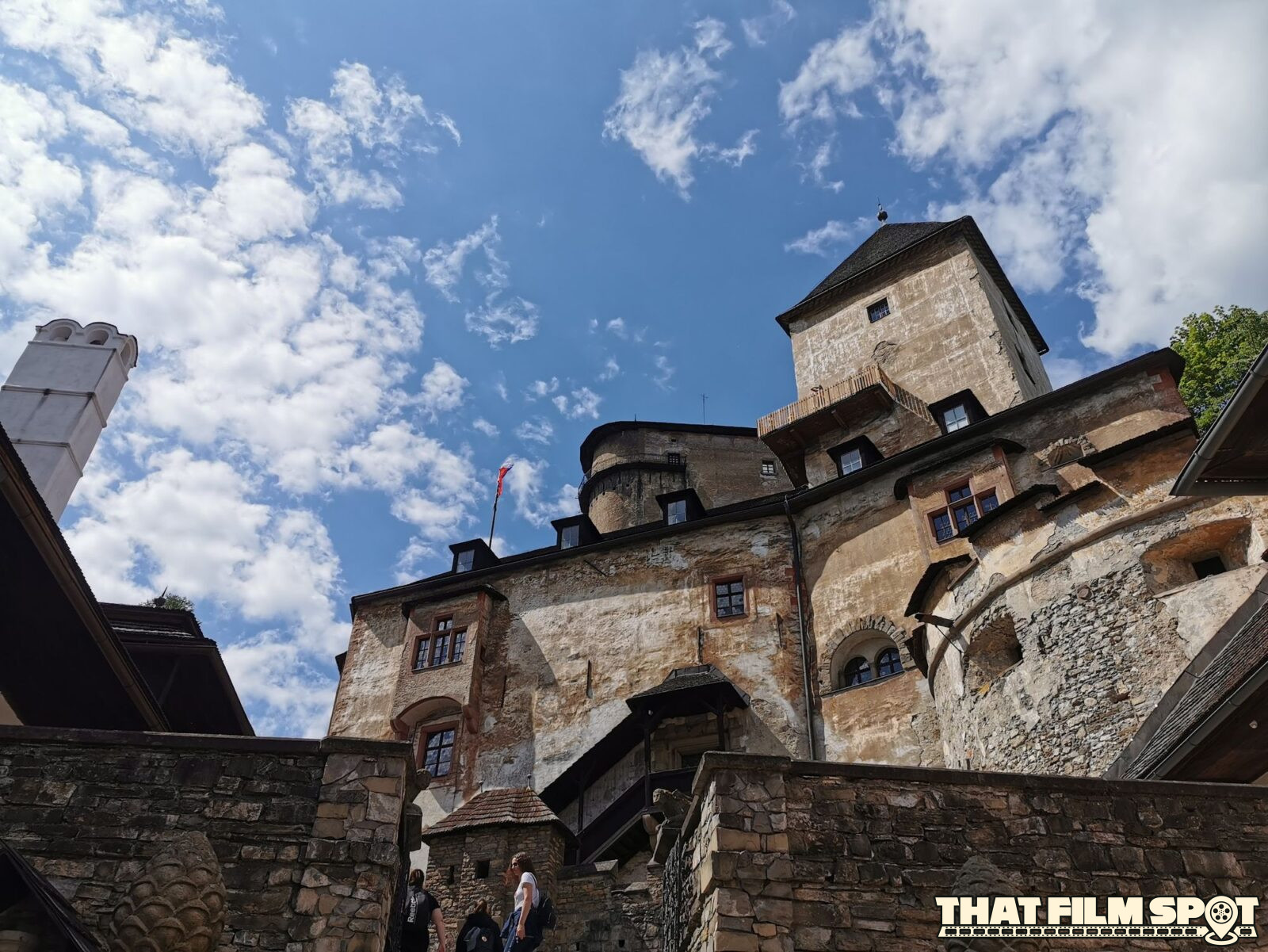
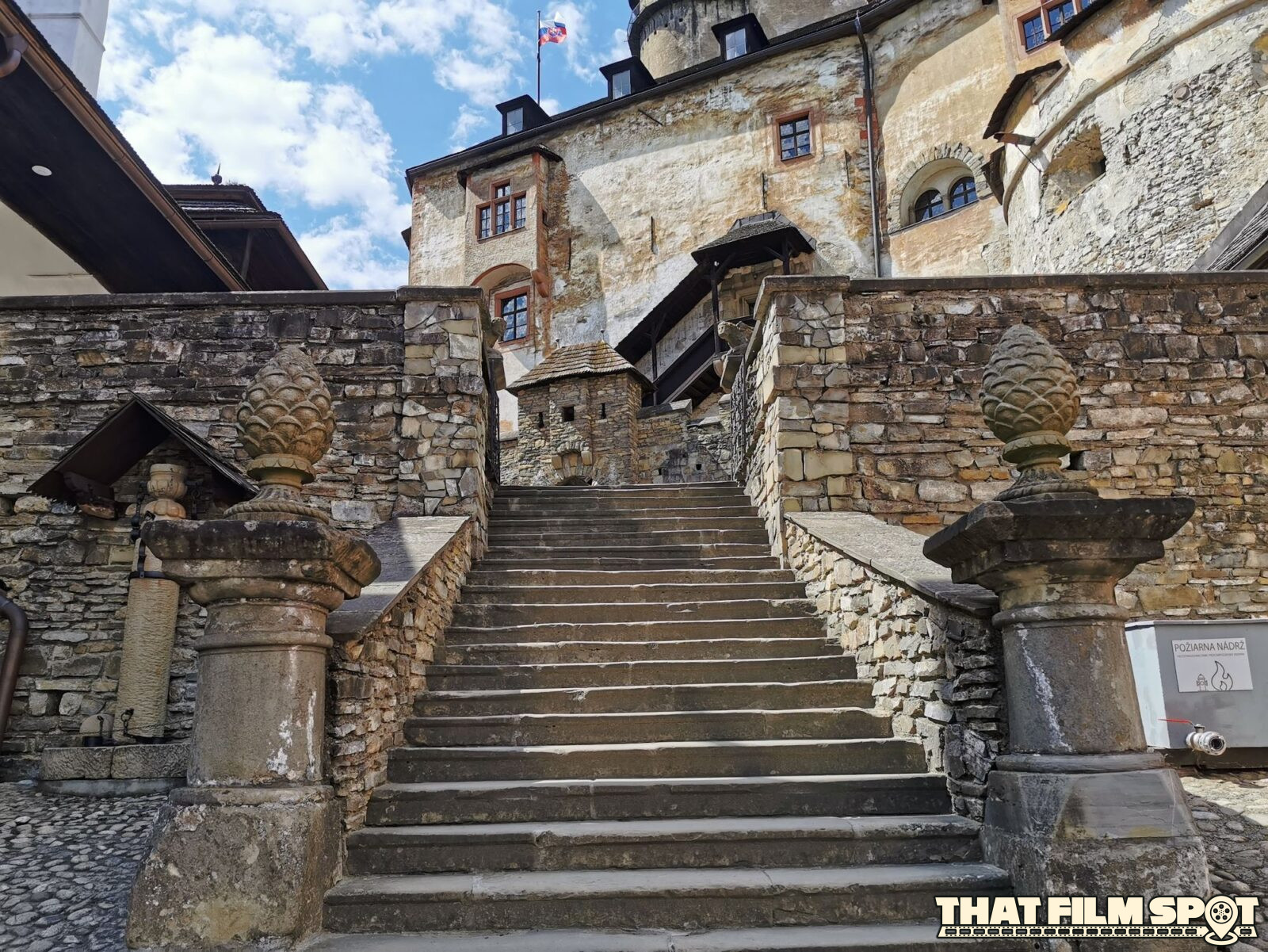
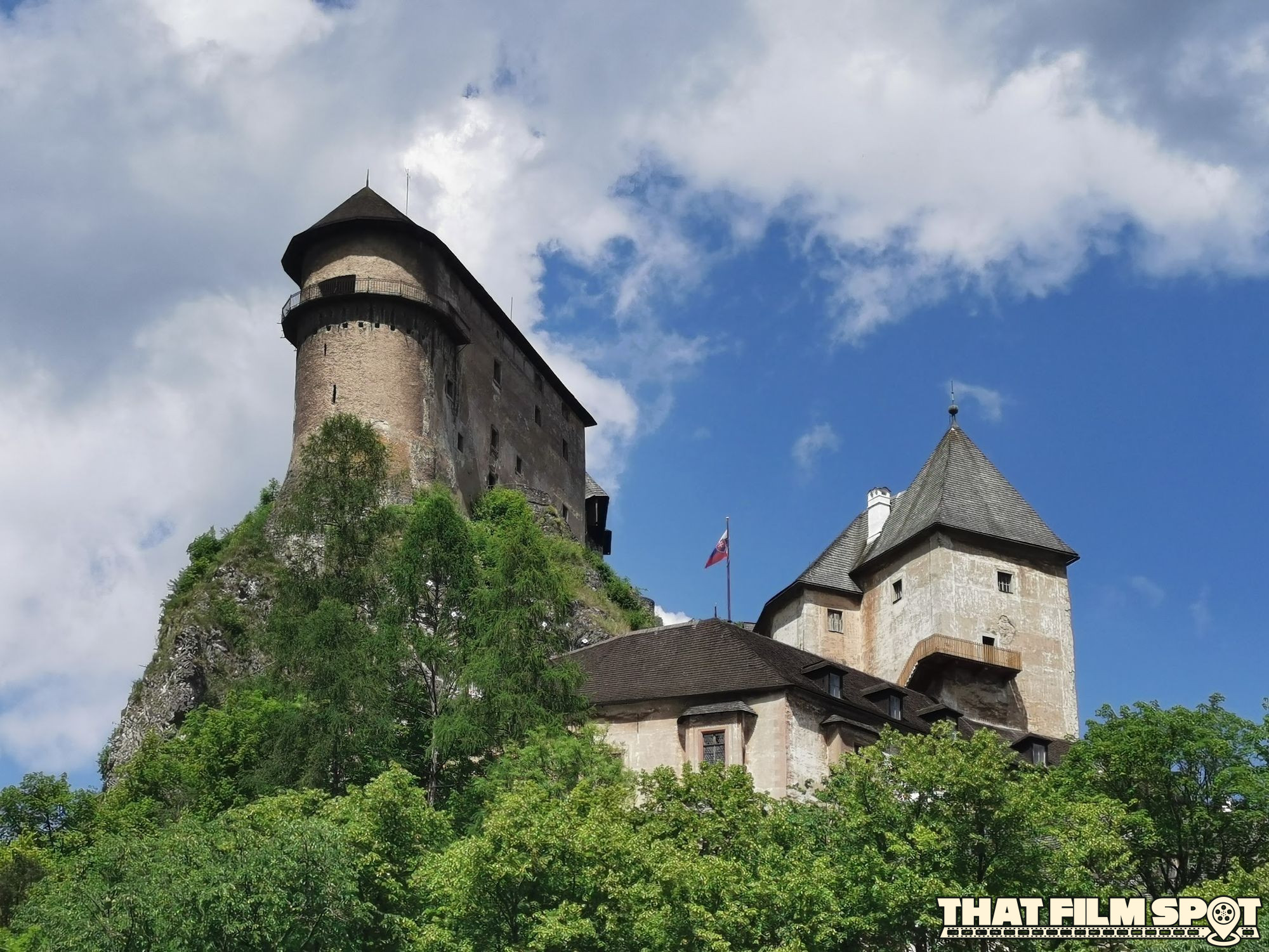
Orava Castle, known in Slovak as Oravský hrad, is a vast castle complex rising on a steep limestone rock approximately 110 metres above the Orava River in Oravský Podzámok in northern Slovakia. The site developed after the Mongol invasion of the Kingdom of Hungary in 1241, replacing an earlier wooden fortification, and the castle is first recorded in writing in 1267. Rather than being constructed as a single building, it expanded over several centuries into a succession of fortified gates, courtyards, towers and palaces arranged vertically along the rock. Among its important owners were King Matthias Corvinus and the Thurzo family, whose extensive rebuilding during the sixteenth and early seventeenth centuries gave much of the complex its present form. The castle eventually grew to 154 rooms divided between the Lower, Middle and Upper Castle, with the Citadel occupying the highest point. A devastating fire in 1800 destroyed much of the complex, after which successive restorations saved the surviving structures. A museum was established here in 1868, making it one of Slovakia’s oldest museums, while a major restoration programme carried out after the Second World War preserved the castle as one of the country’s most important architectural monuments. Its extreme vertical setting, narrow gateways, tunnels, stone courtyards and mixture of Romanesque, Gothic, Renaissance and Baroque architecture have also made it an unusually versatile filming location.
Orava Castle has appeared in Nosferatu: A Symphony of Horror (1922), Adam Šangala (1972), King Thrushbeard (1984), The Young Indiana Jones Chronicles (1992–1993), The Princess and the Pauper (1997), Michael Strogoff (1999), Dragonheart: A New Beginning (2000), Thomas the Falconer (2000), Love in Your Soul (2014), Dracula (2020), Van Helsing (2016–2021) and Three Gold Ducats (2023). Its screen roles range from royal palaces and medieval prisons to monasteries and vampire strongholds, but its association with horror is especially notable: almost a century after F.W. Murnau used it as Count Orlok’s castle in Nosferatu: A Symphony of Horror (1922), the BBC and Netflix returned to Orava to make it Castle Dracula in Dracula (2020), followed by another Transylvanian vampire setting in the final season of Van Helsing (2016–2021).
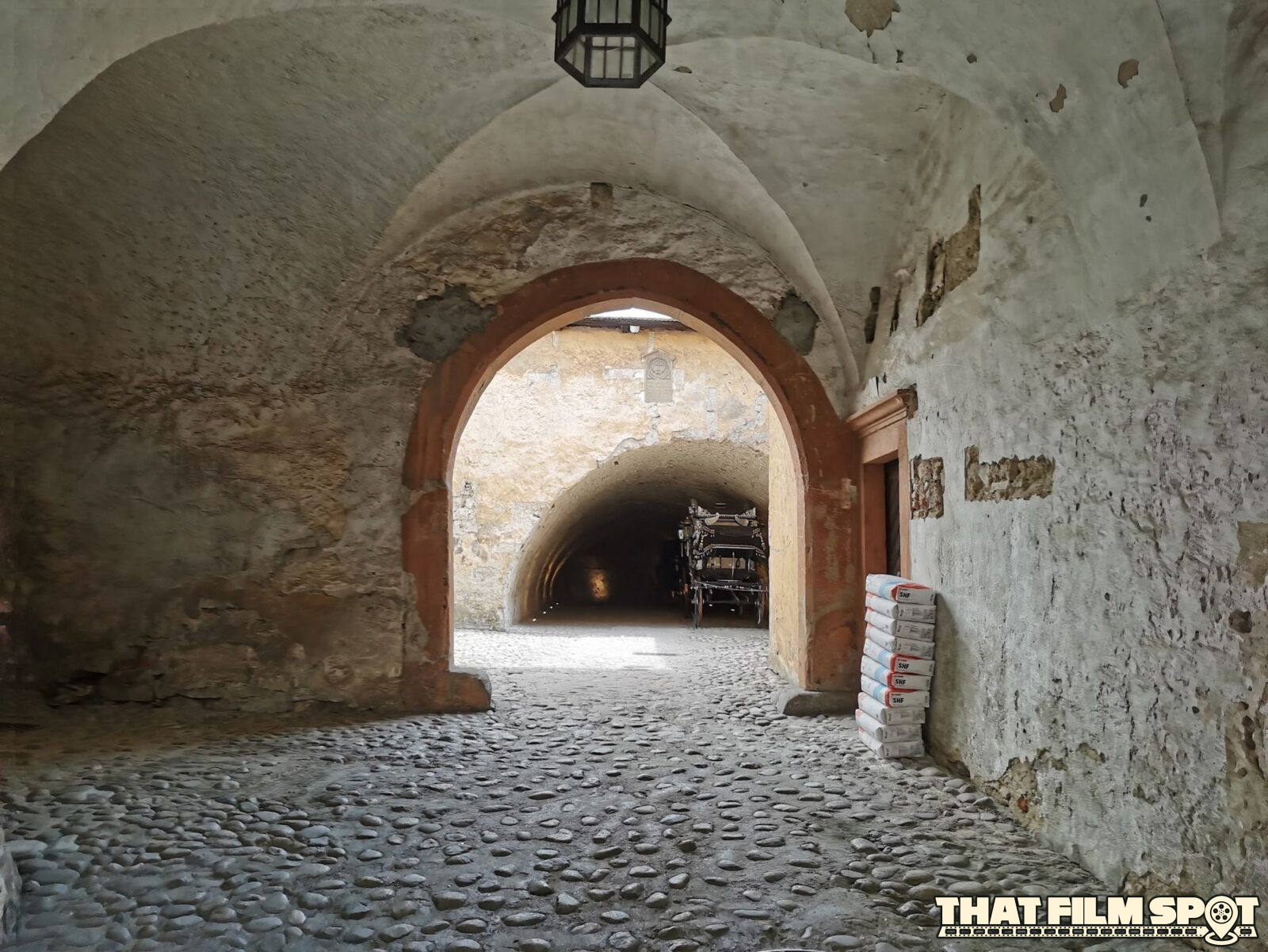
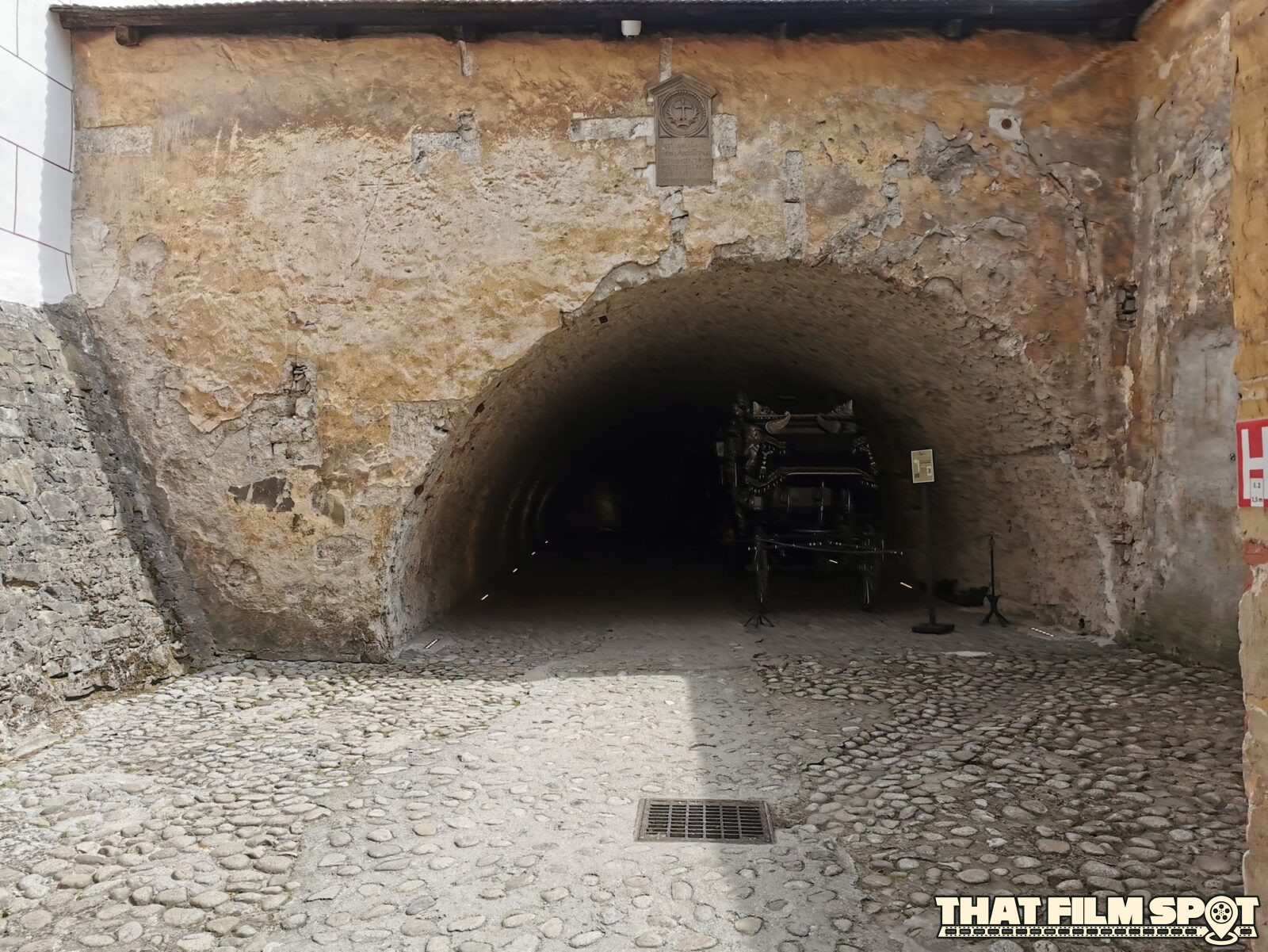
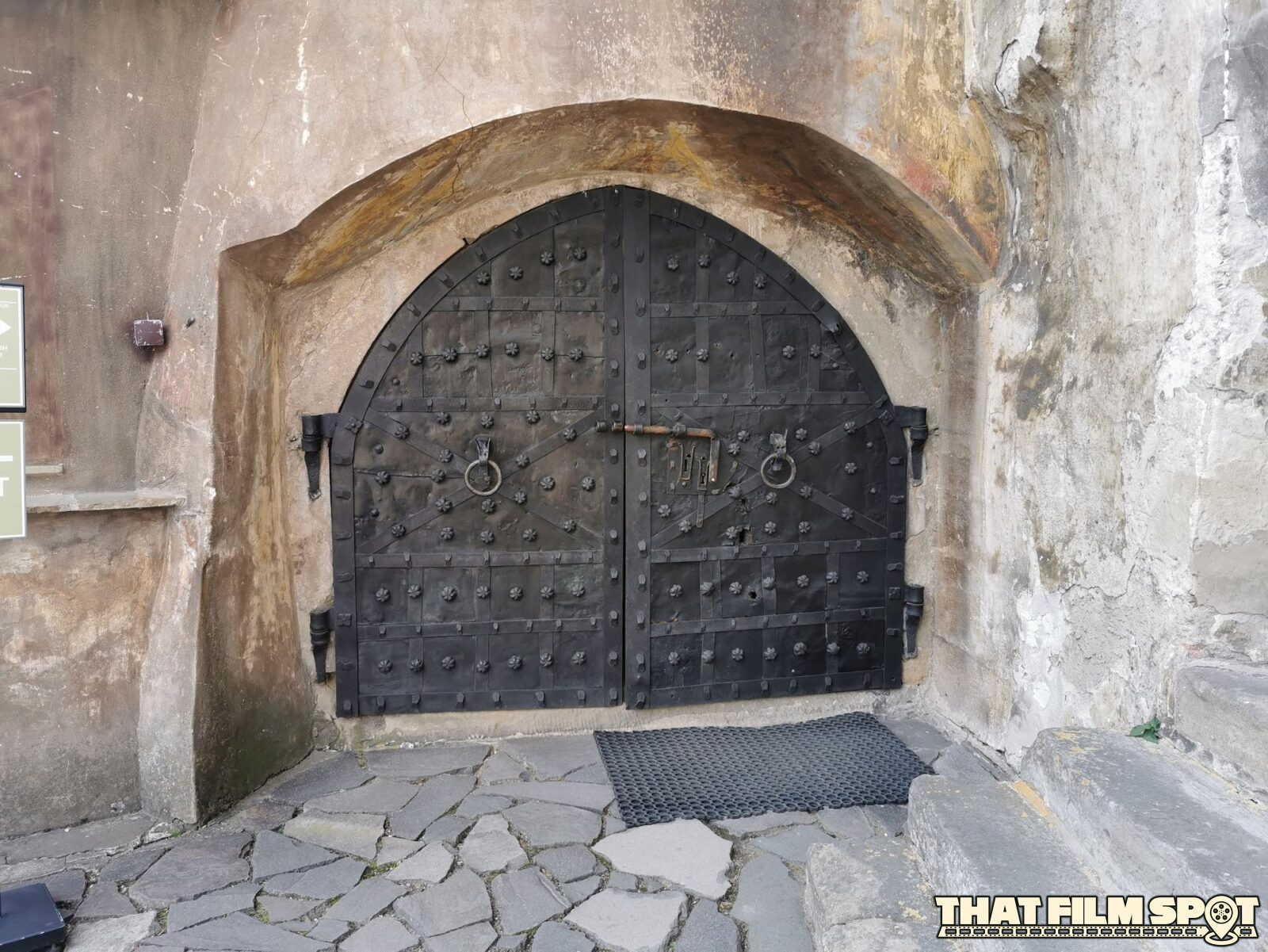
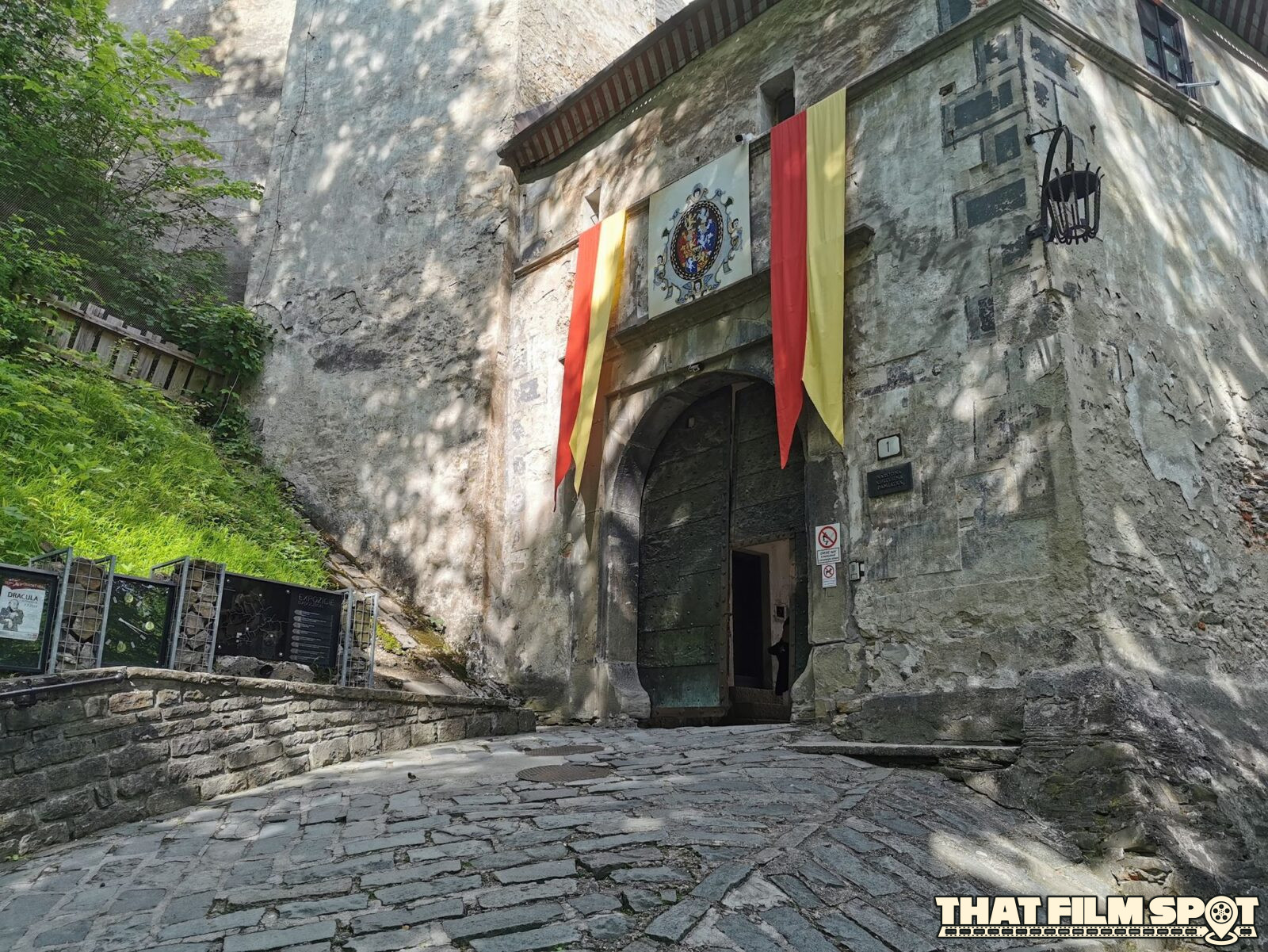
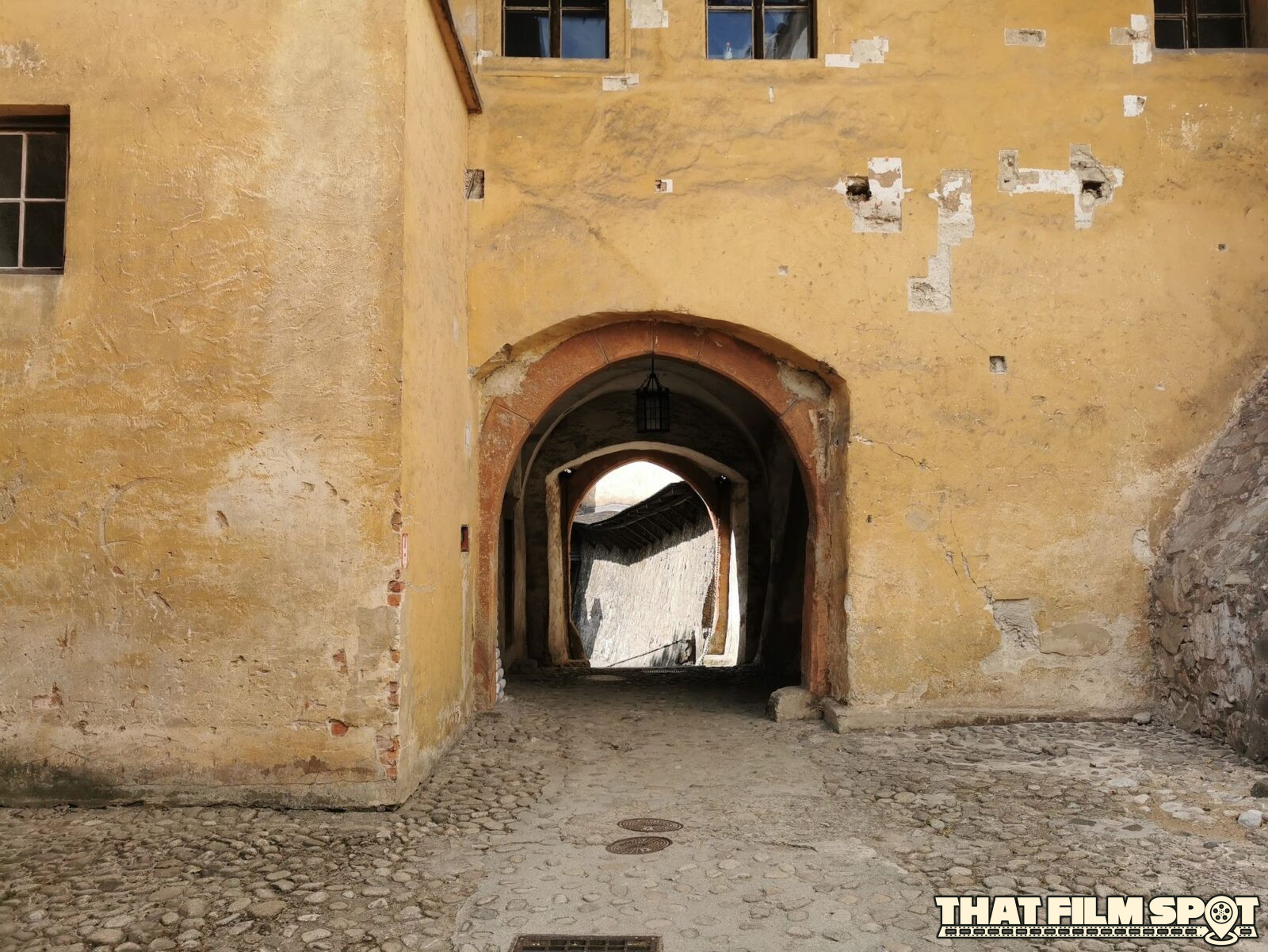
In Nosferatu: A Symphony of Horror (1922), Orava Castle provides Count Orlok’s isolated Transylvanian stronghold and is used much more extensively than a simple establishing shot. Thomas Hutter arrives after a supernatural carriage journey through the Carpathians and passes through the castle’s first gateway before encountering Count Orlok waiting deeper inside the entrance. The defensive passage, gateways and courtyard are all recognisable, and the following morning Hutter wanders through the castle grounds while gradually becoming suspicious of his host. Another Orava location is used while Hutter writes to his wife Ellen, while parts of the Middle Courtyard appear as he searches for Orlok during daylight. The film then combines these genuine castle exteriors with studio interiors created in Berlin, including portions of Orlok’s crypt. Murnau also filmed elsewhere in northern Slovakia, including the Váh River, Vrátna Valley, the High Tatras and Starhrad Castle, but Orava provides the defining image of Orlok’s home and remains one of the oldest surviving horror-film locations that can still be recognised today.
In Adam Šangala (1972), the three-part Czechoslovak television production uses Orava Castle during the seventeenth-century adventures of the title character, a young peasant forced to flee after coming into conflict with a nobleman. Orava stands in for Beckov Castle during the second part of the story. Adam approaches through the real access road and first castle gate, where he encounters his enemy Mihvok, while the fortified space between the first and second gates is clearly visible around them. Other parts of the castle were used for further scenes as Adam becomes caught up in the political and military world of the nobility. The production is particularly interesting historically because it preserves the appearance of Orava Castle only a few years after the completion of its major post-war restoration.
In King Thrushbeard (1984), originally titled Kráľ Drozdia brada, Orava Castle forms much of the royal world surrounding the proud Princess Anna. The fairy tale follows Anna as she mocks and rejects a succession of suitors, prompting her father King Matúš to declare that she will marry the first beggar who comes to the castle gates. That beggar is actually King Michal in disguise, who intends to teach her humility. Orava Castle represents residences belonging to both kings, with extensive use made of its interiors, courtyards, fortifications and gateways. Among the identifiable locations are the Knight’s Hall, the second castle gate where King Matúš waits for a beggar to arrive, the main courtyard and the castle walls used after Anna’s circumstances have dramatically changed. Rather than serving only as a distant fairy-tale castle, Orava is woven through much of the film and provides some of its principal interiors as well as exteriors.
In The Young Indiana Jones Chronicles (1992–1993), Orava Castle appears in the second-season episode «Germany, Mid-August 1916» (1992). After being captured during the First World War and failing to escape from a German prisoner-of-war camp, the young Indiana Jones is transferred to the supposedly escape-proof prison of Dusterstadt on the Danube. Orava Castle provides the establishing view of the forbidding fortress as Indy is brought there, its high position on the rock making it an effective maximum-security prison. Most of the subsequent scenes inside Dusterstadt were actually filmed at Pernštejn Castle in the Czech Republic, where Indy meets fellow prisoner Charles de Gaulle and attempts another escape. Orava’s role is therefore brief but visually important, establishing the prison before the production switches to a different castle for the action inside.
In The Princess and the Pauper (1997), originally titled La principessa e il povero, Orava Castle was among the castle locations used for Lamberto Bava’s two-part fantasy film. The story follows Princess Mirabella, who has unknowingly been exchanged as a baby with the king’s true heir, and Leonardo, the young man raised outside the royal court. As the two become entangled in questions of identity, succession and romance, Orava contributes to the medieval royal setting in which Mirabella has been raised and where Leonardo later finds himself drawn into court life. The castle’s genuine courtyards, towers and fortified architecture allowed the production to create an extensive fairy-tale kingdom without constructing the entire royal residence on sets.
In Michael Strogoff (1999), originally titled Michele Strogoff – Il corriere dello zar, Orava Castle is transformed from a Central European fortress into a fortified Russian Orthodox monastery. The television adaptation of Jules Verne’s novel follows Michael Strogoff as he travels across the Russian Empire while Tartar forces threaten Siberia and the young heir to the throne. The boy is eventually placed under protection at the monastery, drawing the location directly into the conflict. Orava Castle is used for several important sections of the story, including material leading into the dramatic climax, with its enclosed courtyards, defensive walls and elevated position providing a convincing fortified religious stronghold.
In Dragonheart: A New Beginning (2000), Orava Castle supplies part of the medieval environment surrounding Geoff, an orphaned stable boy who dreams of becoming a knight. Geoff lives at a monastery where the young dragon Drake, the offspring of Draco from the original Dragonheart, has secretly been raised by the monks because of a prophecy concerning the return of a two-tailed comet. After Geoff discovers Drake, the pair become friends and are drawn into the plans of Lord Osric, who intends to exploit the dragon for his own pursuit of power. Orava Castle was used for medieval fortress and monastery material during the Slovak production, its courtyards, stone passages and fortifications giving the direct-to-video sequel a genuine historic setting rather than relying entirely on constructed sets.
In Thomas the Falconer (2000), originally titled Sokoliar Tomáš, Orava Castle is combined with Krásna Hôrka Castle to create what appears on screen to be a single medieval stronghold. The young Thomas goes to the castle looking for work after the death of his father and becomes caught up in the intrigues surrounding the powerful lord Balador and his family. Numerous Orava locations can be identified throughout the story. The armoury in the Thurzo Palace is used while Balador practises sword fighting, the space between the first and second gates becomes the courtyard where Thomas saves Vincko from a beating, and other gates, courtyards and interiors are repeatedly incorporated into castle life. Careful editing connects these scenes with footage shot at Krásna Hôrka, allowing two very different real castles to function as one continuous location in the film.
In Love in Your Soul (2014), originally titled Láska na vlásku, Orava Castle provides the principal royal castle in a story built around two almost identical young men exchanging identities. Prince Matej is reluctant to accept his arranged marriage to Princess Beatrix and changes places with the poor wanderer Tomáš, expecting the deception to last only a day. Instead, Matej is arrested while Tomáš becomes trapped in the prince’s privileged life at the castle. Orava appears repeatedly as Tomáš arrives through the fortified gates, carries barrels through the main courtyard, attempts to escape through the Middle Courtyard and later learns to fence on the castle walls. The Middle Castle and terraces are also used for his increasingly complicated relationship with Beatrix, who believes she is speaking to the prince. The production used a particularly large number of recognisable areas around Orava, making the castle one of the film’s dominant locations rather than merely an establishing exterior.
In Dracula (2020), Orava Castle returns to vampire fiction almost a century after Nosferatu: A Symphony of Horror (1922), this time standing explicitly for Castle Dracula. In the opening episode, «The Rules of the Beast», solicitor Jonathan Harker arrives in Transylvania to meet Count Dracula and is shown approaching and entering the castle at Orava. One particularly elaborate shot begins outside the real castle, follows Harker through its entrance tunnel and then disguises the transition from location filming in Slovakia to an interior set at Bray Studios in England. The camera passes Harker as he removes his hat and the architecture around him changes almost imperceptibly into the vast studio-built interior of Dracula’s home. Most of the rooms in which Harker is subsequently imprisoned and gradually weakened by Dracula were therefore not inside Orava Castle, but its exterior, gateway and approach establish the count’s home. The choice was deliberate: production designer Arwel Jones explained that co-creator Mark Gatiss specifically wanted the same castle used for Nosferatu, creating a direct link between two screen versions of the Dracula story made almost one hundred years apart.
In Van Helsing (2016–2021), Orava Castle appears in the fifth-season premiere «Past Tense» (2021), which sends Jack Van Helsing centuries into the past to medieval Transylvania. She discovers that the region is ruled by Count Dalibor and his wife Olivia, who is destined to become Dracula, and attempts to prevent the creation of the Dark One before the future she knows can take place. The exterior of Dalibor’s castle is Orava Castle, appearing as Jack becomes involved with Dalibor, Florian, Michaela and the still-human Olivia. Jack eventually kills Olivia, believing she has prevented Dracula’s rise, only to learn that her actions have merely altered the circumstances surrounding it. The episode therefore gives Orava another role connected directly to the origins of Dracula, continuing the castle’s unusually long association with vampire stories on screen.
In Three Gold Ducats (2023), originally titled Tri zlaté dukáty, Orava Castle represents the ancestral castle of the Selmeczi family. The film opens at the castle centuries before the main story, when Júlia is still part of the noble family, and later returns to it in the early twentieth century after the estate has fallen into the hands of the unscrupulous administrator Blažej Meleg. The first and second castle gates, courtyards and defensive passages are used extensively. A notary arrives through the gates to meet Blažej, servants are seen leaving the property, and later the shepherd Juraj enters the castle while searching for the imprisoned Júlia. His search takes him through a tunnel in the castle’s southern bastion, which becomes part of the prison area on screen. At the end of the story, Júlia stands near the gates after legally regaining possession of the castle, bringing the film back to the location associated with her family at the beginning.
Orava Castle (2023)


Nosferatu: A Symphony of Horror
Nosferatu was primarily filmed on location in Germany and Slovakia. Key German locations included Lübeck. Carpathian scenes were shot in Slovakia.

Liban Quarry
Liban Quarry is a historic limestone quarry in Kraków, Poland. It is also known as the filming location for the camp scenes in Schindler's List.

Schindler’s List Passage
The famous, narrow, and steep staircase where Mrs. Dresner hides from Nazis in Schindler's List is located at Józefa 12 in the Kazimierz district of Kraków.

Spiš Castle
Spiš Castle is a vast medieval castle, and appears in Dragonheart (1996), Kull the Conqueror (1997), The Lion in Winter (2003) and The Last Legion (2007).

Čachtice Castle
Čachtice Castle has appeared in movies like The Mystery of the Carpathian Castle (1981), Dragonheart (1996) and Bathory (2008).

Ogrodzieniec Castle
Ogrodzieniec Castle has appeared in Janosik (1973–1974), The Knight (1980), The Revenge (2002), The Witcher (2019) and the Australian series Spellbinder (1995).

Heroes’ Square
Heroes’ Square appears in A Good Day to Die Hard (2013), Red Sparrow (2018), and Gemini Man (2019).

Fisherman’s Bastion
Fisherman’s Bastion has appeared in several international productions, including "I Spy" (2002), "Tinker Tailor Soldier Spy" (2011) and "Gemini Man" (2019).

Kerepesi Cemetery
Kerepesi Cemetery appears in Dune: Part Two (2024), Red Sparrow (2018), and The Boy in the Striped Pajamas (2008).

Müpa Budapest
Müpa Budapest appears in The Martian (2015) and The Day of the Jackal (2024–). In both productions, Müpa is used as a modern institutional building.