
Indiana Jones and the Last Crusade (1989) is an American action-adventure film directed by Steven Spielberg and produced by George Lucas, starring Harrison Ford as archaeologist and adventurer Indiana Jones. When his father, Professor Henry Jones Sr., disappears while searching for the Holy Grail, Indiana travels to Europe and discovers that a group of Nazis is attempting to recover the same ancient relic. Sean Connery plays Henry Jones, while Alison Doody appears as Austrian art historian Elsa Schneider, Julian Glover as wealthy American businessman Walter Donovan, Denholm Elliott as Marcus Brody and John Rhys-Davies as Sallah. River Phoenix portrays a young Indiana Jones in an opening sequence set in 1912, which reveals the origins of several of the character’s familiar traits. The third instalment in the Indiana Jones series, following Raiders of the Lost Ark (1981) and Indiana Jones and the Temple of Doom (1984), places greater emphasis on the relationship between Indiana and his father while retaining the elaborate action sequences, ancient mysteries and international settings associated with the franchise. It became the highest-grossing film of 1989 worldwide and won an Academy Award for Best Sound Effects Editing.
Indiana Jones and the Last Crusade was filmed in Spain, England, Italy, West Germany, Jordan and the United States, with principal photography beginning on 16 May 1988 in the Spanish province of Almería. The production used a combination of historic buildings, deserts, railway lines, castles and carefully constructed studio environments to represent locations across Europe and the Middle East in 1938. Elstree Studios in Borehamwood, England, served as the principal production base, while location filming took place in places as geographically different as Venice, Petra, the Tabernas Desert and the American Southwest. Several of the film’s most recognisable locations were real buildings or landscapes, although many of their interiors and surrounding features were recreated or substantially altered. Filming continued through September 1988, with additional scenes photographed during post-production.
The film opens in 1912, when a young Indiana Jones is exploring the desert with a Boy Scout troop. The sequence was filmed partly in Arches National Park near Moab, Utah, where the distinctive red sandstone formations provide the setting for the discovery of the Cross of Coronado. Among the recognisable landmarks are Balanced Rock, The Organ and Double Arch. After leaving his fellow scouts, Indiana discovers a group of treasure hunters removing the cross from a cave and decides to steal it, believing that the artefact belongs in a museum. He flees through the rocky landscape before escaping on horseback. Spielberg originally intended to film the sequence at Mesa Verde National Park in Colorado, but objections were raised by Native American representatives concerned about the use of culturally significant archaeological sites. The production instead selected Arches National Park, whose natural formations provided a different but equally distinctive setting.
The pursuit continues aboard a passing circus train, although these scenes were filmed hundreds of miles away from the Utah locations. The production used the Cumbres & Toltec Scenic Railroad, a historic narrow-gauge railway running between Antonito, Colorado, and Chama, New Mexico. Originally constructed during the nineteenth century, the railway retained much of its traditional appearance, including steam locomotives and historic rolling stock. The filmmakers added circus wagons and specially modified railway carriages to create the moving train. Young Indiana scrambles across the roofs and passes through compartments containing snakes, lions and circus equipment while attempting to escape the treasure hunters. The sequence explains his fear of snakes, introduces his use of the bullwhip and shows how he acquired the scar on his chin.
Filming on the moving train required extensive safety preparations. Mechanical-effects supervisor Michael Lantieri and his team installed concealed handholds and protective platforms between the carriages so that performers could move across the roofs without falling between the vehicles. Because stopping and reversing a steam train was a slow process, the timing of the action had to be carefully coordinated. Several of the train interiors were subsequently recreated at Universal Studios in Los Angeles, where mechanical equipment allowed the carriages to rock and shake without actually moving. Thousands of real snakes were brought in for one compartment, although rubber snakes were also used. The scenes involving the lions required additional precautions, particularly when young Indiana attempts to escape by using a whip. The scene in which he disappears through a magician’s box was filmed on the actual train, using a concealed opening beneath the carriage and a second performer to complete the illusion.
The prologue concludes at the Jones family home, which was filmed at a house on Front Street in Antonito, Colorado. Indiana arrives carrying the stolen cross but is disappointed when the local sheriff forces him to return it to the treasure hunters. The mysterious leader of the group, identified only as Fedora, recognises the boy’s determination and gives him his own hat. The scene then moves forward to 1938, with Harrison Ford replacing River Phoenix as the adult Indiana Jones. The confrontation aboard a ship off the Portuguese coast, where Indiana finally recovers the Cross of Coronado, was actually filmed on a large mechanical deck constructed at Elstree Studios. The set was mounted on equipment that simulated the movement of a vessel in rough seas, while large water tanks released thousands of litres of water across the deck during the fight.
Back in the United States, Indiana returns to his teaching position at Barnett College. The college interiors were filmed at the Royal Masonic School for Girls in Rickmansworth, Hertfordshire, the same school that had previously represented Indiana’s academic workplace in Raiders of the Lost Ark (1981). Its corridors and traditional classrooms provided a suitable setting for the fictional American institution. After receiving a mysterious package containing his father’s Grail diary, Indiana meets Walter Donovan, who explains that Henry Jones has disappeared in Venice while investigating the possible location of the Holy Grail. Some of the additional interiors, including Donovan’s luxurious apartment, were constructed at Elstree Studios. The aircraft departure associated with Indiana’s journey to Europe was filmed at North Weald Aerodrome in Essex.
Indiana’s search brings him to Venice, where he and Marcus Brody meet Elsa Schneider near the Grand Canal. Their arrival was filmed around the waterfront at Punta della Dogana, close to the Basilica di Santa Maria della Salute. The surrounding canal, palaces and historic buildings provide the setting for the meeting before Elsa leads them towards the library where Henry Jones was conducting his research. Other Venice scenes were filmed around St Mark’s Square and the Doge’s Palace, with the production carefully arranging its camera angles to avoid modern objects that would reveal the film’s 1988 shooting date. Filming in the city took place in August, during one of its busiest tourist periods. Producer Robert Watts negotiated permission to restrict traffic along sections of the Grand Canal for several hours so the crew could complete the necessary shots.
One of the film’s most recognisable Venetian locations is the Church of San Barnaba in the Dorsoduro district. Its Neoclassical façade, facing Campo San Barnaba, represents the exterior of the fictional library where Henry Jones had been searching for the tomb of a Crusader knight. Indiana and Elsa enter the building and begin examining the floor for clues, eventually discovering a hidden entrance leading into ancient catacombs. Despite its appearance in the film, San Barnaba is a real church rather than a library. The interior seen on screen was constructed at Elstree Studios, where the filmmakers could create the elaborate tiled floor, underground passages and burial chambers required by the story. The actual church has no connection to the fictional network of tunnels or the hidden tomb beneath the library.
The underground sequence was among the more elaborate interiors built for the film. Indiana and Elsa discover a concealed passage beneath the library and descend into flooded catacombs filled with rats, human remains and ancient inscriptions. Their search leads them to the tomb of Sir Richard, whose shield contains an important clue to the Grail’s location. The Brotherhood of the Cruciform Sword then attempts to kill them by setting fire to the petroleum covering the water. The flooded passages, tomb chamber and burning water were created on soundstages at Elstree, allowing the crew to control the water levels, fire effects and camera positions. These sets were completely separate from the real church in Venice, although the editing makes the descent from Campo San Barnaba appear continuous.
After escaping the catacombs, Indiana and Elsa are pursued through the canals in motorboats. Some of the chase was filmed in Venice itself, but its most dangerous stunts were staged at Tilbury Docks in Essex, England. The filmmakers used the industrial port to recreate a section of the Venetian waterways where two enormous ships appear to close together, crushing one of the pursuing motorboats. The vessels had to be carefully positioned and secured while the stunt boats passed between them. For the explosion, the effects team launched an empty boat shell containing dummies from a concealed platform between the ships. The first attempt did not travel far enough towards the camera, requiring the stunt to be repeated.
The chase continues when Indiana climbs aboard another boat to fight Kazim, one of the men pursuing them. Their vessel drifts dangerously close to the propeller of a large ship, which begins destroying the boat as the two men struggle. This sequence was filmed in a water tank at Elstree Studios, using specially constructed boats with sections made from lightweight balsa wood. Explosive charges helped create the illusion that the huge propeller was tearing the vessel apart. By combining genuine Venetian canals, the industrial surroundings of Tilbury and carefully built studio interiors, the filmmakers created a much larger and more destructive boat chase than would have been possible in the historic centre of Venice.
Indiana’s investigation eventually leads him to Castle Brunwald, a fortress supposedly located near the Austrian-German border, where his father is being held prisoner. The castle exterior was filmed at Burg Bürresheim, near Mayen in the Eifel region of West Germany. The medieval castle stands on a rocky hill above the Nette valley and is one of the few historic fortifications in the region that escaped major destruction during later centuries. Although the actual building appears in the film, its appearance was substantially altered using a matte painting. The image was reversed and extended with additional architectural features to make the castle appear larger and more symmetrical. The imposing exterior is therefore partly real and partly an optical illusion.
The castle interiors were filmed at Elstree Studios, where the production constructed the rooms, corridors and staircases needed for Indiana’s rescue attempt. After entering the building disguised as a Scottish nobleman, Indiana encounters a series of Nazi officers before discovering that his father is imprisoned inside. One of the most memorable scenes takes place in a room with a rotating fireplace, which conceals a passage into another part of the castle. The mechanism accidentally carries Indiana and Henry directly into a room filled with Nazi soldiers. The fireplace and surrounding rooms were elaborate studio constructions designed to accommodate the rotating machinery and camera equipment. The film also includes the famous scene in which Henry accidentally sets fire to the building while attempting to escape, creating another opportunity for carefully controlled practical effects.
After escaping Brunwald, the two men flee on a motorcycle and sidecar while being pursued by German soldiers. Although the sequence is set in the countryside near the Austrian-German border, much of the motorcycle chase was actually photographed in California. Spielberg and editor Michael Kahn decided during post-production that the film needed additional action, and new material was filmed around Mount Tamalpais and Fairfax in Marin County, near George Lucas’s Skywalker Ranch. The winding roads and wooded hills were used to represent the European countryside, with period military vehicles and motorcycles completing the setting. The additional footage was combined with existing studio material, demonstrating how the filmmakers could create an apparently continuous European journey using locations on another continent.
The search for Henry’s stolen Grail diary brings Indiana and his father to Berlin, where they enter a large Nazi rally. The nighttime gathering, including the enormous crowds and burning books, was filmed at Stowe School in Buckinghamshire, England. The school occupies the former Stowe House, an eighteenth-century country mansion surrounded by extensive landscaped gardens. Its monumental architecture provided the setting for the political rally, where Indiana disguises himself as a German officer to recover the diary from Elsa. The sequence culminates in an unexpected encounter with Adolf Hitler, who mistakes the diary for a book requiring his autograph. Filming at Stowe took place over two nights in July 1988, with the production adding Nazi banners, lighting and large numbers of uniformed extras to transform the historic English estate into a setting in 1930s Germany.
The escape from Berlin continues at an airport, where Indiana and Henry attempt to board a Zeppelin. The fictional Berlin airport was assembled from several different locations. The exterior was filmed at the Administration Building on Treasure Island in San Francisco Bay, California, an Art Deco building originally associated with the 1939 Golden Gate International Exposition. The airport interior was filmed at Lawrence Hall, formerly part of the Royal Horticultural Halls, in Westminster, London. Its large interior and monumental architectural details suited the period setting. The Zeppelin interiors were constructed at Elstree Studios, including the passenger lounge, corridors and the section where Indiana and Henry take their seats before discovering that German officers are aboard.
The Zeppelin scenes were particularly uncomfortable for the cast because of the heat generated by the studio lighting. Harrison Ford and Sean Connery reportedly performed part of their seated conversation without trousers, since their lower bodies were hidden beneath the table. The sequence eventually leads to the escape in a small aircraft attached to the airship. Indiana and Henry are pursued by German fighter planes before crashing and continuing their journey by car. The later aircraft chase was filmed in southern Spain, where the filmmakers used the open desert roads and coastal landscape around Cabo de Gata-Níjar Natural Park. The road and tunnel scenes were carefully staged to create the illusion of low-flying aircraft pursuing the characters through the Spanish countryside.
One of the film’s best-known moments was shot at Playa de Mónsul, a beach in Cabo de Gata-Níjar Natural Park near San José in Almería. Indiana and Henry reach the coast while attempting to escape an approaching German fighter plane. Henry suddenly remembers a passage from his studies of Charlemagne and uses his umbrella to frighten a flock of seabirds into flight. The birds collide with the pursuing aircraft, causing it to crash. The beach’s distinctive volcanic rock formation and surrounding cliffs are clearly visible during the sequence. The location has subsequently appeared in numerous Spanish and international productions, but the Indiana Jones scene remains one of its most recognisable screen appearances.
Meanwhile, Marcus Brody has travelled to the fictional Republic of Hatay, where he hopes to meet Sallah and continue the search for the Holy Grail. His arrival at the railway station in Alexandretta, now known as İskenderun in Turkey, was actually filmed at Guadix railway station in the Spanish province of Granada. The filmmakers transformed the station into a busy Middle Eastern transport hub, filling it with traders, animals, market stalls and performers wearing period clothing. A mosque was constructed near the station specifically for the production, rather than being added later through optical effects. The sequence shows Marcus attempting to blend into the crowds before being captured by the Nazis. Guadix station had previously appeared in other international productions, including Doctor Zhivago (1965).
Almería city provided another important location for the fictional Republic of Hatay. The courtyard of the Escuela de Arte de Almería was used as the palace of the Sultan of Hatay, where Walter Donovan negotiates military assistance for the expedition to recover the Grail. The scene involves a Rolls-Royce Phantom II, which Donovan offers to the Sultan in exchange for horses, equipment and soldiers. Getting the large car into the courtyard required careful planning, as the historic building was not designed to accommodate vehicles of that size. The filmmakers had originally considered using the Patio de los Leones at the Alhambra in Granada, but permission was not obtained. The Escuela de Arte therefore became the setting for one of the film’s more unusual negotiations, with the Sultan showing considerably more interest in the luxury car than in the proposed archaeological expedition. Additional street scenes were filmed around Calle Almanzor, close to the Alcazaba in Almería’s historic centre.
The desert surrounding Almería was used for the film’s extensive tank-chase sequence, one of its largest and most technically demanding action scenes. The Tabernas Desert, together with the rocky terrain around Rodalquilar and other locations in the province, represented the arid landscape of Hatay. The pursuit begins when Indiana attempts to rescue his father and Marcus from a German tank travelling through the desert. He fights soldiers on horseback, climbs aboard the moving vehicle and struggles to prevent his companions from being killed. The chase eventually reaches a narrow rocky canyon, where the tank becomes trapped against the cliff before falling over the edge. Spielberg had originally planned a much shorter sequence, but expanded it through hundreds of storyboards to make it one of the film’s principal action set pieces.
The production constructed a full-sized working replica of a First World War-style tank for the sequence. Special-effects supervisor George Gibbs designed the vehicle using the chassis of a large excavator, with two Range Rover V8 engines powering the tracks. The completed machine weighed approximately 28 tonnes and was built primarily from steel so that it could withstand the rough desert terrain. It was transported from England to Spain aboard a large Belfast cargo aircraft. Unlike a modern military vehicle, the tank had no suspension, making the ride extremely uncomfortable for the crew. The interior also became dangerously hot during filming, and several industrial fans were installed to cool both the driver and the mechanical equipment. Despite these precautions, the vehicle suffered breakdowns, including problems caused by excessive heat.
A second, lighter version of the upper tank structure was constructed for the stunt work involving Indiana fighting on top of the moving vehicle. Mounted on a military trailer, this duplicate included rubber tracks and concealed safety equipment to protect the actors and stunt performers. Vic Armstrong, Harrison Ford’s regular stunt double, performed several dangerous sequences, including a leap from a moving horse onto the tank. Ford also performed many of the less hazardous scenes himself. Filming the extended chase took approximately two weeks, with the production moving between different rocky locations around Almería. Miniatures and mechanical effects were used for the final destruction of the tank, allowing the filmmakers to show the enormous vehicle falling into the canyon without destroying the expensive working machine.
The search for the Holy Grail finally brings Indiana, Henry, Sallah and Marcus to Petra in southern Jordan. The ancient Nabataean city, carved into sandstone cliffs and reached through a narrow gorge known as the Siq, provided the setting for the Canyon of the Crescent Moon. As the characters ride through the winding passage, the enormous façade of Al-Khazneh, commonly known as the Treasury, gradually comes into view. The real monument was carved into the rock during the Nabataean period, probably around the first century AD, and is generally interpreted as a royal tomb rather than a treasury. Its monumental columns, sculpted figures and position at the end of the narrow gorge made it an extraordinary natural setting for the film’s final discovery.
Filming at Petra took place in August 1988 and required considerable cooperation from the Jordanian authorities. The production was welcomed by King Hussein and Queen Noor, who visited the set with their children. Spielberg later recalled that Queen Noor accompanied him to the location on several occasions. The filmmakers spent approximately three days photographing scenes around the Treasury and the entrance to the Siq. The narrow gorge created logistical challenges because most equipment had to be transported through the same passage used by the actors and horses. Although Petra was already internationally known as an archaeological site, the film introduced its distinctive architecture to an enormous new cinema audience.
Despite the convincing appearance of the Grail temple, the interior seen in the film has no counterpart inside Al-Khazneh. The real monument contains relatively simple rock-cut chambers, whereas the film presents an elaborate underground complex guarded by a centuries-old knight. All of these scenes were filmed at Elstree Studios, where production designer Elliott Scott supervised the construction of the temple interior. The enormous set included the entrance chamber, concealed traps, the narrow pathway across the abyss and the final chamber containing the Grail Knight. The filmmakers also constructed mechanical devices for the three challenges Indiana must overcome, including rotating blades, collapsing floors and the apparently invisible bridge spanning a deep chasm.
The temple’s destruction was one of the most complicated mechanical effects in the production. When Elsa attempts to remove the Grail from the temple, the entire chamber begins shaking and breaking apart. The studio set was fitted with approximately ten hydraulically operated mechanisms that could tilt sections of the floor, open large cracks and bring down architectural elements. The construction took around six weeks, and resetting the equipment between takes could take twenty minutes. A separate floor section was needed for the close-up of the Grail falling and causing the first crack to appear. The massive chamber, collapsing architecture and dangerous gaps were therefore entirely artificial, although their design was intended to connect visually with the real sandstone façade photographed in Petra.
The film ends with Indiana, Henry, Marcus and Sallah escaping the collapsing temple and riding away together across the desert. Although the scene follows their adventure at Petra, the final image of the four horsemen disappearing into the sunset was filmed in the United States, at Figure 3 Ranch near Amarillo, Texas. The shot was photographed by a second unit directed by producer Frank Marshall in early 1989, several months after principal photography had ended. The open Texas landscape provided a simple horizon that could be used to conclude the journey without revealing a recognisable geographical location.
Indiana Jones and the Last Crusade is a particularly elaborate example of international location filmmaking. Its European cities, historic castles, American railway lines, Spanish deserts and ancient Jordanian monuments are often combined with studio sets filmed thousands of miles away. The Venetian library exists only as the exterior of a real church, Brunwald Castle is a modified image of a German fortress, the Berlin airport combines London and San Francisco, and the interior of Petra’s Grail temple was constructed entirely at Elstree. The film also preserves recognisable views of historic locations such as the Cumbres & Toltec Scenic Railroad, Stowe House, Guadix station, Playa de Mónsul and Al-Khazneh. Together, the extensive location work and elaborate practical effects created one of the most varied physical environments in the original Indiana Jones trilogy.

Al-Khazneh
Al-Khazneh has appeared in Sinbad and the Eye of the Tiger (1977), Indiana Jones and the Last Crusade (1989) and Mortal Kombat: Annihilation (1997).

Alcazaba of Almería
The Alcazaba of Almería is in Cleopatra, The Rat Patrol, Duffy, Patton, The Horsemen, Antony and Cleopatra, The Four Musketeers, The Wind and the Lion and more.

Burresheim Castle
Burresheim Castle is best known internationally from Indiana Jones and the Last Crusade (1989), where it appears as Castle Brunwald.

Church of San Barnaba
The Church of San Barnaba has appeared in Summertime (1955), Indiana Jones and the Last Crusade (1989), The Italian Job (2003) and Casino Royale (2006).
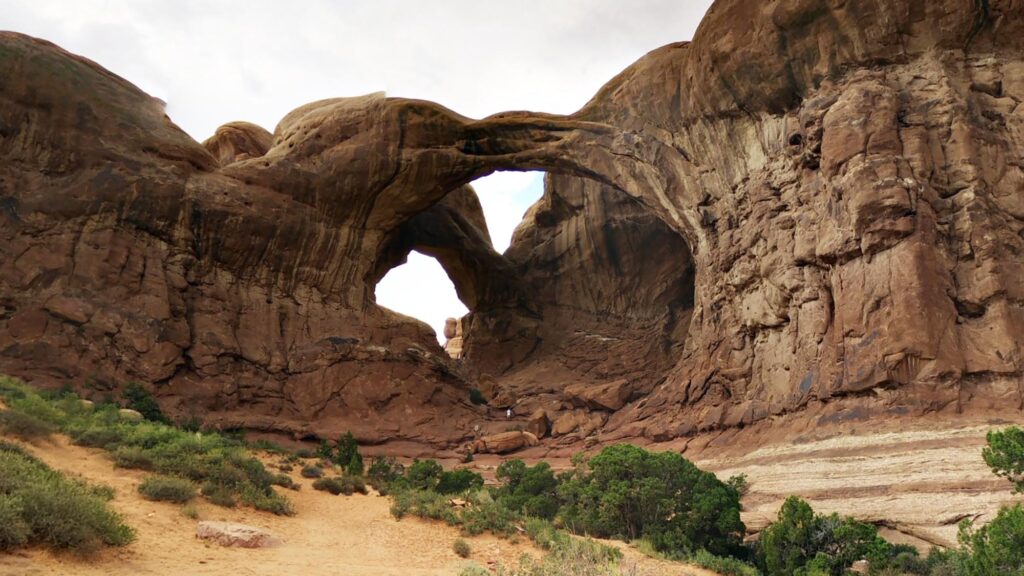
Double Arch
Double Arch is best known from Indiana Jones and the Last Crusade, where it appears during the prologue with young Indiana Jones, played by River Phoenix.
Escuela de Arte de Almería
Escuela de Arte de Almería is in Catlow, Indiana Jones and the Last Crusade, El Ingenio, Die Akte General, Amanece and Lee Cronin’s The Mummy.
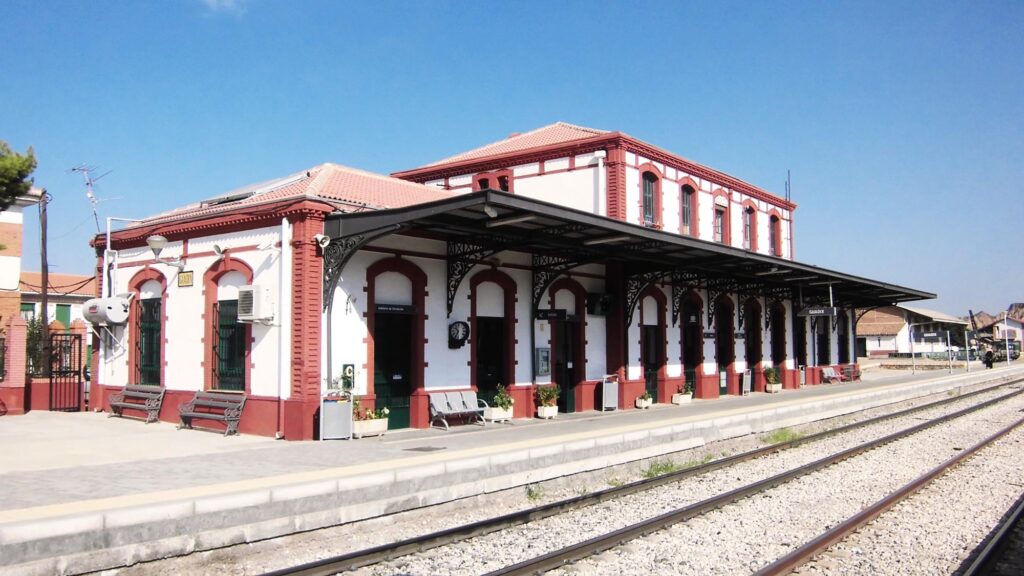
Guadix Railway Station
Guadix Railway Station has appeared in North West Frontier, Doctor Zhivago, A Bullet for the General, Indiana Jones and the Last Crusade, and many more.
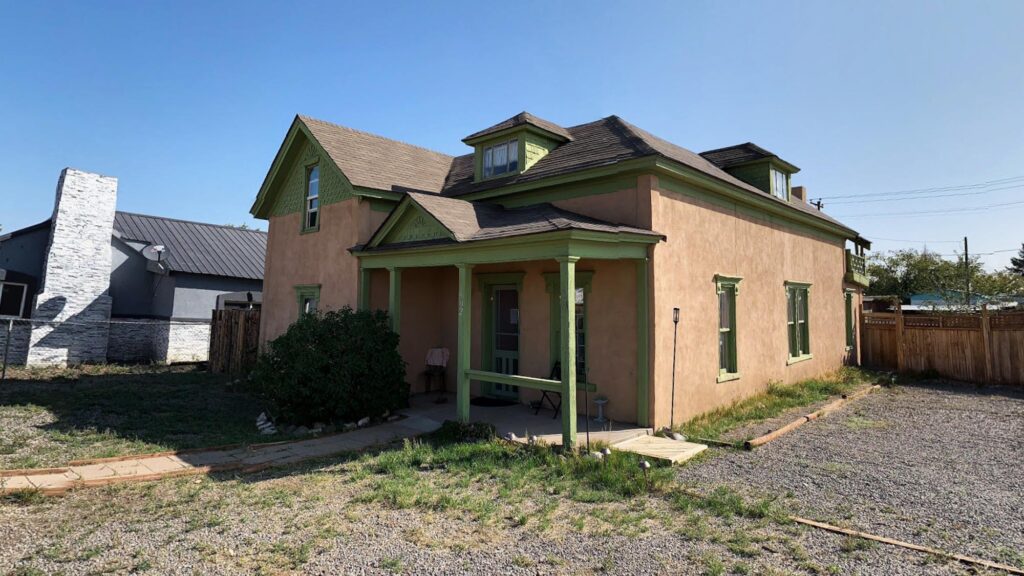
Indiana Jones Bed & Breakfast
Indiana Jones Bed & Breakfast in Antonito, Colorado, is one of the most charming real-world locations connected to "Indiana Jones and the Last Crusade".
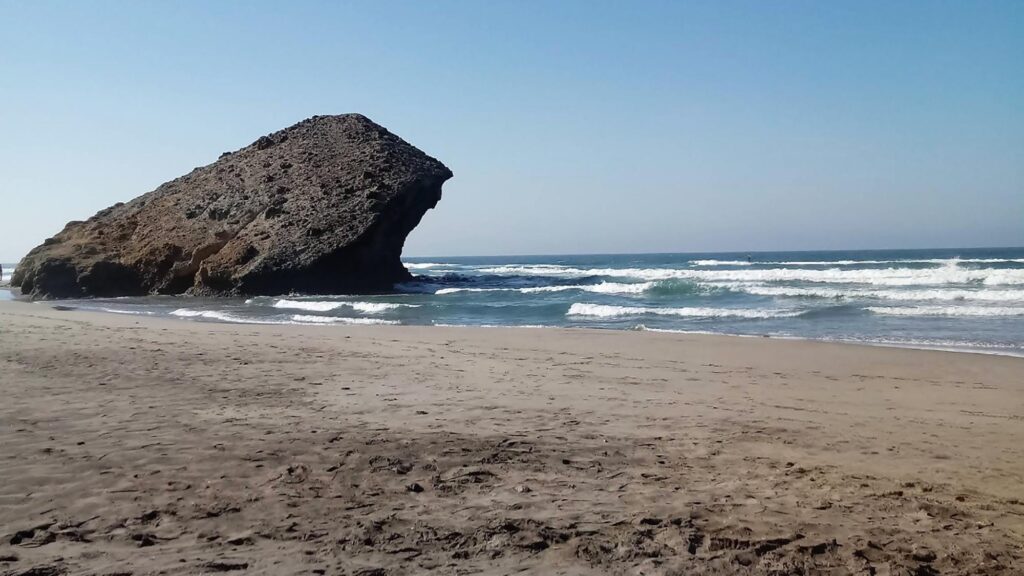
Mónsul Beach
Mónsul Beach appears in Indiana Jones and the Last Crusade, The NeverEnding Story, The Adventures of Baron Munchausen, Antony and Cleopatra, and Shalako.

Palazzo Barbaro
Palazzo Barbaro has appeared in Brideshead Revisited, Nosferatu in Venice, Indiana Jones and the Last Crusade, In Love and War, The Wings of the Dove and more.

Ponte dei Pugni
Ponte dei Pugni is a historic pedestrian bridge in Venice, and has appeared in Summertime (1955) and Indiana Jones and the Last Crusade (1989).

Stowe School
Stowe School is in Indiana Jones and the Last Crusade, Inspector Morse, Jeeves and Wooster, The Avengers, Vanity Fair, The World Is Not Enough and many more.