
The Alcazaba of Almería, known in Spanish as the Alcazaba de Almería, is a large fortified palace complex overlooking the city of Almería in Andalusia, Spain. Its principal development began in 955, when Abd al-Rahman III, the first caliph of Córdoba, granted Almería the status of a medina and ordered the construction of a citadel, city walls and a major mosque. The Alcazaba subsequently became both the seat of political power and a defensive stronghold protecting one of al-Andalus’s most important Mediterranean ports. The complex was expanded during the eleventh century and today consists of three principal enclosures. The first originally contained houses and other parts of a populated neighbourhood but is now largely occupied by gardens. The second formed the palatial and administrative centre, with residences, baths, cisterns, a mosque and the ruler’s palace. The third and highest enclosure is a Christian castle constructed after the Catholic Monarchs captured Almería in 1489, with the Torre del Homenaje and other rounded stone towers contrasting with the earlier Islamic fortifications. The monument underwent extensive restoration during the twentieth century, particularly under architect Francisco Prieto-Moreno, whose work substantially shaped the gardens, battlements and reconstructed areas seen today.
The Alcazaba of Almería has appeared in Cleopatra (1963), The Rat Patrol (1966–1968), Duffy (1968), Patton (1970), The Horsemen (1971), Antony and Cleopatra (1972), The Four Musketeers (1974), The Wind and the Lion (1975), The Story of David (1976), March or Die (1977), The Thief of Baghdad (1978), Conan the Barbarian (1982), Never Say Never Again (1983), Indiana Jones and the Last Crusade (1989), Doomsday Gun (1994), Queen of Swords (2000–2001), Risen (2016), Game of Thrones (2016) and Wonder Woman 1984 (2020). Its Islamic palaces, Christian castle, gardens, pools, walls and battlements have represented locations ranging from ancient Rome, Jerusalem, Baghdad and Afghanistan to Morocco, Madrid, Cairo and the fictional kingdoms of Dorne and the Hyborian Age. In several productions the fortress is combined with other locations around Almería, making it important to distinguish scenes filmed inside the monument from those where its walls merely appear in the background.
In Cleopatra (1963), the Alcazaba of Almería represents Mark Antony’s headquarters at Tarsus. Much of Joseph L. Mankiewicz’s epic had already been filmed in Britain, Italy and Egypt when additional battle material was shot around Almería, with Richard Burton among the principal cast members required for the Spanish filming. The Alcazaba is used to establish Antony’s military headquarters during the later stages of the struggle following the assassination of Julius Caesar. A clear exterior view of the fortress appears after the death of Cassius and around the point when Cleopatra insists that Antony needs her support. Other Almería locations supplied the large battle scenes, including the salt flats at Cabo de Gata and the landscape around Tabernas, so the Alcazaba is specifically associated with Antony’s headquarters rather than the film’s Egyptian palaces.
In The Rat Patrol (1966–1968), the Alcazaba appears in the three-part story “The Last Harbor Raid”. The wartime adventure follows the Allied desert patrol as it attempts to rescue prisoners from German control and arrange their escape by sea. During the operation, Sergeant Jack Moffitt and Private Mark Hitchcock enter a German officers’ club in order to contact a woman who may be able to persuade local fishermen to help transport the escaped prisoners. The officers’ club was filmed within the Alcazaba, using the historic fortress as a German-occupied location in North Africa. The series filmed extensively in the Almería region during its first season, taking advantage of both the desert landscape and historic architecture to represent the North African theatre of the Second World War.
In Duffy (1968), the Alcazaba is not a building entered by the characters but a prominent part of the landscape surrounding Duffy’s home. Duffy, played by James Coburn, lives in a highly unconventional house overlooking the harbour in a setting presented as Tangier. From his terrace, the Alcazaba can be seen dominating the hill above Almería, and the fortress also appears repeatedly in panoramic shots used to orient the audience around the fictional North African port. The production used different areas of Almería to represent Tangier, Oran and Marseille, while Cabo de Gata and Mónsul Beach supplied additional coastal locations. The Alcazaba therefore appears as part of the invented geography surrounding Duffy rather than being disguised as a specific palace or fortress.
In Patton (1970), the Alcazaba appears during sequences in which Almería represents locations around the Mediterranean during General George S. Patton’s campaigns. George C. Scott’s Patton is shown against views of the Alcazaba and the neighbouring Cerro de San Cristóbal during material presented as Malta, with the fortifications helping create the impression of an old Mediterranean stronghold. The Alcazaba also appears above the city when Almería stands in for Messina, including the period surrounding Bernard Montgomery’s arrival after Patton has already reached the Sicilian city. The film does not use the Alcazaba as one consistently identified building; instead its walls and towers become part of the background architecture used to transform modern Almería into wartime Malta and Sicily.
In The Horsemen (1971), the Alcazaba and the adjoining Walls of Jayrán represent the entrance to Kabul, Afghanistan. Uraz, played by Omar Sharif, is the son of a celebrated horseman and enters an important buzkashi competition determined to prove himself. After losing the contest and suffering a badly broken leg, he returns to Kabul in humiliation. The fortified walls above Almería are used as the gateway through which the injured Uraz enters the city. John Frankenheimer’s production initially filmed in Afghanistan before moving substantial portions of the shoot to Spain, where landscapes around Almería and Madrid were combined with the genuine Afghan footage. The Alcazaba consequently becomes part of a fictionalised Kabul assembled from locations in two countries.
In Antony and Cleopatra (1972), the Alcazaba represents the palace of Octavius Caesar in Rome. Charlton Heston directed the adaptation of Shakespeare’s play and also stars as Mark Antony opposite Hildegarde Neil as Cleopatra. Scenes involving Antony and Octavius while the two men are still political allies were filmed in the Alcazaba, with the gardens used for their discussions about the division and control of the Roman world. The fortress also provides the setting for a gladiatorial fight. Rather than emphasising the Alcazaba’s recognisably Islamic architecture, the production uses its courtyards, gardens and stone walls as a generalised ancient palace environment, while numerous other locations around Almería were used for the Roman and Egyptian settings elsewhere in the story.
In The Four Musketeers (1974), the Christian enclosure of the Alcazaba appears during the rescue of Constance Bonacieux, played by Raquel Welch. Constance has been abducted during Cardinal Richelieu and Milady de Winter’s campaign against D’Artagnan and his companions. Her captivity is assembled from several Spanish locations, with the façade of the Alcázar of Segovia used elsewhere in the sequence. During her escape, however, Constance crosses a courtyard within the Alcazaba of Almería while elevated on stilts and assisted by the Musketeers. The unusual method of escape makes the Christian courtyard particularly identifiable. Richard Lester’s production frequently combined castles, monasteries and palaces from different parts of Spain into single fictional locations, and the Alcazaba is one component of that deliberately fragmented geography.
In The Wind and the Lion (1975), the Alcazaba contributes to the Moroccan stronghold associated with Mulai Ahmed er Raisuli, played by Sean Connery. After kidnapping American expatriate Eden Pedecaris, played by Candice Bergen, and her children, Raisuli takes them into the mountainous territory controlled by his followers. During an attempted nighttime escape, Eden and the children descend a staircase around the Torre del Homenaje inside the Alcazaba’s Christian enclosure. Other sections of the monument were also dressed for the production, including the pool area in the second enclosure, where temporary Moroccan-style architectural elements were added. The film’s version of Raisuli’s domain was assembled from several Spanish locations, particularly La Calahorra Castle in Granada, so the Alcazaba provides specific palace and escape sequences rather than the entirety of his fortress.
In The Story of David (1976), the Alcazaba becomes Jerusalem during the second half of the biblical television production. Timothy Bottoms portrays the younger David, while Keith Michell plays him later in life after the story moves into material largely filmed around Almería. The Alcazaba’s walls are used during an assault in which David’s small force storms the fortified city, after which the monument continues to appear as his seat of power. Celebrations take place around its courtyards and walls following his victories, while later scenes associated with David’s increasingly troubled reign make use of the battlements and views from within the fortress. The nearby El Condor western fort was heavily remodelled for other parts of the production, but the Alcazaba itself provides much of the architecture representing Jerusalem.
In March or Die (1977), the Alcazaba represents an archaeological site near Erfoud in Morocco. The film follows a French Foreign Legion unit commanded by Major William Foster, played by Gene Hackman, which is assigned to protect archaeologists searching for an ancient Berber site while local tribes oppose the excavation. Professor François Marneau, played by Max von Sydow, eventually locates a hidden burial chamber containing an important archaeological treasure. The Alcazaba is used for the excavation and discovery scenes, including material in which Marneau descends into the site to reach the tomb and its golden sarcophagus. Portions of the Alcazaba’s walls were also incorporated into views of the Legion’s Moroccan fort, meaning the monument contributes both directly to the archaeological location and indirectly to the surrounding military setting.
In The Thief of Baghdad (1978), the Alcazaba provides several locations within the fantasy version of Baghdad. One of the clearest uses is the courtyard of the harem, where the Prince and the magician enter the palace complex and steal clothing as part of their attempt to move through the city unnoticed. The Alcazaba’s courtyards, arches and Islamic architectural character allow it to represent the palace environment with relatively little alteration. Other parts of Almería city were also transformed into Baghdad, including Plaza de la Constitución, Plaza Bendicho and surrounding streets, while much of the desert material was filmed around Tabernas. The finished film consequently builds its Arabian fantasy world from both the genuine medieval architecture of the Alcazaba and specially dressed urban and desert locations elsewhere in the province.
In Conan the Barbarian (1982), the Alcazaba becomes the first major city encountered by Conan, played by Arnold Schwarzenegger, and Subotai, played by Gerry Lopez, after the two begin travelling together. Following their journey across the desert, they enter the fortress and find themselves in a busy marketplace filled with stalls, traders and animals including elephants, pigs and donkeys. The production transformed part of the Alcazaba, particularly around the Christian enclosure, into a crowded settlement within the fictional Hyborian Age. Conan is visibly unfamiliar with urban life as he and Subotai pass through the market before continuing their journey. Additional angles around the fortress and other Almería locations extend the fictional city, while the surrounding deserts and rocky landscapes provide much of the wilderness through which the pair travel.
In Never Say Never Again (1983), the Alcazaba was among the Almería locations used for additional material during James Bond and Domino Petachi’s escape from Maximilian Largo. Bond, played by Sean Connery, rescues Domino, played by Kim Basinger, from Largo’s North African fortress and the pair flee on horseback. Fortification and stunt material connected with the escape was filmed at the Alcazaba, while the spectacular conclusion in which the horse and riders plunge into the sea was assembled with footage filmed separately on the Almería coast around Los Escullos. The finished sequence therefore creates an impossible continuous geography between the hilltop fortress in Almería city and the Mediterranean shoreline many kilometres away. Several versions of the film subsequently shortened the horse fall because of concerns about the treatment of the animal during the stunt.
In Indiana Jones and the Last Crusade (1989), the Alcazaba is visible during the Almería sequences representing the fictional Republic of Hatay. Indiana Jones, played by Harrison Ford, his father Henry Jones Sr., played by Sean Connery, and Sallah, played by John Rhys-Davies, travel through the city while attempting to reach the Canyon of the Crescent Moon before the Nazis. Calle Almanzor, which climbs towards the Alcazaba, was dressed with market stalls, animals and period details to create a street in Hatay, leaving parts of the Alcazaba’s Puerta de la Guardia, towers and battlements visible above the action. The fortress itself is therefore principally a background landmark in the finished film rather than the Sultan of Hatay’s palace; those palace scenes were filmed at the Escuela de Arte de Almería elsewhere in the city.
In Doomsday Gun (1994), the Alcazaba represents Iraq during the dramatisation of Canadian engineer Gerald Bull’s involvement in Saddam Hussein’s attempt to construct an enormous long-range artillery weapon. Bull, played by Frank Langella, meets Iraqi intelligence representatives twice within the fortress. During the first meeting, roughly early in the story, he walks along the Alcazaba’s battlements while explaining his plans and attempting to secure Iraqi support for the project. A later meeting takes place beside the pool associated with the Baños Privados de la Reina, where Bull has become increasingly uneasy about the people financing his work and attempts to justify his continuing involvement. The two sequences make use of distinctly different parts of the Alcazaba while presenting both as locations within Iraq.
In Queen of Swords (2000–2001), the Alcazaba is used for two locations in “Destiny”, the opening episode of the adventure series. In flashbacks to Madrid, Tessa Alvarado, played by Tessie Santiago, receives sword training from Maestro Juan Torres, played by Anthony De Longis. The Alcazaba courtyard was transformed into the training ground, with the production constructing a platform over a modern metal grate and painting it with the interlocking circles and lines required for the Spanish La Verdadera Destreza fencing system used in the choreography. Another part of the Alcazaba gardens represents the grounds of Don Gaspar Hidalgo’s hacienda. The production therefore uses two areas of the same monument as geographically separate locations, while the fictional Californian town of Santa Helena was principally filmed at Texas Hollywood in the Tabernas Desert.
In Risen (2016), the Alcazaba helps represent Jerusalem shortly after the crucifixion of Jesus. The story follows Roman tribune Clavius, played by Joseph Fiennes, who is ordered by Pontius Pilate, played by Peter Firth, to investigate the disappearance of Jesus’s body and prevent rumours of a resurrection from destabilising Jerusalem. The Alcazaba’s architecture was incorporated into the Roman-controlled city, including material associated with Pilate’s headquarters and administrative complex. The production added Roman decorative elements to disguise the medieval Islamic and Christian architecture, while substantial purpose-built sets were constructed immediately below the fortress around Barranco de la Hoya. These locations are combined seamlessly in the film, allowing the real Alcazaba and newly constructed streets and military structures to form a larger version of first-century Jerusalem.
In Game of Thrones (2016), the second enclosure of the Alcazaba represents the Water Gardens of Sunspear in Dorne during season 6. The pool and the porch of the Casa del Alcaide were dressed with additional vegetation, fabrics, benches, false tiles and House Martell decoration to continue the location previously established at the Real Alcázar of Seville. In “The Red Woman”, the first episode of the season, Ellaria Sand confronts Prince Doran Martell after news arrives that Myrcella Baratheon has died. She accuses him of weakness and suddenly kills him beside the pool, beginning her seizure of power in Dorne. The Alcazaba returns in the season finale, “The Winds of Winter”, when Olenna Tyrell meets Ellaria and the Sand Snakes after Cersei has destroyed much of House Tyrell. Varys then appears on behalf of Daenerys Targaryen, revealing the developing alliance between Dorne, the Tyrells and Daenerys against the Lannisters.
In Wonder Woman 1984 (2020), all three enclosures of the Alcazaba were incorporated into the palace complex of Emir Said Bin Abydos in Egypt. Maxwell Lord, played by Pedro Pascal, travels to Cairo after discovering that he can exploit the Dreamstone by personally granting wishes and taking something from each person in return. He meets the Emir, played by Amr Waked, inside the palace and encourages him to make a wish, expecting to acquire control of the ruler’s oil. The Emir instead wishes for the return of his ancestral lands and reveals that his oil rights have already been sold. Maxwell consequently takes the Emir’s security forces as the benefit he receives from the exchange. The Alcazaba’s courtyards, gardens, walls and elevated terraces are used throughout the palace sequence, with visual effects and additional filming around Almería extending the monument into a much larger version of Cairo and its surrounding desert.
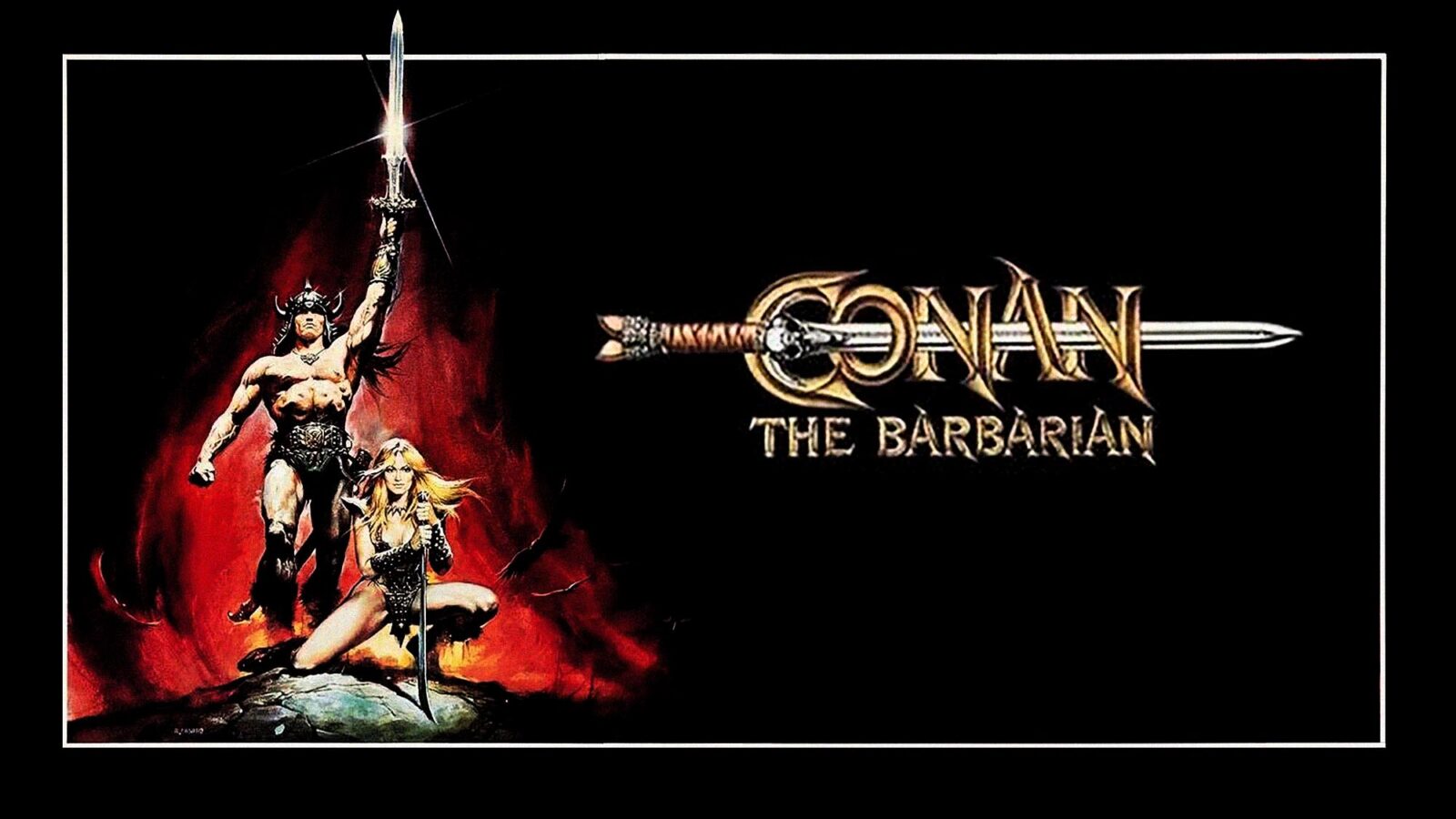
Conan the Barbarian
Conan the Barbarian was filmed primarily across Spain, where deserts, mountains and forests were combined to create the different regions of Conan's world.

Game of Thrones
Game of Thrones was built from a wide range of real locations, with Northern Ireland serving as the main production base.

Indiana Jones and the Last Crusade
Indiana Jones and the Last Crusade was filmed across six countries, featuring iconic spots like Petra in Jordan, the Tabernas Desert and Monsul Beach in Spain, and Venice, Italy.
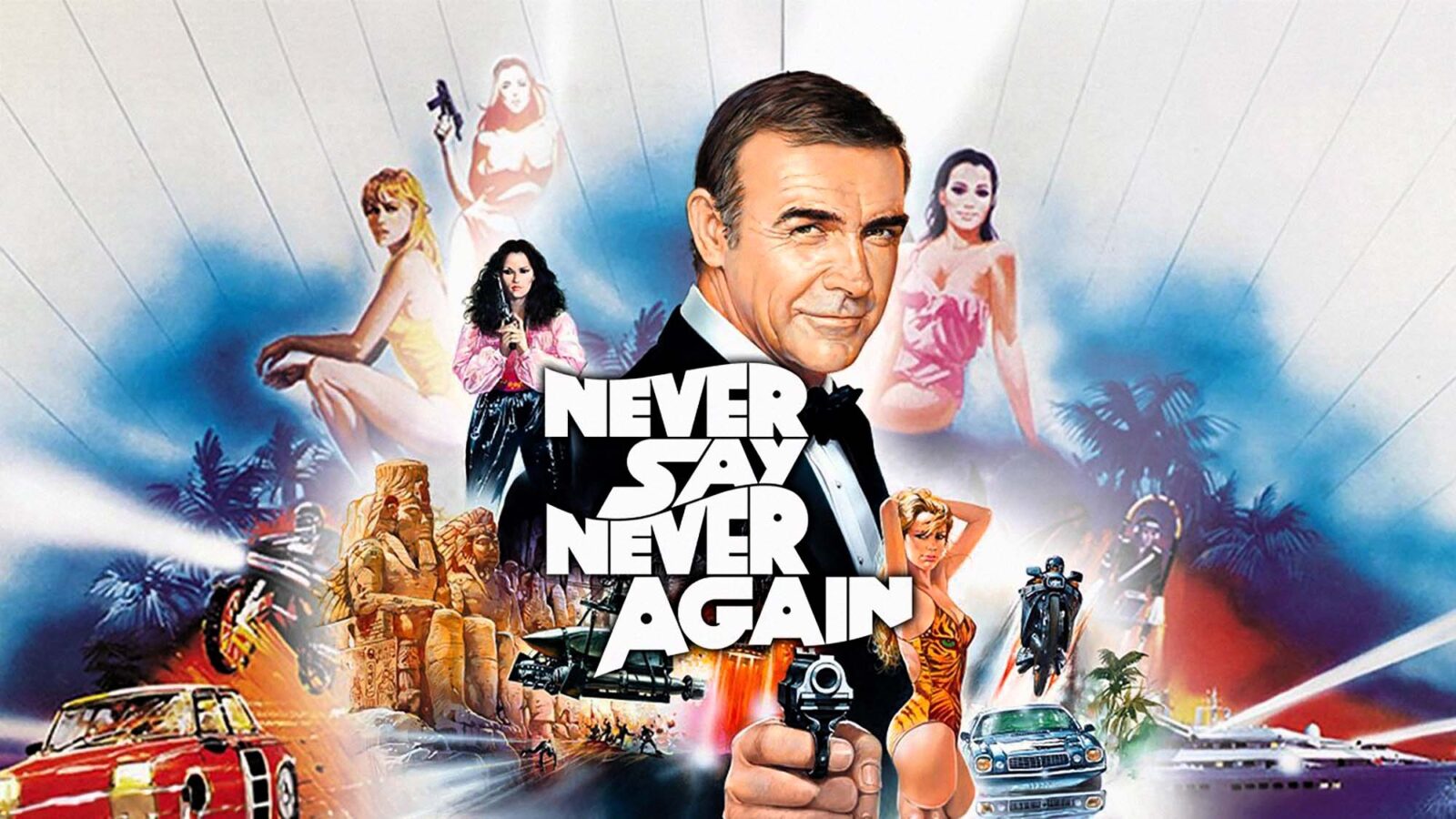
Never Say Never Again
Never Say Never Again (1983) was filmed extensively on the French Riviera, in the Bahamas and in England, with additional filming in Spain and Florida.
Escuela de Arte de Almería
Escuela de Arte de Almería is in Catlow, Indiana Jones and the Last Crusade, El Ingenio, Die Akte General, Amanece and Lee Cronin’s The Mummy.
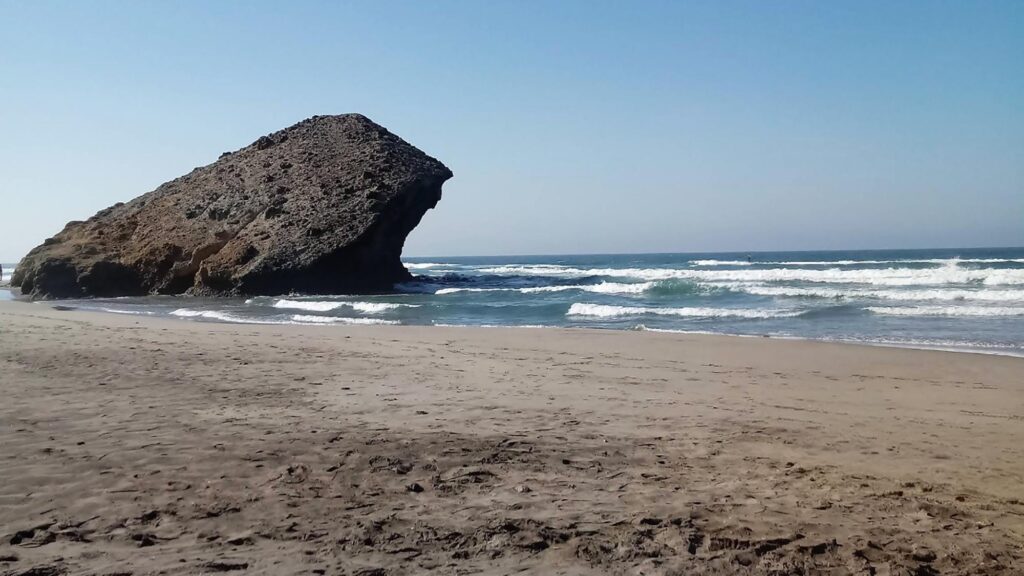
Mónsul Beach
Mónsul Beach appears in Indiana Jones and the Last Crusade, The NeverEnding Story, The Adventures of Baron Munchausen, Antony and Cleopatra, and Shalako.
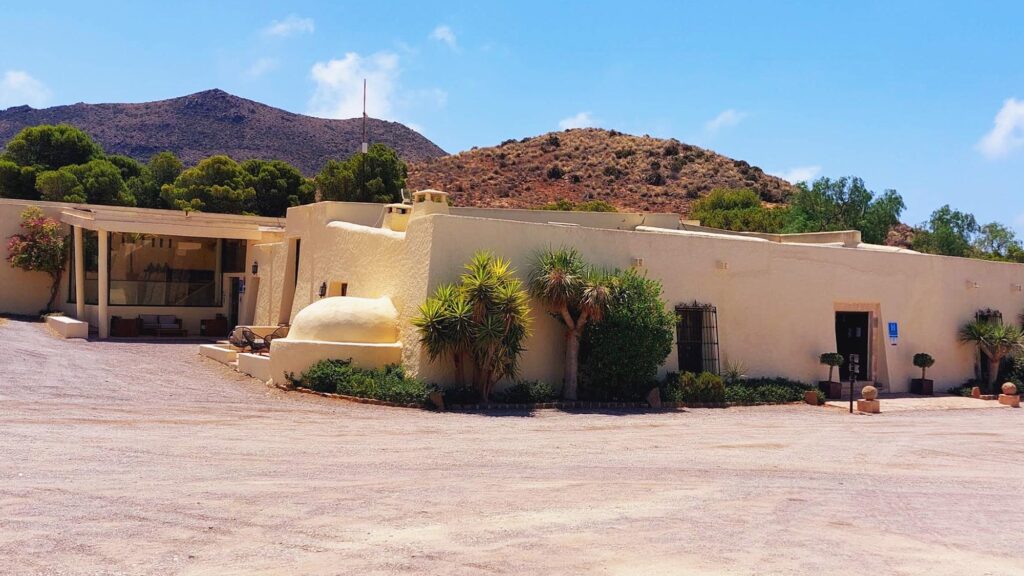
Cortijo El Sotillo
Cortijo El Sotillo has been used in A Fistful of Dollars (1964), Desafío en Río Bravo (1964), Johnny Yuma (1966) and "Day of Anger" (1967).
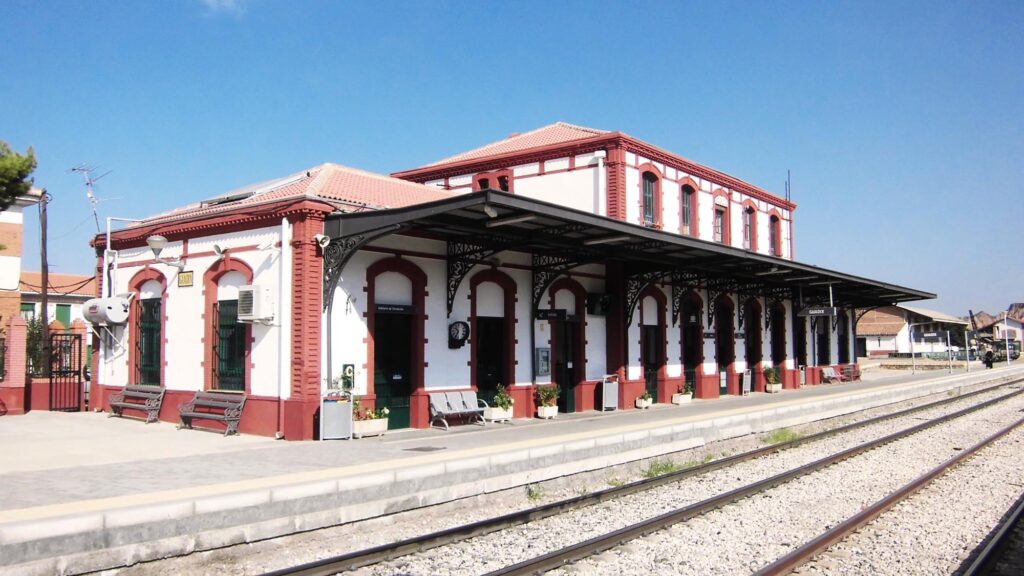
Guadix Railway Station
Guadix Railway Station has appeared in North West Frontier, Doctor Zhivago, A Bullet for the General, Indiana Jones and the Last Crusade, and many more.
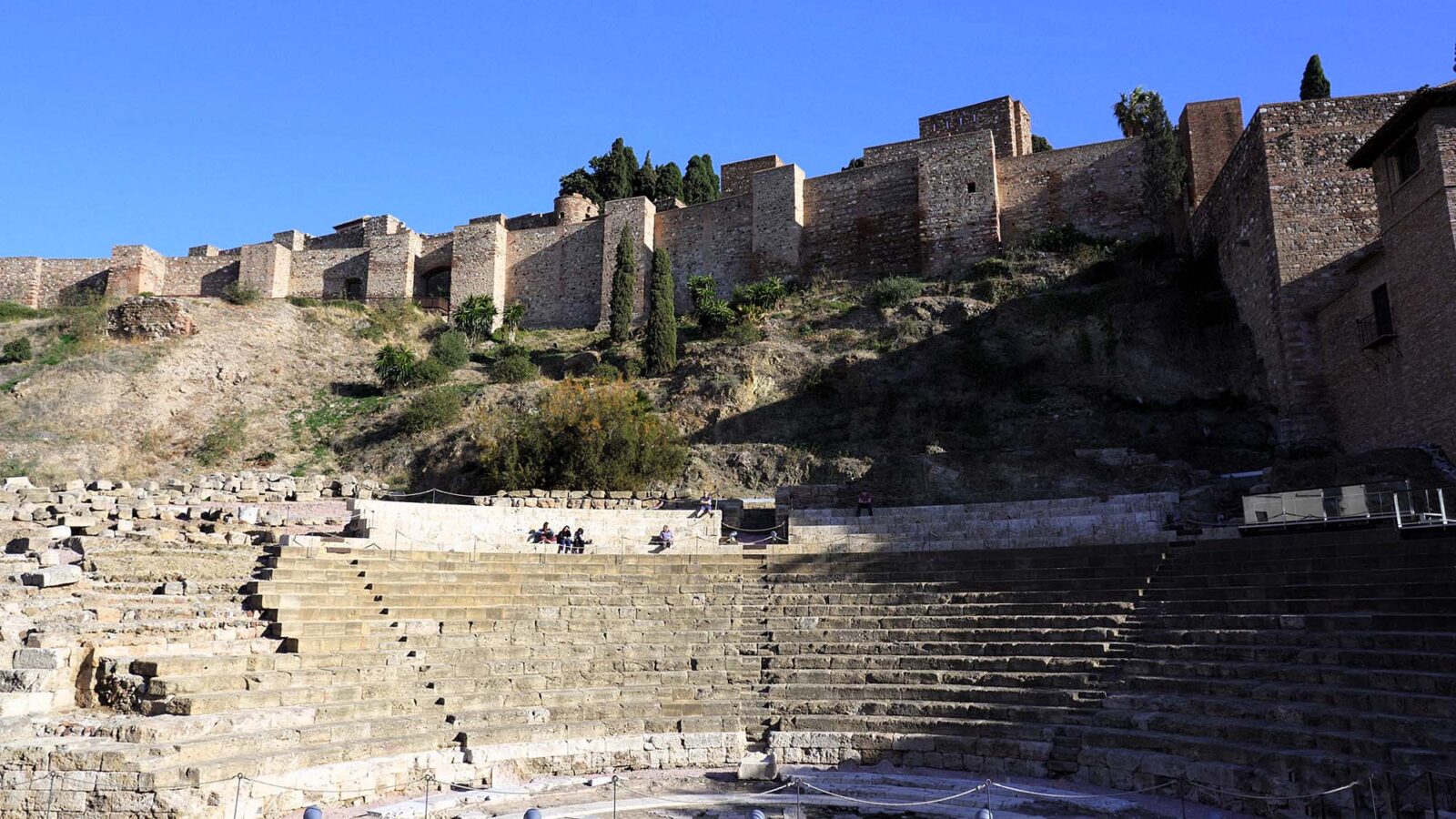
Alcazaba of Málaga
The Alcazaba of Málaga has appeared in Operation Cabaret (1967), Soldier of God (2005) and Nefissa (2016).
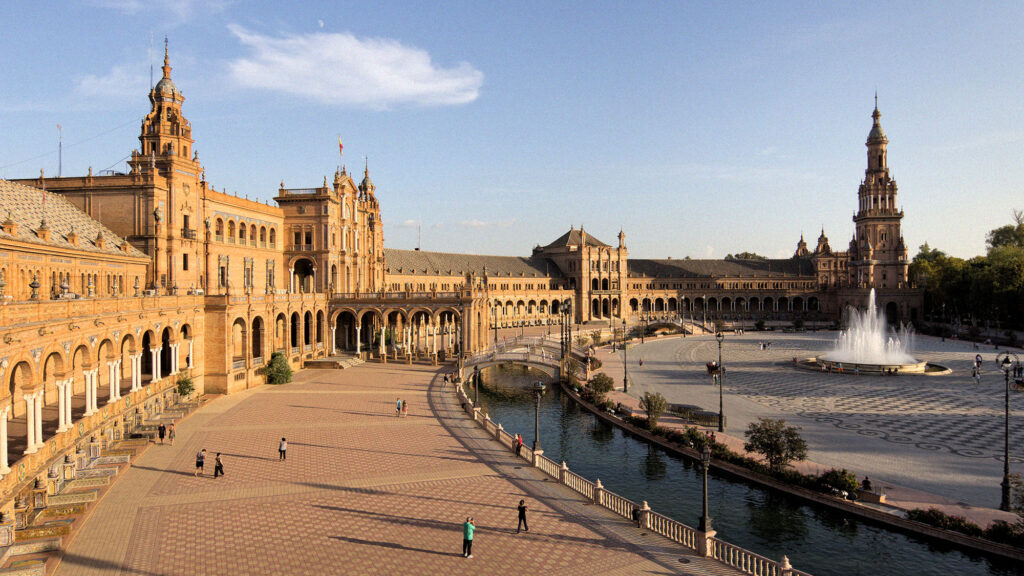
Plaza de España
The Plaza de España has been used as a filming location, including scenes for Lawrence of Arabia and Star Wars: Episode II – Attack of the Clones.
Palácio Estoril Hotel
Palácio Estoril Hotel has appeared in Dois Dias no Paraíso (1957), On Her Majesty’s Secret Service (1969) and The Easy Way (2008).
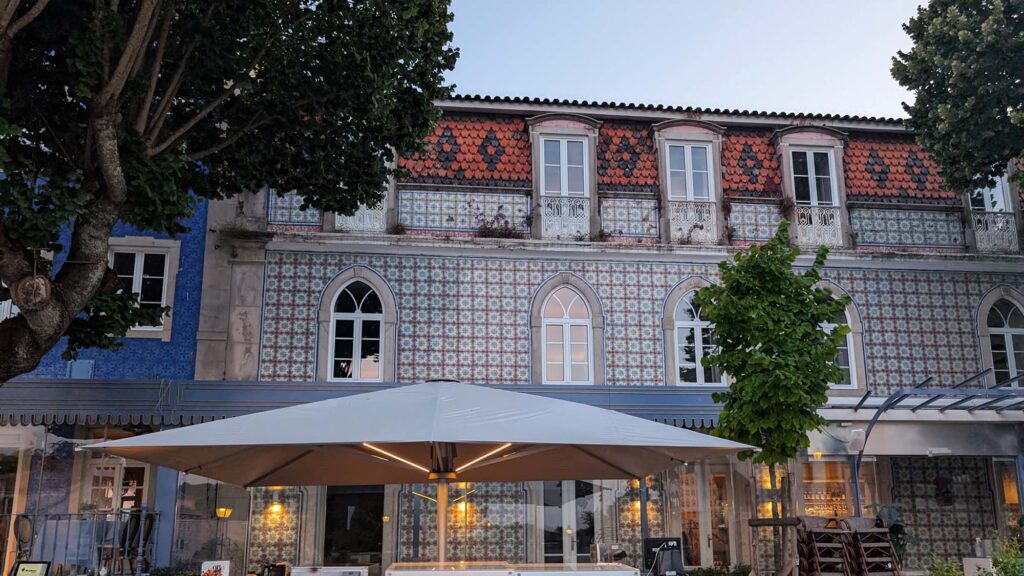
Central Hotel
Central Hotel appears in The Ninth Gate. The film uses several Sintra locations during Dean Corso’s search for the authentic copy of the book he is after.
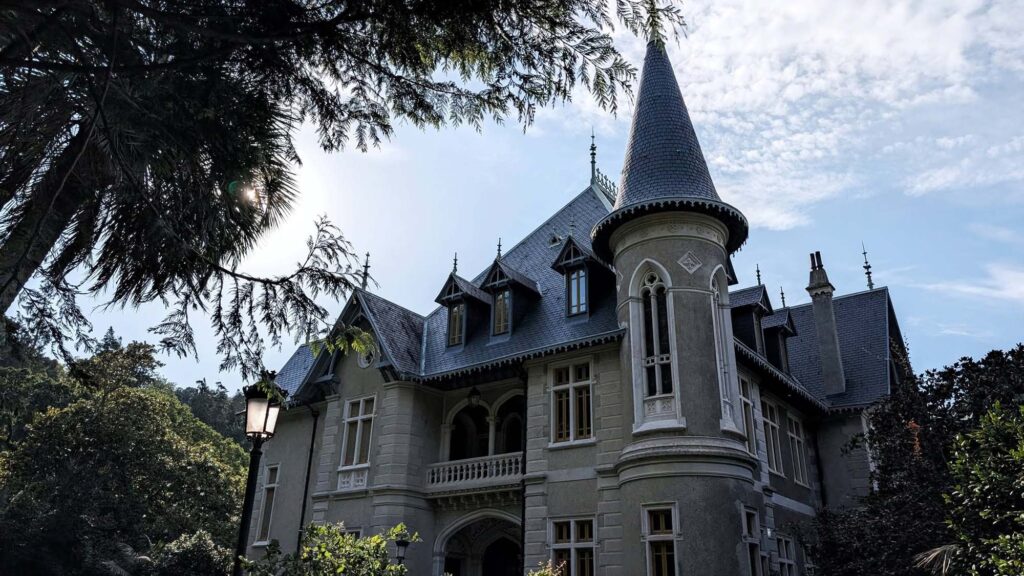
Biester Palace
Biester Palace appears in The Ninth Gate (1999). It is used for the scenes at Victor Fargas’s residence, where Dean Corso visits during his investigation.