
Sean Connery (25 August 1930 – 31 October 2020) was a Scottish actor best known for originating the role of James Bond in Dr. No (1962) and portraying the British secret agent in seven films between 1962 and 1983. Born Thomas Sean Connery at the Royal Maternity Hospital in Edinburgh, Scotland, he grew up in the working-class Fountainbridge district of the city. His father, Joseph Connery, worked as a factory labourer and lorry driver, while his mother, Euphemia “Effie” McLean, was a cleaner. Connery’s family had roots in both Scotland and Ireland. His paternal great-grandparents came from County Wexford in Ireland, while his mother’s ancestry included Gaelic-speaking families from Fife and the Isle of Skye. He grew up with his younger brother Neil in a modest tenement flat at 176 Fountainbridge, a building that has since been demolished.
Connery attended Darroch Secondary School in Edinburgh but left formal education at an early age to help support his family. Among his first jobs was delivering milk for the St. Cuthbert’s Co-operative Society, making rounds through residential neighbourhoods and institutions around Edinburgh. One of the buildings on his route was Fettes College, the prestigious private school that would later become part of the fictional biography of James Bond in Ian Fleming’s novels. The geographical coincidence became particularly notable after Connery was cast as Bond, a character whose Scottish background Fleming developed further during the 1960s.
At sixteen, Connery enlisted in the Royal Navy, although his service ended prematurely when he was medically discharged. Returning to Edinburgh, he worked in several occupations, including as a bricklayer, lifeguard at Portobello swimming pool and model at Edinburgh College of Art. He also developed an interest in bodybuilding, training regularly and eventually entering the Mr. Universe competition in London in 1953. During his visit to London, he heard about auditions for a stage production of South Pacific and secured a place in the chorus. The production introduced him to professional theatre and took him on tour around Britain. He subsequently worked in repertory theatre and appeared in small film and television roles before establishing himself as an actor.
One of his first substantial international film roles came in Walt Disney’s Darby O’Gill and the Little People (1959), in which he played Michael McBride, a young Irishman who falls in love with the title character’s daughter. Although the film depicts rural Ireland, it was shot entirely in California. The Irish village and its surrounding countryside were recreated at Walt Disney Studios in Burbank, with additional exterior filming at Albertson Ranch near Agoura and Rowland V. Lee Ranch in the San Fernando Valley. Elaborate sets and forced-perspective effects were used to create the illusion of an Irish landscape populated by leprechauns. It was Connery’s first American film production, several years before he became internationally famous.
His breakthrough came when producers Albert R. Broccoli and Harry Saltzman selected him to play James Bond in Dr. No (1962), directed by Terence Young. The film was shot partly at Pinewood Studios in Buckinghamshire, England, and extensively on location in Jamaica. Kingston provided the urban setting, while the north coast around Ocho Rios was used for several important sequences. The fictional island of Crab Key was represented by locations along the Jamaican coastline, including Pearly Beach, while Dunn’s River Falls appeared during Bond and Honey Ryder’s journey across the island. Jamaica was also closely associated with James Bond creator Ian Fleming, who wrote the original novels at his Goldeneye estate near Oracabessa.
Connery returned as Bond in From Russia with Love (1963), which took the production to Istanbul, Turkey. The historic Basilica Cistern beneath the city was used for the sequence in which Bond and Kerim Bey investigate the Soviet consulate through an underground passage. Other prominent locations included Hagia Sophia, the Grand Bazaar and Sirkeci railway station, the historic European terminus of the Orient Express. The railway station was also used to represent stations elsewhere in the former Yugoslavia. Additional filming took place in Venice, Italy, while sections of the train journey and the concluding action sequences were filmed in Scotland and Switzerland. Although the story moves across several European countries, much of the production was completed at Pinewood Studios.
Goldfinger (1964) became one of Connery’s most geographically recognisable Bond films. Its famous golf match between Bond and Auric Goldfinger was filmed at Stoke Park near Stoke Poges in Buckinghamshire, while the car chase involving Bond’s Aston Martin DB5 used roads around the Furka Pass and Andermatt in the Swiss Alps. The Pilatus aircraft factory at Stans represented Goldfinger’s industrial complex. The film opens in Miami Beach, Florida, with the Fontainebleau Hotel providing the setting for Bond’s encounter with Goldfinger. However, Connery himself did not film at the Miami hotel. His scenes were recreated at Pinewood Studios, with footage shot in Florida incorporated into the finished film. The climactic Fort Knox sequences followed a similar approach, combining exterior footage from Kentucky with elaborate interiors constructed in England.
Connery returned to the Caribbean for Thunderball (1965), which was filmed extensively around Nassau and Paradise Island in the Bahamas. The production became particularly notable for its underwater photography, with elaborate action scenes staged in the clear waters surrounding New Providence Island. Nassau Harbour, coastal roads and several waterfront properties were incorporated into the film. Two years later, You Only Live Twice (1967) took the Bond series to Japan. Filming locations included Tokyo, where the Hotel New Otani appeared as the headquarters of Japanese intelligence chief Tiger Tanaka, and Himeji Castle in Hyōgo Prefecture, which was used as the setting for a ninja training facility. The production also visited Kagoshima Prefecture on the island of Kyushu, where coastal landscapes were used for scenes connected to the villain’s hidden base.
Connery temporarily left the Bond series after You Only Live Twice but returned for Diamonds Are Forever (1971). The production was largely associated with Las Vegas, Nevada, where Bond investigates a diamond-smuggling operation. Filming took place at several casinos and hotels, including Circus Circus, the Tropicana, the Riviera and the Las Vegas Hilton, which represented the fictional Whyte House hotel. The film also used downtown Las Vegas streets and the surrounding Nevada desert. Its European opening included scenes in Amsterdam, where canals and historic buildings provided an alternative to the American locations that dominate the later part of the film.
Away from Bond, Connery worked with Alfred Hitchcock on Marnie (1964), portraying wealthy publisher Mark Rutland opposite Tippi Hedren. Although much of the production was completed at Universal Studios in California, the film incorporated locations in Pennsylvania, New Jersey and Virginia. Philadelphia’s 30th Street Station appeared in the film, while the Atlantic City Race Course at Mays Landing, New Jersey, was used for the horse-racing sequences. The Red Fox Inn in Middleburg, Virginia, also appeared as a hotel visited by Marnie, while countryside around Unionville in Pennsylvania was used for the Rutland estate.
Connery subsequently starred in John Boorman’s unusual science fiction film Zardoz (1974), which was filmed almost entirely in County Wicklow, Ireland. The production used Ardmore Studios in Bray as its main base, while exterior locations included Luggala Estate near Lough Tay, Glencree, Brittas Bay and a property at Kilmacanogue later used as Brennanstown Riding School. The landscapes of the Wicklow Mountains became the setting for a distant future Earth divided between primitive societies and an isolated community of immortals. Connery stayed in Bray during filming, returning to Ireland in a role far removed from the sophistication of James Bond.
His collaboration with Michael Caine in John Huston’s The Man Who Would Be King (1975) took him to North Africa. Based on Rudyard Kipling’s story, the film follows two former British soldiers who establish themselves as rulers of the fictional kingdom of Kafiristan, located beyond the frontiers of British India. The production recreated this remote Central Asian landscape primarily in Morocco, using the High Atlas Mountains, Todgha Gorge, Ouarzazate and the historic fortified village of Aït Benhaddou. The Todgha Gorge stood in for the Khyber Pass, while mountain scenes were also filmed around Chamonix in the French Alps. Interior scenes were completed at Pinewood Studios in England.
Connery played an ageing Robin Hood opposite Audrey Hepburn in Robin and Marian (1976), directed by Richard Lester. Although the story takes place in medieval England, the production was filmed largely in northern Spain. The fortified town of Artajona in Navarre represented Nottingham, while the Sierra de Urbasa stood in for Sherwood Forest. Villalonso Castle in the province of Zamora was used for scenes involving a medieval fortress. The production also filmed in the forests and countryside surrounding Pamplona, making extensive use of Spanish landscapes to recreate the legendary English setting.
In Richard Attenborough’s war epic A Bridge Too Far (1977), Connery portrayed Major General Roy Urquhart during Operation Market Garden in the Netherlands. The film used actual Dutch towns and landscapes associated with the Second World War campaign, although several locations stood in for places farther away. The historic Wilhelmina Bridge in Deventer represented the bridge at Arnhem, where British paratroopers attempted to secure a vital crossing over the Rhine. Other filming took place around Nijmegen, Grave and several smaller communities in the provinces of Gelderland and North Brabant. The production transformed streets and bridges into wartime environments using military vehicles, temporary structures and large numbers of extras.
Connery returned to Ireland for The First Great Train Robbery (1978), directed by Michael Crichton and set in Victorian England. The film made extensive use of historic Irish railway infrastructure. Heuston Station in Dublin represented London Bridge railway station, while Kent Station in Cork portrayed Brighton. Several railway sequences were filmed along the former Mullingar–Athlone railway line, including around Moate and Castletown Geoghegan. Connery performed part of the action himself on the roof of a moving train, with restored nineteenth-century steam locomotives providing the period setting. Trinity College Dublin was also used for the film’s concluding scenes.
He returned to James Bond one final time in Never Say Never Again (1983), a production outside the official Eon Productions series and a loose remake of Thunderball. Filming again took place in the Bahamas, including Nassau and Clifton Pier, where underwater sequences were staged. The film also made extensive use of the French Riviera. Fort Carré in Antibes represented the villain’s fortified residence, while Villefranche-sur-Mer provided harbour scenes and the setting for Bond’s waterfront villa. A motorcycle chase was filmed around the narrow streets of Menton, and the famous Casino de Monte-Carlo in Monaco appeared during the gambling sequences. Other filming locations included Luton Hoo in Bedfordshire, England, which represented the Shrublands health retreat, and studio facilities at Elstree.
Connery’s career took him back to his native Scotland for the fantasy adventure Highlander (1986), starring Christopher Lambert. Although the film moves between sixteenth-century Scotland and modern New York, several of its most recognisable sequences were filmed in the Scottish Highlands. Eilean Donan Castle near Dornie represented the ancestral home of Clan MacLeod, while Glen Coe provided the mountainous setting for battles and scenes involving Connery’s character Juan Sánchez-Villalobos Ramírez. The cottage where Ramírez trains Connor MacLeod was constructed beneath the mountains near Glencoe Gorge. Other filming took place around Loch Shiel and the Isle of Skye. The modern New York sequences combined locations in Manhattan and New Jersey with interiors filmed in London, demonstrating the film’s considerable geographical range.
In The Name of the Rose (1986), based on Umberto Eco’s novel, Connery portrayed Franciscan friar William of Baskerville investigating mysterious deaths at a medieval monastery in northern Italy. Director Jean-Jacques Annaud used several historic European locations to create the fictional abbey. Eberbach Abbey, a former Cistercian monastery near Eltville in Germany’s Rheingau region, provided important interior scenes, including the abbey church. The mountainous landscapes of Abruzzo in central Italy, particularly around Campo Imperatore and Rocca Calascio, supplied the harsh scenery surrounding the monastery. The main abbey exterior was an elaborate set constructed near Rome, with additional studio work at Cinecittà. Connery’s performance earned him the BAFTA Award for Best Actor.
Connery won the Academy Award for Best Supporting Actor for his portrayal of Irish-American police officer Jimmy Malone in Brian De Palma’s The Untouchables (1987). Set in Chicago during Prohibition, the film made extensive use of the city’s historic architecture. Locations included the Rookery Building, Chicago Cultural Center, Blackstone Hotel and Chicago Union Station, where the famous staircase shootout was filmed. The interior of the Chicago Theatre represented part of Al Capone’s residence, while Roosevelt University’s Auditorium Building provided the exterior and lower lobby of the fictional Lexington Hotel. For the sequence involving a raid on liquor smugglers at the Canadian border, the production travelled to Montana, where the Hardy Bridge over the Missouri River near Cascade stood in for an international border crossing.
In Indiana Jones and the Last Crusade (1989), Connery played Professor Henry Jones Sr., the father of Harrison Ford’s archaeologist adventurer. The production travelled across Europe, North Africa and the Middle East, using several historic buildings and landscapes. In Venice, Italy, the Church of San Barnaba provided the exterior of the fictional library where Indiana Jones investigates the location of the Holy Grail. Bürresheim Castle near Mayen in West Germany represented the Austrian fortress where Henry Jones is imprisoned, while scenes involving the Nazi rally were filmed at Stowe School in Buckinghamshire, England. The desert tank chase was shot in Almería, Spain, and the ancient Treasury building at Petra in Jordan became the exterior of the Grail temple. Although Petra supplied the spectacular façade, the temple interiors were constructed at Elstree Studios in England.
Connery subsequently portrayed Soviet submarine captain Marko Ramius in The Hunt for Red October (1990). Despite the film’s Cold War setting and extensive submarine action, most interiors were built on sound stages at Paramount Studios in Los Angeles. Hydraulic platforms simulated the movement of submarines at sea, while additional scenes used naval facilities in San Diego, California, and Port Angeles, Washington. The production also filmed around Port Valdez in Alaska and Lake James in North Carolina. Liverpool in England supplied some of the scenes representing Moscow, another example of a city standing in for a location far from the actual filming site.
A more direct connection to Russia followed in The Russia House (1990), in which Connery starred opposite Michelle Pfeiffer. The adaptation of John le Carré’s novel became one of the first major American productions to film extensively in the Soviet Union. Filming began in Leningrad, now Saint Petersburg, in October 1989, with locations including the State Hermitage Museum. The production then moved to Moscow, filming around Red Square, the Kremlin, GUM department store and several historic hotels. Additional scenes were shot in Lisbon, Portugal, London and near Vancouver in Canada. The production took place during Mikhail Gorbachev’s policy of glasnost, which made filming in Soviet cities considerably more accessible to Western productions.
Connery played King Arthur in First Knight (1995), which recreated the legendary kingdom of Camelot using landscapes and historic buildings in Wales and England. Extensive exterior filming took place around Trawsfynydd and Harlech in Gwynedd, North Wales, where a large castle set was constructed beside the water. Other locations included Black Park and Burnham Beeches in Buckinghamshire, while St Albans Cathedral in Hertfordshire was used for interior scenes involving the royal wedding. Connery subsequently voiced the dragon Draco in Dragonheart (1996), a film shot in Slovakia at locations including Spiš Castle, Čachtice Castle and the Slovak Paradise region. Although he supplied Draco’s voice rather than appearing physically at these locations, the film provided another example of Central European landscapes being used to create a fictional medieval kingdom.
In Michael Bay’s The Rock (1996), Connery portrayed former British intelligence operative John Patrick Mason, who joins Nicolas Cage’s character in a mission to stop a terrorist threat on Alcatraz Island in San Francisco Bay. Much of the film was shot at the actual former prison, with the production using cellblocks, corridors, exercise areas and other parts of the island. The National Park Service allowed access to several areas normally closed to visitors, including buildings that required hazardous-material cleanup before filming. Additional San Francisco locations included the Palace of Fine Arts, where Mason meets his estranged daughter, and the Fairmont Hotel on Nob Hill. The elaborate underground tunnels and underwater passages, however, were recreated at Sony Pictures Studios in Culver City, using a large water tank originally constructed during the MGM era.
Connery returned to Scotland for Entrapment (1999), starring opposite Catherine Zeta-Jones. In the film, his character Robert MacDougal lives in an isolated Scottish castle, represented by locations including Duart Castle on the Isle of Mull and Eilean Donan Castle near Dornie. The production also filmed around London, using buildings such as Lloyd’s of London and the Savoy Hotel, before travelling to Kuala Lumpur, Malaysia. The Petronas Twin Towers became the central setting for the film’s climactic theft, with filming around the towers and nearby railway infrastructure. The production used Bukit Jalil LRT station to represent another station in Kuala Lumpur, with additional scenes completed at Pinewood Studios.
In Finding Forrester (2000), directed by Gus Van Sant, Connery portrayed William Forrester, a reclusive writer living in the Bronx, New York. Unlike many of his internationally filmed productions, the film made extensive use of actual New York neighbourhoods. The exterior of Forrester’s apartment building was filmed at 299 East 158th Street in the Bronx, while Regis High School on East 84th Street in Manhattan represented parts of the prestigious private school attended by the young protagonist. The General Theological Seminary in Chelsea provided classroom interiors. Additional photography took place in Toronto and Hamilton, Ontario, where some interiors and sporting facilities substituted for New York locations.
His final major live-action film was The League of Extraordinary Gentlemen (2003), in which he portrayed the fictional adventurer Allan Quatermain. Although the story travels through Victorian London, Paris, Venice and other European cities, much of the production was based in Prague, Czech Republic. The library of Strahov Monastery was used for the introduction of the League, while the former ČKD industrial complex in Vysočany was transformed into elaborate streets and waterfront sets representing several European cities. Olšany Cemetery provided the setting for another important scene, while additional filming took place on the island of Gozo in Malta. The film’s difficult production contributed to Connery’s decision to withdraw from major screen acting.
Outside the film industry, Connery maintained homes and business interests in several countries. He was particularly associated with the French Riviera and the Mediterranean coast of Spain. One of his best-known residences was Le Roc Fleuri, a large villa overlooking the Mediterranean in Nice, France. The property became informally known as the James Bond villa because of its association with the actor. In Marbella, Spain, Connery and his second wife, French-Moroccan artist Micheline Roquebrune, owned a beachfront villa known as Casa Malibu. The couple lived in the area for many years before selling the property in the late 1990s. The villa was subsequently demolished and replaced by an apartment development, which later became the subject of a Spanish investigation into alleged planning irregularities.
Connery also had a substantial involvement in property development in Provence. In 1979, he acquired the Domaine de Terre Blanche estate near Tourrettes in the Var department of southern France. The property covered approximately 266 hectares and included woodland and a historic château. A keen golfer, Connery envisioned developing the land into a golf destination and began preliminary work, although the project was not completed during his ownership. The property was sold in 1999 and subsequently developed under German businessman Dietmar Hopp into the Terre Blanche Hotel Spa Golf Resort, which opened in 2004. The complex eventually included two golf courses, a luxury hotel, spa facilities and private residences.
In later life, Connery settled primarily in the Bahamas, where he owned a home in the Lyford Cay community on New Providence Island, west of Nassau. The country had a long association with his career, beginning with the filming of Thunderball in 1965 and continuing with Never Say Never Again nearly two decades later. He also maintained property interests elsewhere, including Greece, where he owned a villa near Kranidi in the Peloponnese.
Connery was married to Australian actress Diane Cilento from 1962 until 1973, and they had one son, actor Jason Connery, born in London in 1963. He married Micheline Roquebrune in 1975, and the couple remained together for the rest of his life. Despite living abroad for much of his career, Connery retained strong connections to Scotland. He was awarded the Freedom of the City of Edinburgh in 1991 and was knighted by Queen Elizabeth II at the Palace of Holyroodhouse in Edinburgh on 5 July 2000. He also supported the establishment of the Scottish International Education Trust, which provided educational assistance to talented young Scots.
Connery died in his sleep at his home in Lyford Cay, Bahamas, on 31 October 2020, aged 90. His remains were cremated, and his widow subsequently announced that his ashes would be scattered in both the Bahamas and Scotland, in accordance with his wishes. In August 2022, members of his family scattered ashes at undisclosed locations in Scotland, marking what would have been his 92nd birthday. There is consequently no conventional public grave associated with the actor, although Edinburgh remains closely connected with his early life through Fountainbridge, the former neighbourhood where he grew up, and other locations associated with his journey from an Edinburgh milkman to one of the most recognisable figures in international cinema.

Diamonds Are Forever
Diamonds Are Forever was primarily filmed in Las Vegas and Palm Springs, California, with additional scenes in Amsterdam, London, and at Pinewood Studios.

Dragonheart
Dragonheart was shot primarily in Slovakia, and its locations are a major reason why the medieval setting feels so convincing.

From Russia with Love
From Russia with Love (1963) was primarily filmed on location in Istanbul, Turkey, with significant scenes shot in Scotland, Venice, and at Pinewood Studios.
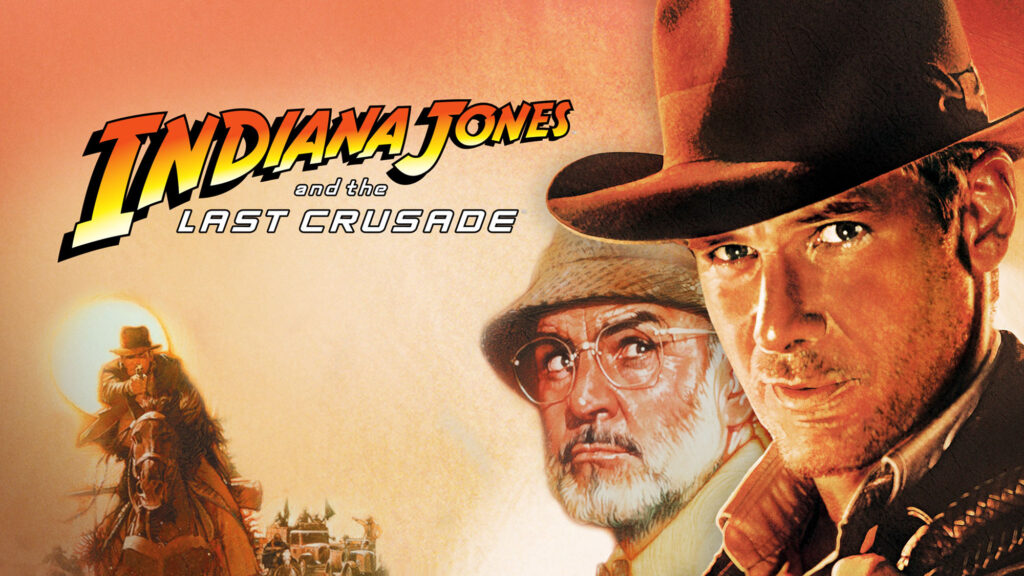
Indiana Jones and the Last Crusade
Indiana Jones and the Last Crusade was filmed in Spain, England, Italy, West Germany, Jordan and the United States.
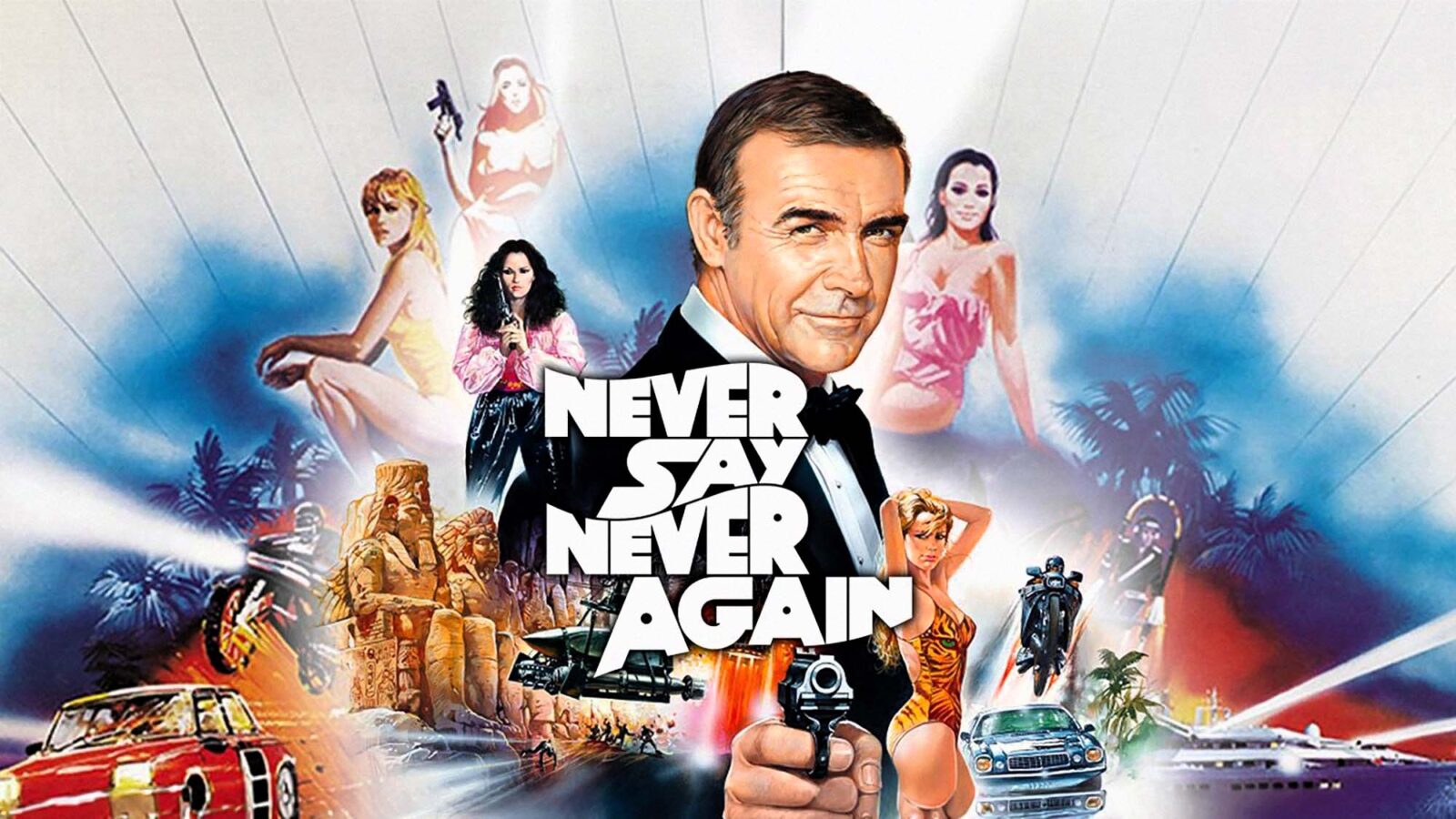
Never Say Never Again
Never Say Never Again (1983) was filmed extensively on the French Riviera, in the Bahamas and in England, with additional filming in Spain and Florida.
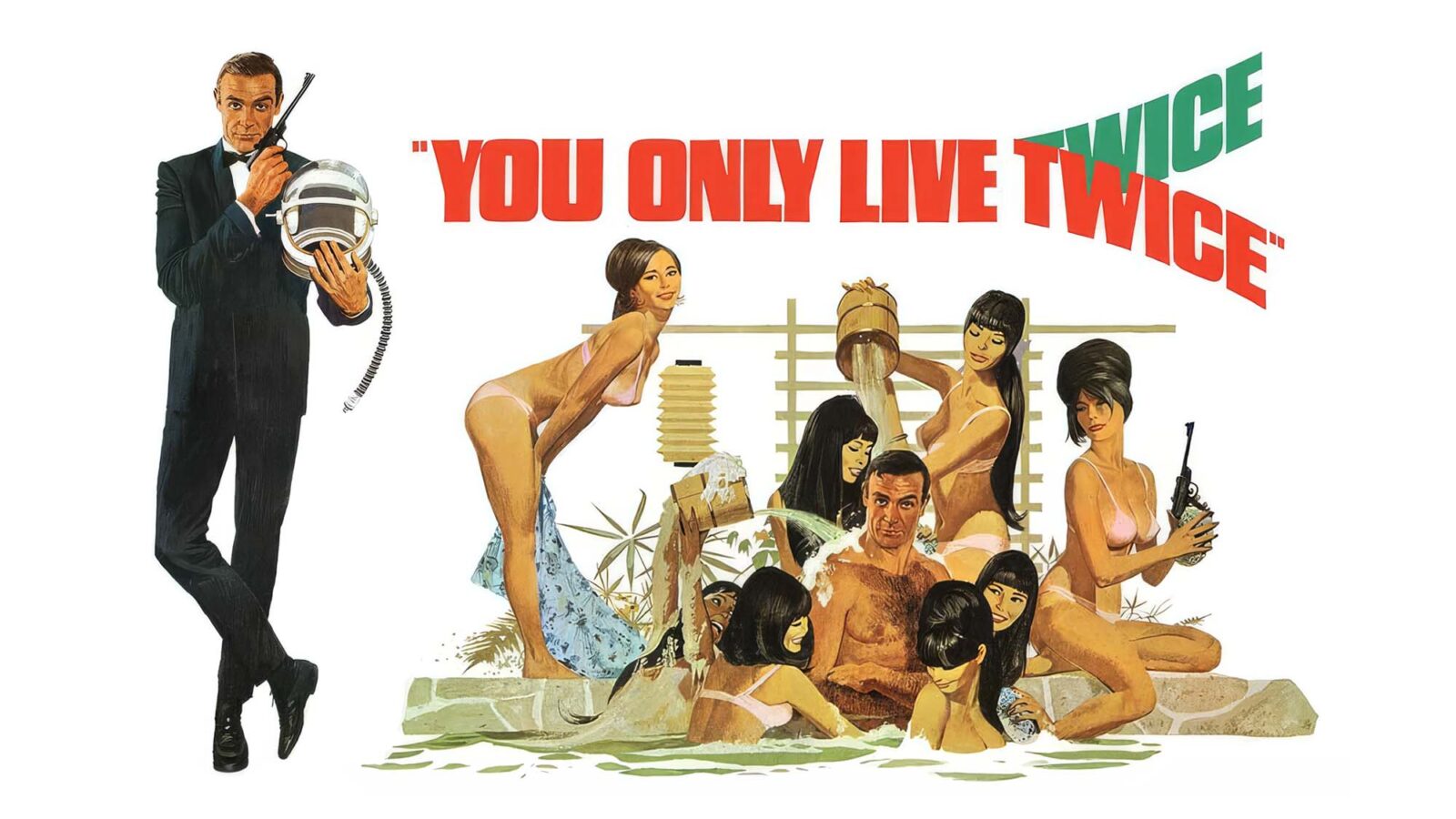
You Only Live Twice
You Only Live Twice (1967) was filmed primarily in Japan, with additional work in Hong Kong, the Bahamas, Spain and at Pinewood Studios in England.