
Steven Spielberg is an American film director, producer and screenwriter born on 18 December 1946 in Cincinnati, Ohio. He is the eldest of four children born to Arnold Spielberg, an electrical engineer involved in the early development of computers, and Leah Posner, a concert pianist who later became a restaurateur. His grandparents were Jewish immigrants from Eastern Europe, particularly areas of present-day Ukraine, and the family maintained strong connections to its religious and cultural heritage. Spielberg spent his earliest years in Cincinnati before the family moved to Haddon Township, New Jersey, in 1952, following his father’s employment with the Radio Corporation of America. They relocated again in 1957, settling in the Phoenix metropolitan area of Arizona, where Spielberg spent much of his adolescence. These frequent moves disrupted his education and friendships, while his experiences of antisemitic bullying contributed to a sense of isolation that he would later explore in his films.
Spielberg developed an interest in filmmaking as a child, using his father’s 8 mm camera to make short films with relatives and neighbourhood friends. His earliest experiments included staging miniature train crashes and recreating scenes from the war films and Westerns he enjoyed watching. As a Boy Scout in Arizona, he made a short Western called The Last Gunfight to fulfil the requirements for a photography merit badge, discovering that motion pictures interested him more than conventional still photography. He subsequently made increasingly ambitious amateur productions, often organising groups of local teenagers to act in them. While attending Arcadia High School in Phoenix, he completed Firelight (1964), a feature-length science-fiction film involving unexplained lights and extraterrestrial visitors. The production was financed largely by his father and screened for one evening at the Phoenix Little Theatre on 24 March 1964. Friends and family helped sell tickets, and Spielberg later recalled that the screening made a profit of approximately one dollar. Although almost all of Firelight has been lost, its subject matter anticipated the fascination with extraterrestrial contact that would become a recurring element of his professional work.
In 1964, Spielberg’s family moved to Saratoga, California, south-west of San Jose, where he completed his education at Saratoga High School in 1965. His parents separated around this period and subsequently divorced, with Spielberg moving to Los Angeles to live with his father while his mother and three younger sisters remained in Northern California. After being rejected by the University of Southern California’s film programme, he enrolled at California State College, Long Beach, later renamed California State University, Long Beach. During his studies, Spielberg became increasingly involved with Universal Studios in Universal City, initially spending time around its editing facilities and observing professional productions. In 1968, he wrote and directed Amblin’, a short film about two young hitchhikers travelling through the California desert. Shot on 35 mm film, it attracted the attention of Universal executive Sidney Sheinberg, who offered Spielberg a seven-year television directing contract. Spielberg left university before completing his degree, although he eventually returned to his studies and received his bachelor’s degree in 2002.
Spielberg’s first professional directing assignment was a segment of the television film Night Gallery (1969), created by Rod Serling and starring Joan Crawford. He subsequently directed episodes of television series including Marcus Welby, M.D. and Columbo, gaining experience with professional actors, production schedules and studio crews. His major breakthrough in television came with Duel (1971), a suspense thriller starring Dennis Weaver as a motorist terrorised by an apparently murderous truck driver. The film was shot on roads in Southern California, particularly around the Santa Clarita Valley, including Soledad Canyon and the surrounding desert highways. Produced for ABC television, Duel was subsequently expanded for international theatrical distribution and attracted considerable attention for its visual storytelling. Spielberg’s first feature made specifically for cinemas was The Sugarland Express (1974), starring Goldie Hawn and based on a real incident in Texas. Filming took place across the state, including San Antonio, Richmond, Floresville and the Sugar Land area. The production also marked the beginning of Spielberg’s long collaboration with composer John Williams, whose music would become closely associated with his films.
The success of The Sugarland Express brought Spielberg his next major opportunity, directing an adaptation of Peter Benchley’s novel Jaws. Released in 1975, the film became a turning point in his career and in the commercial development of American cinema. Principal photography began in May 1974 on Martha’s Vineyard, Massachusetts, where the island’s communities were transformed into the fictional resort of Amity. Edgartown provided the town centre and harbour, while Joseph Sylvia State Beach was used for major beach sequences. The fishing village of Menemsha accommodated the exterior set of Quint’s workshop, and the surrounding Atlantic waters became the setting for the shark-hunting expedition. Spielberg insisted on filming extensively at sea rather than relying entirely on controlled studio environments, a decision that contributed to repeated mechanical failures, unpredictable weather and serious scheduling difficulties. The malfunctioning mechanical shark forced him to suggest its presence through camera movement, editing and music rather than showing the creature continuously. Jaws became the highest-grossing film of its time and established Spielberg as a major Hollywood director while creating a model for the modern summer blockbuster.
Spielberg followed Jaws with Close Encounters of the Third Kind (1977), an original science-fiction drama starring Richard Dreyfuss and François Truffaut. The film drew on Spielberg’s longstanding fascination with unidentified flying objects and returned to ideas he had explored in Firelight. Production took place in several American states, most notably Wyoming, where Devils Tower became the location of the climactic encounter between humans and extraterrestrial visitors. The actual landing site and enormous spacecraft sets were constructed inside former aircraft hangars at Brookley Field in Mobile, Alabama, while additional sequences were filmed around Fairhope, Bay Minette and Los Angeles. Close Encounters earned Spielberg his first Academy Award nomination for Best Director. His next film, the wartime comedy 1941 (1979), was less successful, but he soon began collaborating with George Lucas on an adventure film inspired by the serials they had enjoyed during childhood. Raiders of the Lost Ark (1981), starring Harrison Ford as archaeologist Indiana Jones, took Spielberg to La Rochelle in France, Tunisia and Hawaii, with elaborate interiors constructed at Elstree Studios in Borehamwood, England. The film’s Egyptian settings were recreated around Kairouan and the Tunisian desert, while the South American opening sequence was filmed on the Hawaiian island of Kauai.
Spielberg’s interest in childhood, family relationships and science fiction came together in E.T. the Extra-Terrestrial (1982), which he developed with screenwriter Melissa Mathison. The story of a boy who befriends a stranded alien was partly influenced by Spielberg’s experiences following his parents’ separation. Unlike his earlier extraterrestrial production, the film was made largely within the Los Angeles area, using suburban locations in the San Fernando Valley, particularly Tujunga, Northridge and Porter Ranch. The exterior of Elliott’s house was filmed in Tujunga, while its interiors were recreated at the Culver Studios in Culver City. The film’s famous bicycle chase used residential streets around Porter Ranch, and its forest sequences were shot near Crescent City in Northern California. Spielberg worked with a cast dominated by children, including Henry Thomas and Drew Barrymore, and filmed much of the story chronologically to help the young performers follow the developing relationship with the alien character. E.T. became an enormous commercial success and received nine Academy Award nominations, including Best Picture and Best Director. During this period, Spielberg was also expanding his work as a producer. Alongside Kathleen Kennedy and Frank Marshall, he established Amblin Entertainment, which subsequently became involved in films including Gremlins (1984), The Goonies (1985) and Back to the Future (1985). These productions were directed by other filmmakers but helped establish Spielberg as an influential figure beyond his own directing work.
Spielberg returned to the Indiana Jones series with Indiana Jones and the Temple of Doom (1984), which was filmed in Sri Lanka and at Elstree Studios. During production, he developed a relationship with actress Kate Capshaw, who played nightclub singer Willie Scott. He was also involved with actress Amy Irving, whom he had met during the casting of Close Encounters of the Third Kind. Spielberg and Irving married in November 1985, several months after the birth of their son, Max, but divorced in 1989. Professionally, he was becoming increasingly interested in dramatic subjects outside the adventure genre. His adaptation of Alice Walker’s novel The Color Purple (1985), starring Whoopi Goldberg, Danny Glover and Oprah Winfrey, was filmed principally in North Carolina. The production recreated rural Georgia during the early twentieth century, using locations around Marshville, Wadesboro and Lilesville in Union and Anson counties. It received eleven Academy Award nominations, although Spielberg was not nominated for Best Director. He subsequently directed Empire of the Sun (1987), an adaptation of J. G. Ballard’s autobiographical novel about a British boy imprisoned during the Japanese occupation of China. Filming in Shanghai made Spielberg one of the first major American directors permitted to shoot extensively in the city after decades of restrictions. The production also used locations in Spain and England, including Elstree Studios, and introduced a young Christian Bale in his first major leading role.
Spielberg returned to adventure filmmaking with Indiana Jones and the Last Crusade (1989), reuniting Harrison Ford with the character and casting Sean Connery as his father. The production travelled through England, Spain, Italy and Jordan, with the ancient city of Petra providing the exterior of the Grail temple. Venice was used for several memorable sequences, including scenes around the church of San Barnaba and the city’s canals, while the elaborate interior of the temple was constructed at Elstree Studios. Spielberg subsequently directed Always (1989), a romantic fantasy involving aerial firefighters, before turning to the story of Peter Pan in Hook (1991), starring Robin Williams, Dustin Hoffman and Julia Roberts. Much of Hook was filmed on enormous sets constructed at Sony Pictures Studios in Culver City, formerly the MGM studios. By this stage, Spielberg had established a close professional relationship with several filmmakers and technicians, particularly editor Michael Kahn, composer John Williams and cinematographer Janusz Kamiński, who became his principal cinematographer beginning with Schindler’s List (1993).
Spielberg’s personal life also changed substantially during the early 1990s. He married Kate Capshaw on 12 October 1991 at their estate in East Hampton, New York, following her conversion to Judaism. The couple established a large blended family that eventually included seven children, with residences in Pacific Palisades, Los Angeles, and East Hampton on Long Island. Spielberg’s relationship with his Jewish heritage became more prominent during this period, influenced partly by his marriage and the family life he had established. His mother, Leah Adler, meanwhile operated the Milky Way, a kosher dairy restaurant on Pico Boulevard in Los Angeles, which had opened in the late 1970s and became a familiar gathering place for the city’s Jewish community. Although Spielberg maintained close connections with the entertainment industry in Los Angeles, his homes on the East Coast provided an additional geographical base away from Hollywood. His family life and experiences of fatherhood would increasingly influence both the subjects he chose to film and his decisions about how much time to spend working away from home.
In 1993, Spielberg released two films that represented markedly different sides of his career. Jurassic Park, adapted from Michael Crichton’s novel, was filmed in Hawaii and California, combining large mechanical dinosaurs with emerging computer-generated imagery. Its fictional island of Isla Nublar was represented primarily by Kauai, where the Manawaiopuna Falls in Hanapepe Valley became the setting for the characters’ helicopter arrival. Other sequences were filmed at Kualoa Ranch on Oahu, including the stampede of Gallimimus dinosaurs, while extensive interior sets were constructed at Universal Studios and Warner Bros. Studios in California. Filming in Hawaii was disrupted by Hurricane Iniki in September 1992, although the production was completed without the prolonged delays that had troubled Jaws. Jurassic Park became the highest-grossing film in cinema history at the time of its release, demonstrating the commercial possibilities of new visual-effects technology. Spielberg was already preparing an entirely different project, however, and spent much of the following year working in Poland on Schindler’s List (1993), a historical drama based on Thomas Keneally’s account of German industrialist Oskar Schindler and the Jewish workers he saved during the Holocaust.
Schindler’s List was Spielberg’s most personally significant production up to that point. Filming began in Kraków in March 1993, with Liam Neeson portraying Schindler, Ralph Fiennes playing concentration camp commandant Amon Göth and Ben Kingsley appearing as accountant Itzhak Stern. The production used numerous locations throughout the city, particularly the historic Jewish district of Kazimierz, whose streets and courtyards were transformed to represent the wartime Kraków Ghetto. The actual ghetto had been established across the Vistula River in Podgórze, but the older architecture of Kazimierz was better suited to the film’s reconstruction of the period. The exterior of Schindler’s enamel factory was filmed at the original factory complex on Lipowa Street, while the concentration camp at Płaszów was recreated in the nearby Liban Quarry. Spielberg also visited Auschwitz-Birkenau while researching the film, although the production constructed sets outside the former camp rather than staging dramatic scenes within the memorial site itself. Much of the film was shot in black and white, with Kamiński developing a visual approach intended to resemble historical documentary photography. Spielberg continued supervising post-production on Jurassic Park while working in Poland, an unusually demanding overlap between two large productions.
Schindler’s List won seven Academy Awards in 1994, including Best Picture and Best Director, giving Spielberg his first Oscars in both categories. The experience of filming in Kraków strengthened his commitment to documenting the Holocaust and preserving the experiences of survivors. In 1994, he established the Survivors of the Shoah Visual History Foundation, an organisation dedicated to recording video testimonies from Holocaust survivors and other witnesses. Its interviewers eventually collected tens of thousands of testimonies across numerous countries, and the institution later became part of the University of Southern California as the USC Shoah Foundation. Spielberg also established the Righteous Persons Foundation, supporting Jewish education, culture and community organisations. The same year, he joined music executive David Geffen and former Disney executive Jeffrey Katzenberg in founding DreamWorks SKG, a new entertainment company that developed film, television and animation projects. The company was headquartered in the Los Angeles area, extending Spielberg’s role from director and producer to studio co-founder.
Spielberg continued directing historical dramas with Amistad (1997), based on the legal struggle surrounding Africans who had been transported into slavery aboard the Spanish ship La Amistad. The production filmed in several American locations, including Mystic Seaport in Connecticut and Newport, Rhode Island. He then directed Saving Private Ryan (1998), starring Tom Hanks as an American army captain leading a search mission through German-occupied France during the Second World War. Despite the film’s Normandy setting, the famous D-Day landing sequence was shot at Ballinesker Beach, part of Curracloe Beach in County Wexford, Ireland. Spielberg spent several weeks on the Irish coast filming the elaborate battle scenes, using hundreds of extras, military vehicles and practical effects. Later sequences were filmed in England, including at the former British Aerospace factory in Hatfield, Hertfordshire, where a ruined French town was constructed for the film’s climactic battle. Spielberg received his second Academy Award for Best Director, while Saving Private Ryan won five Oscars overall. He also served as an executive producer on the television miniseries Band of Brothers (2001), which continued his exploration of the experiences of American soldiers during the war.
During the early 2000s, Spielberg alternated between science fiction, thrillers and contemporary dramas. He directed A.I. Artificial Intelligence (2001), developing a project originally conceived by Stanley Kubrick, who had died in 1999. The film was followed by Minority Report (2002), starring Tom Cruise and based on a story by Philip K. Dick. Although set in a futuristic Washington, D.C., the production combined actual locations in the capital with buildings and studio sets in Southern California. The Ronald Reagan Building in Washington represented the headquarters of the fictional PreCrime division, while Los Angeles locations included Angelus Plaza and Descanso Gardens in La Cañada Flintridge. Spielberg reunited with Tom Hanks for Catch Me If You Can (2002), starring Leonardo DiCaprio as the young impostor Frank Abagnale. Filming took place across California, New York, New Jersey and Canada, with locations in Old Québec standing in for a French town. The historic TWA Flight Center at John F. Kennedy International Airport was among the aviation-related locations used in the production. Spielberg then directed The Terminal (2004), also starring Hanks, for which an enormous airport terminal set was constructed inside an aircraft hangar in Palmdale, California.
Spielberg returned to science fiction with War of the Worlds (2005), another collaboration with Tom Cruise. The film was set largely in New Jersey and the eastern United States, and Spielberg used locations around Bayonne, Newark and other New Jersey communities to depict the alien invasion. The production also filmed in New York and California, including scenes involving extensive destruction created through practical effects and digital imagery. Later in 2005, Spielberg released Munich, a historical thriller examining the aftermath of the murder of Israeli athletes at the 1972 Summer Olympics. The production travelled across Europe, but many scenes representing different cities were filmed in Hungary and Malta. Budapest’s Puskás Ferenc Stadium stood in for the Olympic stadium in Munich, while streets and buildings around the Hungarian capital represented parts of Paris and other European cities. In Malta, locations in Valletta, Rabat and Sliema were used to recreate settings in Rome, Athens and Tel Aviv. Munich received five Academy Award nominations, including Best Picture and Best Director, and demonstrated Spielberg’s continuing interest in politically and historically complex subjects.
Spielberg returned to Indiana Jones with Indiana Jones and the Kingdom of the Crystal Skull (2008), again starring Harrison Ford. Unlike the previous instalments, the fourth film was shot entirely in the United States, including locations in New Mexico, Hawaii and Connecticut. Yale University in New Haven was transformed into the fictional Marshall College, with filming taking place around its historic campus and surrounding streets. He subsequently directed the animated adventure The Adventures of Tintin (2011), using motion-capture technology to adapt the Belgian comic-book character created by Hergé. That same year, Spielberg released War Horse (2011), based on Michael Morpurgo’s novel and the stage production adapted from it. The film brought him to the English countryside, particularly Dartmoor in Devon, where filming took place around Widecombe-in-the-Moor, Meavy, Sheepstor and the Burrator Reservoir area. Additional scenes were filmed at Castle Combe in Wiltshire, Stratfield Saye in Hampshire and locations in Surrey, with purpose-built sets recreating the battlefields of the First World War.
Spielberg’s next historical drama was Lincoln (2012), starring Daniel Day-Lewis as the American president during the final months of the Civil War. Although centred on events in Washington, D.C., much of the film was shot in Virginia, where historic buildings and preserved nineteenth-century architecture could represent the capital during the 1860s. Production centred on Richmond and Petersburg, with the Virginia State Capitol and surrounding buildings among the principal locations. Day-Lewis received the Academy Award for Best Actor, while the film earned twelve Oscar nominations, including Best Picture and Best Director. Spielberg subsequently reunited with Tom Hanks for Bridge of Spies (2015), a Cold War drama about the negotiations surrounding the exchange of Soviet intelligence officer Rudolf Abel for American pilot Francis Gary Powers. Filming began in New York City, particularly Brooklyn, before moving to Berlin and Potsdam in Germany. One of the film’s most historically significant locations was the Glienicke Bridge, connecting Berlin and Potsdam across the Havel River, where the actual prisoner exchange had occurred in 1962. Spielberg received permission to close the bridge for filming, and the production also used the former Tempelhof Airport, Babelsberg Studios and locations in Wrocław, Poland, which represented parts of East Berlin.
Spielberg continued working in both American and British cinema during the second half of the 2010s. His adaptation of Roald Dahl’s The BFG (2016) was filmed using motion-capture technology and elaborate studio sets, with principal production based in Vancouver, Canada. He then directed The Post (2017), starring Meryl Streep and Tom Hanks in a drama about the publication of the Pentagon Papers. Although the story takes place primarily in Washington, D.C., Spielberg filmed extensively in New York City and Westchester County. An office building in White Plains was transformed into the newspaper’s headquarters, while scenes were also filmed in Brooklyn, at Columbia University and at locations in Washington itself. In Ready Player One (2018), an adaptation of Ernest Cline’s science-fiction novel, Spielberg returned to England for principal photography. The production used Warner Bros. Studios Leavesden in Hertfordshire alongside locations in Birmingham, where streets in the Jewellery Quarter and Digbeth were transformed into a futuristic version of Columbus, Ohio. The film required extensive digital environments and motion-capture work, combining real industrial locations with computer-generated architecture.
Spielberg took on his first full-scale musical with West Side Story (2021), a new adaptation of the Broadway production originally created by Leonard Bernstein, Stephen Sondheim, Arthur Laurents and Jerome Robbins. Working with screenwriter Tony Kushner, Spielberg developed a version that placed particular emphasis on the history of Puerto Rican communities in New York. Filming took place around Manhattan, Brooklyn and New Jersey, including Harlem, Flatlands and Paterson, where streets were temporarily transformed to represent the changing Upper West Side of the late 1950s. Sets were also constructed at Steiner Studios in the Brooklyn Navy Yard. The production brought Spielberg into contact with Rita Moreno, who had appeared in the 1961 film adaptation and returned in a newly created role. West Side Story received seven Academy Award nominations, with Ariana DeBose winning Best Supporting Actress. The project also continued Spielberg’s long association with New York, where he had filmed and produced numerous projects throughout his career.
After decades of incorporating elements of his personal experiences into fictional stories, Spielberg made his most explicitly autobiographical film with The Fabelmans (2022). Written with Tony Kushner, the drama follows Sammy Fabelman, a boy growing up in a Jewish family whose fascination with filmmaking develops alongside the gradual breakdown of his parents’ marriage. The story drew closely on Spielberg’s childhood in New Jersey, Arizona and California, including his early amateur films, experiences of antisemitism and discovery of a family secret while editing home-movie footage. Michelle Williams and Paul Dano portrayed fictionalised versions of his parents, while Gabriel LaBelle played the teenage filmmaker. Although much of the story takes place in Arizona and Northern California, principal photography was conducted around Los Angeles, including locations in Santa Clarita, Malibu and the San Fernando Valley. Spielberg also recreated several of his childhood filmmaking experiments, including a Western and a wartime film produced with neighbourhood friends. The Fabelmans premiered at the Toronto International Film Festival in September 2022, where it won the People’s Choice Award. It subsequently received seven Academy Award nominations, including Best Picture, Best Director and Best Original Screenplay.
Throughout his career, Spielberg maintained close professional relationships with several collaborators, most notably composer John Williams, editor Michael Kahn and cinematographer Janusz Kamiński. Williams composed the music for nearly all his major feature films, creating themes associated with Jaws, Indiana Jones, E.T., Jurassic Park and Schindler’s List. Spielberg’s involvement in preserving cinema history also extended beyond his own productions. He has supported film restoration projects and institutions including the Academy of Motion Picture Arts and Sciences, while his humanitarian work has continued through the USC Shoah Foundation and other charitable organisations. His professional achievements brought numerous international honours, including an honorary Knight Commander of the Order of the British Empire in 2001, the Presidential Medal of Freedom awarded by Barack Obama at the White House in 2015, and the 2021 Genesis Prize recognising his contribution to Jewish cultural life and Holocaust remembrance.
In February 2026, Spielberg became one of the relatively small number of entertainers to achieve EGOT status, having received an Emmy, Grammy, Oscar and Tony Award. His first Grammy came as a producer of Music by John Williams (2024), a documentary directed by Laurent Bouzereau about the composer’s life and career. That year also marked Spielberg’s return to feature-film directing with Disclosure Day (2026), an original science-fiction thriller written by David Koepp from Spielberg’s story. Starring Emily Blunt, Josh O’Connor, Colin Firth, Eve Hewson and Colman Domingo, the film concerned a worldwide confrontation with evidence of extraterrestrial life. Production began in early 2025 and returned Spielberg to New Jersey and New York, where he had worked on several earlier films. Locations included Newark, Jersey City, Montville, Woodbine and the railway around Tuckahoe, while additional scenes were shot at the Paramount Theatre in Huntington, Long Island, and other locations around the Hudson Valley. The production made extensive use of New Jersey to represent several different American states, including Kansas, Missouri and Maryland. Disclosure Day was released by Universal Pictures in June 2026, almost fifty years after Close Encounters of the Third Kind.
Spielberg continued to divide his time between his family, film production and his charitable work. His home in Pacific Palisades remained associated with his professional life in Los Angeles, while his property in East Hampton had been part of the family’s life since the early 1990s. In interviews during 2026, he spoke about the importance of his wife, children and grandchildren, explaining that family commitments had become a greater priority than accepting every directing opportunity offered to him. By the time of his eightieth birthday in December 2026, Spielberg had directed films across more than five decades, with productions taking him from the small theatres and suburban streets of Arizona and California to locations across Europe, Africa and Asia. His career encompassed commercial adventure films, science fiction, historical dramas and personal family stories, while his work as a producer and studio founder helped shape several generations of American filmmaking.
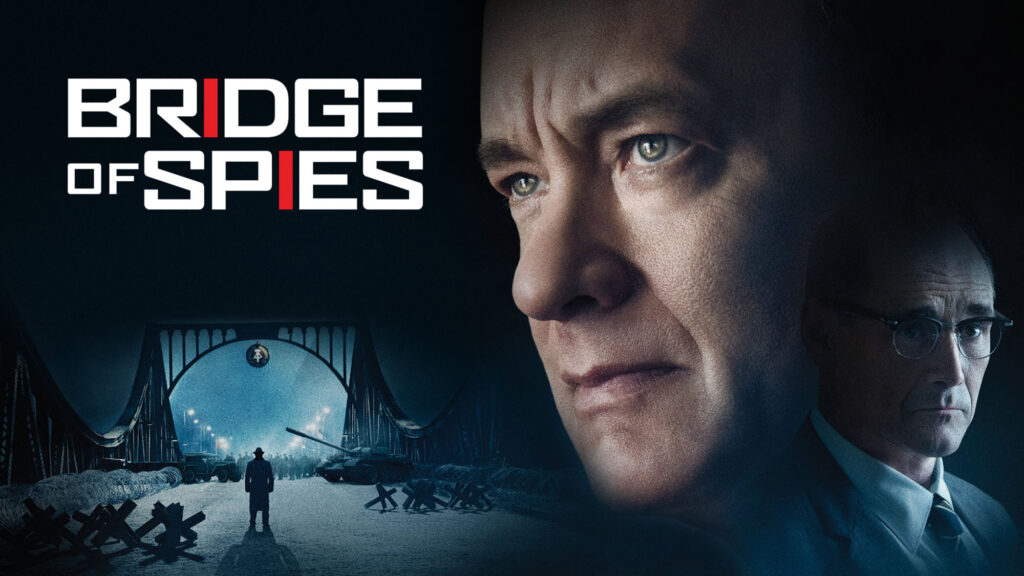
Bridge of Spies
Bridge of Spies is a 2015 historical film directed and co-produced by Steven Spielberg, written by Matt Charman and the Coen brothers, and starring Tom Hanks.

Close Encounters of the Third Kind
The Close Encounters of the Third Kind story begins in Indiana and stretches toward Wyoming, the film was shot in California, Alabama, Wyoming and India.
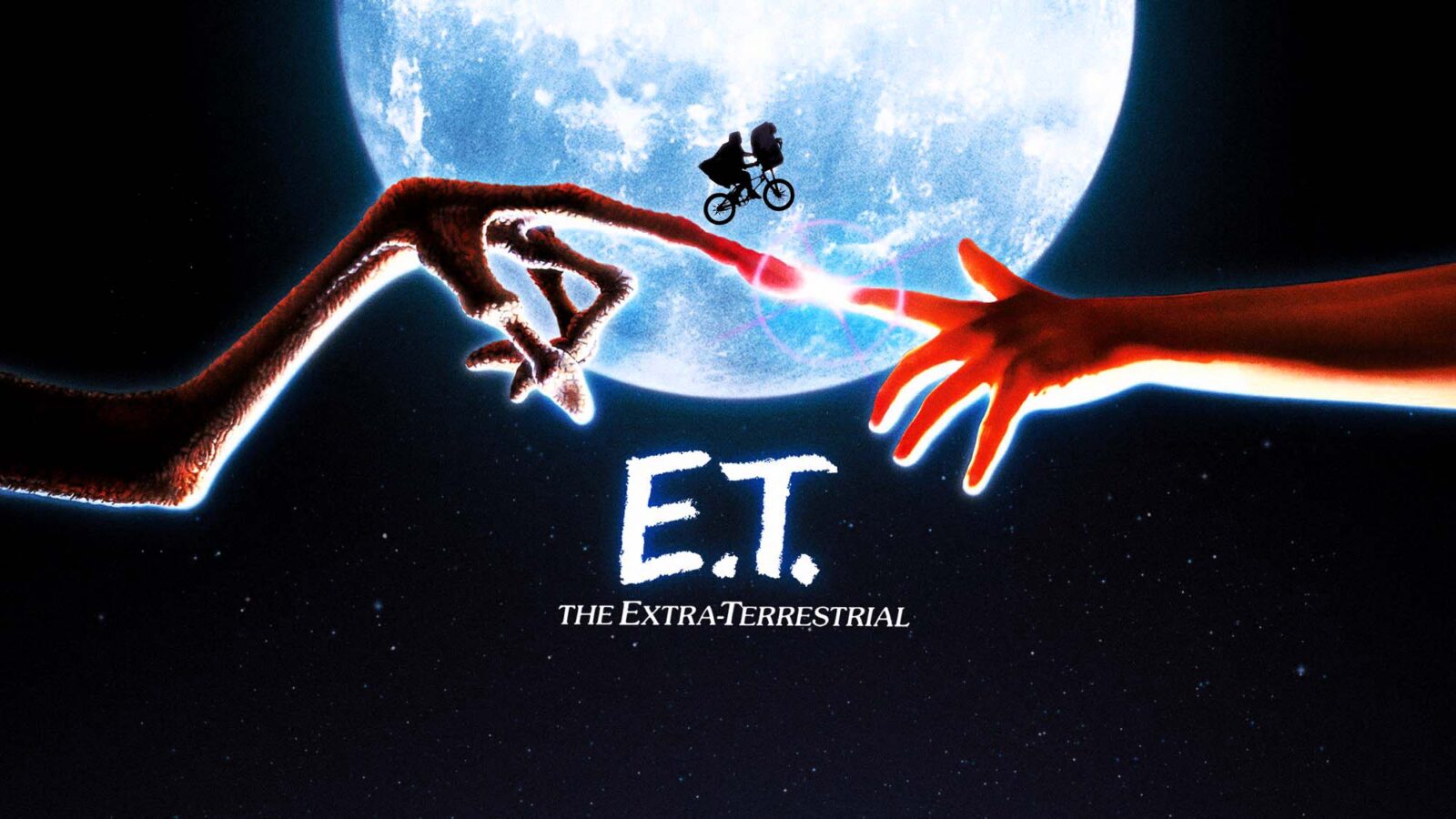
E.T. the Extra-Terrestrial
E.T. the Extra-Terrestrial (1982) is an American science-fiction family film produced and directed by Steven Spielberg and written by Melissa Mathison. The…
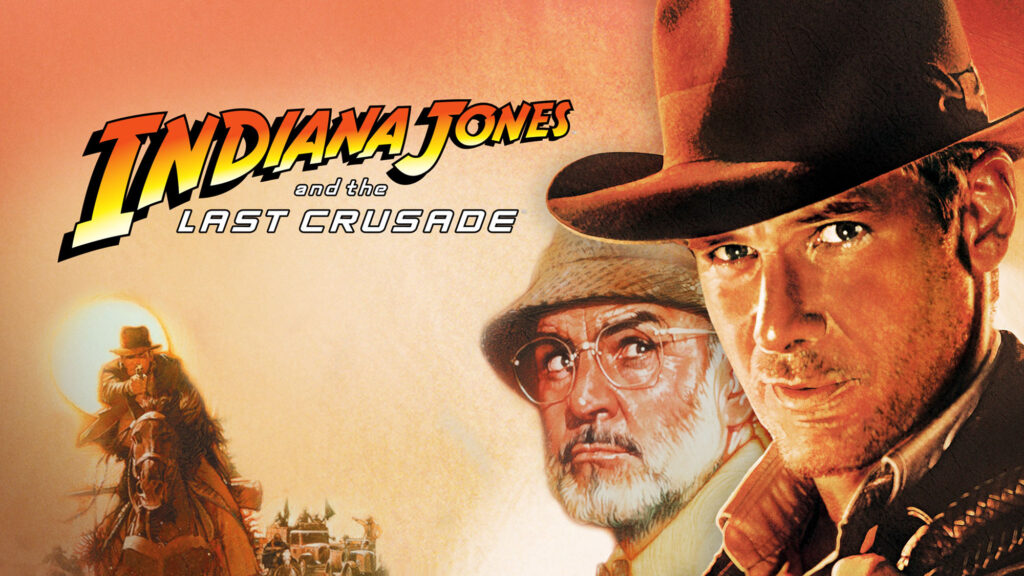
Indiana Jones and the Last Crusade
Indiana Jones and the Last Crusade was filmed in Spain, England, Italy, West Germany, Jordan and the United States.

Jaws
Jaws was shot mainly on Martha’s Vineyard in Massachusetts, and the island is absolutely central to its identity.
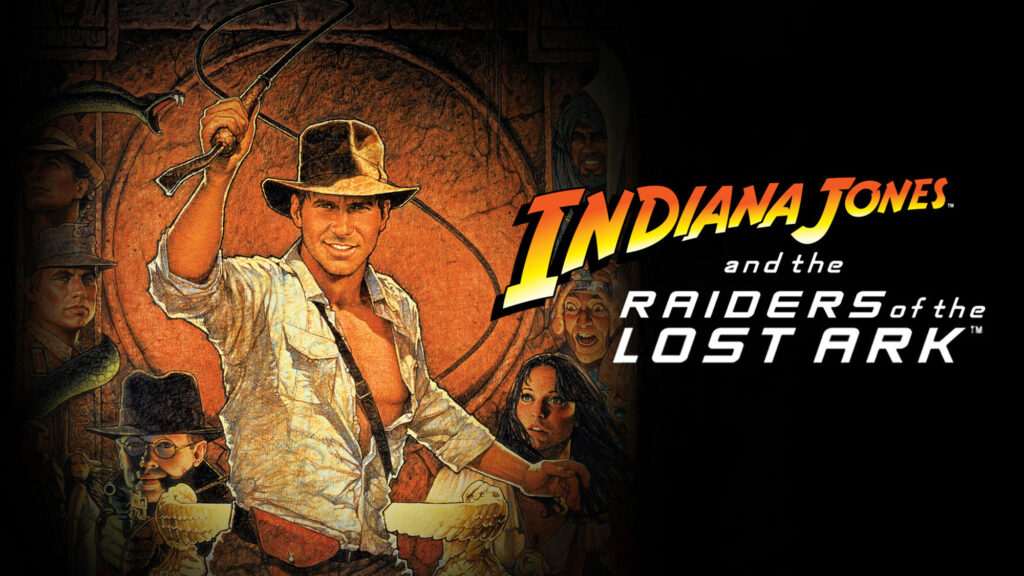
Raiders of the Lost Ark
Raiders of the Lost Ark was filmed in England, Tunisia, France, Hawaii and California, with each place contributing a very different part of Indy's journey.

Schindler’s List
Schindler's List was shot mainly in and around Kraków, Poland, using a combination of real historical locations, nearby stand-ins and large reconstructed sets.
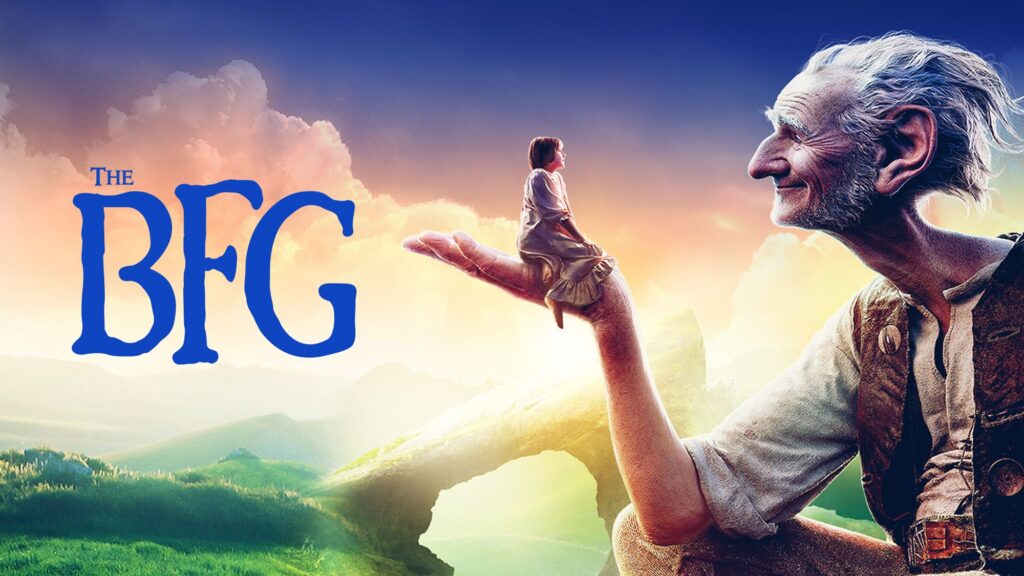
The BFG
The BFG was produced around Vancouver, where much of the film’s studio and set work was created, while real locations in the UK were used for exterior.