
Harrison Ford is an American actor born on 13 July 1942 in Chicago, Illinois. He grew up in the nearby suburb of Park Ridge with his parents and younger brother, Terence. His father, Christopher Ford, was a former actor who worked in advertising, while his mother, Dorothy Nidelman, had been a radio actress. His paternal family had Irish and German ancestry, and his maternal grandparents were Jewish immigrants from Eastern Europe. Although both parents had experience in entertainment, Ford did not initially consider acting a realistic career. He attended Maine East High School in Park Ridge, where he participated in the school’s radio station, WMTH, becoming its first student sportscaster. He was also involved in the Boy Scouts, reaching the rank of Life Scout. Ford later described himself as a shy and academically unremarkable student who had difficulty finding a clear direction during his teenage years.
After graduating from high school in 1960, Ford enrolled at Ripon College in Ripon, Wisconsin, where he studied philosophy and English. During his final year, he took a drama class in an attempt to overcome his shyness and became involved in the college’s theatre productions. His stage performances included The Threepenny Opera, The Skin of Our Teeth and The Fantasticks, and he discovered that acting offered him a sense of purpose he had not found elsewhere in his studies. Ford left Ripon shortly before completing his degree and spent the summer of 1964 working with the Belfry Players, a repertory theatre company based in Williams Bay, Wisconsin. The theatre occupied a converted church, and Ford’s responsibilities included helping with carpentry and other practical work alongside his acting duties. During the same summer, he married Mary Marquardt, whom he had met at college, in a ceremony in Mequon, Wisconsin. The couple subsequently moved to Los Angeles, where Ford hoped to establish himself as a professional actor.
Ford’s first years in Hollywood were difficult. He secured a contract with Columbia Pictures in 1966, appearing in small, frequently uncredited parts, including his screen debut in Dead Heat on a Merry-Go-Round (1966). He subsequently worked for Universal Studios and appeared in television productions such as Gunsmoke, Ironside and The Virginian, but the roles were generally brief and offered little opportunity for advancement. With a growing family to support, Ford taught himself carpentry and began working as a professional cabinetmaker and carpenter around Los Angeles. His clients eventually included people involved in the film industry, among them Francis Ford Coppola, for whom he undertook renovation and construction work. The occupation provided a more reliable income than acting and allowed him to be selective about the parts he accepted. Through his connections with filmmakers, Ford was cast as the street racer Bob Falfa in George Lucas’s American Graffiti (1973), a nostalgic comedy set in Modesto, California, in 1962. The film was shot principally in Petaluma and San Rafael, north of San Francisco, with additional locations around the Bay Area. Ford also appeared in Coppola’s surveillance thriller The Conversation (1974), filmed in San Francisco, and later played a small role as an army officer in Apocalypse Now (1979).
His career changed when George Lucas cast him as Han Solo in Star Wars (1977). Ford had initially been brought in to read dialogue with actors auditioning for other roles, having previously worked with Lucas on American Graffiti. His performance impressed the director sufficiently for him to be offered the part of the cynical smuggler and pilot of the Millennium Falcon. The production was based at Elstree Studios in Borehamwood, Hertfordshire, where many of the spacecraft interiors and other elaborate sets were constructed. Additional filming took place in Tunisia, whose desert landscapes represented the planet Tatooine, although Ford’s principal scenes were filmed in England. Star Wars became an unprecedented commercial success and transformed Ford from a working character actor into an internationally recognised leading man. He reprised the role in The Empire Strikes Back (1980), which again used Elstree Studios but also brought him to Norway. The production filmed its Arctic sequences around Finse and the Hardangerjøkulen glacier in March 1979, using the mountainous terrain to represent the ice planet Hoth. Severe winter conditions repeatedly disrupted filming, and Ford’s journey from Oslo to Finse was delayed by avalanches that blocked the railway. He eventually reached the production area after travelling by train, taxi and snowplough, allowing the crew to complete scenes that had originally been scheduled for studio filming in England.
Ford’s next major role was another George Lucas creation, the archaeologist Indiana Jones, whom he first portrayed in Steven Spielberg’s Raiders of the Lost Ark (1981). The production involved extensive international travel, with principal photography beginning at the former German submarine pens in La Rochelle, France, in June 1980. Ford was present for the opening days of filming, appearing in sequences involving the capture of a merchant ship and a German naval installation. The production subsequently moved to Elstree Studios, Tunisia and Hawaii, with the North African locations standing in for Egypt and the Hawaiian landscapes used for the film’s South American opening. The physically demanding shoot included elaborate action sequences and prolonged work in extreme heat, particularly around Kairouan, Tunisia, where Ford became ill during filming. Raiders of the Lost Ark was another major success and established a character he would return to for more than four decades. He followed it with Ridley Scott’s science-fiction thriller Blade Runner (1982), playing Rick Deckard, a former police officer employed to hunt genetically engineered humans. Although the story is set in a futuristic Los Angeles, much of the film was shot in the contemporary city, with locations including the Bradbury Building on South Broadway, Union Station, the Second Street Tunnel and the Ennis House in Los Feliz. The Bradbury Building’s distinctive interior became the setting for the film’s climactic confrontation, while the Ennis House provided the exterior architectural design for Deckard’s apartment. Additional sets were constructed at Warner Bros. Studios in Burbank.
Ford returned to the Star Wars series in Return of the Jedi (1983), completing Han Solo’s story in the original trilogy. Production again took place at Elstree Studios, with desert sequences filmed in Buttercup Valley near Yuma, Arizona, and forest scenes around the redwood country of northern California. He then reprised Indiana Jones in Indiana Jones and the Temple of Doom (1984), which was filmed in Sri Lanka and at Elstree Studios. The Sri Lankan production included locations around Kandy and the Mahaweli River, where a suspension bridge was constructed for the film’s climactic sequence. Ford suffered a back injury during filming and underwent surgery, temporarily interrupting his participation while stunt work and other scenes continued. Despite the commercial success of these adventure films, he was increasingly interested in dramatic roles that would allow him to work outside the action genre.
That opportunity came with Peter Weir’s Witness (1985), in which Ford portrayed John Book, a Philadelphia police detective protecting a young Amish boy who has witnessed a murder. The film was shot in Pennsylvania, with major scenes filmed at Philadelphia’s 30th Street Station and throughout Lancaster County, including farms near Strasburg and the village of Intercourse. Ford spent time observing Amish life and learning practical farm skills in preparation for the role. His performance earned him his first and, to date, only Academy Award nomination for Best Actor. The following year, he reunited with Weir for The Mosquito Coast (1986), playing Allie Fox, an eccentric inventor who moves his family from the United States to Central America. The film was shot extensively in Belize, including Belize City and surrounding jungle locations, with additional filming in Georgia and Maryland. Ford worked alongside Helen Mirren and a young River Phoenix, who portrayed his character’s eldest son. The production kept him in Central America during the 1986 Academy Awards ceremony, which he did not attend despite his nomination for Witness.
In the late 1980s, Ford broadened his range with Roman Polanski’s Paris-set thriller Frantic (1988), in which he played an American doctor searching for his missing wife, and Mike Nichols’s romantic comedy Working Girl (1988), alongside Melanie Griffith and Sigourney Weaver. Working Girl was filmed in New York City, using locations on Staten Island and in Manhattan, including the Staten Island Ferry, the financial district and the former 7 World Trade Center. The production made extensive use of the city’s working environments, reflecting the corporate world inhabited by Ford’s character, investment broker Jack Trainer. He returned to Indiana Jones in Indiana Jones and the Last Crusade (1989), which reunited him with Spielberg and introduced Sean Connery as the archaeologist’s father. Filming took place in England, Spain, Italy and Jordan, with the church of San Barnaba in Venice representing the exterior of a library containing clues to the Holy Grail. The production also used the Grand Canal and the ancient city of Petra, where the monumental façade of Al-Khazneh, commonly known as the Treasury, represented the entrance to the Grail temple. Its interiors, however, were constructed at Elstree Studios. The success of the film confirmed Ford’s position as one of Hollywood’s most commercially reliable leading actors.
By this stage, Ford had also established a second home away from Los Angeles. In the early 1980s, following the success of the Star Wars films, he purchased approximately 800 acres of land along the Snake River in Jackson Hole, Wyoming. He helped design and construct a residence on the property, drawing on the carpentry skills he had developed before becoming a successful actor. The ranch became an important part of his personal life, providing a place to spend time with his family and pursue outdoor interests. In 1985, he began placing conservation easements on sections of the land to protect them from future development. His interest in conservation subsequently developed into a long association with Conservation International, an environmental organisation on whose board he has served. Ford also became an experienced pilot, flying both fixed-wing aircraft and helicopters and maintaining aircraft at facilities in California and Wyoming. His aviation activities sometimes extended to assisting with search-and-rescue operations, including helping locate a missing Boy Scout in the Wyoming wilderness in 2001.
During the 1990s, Ford concentrated largely on contemporary thrillers and dramas. He starred in Alan J. Pakula’s Presumed Innocent (1990), played CIA analyst Jack Ryan in Patriot Games (1992) and Clear and Present Danger (1994), and appeared in the romantic drama Sabrina (1995), directed by Sydney Pollack. One of his most successful films of the decade was Andrew Davis’s The Fugitive (1993), in which he played Dr Richard Kimble, a surgeon wrongly convicted of murdering his wife. Ford was closely involved in the decision to film in Chicago, the city of his birth, and the production made extensive use of its streets, bridges, railway stations and public buildings. Locations included Chicago City Hall, the historic Pullman neighbourhood and the city’s St Patrick’s Day parade, where scenes were filmed during the actual celebrations in March 1993. Other parts of the film were shot in North Carolina, where the Great Smoky Mountains Railroad near Dillsboro was used for the spectacular train crash and Cheoah Dam provided the exterior setting for Kimble’s escape over a waterfall. The film became a major commercial success and earned Tommy Lee Jones an Academy Award for Best Supporting Actor.
Ford continued working in large-scale thrillers with Air Force One (1997), playing an American president confronting terrorists who hijack his aircraft. Although the film depicts locations in Russia, Kazakhstan and Germany, the production was filmed primarily in the United States, with locations including Los Angeles International Airport, Case Western Reserve University in Cleveland, Mansfield Reformatory in Ohio and Rickenbacker Airport near Columbus. Extensive aircraft interiors were also constructed on soundstages. His other films from the period included Six Days, Seven Nights (1998), filmed principally on the Hawaiian island of Kauai, and Random Hearts (1999), which brought him back to Washington, D.C., and New York. He subsequently starred opposite Michelle Pfeiffer in Robert Zemeckis’s supernatural thriller What Lies Beneath (2000), followed by the submarine drama K-19: The Widowmaker (2002), directed by Kathryn Bigelow. The latter production, in which Ford played a Soviet submarine captain opposite Liam Neeson, was filmed largely in Canada, including Nova Scotia and Manitoba. By the early 2000s, Ford had received several major career honours, including the American Film Institute’s Life Achievement Award in 2000 and the Cecil B. DeMille Award at the Golden Globes in 2002.
Ford’s personal circumstances changed during this period. His first marriage to Mary Marquardt had ended in divorce in 1979 after the birth of their two sons, Benjamin and Willard. In 1983, he married screenwriter Melissa Mathison, who had written Steven Spielberg’s E.T. the Extra-Terrestrial (1982). They had two children, Malcolm and Georgia, before separating in 2000 and divorcing in 2004. Ford met actress Calista Flockhart at the Golden Globe Awards in 2002, and the couple developed a relationship while dividing their time between California and Wyoming. They married in Santa Fe, New Mexico, in June 2010, during a period when Ford was working on the Western science-fiction film Cowboys & Aliens (2011). Ford also adopted Flockhart’s son, Liam, becoming a father of five. Although his residences in Los Angeles and Jackson Hole were publicly known, he generally maintained a relatively private family life. In March 2015, his passion for aviation led to a serious accident when the engine of his vintage aircraft failed shortly after take-off from Santa Monica Airport. Ford made an emergency landing at Penmar Golf Course in Venice, Los Angeles, suffering injuries that required hospital treatment.
Ford returned to the Indiana Jones series with Indiana Jones and the Kingdom of the Crystal Skull (2008), the fourth instalment directed by Spielberg. Unlike the earlier films, the production was shot entirely in the United States, including New Mexico, Hawaii and Connecticut. One of its most elaborate sequences was filmed at Yale University in New Haven, where the historic campus represented the fictional Marshall College. Ford and Shia LaBeouf participated in a motorcycle chase filmed along Chapel Street, Elm Street and College Street, with production crews temporarily transforming the university district into a 1950s American town. Ford subsequently appeared in Cowboys & Aliens, Ender’s Game (2013), the baseball drama 42 (2013) and The Expendables 3 (2014). He also played a supporting role in the romantic fantasy The Age of Adaline (2015), filmed in and around Vancouver, British Columbia. His return to the Star Wars franchise in Star Wars: The Force Awakens (2015) brought him back to Pinewood Studios in Buckinghamshire, England, where much of the production was based. During filming in June 2014, Ford broke his leg when a hydraulic door on the Millennium Falcon set fell on him, forcing production to adjust its schedule while he recovered.
Ford reprised Rick Deckard in Denis Villeneuve’s Blade Runner 2049 (2017), appearing opposite Ryan Gosling more than thirty years after the original film. Although the story returns to a dystopian Los Angeles and includes scenes set in a deserted Las Vegas, much of the production took place in Hungary, particularly at Korda Studios and Origo Studios around Budapest. The interiors of the former Budapest Stock Exchange building were also used for elaborate casino sequences, while industrial locations and purpose-built sets supplied the film’s futuristic environments. Ford subsequently appeared briefly as Han Solo in Star Wars: The Rise of Skywalker (2019) and starred in The Call of the Wild (2020), an adaptation of Jack London’s novel in which he played the prospector John Thornton. The latter production relied heavily on computer-generated animals and digital environments rather than filming exclusively in the wilderness of the Yukon, where the story takes place.
In the 2020s, Ford began taking substantial television roles after spending most of his career working in feature films. He starred opposite Helen Mirren in 1923 (2022–2025), a Western drama created by Taylor Sheridan as a prequel to Yellowstone. Ford played Jacob Dutton, the patriarch of a Montana ranching family during the early twentieth century. Much of the production was filmed in Montana, including Butte and surrounding rural locations, while other storylines required filming in South Africa and additional international locations. Ford’s work brought him back to the American West, a region with which he had developed strong personal connections through his years in Wyoming. He also joined Jason Segel in the comedy-drama series Shrinking (2023–), playing Paul Rhoades, a senior therapist living with Parkinson’s disease. The series is set in Pasadena, California, and has been filmed around Pasadena, Altadena and the greater Los Angeles area, with locations including Pasadena’s Central Park, where Ford and Segel filmed outdoor scenes together. Other interiors were constructed at Warner Bros. Studios in Burbank. Ford received Primetime Emmy Award nominations for Outstanding Supporting Actor in a Comedy Series in both 2025 and 2026, his first nominations in the category.
Ford made his final appearance as Indiana Jones in Indiana Jones and the Dial of Destiny (2023), directed by James Mangold. The film’s international production involved locations in England, Scotland, Italy and Morocco. In Glasgow, streets around the city centre were transformed into 1960s New York for a parade sequence, while filming in Sicily used the ancient streets of Syracuse, the coastal town of Cefalù and archaeological sites including the Temple of Segesta. Additional sets were constructed at Pinewood Studios, where the production recreated interiors and other locations that could not be filmed on site. Ford was eighty when the film was released, having portrayed Indiana Jones across five feature films spanning more than forty years. He subsequently joined the Marvel Cinematic Universe in Captain America: Brave New World (2025), portraying President Thaddeus Ross, a character previously played by William Hurt. The film was produced principally in Georgia, including at Trilith Studios near Atlanta, and introduced Ford to another major film franchise late in his career.
In March 2026, Ford received the SAG-AFTRA Life Achievement Award at the Actor Awards ceremony in Los Angeles, recognising more than six decades of work in film and television. He continued portraying Paul Rhoades in the third season of Shrinking, which premiered in January 2026, while maintaining his longstanding involvement in environmental conservation and aviation. His career had taken him from repertory theatre in rural Wisconsin and carpentry jobs around Los Angeles to film productions in Europe, North Africa, Central America and Asia. Despite the international scope of his work, Chicago, Los Angeles and Jackson Hole have remained the principal geographical centres of his life, with the latter providing a home away from Hollywood for much of his adulthood.
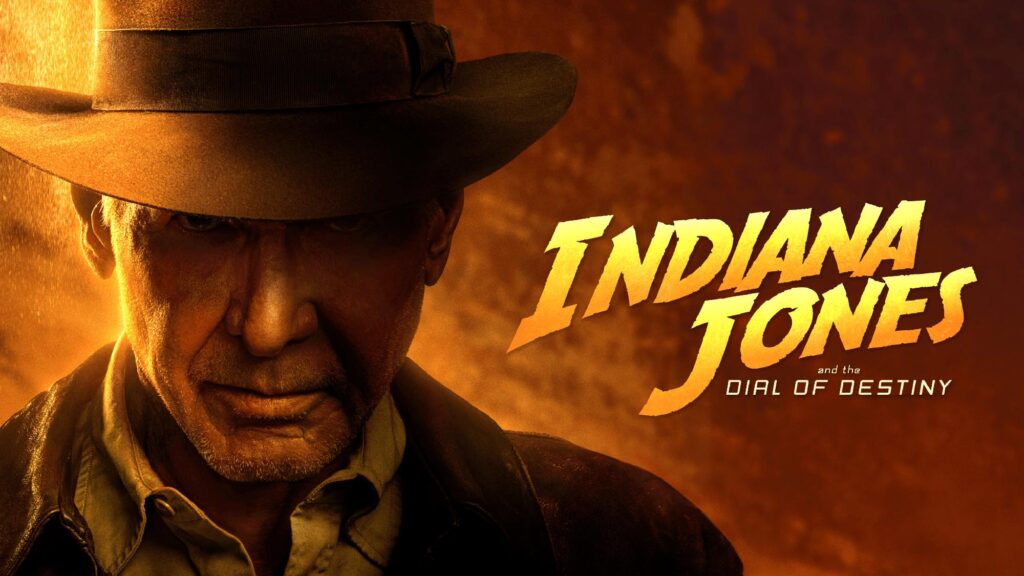
Indiana Jones and the Dial of Destiny
Indiana Jones and the Dial of Destiny was shot across England, Scotland, Italy, Morocco and studio facilities at Pinewood, giving it a wide geographical range.
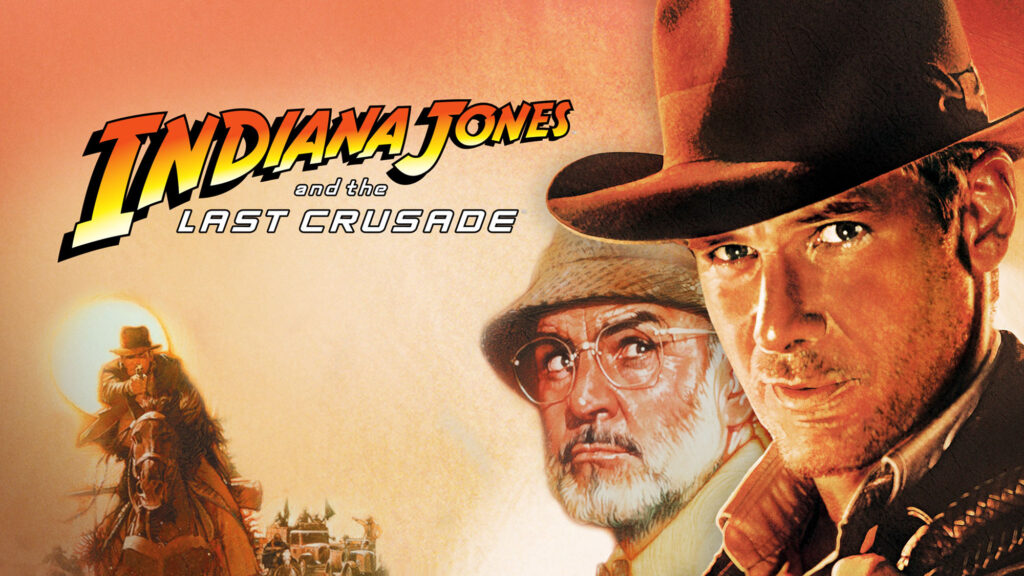
Indiana Jones and the Last Crusade
Indiana Jones and the Last Crusade was filmed in Spain, England, Italy, West Germany, Jordan and the United States.
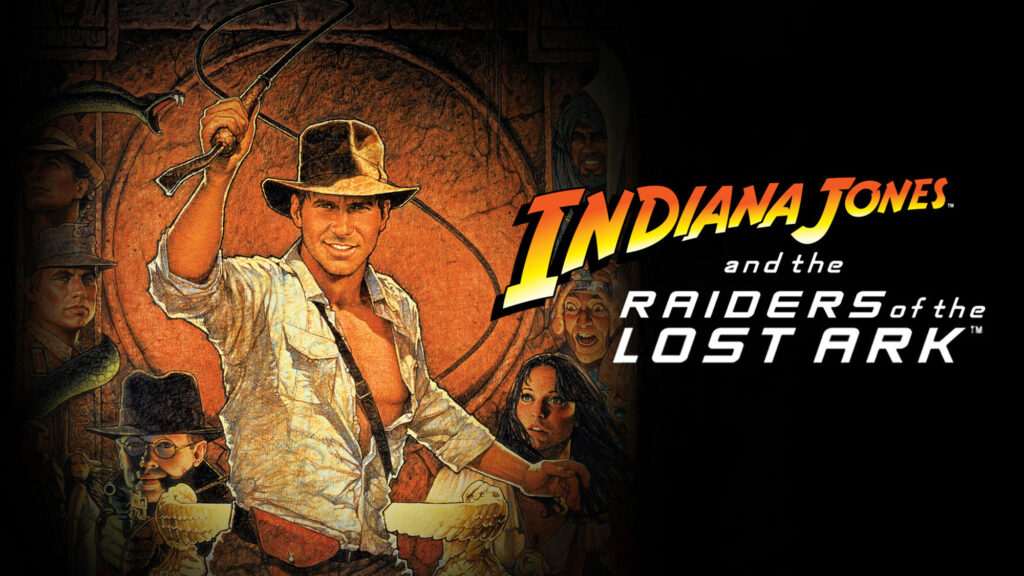
Raiders of the Lost Ark
Raiders of the Lost Ark was filmed in England, Tunisia, France, Hawaii and California, with each place contributing a very different part of Indy's journey.