
Swinemünder Bridge, known in German as Swinemünder Brücke and traditionally nicknamed the Millionenbrücke, is a historic steel road bridge in the Gesundbrunnen district of Berlin, Germany. The 228-metre bridge carries Swinemünder Straße and Bellermannstraße across the extensive railway tracks immediately east of Gesundbrunnen station. It was constructed between 1902 and 1905 according to plans by civil engineer Friedrich Krause, with the architectural treatment designed by Bruno Möhring, and opened on 11 November 1905. At approximately 1.25 million marks, it was the most expensive bridge yet built by the city of Berlin and became popularly known as the Million Bridge. Möhring originally decorated the steel structure with elaborate Art Nouveau elements, but much of this ornamentation disappeared after the central span was destroyed during the Second World War and rebuilt in a simplified form in 1954. The bridge is now a protected architectural monument. Its repeating steel framework resembles both Glienicke Bridge and the nearby Bösebrücke at Bornholmer Straße, while its comparatively light road traffic makes it much easier to close for filming. As a result, Swinemünder Bridge has repeatedly been transformed into Cold War border crossings that historically existed somewhere else.
Swinemünder Bridge has appeared in Funeral in Berlin (1966), Target (1985), Judgment in Berlin (1988), Die Frau vom Checkpoint Charlie (2007), Das Wunder von Berlin (2008), Weissensee (2010–2018), Bornholmer Straße (2014) and We Children from Bahnhof Zoo (2021). The bridge has rarely represented itself. Instead, its steel structure has repeatedly doubled for Glienicke Bridge or the former Bornholmer Straße border crossing, making it one of Berlin’s most frequently reused locations for stories about the Cold War and the division of the city.
In Funeral in Berlin (1966), Swinemünder Bridge represents Glienicke Bridge during the elaborate operation intended to smuggle Soviet intelligence officer Colonel Stok from East Berlin into the West. British agent Harry Palmer arranges for escape specialist Otto Kreutzmann to bring Stok across the border hidden inside a coffin as part of a staged funeral. Palmer and Kreutzmann’s men wait on the Western side while the funeral party crosses the supposed Glienicke Bridge. When the coffin reaches them and is opened, however, Stok is nowhere inside. Instead, it contains the murdered Kreutzmann, revealing that the entire defection has been a deception. The real Glienicke Bridge could not be used for the production because it was an active and highly restricted Cold War crossing between West Berlin and East Germany. Swinemünder Bridge was therefore dressed with barriers and border details to reproduce it, its steel construction providing a convincing substitute for the bridge associated with genuine East–West prisoner exchanges.
In Target (1985), Swinemünder Bridge appears briefly during the Berlin section of the spy thriller. Walter Lloyd, played by Gene Hackman, travels through Europe with his son Chris while searching for his kidnapped wife and gradually reveals that his apparently ordinary past conceals a former career in American intelligence. A bridge sequence involving Walter was filmed at Swinemünder Bridge during the production’s Berlin location work. Unlike several later productions, the bridge was not principally selected to recreate the fall of the Berlin Wall, but its steel structure fits the Cold War environment through which Walter moves while old intelligence connections and enemies begin resurfacing. Target used locations in several European cities to create its fragmented journey through Berlin and the surrounding espionage world, with Swinemünder Bridge forming one of the genuine Berlin elements.
In Judgment in Berlin (1988), Swinemünder Bridge represents a fortified crossing between East and West Berlin. The film is based on the real 1978 hijacking of a LOT Polish Airlines aircraft that was forced to land at Tempelhof Airport by East Germans attempting to escape to the West. Sigrid Radke has previously been involved with West Berliner Hans Schuster, who attempted to provide forged documents for an earlier escape plan but was arrested in the Eastern Bloc. Towards the end of the film, Sigrid and Hans are brought to opposite sides of a border bridge and are able to see one another across the divided city. Swinemünder Bridge was transformed into the crossing for the sequence with border installations and restrictions added around the otherwise West Berlin structure. The location reinforces the separation at the centre of their relationship before Hans is eventually released and the two can finally be reunited.
In Die Frau vom Checkpoint Charlie (2007), Swinemünder Bridge represents the Bornholmer Straße border crossing during the film’s recreation of divided Berlin. The two-part television drama is based on the experiences of Jutta Fleck, fictionalised as Sara Bender, who is imprisoned after attempting to escape East Germany with her daughters and later campaigns from the West for their release. The real Bösebrücke and Bornholmer Straße crossing were impractical for extensive period filming, so Swinemünder Bridge was dressed with border installations to recreate the East–West checkpoint. The bridge appears as part of the film’s wider depiction of a city where Sara and her daughters remain physically separated by the heavily controlled border, while Sara’s public campaign increasingly draws attention to their case.
In Das Wunder von Berlin (2008), Swinemünder Bridge once again represents the Bornholmer Straße border crossing, this time during the events surrounding the fall of the Berlin Wall on 9 November 1989. Marco Kaiser begins the film as a rebellious East German punk but enters the National People’s Army after his father, a senior Stasi officer, intervenes following his arrest. By November 1989, Marco is serving at the border as political events accelerate around him. After Günter Schabowski’s confused announcement of new travel regulations is broadcast on television, thousands of East Berliners gather at the crossing demanding to be allowed into West Berlin. The Swinemünder Bridge area was extensively transformed with a reconstructed section of the Berlin Wall, barriers, fencing, guard installations and other border equipment to reproduce Bornholmer Straße. As pressure from the crowd increases and clear orders fail to arrive, Marco and the other guards eventually open the crossing. Marco then encounters Anja among the people moving through the border, bringing their personal story together with the historical opening of the Wall.
In Weissensee (2010–2018), Swinemünder Bridge appears in the third-season premiere, “Eine Nacht im November”, which begins on the night of 9 November 1989. The episode follows the Kupfer and Hausmann families as the unexpected announcement of relaxed travel restrictions rapidly develops into the opening of the Berlin Wall. Martin Kupfer and his brother Roman eventually make their way to the Bornholmer Straße border crossing and leave East Germany amid the crowds passing into West Berlin. These scenes were not filmed at the actual Bösebrücke. Swinemünder Bridge was used to recreate the crossing, allowing the production to control the road and reconstruct the border environment while retaining a steel bridge structure similar to the historical location. The sequence places the fictional family directly within one of the defining moments in the history covered by the series.
In Bornholmer Straße (2014), Swinemünder Bridge substitutes for the nearby Bösebrücke during the entire central recreation of the night the Berlin Wall first opened. The television film follows Lieutenant Colonel Harald Schäfer, a fictionalised version of border officer Harald Jäger, as confusion spreads following Günter Schabowski’s announcement on 9 November 1989. Schäfer and the other officers at the Bornholmer Straße checkpoint attempt repeatedly to obtain clear instructions while a steadily growing crowd of East Berliners gathers outside and demands passage to the West. The officials initially try different methods of releasing small numbers of people, but the situation becomes impossible to control without either opening the border or using force. Swinemünder Bridge and its approaches were transformed into the historical border crossing for these sequences because the real Bösebrücke carries heavy modern traffic and would have been considerably more difficult to close and return to its 1989 appearance. The bridge remains central throughout the film’s climax as the barriers are finally opened and thousands of people begin crossing into West Berlin.
In We Children from Bahnhof Zoo (2021), originally released as Wir Kinder vom Bahnhof Zoo, Swinemünder Bridge is used as a real West Berlin street location rather than being transformed into another famous bridge. It appears in the second episode, “Christmas”, which expands the stories of Stella, Babsi and the other teenagers outside the SOUND nightclub and reveals increasingly difficult family lives behind their nightlife. Stella finds Babsi on Swinemünder Bridge during the episode, with the steel structure and railway landscape forming the setting around their encounter. Unlike the historical dramas that use the bridge to recreate checkpoints and the Berlin Wall, the series presents it simply as part of the urban environment of 1970s West Berlin. Filming on and around Swinemünder Bridge took place overnight in January 2020 as part of the series’ extensive Berlin location work.
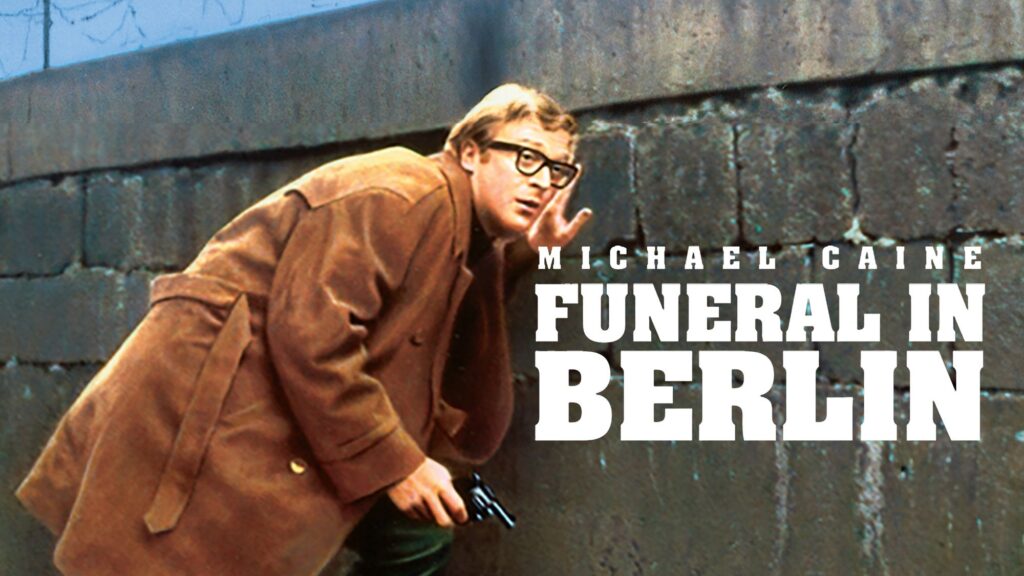
Funeral in Berlin
Funeral in Berlin was filmed partly on location in Berlin, giving the film a strong sense of real Cold War geography. Studio work was also used.
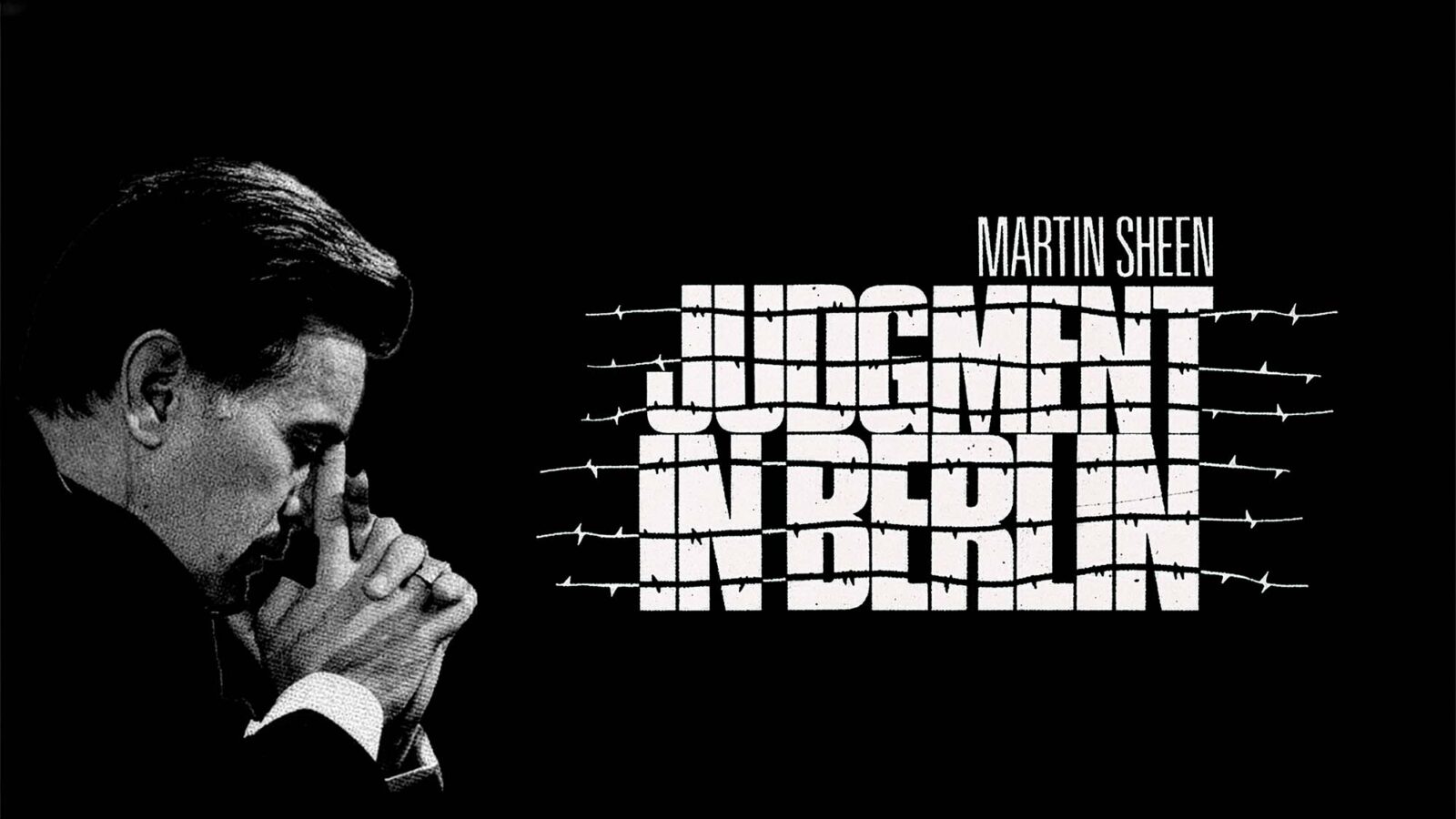
Judgment in Berlin
Judgment in Berlin was filmed in Berlin, with the divided city itself forming the centre of the film’s location identity.
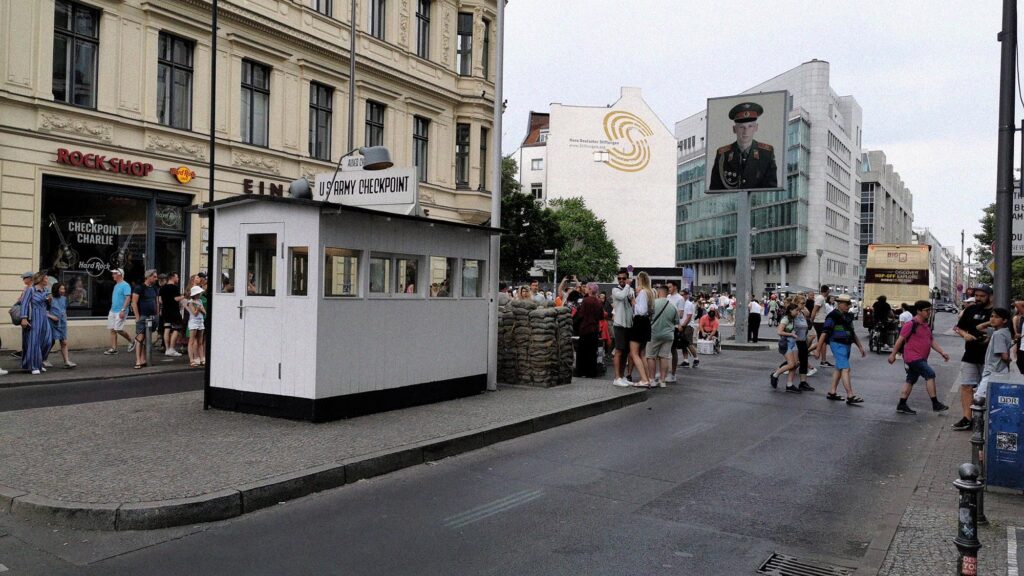
Checkpoint Charlie
Checkpoint Charlie are used in productions on the real site are Octopussy, Funeral in Berlin, and A Dandy in Aspic.
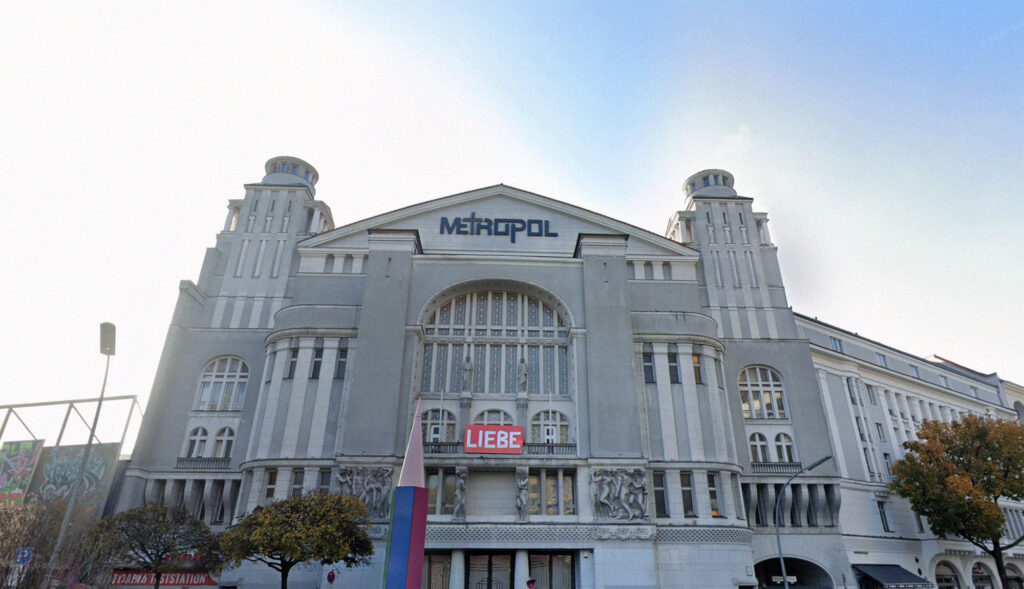
Metropol
Metropol has appeared in movies and series like The Invisible Dr. Mabuse (1962), Demons (1985), Deathline (1996) and Babylon Berlin (2017–).
Teufelsberg
Teufelsberg is in Aufwind (1979), The Gamblers, We Are the Night, Allein gegen die Zeit, Covert Affairs, Manifesto, Berlin Station, You Are Wanted and more.
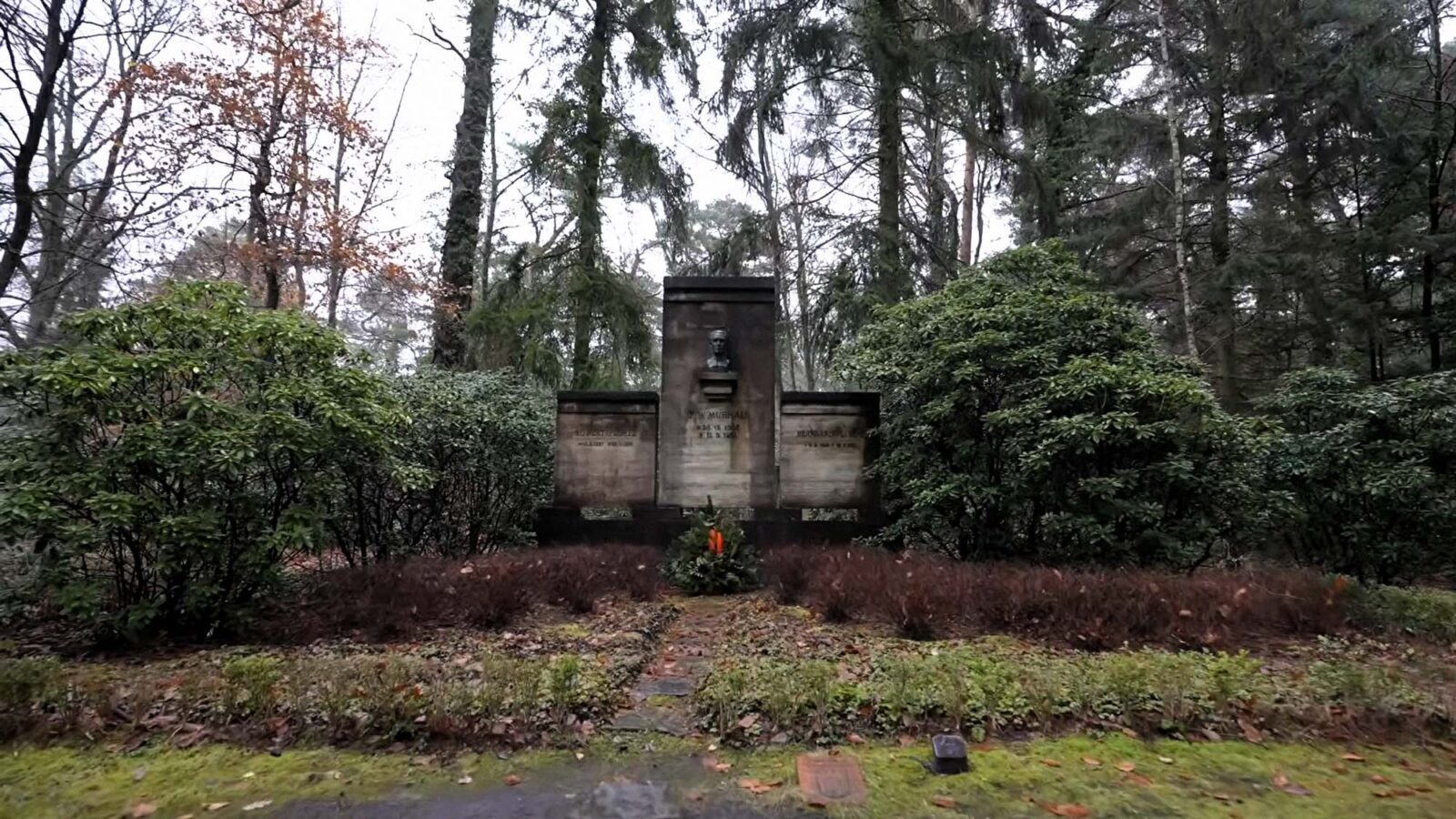
Südwestkirchhof Stahnsdorf
Südwestkirchhof Stahnsdorf is a large forest cemetery in Stahnsdorf, Brandenburg, immediately southwest of Berlin, Germany. The cemetery was created by the Protestant…
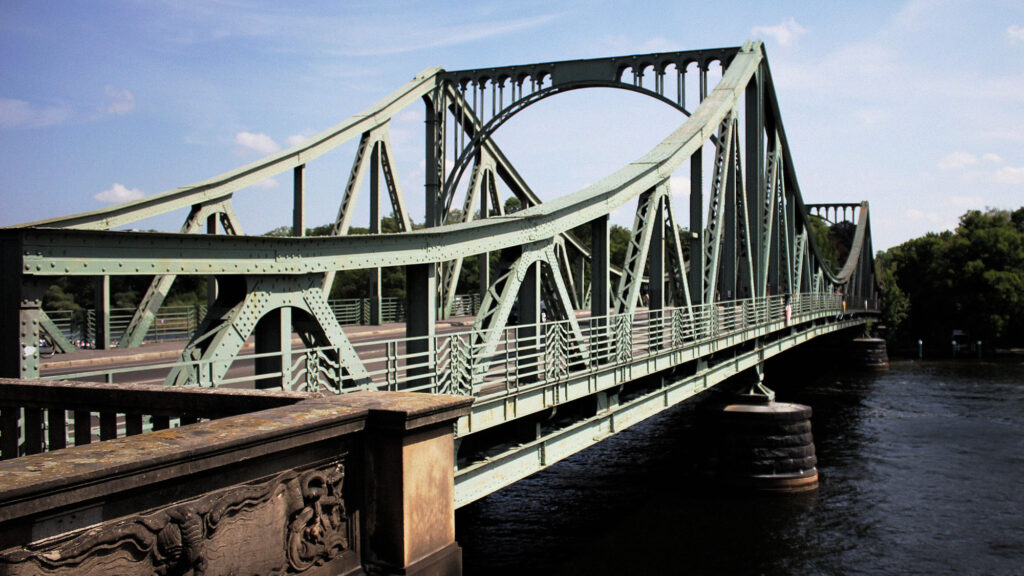
Glienicke Bridge
Glienicke Bridge has appeared in Under the Bridges, Hilde, Bridge of Spies, Kundschafter des Friedens and Havelland-Krimi: Hinter der Fassade.
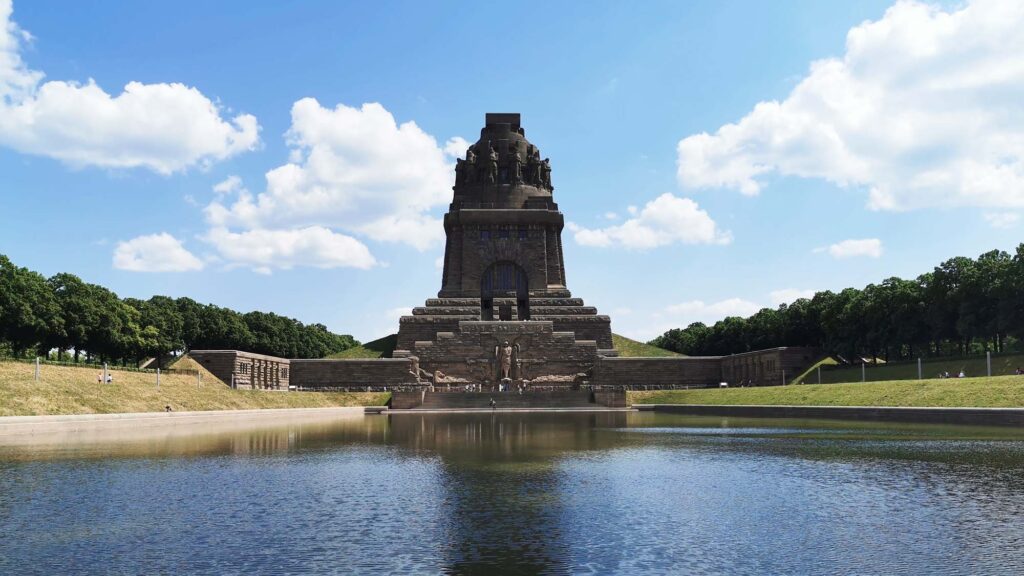
Monument to the Battle of the Nations
The Monument to the Battle of the Nations is in Schwarzer Samt, Das Monstrum, The Hunt for the Amber Room and The Hunger Games The Ballad of Songbirds & Snakes.
Phaeno Science Center
Phaeno Science Center has appeared in The International (2009), Helden – Wenn dein Land dich braucht (2013) and the television series Arcadia (2023).
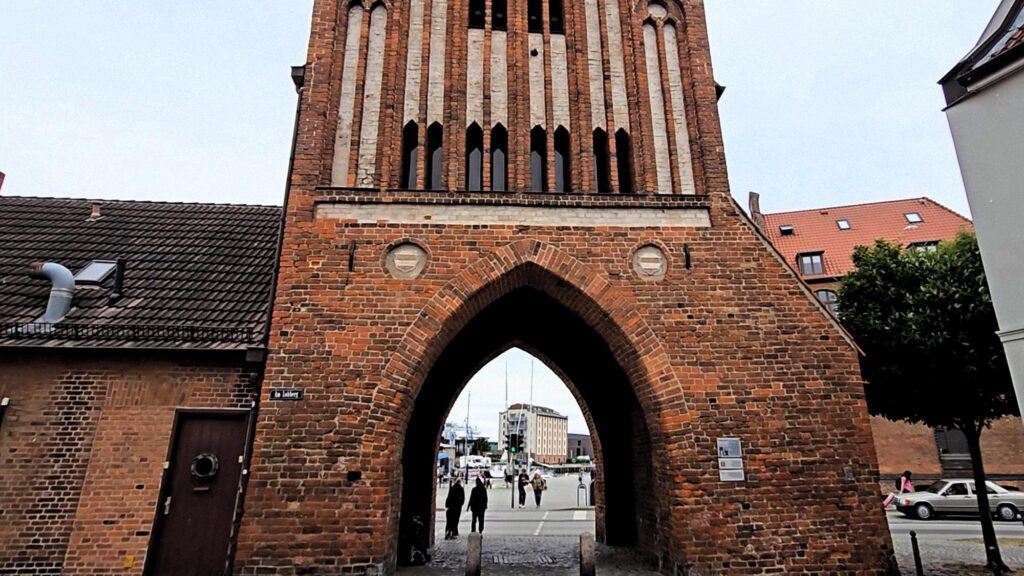
Wassertor
Wassertor appears in Nosferatu: A Symphony of Horror (1922). Wismar was used as the fictional town of Wisborg, and Wassertor is one of the real locations.
Grandhotel Pupp
Grandhotel Pupp has appeared in Waiter, Scarper!, The Death of the Beautiful Deer, Shanghai Knights, Last Holiday, Casino Royale, La Vie en Rose and Nobel.