
Südwestkirchhof Stahnsdorf is a large forest cemetery in Stahnsdorf, Brandenburg, immediately southwest of Berlin, Germany. The cemetery was created by the Protestant Church in response to Berlin’s rapidly growing population and opened in 1909. Landscape architect Louis Meyer designed the grounds around the existing woodland rather than imposing a conventional formal cemetery plan, creating separate burial sections connected by paths, avenues, small squares and sightlines across approximately 206 hectares. At the centre stands a distinctive wooden chapel designed by Gustav Werner and inaugurated on 28 March 1909. Inspired by Norwegian stave churches, although constructed using horizontal log-building techniques rather than true stave construction, the chapel has become the cemetery’s most recognisable building. A dedicated railway known as the Friedhofsbahn connected Stahnsdorf with Berlin-Wannsee from 1913 until the construction of the Berlin Wall led to its closure in 1961. During Albert Speer’s preparations for the proposed reconstruction of Berlin as “Germania” in 1938 and 1939, around 15,000 graves threatened by redevelopment were transferred to Stahnsdorf. The cemetery contains numerous elaborate mausoleums and historic graves and is the burial place of figures including painter Heinrich Zille, filmmaker F. W. Murnau, composer Engelbert Humperdinck, publisher Gustav Langenscheidt and members of the Siemens family.
Südwestkirchhof Stahnsdorf has appeared in The Ghost Writer (2010), Back on Track (2013), Der Kriminalist (2006–2020), Manifesto (2015), Dark (2017–2020), The Collini Case (2019), Babylon Berlin (2017–) and Das Märchen von der silbernen Brücke (2024). Its woodland, graves, mausoleums and Norwegian-style chapel have represented locations in Massachusetts, contemporary Berlin and the fictional town of Winden, while several productions have used the cemetery for actual funeral scenes. The chapel and the nearby Caspary family mausoleum have proved particularly popular with filmmakers.
In The Ghost Writer (2010), Südwestkirchhof Stahnsdorf represents the isolated surroundings of Professor Paul Emmett’s home in Belmont, Massachusetts. The unnamed ghostwriter, played by Ewan McGregor, discovers a previously entered destination in the navigation system of the car used by his dead predecessor Mike McAra and follows it to Emmett, a retired Harvard professor played by Tom Wilkinson. The wooded approach to the property was filmed in the cemetery’s secluded Lietzensee section. For the production, a full-size façade representing Emmett’s house was constructed among the trees. The Ghost stops at the entrance, uses an intercom and is eventually allowed onto the property, where he questions Emmett about his connection with former British prime minister Adam Lang and shows him photographs linking the two men. Emmett denies knowing McAra and becomes increasingly evasive before asking the Ghost to leave. After driving away through the wooded surroundings, the Ghost realises that a black car is following him. The cemetery therefore supplies the secluded American landscape surrounding one of the film’s most important investigative encounters, while other locations and studio sets were used for additional parts of Emmett’s property.
In Back on Track (2013), originally released as Sein letztes Rennen, Südwestkirchhof Stahnsdorf is used for the funeral of Margot Averhoff, played by Tatja Seibt. Margot and her husband Paul, played by Dieter Hallervorden, have moved into a retirement home, where former Olympic marathon champion Paul begins training for the Berlin Marathon in an attempt to regain a sense of purpose. Shortly before the race, Margot dies from a brain tumour. Her coffin is carried through the cemetery as part of a large funeral procession before Paul stands beside the open grave with their daughter Birgit. Devastated after more than sixty years together, Paul struggles to remain standing and eventually drops a red rose onto Margot’s coffin. The loss initially leaves him unable to continue training, but the promise he made to Margot eventually drives him to compete in the marathon. The cemetery scene was filmed in Stahnsdorf in 2012.
In Der Kriminalist (2006–2020), Südwestkirchhof Stahnsdorf appears in “Der Hacker”, episode 4 of season 11, first broadcast in 2015. Commissioner Bruno Schumann, played by Christian Berkel, is investigating the murder of IT specialist Philipp Steiner, an employee of the international chemical company Feargood Boyles. Steiner had discovered information connected with an environmental scandal and may have been supplying confidential material to the investigative platform darkdoX. The investigation brings Schumann to the cemetery, where he meets company geologist Frieder Berg, played by Holger Handtke. Berg is prepared to assist Schumann and provide information relating to the corporation and the environmental allegations. The woodland graves of Südwestkirchhof provide the discreet setting for their meeting away from the company whose activities are under investigation.
In Manifesto (2015), Südwestkirchhof Stahnsdorf provides the setting for the “Funeral Speaker” section of Julian Rosefeldt’s thirteen-channel film installation starring Cate Blanchett in thirteen different roles. Blanchett appears among mourners at an open grave and delivers a funeral address composed not from a conventional eulogy but from Dadaist manifestos. A funeral procession moves through the wooded cemetery before the ceremony gathers beside the grave, where Blanchett’s speaker recites fragments of texts associated with artists including Tristan Tzara and other figures of the Dada movement. The solemn surroundings and traditional rituals of mourning are deliberately contrasted with declarations attacking logic, convention and established systems. The sequence was filmed among the real graves at Südwestkirchhof rather than on a constructed cemetery set.
In Dark (2017–2020), Südwestkirchhof Stahnsdorf is one of the series’ most important recurring locations and represents the church and cemetery of the fictional town of Winden. The cemetery’s wooden chapel becomes St. Christopher’s Church, associated at different points in the complex timeline with Noah, Sic Mundus and several generations of Winden residents. One particularly recognisable scene occurs in “Truths”, episode 5 of season 1, when Jonas Kahnwald, played by Louis Hofmann, sits on a bench near the grave of his father Michael. The mysterious Stranger, played by Andreas Pietschmann, joins him and tells Jonas that he once knew Michael and that his father saved his life. Jonas does not yet realise that the Stranger is an older version of himself. The cemetery is also used for the graves of Michael Kahnwald and Mads Nielsen and for scenes involving Noah and Helge Doppler. Because the story repeatedly moves between different years, the production returned to Südwestkirchhof throughout all three seasons and altered the appearance of the chapel to fit different periods. Digital effects were used extensively: in one timeline the building is shown damaged and burning, while in another it appears restored and more brightly illuminated. The real chapel and cemetery consequently provide a fixed geographical point while the world and characters surrounding them change across decades and parallel realities.
In The Collini Case (2019), originally released as Der Fall Collini, Südwestkirchhof Stahnsdorf provides the cemetery where wealthy industrialist Hans Meyer, played by Manfred Zapatka, is buried. Meyer has been murdered in a Berlin hotel room by retired Italian mechanic Fabrizio Collini, played by Franco Nero, who immediately admits responsibility but refuses to explain his motive. Young lawyer Caspar Leinen, played by Elyas M’Barek, is appointed to defend Collini before discovering that the victim was the man he regarded almost as a grandfather while growing up. Early in the investigation, Caspar attends Meyer’s large funeral at Südwestkirchhof, where he encounters members of the family and people from his past. The sequence emphasises Meyer’s respected public image before the trial gradually exposes his activities as a German officer in Italy during the Second World War and the reason Collini targeted him decades later.
In Babylon Berlin (2017–), Südwestkirchhof Stahnsdorf appears in the fourth season as the supposed burial place of Edgar Kasabian, better known as the Armenian. At the beginning of the season, the characters believe that the powerful Berlin underworld figure has died during the period between seasons three and four. In episode 2, his wife Esther Kasabian, played by Meret Becker, visits his grave together with Walter Weintraub, played by Ronald Zehrfeld. The production uses the elaborate Caspary family mausoleum at Südwestkirchhof as Edgar’s fictional tomb, turning one of the cemetery’s most distinctive monuments into the burial place of the former Moka Efti owner. The scene gains additional significance later in the season when Edgar is revealed to be alive, having secretly manipulated events within Berlin’s criminal underworld. Südwestkirchhof has an unusual real connection with the series as well: Ernst Gennat, the pioneering head of Berlin’s murder squad who appears in Babylon Berlin as a character played by Udo Samel, is genuinely buried in the cemetery.
In Das Märchen von der silbernen Brücke (2024), Südwestkirchhof Stahnsdorf becomes part of the enchanted forest through which siblings Rose and Heinrich travel after discovering an old book whose fairy tales are in danger of disappearing. When characters including Snow White, Little Red Riding Hood, Rumpelstiltskin, the Devil and the Witch fall out of the book into the children’s world, Rose and Heinrich are sent in search of Frau Liebegüte and the magical Wheel of Time. Accompanied by the Devil, played by Detlev Buck, and the Witch, played by Christina Große, they make their way through the forest while the creature known as the “Dicke Ende” pursues them. Portions of this journey were filmed among the dense woodland, paths and old monuments of Südwestkirchhof Stahnsdorf, with additional forest material filmed at the neighbouring Wilmersdorfer Waldfriedhof Stahnsdorf. The production filmed at the two cemeteries in July 2024 before the television film premiered as part of ARD’s Sechs auf einen Streich fairy-tale series on Christmas Day.
Dark
Dark, the German science-fiction mystery thriller, is set in the fictional German town of Winden, but the series was filmed mainly in Berlin and Brandenburg.
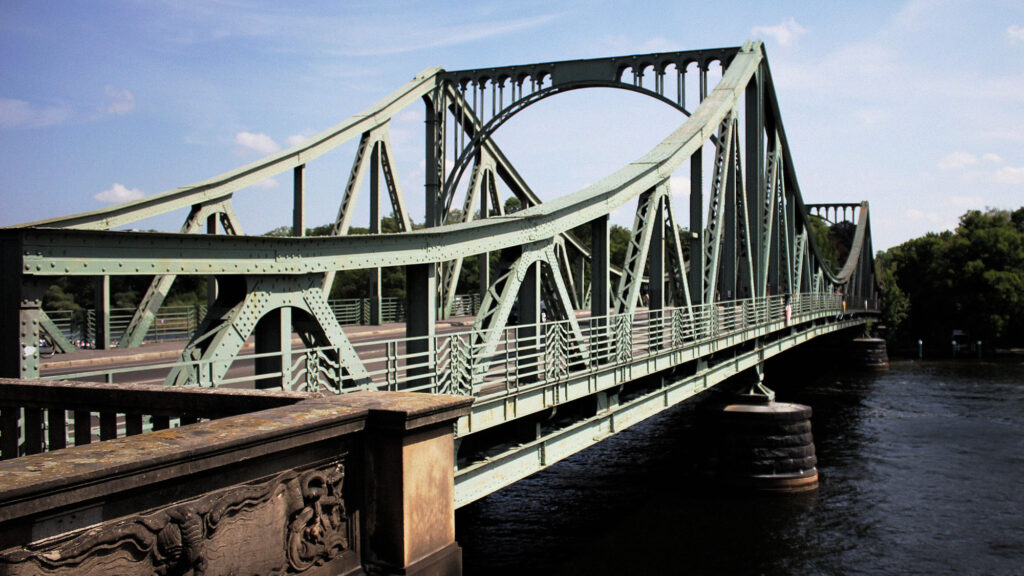
Glienicke Bridge
Glienicke Bridge has appeared in Under the Bridges, Hilde, Bridge of Spies, Kundschafter des Friedens and Havelland-Krimi: Hinter der Fassade.
Teufelsberg
Teufelsberg is in Aufwind (1979), The Gamblers, We Are the Night, Allein gegen die Zeit, Covert Affairs, Manifesto, Berlin Station, You Are Wanted and more.
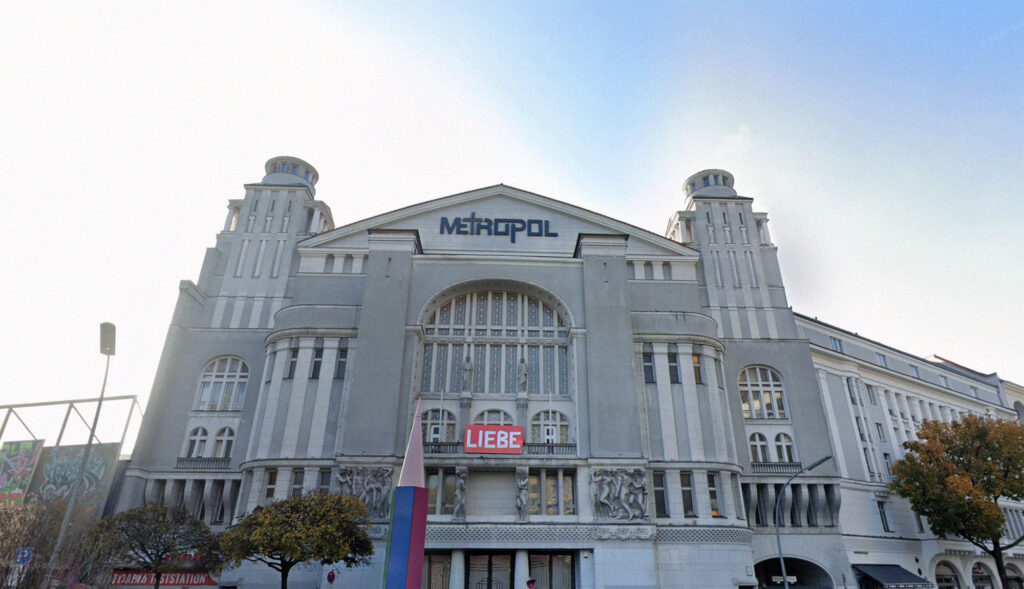
Metropol
Metropol has appeared in movies and series like The Invisible Dr. Mabuse (1962), Demons (1985), Deathline (1996) and Babylon Berlin (2017–).
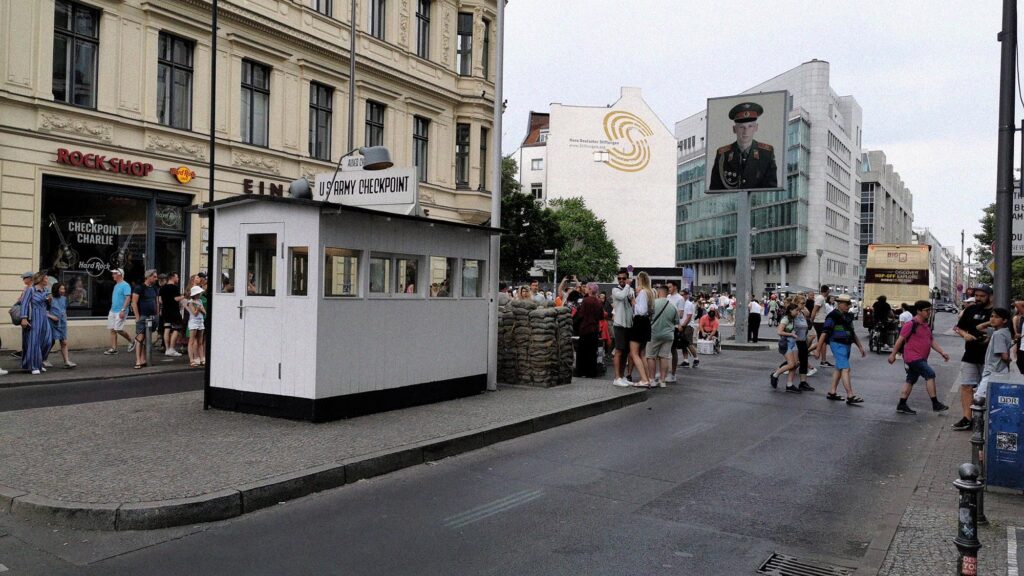
Checkpoint Charlie
Checkpoint Charlie are used in productions on the real site are Octopussy, Funeral in Berlin, and A Dandy in Aspic.
Swinemünder Brücke
Swinemünder Bridge is in Funeral in Berlin, Target, Judgment in Berlin, Die Frau vom Checkpoint Charlie, Das Wunder von Berlin, Weissensee and many more.
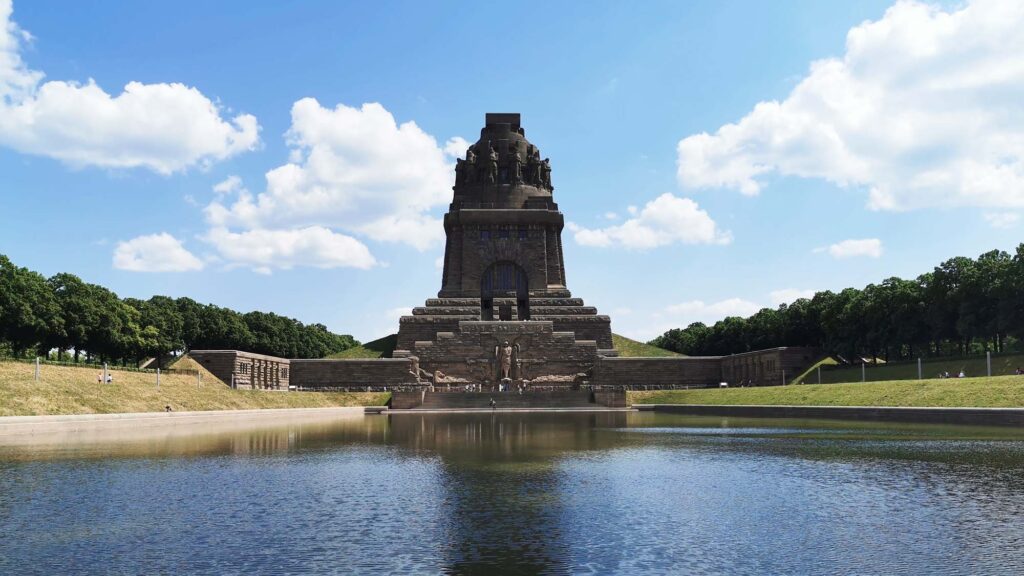
Monument to the Battle of the Nations
The Monument to the Battle of the Nations is in Schwarzer Samt, Das Monstrum, The Hunt for the Amber Room and The Hunger Games The Ballad of Songbirds & Snakes.
Phaeno Science Center
Phaeno Science Center has appeared in The International (2009), Helden – Wenn dein Land dich braucht (2013) and the television series Arcadia (2023).
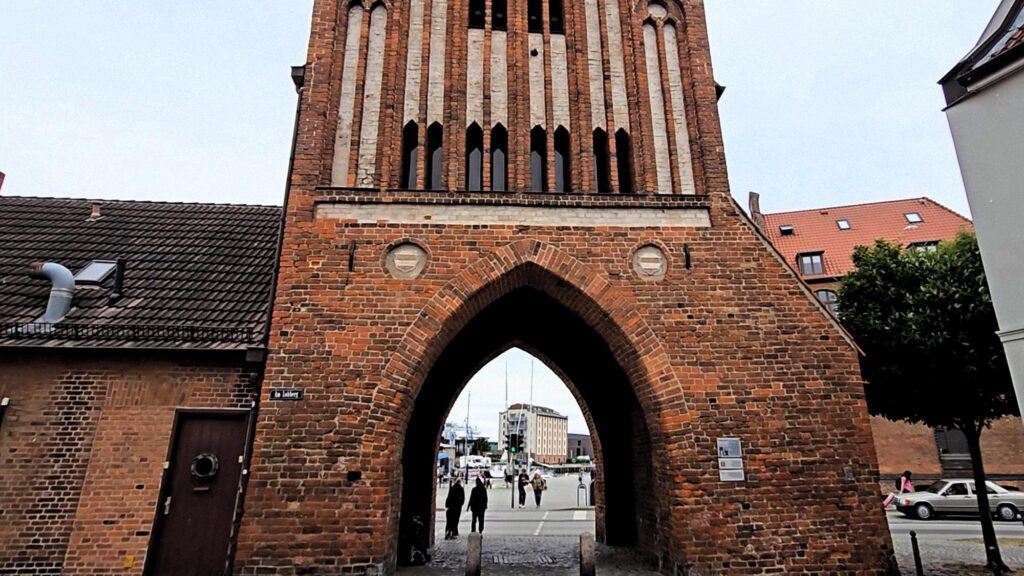
Wassertor
Wassertor appears in Nosferatu: A Symphony of Horror (1922). Wismar was used as the fictional town of Wisborg, and Wassertor is one of the real locations.
Grandhotel Pupp
Grandhotel Pupp has appeared in Waiter, Scarper!, The Death of the Beautiful Deer, Shanghai Knights, Last Holiday, Casino Royale, La Vie en Rose and Nobel.