
Glienicke Bridge, known in German as Glienicker Brücke, is a steel truss bridge across the Havel River connecting the Wannsee district of Berlin with the Berliner Vorstadt district of Potsdam, Germany. The present bridge was inaugurated in 1907, replacing earlier crossings at the same location, and today carries Bundesstraße 1 between the two cities. It was partially destroyed during fighting between German and Soviet forces in the final days of the Second World War and reconstructed after the war, reopening in 1949 under the official name Brücke der Einheit, or Bridge of Unity. The political border between Potsdam in East Germany and the American sector of West Berlin ran directly through the middle of the bridge. Private road traffic was prohibited from 1952, and after the construction of the Berlin Wall in 1961 the crossing became one of the most tightly controlled points on the divided German border. Its isolated position and the ability of both sides to secure the approaches made it particularly suitable for prisoner exchanges. Three major exchanges took place here during the Cold War: Rudolf Abel was exchanged for captured U-2 pilot Francis Gary Powers in 1962; 23 Western prisoners were exchanged for four Eastern Bloc agents in 1985; and Soviet dissident Natan Sharansky and three other prisoners were exchanged for five Eastern agents in 1986. These events gave Glienicke Bridge its internationally recognised nickname, the Bridge of Spies. It reopened to the general public on 10 November 1989, the day after the fall of the Berlin Wall.
Glienicke Bridge has appeared in Under the Bridges (1946), Hilde (2009), Bridge of Spies (2015), Kundschafter des Friedens (2017) and Havelland-Krimi: Hinter der Fassade (2026). Its screen history is unusually closely connected to its real history. Before the division of Germany, it served as the setting for the meeting that begins the central romance in Under the Bridges. Later productions have used the bridge to represent the Cold War border, the construction of the Berlin Wall, intelligence exchanges and contemporary Potsdam. Bridge of Spies is particularly notable for recreating the real 1962 Abel–Powers exchange on the exact bridge where it occurred.
In Under the Bridges (1946), originally released as Unter den Brücken, Glienicke Bridge is the location where bargemen Hendrik and Willy first encounter Anna Altmann. Their barge is travelling along the Havel when the two men notice Anna standing alone on the bridge above them. Believing that she may be preparing to kill herself, they watch her closely, but instead of jumping she throws a ten-mark banknote into the water in an attempt to rid herself of an unpleasant memory. Hendrik and Willy retrieve the money and make contact with her, eventually persuading Anna to travel with them towards Berlin. Both men subsequently fall in love with her, establishing the romantic triangle around which the remainder of the film develops. The production filmed at Glienicke Bridge between May and October 1944, while the Second World War was still underway and before the bridge was damaged during the final fighting around Berlin and Potsdam. The film therefore preserves unusually detailed footage of the structure and surrounding Havel landscape before the post-war division transformed it into a heavily guarded border crossing.
In Hilde (2009), Glienicke Bridge appears during a sequence set on 13 August 1961, the day construction of the Berlin Wall began. Hildegard Knef, played by Heike Makatsch, and her partner David Cameron are driving in her Cadillac from the Wannsee area towards Potsdam when their journey suddenly ends at the bridge. They find the crossing closed and are unable to continue into East Germany as the new border restrictions come into force. The scene uses the real Glienicke Bridge to place Knef directly against one of the defining events in post-war Berlin history. Filming took place on the bridge in 2008, with the production recreating the early Cold War border environment around the period car and the crossing. The location has an additional connection to Knef herself: one of her earliest film appearances was in Under the Bridges, which had been filmed at the same bridge more than sixty years earlier.
In Bridge of Spies (2015), Glienicke Bridge is the setting for the film’s climactic prisoner exchange and represents itself. American lawyer James B. Donovan has negotiated an agreement under which convicted Soviet intelligence officer Rudolf Abel will be exchanged for American U-2 pilot Francis Gary Powers, who was captured after his aircraft was shot down over the Soviet Union. Donovan also insists that American student Frederic Pryor, imprisoned in East Germany, must be released as part of the arrangement. On the morning of the exchange, Abel and Powers are brought to opposite ends of Glienicke Bridge while Donovan waits on the Western side for confirmation that Pryor has been freed separately at Checkpoint Charlie. Only after receiving confirmation does the exchange proceed. Abel and Powers walk towards one another across the bridge and pass near its centre before continuing into the opposing sides.
The production returned to the real location where Abel and Powers had been exchanged on 10 February 1962. Glienicke Bridge was completely closed for filming and extensively returned to its Cold War appearance with barbed wire, guard posts, lighting, period vehicles and other border installations. Modern elements were concealed, including the post-reunification Nike 89 sculpture, while approximately 7.2 tonnes of artificial snow and decorative ice were spread across the bridge to reproduce the freezing conditions of the historical exchange. Lighting and fog equipment were positioned both around the bridge and on boats on the Havel. Obtaining permission required approximately five months of preparation and coordination between 23 different authorities and organisations in Berlin and Potsdam. Steven Spielberg also had to interrupt filming on three occasions to allow emergency vehicles to cross the otherwise closed bridge. The sequence consequently combines one of the film’s most important historical events with the actual location where it occurred.
In Kundschafter des Friedens (2017), Glienicke Bridge is closely connected to former East German intelligence officer Jochen Falk, played by Henry Hübchen. Falk’s history as an operative of the Hauptverwaltung Aufklärung includes being exposed by West German agent Frank Kern in 1985 and subsequently exchanged across Glienicke Bridge, echoing the genuine Cold War exchanges that took place there. Decades later, the retired Falk is recruited by the BND when Kern disappears during a mission, forcing the two former opponents and their families back into one another’s lives. The bridge returns for the final scene after the mission has been completed and uncertainty remains over whether Falk or Kern is the biological father of BND agent Paula Kern. Paula meets Falk on Glienicke Bridge with the results of a paternity test. Rather than resolving the question for everyone, she opens the envelope, reads the result, begins laughing and destroys the paper, leaving the answer unknown. The choice of location brings Falk’s story back to the same bridge associated with the end of his original intelligence career and deliberately plays on its real reputation as the place where East and West exchanged spies.
In Havelland-Krimi: Hinter der Fassade (2026), Glienicke Bridge is one of the central locations of the first film in the ZDF crime series. The investigation begins after university student Doreen Schmidtke is found dead beside the Havel near the bridge following a night at a club. Staatsanwältin Dena Paulos, Kriminalhauptkommissar Max Zeller, Kommissar Lennard Rösken and trainee prosecutor Jasna Nowak arrive at the riverside and begin examining the circumstances surrounding her death. The bridge is clearly visible above the investigation area and repeatedly establishes the geographical location of the crime. Police initially treat the area around the bridge as a possible murder scene, searching the riverbank extensively and recovering the victim’s telephone from the water. The investigation subsequently establishes that the body was brought there rather than the killing taking place at the bridge. The case also revives an unsolved murder from several years earlier involving the same university professor who had once been prosecuted by Paulos and acquitted for lack of evidence. Glienicke Bridge therefore functions as more than an establishing landmark: the discovery beneath it initiates both the new investigation and the unresolved case that returns to haunt the prosecutor.
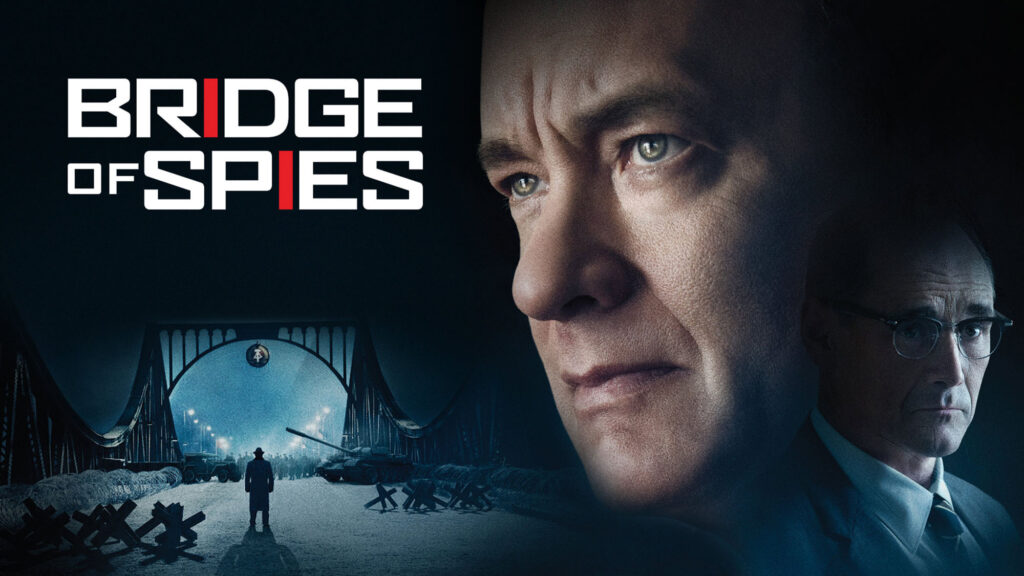
Bridge of Spies
Bridge of Spies is a 2015 historical film directed and co-produced by Steven Spielberg, written by Matt Charman and the Coen brothers, and starring Tom Hanks.
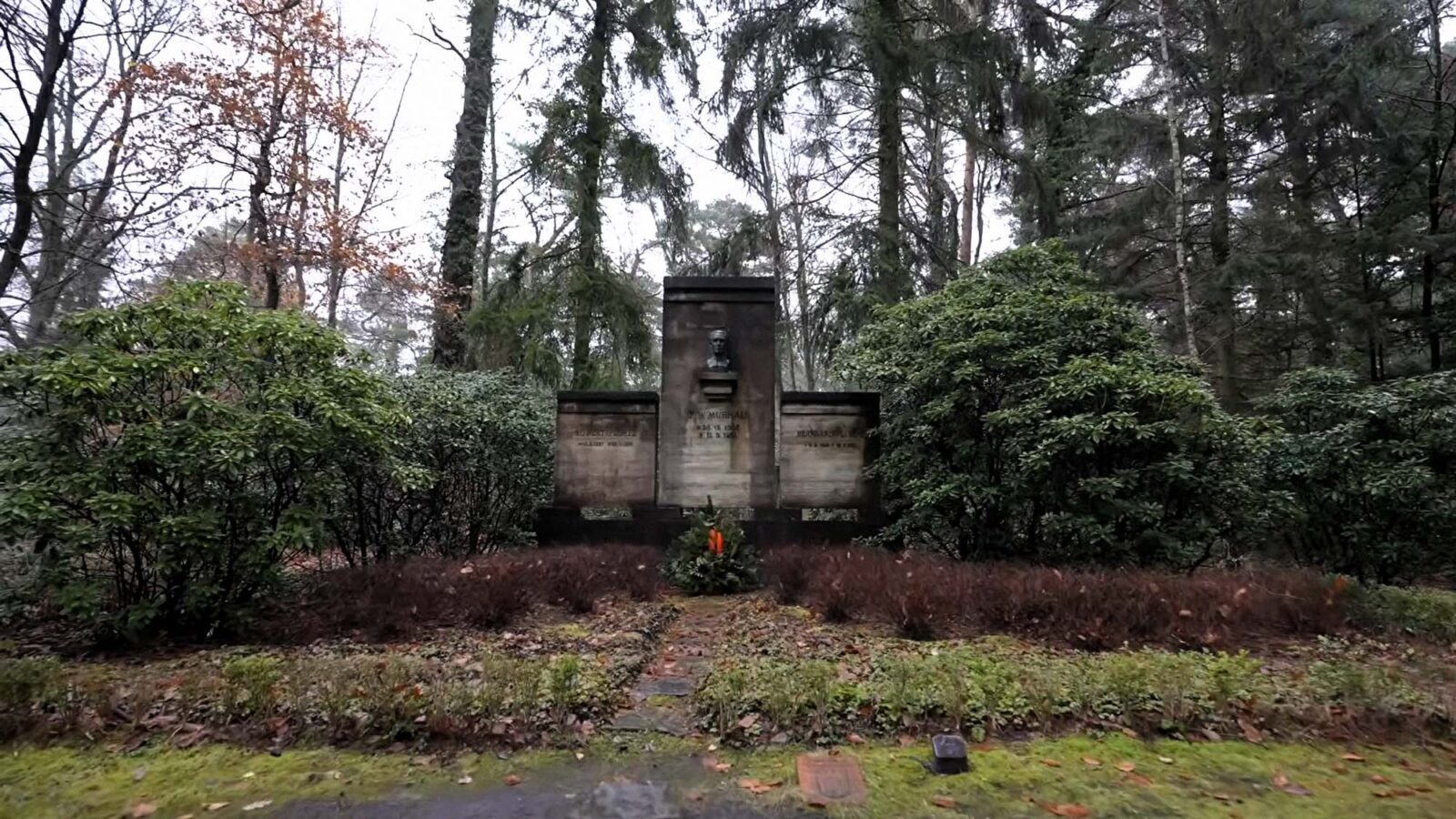
Südwestkirchhof Stahnsdorf
Südwestkirchhof Stahnsdorf is a large forest cemetery in Stahnsdorf, Brandenburg, immediately southwest of Berlin, Germany. The cemetery was created by the Protestant…
Teufelsberg
Teufelsberg is in Aufwind (1979), The Gamblers, We Are the Night, Allein gegen die Zeit, Covert Affairs, Manifesto, Berlin Station, You Are Wanted and more.
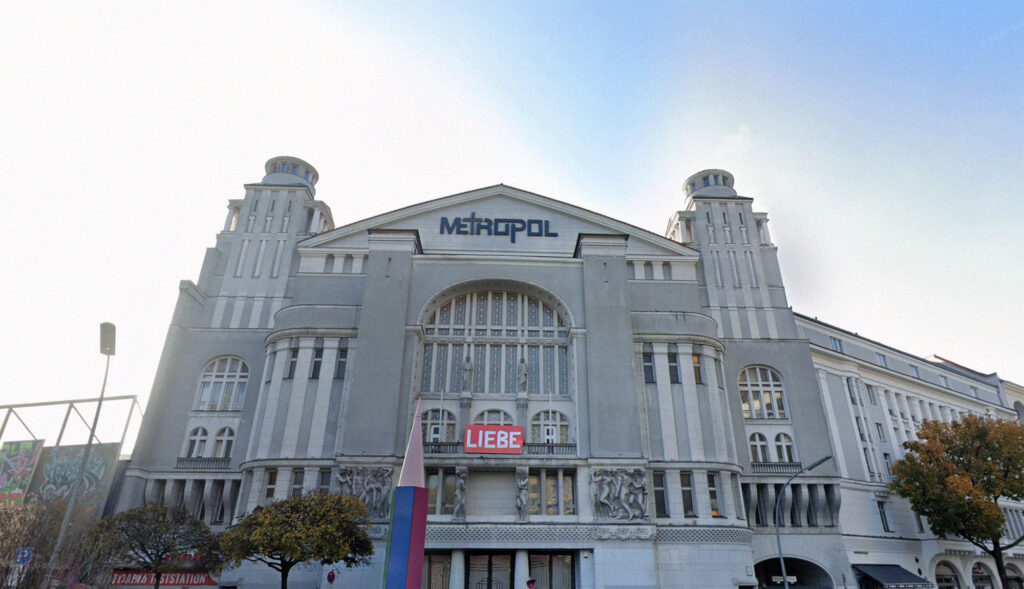
Metropol
Metropol has appeared in movies and series like The Invisible Dr. Mabuse (1962), Demons (1985), Deathline (1996) and Babylon Berlin (2017–).
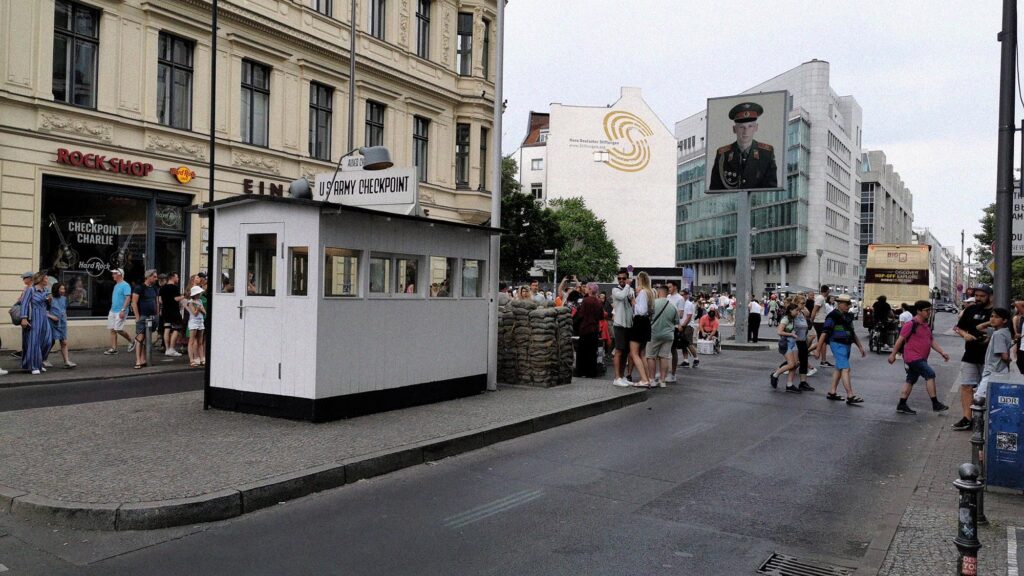
Checkpoint Charlie
Checkpoint Charlie are used in productions on the real site are Octopussy, Funeral in Berlin, and A Dandy in Aspic.
Swinemünder Brücke
Swinemünder Bridge is in Funeral in Berlin, Target, Judgment in Berlin, Die Frau vom Checkpoint Charlie, Das Wunder von Berlin, Weissensee and many more.
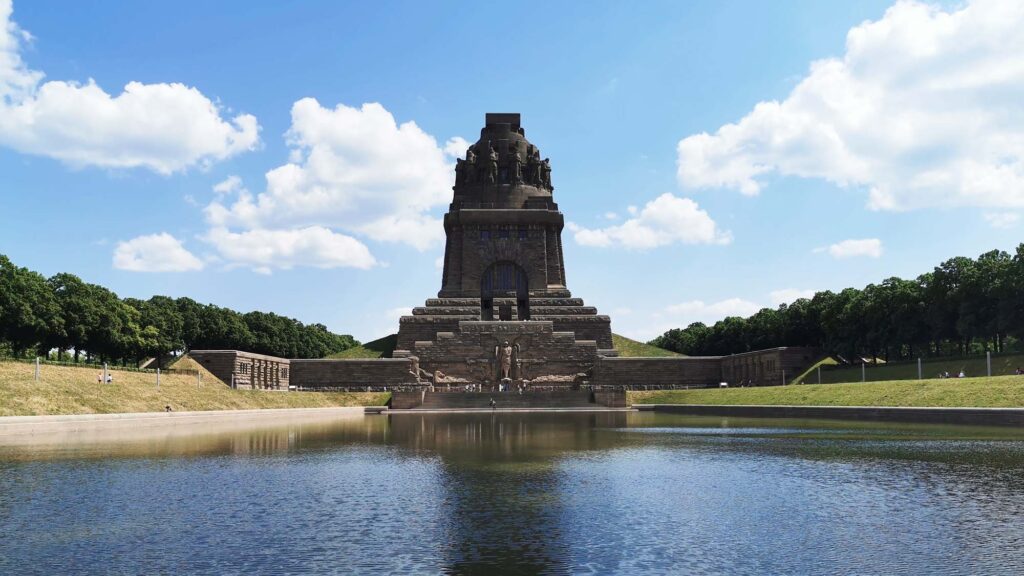
Monument to the Battle of the Nations
The Monument to the Battle of the Nations is in Schwarzer Samt, Das Monstrum, The Hunt for the Amber Room and The Hunger Games The Ballad of Songbirds & Snakes.
Phaeno Science Center
Phaeno Science Center has appeared in The International (2009), Helden – Wenn dein Land dich braucht (2013) and the television series Arcadia (2023).
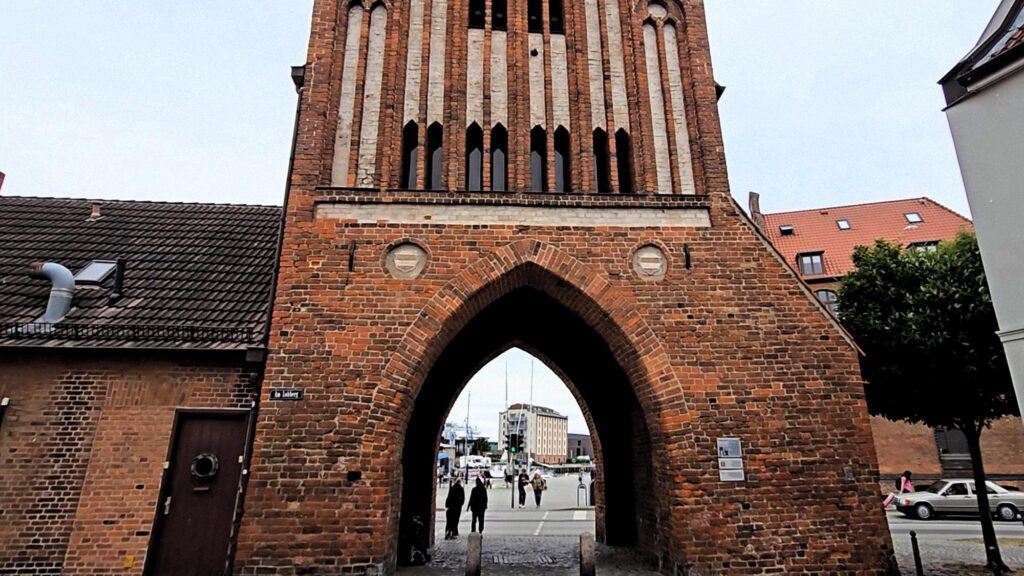
Wassertor
Wassertor appears in Nosferatu: A Symphony of Horror (1922). Wismar was used as the fictional town of Wisborg, and Wassertor is one of the real locations.
Grandhotel Pupp
Grandhotel Pupp has appeared in Waiter, Scarper!, The Death of the Beautiful Deer, Shanghai Knights, Last Holiday, Casino Royale, La Vie en Rose and Nobel.