
Metropol is a historic theatre, concert and event venue at Nollendorfplatz 5 in the Schöneberg district of Berlin, Germany. The building was constructed in 1905–1906 as the Neues Schauspielhaus, designed by Albert Frölich with the architectural firm Boswau & Knauer as part of a larger complex containing a theatre, concert hall, restaurants and other facilities. The main theatre originally accommodated more than 1,100 spectators, while the richly decorated Mozartsaal occupied the front section facing Nollendorfplatz. The Mozartsaal was converted into a cinema in 1911, beginning an association with film exhibition that would last for decades. In 1927, theatre director Erwin Piscator established his influential Piscator-Bühne in the building, creating politically radical productions with collaborators associated with figures including Bertolt Brecht, George Grosz and John Heartfield. Much of the complex was damaged during the Second World War, but the prominent façade and former cinema survived. The building returned primarily to cinema use after the war and adopted the name Metropol in the early 1950s. Cinema operations ended in 1977, after which it became one of West Berlin’s best-known discotheques and concert venues, hosting performers including Depeche Mode, The Human League, OMD, Tina Turner and Front 242. KitKatClub briefly occupied the premises in 2000, and in 2005 architect Hans Kollhoff redesigned the interior for the upscale Goya club. Since 2019 the building has once again operated under the Metropol name as a concert and event venue, with a main capacity of around 1,300 people.
Metropol has appeared in The Invisible Dr. Mabuse (1962), Demons (1985), Deathline (1996) and Babylon Berlin (2017–). The building has played a theatre under its own name, provided the unforgettable exterior of a demon-infested cinema, appeared in a contemporary Berlin thriller and been transformed into a luxurious Weimar-era department store. Its film appearances also preserve several very different periods in the building’s history, from its years as an operating cinema to its 1980s identity as a West Berlin nightclub and its later restoration as an event venue.
In The Invisible Dr. Mabuse (1962), originally released as Die unsichtbaren Krallen des Dr. Mabuse, Metropol appears as the Metropol-Theater, where celebrated dancer Liane Martin is performing to a sold-out audience. During her show, the supposedly empty box in the auditorium displays a series of impossible movements: opera glasses rise by themselves, a programme moves and a chair appears to be occupied by an invisible spectator. A man watching from a neighbouring box follows the mysterious figure and is drawn into the backstage area, where he discovers evidence of a secret operation. He is captured by revue clown Bobo and eventually murdered, while the theatre porter later notices stagehands removing a suspiciously heavy trunk that contains the victim’s body. These events establish the mystery involving Professor Erasmus’s invisibility invention and Dr. Mabuse’s attempt to control it. Production took place in West Berlin during December 1961 and January 1962, with the real Metropol used for theatre location material while additional interiors and effects work were completed at CCC Studios in Berlin-Haselhorst. The appearance is especially interesting because the building was still functioning as a cinema at the time and the film retains its real Metropol identity rather than disguising it as an unrelated location.
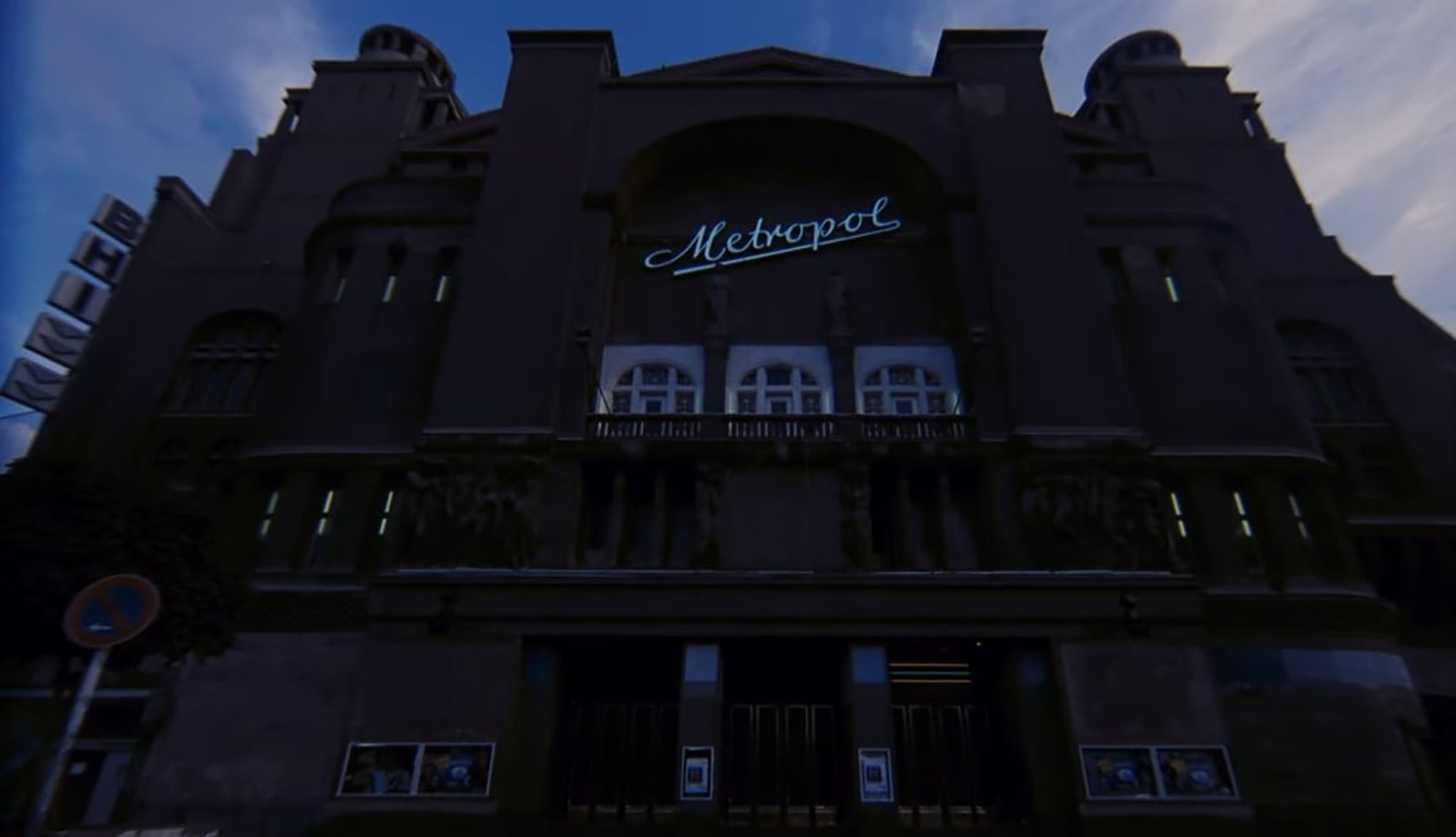
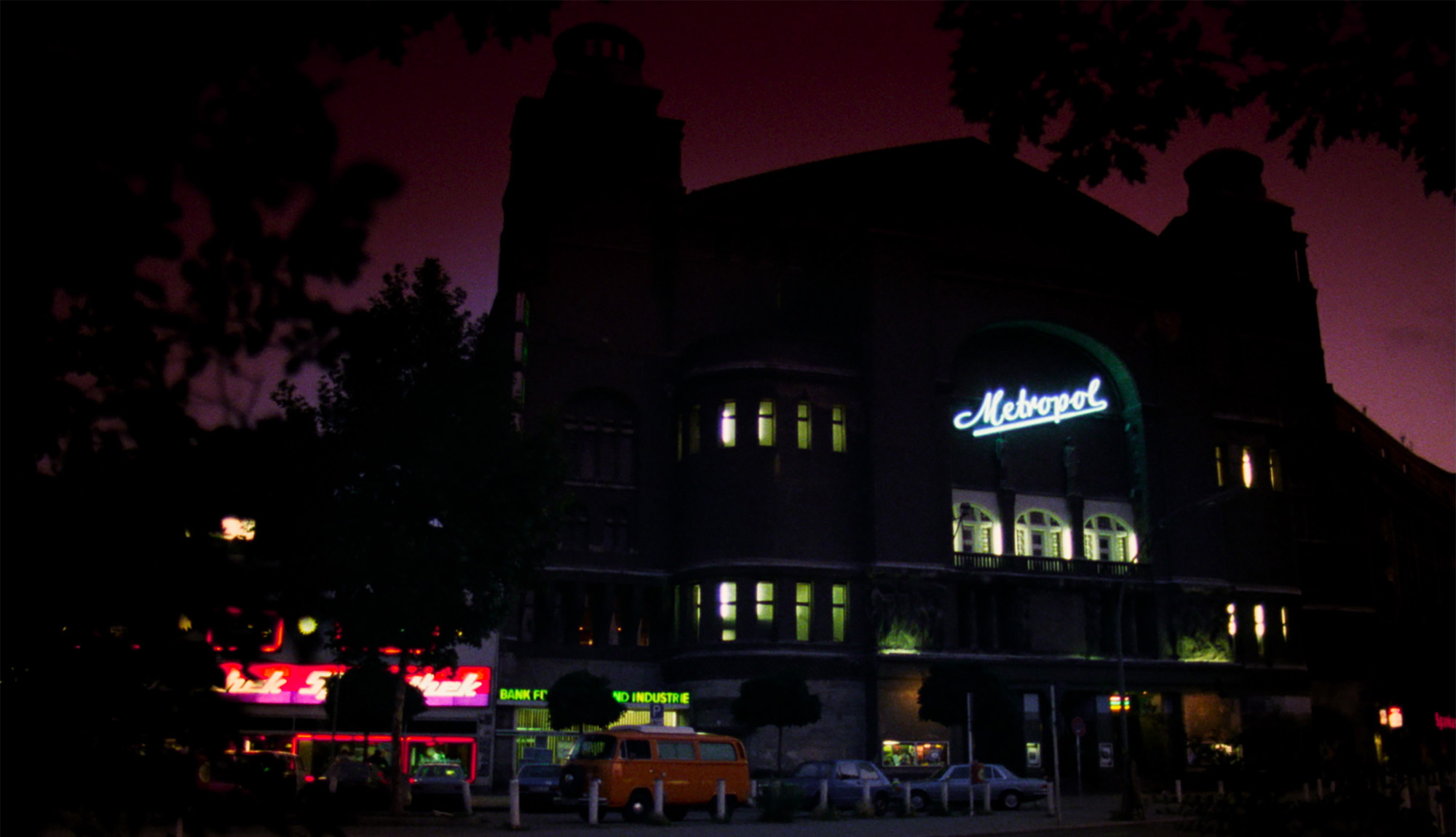
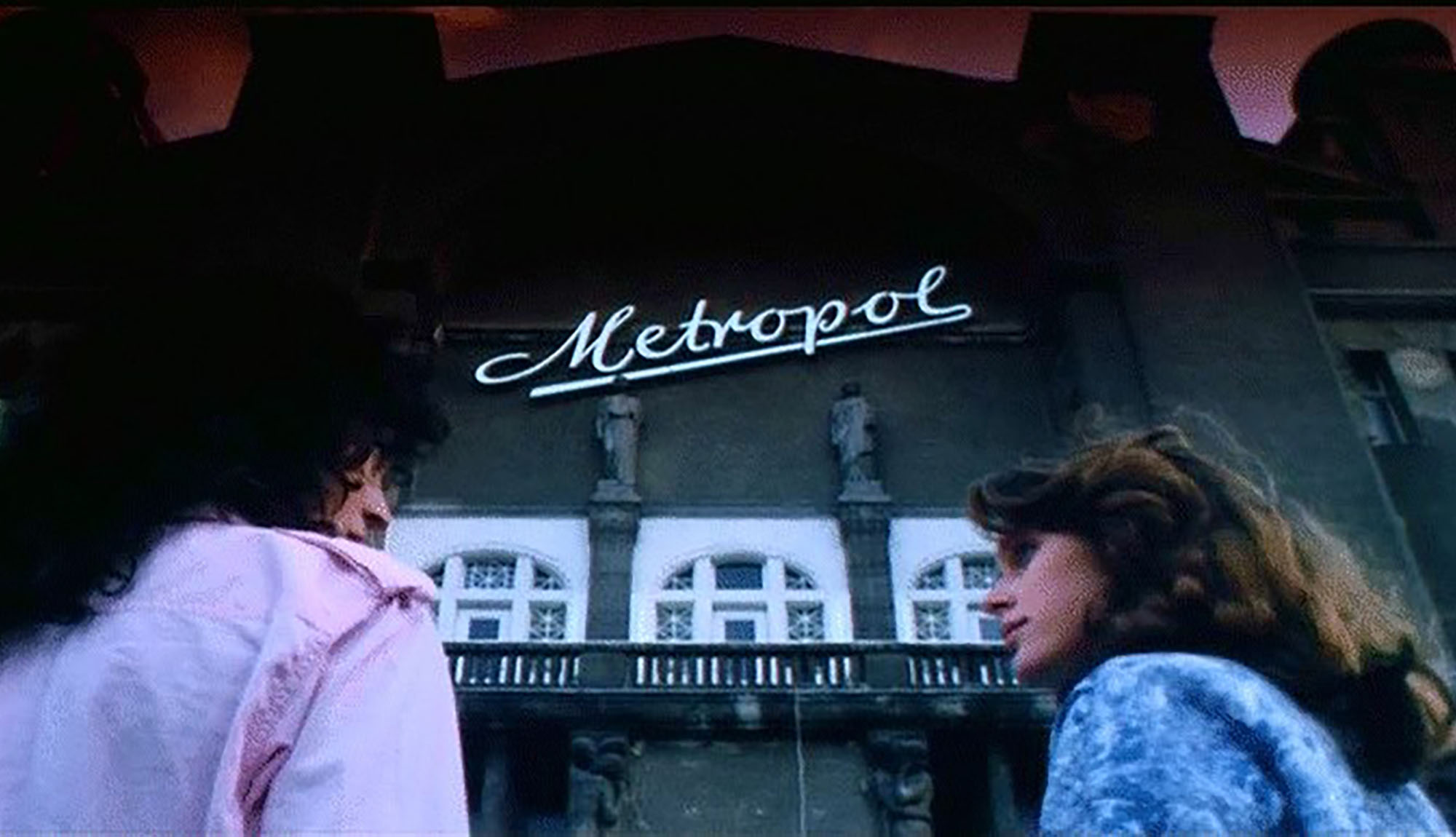
In Demons (1985), originally released as Dèmoni, Metropol provides the exterior of the mysterious cinema in which almost the entire story is set. University student Cheryl is approached in the Berlin U-Bahn by a sinister man wearing a metallic mask, who gives her two complimentary tickets to a screening at the Metropol. She persuades her friend Kathy to accompany her, and the two eventually arrive outside the cinema together with the other invited guests. The imposing façade on Nollendorfplatz is shown with the large illuminated METROPOL lettering above the entrance, establishing the apparently ordinary cinema before the audience becomes trapped inside and gradually transformed into demons. Significantly, the name was not invented for the film: when filming took place in 1985, the building was already operating as the Metropol nightclub and the filmmakers retained its real sign and logo for their fictional cinema. Despite the building becoming visually synonymous with the film, the horrific events inside were not filmed at the Berlin Metropol. Lamberto Bava used the disused Cinema Argo on Via Tiburtina in Rome for much of the cinema interior, together with studio work at De Paolis. The Berlin building therefore contributes primarily the memorable exterior and entrance that frame the story rather than the auditorium, lobby and corridors in which the demon outbreak unfolds.
In Deathline (1996), originally released as Der kalte Finger, Metropol was one of the real Berlin locations used for Ralf Huettner’s erotic thriller. The film follows Conny, a young hospital receptionist who supplements her income by working for a telephone-sex service under the name Kim. Her increasingly intense conversations with an anonymous caller known as “Der kalte Finger” become threatening when she realises that his violent sexual fantasies may be connected with a series of murders around Berlin. The production was filmed almost entirely on location in the city between July and August 1995, with the Metropol specifically documented among its locations. At that time the building was still part of Berlin’s nightlife scene, giving the film access to a very different version of the venue from the cinema seen in The Invisible Dr. Mabuse (1962) or the later renovated interior. Detailed surviving location records confirm the Metropol shoot but do not identify the individual scene sufficiently clearly to assign a particular conversation or murder sequence to the building without speculation.
In Babylon Berlin (2017–), Metropol is transformed into the luxurious Tietz department store during the opening episode of the fourth season, set on New Year’s Eve 1930. While Berlin descends into political violence outside, Charlotte Ritter’s teenage sister Toni and her boyfriend Benni break into the Jewish-owned department store to steal jewellery and other valuables. At the same time, Gereon Rath’s nephew Moritz and other young Nazi supporters climb onto the building to display an antisemitic boycott banner. Police responding to the burglary pursue Toni and Benni through the store and onto the roof, where officer Kuschke deliberately pushes Benni to his death. Charlotte later arrives as a police photographer and gradually realises that her sister was involved in the burglary. The ornate interior of Metropol was extensively dressed with counters, glass display cases, merchandise and period decoration to create the grand Kaufhaus Tietz sales floor. Exterior scenes depicting the violent SA attacks on Berlin’s Kurfürstendamm were filmed elsewhere, particularly on Karl-Marx-Allee, meaning that Metropol specifically provides the department-store interiors rather than the entire geographical setting surrounding Tietz.
Demons (1985)
Demons
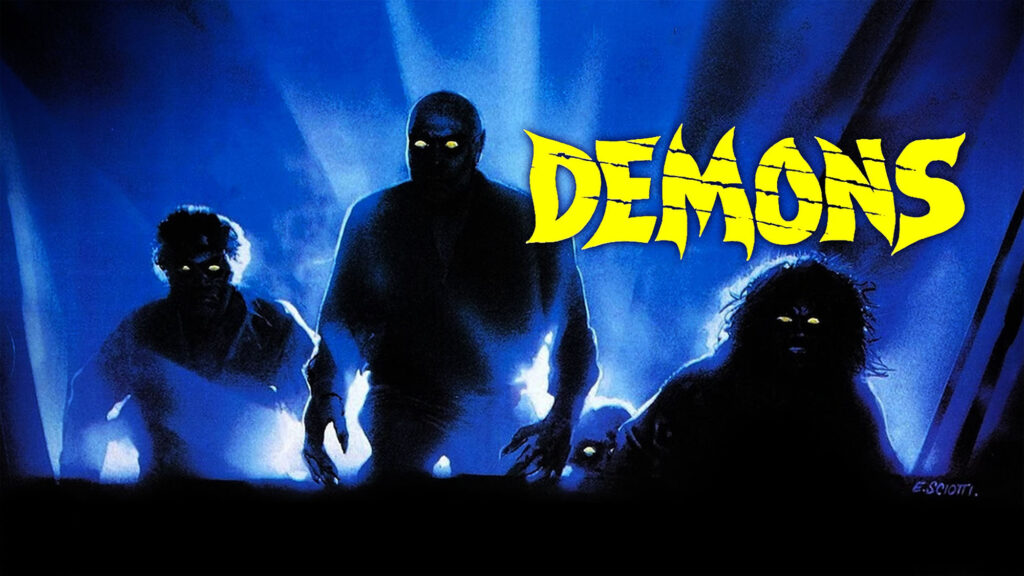
Demons was filmed over nine weeks in West Berlin and at De Paolis Studios in Rome. The iconic "Metropol" cinema exteriors were shot in Berlin.
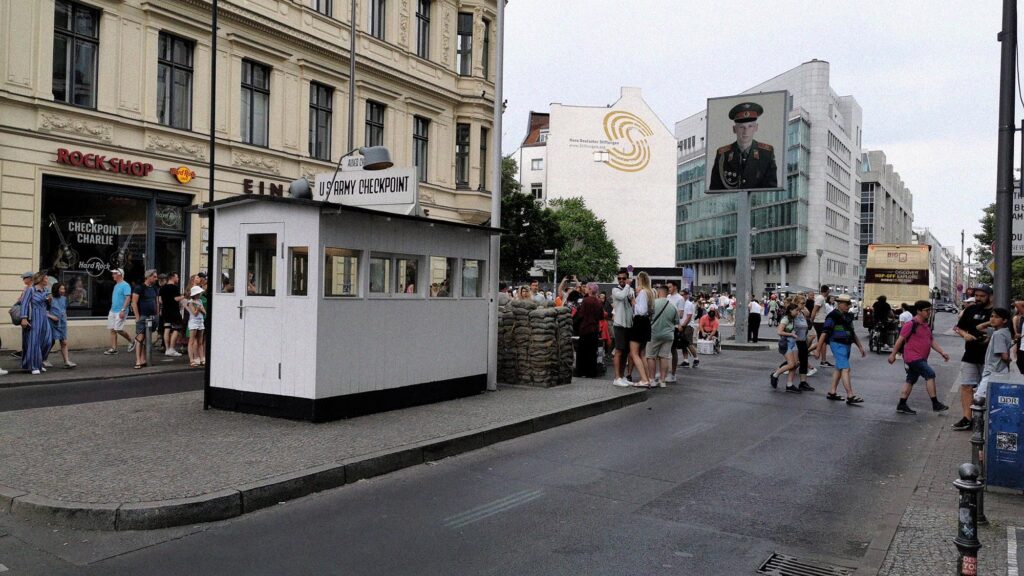
Checkpoint Charlie
Checkpoint Charlie are used in productions on the real site are Octopussy, Funeral in Berlin, and A Dandy in Aspic.
Swinemünder Brücke
Swinemünder Bridge is in Funeral in Berlin, Target, Judgment in Berlin, Die Frau vom Checkpoint Charlie, Das Wunder von Berlin, Weissensee and many more.
Teufelsberg
Teufelsberg is in Aufwind (1979), The Gamblers, We Are the Night, Allein gegen die Zeit, Covert Affairs, Manifesto, Berlin Station, You Are Wanted and more.
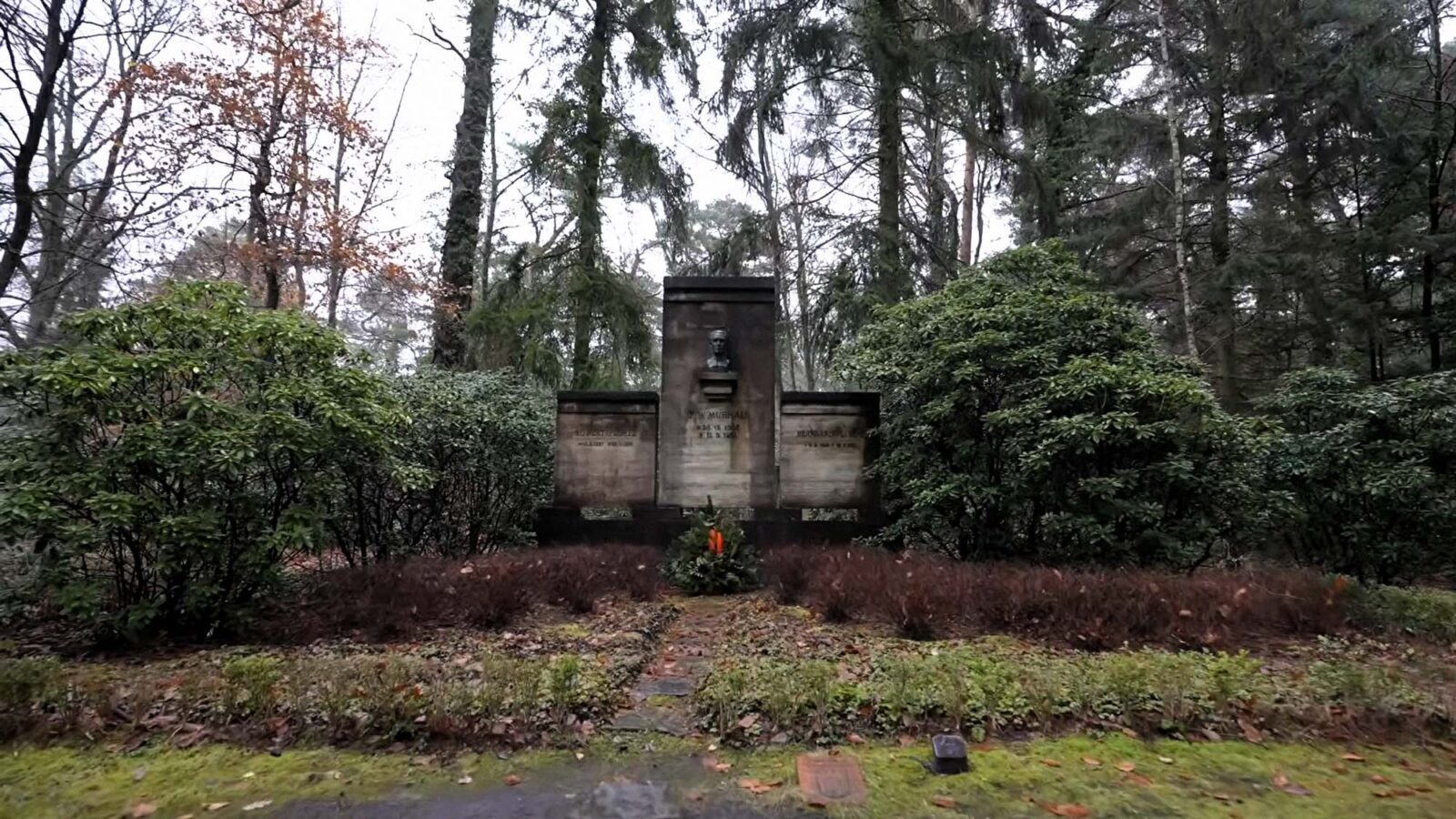
Südwestkirchhof Stahnsdorf
Südwestkirchhof Stahnsdorf is a large forest cemetery in Stahnsdorf, Brandenburg, immediately southwest of Berlin, Germany. The cemetery was created by the Protestant…
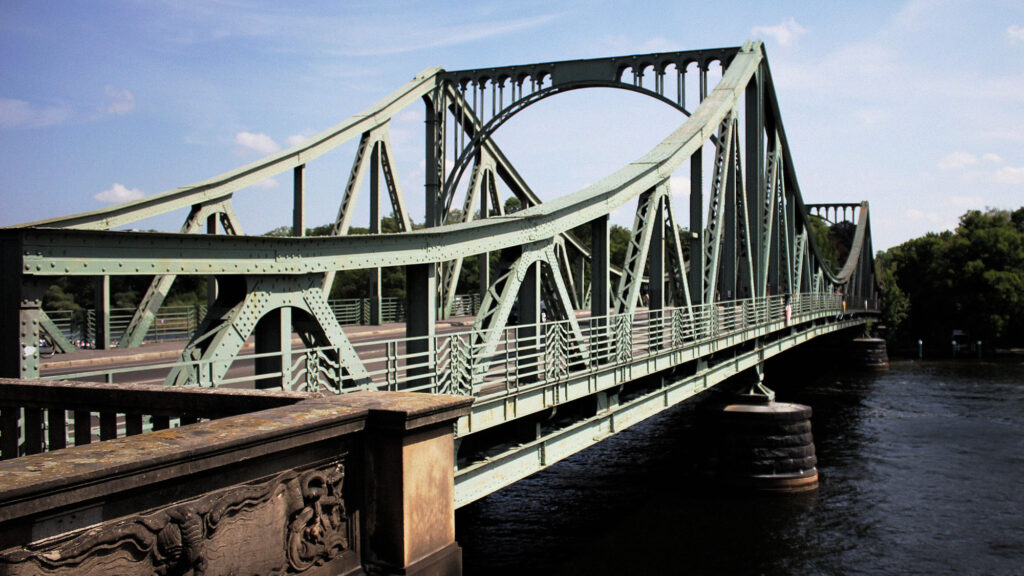
Glienicke Bridge
Glienicke Bridge has appeared in Under the Bridges, Hilde, Bridge of Spies, Kundschafter des Friedens and Havelland-Krimi: Hinter der Fassade.
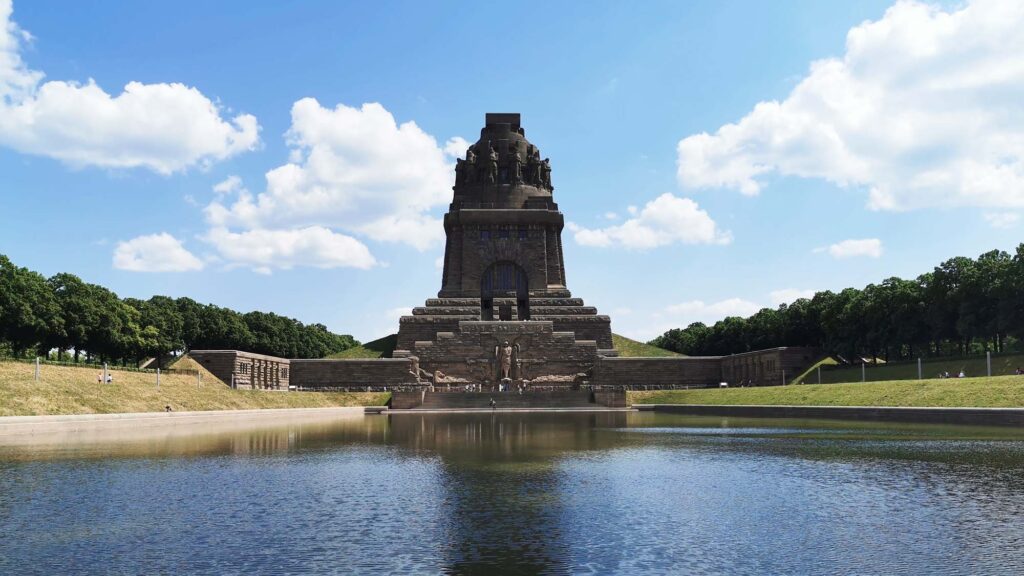
Monument to the Battle of the Nations
The Monument to the Battle of the Nations is in Schwarzer Samt, Das Monstrum, The Hunt for the Amber Room and The Hunger Games The Ballad of Songbirds & Snakes.
Phaeno Science Center
Phaeno Science Center has appeared in The International (2009), Helden – Wenn dein Land dich braucht (2013) and the television series Arcadia (2023).
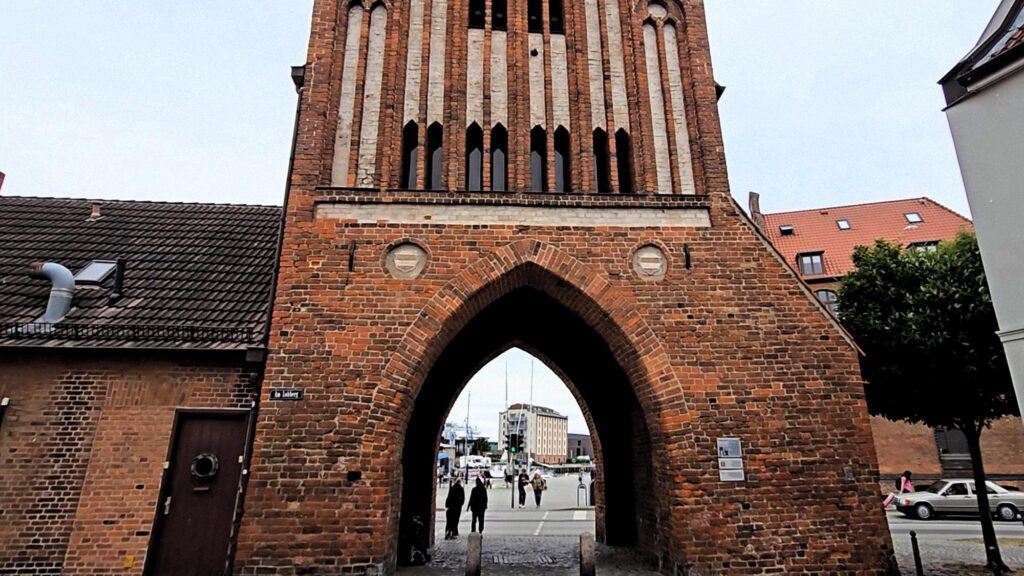
Wassertor
Wassertor appears in Nosferatu: A Symphony of Horror (1922). Wismar was used as the fictional town of Wisborg, and Wassertor is one of the real locations.
Grandhotel Pupp
Grandhotel Pupp has appeared in Waiter, Scarper!, The Death of the Beautiful Deer, Shanghai Knights, Last Holiday, Casino Royale, La Vie en Rose and Nobel.