
Plaza de España is a monumental public square within María Luisa Park in Seville, Spain, constructed as the principal Spanish pavilion for the Ibero-American Exposition of 1929. Sevillian architect Aníbal González presented the original design in 1914 and oversaw most of the construction before resigning in 1926, after which Vicente Traver completed the project for the opening of the exposition. The complex covers approximately 50,000 square metres and consists of a vast semicircular plaza surrounded by an arcaded building combining Spanish Regionalist, Neo-Renaissance and Neo-Mudéjar architecture. A 515-metre canal follows the curve of the building and is crossed by four ornamental bridges, while ceramic alcoves around the lower level represent the provinces of Spain through maps, coats of arms and historical scenes. Two tall towers terminate the curved structure at either end. Originally built as an exhibition complex, the buildings subsequently became government and military offices. Plaza de España has also developed one of the longest screen histories of any location in Seville, appearing in Spanish cinema from the 1930s before becoming internationally recognisable through Lawrence of Arabia and Star Wars. In 2017, the European Film Academy designated Plaza de España a Treasure of European Film Culture in recognition of its importance as a filming location.
Plaza de España has appeared in María de la O (1936), ¡Olé torero! (1948), Jalisco canta en Sevilla (1949), La hermana San Sulpicio (1952), Good-bye Sevilla (1955), Pan, Love and Andalusia (1958), The Female (1959), Scent of Mystery (1960), Lawrence of Arabia (1962), The Wind and the Lion (1975), Star Wars: Episode II – Attack of the Clones (2002), The Dictator (2012), Ocho apellidos catalanes (2015), the television series Allí abajo (2015–2019) and KAOS (2024). The square has alternately represented Seville itself, Cairo, Damascus, Tangier, the fictional North African state of Wadiya, the planet Naboo and a modernised version of ancient Crete.
In María de la O (1936), Plaza de España appears as part of the film’s presentation of contemporary Seville. The drama, starring Carmen Amaya and Pastora Imperio, contrasts traditional areas of the city with the newer monumental spaces created for the 1929 Ibero-American Exposition. Views towards the towers of Plaza de España place the structure within the landscaped surroundings of María Luisa Park, presenting it as part of the modern, garden-like expansion of Seville rather than as a historical monument from the city’s older centre. The film is one of the earliest known fictional productions to incorporate Plaza de España following the completion of the complex only a few years earlier.
In ¡Olé torero! (1948), Plaza de España appears during a tourist carriage ride through Seville. The film follows a Swedish man who becomes fascinated with bullfighting after travelling to Spain and eventually attempts to become a bullfighter himself. During his introduction to Seville, he is taken on an extensive horse-drawn carriage tour encompassing the Santa Cruz district and María Luisa Park. Plaza de España forms part of the route, with the comedy including a joke in which the tourist is charged an excessive amount by the carriage driver for the grand tour. The sequence reflects the way the plaza had already become established in Spanish cinema as an instantly recognisable visual shorthand for Seville.
In Jalisco canta en Sevilla (1949), Plaza de España becomes the setting for the first encounter between the Mexican and Spanish sides of the story. The film centres on Mexican charros who travel to Seville, combining stereotypical images of Mexican ranchera culture with Andalusian music and traditions. The charros walk through Plaza de España and encounter Araceli riding on horseback, placing their introduction directly within one of the city’s most monumental public spaces. The location was particularly appropriate for a Spanish-Mexican co-production because the plaza itself had been constructed for an exposition intended to emphasise Spain’s cultural relationship with Latin America.
In La hermana San Sulpicio (1952), Plaza de España forms part of a sightseeing journey through Seville. Ceferino Sanjurjo, played by Jorge Mistral, travels through the city by horse-drawn carriage and reacts with admiration to an environment very different from his native Galicia. His route takes him through several of Seville’s best-known locations, including María Luisa Park and Plaza de España. The sequence uses the plaza openly as itself, continuing its post-war screen role as one of the principal landmarks through which visiting characters are introduced to the city.
In Good-bye Sevilla (1955), Plaza de España is used for the culmination of a large musical sequence. Pedro de Córdoba and Maruja Díaz perform alongside a substantial group of flamenco dancers gathered from around the Province of Seville. The performance develops through the city before reaching the monumental plaza, whose open space, bridges and curved architecture provide the setting for the climax of the number. The production was one of several Spanish and international films during the 1950s that exploited Plaza de España not merely for establishing shots but as a large outdoor stage capable of accommodating extensive musical performances.
In Pan, Love and Andalusia (1958), originally released as Pan, amor y… Andalucía, Plaza de España is the setting for an international band competition in Seville. Antonio Carotenuto, played by Vittorio De Sica, travels from Italy to Spain with the Banda Bianca di Sorrento and becomes increasingly fascinated with dancer Carmen García, played by Carmen Sevilla. During the competition, spectators crowd around the tiled provincial alcoves while the bands perform in the enormous central space. Carmen eventually performs a dance to Rossini’s “Tarantella” in front of the assembled audience. The production uses the entire monumental scale of Plaza de España for the musical spectacle, making the architecture, provincial benches and crowds part of the performance rather than simply a background view of Seville.
In The Female (1959), originally released as La femme et le pantin, Plaza de España appears during the Seville section of the romantic drama starring Brigitte Bardot. Eva travels through the crowded April Fair and pursues Matteo across the city until reaching Plaza de España. Matteo is seen travelling along the artificial canal in a small boat with another woman while Eva follows him from the surrounding plaza. The scene makes unusually extensive use of the canal, one of the location’s most distinctive architectural features, while connecting Plaza de España directly with the nearby fairgrounds at the Prado de San Sebastián as they existed at the time.
In Scent of Mystery (1960), Plaza de España forms part of an elaborate April Fair sequence. The mystery film follows English writer Oliver Larker as he becomes involved in an attempt to prevent the murder of a mysterious woman while travelling through Spain. During the Seville section, crowds gather around Plaza de España as fireworks are launched and performers dance sevillanas and flamenco. Several dancers perform directly on the ornamental bridges crossing the canal, with decorations, streamers and the surrounding fair creating a much busier environment than the plaza normally presents today. The sequence uses the real location as Seville rather than disguising it as another city.
In Lawrence of Arabia (1962), Plaza de España represents several parts of British-controlled Cairo and contributes to material representing Damascus. After Lawrence crosses the Sinai with Farraj and returns to British headquarters, their military truck arrives outside the enormous central building of Plaza de España. Farraj accompanies Lawrence towards the officers’ area despite attracting hostility from British personnel because he is an Arab servant. The building and arcades provide the exterior of the British headquarters, while an interior courtyard within the central Plaza de España complex was also used for the officers’ club. This is sometimes incorrectly identified as the courtyard of Hotel Alfonso XIII, which was another Lawrence of Arabia location nearby.
The Plaza de España towers were also incorporated into wider views used to create Damascus, with additional architectural elements helping the Sevillian Regionalist buildings pass for a Middle Eastern city. David Lean used several other locations around Seville for Cairo, Jerusalem and Damascus, including Casa de Pilatos, the Real Alcázar, Plaza de América and the Casino de la Exposición. Plaza de España nevertheless remains one of the film’s most recognisable urban locations, particularly during Lawrence and Farraj’s arrival at British headquarters.
In The Wind and the Lion (1975), Plaza de España represents diplomatic buildings in Tangier, Morocco, during the international crisis surrounding the kidnapping of Eden Pedecaris and her children by Berber leader Mulai Ahmed er Raisuli. Different sections of the semicircular complex are used as the French and German consulates as European powers react to the crisis and military forces gather in the city. John Milius filmed extensively in Seville and deliberately reused several locations that David Lean had previously transformed into North African and Middle Eastern settings for Lawrence of Arabia. Once again, Plaza de España’s combination of arcades, brickwork, towers and Moorish-influenced decoration allowed a Spanish building to represent architecture elsewhere in the region.
In Star Wars: Episode II – Attack of the Clones (2002), Plaza de España represents part of Theed, the capital city of Naboo. After Senator Padmé Amidala returns to her home planet with Anakin Skywalker and R2-D2, the three cross one of the plaza’s bridges and walk through its long curved colonnade on their way to meet Queen Jamillia at the Royal Palace. Padmé and Anakin discuss the political situation and their arrival while attendants carry their luggage behind them. The real architecture remains immediately recognisable, but digital effects significantly enlarge the location. The semicircular Plaza de España was extended into a complete circular complex, additional towers and buildings were added and the surrounding Seville environment was replaced by the architecture and landscape of Naboo. Approximately 50 local extras participated in the Seville shoot, which lasted two days in September 2000. Despite the digital alterations, the bridge, balustrades, tiled surfaces and arcades remain clearly identifiable throughout the finished scene.
In The Dictator (2012), Plaza de España represents the presidential palace of Admiral General Aladeen in the fictional North African Republic of Wadiya. The enormous semicircular building appears in establishing views of Aladeen’s residence and during material showing the extravagant political environment surrounding the dictator. Digital effects alter the real Sevillian complex, adding decorations, banners and other architectural elements appropriate to Aladeen’s personality and authoritarian regime. Although much of the film takes place in New York after Aladeen travels to the United Nations, Plaza de España establishes the scale of his wealth and power during the Wadiya sequences and provides the exterior identity of his palace.
In Ocho apellidos catalanes (2015), Plaza de España appears during the opening presentation of Rafa’s life back in Seville. After the events of Ocho apellidos vascos, the story initially returns to Andalusia before Rafa, Koldo and the other characters become involved in Amaia’s planned wedding in Catalonia. The opening Seville material presents an intentionally concentrated collection of Andalusian imagery, including Holy Week, flamenco, horse-drawn carriages and some of the city’s most recognisable landmarks. Plaza de España appears during this montage, with carriage and horseback material using the monumental square to immediately establish Rafa’s return to his familiar Sevillian environment before the story moves north.
In Allí abajo (2015–2019), Plaza de España is associated with one of the central relationships in the series and appears during the early development of Iñaki and Carmen’s story. The romantic comedy repeatedly contrasts Iñaki’s Basque background with Carmen’s life in Seville, using real locations throughout the city rather than relying entirely on studio environments. Plaza de España is the location of the first meeting between Carmen and Iñaki, establishing one of Seville’s most recognisable landmarks at the beginning of the relationship that drives the series. The location subsequently became closely associated with the programme’s visual presentation of the city alongside other recurring Seville streets, squares and monuments.
In KAOS (2024), Plaza de España represents the monumental centre of Heraklion on the island of Krete and forms part of President Minos’ palace complex. The series reimagines Greek mythology in a contemporary world where Zeus and the other gods remain in power, while Minos rules Krete as president. Plaza de España appears prominently during the Olympia Day celebrations, when Orpheus performs before a large public audience in the square. The surrounding government buildings also provide the exterior of Minos’ palace, connecting the public ceremonial space directly with his authoritarian government. The location returns during the political storyline involving Minos, his daughter Ariadne, the imprisoned Trojan Seven and the prophecy surrounding his children. Rather than attempting to recreate ancient Crete, the production uses the monumental twentieth-century architecture of Plaza de España to create a deliberately modern, wealthy and authoritarian version of the mythological kingdom.
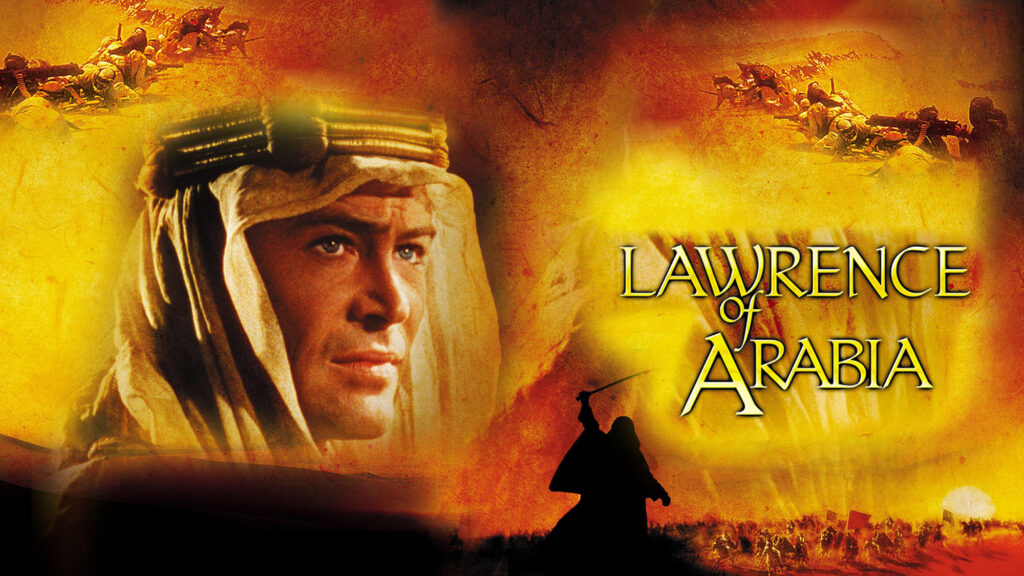
Lawrence of Arabia
Lawrence of Arabia is a 1962 epic biographical adventure drama film directed by David Lean and produced by Sam Spiegel.

Star Wars: Episode II – Attack of the Clones
Star Wars: Episode II – Attack of the Clones was shot through a mix of studio production in Australia and location work in Tunisia, Italy and Spain.
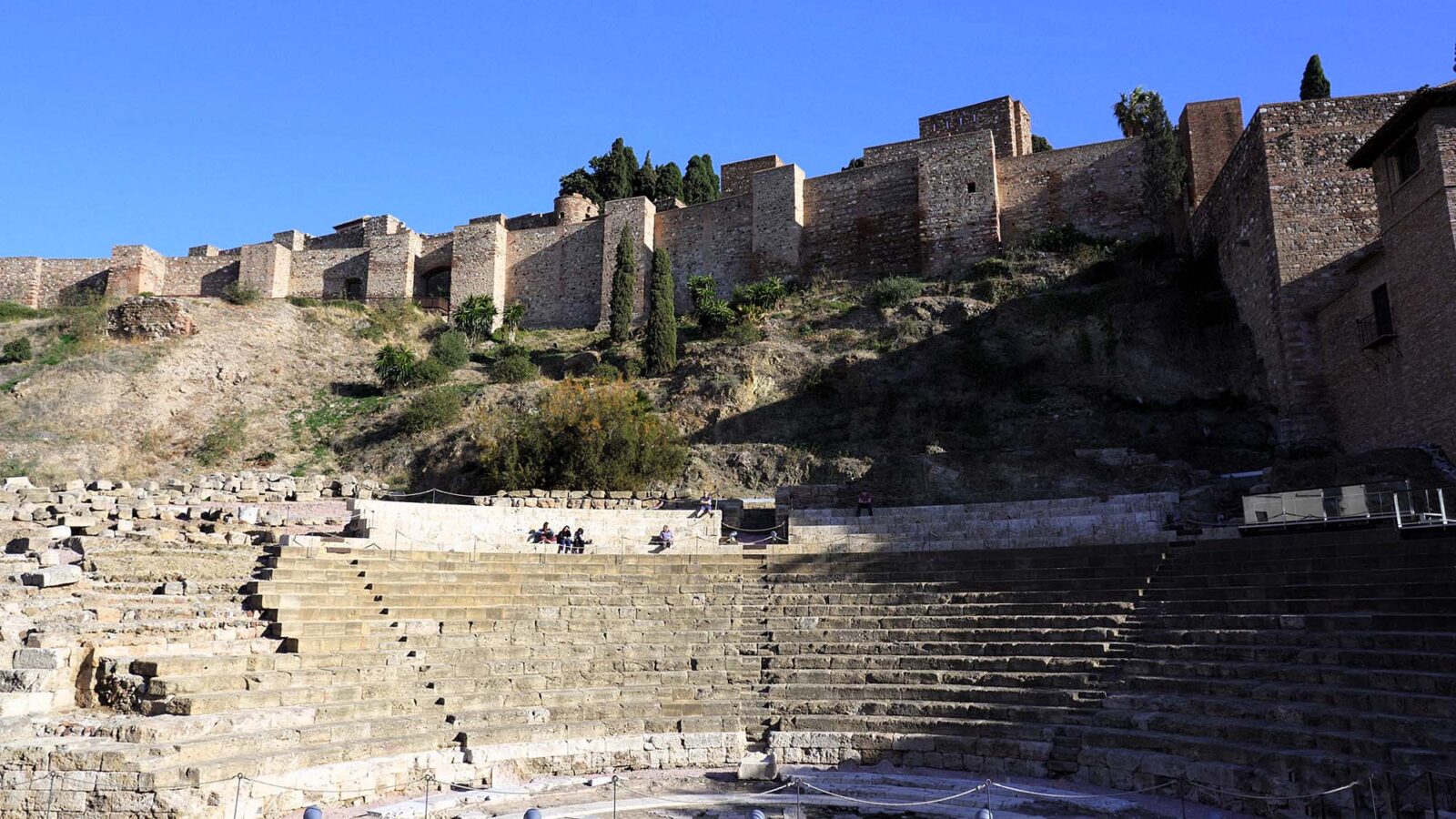
Alcazaba of Málaga
The Alcazaba of Málaga has appeared in Operation Cabaret (1967), Soldier of God (2005) and Nefissa (2016).
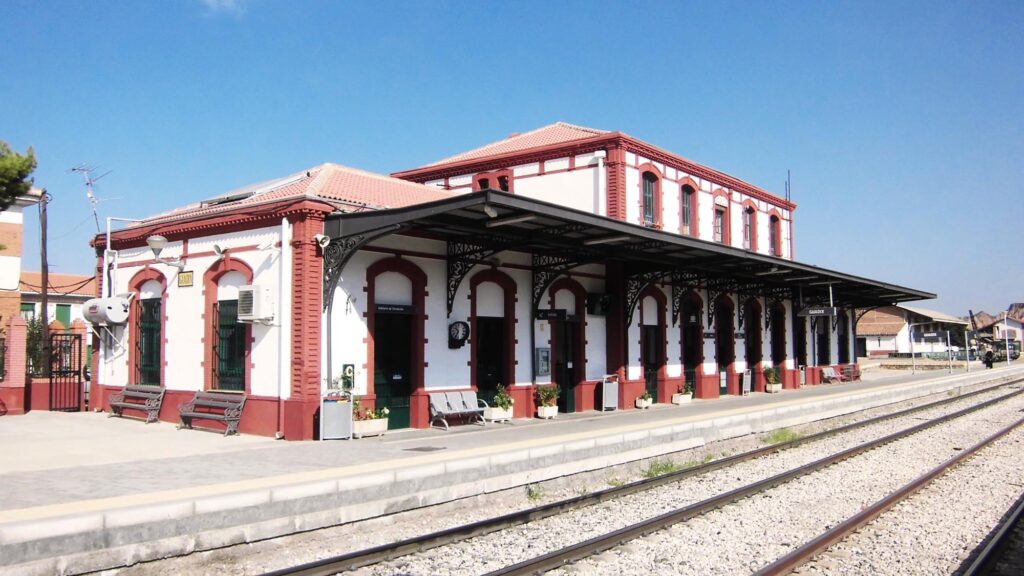
Guadix Railway Station
Guadix Railway Station has appeared in North West Frontier, Doctor Zhivago, A Bullet for the General, Indiana Jones and the Last Crusade, and many more.

Alcazaba of Almería
The Alcazaba of Almería is in Cleopatra, The Rat Patrol, Duffy, Patton, The Horsemen, Antony and Cleopatra, The Four Musketeers, The Wind and the Lion and more.
Escuela de Arte de Almería
Escuela de Arte de Almería is in Catlow, Indiana Jones and the Last Crusade, El Ingenio, Die Akte General, Amanece and Lee Cronin’s The Mummy.
Palácio Estoril Hotel
Palácio Estoril Hotel has appeared in Dois Dias no Paraíso (1957), On Her Majesty’s Secret Service (1969) and The Easy Way (2008).
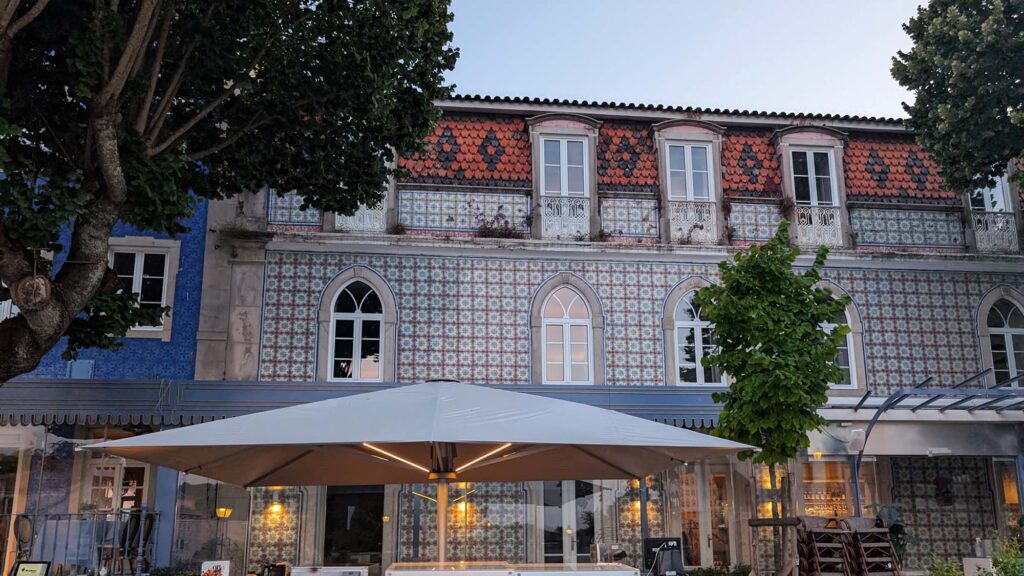
Central Hotel
Central Hotel appears in The Ninth Gate. The film uses several Sintra locations during Dean Corso’s search for the authentic copy of the book he is after.
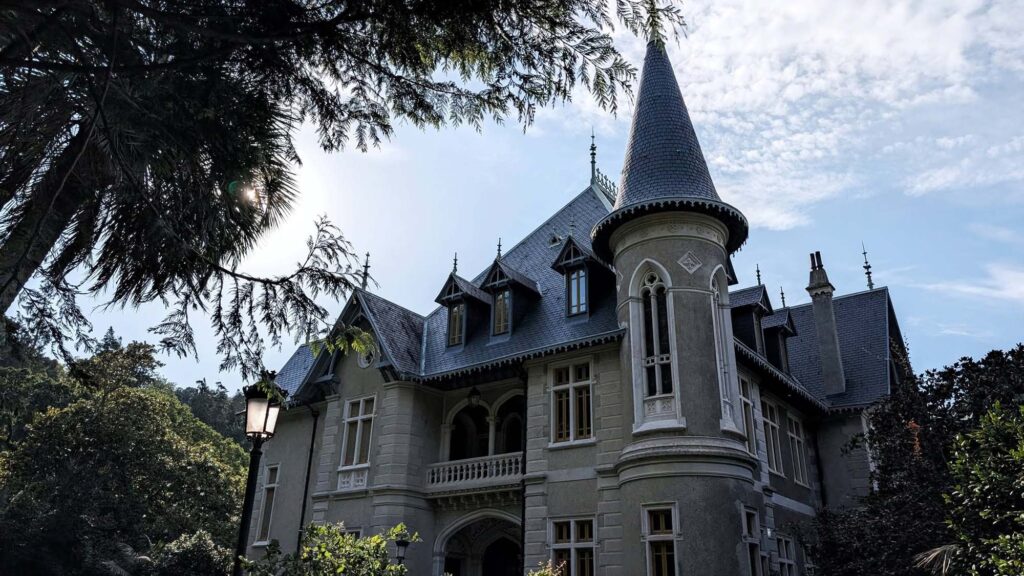
Biester Palace
Biester Palace appears in The Ninth Gate (1999). It is used for the scenes at Victor Fargas’s residence, where Dean Corso visits during his investigation.
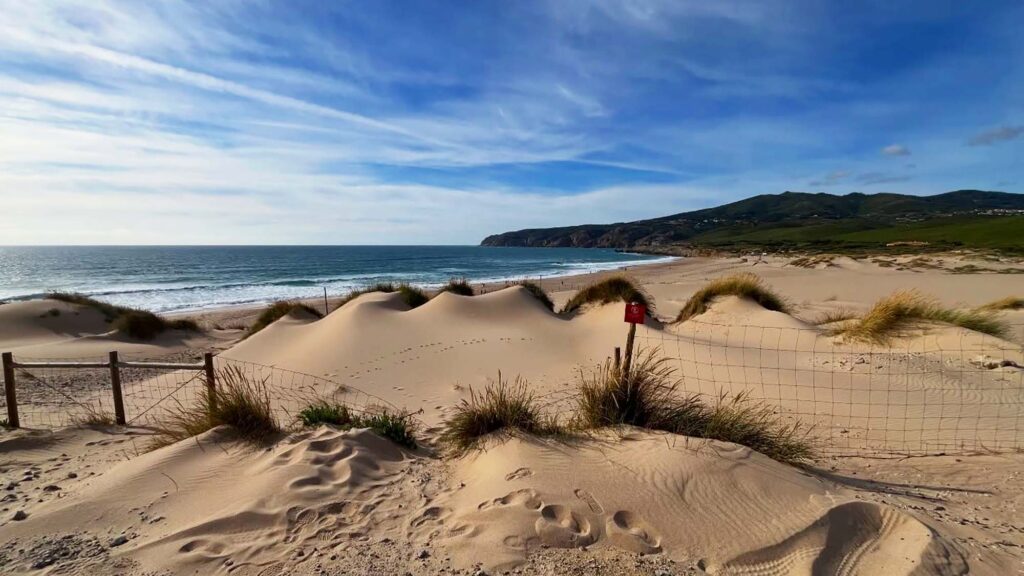
Guincho Beach
Guincho Beach has appeared in On Her Majesty's Secret Service (1969) and This Side of Resurrection (2011). In both, the beach itself plays a prominent role.
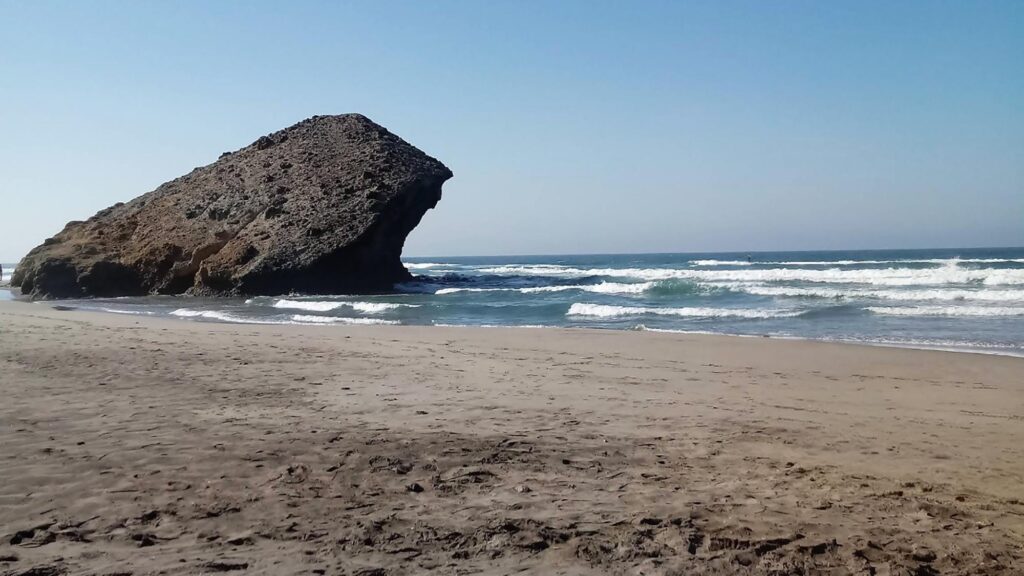
Mónsul Beach
Mónsul Beach appears in Indiana Jones and the Last Crusade, The NeverEnding Story, The Adventures of Baron Munchausen, Antony and Cleopatra, and Shalako.