
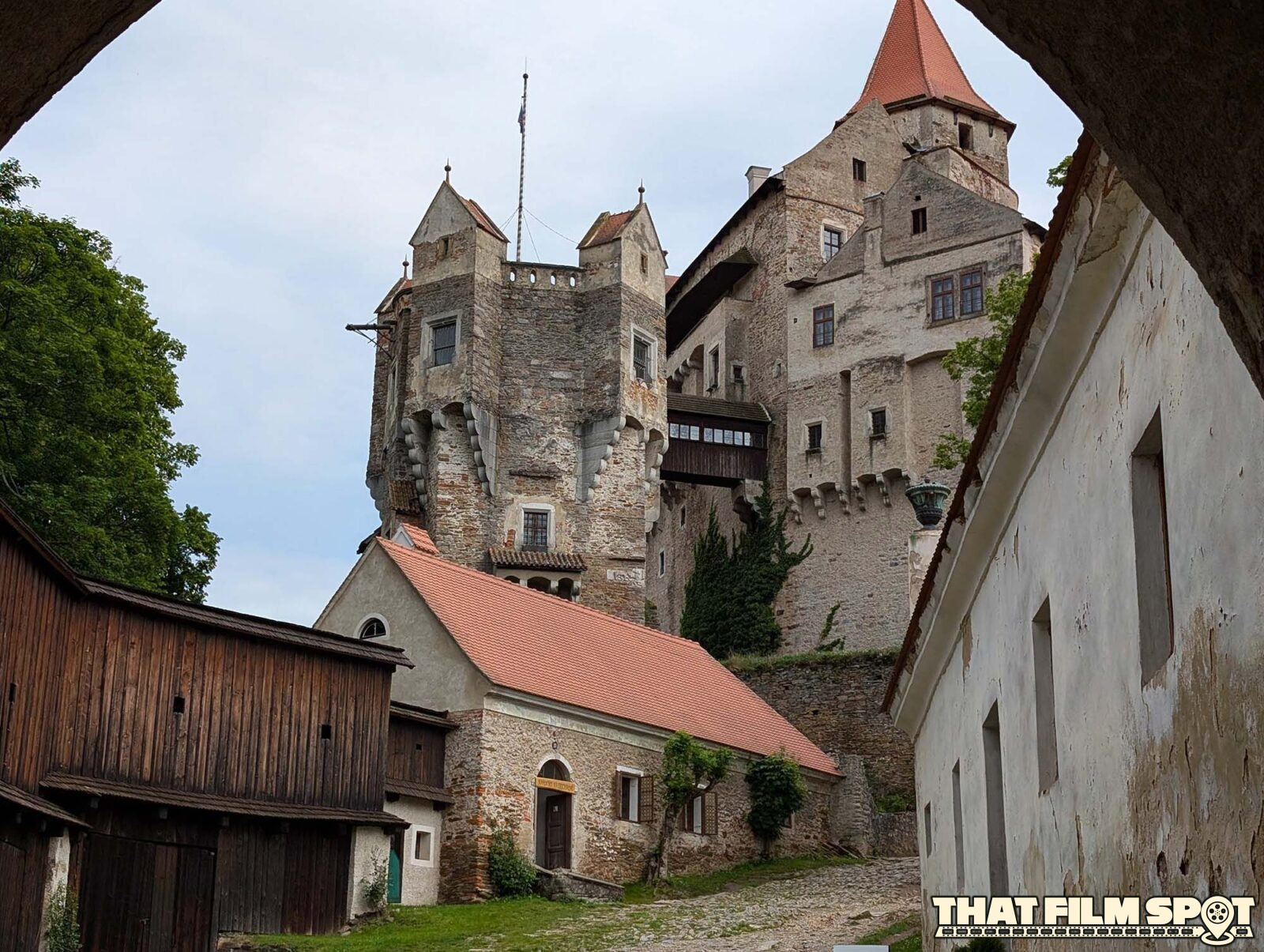
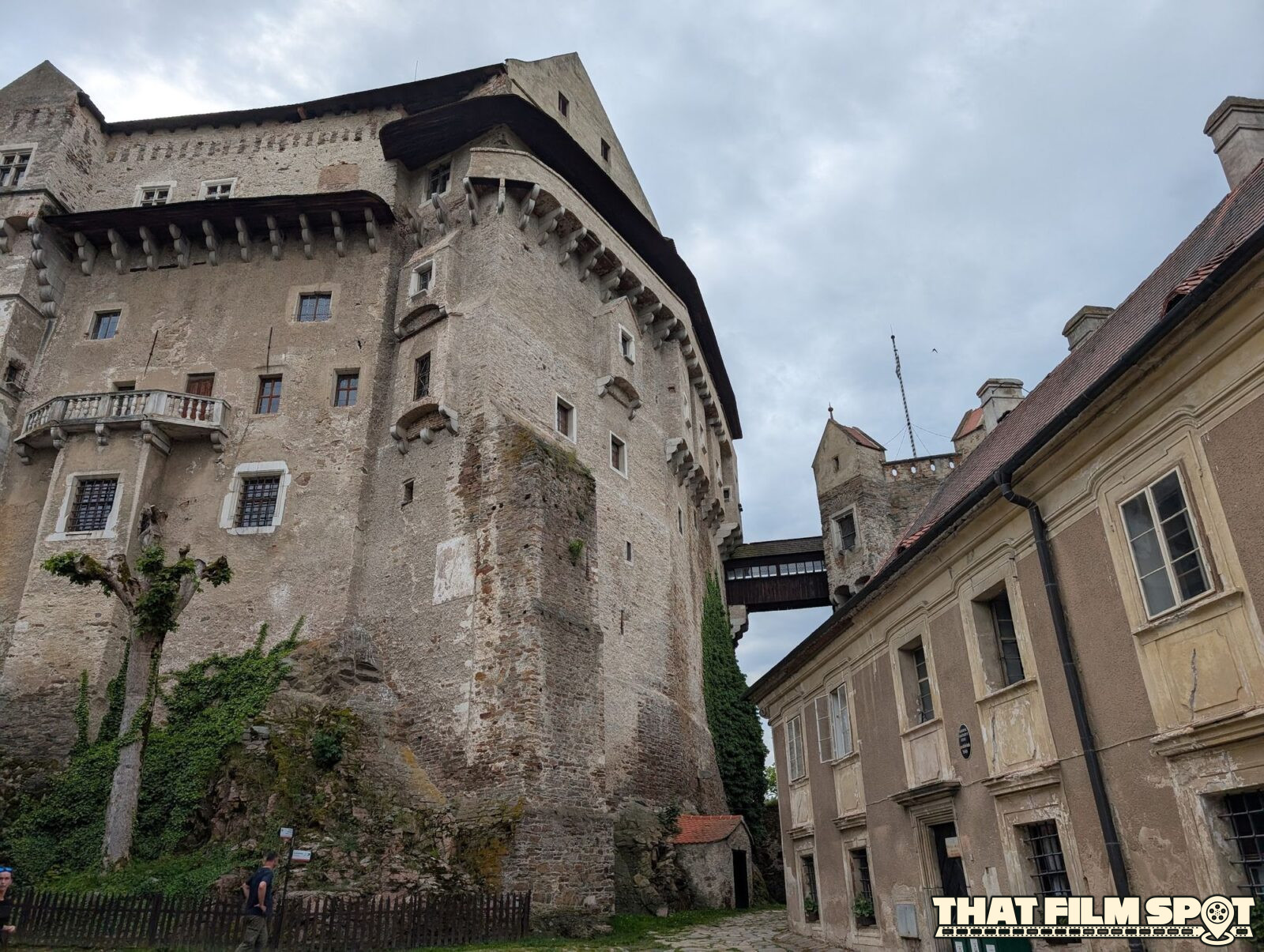
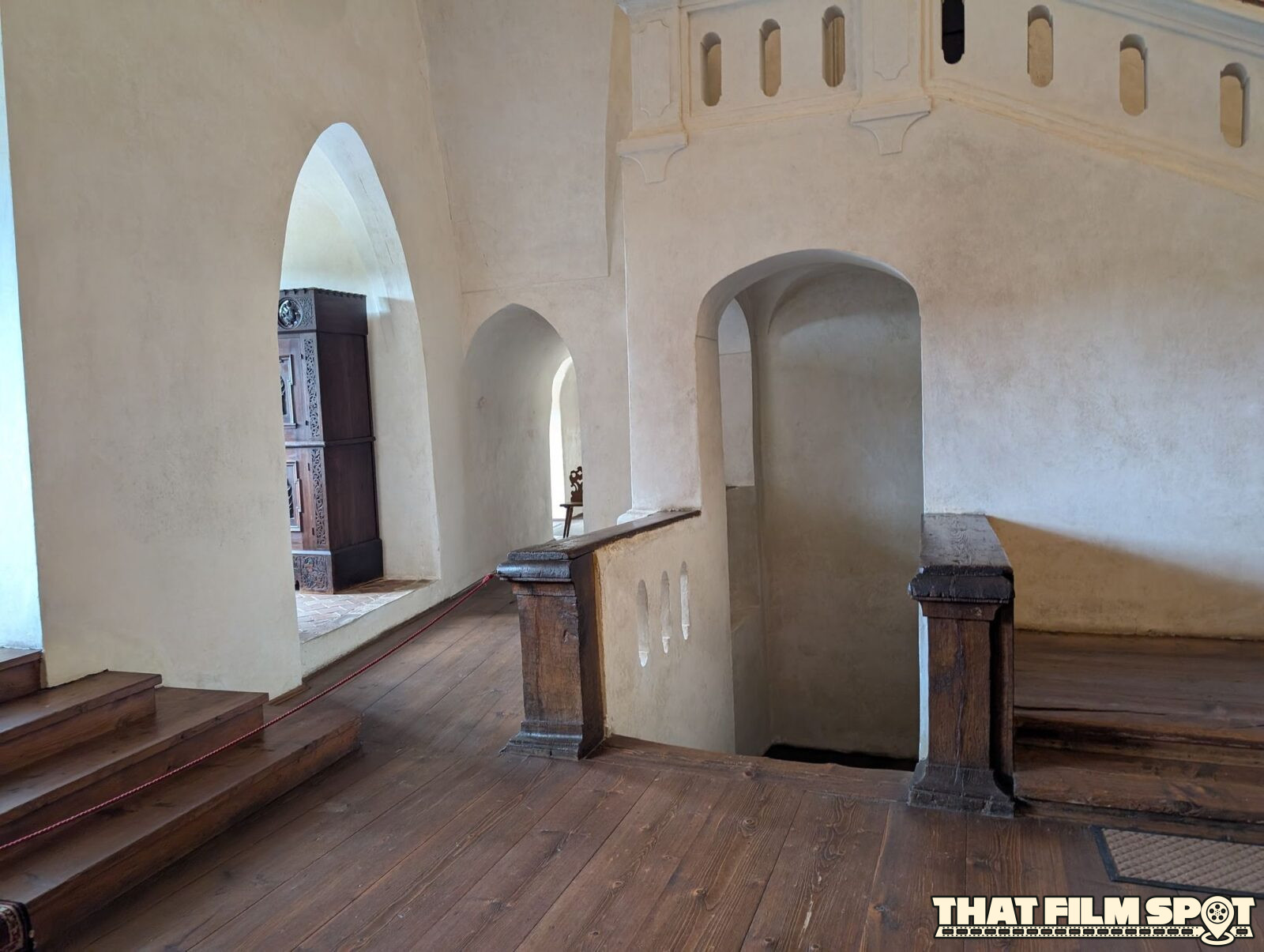
Pernštejn Castle is a medieval fortress situated on a rocky outcrop above the village of Nedvědice in the South Moravian Region of the Czech Republic, approximately 40 kilometres northwest of Brno. Founded between 1270 and 1285 by the powerful Lords of Medlov, who subsequently adopted the name Pernštejn, the castle developed from a relatively simple defensive structure into one of Moravia’s most imposing aristocratic residences. Its original core was protected by a circular keep known as Barborka, while successive expansions during the fourteenth, fifteenth and sixteenth centuries introduced additional towers, fortified gateways, enclosed courtyards, residential wings and an elaborate system of defensive walls. The castle suffered a major fire before 1460 but was extensively rebuilt under Jan I of Pernštejn, acquiring much of its distinctive Late Gothic appearance. Further construction continued into the mid-sixteenth century, including the addition of the Knights’ Hall and several Renaissance residential chambers. The Pernštejn family sold the property in 1596, after which it passed through several aristocratic families, including the Stockhammers, Schröfl von Mannspergs and Mitrovskýs. Unlike many other European castles, Pernštejn escaped extensive later reconstruction, preserving its medieval layout, narrow connecting passages, projecting oriel windows, steep staircases and numerous original architectural details. A Swedish attempt to capture the fortress in 1645 was unsuccessful, and in 1655 it was officially designated a Moravian land fortress. Its unusually complete preservation earned it the nickname Marble Castle, referring to the pale Nedvědice marble used around its windows and doorways. Today, Pernštejn is a state-owned historic monument, retaining interiors ranging from Gothic and Renaissance chambers to later Baroque, Rococo and nineteenth-century rooms.
Pernštejn Castle has appeared in Nosferatu: Phantom der Nacht (1979), Van Helsing (2004), Wanted (2008), Borgia (2011–2014), Journey to the Christmas Star (2012) and Nosferatu (2024). Its remarkably preserved medieval architecture has allowed it to represent several entirely different fictional locations, including Count Dracula’s residence, Frankenstein’s castle, the birthplace of a secret brotherhood of assassins and a royal palace in a Norwegian fairy tale. It has a particularly unusual connection to the Nosferatu franchise, having served as Count Dracula’s castle in Werner Herzog’s 1979 adaptation and returning 45 years later as part of Count Orlok’s fortress in Robert Eggers’ 2024 reinterpretation. While Herzog made extensive use of its original interiors and courtyards, Eggers deliberately selected different parts of the castle, incorporating its gatehouse and courtyard into a larger fictional structure assembled from several historic locations and purpose-built sets.
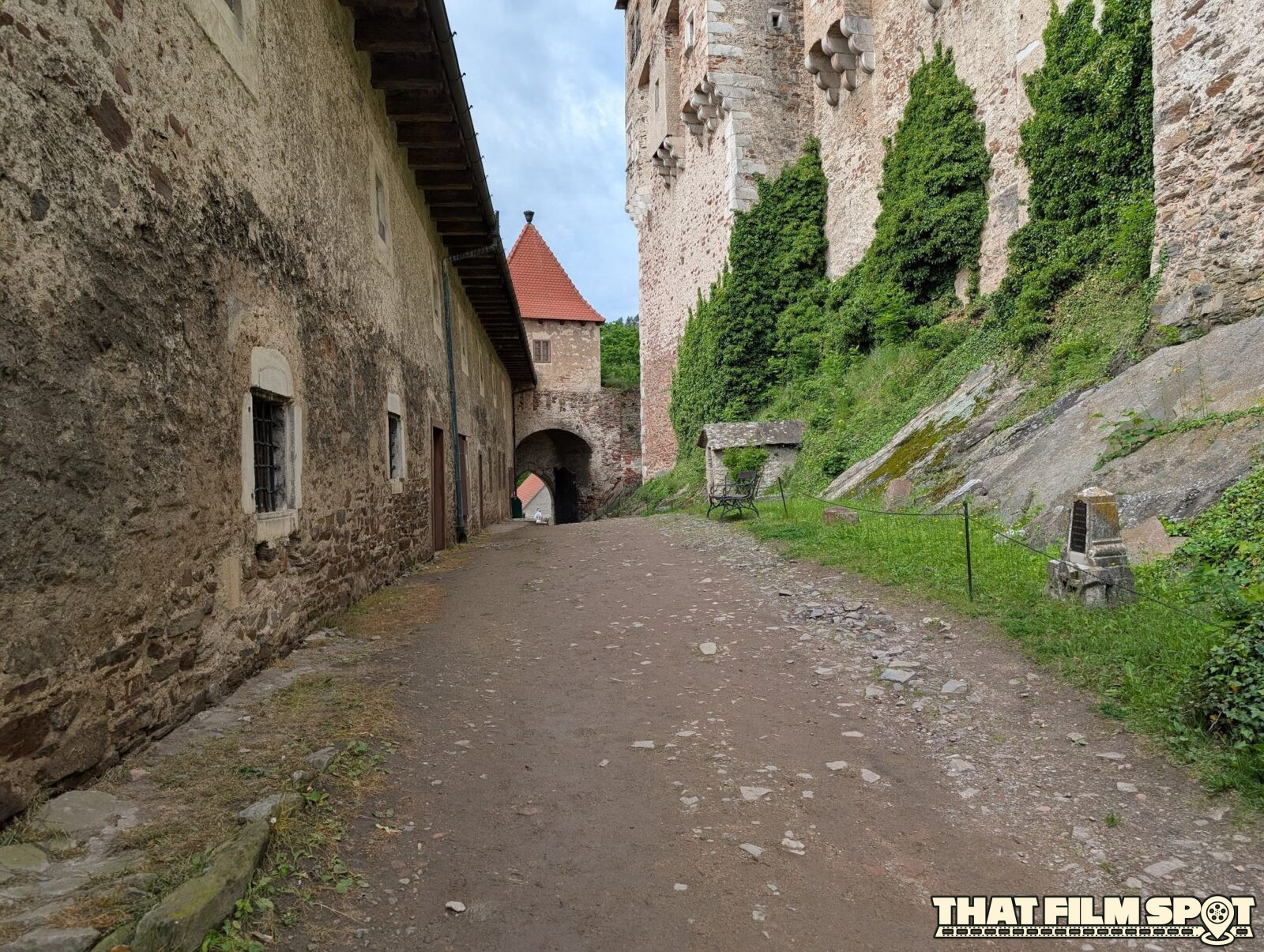
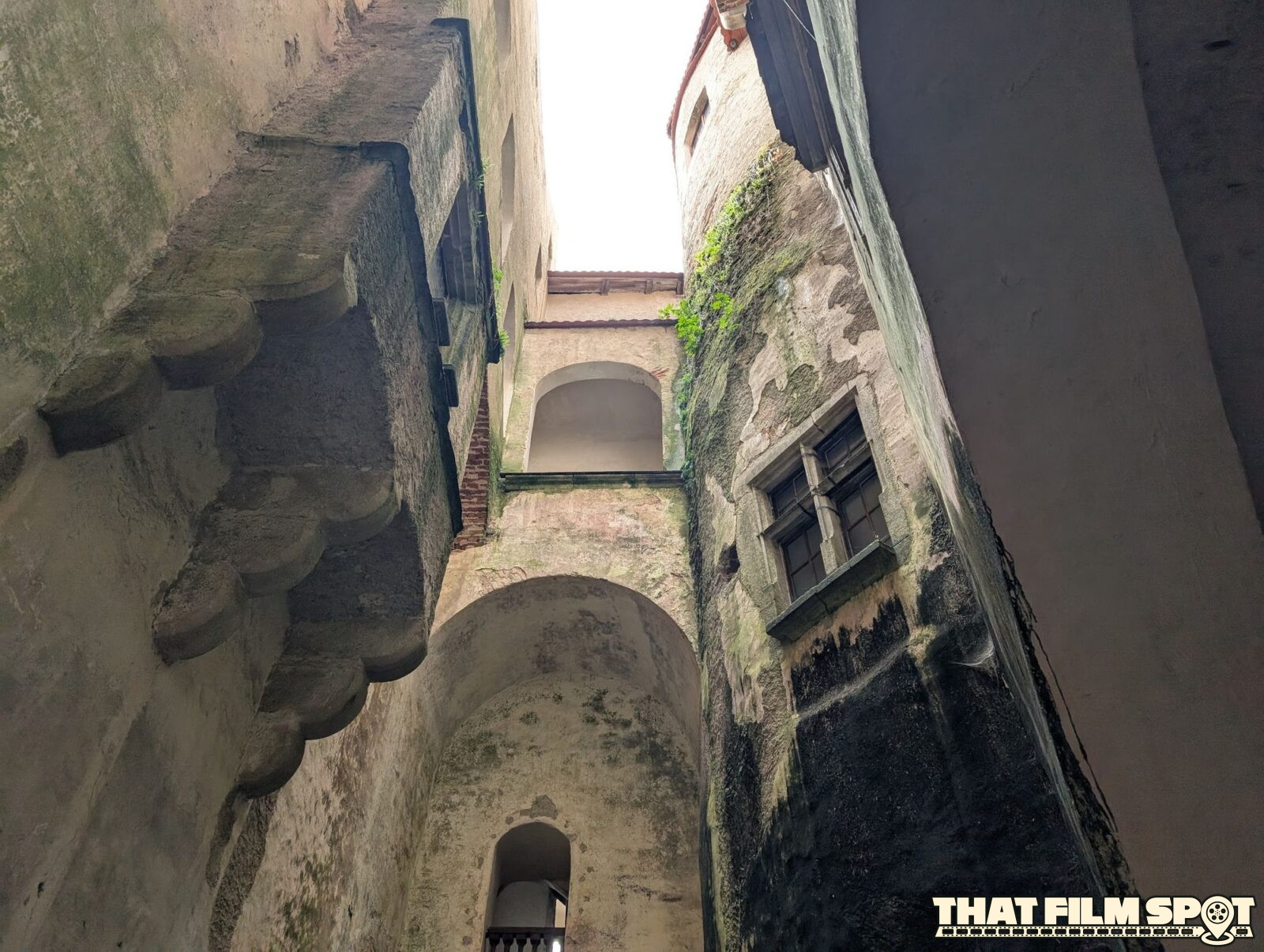
In Nosferatu: Phantom der Nacht (1979), also known as Nosferatu the Vampyre, Pernštejn Castle portrays the remote Transylvanian residence of Count Dracula, played by Klaus Kinski. After travelling through the Carpathian Mountains to arrange the sale of a property in Wismar, estate agent Jonathan Harker, played by Bruno Ganz, arrives at the castle and is welcomed inside by the mysterious Count. The historic courtyards, vaulted chambers and narrow passageways establish Dracula’s enormous but almost deserted residence, where Jonathan gradually becomes aware that something is terribly wrong. During their first meeting, Dracula examines the documents relating to the proposed purchase and becomes particularly interested in a miniature portrait of Jonathan’s wife Lucy. Jonathan’s discomfort increases when the Count reacts unnaturally to the sight of blood after he accidentally cuts his thumb. As his stay continues, Jonathan explores the castle and eventually discovers Dracula lying inside a coffin in a crypt-like chamber, confirming his growing suspicion that his host is a vampire. The castle’s real medieval architecture plays an important part in these sequences, particularly the enclosed inner courtyard and the entrance leading towards Dracula’s resting place. After the Count departs for Wismar with several coffins containing Transylvanian earth, Jonathan discovers that he has been imprisoned inside the fortress. Desperate to warn Lucy, he ties bedsheets together to form an improvised rope and attempts to escape through a high window. The rope proves too short, and he falls to the ground, severely injuring himself. Pernštejn provides both interior and exterior settings for Dracula’s residence, although the film also incorporates material from other locations in Czechoslovakia, including Orava Castle in present-day Slovakia. The production filmed at Pernštejn during 1978, preserving unusually extensive views of the historic building in one of Herzog’s most recognisable Gothic horror films.
In Van Helsing (2004), directed by Stephen Sommers, Pernštejn Castle provides the exterior of Castle Frankenstein, the Transylvanian stronghold occupied by scientist Victor Frankenstein, played by Samuel West. The castle is introduced during the film’s black-and-white prologue, set in 1887, as an angry mob of villagers carrying burning torches approaches the fortress after discovering that Frankenstein has been conducting unnatural experiments. The castle’s imposing walls, towers and steep approach provide the basis for the fictional stronghold, with additional Gothic architecture and atmospheric effects incorporated digitally. Inside his laboratory, Frankenstein succeeds in bringing his enormous creature to life with the assistance of machinery powered by lightning, but is subsequently confronted and murdered by Count Dracula, played by Richard Roxburgh, who has secretly financed the experiment for his own purposes. The mob eventually storms the castle, forcing the newly created monster to flee with its dead creator towards a nearby windmill. The fortress returns later in the story when Gabriel Van Helsing, played by Hugh Jackman, and Anna Valerious, played by Kate Beckinsale, investigate Dracula’s attempts to use Frankenstein’s research to bring his vampire offspring to life. Pernštejn supplies the real medieval architecture underlying the exterior of Castle Frankenstein, while the elaborate laboratory, machinery and other fantastical interiors were constructed separately for the production. The combination of the castle’s original stonework and digital extensions creates one of the principal Gothic settings of the film.
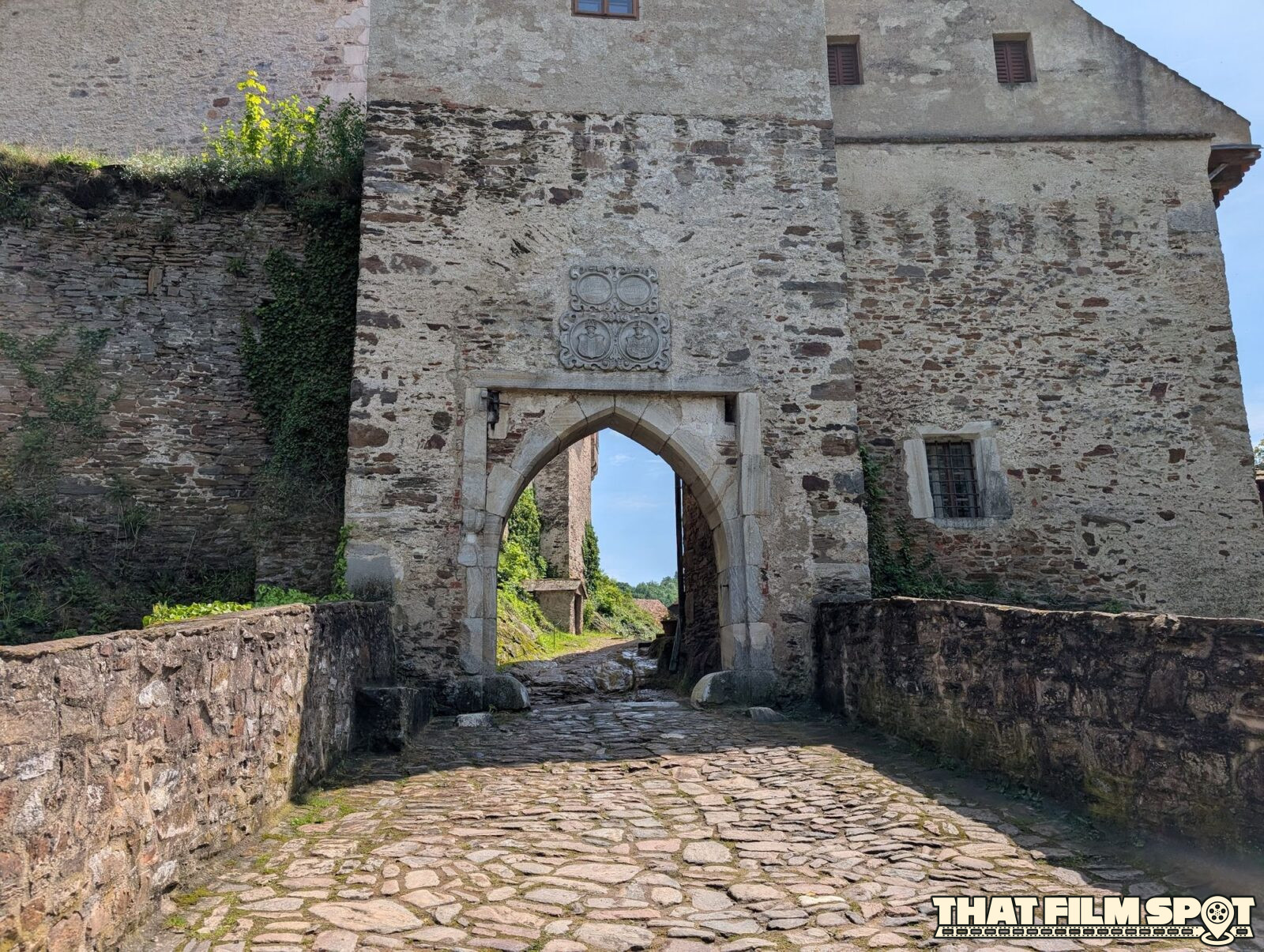
In Wanted (2008), directed by Timur Bekmambetov, Pernštejn Castle represents the exterior of an ancient monastery in Moravia associated with the origins of the Fraternity, a secret society of assassins whose members believe they are carrying out the instructions of fate. The castle appears approximately 67 minutes into the film, when Wesley Gibson, played by James McAvoy, travels to the monastery while attempting to track down Cross, the assassin he believes murdered his father. Wesley has recovered a distinctive bullet and traced its manufacture to Pekwarsky, played by Terence Stamp, a former member of the Fraternity and an expert in producing specialised ammunition. The approach to Pernštejn, including its imposing medieval gateway and surrounding stone architecture, establishes the isolated religious complex where Wesley hopes to find him. After arriving at the monastery, Wesley proceeds inside and questions the inhabitants about Pekwarsky’s whereabouts. The subsequent scenes, in which he searches the historic halls and chapel before confronting Pekwarsky, were filmed at Křivoklát Castle elsewhere in the Czech Republic. The two castles are edited together to represent one continuous fictional location, with Pernštejn providing the exterior establishing shot and Křivoklát supplying the interior spaces. Wesley eventually forces Pekwarsky to arrange a meeting with Cross, leading directly into the film’s extended railway sequence and the revelation that Cross is actually his biological father. Pernštejn’s appearance is comparatively brief, but its authentic medieval exterior establishes the connection between the Fraternity’s supposedly ancient origins and the modern organisation operating from its industrial headquarters.
In Journey to the Christmas Star (2012), originally titled Reisen til julestjernen, Pernštejn Castle serves as the royal palace at the centre of Nils Gaup’s Norwegian fantasy film, adapted from Sverre Brandt’s 1924 stage play. The story takes place in a kingdom that has fallen into darkness after the disappearance of Princess Gulltopp, whose grieving father, played by Anders Baasmo Christiansen, curses the Christmas Star and inadvertently causes it to vanish from the sky. Nine years later, a young girl named Sonja, played by Vilde Zeiner, escapes from a group of robbers and eventually reaches the royal castle. The imposing approach, fortified gateways, courtyards and historic interiors of Pernštejn establish the king’s residence, where preparations for Christmas take place under the shadow of the missing princess. After learning the reason for the king’s unhappiness, Sonja promises to help him recover the Christmas Star, setting out on a dangerous journey opposed by the wicked Count Uldrich, played by Stig Werner Moe, and the witch Melssahya, played by Agnes Kittelsen. Meanwhile, the Count attempts to exploit the king’s desperation and persuade him to surrender control of the kingdom. The castle returns during the film’s conclusion, when Sonja comes back after her extraordinary journey and the mystery surrounding her true identity is finally resolved. Pernštejn was the production’s principal filming location, with almost four weeks of the six-week Czech shoot taking place at the castle during January and February 2012. The filmmakers used both its exterior architecture and historic rooms, which were dressed with period furniture, Christmas decorations and other elements intended to create a distinctly Nordic fairy-tale atmosphere. Director Nils Gaup and producer Jan Eirik Langøen selected Pernštejn after considering castles in several European countries, finding that its preserved medieval appearance provided the particular setting they wanted for the fictional kingdom. The production also involved extensive Czech supporting casts, costumes supplied through Barrandov Studios and specially constructed fantasy sets for the scenes taking place outside the royal residence.
In Borgia (2011–2014), Pernštejn Castle was used during filming of the second season of Tom Fontana’s historical drama, which follows the rise of the Borgia family in Renaissance Italy. John Doman plays Rodrigo Borgia, who becomes Pope Alexander VI, while Stanley Weber portrays his ambitious son Cesare and Isolda Dychauk plays Lucrezia Borgia. The second season continues the family’s political and military struggles, with Cesare increasingly pursuing power beyond Rome as the Italian states become embroiled in conflict. Pernštejn was selected as one of the Czech locations representing historic Italy, allowing the production to incorporate authentic medieval architecture alongside the extensive period sets constructed at Barrandov Studios in Prague. Filming took place in 2012 for the episodes released in 2013. The production is distinct from the similarly titled American television series The Borgias (2011–2013), starring Jeremy Irons.
In Nosferatu (2024), Pernštejn Castle returns as part of Count Orlok’s Transylvanian fortress in Robert Eggers’ adaptation of the classic vampire story. The location appears during the sequence in which estate agent Thomas Hutter, played by Nicholas Hoult, arrives at the remote castle after an increasingly unsettling journey through the Carpathian Mountains. Having been collected by a mysterious black carriage, Thomas gradually slips into a disorienting, dreamlike state as the vehicle carries him towards his destination. The scene incorporates an elaborate camera transition in which the enclosed carriage seemingly dissolves around him, revealing that he is now standing directly outside the enormous entrance to Orlok’s castle. Pernštejn provides the real gatehouse and courtyard used for this sequence, although the production constructed a much larger set of wooden gates in front of the original entrance to give the building a more imposing appearance. Artificial snow made from potato flakes was used to transform the courtyard into a bleak winter landscape. As the gates open, Thomas encounters Count Orlok, played by Bill Skarsgård, who emerges from the darkness and silently compels his visitor to follow him further into the fortress. The subsequent movement through the gateway and courtyard was filmed at Pernštejn, while the interior rooms and passages of Orlok’s residence were constructed separately at Barrandov Studios in Prague. Wide exterior views of the castle incorporate footage of Corvin Castle in Hunedoara, Romania, allowing the different buildings to appear as parts of a single enormous Transylvanian stronghold. Interestingly, Eggers initially rejected Pernštejn after discovering that Werner Herzog had already used it in Nosferatu: Phantom der Nacht (1979). After scouting several alternatives, however, he reconsidered when he realised that the gatehouse and courtyard needed for his own film were different parts of the castle from those prominently featured in Herzog’s adaptation. The production consequently returned to Pernštejn in March 2023, establishing an unusual cinematic connection between two versions of Nosferatu made 45 years apart.
Pernštejn Castle (2025)




Nosferatu
Nosferatu was filmed mainly in the Czech Republic, with additional location work in Romania. Barrandov Studios in Prague served as the production’s main base.
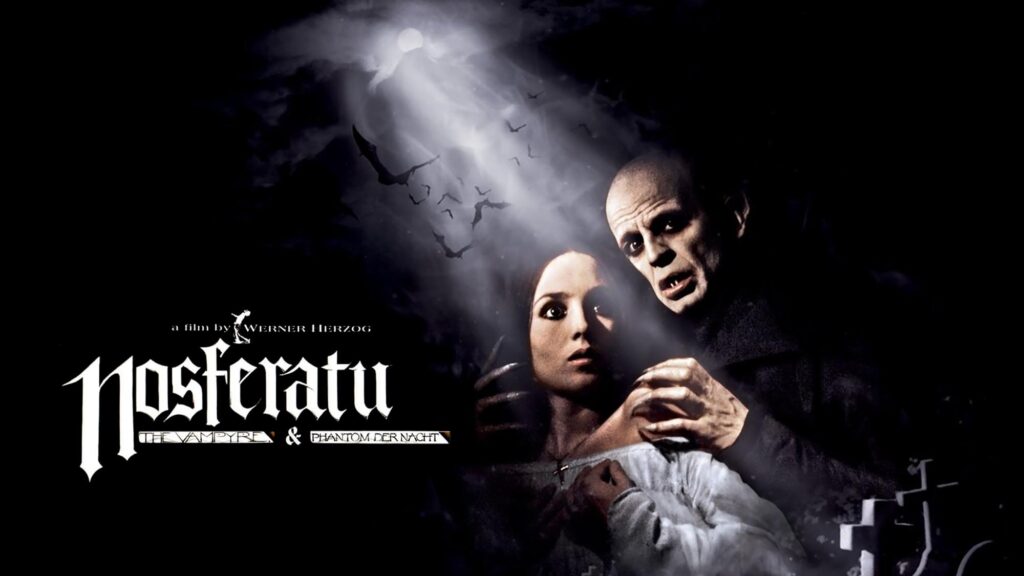
Nosferatu: Phantom der Nacht
Werner Herzog's Nosferatu: Phantom der Nacht (1979), aka Nosferatu the Vampyre, was primarily filmed in the Netherlands, Czechoslovakia, and West Germany.

Čachtice Castle
Čachtice Castle has appeared in movies like The Mystery of the Carpathian Castle (1981), Dragonheart (1996) and Bathory (2008).

Wiener Riesenrad
Wiener Riesenrad has appeared in The Third Man (1949), Scorpio (1973), The Living Daylights (1987), Before Sunrise (1995), Woman in Gold (2015) and Sachertorte.

Devín Castle
In Kull the Conqueror (1997), Devín Castle is used as one of the film’s fortress locations.

Olšany Cemetery
Olšany Cemetery is in Ferat Vampire, Náhrdelník, From Hell, Bad Company, The League of Extraordinary Gentlemen, Hellboy, Van Helsing, Kriminálka Anděl and more.
Liechtenstein Palace
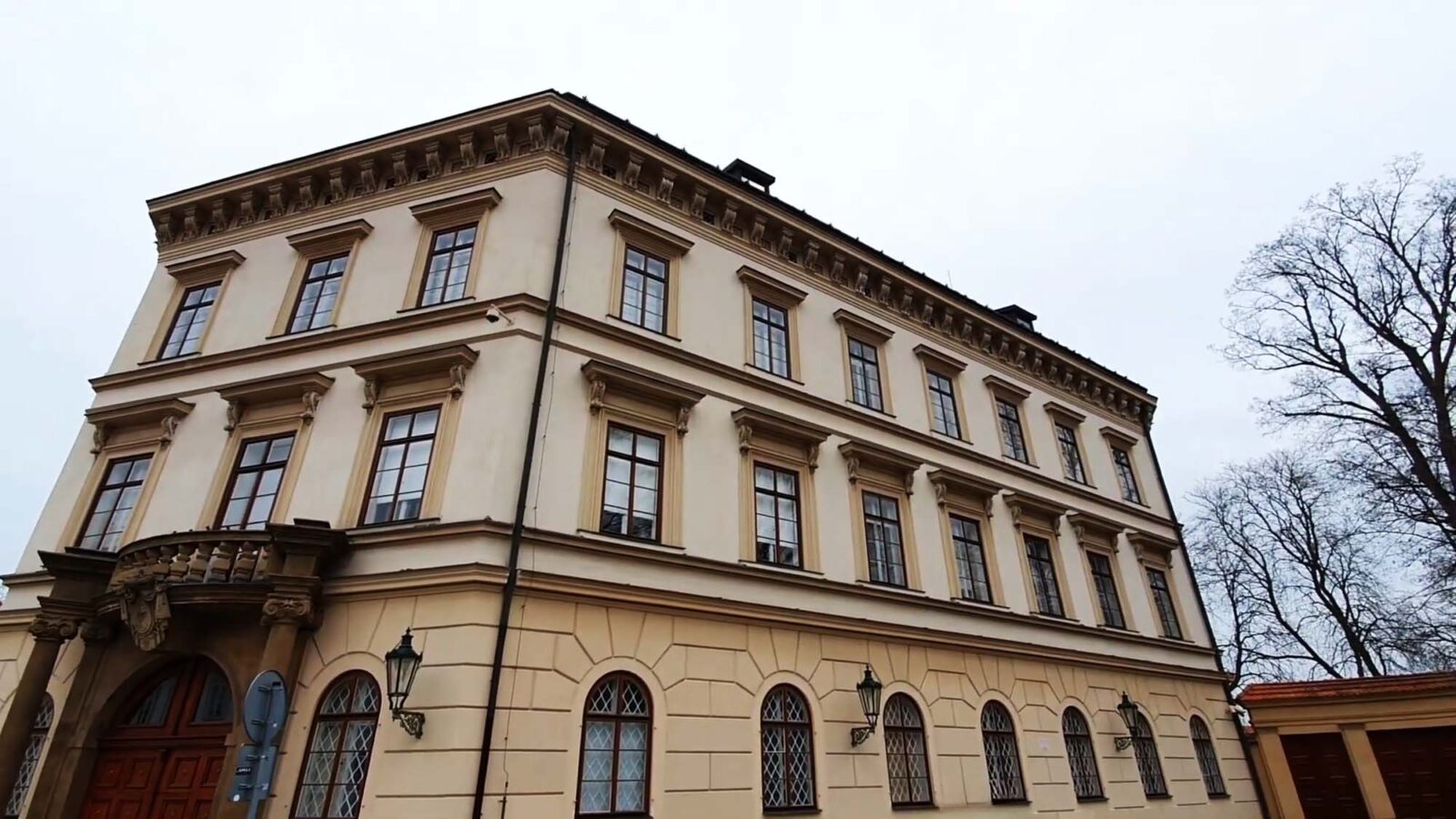
Liechtenstein Palace, known in Czech as Lichtenštejnský palác, is a historic palace at U Sovových mlýnů 506/4 on Kampa Island in the…

Orava Castle
Orava Castle appears in Nosferatu: A Symphony of Horror (1922), Dragonheart: A New Beginning (2000), and Dracula (2020).

Ogrodzieniec Castle
Ogrodzieniec Castle has appeared in Janosik (1973–1974), The Knight (1980), The Revenge (2002), The Witcher (2019) and the Australian series Spellbinder (1995).
Grandhotel Pupp
Grandhotel Pupp has appeared in Waiter, Scarper!, The Death of the Beautiful Deer, Shanghai Knights, Last Holiday, Casino Royale, La Vie en Rose and Nobel.

Schindler’s List Passage
The famous, narrow, and steep staircase where Mrs. Dresner hides from Nazis in Schindler's List is located at Józefa 12 in the Kazimierz district of Kraków.