
Lars Lillo-Stenberg House is a protected historic wooden villa in Thomas Heftyes gate in the Frogner district of Oslo, Norway. Built between 1891 and 1892 for merchant Paul Aamodt (1826–1925), the house was designed by architect Sigurd Gulbransen (1862–1929) in an unusual combination of Dragestil, or Norwegian Dragon Style, and Swiss chalet architecture. Its asymmetrical construction, steeply pitched gables, elaborate timber ornamentation and dark brown façade with distinctive red detailing make it stand out among the surrounding residential buildings and former embassies. The architectural style emerged towards the end of the nineteenth century, combining influences from Norwegian medieval stave churches, Viking ornamentation and the wider National Romantic movement. By the late 1890s, the villa belonged to lawyer Frederik Stang Lund, and it subsequently passed through several owners before becoming associated with the Lillo-Stenberg family. Norwegian musician Lars Lillo-Stenberg, best known as the founder and frontman of deLillos, grew up in the house, which has been divided into several residential units occupied by different members of his family. The building also has a place in Norwegian music history through its appearance on the cover of deLillos’ third album, Hjernen er alene (1989). The photograph, taken from the family’s private collection, shows one of their golden retrievers lying alone on the front steps, with the villa’s green entrance door and red-painted woodwork visible behind it. Lars Lillo-Stenberg has suggested that the dog was probably Snuffy, which belonged to his uncle. The property remains a private residence and is protected under Norwegian planning and building regulations.
Lars Lillo-Stenberg House has appeared in Oslo, August 31st (2011) and Sentimental Value (2025), both directed by Joachim Trier and written in collaboration with Eskil Vogt. In Oslo, August 31st (2011), the villa represents the childhood home of Anders, providing the setting for the film’s extended and devastating final sequence. Fourteen years later, Trier returned to the same property for Sentimental Value (2025), in which the building plays an even more substantial role as the ancestral home of the fictional Borg family. Rather than simply providing a recognisable Oslo exterior, the house became the architectural foundation of the entire production, with its real ground-floor rooms used for many of the contemporary scenes and a detailed replica constructed at Gateway Studios in Drammen for the historical sequences, upstairs rooms and additional filming. Its appearance in both films creates a notable connection between two of Trier’s dramas, each exploring family relationships, personal history and the emotional significance of returning to a childhood home.
In Oslo, August 31st (2011), Lars Lillo-Stenberg House represents the family home of Anders, played by Anders Danielsen Lie, and provides the setting for the film’s final sequence. After spending a day and night wandering through Oslo, reconnecting with old friends and struggling with the prospect of rebuilding his life following drug rehabilitation, Anders returns to his parents’ house, which is in the process of being sold. The building is empty of people, but its rooms remain filled with traces of family life, including old photographs, books, personal belongings and partly packed moving boxes. Anders slowly makes his way through the house, passing through the living room and other familiar spaces before eventually reaching his former bedroom. There, he prepares and takes a fatal overdose of heroin, bringing his journey through Oslo to an end. The sequence was filmed as an approximately ten-minute continuous tracking shot, with the camera following Anders through the interconnected rooms without an apparent cut. Production designer Jørgen Stangebye Larsen selected and prepared the property partly because its particular layout made this technically demanding shot possible. The camera had to travel smoothly between rooms, requiring furniture and other objects to be moved out of its path and repositioned during filming. Larsen also furnished the house with objects borrowed from his own family, including childhood possessions, artwork and furniture, creating the impression of an established intellectual household whose inhabitants had gradually accumulated a lifetime of memories. The result is one of the film’s most important locations, with the house’s physical layout and lived-in interiors becoming inseparable from its final scene.
In Sentimental Value (2025), originally titled Affeksjonsverdi, Lars Lillo-Stenberg House portrays the ancestral residence of the Borg family, whose complicated history stretches across several generations. The film opens with an extended introduction to the house, accompanied by a narration based on an essay written by Nora Borg as a child, in which she imagines what the building might have experienced if it were a living being. Through a series of historical sequences, the audience witnesses changing generations of the family, including childhood memories, celebrations, arguments, deaths and the gradual transformation of the rooms over more than a century. A recurring crack in the building’s structure becomes a visual reminder of its age and the troubled relationships of its inhabitants. In the present-day storyline, sisters Nora and Agnes, played by Renate Reinsve and Inga Ibsdotter Lilleaas, reunite at the house following the death of their mother, Sissel. Their estranged father, once-celebrated film director Gustav Borg, played by Stellan Skarsgård, unexpectedly returns for the funeral gathering. Having spent much of his adult life away from the family, Gustav now hopes to use the house as the principal location for his comeback film, a deeply personal screenplay inspired by the life and suicide of his own mother, Karin, who was imprisoned and tortured during the German occupation of Norway and later took her own life in the family residence. Gustav initially offers the leading role to Nora, an established stage actress, but she refuses. He subsequently casts American actress Rachel Kemp, played by Elle Fanning, and brings her to the house to familiarise her with the story and its setting. During a particularly revealing sequence, Gustav leads Rachel through the rooms and explains how the film’s final scene will unfold, showing her the corridor and the small room where his mother died. The property also features in several confrontations between Gustav and his daughters, including disagreements over his proposed film, his absence during their childhood and his decision to involve Agnes’s young son Erik in the production. As Gustav’s project begins to fall apart, his attachment to the family home becomes increasingly complicated, eventually leading him to sell the property to finance the film independently. The production made extensive use of the actual villa, filming the contemporary funeral gathering, several family encounters and scenes involving Gustav and Rachel inside its original ground-floor rooms. To portray the building across different historical periods, production designer Jørgen Stangebye Larsen also constructed a detailed two-storey replica at Gateway Studios in Drammen, reproducing the distinctive woodwork, windows, connecting rooms and architectural irregularities of the real house. LED screens positioned beyond the set’s windows displayed digitally reconstructed views of Frogner, allowing the surrounding neighbourhood, vegetation and seasons to change according to the period being portrayed. The reconstructed house ultimately becomes an essential part of the film’s conclusion, when Nora agrees to star in Gustav’s production and performs its climactic sequence alongside Erik. The camera eventually reveals that the familiar family residence is now a studio set, completing a story in which the house functions not merely as a location but as a physical record of the family’s shared history.
Lars Lillo-Stenberg House (2026)
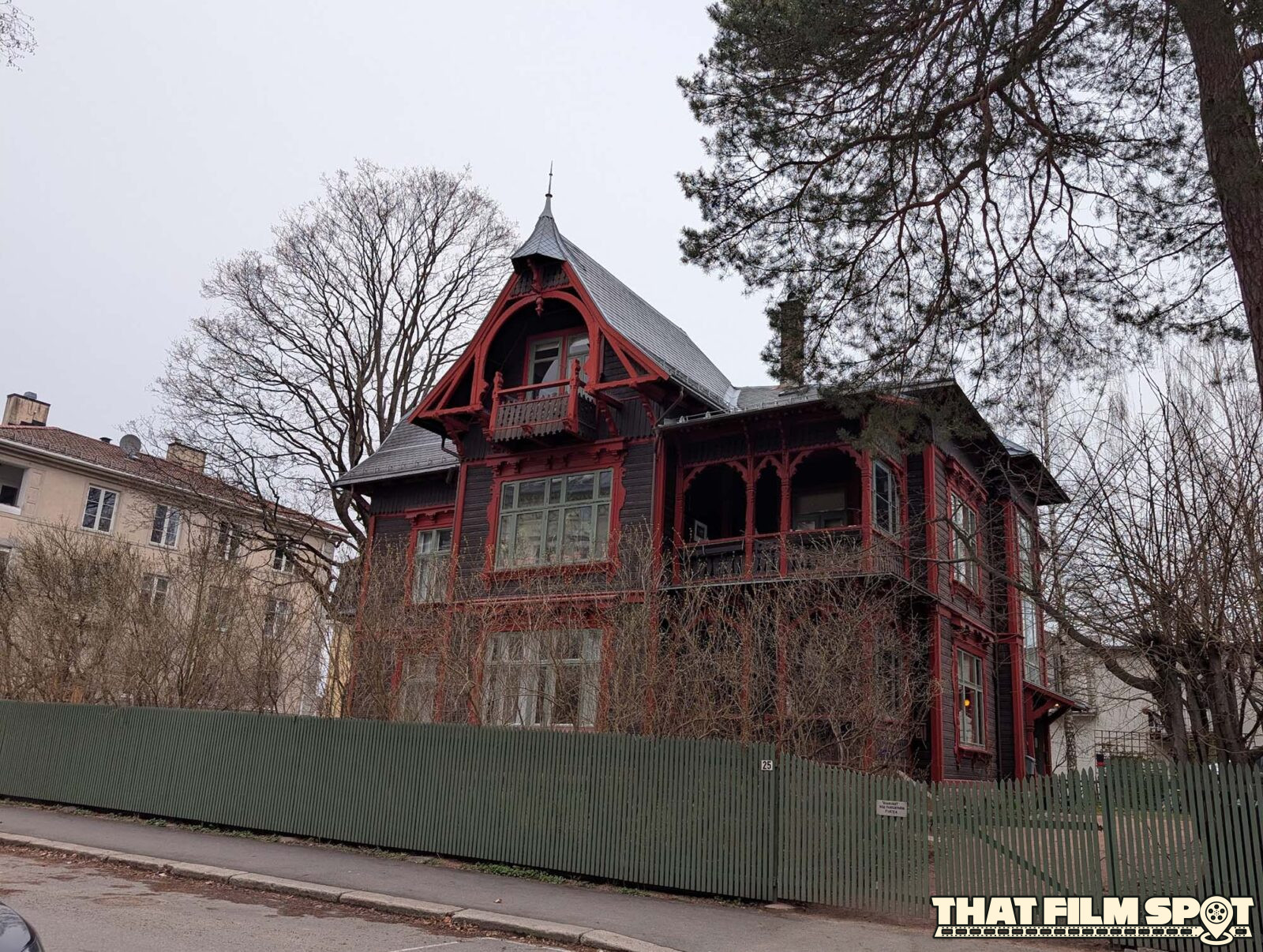
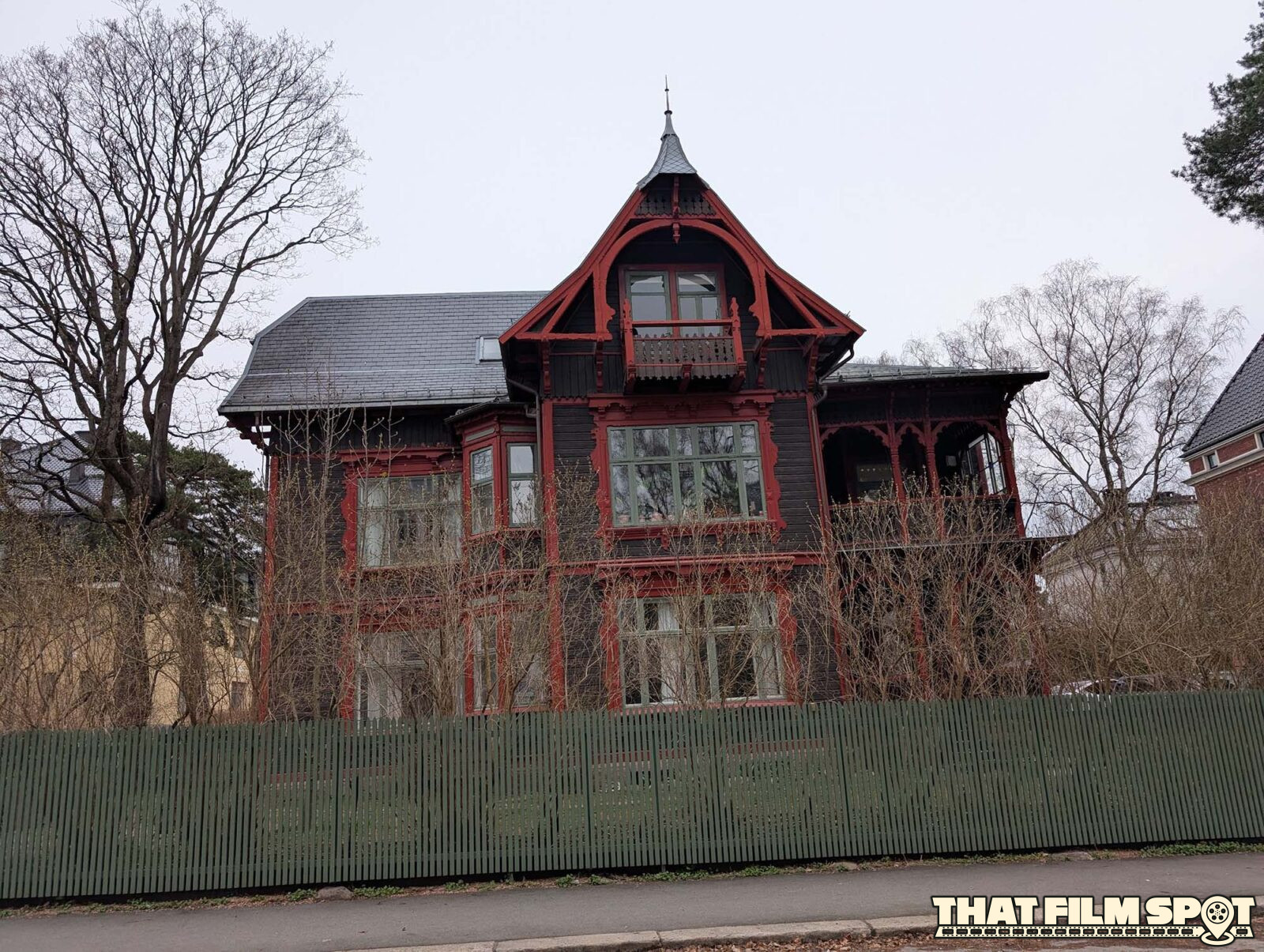
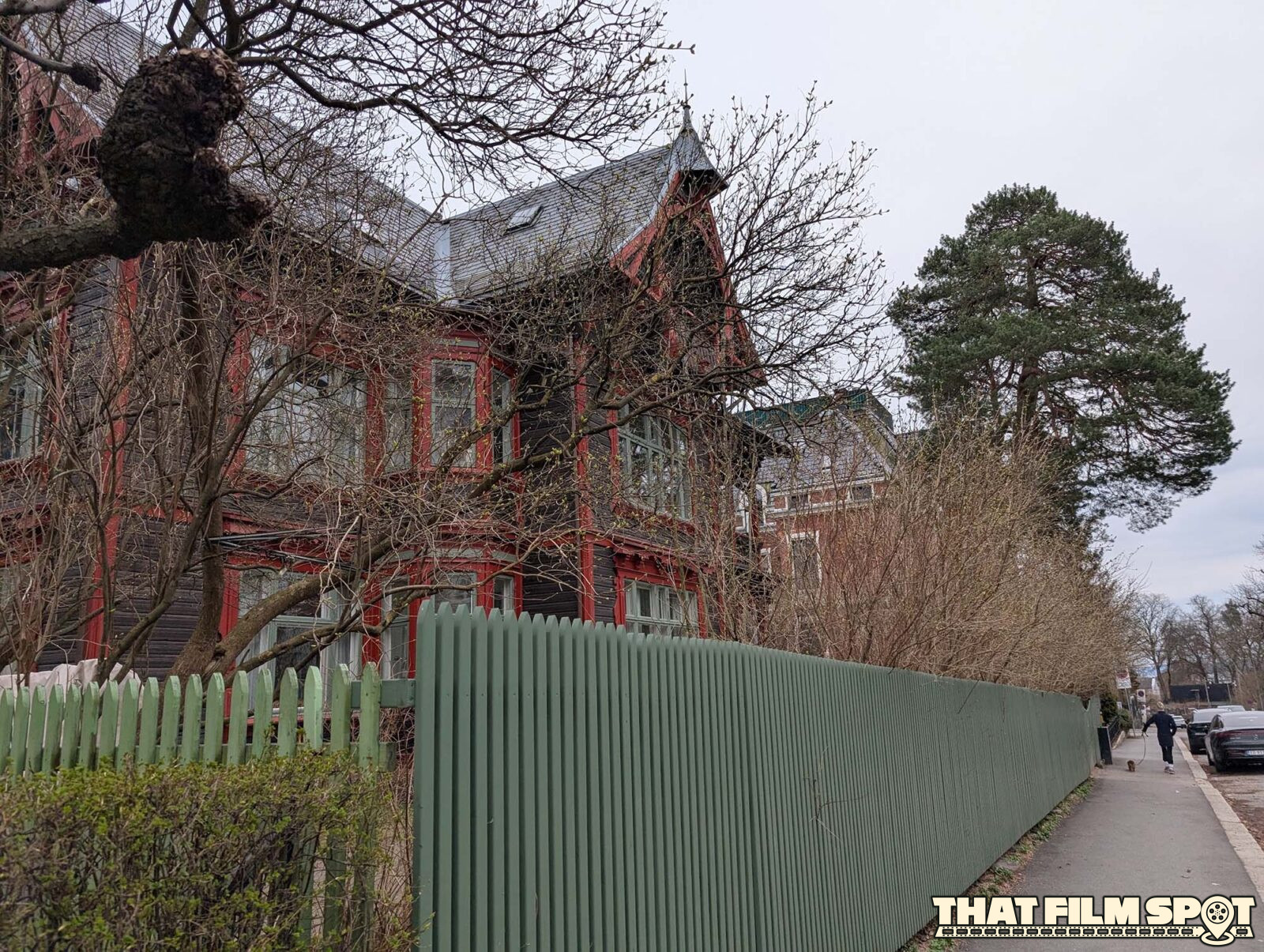
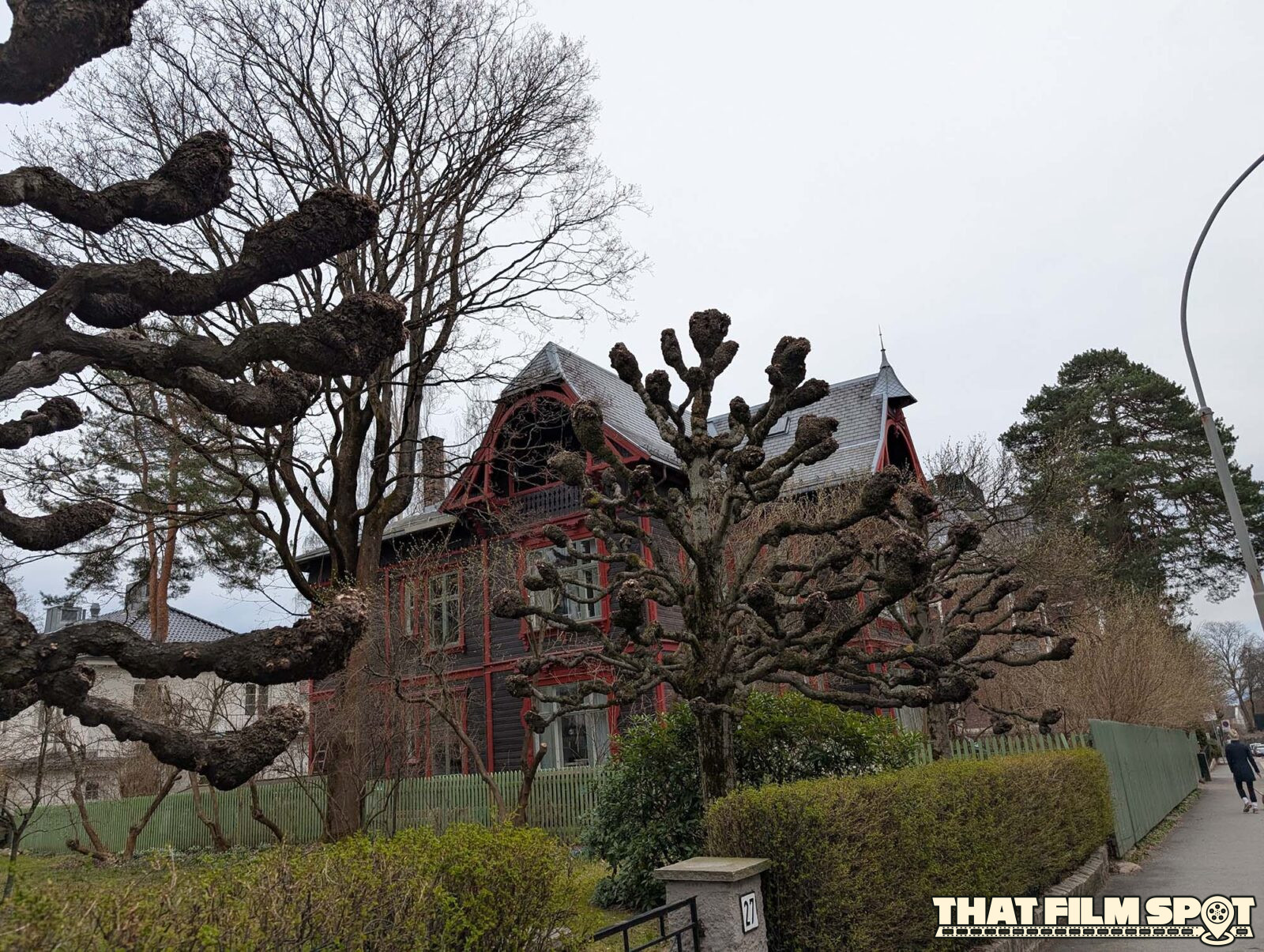


Sentimental Value
Sentimental Value was primarily filmed in Oslo, Norway, with additional scenes in Deauville, France, and Strömstad, Sweden.
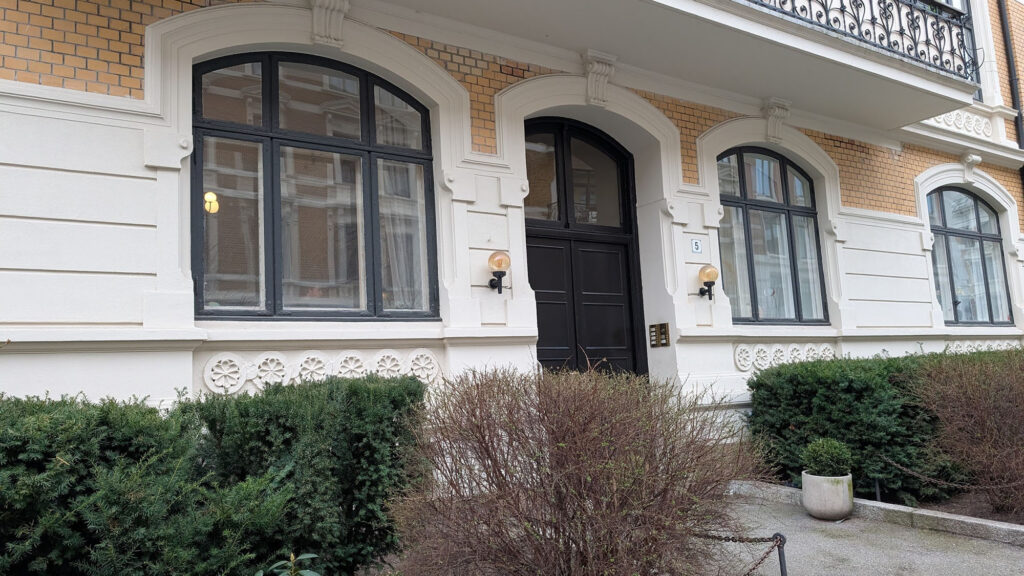
Behrens’ gate 5
In Jo Nesbø’s Detective Hole (2026), Behrens’ gate 5 is used for the scenes at Camilla Loen’s apartment, where she is found murdered.

Oscarshall
Oscarshall, the royal summer palace on the Bygdøy peninsula in Oslo, has appeared in Doctor Proctor’s Fart Powder (2014).
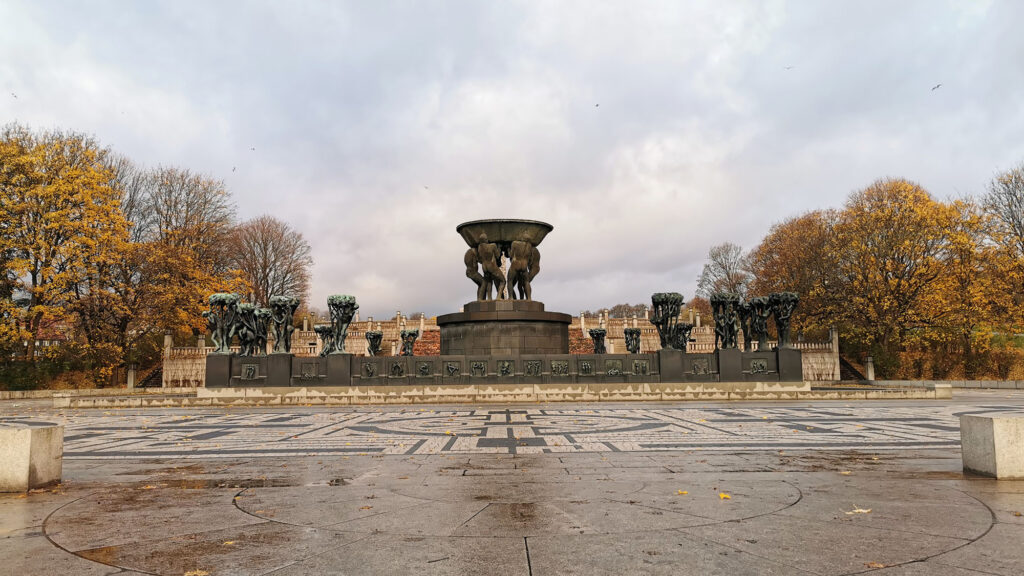
Vigeland Sculpture Park
Vigeland Sculpture Park appears in Jo Nesbø’s Detective Hole, The Snowman, Himmel og helvete, Oslo, 31. august, Elling, and many more.
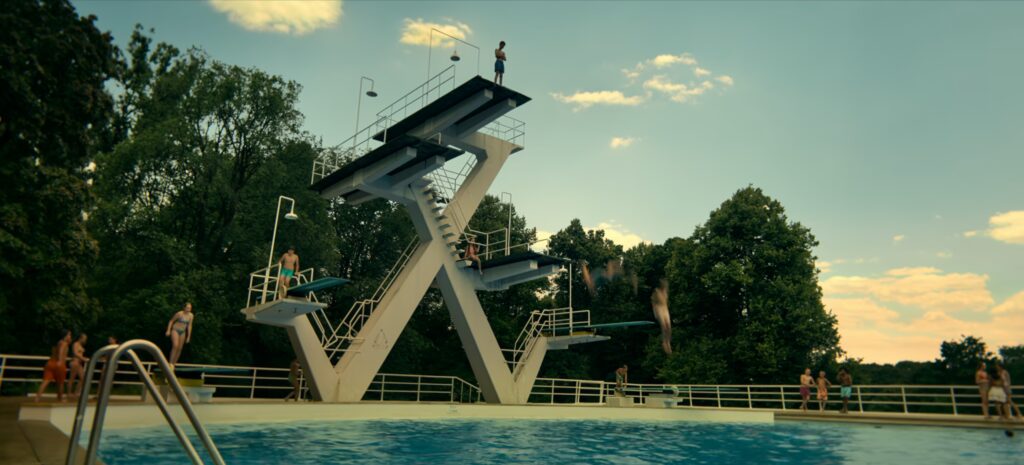
Frognerbadet
Frognerbadet is in Olsenbanden møter Kongen & Knekten, Frida: Straight from the Heart, Stuperen, Oslo, August 31st, Beatles, Hvite gutter and Detective Hole.
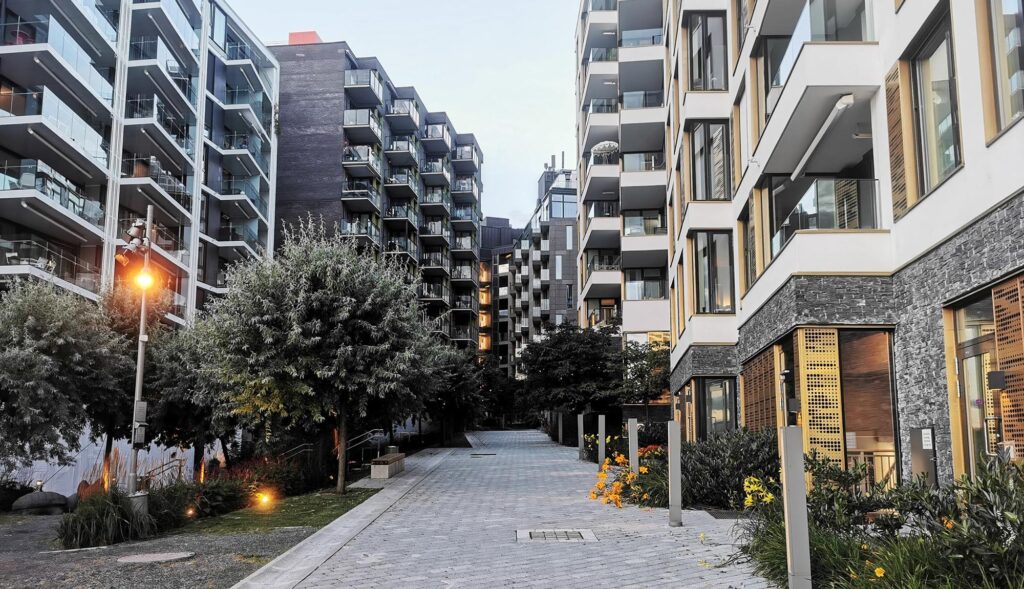
Tjuvholmen
The 2020 Christopher Nolan film Tenet filmed key action scenes at Tjuvholmen, specifically around Olav Selvaags Plass and near the Thief Hotel.
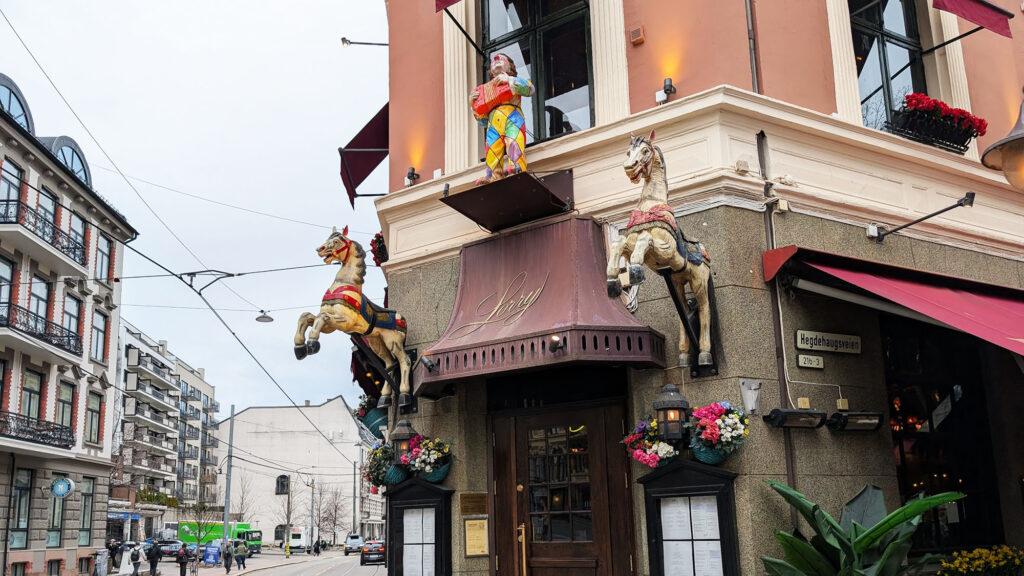
Lorry
Restaurant Lorry appears in Sentimental Value (2025). The restaurant is used as one of the film’s Oslo locations and forms part of its city setting.

Gol Stave Church
Gol Stave Church appears in Lords of Chaos (2018), the biographical crime drama directed by Jonas Åkerlund about the early Norwegian black metal scene.
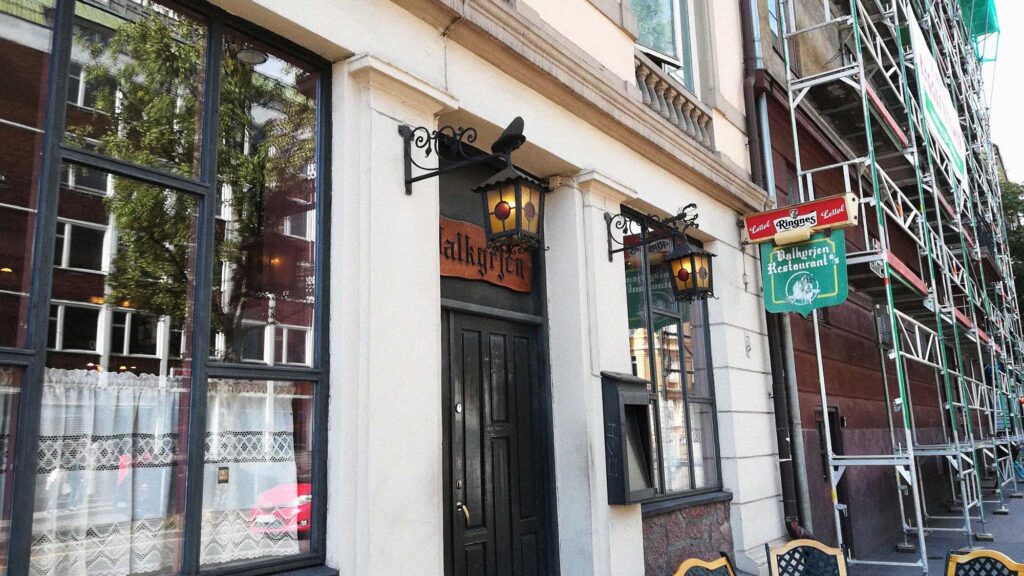
Valkyrien Restaurant
Valkyrien Restaurant has appeared in Elling (2001) and O’ Horten (2007). In both films, its old-fashioned interior is used as a familiar Oslo restaurant.
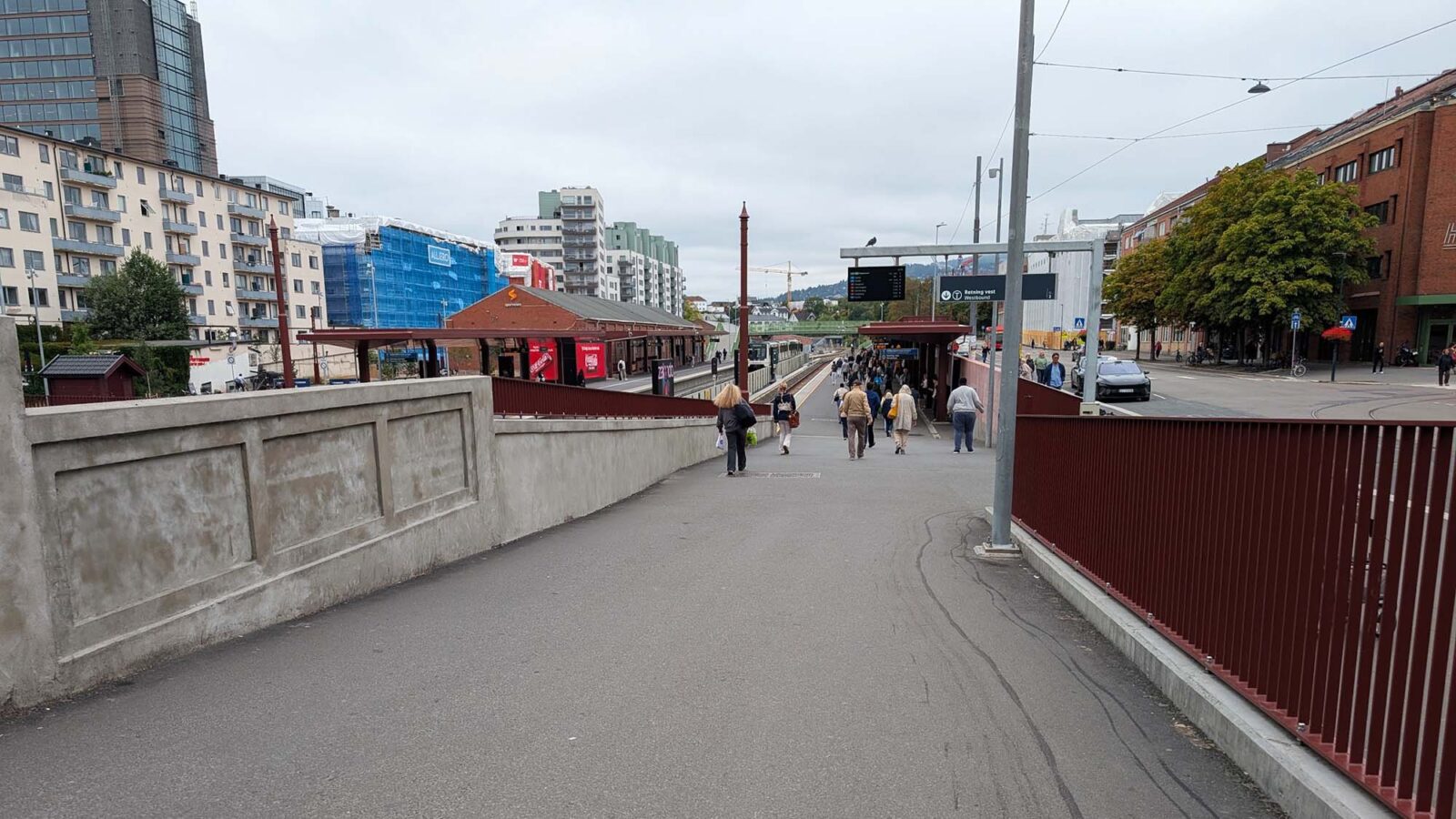
Majorstuen Station
Majorstuen Station appears in Jo Nesbø’s Detective Hole (2026), the Netflix adaptation of Nesbø’s Harry Hole universe, which was filmed extensively in Oslo.