
Vigeland Sculpture Park, commonly known as Vigelandsparken, is the monumental sculpture installation created by Norwegian sculptor Gustav Vigeland within Frogner Park in Oslo, Norway. Strictly speaking, the entire public park is Frogner Park, while Vigelandsanlegget refers to Vigeland’s sculpture ensemble within it, although the name Vigeland Park is widely used internationally and by the Vigeland Museum itself. The installation was the result of more than forty years of Vigeland’s work and contains more than 200 sculptures in bronze, granite and wrought iron, installed mainly between 1940 and 1949. Its principal axis passes through the Main Gate, the Bridge, the Fountain and the Monolith plateau before reaching the Wheel of Life. The Bridge alone contains 58 bronze sculptures, including the famous Sinnataggen, or Angry Boy, while the Monolith stands 17 metres above the ground and consists of 121 intertwined human figures carved from a single block of granite. The recurring naked figures depicting childhood, parenthood, relationships, conflict, ageing and death give the installation an immediately recognisable visual character that has repeatedly attracted film and television productions.
Vigeland Sculpture Park has appeared in Himmel og helvete (1969), The Love Boat (1977–1987), Gulag (1985), Elling (2001), Oslo, August 31st (2011), Trailer Park Boys: Out of the Park: Europe (2016), The Snowman (2017) and Jo Nesbø’s Detective Hole (2026). Productions have used both the monumental architecture and individual sculptures in very different ways: as a youthful playground during a drug sequence, a sightseeing attraction, a Soviet exterior, the setting for one of Elling and Kjell Bjarne’s most memorable comic scenes, a quiet nighttime encounter in Joachim Trier’s Oslo, an irreverent challenge for the Trailer Park Boys and a recurring visual component in two different screen versions of Jo Nesbø’s Harry Hole universe.
In Himmel og helvete (1969), Vigeland Sculpture Park is one of the film’s recurring Oslo locations during the early stages of Arne and Eva’s descent into drug use. Early in the film, the young couple, played by Lillebjørn Nilsen and Sigrid Huun, spend time near the Monolith. They later return to the park after smoking hashish, and their intoxication develops into a prolonged sequence in which they run freely through the sculpture installation and imitate the poses of several of Vigeland’s naked figures. The familiar statues therefore become active elements in the scene rather than simply providing an Oslo backdrop. The playful and euphoric presentation of the park forms part of the film’s deliberately exaggerated progression from apparently harmless experimentation towards the increasingly destructive drug culture that follows, reflecting the strongly anti-drug message around which the entire film was constructed.
In The Love Boat (1977–1987), Vigeland Sculpture Park appears during the two-part eighth-season special usually known collectively as “Scandinavia Cruise”, broadcast in 1985. The special follows the crew and passengers of the Royal Viking Sky on a journey beginning in London and continuing through Oslo and Stockholm, allowing the series to use real Scandinavian landmarks rather than its usual American and Caribbean settings. During the Oslo section, members of the group visit Frogner Park on a guided sightseeing tour. The sequence shows them among Vigeland’s sculptures while their guide introduces Frogner Park and explains that the stone, iron and bronze figures are the work of Gustav Vigeland. Rather than disguising the location, the programme presents the sculpture installation explicitly as one of Oslo’s major attractions, making the real park and Vigeland’s artwork part of the characters’ visit to Norway.
In Gulag (1985), Vigeland Sculpture Park was used for exterior material during the Norwegian filming of the American HBO television film. The story follows American sports reporter Mickey Almon, played by David Keith, who travels to Moscow to cover an international athletics event but is arrested by the KGB after becoming involved with a Soviet scientist. He is forced to confess to espionage and is eventually transported to a labour camp near the Arctic Circle, where he meets British prisoner Kenneth Barrington and begins planning an escape towards Norway. Although the story is set primarily in the Soviet Union, much of the production was filmed in Norway, with Oslo locations used to create Soviet surroundings. Contemporary location records specifically identify Vigeland Park for exterior scenes, alongside other Oslo locations including City Hall and the Botanical Garden. Available documentation does not identify the precise individual shots filmed among the sculptures, so the park’s contribution is best understood as part of the Norwegian location work used to construct the film’s Soviet environment rather than as a location explicitly identified as Oslo within the story.
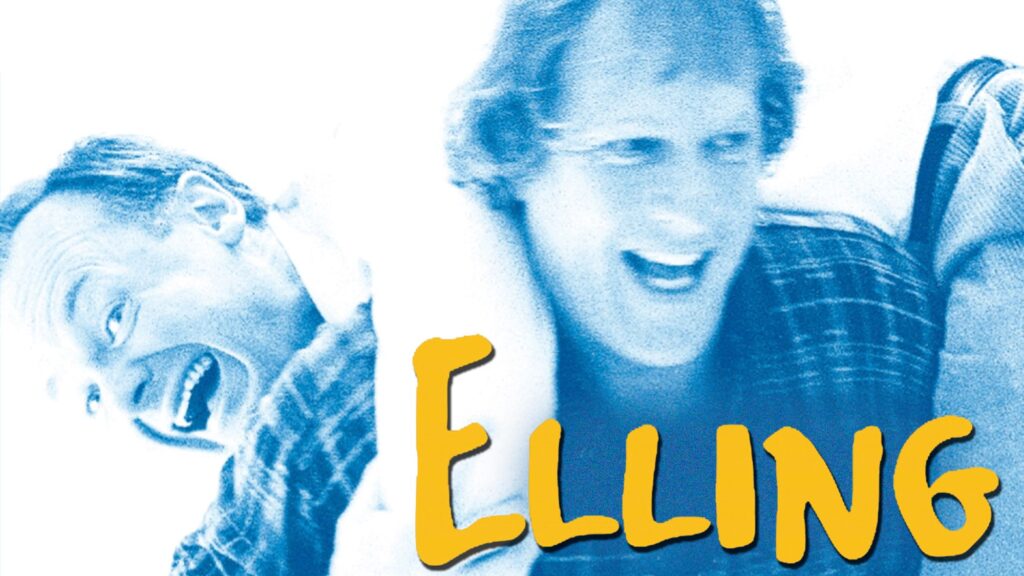
In Elling (2001), Vigeland Sculpture Park is the setting for a comic nighttime visit by Elling and Kjell Bjarne. After the two men have been drinking at Valkyrien Restaurant, they continue through Oslo and end up in Frogner Park. Elling presents the visit as an opportunity to experience culture, but Kjell Bjarne quickly becomes far more interested in the numerous nude female figures among Gustav Vigeland’s sculptures. He enthusiastically approaches one of the statues, touching and embracing it while wondering aloud what it would be like if the sculptures were alive. Elling admits that he has had similar thoughts, and the two continue examining the figures together. The scene makes direct use of the sculptures themselves as part of the comedy, contrasting Elling’s attempt to frame the excursion as a cultural experience with Kjell Bjarne’s much more physical fascination with the naked figures.
In Oslo, August 31st (2011), originally released as Oslo, 31. august, Vigeland Sculpture Park appears late in Anders’ final night in Oslo. After meeting two younger women at a party, Anders and another man walk with them through the park in the bright summer night. The other couple circle around on a bicycle while Anders leads the woman with him to what he calls the “echo point”, describing it as a classic Oslo spot that they should show to newcomers. He positions her in the centre of the paved circular area and asks her to stamp her foot, allowing the unusual acoustics to return the sound as an echo. She begins calling out different sounds while Anders demonstrates the effect, but the playful flirtation gradually contrasts with his emotional state. As the others continue enjoying themselves around him, Anders momentarily withdraws into himself, visually reinforcing the isolation that has followed him throughout the day despite being surrounded by friends, strangers and familiar places in his home city.
In Trailer Park Boys: Out of the Park: Europe (2016), Vigeland Sculpture Park appears in the fourth episode, “Oslo”. Ricky, Julian and Bubbles arrive in Norway as part of their European tour and receive a series of tasks that they must complete in order to earn money. One of the challenges specifically sends them to Vigeland Park, where they are instructed to find a sculpture referred to in the programme as a troll and give it an “atomic hover wedgie”. The absurd task brings the three men directly among Vigeland’s sculptures and turns one of Oslo’s most famous cultural landmarks into the setting for the programme’s deliberately irreverent humour. Their visit forms part of a wider Oslo episode that also involves obtaining a boat and taking Norwegian actor Fridtjov Såheim, known internationally from Lilyhammer, for drinks at an ice bar. Unlike productions that use the sculptures primarily for atmosphere, the programme identifies Vigeland Park by name and makes the artwork itself the subject of the challenge.
In The Snowman (2017), Vigeland Sculpture Park is used for the introduction of the adult Harry Hole, played by Michael Fassbender. After the opening section of the film, the story moves to present-day Oslo and finds Harry waking after a night of heavy drinking inside a small open shelter in the park. This shelter is not normally in the park, but put there by the filming production. The structure has open window spaces and no door, with a bench positioned inside, giving Harry some protection from the snow despite being outdoors. He wakes on the bench and leaves the shelter, establishing both his alcoholism and his disordered personal life before the murder investigation begins. The sequence was filmed close to the Monolith and uses the snow-covered Vigeland installation as an immediately recognisable Oslo setting for Harry’s introduction.
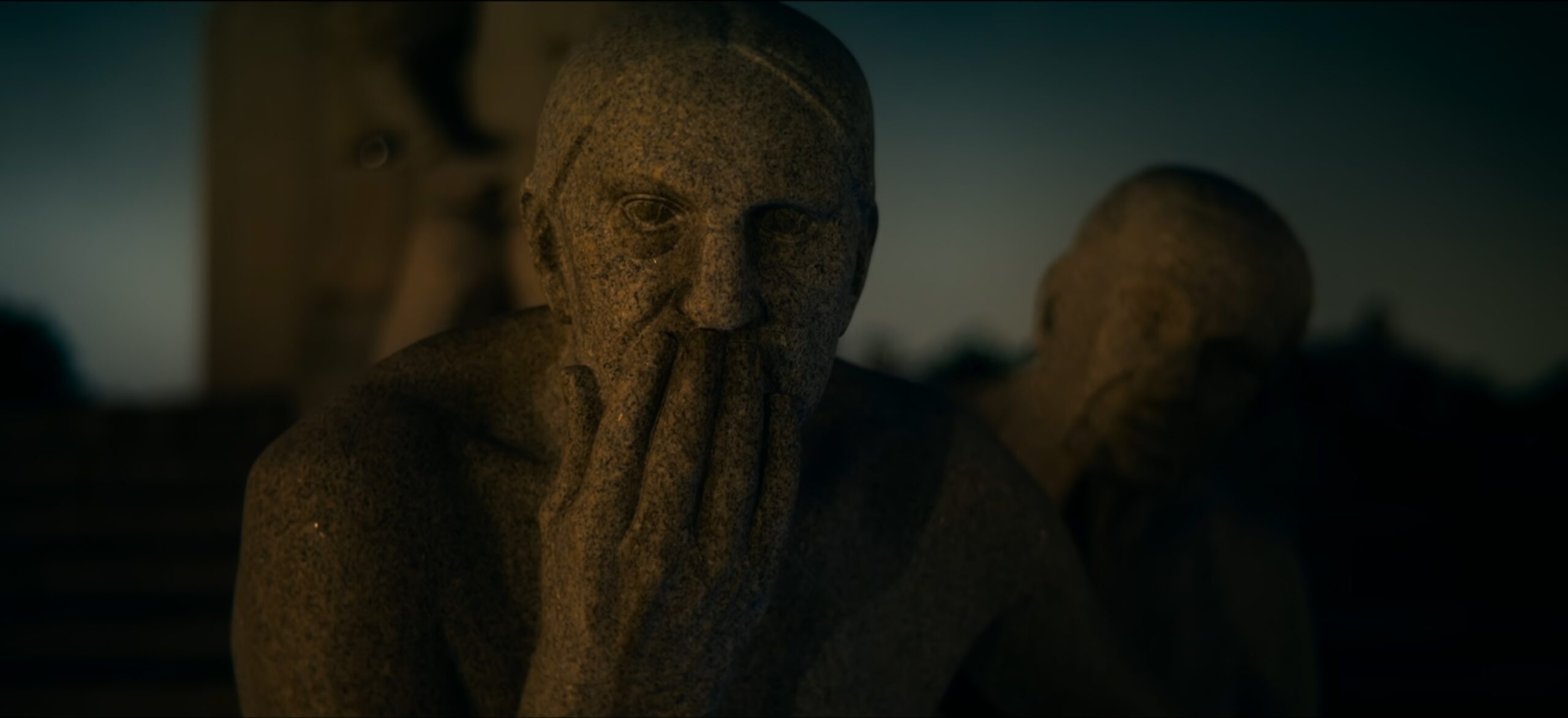
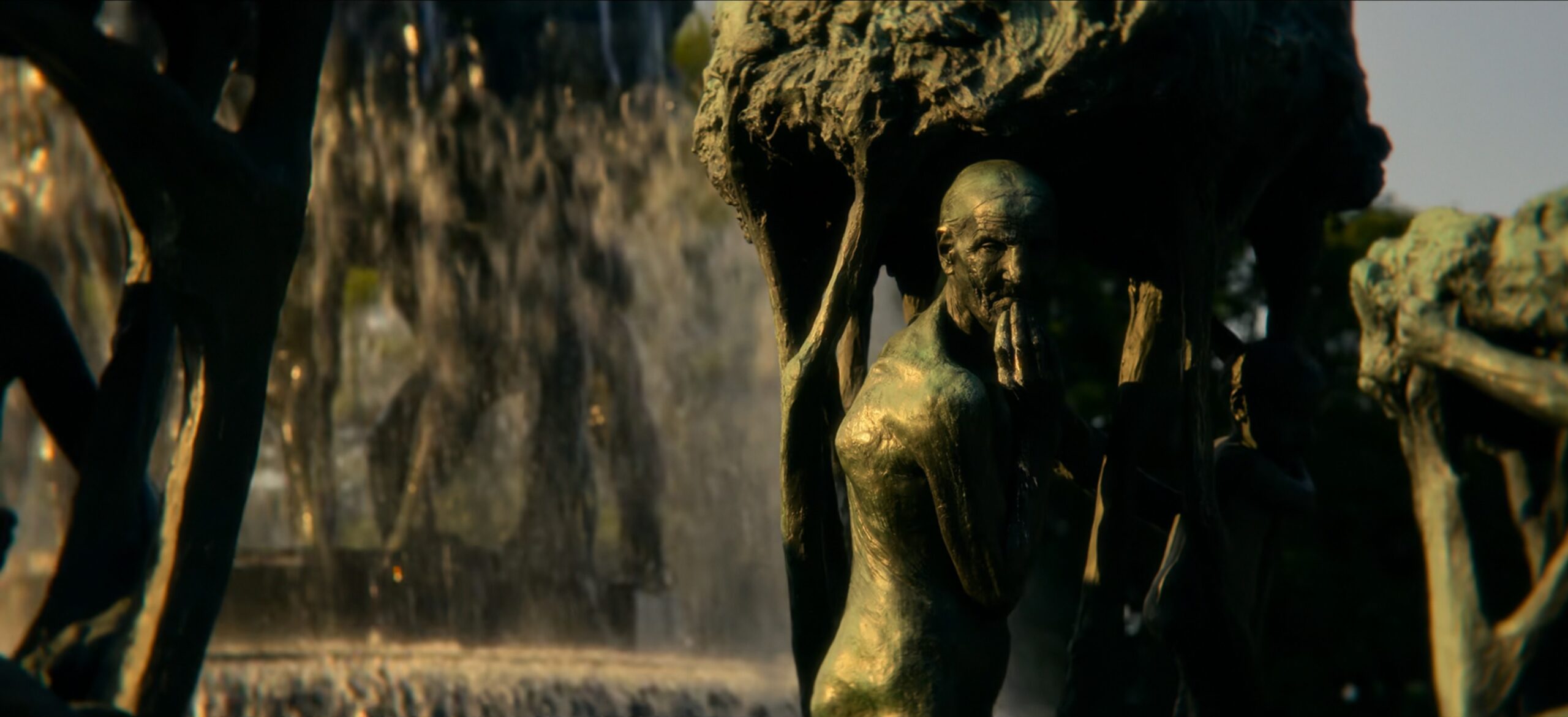
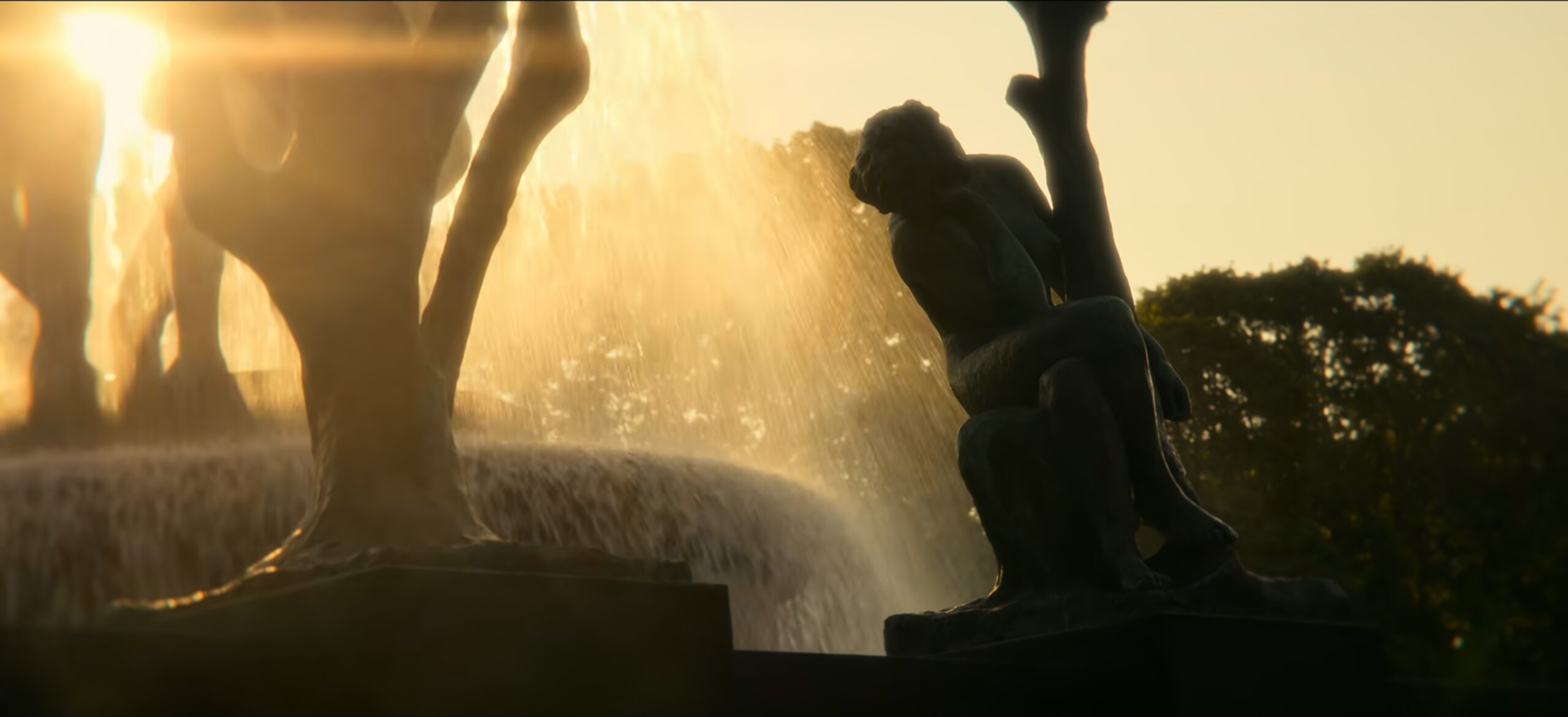
In Jo Nesbø’s Detective Hole (2026), Vigeland Sculpture Park returns to the Harry Hole universe, this time with Tobias Santelmann in the title role. The nine-part Netflix series was filmed extensively on real Oslo locations, and several sequences were shot within the Vigeland installation. Rather than using the park only as a conventional tourist landmark, the production repeatedly incorporates its monumental human figures into the visual language of the series. The Monolith and other sculptures appear in exterior and transitional material, their intertwined bodies and sometimes unsettling poses complementing a story built around ritualistic murders, corruption and psychological obsession. The treatment is markedly different from the sunny sightseeing presentation in The Love Boat or the comedy of Elling: the sculptures are photographed as part of the series’ darker interpretation of Oslo, turning one of the city’s most familiar public spaces into a recurring atmospheric motif. The production filmed for 113 shooting days at more than 160 locations around Oslo, with Vigeland Sculpture Park among the specifically documented locations used for several scenes.
Jo Nesbø’s Detective Hole (2026)
Elling
Norwegian comedy-drama Elling is closely tied to Oslo, especially the Majorstua area, where Elling and Kjell Bjarne are given their council flat.
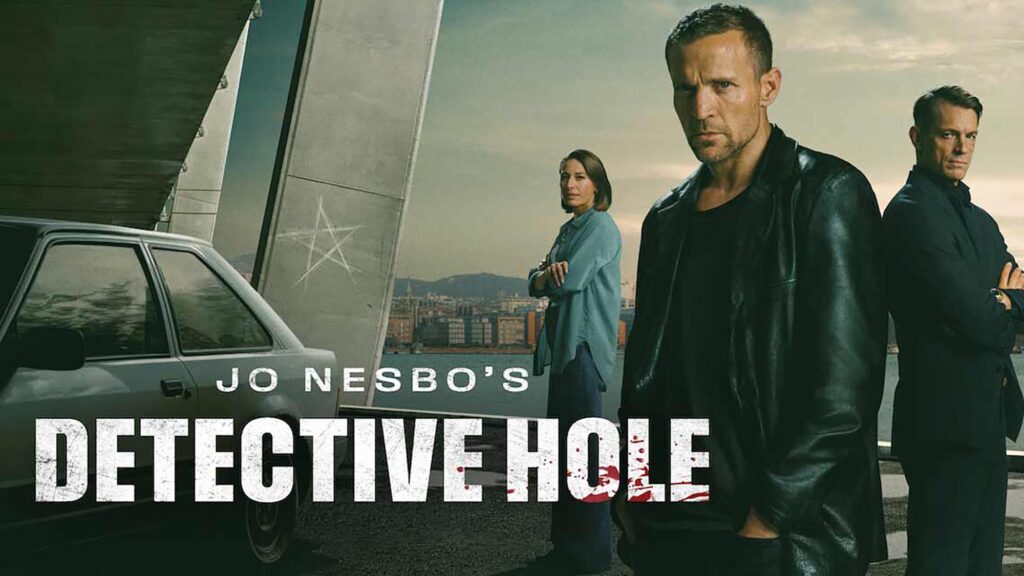
Jo Nesbo’s Detective Hole
Jo Nesbø’s Detective Hole is very closely tied to Oslo, and the city appears to have been used as a real dramatic environment rather than just a generic Scandinavian backdrop.
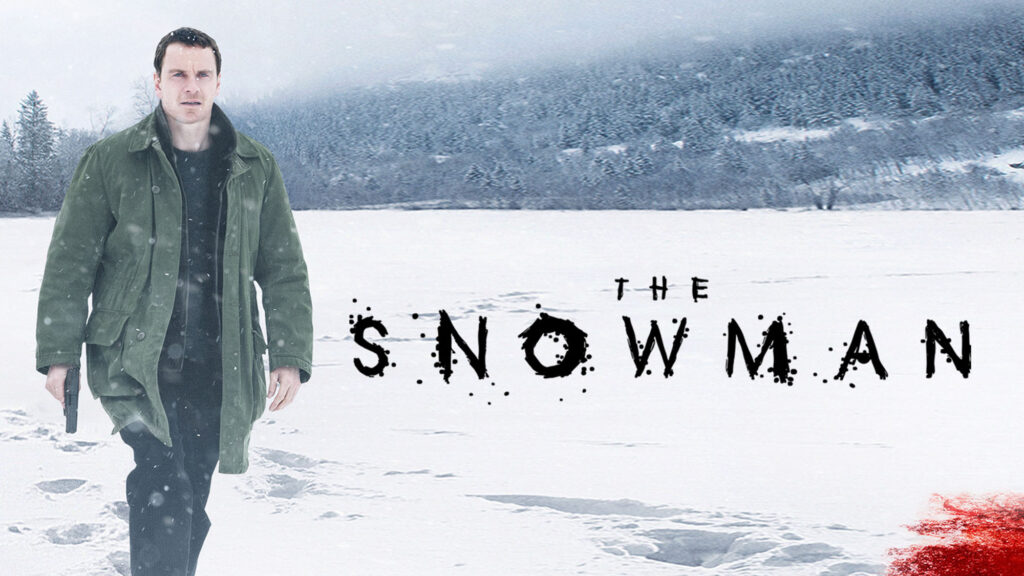
The Snowman
The Snowman is a 2017 psychological thriller film directed by Tomas Alfredson and written by Peter Straughan, Hossein Amini, and Søren Sveistrup.
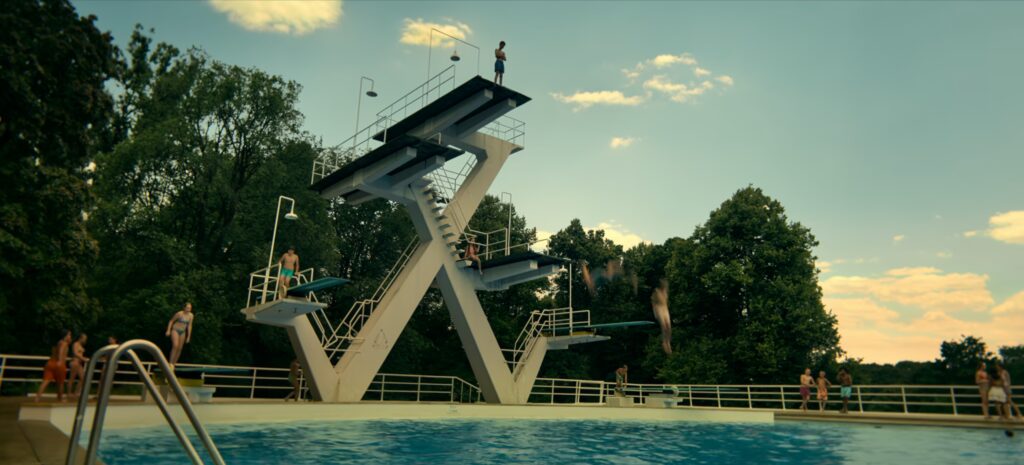
Frognerbadet
Frognerbadet is in Olsenbanden møter Kongen & Knekten, Frida: Straight from the Heart, Stuperen, Oslo, August 31st, Beatles, Hvite gutter and Detective Hole.
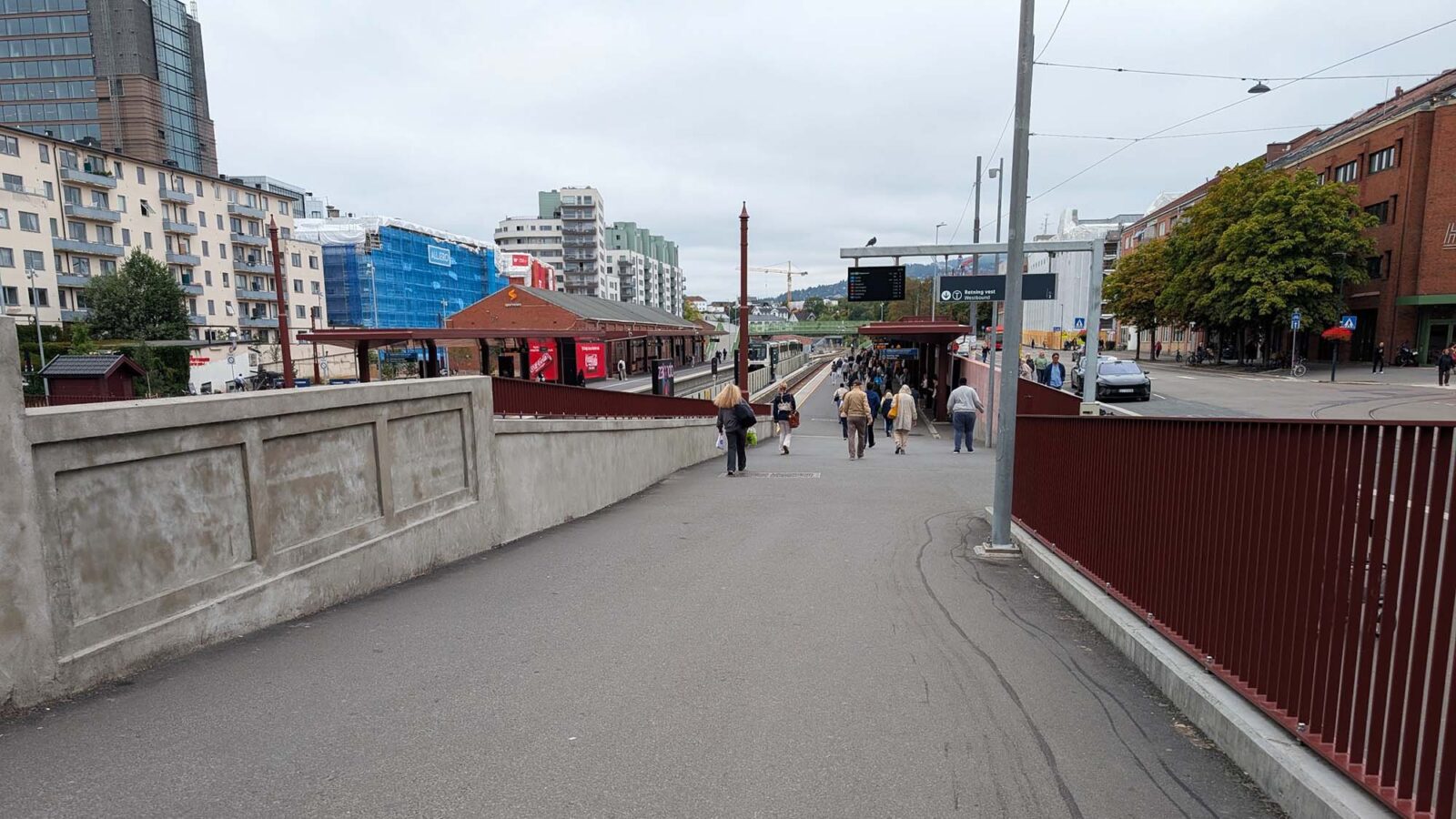
Majorstuen Station
Majorstuen Station appears in Jo Nesbø’s Detective Hole (2026), the Netflix adaptation of Nesbø’s Harry Hole universe, which was filmed extensively in Oslo.
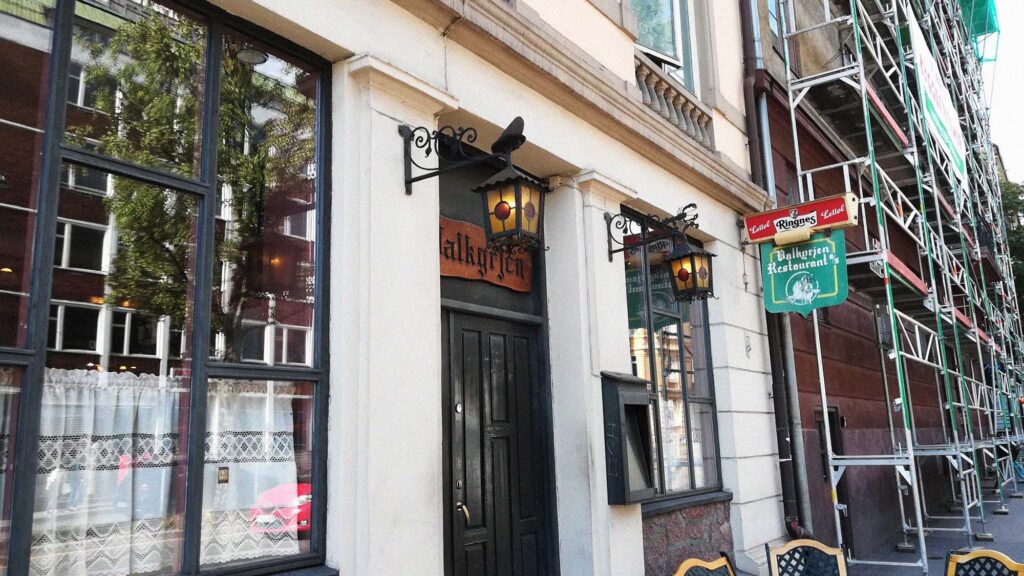
Valkyrien Restaurant
Valkyrien Restaurant has appeared in Elling (2001) and O’ Horten (2007). In both films, its old-fashioned interior is used as a familiar Oslo restaurant.

Lars Lillo-Stenberg House
Lars Lillo-Stenberg House is a private villa in Frogner, Oslo, known for its dragestil architecture. The house appears in Sentimental Value (2025).
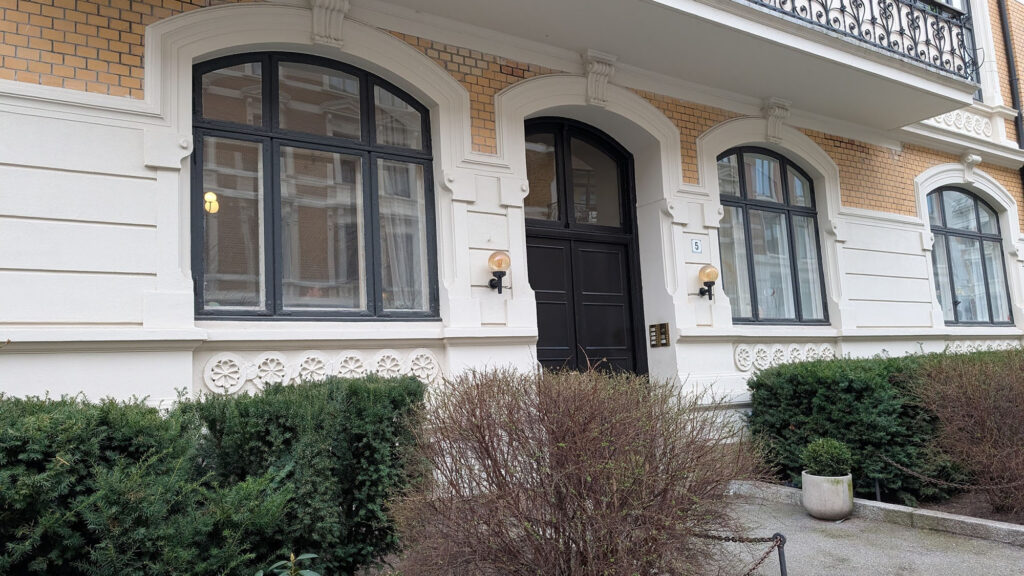
Behrens’ gate 5
In Jo Nesbø’s Detective Hole (2026), Behrens’ gate 5 is used for the scenes at Camilla Loen’s apartment, where she is found murdered.
Havens Kolonial
In Max Manus, Havens Kolonial is used for the Plasskafeen. Gregers Gram and Edvard Tallaksen are seen coming from Hertzbergs gate before entering the café.
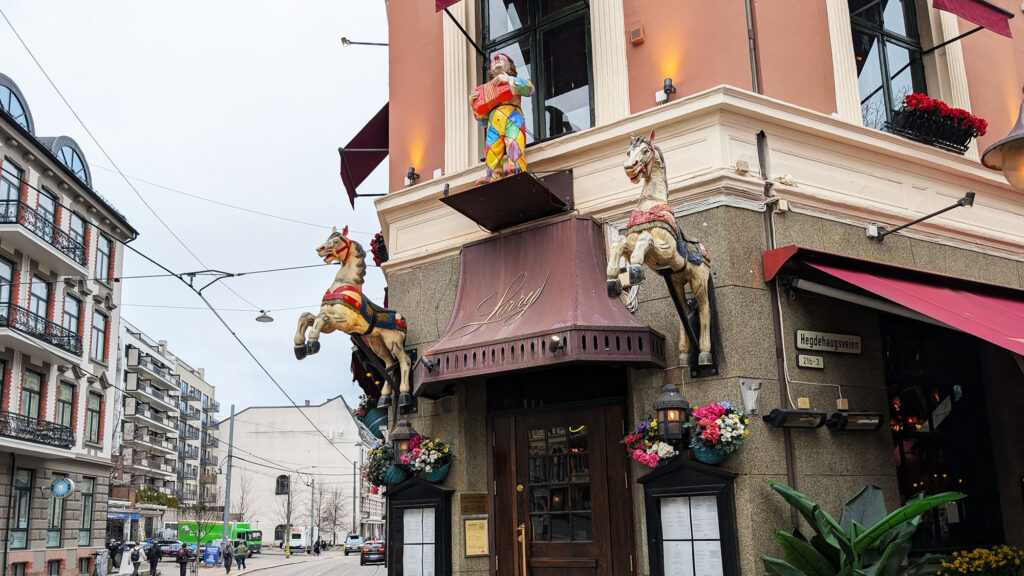
Lorry
Restaurant Lorry appears in Sentimental Value (2025). The restaurant is used as one of the film’s Oslo locations and forms part of its city setting.
Oscarshall
Oscarshall, the royal summer palace on the Bygdøy peninsula in Oslo, has appeared in Doctor Proctor’s Fart Powder (2014).
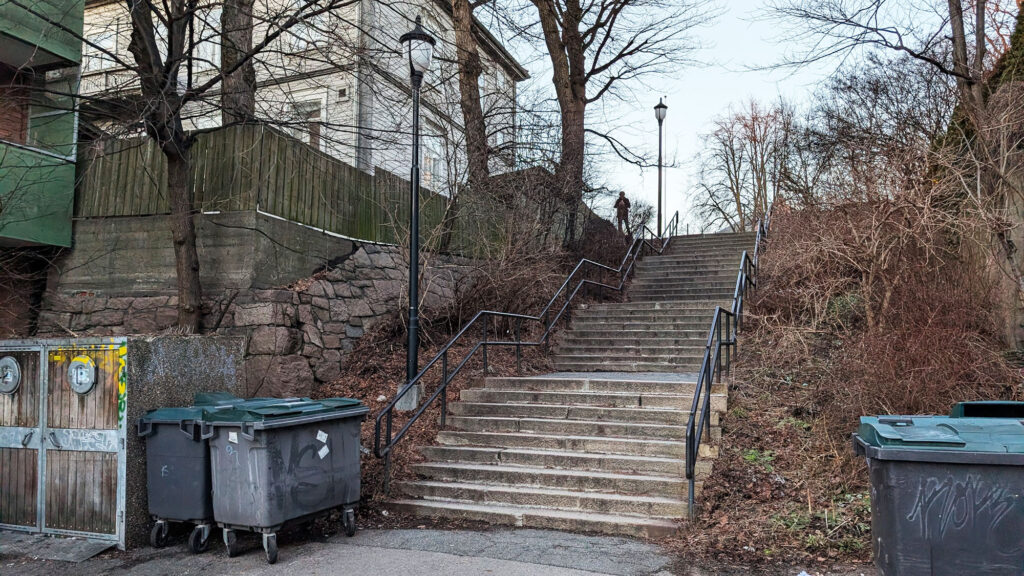
Wilhelms gate Steps
Wilhelms gate Steps appears in The Worst Person in the World (2021). The stairway is used in one of the film’s Oslo street sequences.