
Gol Stave Church is a medieval wooden church situated on a small hill within the Norwegian Museum of Cultural History, known as Norsk Folkemuseum, on the Bygdøy peninsula in Oslo, Norway. Originally built around 1200 in the village of Gol in Hallingdal, it is one of the surviving Norwegian stave churches dating from the Middle Ages. Its distinctive architecture is based on a framework of upright wooden posts, or staves, supporting a tall central nave surrounded by lower aisles. The exterior is characterised by steeply pitched, overlapping roofs covered with wooden shingles, carved dragon heads projecting from the roof ridges and richly decorated entrance portals featuring intertwined animals and plant motifs. The church originally stood at Gol’s old cemetery, approximately 500 metres southwest of the present parish church, where it served the local community for more than six centuries. During that period, the building underwent several alterations to accommodate changing religious practices and a growing congregation. A new log-built chancel was added around 1730, while the nave was enlarged between 1802 and 1803. By the late nineteenth century, the old building had become too small and was in poor condition, and plans were made to replace it with a larger church. The new Gol Church was completed in 1881 and consecrated the following year. The medieval building was consequently threatened with demolition, but the Society for the Preservation of Norwegian Ancient Monuments intervened and purchased it. The society subsequently presented the church to King Oscar II, who financed its relocation to his open-air collection of historic Norwegian buildings at Bygdøy. It was dismantled in January 1884 and transported to Oslo, where architect Waldemar Hansteen supervised its reconstruction. Rather than restoring the building to its appearance immediately before dismantling, Hansteen attempted to recreate what he believed had been its original medieval form. Borgund Stave Church in Lærdal served as an important architectural model, particularly for the elaborate roof structures and exterior galleries. Only approximately one-third of the materials taken from Gol were considered medieval, and much of the exterior was reconstructed during 1884 and 1885. The surviving medieval framework, however, remains largely intact. Inside, the church retains carved wooden faces on its supporting posts, medieval runic inscriptions and decorative wall paintings from 1652 in the chancel and apse. One of the runic inscriptions has been interpreted as a request for a kiss from someone in distress, possibly referring to a religious figure that once stood nearby. The church became part of Norsk Folkemuseum in 1907, when King Oscar II’s collection was incorporated into the museum. Today, it remains one of the most recognisable examples of Norway’s medieval wooden church architecture, although its present appearance is partly the result of nineteenth-century reconstruction.
Gol Stave Church appears in Lords of Chaos (2018), the biographical crime drama directed by Jonas Åkerlund about the early Norwegian black metal scene. The church represents Fantoft Stave Church in Bergen, which was destroyed by arson on 6 June 1992. The sequence shows Kristian «Varg» Vikernes approaching the building, entering it with a crowbar and eventually emerging as smoke begins surrounding the church. The scene makes extensive use of the actual medieval church at Norsk Folkemuseum in Oslo, including its entrance, surrounding grounds and distinctive wooden architecture.
In Lords of Chaos (2018), Gol Stave Church appears approximately 43 minutes into the film, during the sequence depicting the burning of Fantoft Stave Church by Kristian «Varg» Vikernes, played by Emory Cohen. Vikernes, also known as the Count, is first seen walking up the gravel path through Norsk Folkemuseum towards the medieval wooden church, carrying a rabbit or hare in one hand. Upon reaching the building, he places his backpack and the animal on the ground outside the entrance before taking out a crowbar. He then approaches the doorway and enters the church. The camera provides several views of the building, including its distinctive entrance with an ornamental emblem above the doorway, one of the architectural details that distinguishes Gol Stave Church from the similar-looking Fantoft Stave Church in Bergen. After a few additional exterior shots, Vikernes emerges through the same entrance, with smoke drifting out of the doorway and light visible from inside the building. He walks away along the gravel path as the camera returns to a wider view of the entire church, now surrounded by smoke. The sequence was filmed entirely at the actual Gol Stave Church, with the entrance and surrounding architecture remaining consistent throughout the shots. No interior scenes are shown, and the building is never seen catching fire or burning down. Instead, smoke effects and lighting create the impression that Vikernes has started a fire inside. The real Fantoft Stave Church was destroyed on 6 June 1992, while Gol Stave Church remains preserved at Norsk Folkemuseum on Bygdøy in Oslo.

Lords of Chaos
The story in Lords of Chaos is rooted in Oslo and in the real early-1990s Norwegian black metal milieu, but the production was split between Norway and Hungary.

Oscarshall
Oscarshall, the royal summer palace on the Bygdøy peninsula in Oslo, has appeared in Doctor Proctor’s Fart Powder (2014).

Lars Lillo-Stenberg House
Lars Lillo-Stenberg House has appeared in Oslo, August 31st (2011) and Sentimental Value (2025), both directed by Joachim Trier and written by Eskil Vogt.
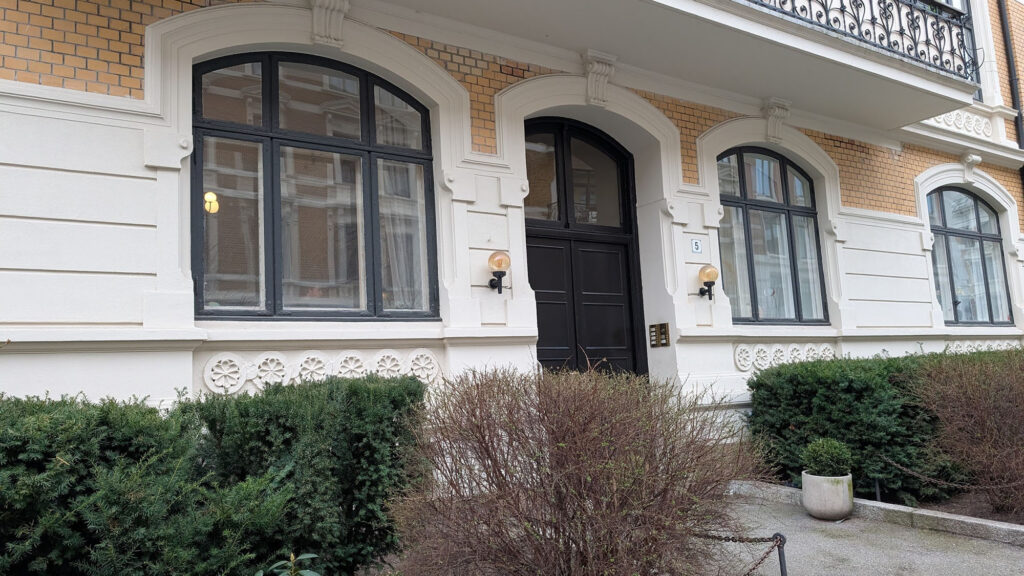
Behrens’ gate 5
In Jo Nesbø’s Detective Hole (2026), Behrens’ gate 5 is used for the scenes at Camilla Loen’s apartment, where she is found murdered.
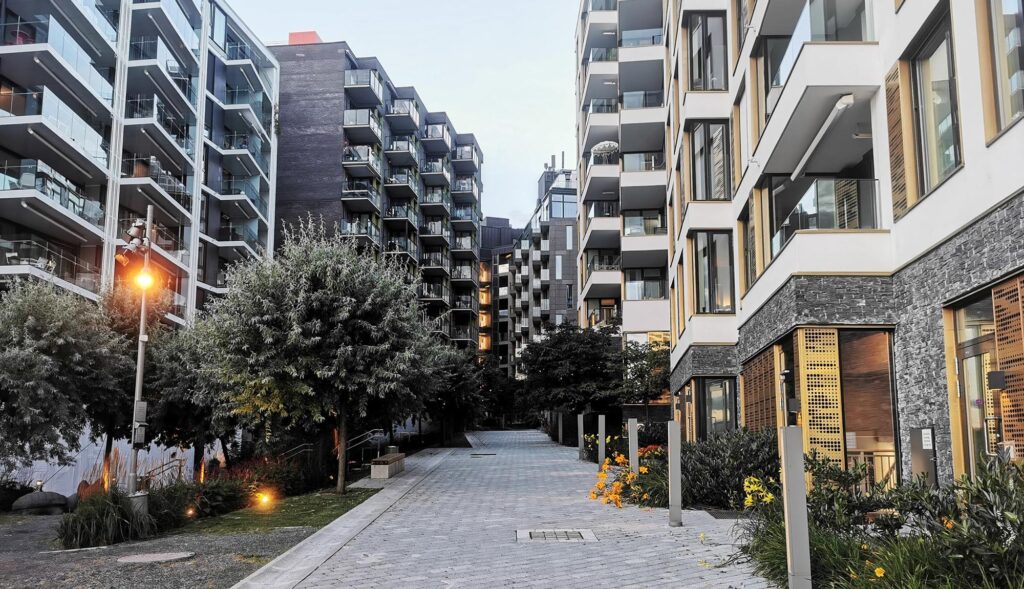
Tjuvholmen
The 2020 Christopher Nolan film Tenet filmed key action scenes at Tjuvholmen, specifically around Olav Selvaags Plass and near the Thief Hotel.
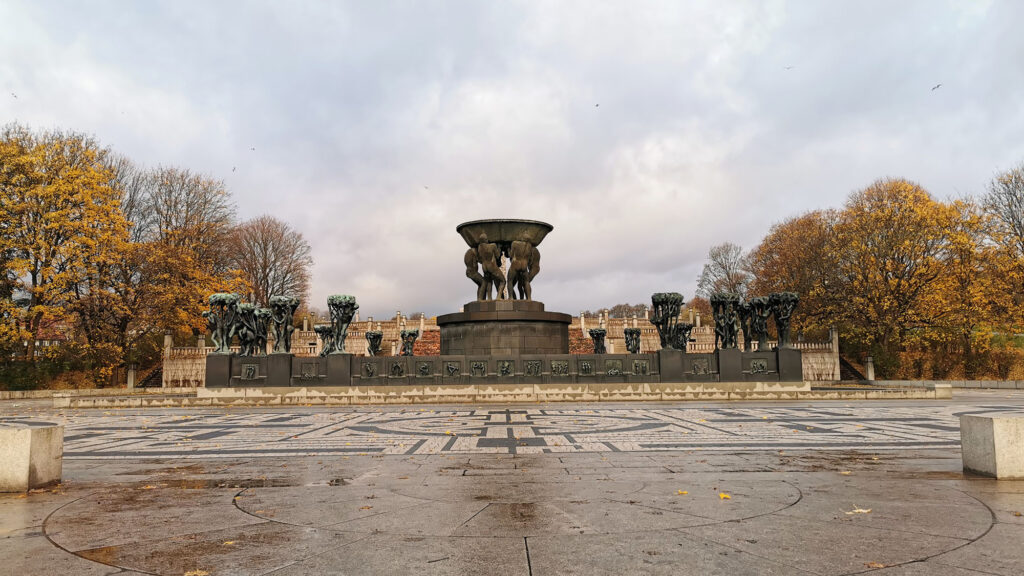
Vigeland Sculpture Park
Vigeland Sculpture Park appears in Jo Nesbø’s Detective Hole, The Snowman, Himmel og helvete, Oslo, 31. august, Elling, and many more.
Strandveitunnelen
Strandveitunnelen appears in Insomnia (1997). The film is set in Troms in Northern Norway, but the tunnel scene uses a location from the Oslo region instead.
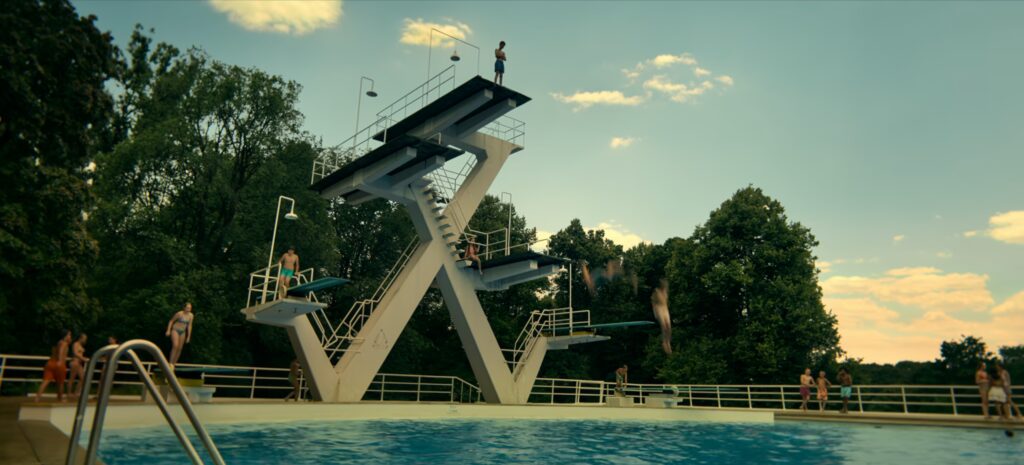
Frognerbadet
Frognerbadet is in Olsenbanden møter Kongen & Knekten, Frida: Straight from the Heart, Stuperen, Oslo, August 31st, Beatles, Hvite gutter and Detective Hole.
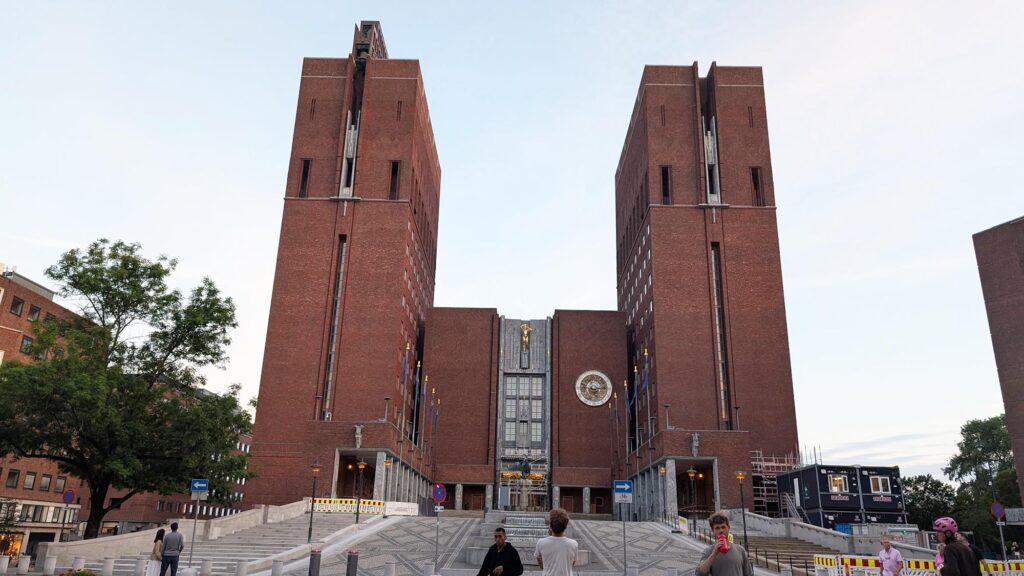
Oslo City Hall
Oslo City Hall (Rådhuset) is the administrative headquarters of the city council and municipal government in Oslo, Norway, inaugurated in 1950.
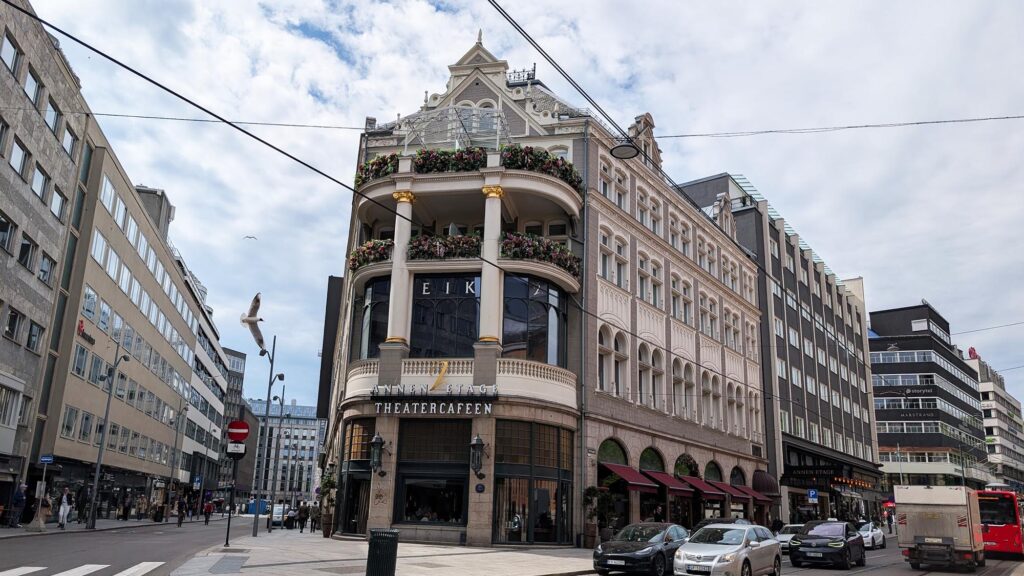
Theatercaféen
Theatercaféen appears in "Jo Nesbø’s Detective Hole" (2026), and is connected to a lunch that becomes very relevant to Harry Hole’s investigation.