
Gloucester Cathedral, formally the Cathedral Church of St Peter and the Holy and Indivisible Trinity, stands in the centre of Gloucester, England. Its origins can be traced to a religious community founded on the site in around 678 or 679, although most of the present building developed from the Benedictine abbey begun under Abbot Serlo in 1089. The massive Norman nave survives from this rebuilding, while later medieval additions transformed much of the eastern end into the Perpendicular Gothic style. The burial of King Edward II at the abbey in 1327 attracted pilgrims and considerable income, helping finance major architectural work during the fourteenth century. Among the cathedral’s most celebrated features are the Great East Window, installed during the 1350s, and the cloisters, completed around 1412 and famous for some of the earliest surviving large-scale fan vaulting in England. Following the Dissolution of the Monasteries, the abbey was refounded as Gloucester Cathedral in 1541. Its mixture of Norman and Gothic architecture, long vaulted corridors, cloisters, crypt and surrounding College Green have subsequently made it one of England’s most frequently used ecclesiastical filming locations.
Gloucester Cathedral has appeared in El libro de buen amor II (1976), The Whistle Blower (1986), The Choir (1995), Shadow Run (1998), Harry Potter and the Sorcerer’s Stone (2001), Harry Potter and the Chamber of Secrets (2002), Doctor Who (2005–2022), Harry Potter and the Half-Blood Prince (2009), Sherlock (2010–2017), The Hollow Crown (2012–2016), Father Brown (2013–), Wolf Hall (2015–2024), The White Princess (2017), Mary Queen of Scots (2018), The Spanish Princess (2019–2020), Catherine Called Birdy (2022), The Famous Five (2023–) and Alex Rider (2020–2024). Its nave, crypt, cloisters, Lavatorium, exterior and surrounding College Green have represented medieval monasteries, royal palaces, fictional cathedrals, Victorian churches and, most famously, the corridors of Hogwarts School of Witchcraft and Wizardry.
In El libro de buen amor II (1976), Gloucester Cathedral was used as one of the historic locations for the Spanish medieval comedy directed by Jaime Bayarri. The film continues the adventures of Juan Ruiz, the Archpriest of Hita, as he pursues what he considers “good love”, becomes involved with a succession of women and encounters representatives of the medieval Church. The cathedral is specifically documented among the production’s British locations and its medieval architecture was used for the ecclesiastical surroundings of Juan’s story. Detailed surviving location records do not identify the individual scene or precise part of the cathedral used, making this one of the less well documented appearances of Gloucester Cathedral on film.
In The Whistle Blower (1986), Gloucester Cathedral appears during an early conversation between Frank Jones and his son Bob. Bob works as a Russian-language translator at GCHQ and has become increasingly troubled by the surveillance and secrecy surrounding Britain’s intelligence establishment. Father and son walk through the cloisters of Gloucester Cathedral while discussing government power, official secrecy and whether wrongdoing at the highest levels could ever genuinely be exposed. Frank argues that Britain has never experienced an equivalent of Watergate because official inquiries and the Official Secrets Act allow embarrassing matters to be concealed. The peaceful medieval cloisters provide a deliberately restrained setting for a conversation that foreshadows Bob’s death and Frank’s subsequent investigation into the intelligence services.
In The Choir (1995), Gloucester Cathedral becomes the fictional Aldminster Cathedral and is one of the principal settings throughout the five-part BBC adaptation of Joanna Trollope’s novel. The story centres on the cathedral community as Dean Hugh Cavendish attempts to address severe financial problems, placing the future of the choir and its associated school under threat. Gloucester Cathedral’s nave, choir, cloisters and surrounding precinct repeatedly appear as choristers rehearse and perform, clergy argue over the institution’s future and the struggle to preserve the choir becomes increasingly entangled with the characters’ personal lives. Gloucester Cathedral’s own choir participated in the production and soundtrack, while cathedral organist David Briggs provided the organ playing heard in the series. The location is so central to the drama that Gloucester effectively becomes Aldminster rather than merely supplying occasional establishing shots.
In Shadow Run (1998), Gloucester Cathedral is unusually important to the mechanics of the film’s robbery plot. Criminal mastermind Haskell plans to hijack a high-security vehicle carrying millions of pounds, and his gang discovers that construction work and metal plates on the cathedral can interfere with radio signals in the surrounding streets. Haskell and Liney attend Evensong at the cathedral while secretly looking for a way onto the roof, moving through the building as the choir sings and young chorister Edward Joffrey performs “Once in Royal David’s City”. After the cathedral closes, the criminals use the building and its roof as part of their preparations to create the radio dead zone required for the robbery. Edward, who has already witnessed evidence of the gang’s earlier violence, becomes caught up in their scheme. Gloucester Cathedral therefore functions not simply as background but as an integral component of Haskell’s plan.
In Harry Potter and the Sorcerer’s Stone (2001), Gloucester Cathedral provides several of the corridors of Hogwarts. Its first major appearance comes after the Sorting Ceremony, when Percy Weasley leads Harry Potter, Ron Weasley, Hermione Granger and the other new Gryffindor students along the South Cloister towards their common room. The West Cloister Door becomes the entrance beneath the portrait of the Fat Lady. The cathedral appears again during the Halloween troll sequence. After realising that Hermione does not know about the troll, Harry and Ron run through the North Cloister looking for her and hide behind a column in the Lavatorium when they see the troll’s shadow approaching. Modern electrical fittings and religious imagery were disguised during filming so that the medieval cloisters could convincingly become part of Hogwarts.
In Harry Potter and the Chamber of Secrets (2002), Gloucester Cathedral returns as the Hogwarts corridors and provides the setting for some of the film’s most recognisable scenes. In the North Cloister, Harry, Ron and Hermione discover Argus Filch’s cat Mrs Norris hanging petrified beneath the threatening message announcing that the Chamber of Secrets has been opened. The production protected the historic stonework by installing a false wall on which the message could be placed. The East Cloister is used after Moaning Myrtle floods the girls’ bathroom, with Harry and Ron following the water along the corridor to discover where it is coming from. The cathedral’s vaulted passageways consequently become closely associated with the mystery of the Chamber and the increasing sense that something dangerous is moving through Hogwarts.
In Doctor Who (2005–2022), Gloucester Cathedral appears in two stories separated by more than a decade. In the Christmas special “The Next Doctor” from 2008, the cathedral grounds and College Green were transformed into Victorian London for scenes involving the Tenth Doctor, Jackson Lake and the Cybermen. The production returned to Gloucester for “Fugitive of the Judoon” in 2020, this time allowing the city to play itself. Ruth Clayton works as a tour guide in Gloucester, and the Judoon descend on the city while searching for a mysterious fugitive. Their patrol moves through Berkeley Street, College Green and the cathedral precinct before entering Gloucester Cathedral itself as they scan local residents. The second appearance is therefore particularly distinctive because viewers are meant to recognise the building as Gloucester Cathedral rather than as a fictional location.
In Harry Potter and the Half-Blood Prince (2009), Gloucester Cathedral returned to represent Hogwarts for the first time since Harry Potter and the Chamber of Secrets (2002). In the West Cloister, Harry and Ron are enjoying a free period when Professor McGonagall catches them loitering and informs them that they should be taking Potions, sending them to Professor Slughorn’s class. The Lavatorium is used for a darker scene in which Harry secretly watches Severus Snape confront Draco Malfoy. Draco reminds Snape of the Unbreakable Vow and insists that he does not need assistance with the task given to him by Voldemort, while Harry listens from hiding nearby. Religious imagery in the stained glass was disguised for the production, allowing the medieval monastic architecture to return convincingly as the corridors of Hogwarts.
In Sherlock (2010–2017), Gloucester Cathedral appears in the special episode “The Abominable Bride”, broadcast in 2016. The Victorian version of Sherlock Holmes and Dr John Watson investigate the apparently supernatural case of Emelia Ricoletti, a bride who appears to have returned from the dead. Gloucester Cathedral doubles as a deconsecrated church visited during their investigation. Holmes and Watson are seen running through the dark exterior precinct before descending into the cathedral’s crypt, where they discover a gathering of figures dressed in purple robes. The underground space becomes the meeting place of the secret society connected to the mystery, and Holmes reconstructs the events surrounding the supposed ghostly bride while surrounded by the cathedral’s medieval stonework.
In The Hollow Crown (2012–2016), Gloucester Cathedral was used to represent parts of the medieval Palace of Westminster. During the first cycle of Shakespeare adaptations, scenes at the court of Henry IV in Henry IV, Part 1 and Henry IV, Part 2 were filmed in the cathedral’s nave and cloisters. Director Richard Eyre wanted a genuinely medieval building for the royal court and was allowed to clear the nave for filming, exposing the enormous Norman columns and vaulted interior. Parts of the building were dressed and partitioned to reduce its recognisably ecclesiastical appearance and create the impression of a secular royal palace. Gloucester Cathedral was used again during the second cycle, The Wars of the Roses, which adapted Henry VI and Richard III, continuing its role as part of the royal and political world in which the struggle for the English crown unfolds.
In Father Brown (2013–), Gloucester Cathedral appears in stories involving Hercule Flambeau and valuable religious treasures. It was used during the 2016 episode “The Daughter of Autolycus”, in which Father Brown reluctantly becomes involved in Flambeau’s attempt to steal a priceless cross sent by the Pope as a coronation gift to the Queen. The cathedral returned more explicitly in the 2018 episode “The Two Deaths of Hercule Flambeau”. After learning that Flambeau has apparently died in Italy, Father Brown discovers that the Iron Crown of Lombardy has arrived for an exhibition at Gloucester Cathedral. The crown, reputed in the story to contain one of the nails from the Crucifixion, inevitably attracts Flambeau’s attention and becomes the centre of an elaborate theft. Unlike many productions filmed here, the episode identifies the location by its real name, allowing Gloucester Cathedral to play itself.
In Wolf Hall (2015–2024), Gloucester Cathedral represents several locations associated with the court of Henry VIII. During the first series, different parts of the building were dressed to provide interiors for Blackfriars and Calais Castle as well as the exterior of the King’s Lodgings, allowing the same cathedral to represent several separate places in Thomas Cromwell’s political world. The production returned almost a decade later for Wolf Hall: The Mirror and the Light in 2024. In the second episode, Cromwell visits Dorothea, the illegitimate daughter of his former mentor Cardinal Wolsey, at the convent where she lives as a nun. Their uncomfortable meeting was filmed in the main body of Gloucester Cathedral. After Dorothea accuses Cromwell of having failed her father during Wolsey’s final days, the shaken Cromwell later breaks down while walking alone through the cathedral’s cloister, making particularly prominent use of its fan-vaulted passages.
In The White Princess (2017), Gloucester Cathedral contributes to the collection of locations used to create the royal residences of the early Tudor court. The production made particularly extensive use of the crypt beneath the cathedral, where a set was constructed to represent the rooms occupied by Elizabeth Woodville and members of the Woodville family after they arrive at court. Executive producer Emma Frost later explained that these were the rooms involved when Margaret Beaufort, mother of King Henry VII, asserts her authority by taking the Queen’s room for herself. Rather than simply photographing the crypt in its existing state, the production built rooms within the medieval underground space, using the cathedral’s stone structure as the architectural foundation for the set.
In Mary Queen of Scots (2018), Gloucester Cathedral serves two very different purposes. The cloisters form part of Hampton Court Palace, with their long Gothic corridors combined with other locations to create the court of Elizabeth I. They appear as Elizabeth and members of her household move through the royal palace, with the cathedral architecture blended with locations including Haddon Hall and Oxford’s Divinity School. Much later in the film, the cathedral’s crypt becomes the prison cell in which Mary Stuart spends the period immediately before her execution. The actual execution sequence was filmed elsewhere at Penshurst Place, but Gloucester provides the darker, confined setting for Mary’s final imprisonment.
In The Spanish Princess (2019–2020), the cloisters of Gloucester Cathedral represent corridors within the Palace of Westminster. The Starz historical drama follows Catherine of Aragon from her arrival in England and marriage to Arthur, Prince of Wales, through her eventual marriage to Henry VIII and her struggle to secure her position as queen. One particularly recognisable Gloucester sequence shows Margaret Beaufort walking through the cloisters with Catherine while angrily confronting her over her failure to provide Henry with a surviving male heir. The North Cloister and its medieval Lavatorium remain clearly identifiable behind the characters. Other parts of Westminster were assembled from different locations, including nearby Berkeley Castle, whose exterior was used for the palace courtyard.
In Catherine Called Birdy (2022), Gloucester Cathedral provides part of the medieval world surrounding fourteen-year-old Catherine, known as Birdy. The film follows the rebellious daughter of financially troubled Lord Rollo as she attempts to discourage the wealthy men her father wants her to marry. Gloucester Cathedral’s cloisters were used prominently during filming and can be recognised in the finished film, while the cathedral also contributes to the monastery associated with Birdy’s older brother Edward, who has become a monk. Parts of Gloucester were combined with Stokesay Castle, Ludlow Castle and other surviving medieval buildings rather than constructing the entire world of the film on sound stages, giving the story a mixture of genuine thirteenth- and later medieval architecture.
In The Famous Five (2023–), Gloucester Cathedral appears in “The Curse of Kirrin Island”, the opening feature-length story of the BBC adaptation of Enid Blyton’s books. Julian, Dick, Anne, George and Timmy travel to London while investigating a mystery connected to the Knights Templar and visit a church containing clues to the history of Kirrin Island. Gloucester Cathedral stands in for the London church. The children cross the Cloister Garden before entering the building, with scenes filmed in the Quire as they pursue the Templar mystery. They subsequently race back through the cloisters and past the Lavatorium while searching for a way into the underground areas. The sequence uses considerably more of the cathedral than a simple establishing shot, moving the characters through several of its most recognisable spaces as the investigation develops.
In Alex Rider (2020–2024), Gloucester Cathedral was used during the third and final season, filmed in Gloucester in late 2022 and released in 2024. The season follows Alex as he attempts to infiltrate the international criminal organisation Scorpia and uncover its plan to use a weapon known as Invisible Sword. The cathedral provides the setting for an elaborate art exhibition that Alex attends undercover in formal dress. The initially sophisticated event develops into an action sequence, with Alex pursued through the building and the chase making use of the cathedral’s large interior and Gothic architecture. Production for the season also moved onto nearby Southgate Street, allowing several parts of central Gloucester to form part of the series’ version of London and the wider world of Scorpia.

Harry Potter and the Sorcerer’s Stone
Harry Potter and the Sorcerer’s Stone (2001), released in many countries as Harry Potter and the Philosopher’s Stone, is a fantasy adventure…

The Falkland Arms
The Falkland Arms appears in MobLand (2025–). The series uses the real Great Tew pub as itself, with the name The Falkland Arms kept in the dialogue.
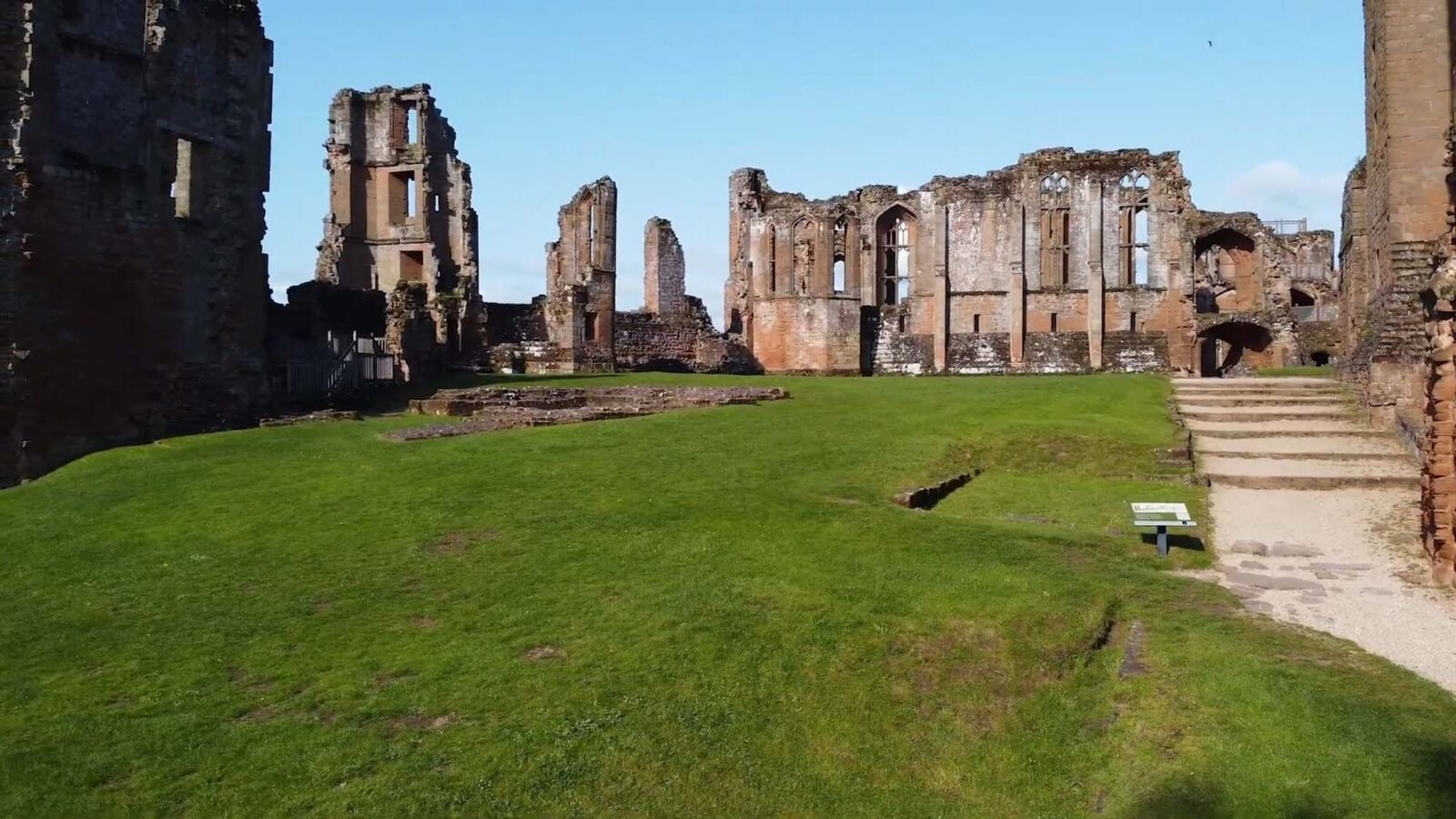
Kenilworth Castle
Kenilworth Castle, in Warwickshire, England, has appeared in When Knights Were Bold (1916), Kenilworth Castle and Amy Robsart (1926) and Father Brown (2013–).

Stowe School
Stowe School is in Indiana Jones and the Last Crusade, Inspector Morse, Jeeves and Wooster, The Avengers, Vanity Fair, The World Is Not Enough and many more.
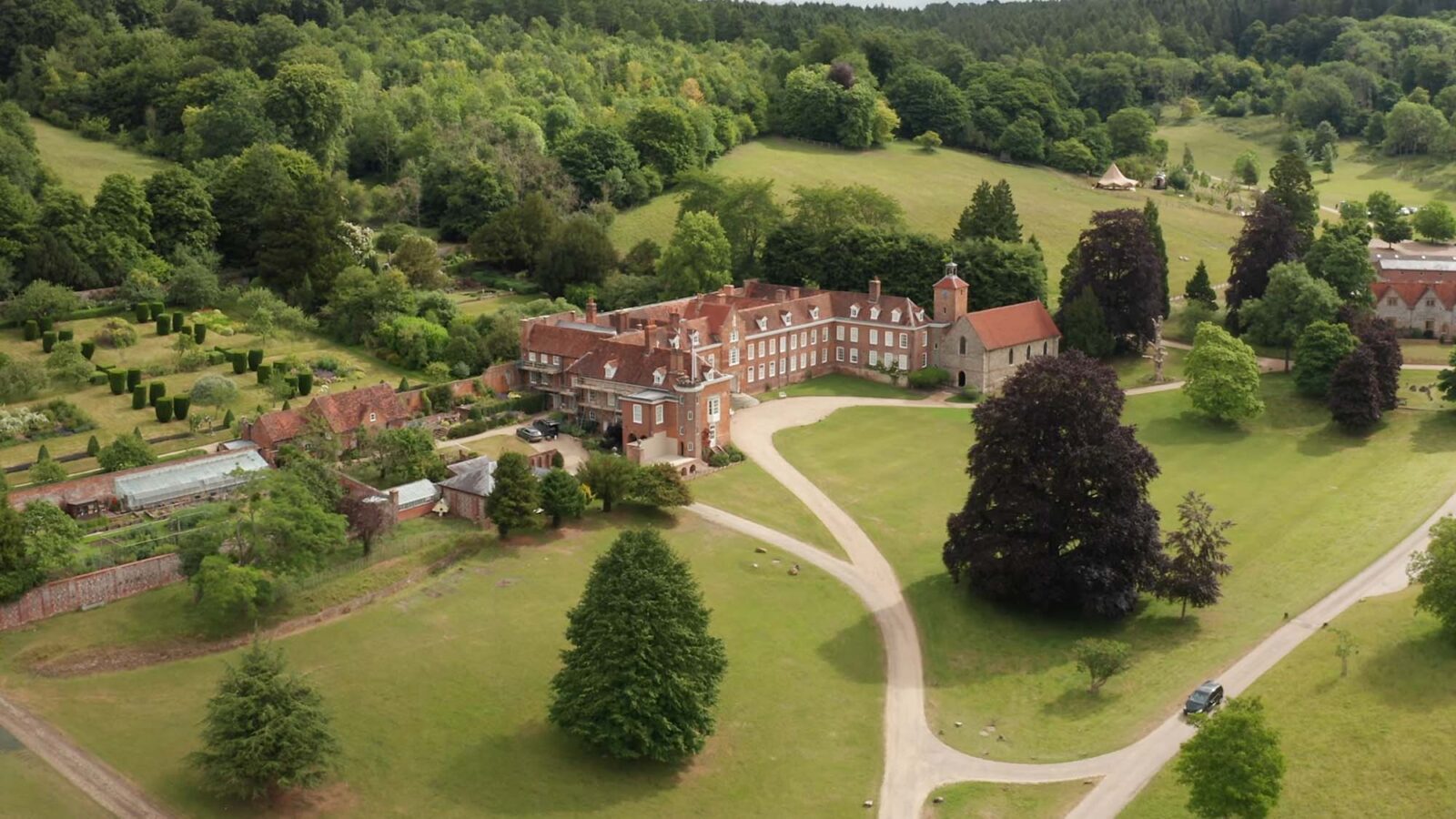
Stonor Park
Stonor Park is a historic country house and estate located in the Chiltern Hills near Henley-on-Thames in Oxfordshire, England. The estate has…
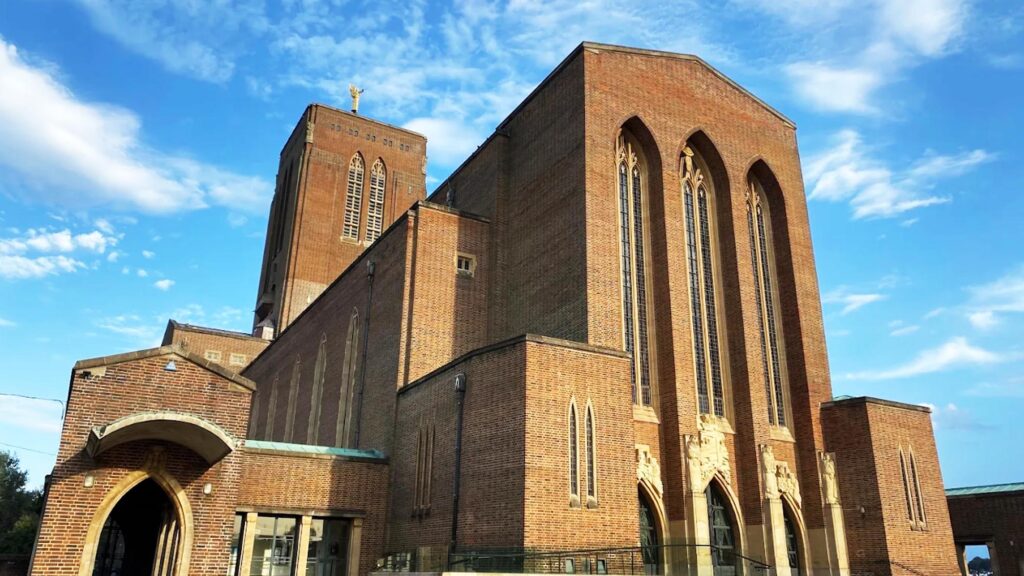
Guildford Cathedral
Guildford Cathedral is best known as a filming location from The Omen. The cathedral has also appeared in productions such as The Sandman and The Witcher.
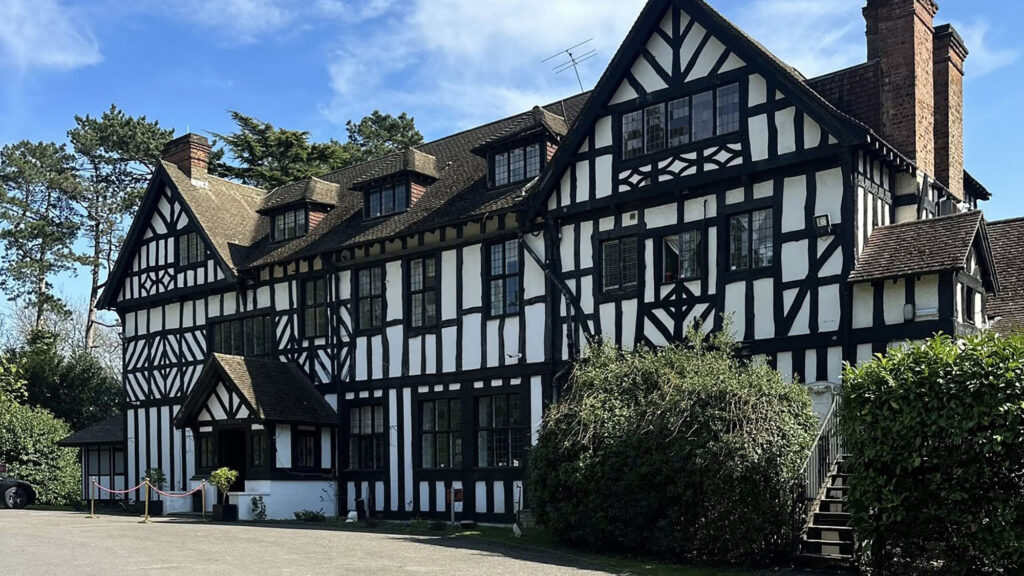
The Manor Elstree
The Manor Elstree has appeared in productions including School for Scoundrels, The Devil Rides Out, A Clockwork Orange, Stardust, Hot Fuzz, and many more.
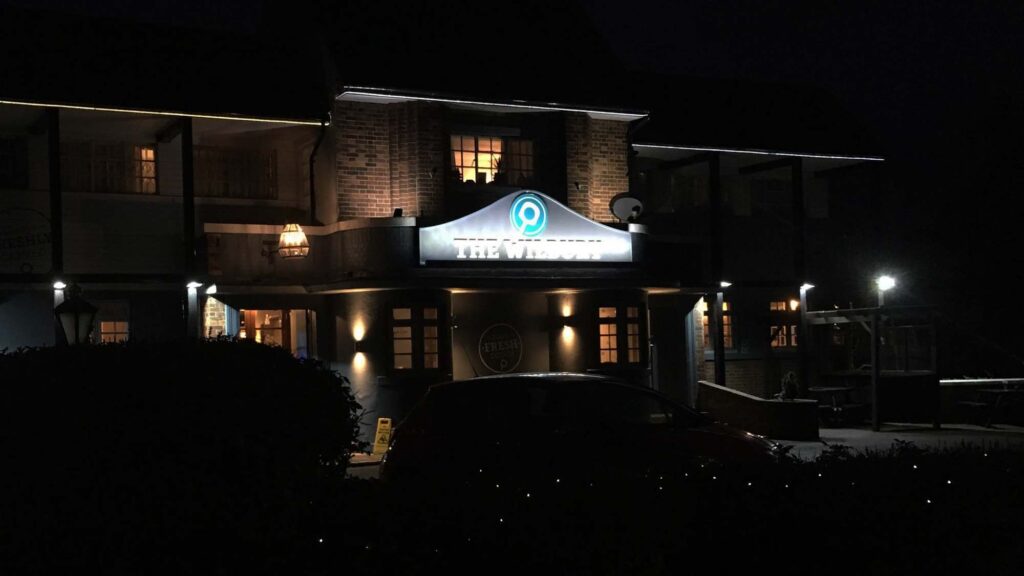
The Wilbury
The Wilbury has appeared in The World’s End (2013), where it was used as the fictional pub that gives the film its title and serves as the final destination.
Durdle Door
Durdle Door is a natural limestone arch on the Jurassic Coast near West Lulworth in Dorset, England. The formation stands at the…
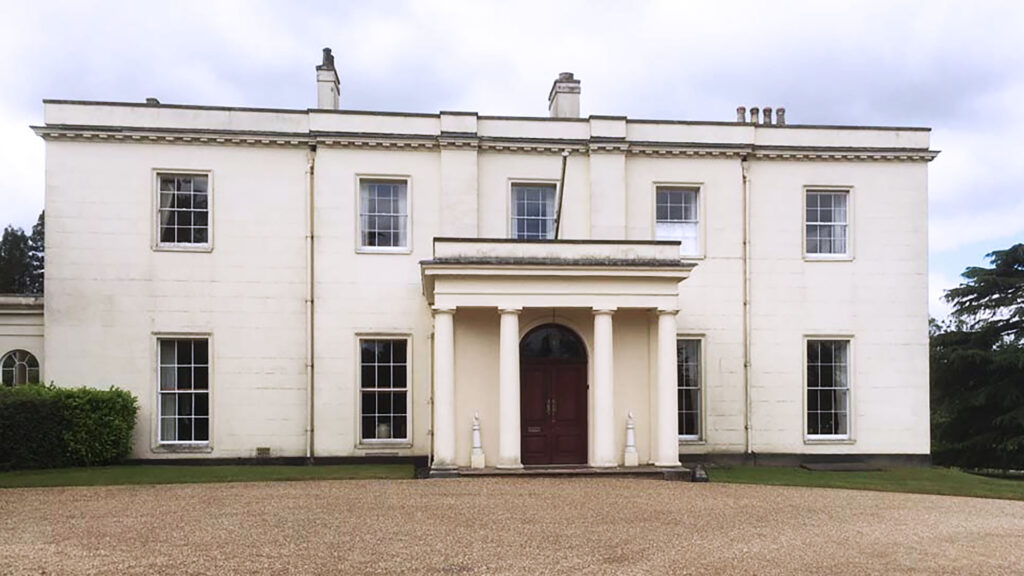
High Canons
High Canons appears in The Devil Rides Out, The Satanic Rites of Dracula, Murder on the Orient Express, Half Moon Street, and many more.