
The Holy Monastery of Rousanou, also known as the Monastery of Saint Barbara, is a Greek Orthodox monastery situated on a narrow rock pillar in the Meteora region of Thessaly, central Greece, between the monasteries of Saint Nicholas Anapausas and Varlaam. The building occupies virtually the entire summit of a vertical formation approximately 60 metres high and 484 metres above sea level, giving it the appearance of a natural continuation of the rock beneath it. According to monastic tradition, the site was first occupied in 1388 by two monks named Nikodimos and Benedict, although its earliest confirmed historical reference dates to 1527. The present monastery was established between 1527 and 1529 by two brothers from Ioannina, Joasaph and Maximos, who rebuilt an abandoned church dedicated to the Transfiguration of Christ and constructed additional residential and service buildings. Its small Athonite-style church was decorated in 1560 with elaborate frescoes attributed to the painter Tzortzis, a follower of Theophanes the Cretan. Among the surviving compositions is an extensive depiction of the Last Judgement, alongside scenes from the life of Christ and numerous representations of martyrdom. Rousanou gradually declined during the eighteenth and nineteenth centuries and was occasionally abandoned altogether. Originally accessible only by rope ladders and a lifting net, it received wooden access bridges in 1868, which were replaced by iron bridges and new steps in 1930. The monastery was looted during the German occupation of Greece in the Second World War, losing valuable manuscripts and religious objects. Restoration work began in the following decades, and on 17 October 1988 it was formally converted into a convent when eight nuns from the Monastery of Stagiadon established a permanent community there. Further expansion included a new three-storey residential wing begun in 1996, providing additional accommodation, a refectory, library and workshops. Rousanou remains one of the six active monasteries of Meteora, which collectively became a UNESCO World Heritage Site in 1988.
The Holy Monastery of Rousanou has appeared in Sky Riders (1976) and The Adventures of Young Indiana Jones: Travels with Father (1996). In Sky Riders (1976), the monastery represents an abandoned mountain fortress occupied by a terrorist organisation holding an American woman and her children hostage, becoming the central location for an elaborate rescue operation involving hang gliders. The production makes extensive use of Rousanou’s exposed position, surrounding cliffs and distinctive access route. Two decades later, The Adventures of Young Indiana Jones: Travels with Father (1996) incorporated Rousanou alongside Great Meteoron and Holy Trinity to create a fictional hanging monastery visited by Indiana Jones and his father during their travels through Greece.
In Sky Riders (1976), directed by Douglas Hickox, the Holy Monastery of Rousanou provides the setting for the remote mountain stronghold occupied by a revolutionary terrorist organisation that has kidnapped Ellen Bracken, played by Susannah York, and her two children, Jimmy and Susie. Her wealthy husband Jonas Bracken, played by Robert Culp, is initially ordered to pay a ransom of five million dollars, but the kidnappers subsequently demand that he supply them with military weapons. Ellen’s former husband Jim McCabe, played by James Coburn, becomes involved in the investigation and eventually identifies the hostages’ location after an art expert recognises a sixteenth-century religious fresco visible in a photograph supplied by the terrorists. McCabe travels to Meteora and discovers that the monastery is almost impossible to approach without being seen, inspiring him to recruit a team of professional hang-glider pilots for an unconventional rescue mission. The exterior sequences make extensive use of Rousanou’s distinctive architecture, including the narrow access bridge, the doorway with three adjacent windows, and the sloping stairways connecting the building to a small circular landing on the neighbouring rock pillar. These features remain recognisable today, although the bridge railings have changed colour and later construction has substantially altered part of the adjoining façade. The rescue takes place during the film’s extended climax, as McCabe and his team launch their hang gliders from higher ground and silently descend towards the monastery. After entering the fortress, they locate Ellen and the children and begin moving them towards safety, but their escape is discovered, triggering a gunfight involving the terrorists and the arriving Greek police and military. The rescuers eventually reach their gliders, while McCabe remains behind to delay their pursuers. The confrontation continues into the surrounding mountains, culminating in McCabe’s encounter with the terrorist leader aboard a helicopter. Filmed in Greece during the summer of 1975, the sequence preserves extensive views of Rousanou before the major architectural additions carried out during the 1990s.
In The Adventures of Young Indiana Jones: Travels with Father (1996), originally released as the television film Young Indiana Jones: Travels with Father, the Meteora monasteries provide the setting for the Greek section of the story, set in 1910. Young Indiana Jones, played by Corey Carrier, is left in the care of his father, Professor Henry Jones Sr., played by Lloyd Owen, while his mother travels elsewhere for the weekend. Henry intends to visit a remote Greek monastery to conduct historical research and reluctantly brings Indy along. Their journey develops into a series of misadventures as they argue about philosophy, democracy and the teachings of ancient Greek thinkers while attempting to reach the mountains. After travelling on foot and accepting lifts from local villagers, they eventually arrive at the spectacular rock formations of Meteora. The monastery is presented through a combination of location shots incorporating Rousanou, Great Meteoron and Holy Trinity, with their individual buildings edited together to create a single destination. Indy and his father ascend to the fictional monastery inside a small wooden cage raised by monks using a hand-operated winch, an experience that reveals Henry’s considerable fear of heights. Once inside, Henry resumes his research while Indy is instructed to occupy himself by writing an essay on Aristotelian logic. In the monastery library, the boy encounters Greek writer Nikos Kazantzakis, who discusses philosophy with him and helps develop his understanding of the relationship between reason and experience. The visit becomes considerably more eventful when Indy and his father attempt to leave. Their lifting cage becomes stuck high above the ground, leaving them suspended against the enormous cliffs while the monks remain secluded in prayer under a vow of silence. Indy eventually uses the principles of logic he has been learning to help find a solution to their predicament. Filming took place in Meteora during the summer of 1994, with the Greek story subsequently incorporated into the television film released in June 1996. The production also used studio facilities in Prague for supplementary material.
Sky Riders (1976)


Sky Riders
Sky Riders was filmed entirely on location in Greece, with production beginning in Athens in June 1975 before moving to the rock formations of Meteora.

Monastery of Varlaam
The Monastery of Varlaam has appeared in Jupiter's Thigh (1980), originally titled On a volé la cuisse de Jupiter, a French adventure comedy.

Monastery of the Holy Trinity
The Monastery of the Holy Trinity has appeared in Boy on a Dolphin (1957), Tintin and the Golden Fleece (1961), For Your Eyes Only (1981) and Meteora (2012).

Acropolis of Athens
The Acropolis of Athens has served as a dramatic, often backdrop for several films, most notably Boy on a Dolphin (1957) and The Two Faces of January (2014).
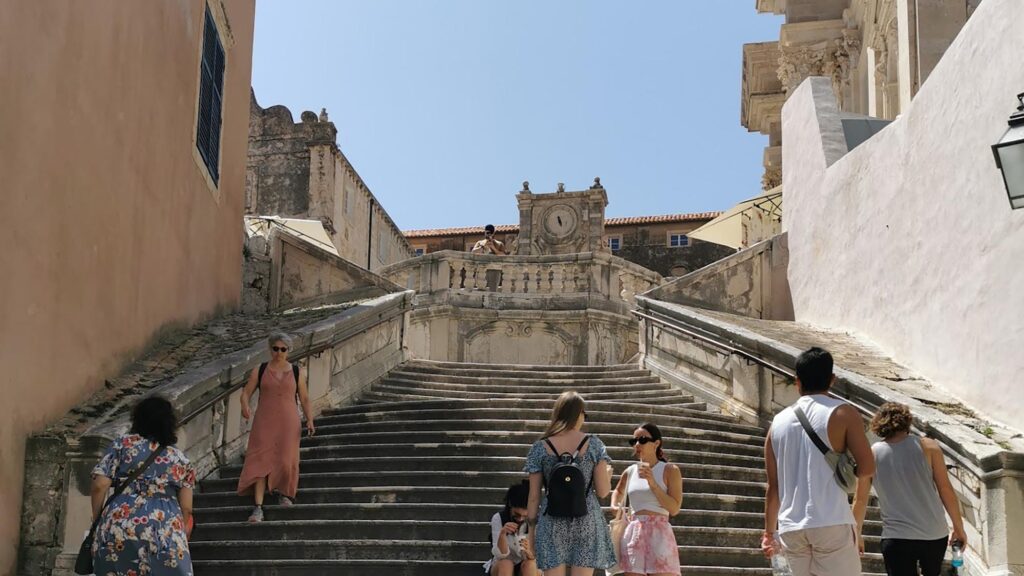
Jesuit Stairs
Jesuit Stairs is best known from Game of Thrones. The Jesuit Stairs were used in the Season 5 finale Mother’s Mercy during Cersei Lannister’s walk of atonement.

Craco
Craco is in The Vixen, Il tempo dell'inizio, Christ Stopped at Eboli, King David, Saving Grace, Classe di ferro, The Sun Also Shines at Night and many more.

Klis Fortress
Klis Fortress, a historic stronghold northeast of Split in Croatia, has appeared in Eagle in a Cage (1971) and Game of Thrones (2011–2019).
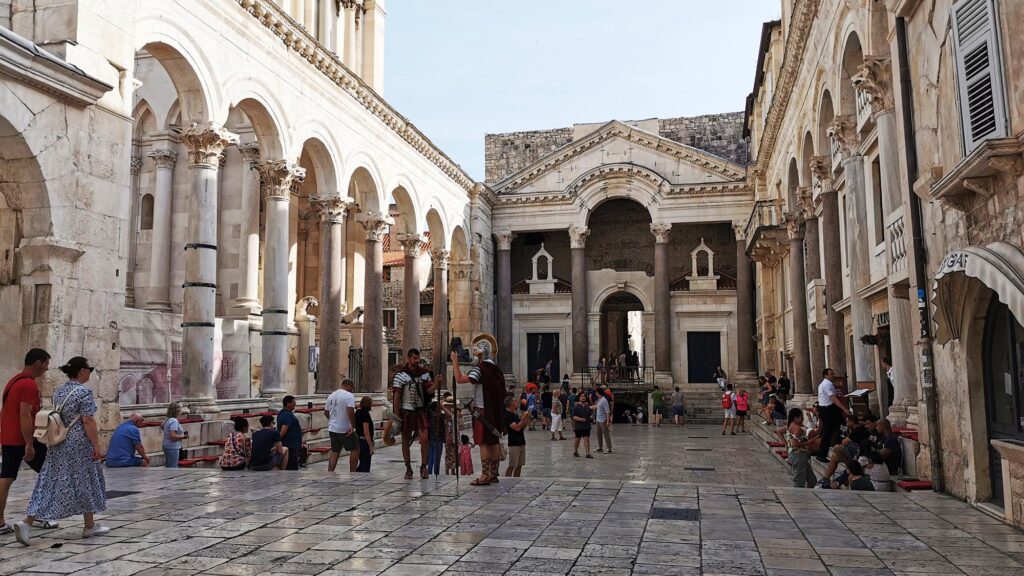
Diocletian’s Palace
Diocletian’s Palace has been used in several productions, most famously "Game of Thrones" (2011–2019) and the Netflix thriller "The Weekend Away" (2022).
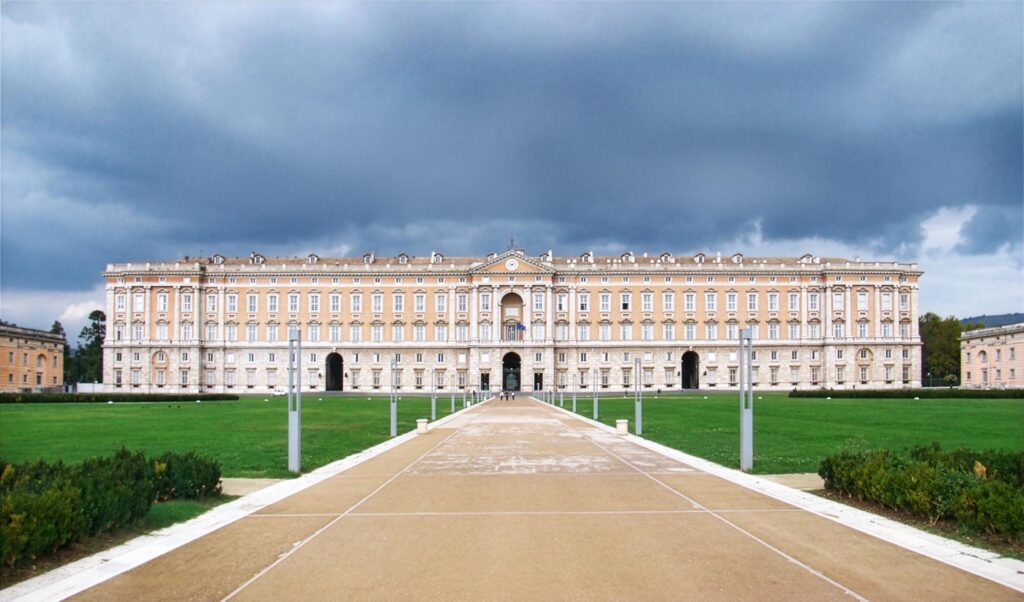
Royal Palace of Caserta
Royal Palace of Caserta has appeared in Star Wars – The Phantom Menace, Star Wars – Attack of the Clones, Mission: Impossible III, and many more.

Grand Bazaar
Grand Bazaar has appeared in From Russia with Love (1963), The International (2009), Argo (2012), Taken 2 (2012), Skyfall (2012), Inferno and Charlie’s Angels.