
Craco is an abandoned hilltop town in the Province of Matera in Basilicata, southern Italy. A settlement is documented here by 1060, while archaeological discoveries indicate human activity in the area much earlier, and the Norman tower that still dominates the skyline dates from around the eleventh century. Over the following centuries the town developed around the steep hillside with churches, monasteries, noble palaces and tightly packed stone houses overlooking the surrounding calanchi, the deeply eroded clay landscape characteristic of this part of Basilicata. Craco’s decline accelerated dramatically in 1963 when a major landslide made parts of the historic centre unsafe. Residents were progressively relocated, principally to the new settlement of Craco Peschiera, and further ground movement and seismic activity contributed to the abandonment of the old town. By the early 1980s the historic centre had effectively become a ghost town. Its roofless houses, empty streets, exposed interiors, Norman tower and barren surroundings subsequently turned Craco into an unusually versatile natural film set, capable of representing everything from biblical settlements and war zones to isolated villages and post-apocalyptic ruins. The historic centre was included on the World Monuments Fund’s 2010 Watch List.
Craco has appeared in The Vixen (1953), Il tempo dell’inizio (1974), Christ Stopped at Eboli (1979), King David (1985), Saving Grace (1986), Classe di ferro (1989–1991), The Sun Also Shines at Night (1990), The Nymph (1996), O Rei do Gado (1996–1997), Terra bruciata (1999), The Passion of the Christ (2004), The Nativity Story (2006), Quantum of Solace (2008), Basilicata Coast to Coast (2010), Un medico di campagna (2012), Murder in the Dark (2013), See You Tomorrow (2013), Montedoro (2015), France (2021) and Don Chisciotte (2026). Depending on the production, the abandoned town has played itself or represented fictional villages, 1930s Basilicata, ancient biblical settlements, wartime Italy, Bolivia, Turkey and unnamed conflict zones.
In The Vixen (1953), originally released as La lupa, Craco was among the locations used by director Alberto Lattuada for his adaptation of Giovanni Verga’s story. The drama takes place in a poor rural community in southern Italy and centres on the sexually independent woman known as La Lupa, her daughter Maricchia and the young farmer Nanni, whose relationships eventually lead to jealousy and violence. Craco’s old stone settlement contributed to the austere Basilicata environment in which the story unfolds. The film predates the landslide that later emptied the town, meaning that Craco appears here as a functioning community rather than the ghost town familiar from later productions. Surviving location records confirm filming at Craco but do not clearly identify which individual streets or buildings were used.
In Il tempo dell’inizio (1974), Craco provides exterior material for Luigi Di Gianni’s surreal and allegorical drama. Davide Landa is confined to a psychiatric institution after being judged antisocial and beyond rehabilitation, but mentally escapes into a symbolic world dominated by figures representing political and social power. Most of the film was made at Cinecittà, while exterior scenes were filmed at Craco. The town’s stark architecture and barren surroundings fit the deliberately oppressive and unreal world imagined by Davide, although surviving production documentation does not identify the individual Craco sequences closely enough to assign specific buildings to particular scenes.
In Christ Stopped at Eboli (1979), Craco represents Gagliano, the isolated Lucanian village to which anti-fascist writer and physician Carlo Levi is exiled in 1935. The real town associated with Levi, Aliano, had changed too much by the time the film was made, so director Francesco Rosi used Craco’s steep stone streets and largely untouched historic architecture to recreate the village of the 1930s. Craco is particularly recognisable when Levi first arrives at his new place of confinement. Mourning banners were placed on houses at the entrance to reproduce the atmosphere described in Levi’s book. At the edge of the landslide area, the production also reconstructed the house of the widow with whom Levi initially stays. The broad view across the valley and the small open space where two political exiles are forced to eat separately because they are forbidden to communicate were also filmed at Craco. Other parts of Gagliano were assembled from locations including Guardia Perticara and Aliano, making the fictional village a composite rather than Craco alone.
In King David (1985), Craco contributes to the ancient world of Bruce Beresford’s biblical epic starring Richard Gere as David. The production was originally considered for Israel before the filmmakers instead assembled its biblical landscapes and settlements from locations in southern Italy, Sardinia and England. Craco and nearby Matera were among the Basilicata locations used, while large battle scenes were filmed at Campo Imperatore in Abruzzo and additional material was shot in Sardinia and at Pinewood Studios. Craco’s stone buildings and surrounding arid terrain were incorporated into the film’s representation of ancient Israel. Publicly available production records confirm filming in the town but do not reliably isolate the individual Craco scenes from material photographed at the other Italian locations.
In Saving Grace (1986), Craco becomes Montepetra, the impoverished Italian village that provides the principal setting for much of the film. Pope Leo XIV, played by Tom Conti, accidentally finds himself locked outside the Vatican and decides to travel incognito rather than immediately return to Rome. He eventually arrives in Montepetra, a neglected community whose damaged aqueduct has left its residents without an adequate water supply. Craco’s abandoned streets and deteriorating buildings become the village where the disguised Pope gradually wins the confidence of local residents and persuades them to work together to repair the aqueduct. His efforts are opposed by Ciolino and local criminals who benefit from the villagers remaining dependent and demoralised. Although scenes involving the Vatican and other parts of the story were filmed elsewhere, including Rome and Mantua, Craco provides the distinctive physical identity of Montepetra and is one of the film’s most substantial locations.
In Classe di ferro (1989–1991), Craco was used during the Italian television series following a group of young men completing compulsory military service. The abandoned town is associated with the Basilicata background of Sandrino Melloni, played by Rocco Papaleo, before he joins the army and meets the other recruits. Craco is shown during the early material establishing his rural home region. The series subsequently moves to the military barracks and numerous other locations around Italy. Although the Municipality of Craco records Classe di ferro (1989–1991) among productions filmed in the town, the precise house used for Melloni’s home has not been conclusively identified, so Craco’s role is best treated as part of the introductory Basilicata material rather than attributing a specific building without stronger evidence.
In The Sun Also Shines at Night (1990), originally released as Il sole anche di notte, Craco was used during the first part of Paolo and Vittorio Taviani’s adaptation of Leo Tolstoy’s Father Sergius. The Russian story is transferred to the Kingdom of Naples, where aristocrat Sergio Giuramondo discovers that the woman he intends to marry was previously the king’s mistress. Disillusioned with court life, he abandons his social position and eventually becomes a monk and hermit. Scenes from the early section of Sergio’s story were filmed between Matera and Craco, using the historic architecture of Basilicata to establish his southern Italian world. The later wilderness and hermitage material was filmed largely elsewhere, including Campo Imperatore and locations in Puglia, so Craco should not be confused with Sergio’s principal hermitage.
In The Nymph (1996), originally released as Ninfa plebea, Craco was used alongside several other southern Italian locations for Lina Wertmüller’s adaptation of Domenico Rea’s novel. The story follows Miluzza, a young woman growing up amid poverty, prejudice and sexual repression during the Second World War. The fictional community in which she lives was assembled from locations in Basilicata and neighbouring regions, with Craco’s old streets and buildings contributing to the rural southern setting. Unlike films such as Saving Grace (1986) or Montedoro (2015), Craco does not consistently represent one clearly identifiable location throughout the film, and surviving sources do not provide enough scene-level information to distinguish every Craco shot from material filmed elsewhere.
In O Rei do Gado (1996–1997), Craco appears during the first phase of the Brazilian television drama, which begins with the history of two Italian immigrant families before moving to contemporary Brazil. The production travelled to Italy to recreate events connected with the Second World War and used Craco for large battle sequences. Around 300 extras participated in scenes staged among the town’s buildings and surrounding landscape, transforming the already damaged settlement into a war-ravaged Italian community. The material was shot on 16mm film and forms part of the historical background explaining the rival Mezenga and Berdinazzi families before the main narrative shifts to later generations in Brazil.
In Terra bruciata (1999), Craco was among the Basilicata locations used for Fabio Segatori’s crime drama. The film follows Francesco, who returns to southern Italy after years abroad and discovers that his family has been destroyed by the local criminal organisation controlled by the ruthless Macrì. His return develops into a violent confrontation as Francesco seeks revenge and challenges Macrì’s control of the area. Craco’s ruined architecture and stark surrounding countryside form part of the film’s harsh rural Basilicata environment. The Municipality of Craco specifically records the production among those filmed in the old town, although the available location documentation does not identify individual Craco scenes reliably enough to connect a particular building with one stage of Francesco’s revenge.
In The Passion of the Christ (2004), Craco appears during the death of Judas Iscariot. After betraying Jesus and unsuccessfully attempting to return the thirty pieces of silver, Judas is tormented by demonic children and flees into the desolate countryside outside Jerusalem. He discovers the carcass of an animal with a rope attached to it and ultimately uses the rope to hang himself. The sequence was filmed at Craco, with the abandoned settlement and barren landscape creating the bleak surroundings in which Judas takes his life. Most of the film’s Jerusalem material was filmed in Matera or constructed at Cinecittà, making Craco’s appearance comparatively brief but particularly recognisable. The ruined town can be seen in the background of the suicide sequence rather than serving as the streets of Jerusalem itself.
In The Nativity Story (2006), Craco again became part of a biblical landscape. Catherine Hardwicke’s film follows Mary and Joseph from Nazareth to Bethlehem, while also depicting the journey of the Magi and King Herod’s attempts to find the child whose birth has been foretold. The production filmed extensively in Matera, Morocco and at Cinecittà, while Craco was incorporated into several exterior sequences. Regional film material identifies the ghost town as representing the village of Ginea in the film, its empty stone houses and surrounding arid landscape blending naturally with the larger recreation of first-century Judea. The principal Nazareth and Bethlehem sets, however, were created elsewhere around Matera, so Craco should not be identified as either of those two major settlements.
In Quantum of Solace (2008), Craco was one of several international locations used to create the film’s version of Bolivia. James Bond follows businessman Dominic Greene and discovers a scheme to seize control of a supposedly worthless area of desert that actually contains an important underground water supply. Although much of the Bolivian material was filmed in Panama and Chile, location shooting also took place at Craco and Maratea in Basilicata. The abandoned town’s dry, damaged landscape was suitable for the impoverished environment surrounding Greene’s operation. Craco is never identified by its real name in the story, and the specific shots filmed there are difficult to separate conclusively from the film’s other Bolivian locations. It should also not be confused with the opening car chase, which was filmed much farther north around Lake Garda and other Italian locations.
In Basilicata Coast to Coast (2010), Craco appears as itself during the group’s journey on foot across Basilicata from the Tyrrhenian coast towards Scanzano Jonico on the Ionian side of the region. The travelling musicians and journalist Tropea reach the abandoned town after passing through Aliano. While Tropea films him, Nicola explains Craco’s history and describes how the town was abandoned following the landslide that began in 1963, linking the disaster to problems surrounding the construction of the sewer system. The characters move among the ghost town and its desolate surroundings before continuing east towards the coast. Unlike many productions that disguise Craco as another country or historical settlement, the film deliberately presents the location for what it is and incorporates its real history into the dialogue.
In Un medico di campagna (2012), Craco was used by director Luigi Di Gianni for his adaptation of Franz Kafka’s short story A Country Doctor. The approximately 37-minute fiction film stars Renato Scarpa as a doctor summoned during the night to treat a gravely ill young patient. Di Gianni relocates Kafka’s strange and increasingly nightmarish story to a stark southern Italian environment, using Craco as part of the barren, almost unreal landscape surrounding the doctor’s journey. The abandoned architecture is particularly suited to the production’s dreamlike atmosphere, although surviving public location records do not provide a precise breakdown of which individual streets and buildings appear in each sequence.
In Murder in the Dark (2013), Craco provides the central ruined settlement in which almost the entire story unfolds. A group of travellers camp among what the film presents as the ruins of an ancient Turkish town and spend the evening playing a murder-mystery party game called “Murder in the Dark”. What initially appears to be entertainment becomes increasingly disturbing when members of the group begin disappearing and dying for real. Craco’s abandoned houses, passages and surrounding wilderness create the isolated environment that traps the characters and makes it difficult to determine whether their danger comes from someone within the group or from something connected with the ruins themselves. The film lists Craco as its principal filming location, making this one of the most extensive uses of the ghost town in an English-language production.
In See You Tomorrow (2013), originally released as Ci vediamo domani, Craco contributes to the approach to the fictional southern Italian village of Petrafrisca. Marcello Santilli, a chronically unsuccessful businessman, decides to open a funeral agency after discovering a remote community populated almost entirely by elderly residents. He assumes that such a population will guarantee a steady stream of customers, only to discover that the villagers are remarkably healthy. Petrafrisca was created from several locations, principally in Puglia, including Crispiano, Cisternino and Martina Franca. Craco appears when Marcello travels towards the village, with the abandoned settlement visible prominently in the surrounding landscape. It therefore forms part of the visual introduction to his remote destination rather than representing Petrafrisca in its entirety.
In Montedoro (2015), Craco becomes the fictional ghost town of Montedoro and is effectively one of the principal characters in the film. The story was inspired by the real experiences of Pia Marie Mann, an American woman who discovered as an adult that she had been born in Basilicata and adopted abroad. Her fictional counterpart travels to southern Italy hoping to find the biological mother she has never known, only to discover that Montedoro has been completely abandoned. As she wanders through the ruined streets, she encounters mysterious figures who appear to belong to the vanished community and is drawn into memories of a past she never experienced. Director Antonello Faretta filmed extensively at Craco, using its houses, churches, exposed rooms and empty streets to blur the boundary between the physical ghost town and the protagonist’s encounters with family memory and the dead. The title itself refers to Craco, which Faretta described as both a real and mythical place within the story.
In France (2021), Craco doubles as a foreign conflict zone during one of television journalist France de Meurs’ war reports. France, played by Léa Seydoux, has built her celebrity partly through dramatic reports from dangerous locations, but the film repeatedly exposes how carefully she and her crew manipulate the images presented to television audiences. During her second war-reporting sequence, France positions herself among the ruins of Craco while being filmed by her crew, with the abandoned town transformed into a devastated settlement in an unnamed overseas conflict. The scene uses the authentic destruction of Craco to create images that appear to come from a contemporary war zone, fitting the film’s satire of the gap between televised reality and the calculated performance taking place behind the camera.
In Don Chisciotte (2026), Craco contributes to the deliberately timeless landscape of Fabio Segatori’s adaptation of Miguel de Cervantes’ Don Quixote. The film begins in 1571 and moves between the world of the wounded Cervantes and the imagined adventures of Don Quixote and Sancho Panza, with Alessio Boni and Fiorenzo Mattu in the central roles. Rather than recreate La Mancha literally, the production used the dramatic landscapes of Basilicata and Calabria, including calanchi, medieval castles, dry riverbeds and isolated settlements, to create a harsher and more metaphysical version of the story’s world. Craco was among the Basilicata locations used during filming in May 2024, alongside Pisticci, Montalbano Jonico, Borgo Taccone and Genzano di Lucania. Its abandoned hilltop architecture forms part of the strange southern landscape encountered by Don Quixote and Sancho, although published production material does not yet identify the individual Craco sequence closely enough to assign a particular street or building.
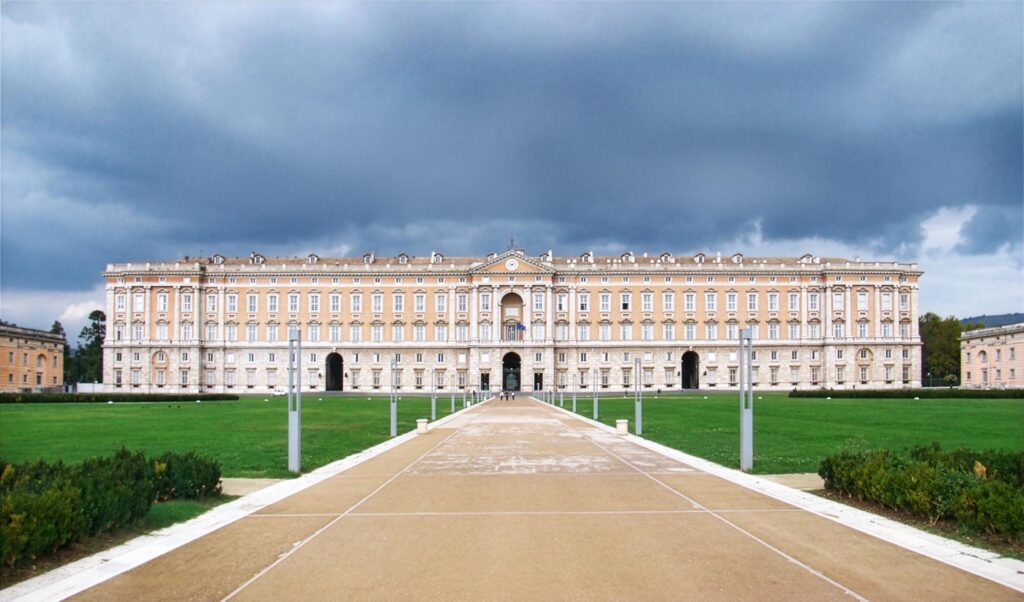
Royal Palace of Caserta
Royal Palace of Caserta has appeared in Star Wars – The Phantom Menace, Star Wars – Attack of the Clones, Mission: Impossible III, and many more.
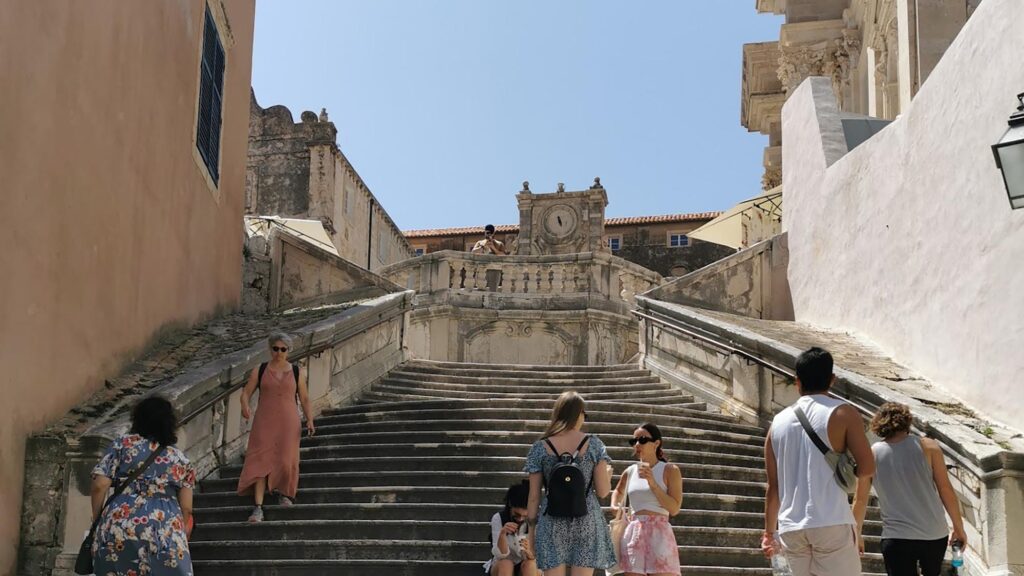
Jesuit Stairs
Jesuit Stairs is best known from Game of Thrones. The Jesuit Stairs were used in the Season 5 finale Mother’s Mercy during Cersei Lannister’s walk of atonement.
Rocca Calascio
Rocca Calascio is a ruined medieval fortress situated above the village of Calascio in the Province of L’Aquila, Abruzzo, Italy. Standing approximately…
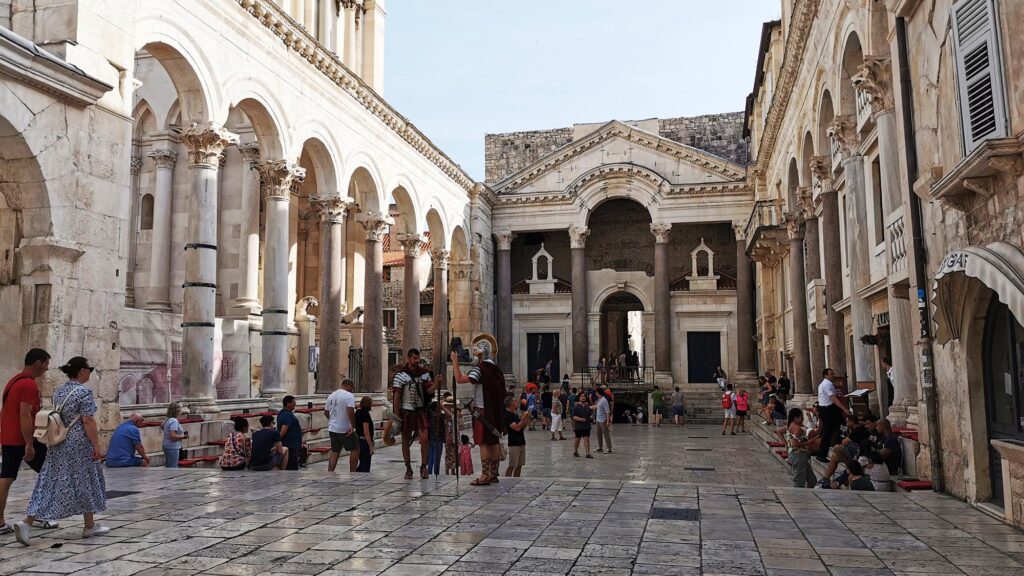
Diocletian’s Palace
Diocletian’s Palace has been used in several productions, most famously "Game of Thrones" (2011–2019) and the Netflix thriller "The Weekend Away" (2022).
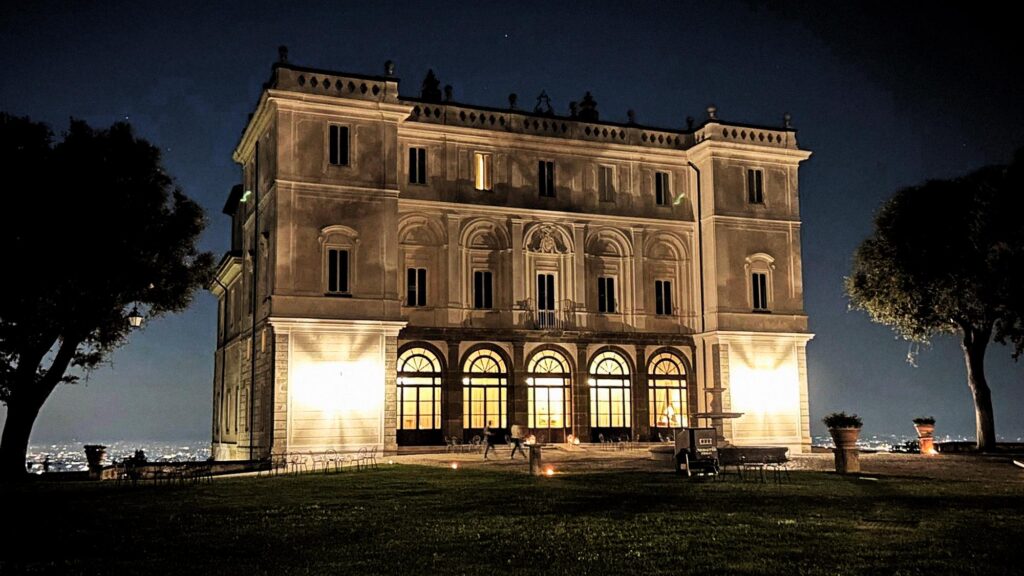
Park Hotel Villa Grazioli
Park Hotel Villa Grazioli has appeared in Kill, Baby, Kill, The Marquis of Grillo, Nosferatu in Venice, The Dew Point and The Long Night.

Klis Fortress
Klis Fortress, a historic stronghold northeast of Split in Croatia, has appeared in Eagle in a Cage (1971) and Game of Thrones (2011–2019).

Piazza Mincio
Piazza Mincio and the buildings directly facing it have appeared in The Girl Who Knew Too Much (1963), The Omen (1976), Inferno (1980) and many other movies.
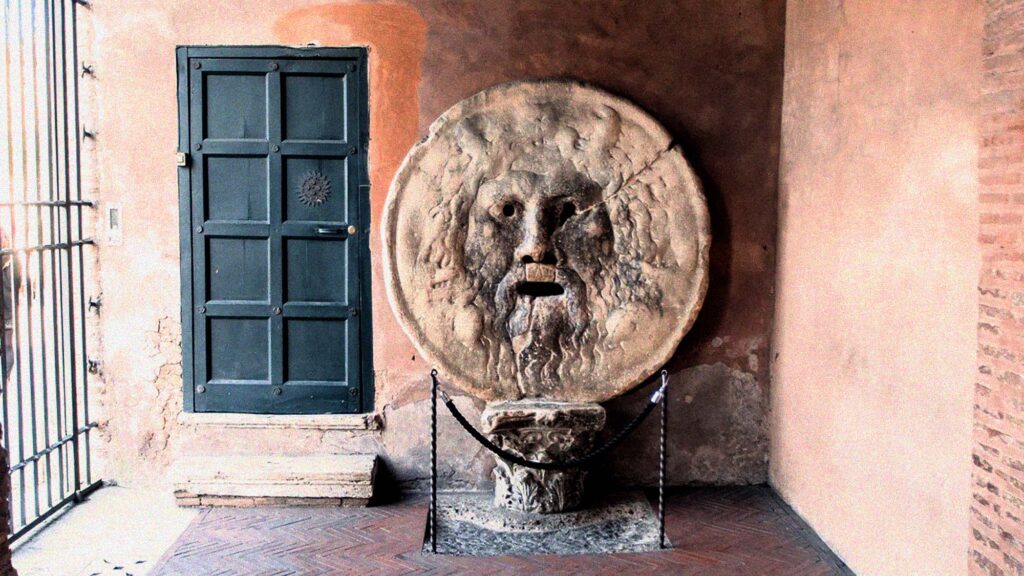
The Mouth of Truth
The Mouth of Truth has appeared in Roman Holiday (1953). The monument is used directly as one of the Roman landmarks visited by the film’s central characters.
Piazza San Bartolomeo all’Isola
Piazza San Bartolomeo all’Isola has appeared in The Two Orphans, Flesh Will Surrender, Love and Troubles, La cento chilometri, L’Avventura, Akiko and many more.