
Eidsvolls plass is a public square and park directly in front of the Norwegian Parliament building, Stortinget, in central Oslo. The section immediately facing Parliament is bounded by Karl Johans gate, Stortingsgata and Rosenkrantz’ gate and has become one of Norway’s most important public spaces for political demonstrations and civic gatherings. The area was still marshy ground belonging to consul Andreas Grüning’s property during the first half of the 19th century. After his death in 1842, Stortingsgata was laid out across the land, and in 1846 property owners along what is now Karl Johans gate purchased the northern section to preserve the open space in front of their buildings. The state acquired the park in 1858, and it was named Eidsvolls plass in 1864 while the new Parliament building was under construction, deliberately linking Stortinget with the constitutional assembly at Eidsvoll in 1814. Christiania municipality took over the square in 1889. Today the lawns and paved areas directly outside Parliament are used for hundreds of political, humanitarian and religious demonstrations each year, making Eidsvolls plass as much a symbol of public political expression as a formal park. Several monuments stand around the square, including statues or busts of Christian Frederik, Christian Michelsen and former parliamentary president C. J. Hambro.
Eidsvolls plass has appeared in Max Manus (2008) and En nasjon i sjakk (2026). Max Manus (2008) uses the square and Parliament frontage while recreating German-occupied Oslo during the Second World War, with Stortinget dressed in Nazi flags and propaganda. En nasjon i sjakk (2026) gives the location a much larger role, turning Eidsvolls plass into the centre of a terrorist crisis after the kidnapped Norwegian prime minister is placed in a glass enclosure directly outside Parliament.
In Max Manus (2008), Eidsvolls plass forms part of the film’s recreation of occupied Oslo during the Second World War. For filming in April 2008, the real Storting building was temporarily returned to its wartime appearance, with a swastika flag raised above the building and the large German propaganda banner “Deutschland siegt an allen Fronten” placed across the façade. Hundreds of extras dressed as German soldiers marched through central Oslo along Karl Johans gate, with Eidsvolls plass and the Parliament building forming part of the surrounding streetscape. The sequence provides one of the film’s largest visual demonstrations of how dramatically the familiar centre of Oslo changed under occupation, before the story moves deeper into Max Manus and his fellow resistance fighters’ campaign against the German authorities.
In En nasjon i sjakk (2026), Eidsvolls plass is at the heart of the film’s central crisis. Norwegian prime minister Torvald Astrup is kidnapped while skiing, and soon afterwards a large trailer rolls onto the square directly outside Stortinget. The sides of the trailer are blown open, revealing the missing prime minister imprisoned inside a transparent enclosure with an explosive device and a countdown clock around his neck. The terrorist responsible demands that the country’s political leadership play a game of chess, with each piece representing a real person who will die if that piece is captured. Eidsvolls plass consequently becomes the physical centre of the national emergency while Delta commander Anton Block and his colleague Björk Jónsdottir race to identify the terrorist and prevent further deaths. The exterior sequences were filmed on the real Eidsvolls plass on 6 and 9 February 2026, when the area outside Parliament was closed off for the production during two exceptionally cold winter shooting days. The production was also allowed inside the actual Storting building for parts of the story, giving the film an unusually direct use of Norway’s political centre rather than substituting another building or creating the entire setting in a studio.
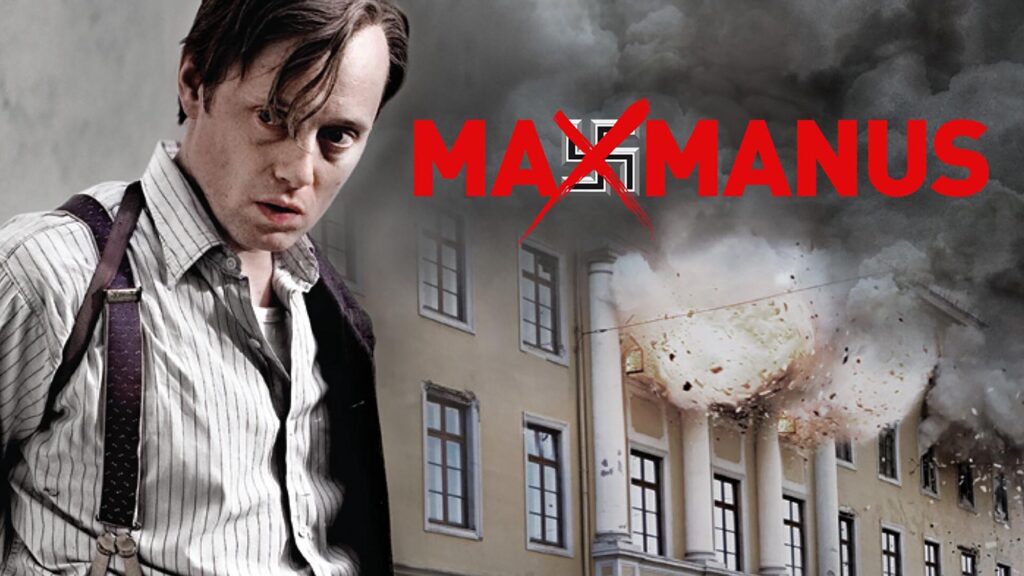
Max Manus
Max Manus: Man of War was primarily filmed on location in Oslo, Norway, with additional scenes shot in Scotland and studio work in Bærum.
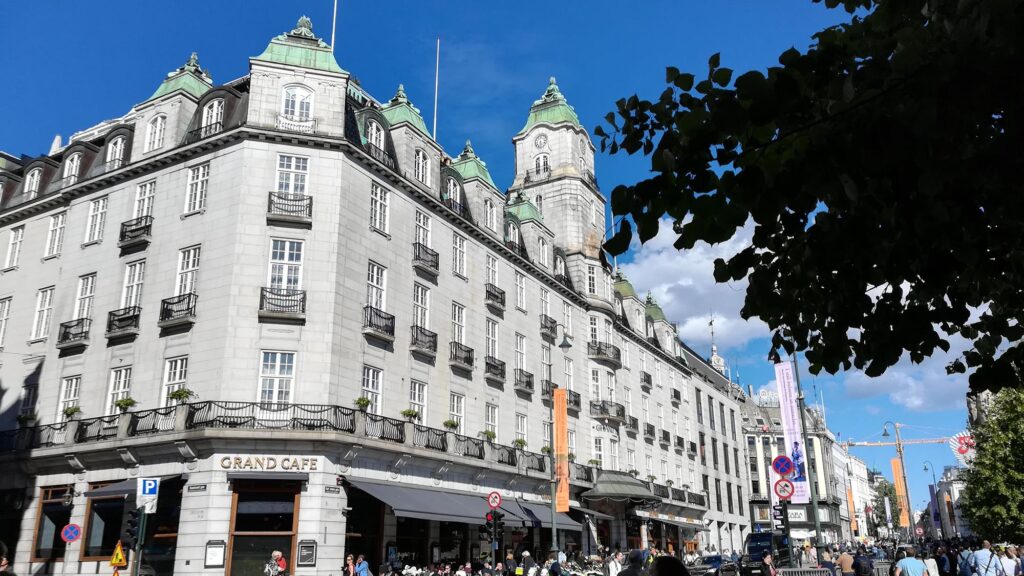
Grand Hotel Oslo
Grand Hotel is most directly connected to the Norwegian film Grand Hotel (2016), directed by Arild Fröhlich and starring Atle Antonsen, and Håkon Gomez Bøhmer.
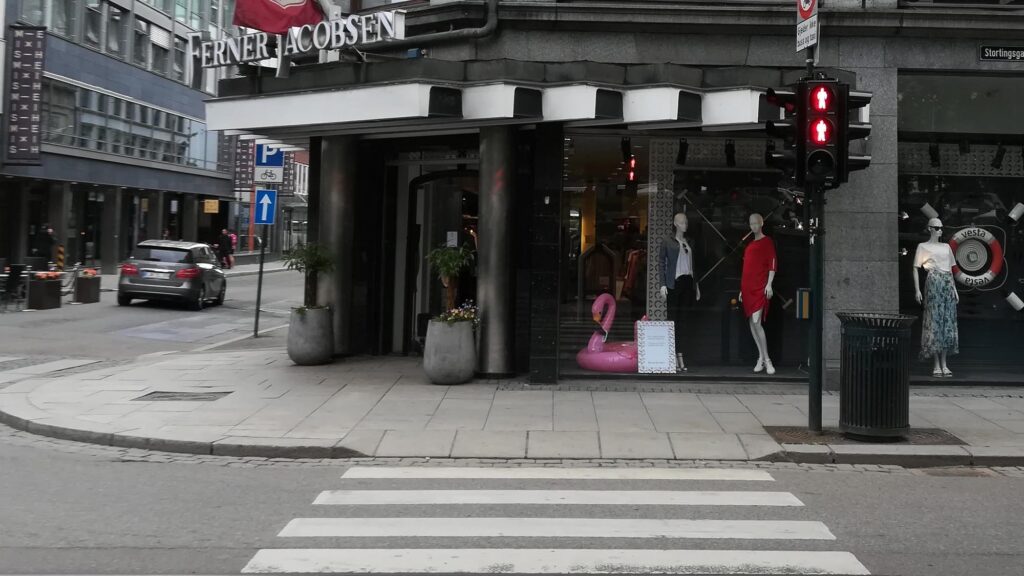
Ferner Jacobsen
In Grand Hotel, Ferner Jacobsen appears in a scene where Axel Farstad’s attempt to present himself with some dignity despite his chaotic personal situation.
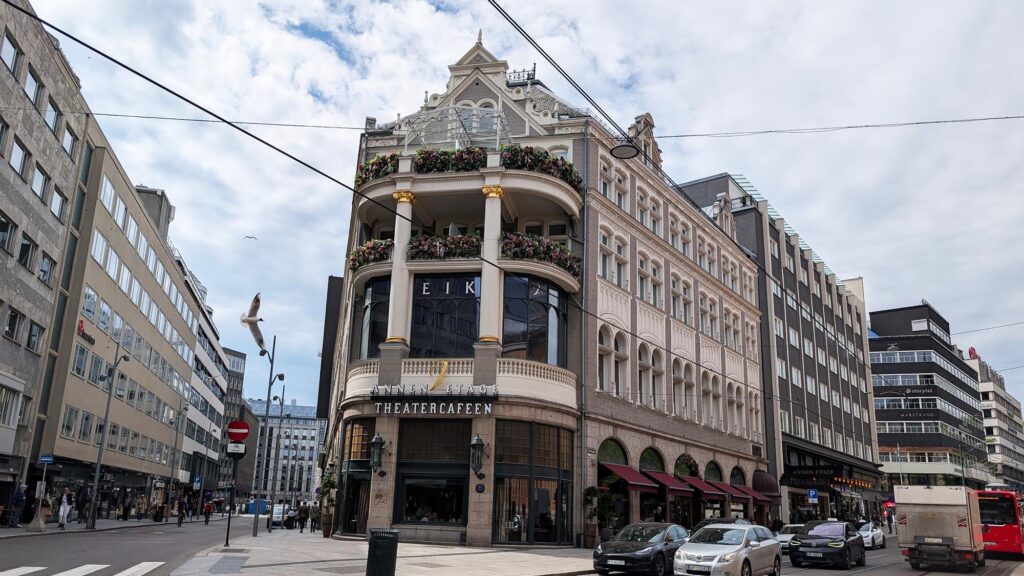
Theatercaféen
Theatercaféen appears in "Jo Nesbø’s Detective Hole" (2026), and is connected to a lunch that becomes very relevant to Harry Hole’s investigation.
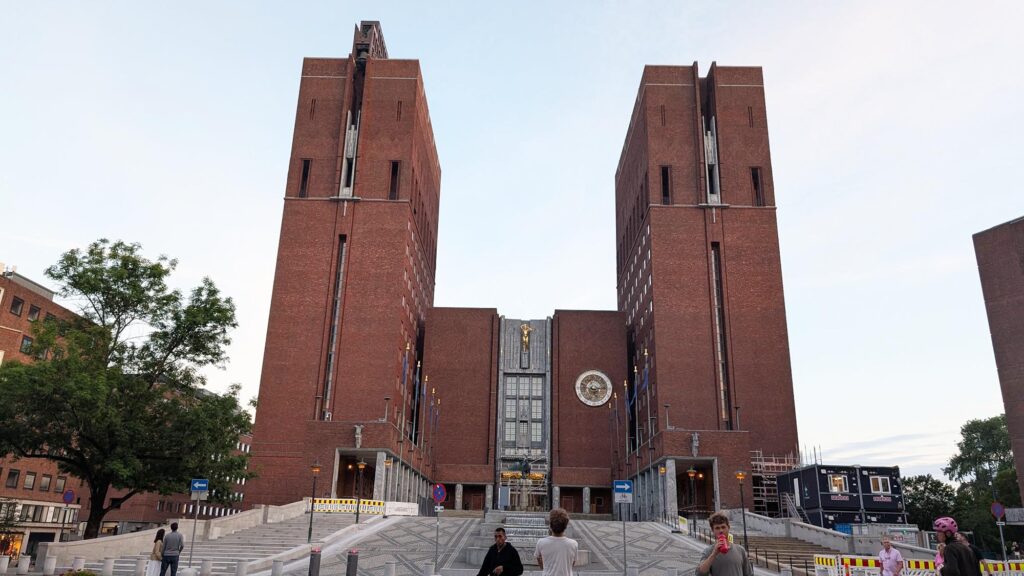
Oslo City Hall
Oslo City Hall (Rådhuset) is the administrative headquarters of the city council and municipal government in Oslo, Norway, inaugurated in 1950.
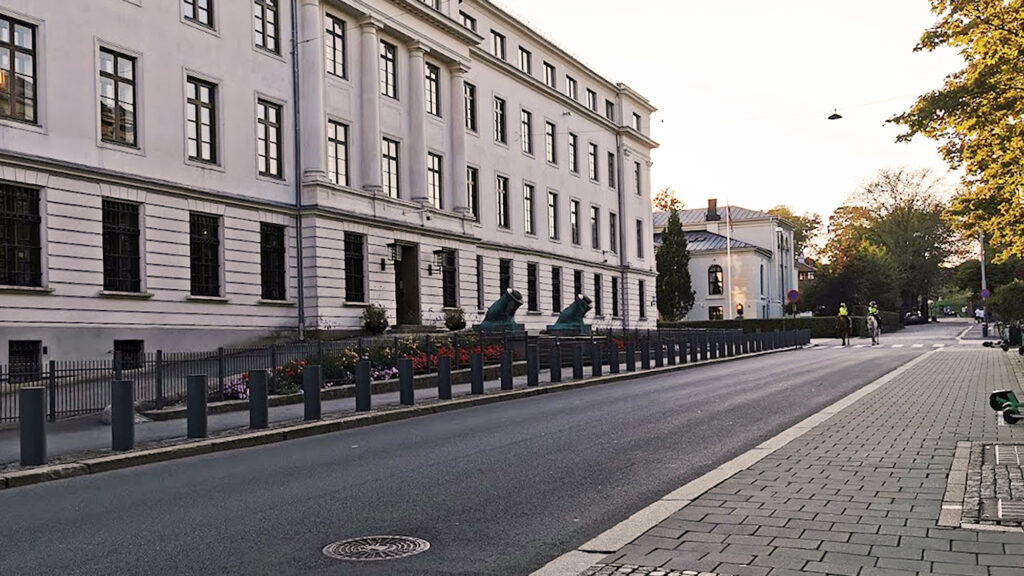
Ministry of Defence
The Royal Norwegian Ministry of Defence in Oslo is the government ministry responsible for developing and implementing Norwegian security and defense policy.
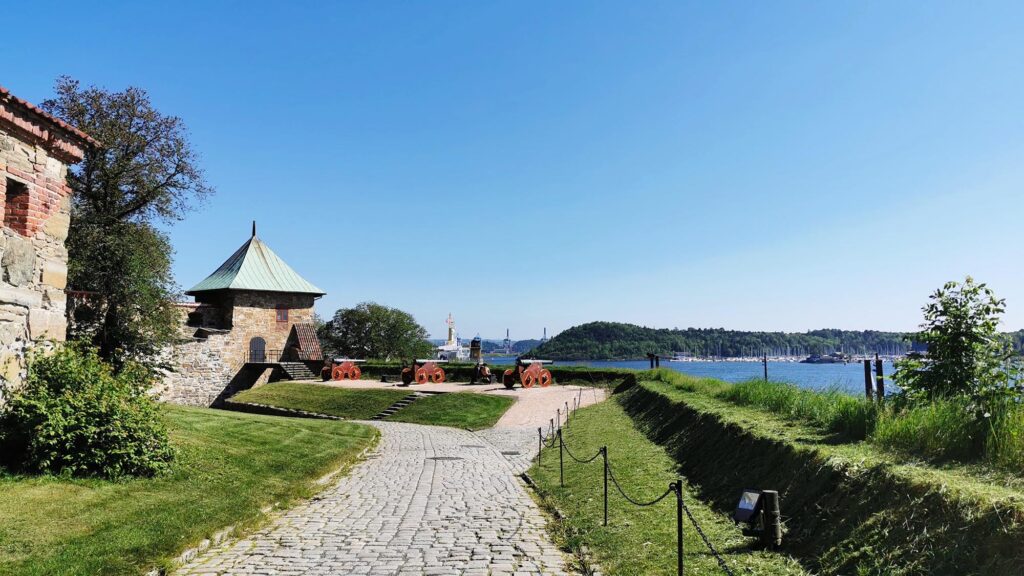
Akershus Fortress
Akershus Fortress has been used in Norwegian film as both a historical setting and a dramatic Oslo landmark. It appears in About Tilla and in Max Manus.
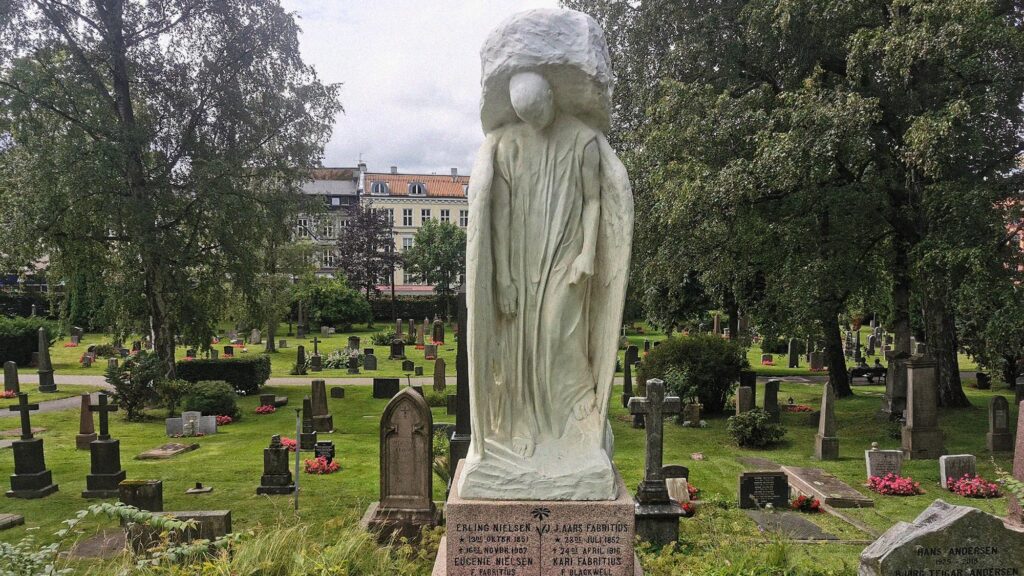
Cemetery of Our Saviour
Cemetery of Our Saviour appears in Sentimental Value, where it is used as a recognisable Oslo location.
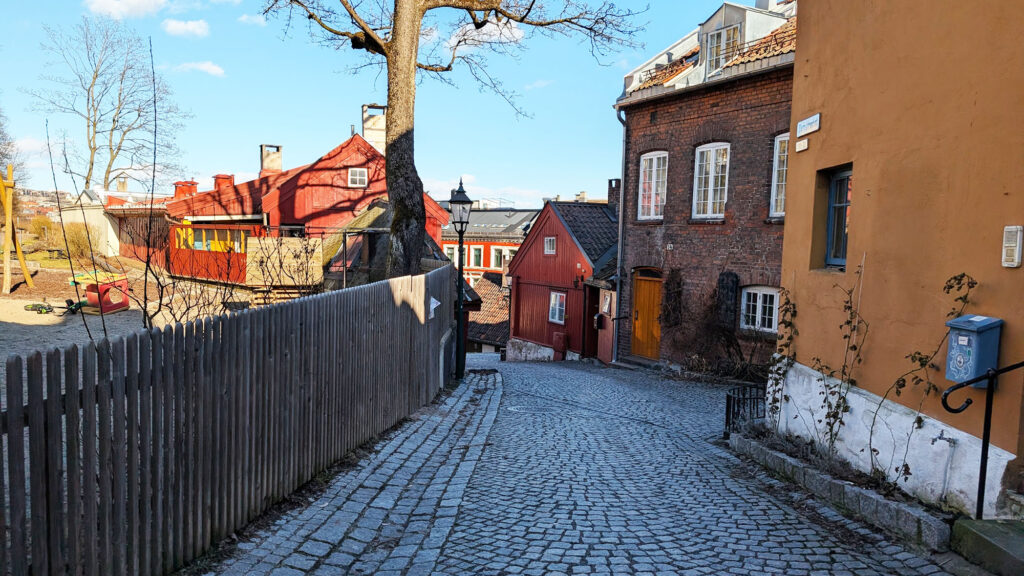
Damstredet
Damstredet appears in Lasse & Geir (1976), The Snowman (2017), and The Worst Person in the World (2021).
Radisson Blu Plaza Hotel
Radisson Blu Plaza Hotel has appeared in Skam (2015–2017), Stories from Norway (2018) and The Quake (2018).