
Max Manus (2008), internationally released as Max Manus: Man of War, is a Norwegian biographical war drama directed by Joachim Rønning and Espen Sandberg from a screenplay by Thomas Nordseth-Tiller. Aksel Hennie stars as Max Manus, one of Norway’s best-known resistance fighters during the Second World War. Based on Manus’ autobiographical accounts and historical research, the film begins with his experiences as a volunteer during the Winter War in Finland before following his return to German-occupied Norway in 1940. After joining the emerging resistance movement, Manus narrowly escapes arrest and eventually reaches Britain, where he receives military training with the Norwegian Independent Company 1, better known as Kompani Linge. Returning to Norway, he participates in increasingly dangerous sabotage operations alongside Gregers Gram (Nicolai Cleve Broch), Gunnar Sønsteby (Knut Joner) and other members of the resistance. Agnes Kittelsen plays Tikken Lindebrække, who becomes an important part of Manus’ life, while Ken Duken portrays the feared Gestapo officer Siegfried Fehmer. The film also examines Manus’ struggle with guilt, alcohol and the loss of close friends. Released in December 2008, Max Manus became one of Norway’s most successful films, attracting more than one million cinema admissions within two months of its premiere.
Max Manus was filmed primarily in Oslo, with additional production at Norsk Film’s former studio facilities at Jar in Bærum and locations in Scotland. Principal photography took place between February and May 2008, with the filmmakers making extensive use of actual Oslo streets and historic buildings to recreate the German occupation between 1940 and 1945. The production was one of the most ambitious Norwegian historical films of its time, involving thousands of costumes, military vehicles, elaborate practical effects and extensive digital reconstruction. Location manager Harriet Molven spent months searching Oslo for streets that had retained enough of their pre-war appearance to be used with relatively few alterations. She travelled through the city on a moped, photographing buildings, cobbled streets and surviving architectural details. Finding suitable locations was difficult because modern shopfronts, signs, traffic infrastructure and new buildings had substantially changed the capital since the war. The production therefore concentrated on a relatively small number of streets that could be transformed into different parts of wartime Oslo.
One of the film’s largest and most widely publicised sequences was shot on Karl Johans gate, directly outside the Norwegian Parliament building. On 15 April 2008, the production temporarily transformed central Oslo into a scene from the German occupation. With permission from the parliamentary authorities, a Nazi flag was raised above the Storting building, while a large banner reading “Deutschland siegt an allen Fronten” was displayed across its façade. The decoration reproduced German propaganda that had appeared on the building during the war. Approximately 1,000 extras dressed as German soldiers and Norwegian civilians participated, while historic military vehicles, horses and trucks filled the street. Modern shop signs were concealed behind temporary façades, and contemporary street furniture was removed or hidden from view. The sequence recreates the sight of German troops marching through Oslo as Manus watches his occupied homeland come under the control of the invading forces.
The filming attracted considerable public attention, particularly because the Nazi banners and military uniforms appeared in the middle of the real Norwegian capital. Some elderly witnesses who had experienced the occupation reportedly became emotional when they saw the recreated scene. The production also caused debate over whether the Storting should permit a swastika flag to be displayed on the building, even temporarily for a historical film. The Royal Guard had declined a request to supply soldiers as extras, considering the wearing of German uniforms too sensitive. Despite these concerns, the sequence was completed using professional performers and large numbers of background actors. Eidsvolls plass, the square immediately in front of Parliament, became part of the reconstructed wartime environment, with its familiar buildings and streets appearing much as they had during the 1940s.
The same central Oslo filming also included scenes celebrating Norway’s liberation in 1945. After photographing the German occupation earlier in the day, the production transformed the streets again to recreate the return of the Norwegian royal family. Among the participants were pupils from Ullevål school, approximately 200 of whom appeared as cheering civilians welcoming the royal procession. Some children were selected to portray members of the royal family. The production even used the Norwegian royal household’s historic Buick Roadmaster, registration A-1, a 1939 model presented to Crown Prince Olav and Crown Princess Märtha by General Motors. The real car had carried King Haakon VII and Crown Princess Märtha through Oslo during the King’s return on 7 June 1945. Its appearance in Max Manus is particularly notable because the filmmakers were able to use an authentic vehicle associated with the historical event rather than a modern replica.
Another important filming area was the Majorstuen neighbourhood, where the production transformed part of Jacob Aalls gate into a wartime commercial street. The building at Jacob Aalls gate 59, now occupied by Havens Kolonial, was used to represent Plasskafeen, the café where resistance fighters Gregers Gram and Edvard Tallaksen were ambushed by German security forces in November 1944. The actual wartime incident occurred at Plasskafeen in Markveien 35, near Olaf Ryes plass in Grünerløkka, but the filmmakers selected a different street for their reconstruction. The location provided a suitable combination of older residential buildings, ground-floor shops and a narrow side street that could be incorporated into the action.
For the scene, the production covered the modern businesses with temporary shopfronts, created an old-fashioned grocery store and café, and decorated the surrounding walls with German and Norwegian propaganda posters. Large piles of firewood were placed outside the building, partly concealing its normal entrance. Gram and Tallaksen are seen approaching from Hertzbergs gate before entering the café, where they believe they are meeting potential contacts. The encounter turns into a trap when armed Germans arrive. A shootout follows, and Gram is struck before crashing through a window and falling into Hertzbergs gate. The surrounding buildings remain recognisable despite the extensive period dressing. A contemporary Dagbladet report described how a local resident emerged from his apartment to discover that the modern shops outside had apparently been replaced overnight by businesses from the 1940s.
The Plasskafeen sequence is also an example of how the film compresses and alters historical events. The real Gregers Gram was shot during the ambush on 13 November 1944 but did not die immediately in the street, as depicted in the film. He died while being transported for medical treatment. The actual encounter also took place after dark, whereas the film presents it in daylight. Although these changes were made for dramatic purposes, the use of a real Oslo neighbourhood gives the sequence a convincing geographical setting. The original café building in Markveien and the filming location in Jacob Aalls gate are therefore two distinct places associated with the same event.
The production also filmed in Observatoriegata in the western part of central Oslo, where Manus, Gram, Tallaksen and Kolbein Lauring are shown passing a German checkpoint. This was among the street scenes observed by a Dagbladet journalist during the filming in April 2008. The production team removed modern signs, replaced them with period equivalents, concealed bicycle racks and covered pedestrian crossings with soil. Military uniforms were carefully checked to ensure that insignia and equipment matched the period. The older buildings and relatively narrow street allowed the filmmakers to create the impression of occupied Oslo without relying entirely on computer-generated backgrounds. Shooting in a functioning modern city nevertheless created difficulties, with the sound department having to watch for contemporary noises such as mobile phones, passing aircraft and traffic that would have been inappropriate for the setting.
Another important part of the story concerns Manus’ escape from arrest in January 1941. The real incident took place at Vidars gate 4 in the Adamstuen neighbourhood, where Manus was staying in a clandestine apartment. When members of the Norwegian State Police arrived to arrest him, he attempted to escape by jumping through a window into the courtyard below. He suffered serious injuries and was taken to Ullevål Hospital, where he subsequently escaped with help from hospital staff and members of the resistance. The event is recreated in the film and becomes an important turning point in Manus’ journey towards joining Kompani Linge. Vidars gate 4 is the documented historical address, although the available production records do not conclusively establish whether the actual building was used for the filmed escape. The distinction is important because the filmmakers frequently substituted other Oslo buildings when recreating events at locations that had been demolished or were unsuitable for filming.
One of the film’s most significant architectural substitutions concerns the sabotage of the German-controlled Labour Service registration office at Akersgata 55 on 18 May 1944. The original building was so badly damaged during the actual bombing that it was eventually demolished in 1953. To recreate the operation, the filmmakers used the former Ministry of Defence building at Myntgata 1, close to Akershus Fortress. The historic government building, constructed and expanded during the nineteenth century, provided an appropriate façade for the wartime offices. In the sequence, Manus and his fellow resistance fighters prepare explosives before warning people to leave the building. The explosion then sends debris and broken windows out into the street. The production combined carefully controlled practical pyrotechnics with the real building, which had to be protected from permanent damage.
The Myntgata sequence illustrates how the filmmakers worked with surviving Oslo architecture to reconstruct locations that no longer existed. Although the building was never the Labour Service office targeted by Manus and Gunnar Sønsteby, its age, proportions and architectural details made it suitable as a replacement. The real operation was part of a broader campaign to disrupt the forced mobilisation of Norwegian labour. The film concentrates on the actions of Manus and his immediate companions, although other resistance organisations had already attacked similar registration offices earlier in 1944. The reconstructed explosion was one of several complicated action sequences requiring precise coordination between actors, stunt performers and the special-effects department.
Oslo’s harbour was particularly important to the film, especially for the recreation of Operation Mardonius in April 1943. During the real operation, Manus, Gram and several other resistance members used small boats to approach German-controlled vessels in Oslo harbour and attach magnetic explosives beneath their hulls. Recreating the mission more than sixty years later presented significant problems, as the wartime harbour had been transformed by redevelopment, modern shipping infrastructure and new buildings. The production initially considered several waterfront locations before selecting the industrial harbour area at Sørenga and Lohavn, east of central Oslo. The site offered enough space for the boats, lighting equipment and camera crews, while the surrounding modern environment could be altered through digital effects.
Preparations for the Mardonius sequence began during the autumn of 2007, several months before principal photography. Directors Rønning and Sandberg worked with storyboard artist Kristin Günther to plan the action. After selecting Sørenga, the production brought in visual-effects company Gimpville and specialists from Skanska to create a detailed digital scan of the location. The scanning process took slightly more than half a day, providing precise measurements that could be imported into Autodesk Maya and used to reconstruct the harbour in three dimensions. The production could not obtain enough large, historically accurate vessels for the scenes, so three ships were created digitally. Only one physical boat was available for close-up photography.
The digital reconstruction was also used to plan the practical filming. The original layout would have required extensive lighting and decoration across a large area of the harbour, but the production discovered that it could reduce the physical set to approximately one-third of the planned size. The remaining surroundings would be completed using digital extensions. This substantially reduced the number of locations the crew needed to prepare and allowed the complex sequence to be completed within the available schedule. The actors and stunt performers nevertheless worked in the actual harbour, paddling through the water and moving beneath the quay while the artificial ships and wartime surroundings were added later. The finished scenes combine real boats, water, practical lighting and computer-generated vessels in an attempt to recreate one of the most important maritime sabotage operations carried out by the Norwegian resistance.
The film’s other major harbour operation is the attack on the German transport ship Donau in January 1945. Manus and fellow resistance fighter Roy Nielsen infiltrate the heavily guarded waterfront and attach explosive charges to the vessel below the waterline. The real operation took place while Donau was moored at the German-controlled harbour near Akershus Fortress. The ship had previously been used in the deportation of Norwegian Jews, including the transport from Oslo on 26 November 1942 that sent hundreds of people towards Auschwitz. After the explosives detonated on 16 January 1945, the vessel was deliberately run aground near Drøbak to prevent it from sinking completely. Its wreck remained there until 1952, when it was recovered and broken up.
The filmmakers had no possibility of using the original Donau, making the ship another important element of the film’s digital reconstruction of wartime Oslo. The sabotage is depicted using a combination of waterfront photography, close-up action and computer-generated ship imagery. The sequence also demonstrates how carefully the production had to distinguish between locations that could still be photographed in Oslo and those that had to be recreated. The original harbour facilities had changed considerably since the 1940s, while the enormous transport vessel existed only in historical photographs and archival material. The film therefore depended on digital effects to restore the appearance of a harbour dominated by German military shipping.
The Scottish scenes were filmed around Inveraray and Cairndow in Argyll, where Manus and his fellow Norwegian resistance fighters undergo military training after escaping occupied Norway. Ardkinglas House, a country estate near the shores of Loch Fyne, was one of the principal Scottish locations. The large house stands in extensive wooded grounds surrounded by mountains, providing a setting for the British training establishments associated with the Norwegian Independent Company 1. Filming took place at Ardkinglas on 5 and 6 May 2008, near the end of principal photography. The production used the historic house and its surrounding landscape, with the natural Highland scenery offering an alternative to reconstructing the entire training environment in Norway.
The Scottish filming was documented in a contemporary report by Scottish Screen. Line producer Jan Eirik Langoen described the cooperation with the estate’s owners and local film crews, and praised the appearance of Ardkinglas House on camera. The production was based in the nearby town of Inveraray during its stay. The historical training of Norwegian resistance fighters in Scotland had taken place at several facilities in the region, including locations around Inveraray and Loch Fyne. In the film, the training sequences introduce the methods and discipline that Manus later uses during the sabotage operations in Oslo. They also provide a geographical contrast to the occupied Norwegian capital, showing the characters preparing for their return to the war rather than operating under immediate German surveillance.
The studio work was carried out partly at Norsk Film’s former facilities at Jar in Bærum, west of Oslo. These facilities provided controlled environments for interiors and scenes requiring complicated technical arrangements. Cinematographer Geir Hartly Andreassen worked with the directors to combine the large outdoor sequences with more intimate scenes of Manus’ relationships and emotional difficulties. Several Norwegian visual-effects companies contributed to the production, including Gimpville, Storm Studios, Chimneypot and Toxic. Their work was particularly important when removing modern features from Oslo streets, extending historical buildings and recreating military equipment and ships that were no longer available.
The production also invested heavily in historical costumes and props. Danish costume designer Manon Rasmussen assembled enough clothing to dress several thousand people, while hundreds of male performers were given hairstyles suitable for the 1940s. Contemporary photographs, military records and historical costume references were used to reproduce the appearance of German soldiers, resistance fighters and Norwegian civilians. During filming, the costume department checked details as small as hats, trouser cuts and the way performers wore their uniforms. Much of the clothing was selected in subdued colours to match the material available during the war. The attention extended to speech and behaviour, with the actors encouraged to avoid modern slang and expressions that would immediately reveal the period reconstruction.
The film’s extensive use of actual Oslo locations made its historical reconstruction particularly visible during production. Instead of filming the entire occupation on closed sets, the filmmakers temporarily returned familiar streets and buildings to their wartime appearance, sometimes attracting large crowds of spectators. The approach also meant that the production had to work around the normal activities of a modern capital, with traffic restrictions, public access and the protection of historic buildings all affecting the schedule. The combination of genuine streets, older architecture, physical decorations and digital effects allowed the filmmakers to recreate a version of Oslo that had largely disappeared by 2008.
Max Manus was released in Norway on 19 December 2008 and became a major commercial success, winning seven Amanda Awards, including Best Norwegian Film. The production also prompted debate about the relationship between historical accuracy and dramatic storytelling, particularly concerning the portrayal of the resistance movement and the simplification of certain events. Nevertheless, its location work remains one of the film’s most notable achievements. From the transformed Parliament building and the streets of Majorstuen to the reconstructed harbour at Sørenga, the filmmakers used recognisable parts of Oslo to portray events that had taken place in the same city more than sixty years earlier. The additional filming in Scotland and the extensive digital effects completed a production that combined historical research with unusually ambitious Norwegian location filmmaking.
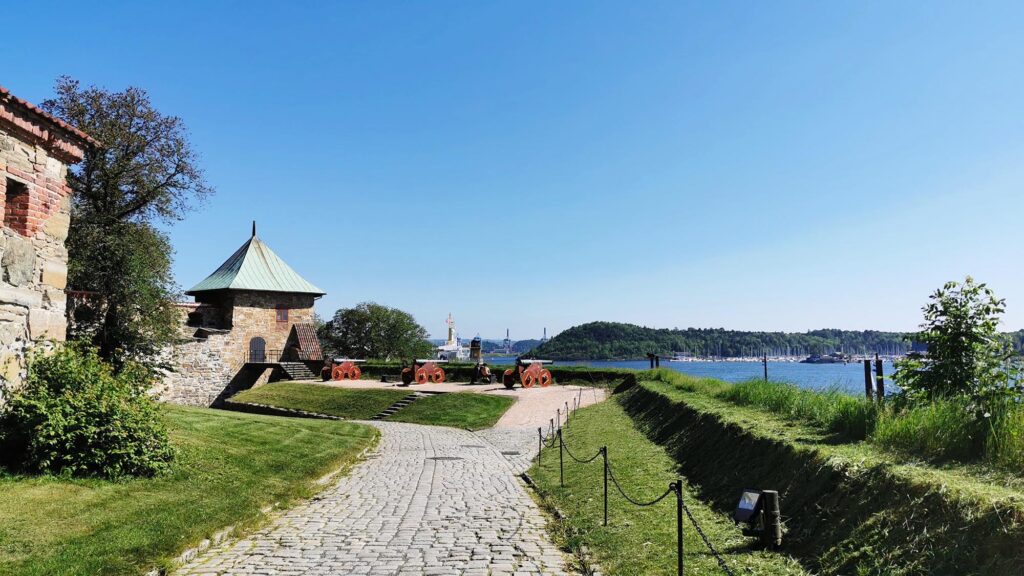
Akershus Fortress
Akershus Fortress has been used in Norwegian film as both a historical setting and a dramatic Oslo landmark. It appears in About Tilla and in Max Manus.
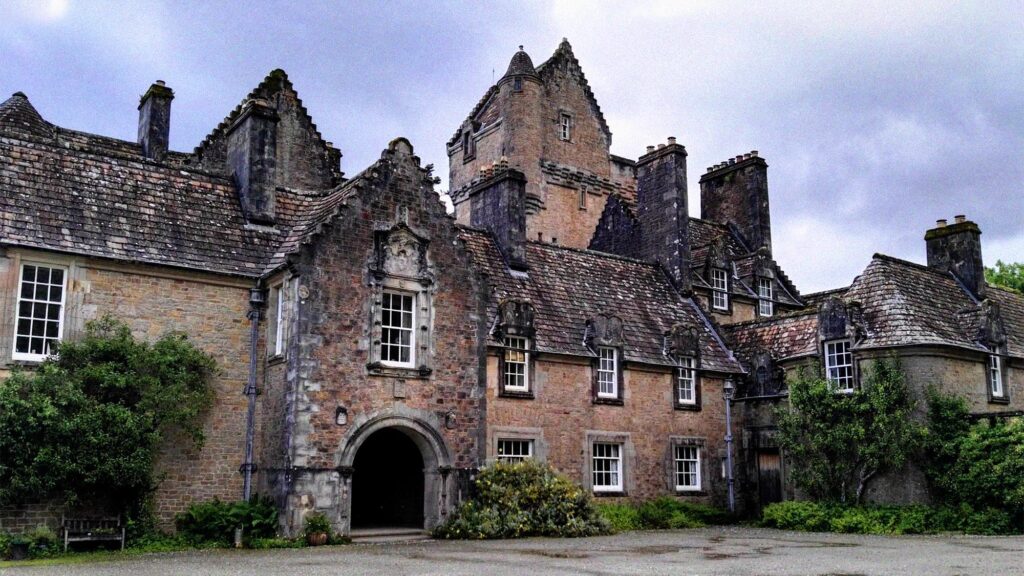
Ardkinglas House
Ardkinglas House appeare in The Crow Road, My Life So Far, The Rocket Post, The Water Horse: Legend of the Deep, Max Manus, Sense8, Behind Her Eyes and more.
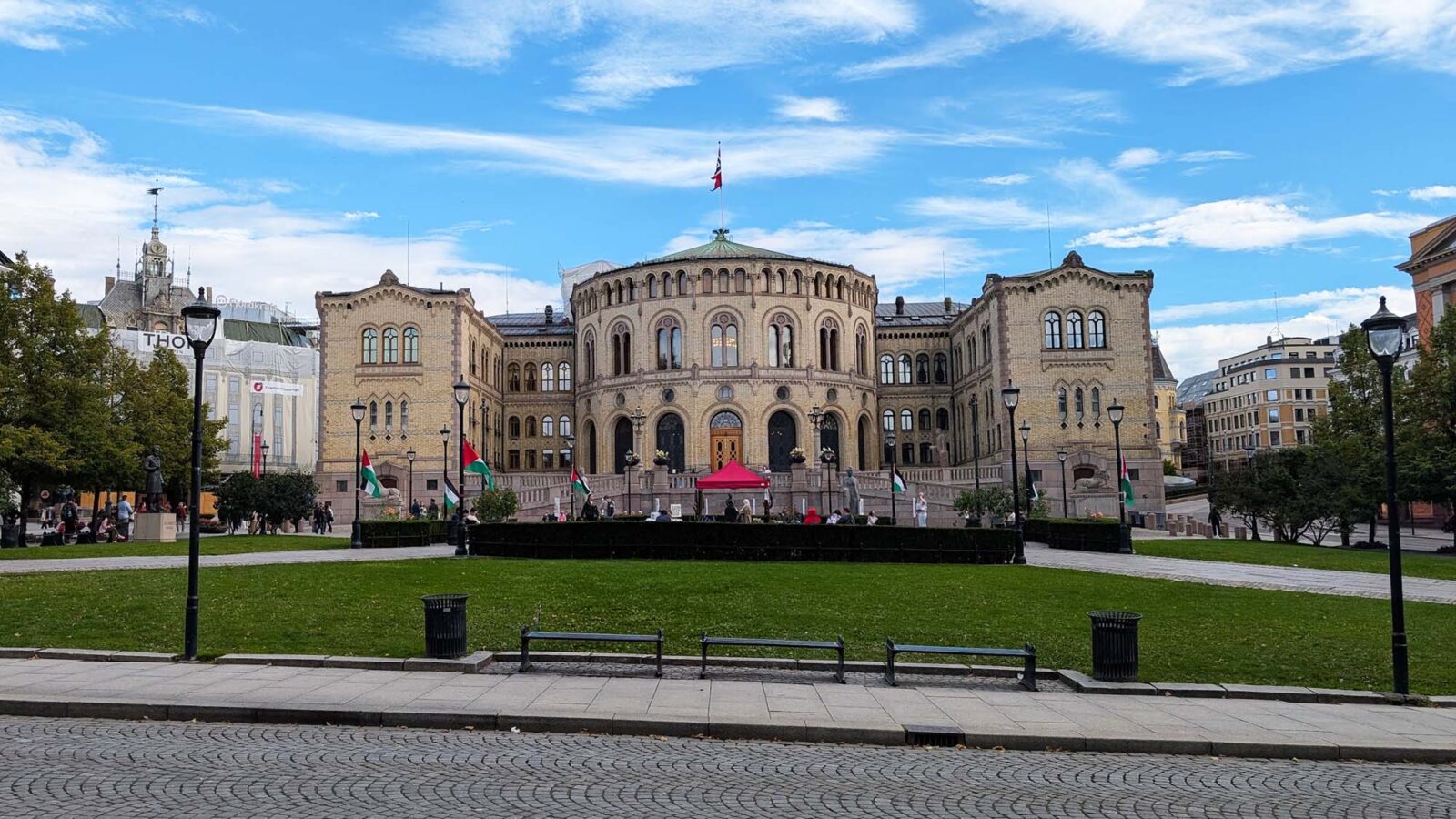
Eidsvolls plass
Eidsvolls plass, the public square directly in front of the Norwegian Parliament building, has appeared in Max Manus (2008) and En nasjon i sjakk (2026).
Havens Kolonial
In Max Manus, Havens Kolonial is used for the Plasskafeen. Gregers Gram and Edvard Tallaksen are seen coming from Hertzbergs gate before entering the café.
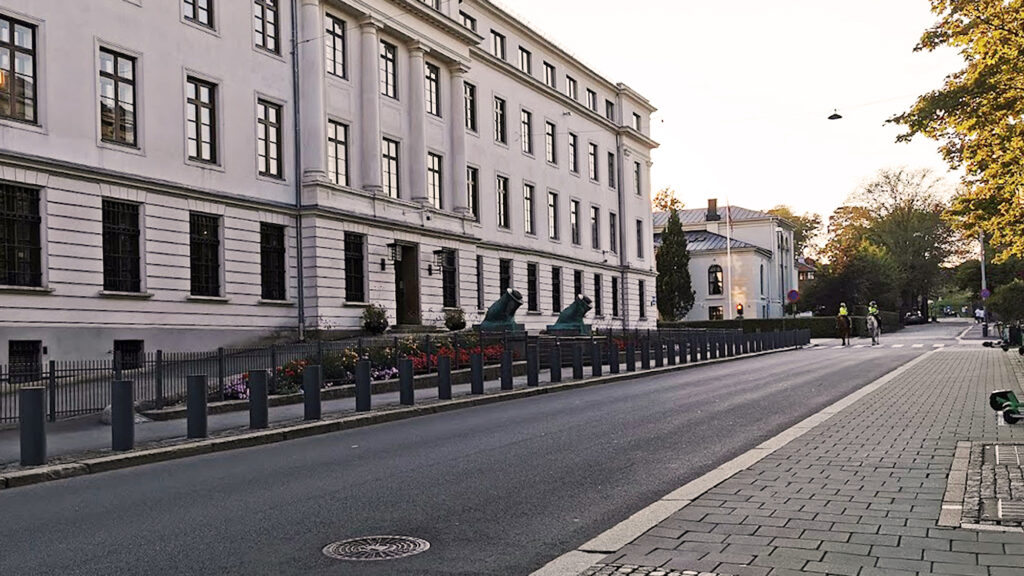
Ministry of Defence
The Royal Norwegian Ministry of Defence in Oslo is the government ministry responsible for developing and implementing Norwegian security and defense policy.
Villa Lilleborg
Villa Lilleborg is used In "Max Manus" (2008) near the beginning of the film, when the resistance group gathers at the house.
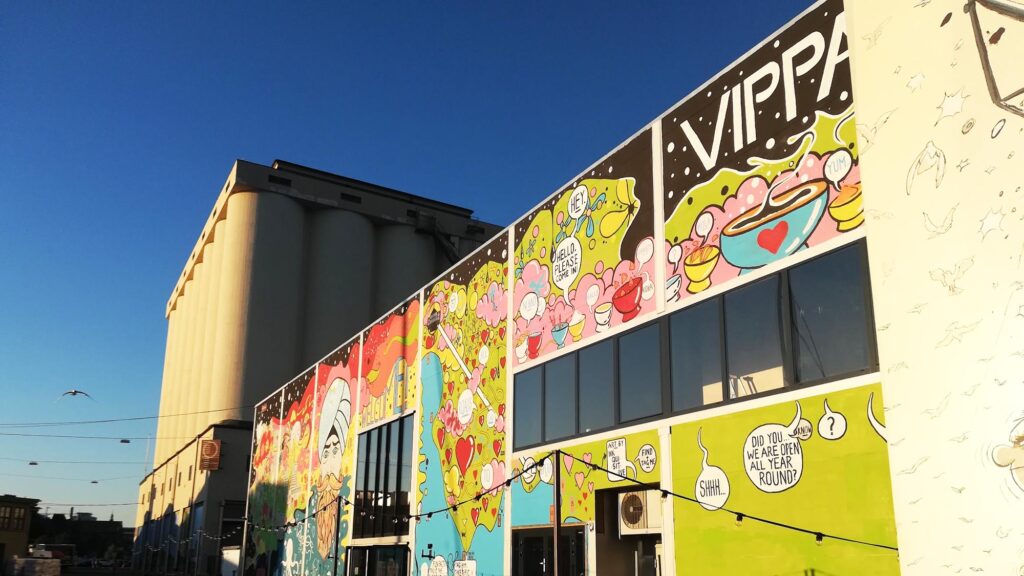
Vippetangen
Vippetangen is used in the Norwegian movies Pastor Jarman kommer hjem (1958), and in the war movie Max Manus (2008).