
Piazza Mincio is the central square of Quartiere Coppedè in Rome’s Trieste district, an early-twentieth-century residential ensemble designed by the Florentine architect Gino Coppedè and developed between 1915 and 1927. The district is entered from Via Tagliamento beneath the monumental arch connecting the Palazzi degli Ambasciatori, while Piazza Mincio itself is centred on the Fontana delle Rane, completed in 1924 and decorated with a series of sculpted frogs. Among the buildings facing the square are the Palazzina del Ragno, recognisable from the large spider above its entrance, the highly asymmetrical Villino delle Fate and sections of the Palazzi degli Ambasciatori. Coppedè combined Liberty and Art Nouveau ornament with Art Deco, Gothic, Baroque, classical and medieval elements, giving the relatively small square an elaborate appearance that has made it one of the most frequently reused residential filming locations in Rome.
Piazza Mincio and the buildings directly facing it have appeared in Domani è un altro giorno (1951), Roma ore 11 (1952), Una madre ritorna (1952), Amici per la pelle (1955), Un amore a Roma (1960), Il boom (1963), The Girl Who Knew Too Much (1963), Made in Italy (1965), 100 ragazze per un playboy (1966), Tre notti violente (1966), Donne… botte e bersaglieri (1968), The Statue (1971), Ultimo tango a Zagarol (1973), The Perfume of the Lady in Black (1974), Mio Dio, come sono caduta in basso! (1974), Emanuelle and Françoise (1975), Roma violenta (1975), La poliziotta fa carriera (1975), The Omen (1976), Natale in casa d’appuntamento (1976), Caro papà (1979), Inferno (1980), La gatta da pelare (1981), Fracchia la belva umana (1981), Una vacanza bestiale (1981), Venni vidi e m’arrapaoh (1984), Fracchia contro Dracula (1985), Il ragazzo del Pony Express (1986), Nuda è arrivata la straniera (1989), Uomini senza donne (1996), L’odore della notte (1998), Il cielo in una stanza (1999), Il corpo dell’anima (1999), Nemiche per la pelle (2016), Trash – La leggenda della piramide (2020), House of Gucci (2021), Per te (2025) and Emily in Paris (2020–). Its buildings have represented private homes, offices, a drawing school, a Paraguayan consulate in London, foreign embassies, a nightclub and a mysterious library, while the square itself has been used for meetings, arrests, accidents, romantic encounters and, in House of Gucci, the assassination of Maurizio Gucci.
In Domani è un altro giorno (1951), the building at Piazza Mincio 2 is used as the home of the elderly woman played by Olga De Liguoro. The woman lives largely alone and has a small dog as her principal companion, forming part of the film’s collection of stories about people driven towards suicide by different personal crises. The ornate entrance of the Coppedè building establishes her Roman residence and is an early example of a façade that would subsequently become one of the most frequently reused buildings on Piazza Mincio.
In Roma ore 11 (1952), Piazza Mincio appears after the disastrous collapse of a staircase crowded with women seeking a secretarial job. Giuseppe De Santis’s drama was inspired by a real accident in Rome and follows several of the women affected by the collapse as well as the social conditions that led so many applicants to compete for a single position. Piazza Mincio is used when the owner of the building in which the accident occurred is collected by the police. The real square therefore represents a location connected with the authorities’ investigation rather than the building where the central collapse itself was filmed.
In Una madre ritorna (1952), Piazza Mincio is the setting for a road accident involving Picchio, the horse belonging to Romolo, played by Enrico Valentini. Picchio is struck and dies in the square, making the Fontana delle Rane and surrounding Coppedè architecture part of one of the film’s more dramatic outdoor sequences. Other parts of the story were filmed elsewhere in Rome, but the accident is specifically staged within Piazza Mincio.
In Amici per la pelle (1955), the Palazzo degli Ambasciatori on Piazza Mincio is used as the home of Margherita Fenocchio. Margherita becomes important to the friendship and rivalry between schoolboys Mario and Franco, whose initially close relationship is repeatedly tested by jealousy, competition and misunderstandings. Scenes connected with Margherita’s home use the ornate Coppedè façade facing the piazza, placing her family residence within one of Rome’s most distinctive residential complexes.
In Un amore a Roma (1960), Piazza Mincio is the location where Marcello Cenni, played by Peter Baldwin, encounters Anna Padoan, played by Mylène Demongeot, again. Their unstable relationship forms the centre of Dino Risi’s drama, with Marcello repeatedly drawn back to Anna despite her affairs and his attempts to distance himself from her. When he finds her in Piazza Mincio she has changed her appearance, replacing her blonde hair with dark hair, and is carrying a suitcase. The recognisable square provides the setting for their reunion as Anna once again enters Marcello’s life.
In Il boom (1963), the Palazzina del Ragno on Piazza Mincio is used as the home of the General, the father of Silvia Alberti. Silvia’s husband Giovanni, played by Alberto Sordi, has accumulated enormous debts while desperately attempting to maintain the affluent lifestyle expected by his wife and their social circle. The General’s elaborate residence forms part of this wealthy environment and contrasts with Giovanni’s increasingly desperate financial position. The same building, on the opposite side of the Fontana delle Rane from Piazza Mincio 2, would later be reused repeatedly for other films.
In The Girl Who Knew Too Much (1963), originally released as La ragazza che sapeva troppo, the Palazzina del Ragno is used as the home of Landini. Nora Davis, played by Letícia Román, has become convinced that she witnessed a murder shortly after arriving in Rome and begins investigating a series of killings despite others initially doubting her story. She goes to the building on Piazza Mincio for an appointment with Landini that has been arranged by telephone. Mario Bava’s film uses the strange architecture of Coppedè naturally within its mystery, several years before the neighbourhood became especially associated with Italian horror and giallo cinema.
In Made in Italy (1965), Piazza Mincio appears in the anthology film’s section entitled “La donna”. Carolina, played by Catherine Spaak, lives in the building at Piazza Mincio 2, and Gianremo brings her there by car. The exterior establishes her residence before the episode continues its examination of relationships and contemporary Italian social behaviour. The location is the same building that would later become particularly recognisable through The Perfume of the Lady in Black, The Omen and Inferno.
In 100 ragazze per un playboy (1966), Piazza Mincio 2 provides the entrance to a drawing school. Peter, played by Peter Alexander, ducks into the school while attempting to escape the people pursuing him, and the arched Coppedè doorway is used for his entrance. The location changes completely once he passes through it: the courtyard supposedly inside the school was filmed at the Heiligenkreuzerhof in Vienna. The finished sequence therefore combines a Roman exterior on Piazza Mincio with an Austrian interior courtyard to create a single fictional building.
In Tre notti violente (1966), Piazza Mincio is used for two different locations within the same crime story. Walter, played by Brett Halsey, lives in the building at Piazza Mincio 2, and outside his home he witnesses the kidnapping of his former girlfriend Lisa. The film later uses the Villino delle Fate at Piazza Mincio 3 as the villa of gangster Johnny Lo Vecchio, whom Walter confronts there. Two buildings standing almost opposite one another on the real square are consequently presented as separate residences belonging to characters on different sides of the story.
In Donne… botte e bersaglieri (1968), also known as Un uomo piange solo per amore, Piazza Mincio is used as the Roman home of Teodoro and his wife. The residence is established through the real Coppedè surroundings as the film moves between its romantic and comic storylines. Rather than disguising the elaborate architecture as another city, the production uses Piazza Mincio as part of contemporary Rome.
In The Statue (1971), originally released in Italy as La statua, the Villino delle Fate at Piazza Mincio 3 is transformed into the Paraguayan consulate in London. Joachim, the servant played by John Cleese, goes to the consulate after being beaten by Professor Alex Bolt, played by David Niven, and attempts to report what has happened to him. Although the story is set largely in Britain, the extraordinary façade of the Villino delle Fate provides the exterior of the diplomatic building, allowing Rome to substitute for London.
In Ultimo tango a Zagarol (1973), also released internationally as The Last Italian Tango, Piazza Mincio provides the exterior of the apartment around which much of the film is built. Franco, played by Franco Franchi, wanders through the square and notices an apartment advertised for rent in the Palazzina del Ragno, on the corner towards Via Tanaro. He subsequently rents the apartment and uses it for his encounters with Giovanna, played by Martine Beswick. Giovanna is also seen leaving the building, clearly establishing the Piazza Mincio exterior, although the apartment interiors were constructed and filmed at the De Paolis studios rather than inside the real building.
In The Perfume of the Lady in Black (1974), originally released as Il profumo della signora in nero, the building at Piazza Mincio 2 is one of the film’s principal locations and represents the home of Silvia Hacherman, played by Mimsy Farmer. The exterior and the Fontana delle Rane are prominently shown near the beginning, immediately connecting Silvia with the unsettling architecture of Quartiere Coppedè. Unlike many films that used only the façade, the production also filmed within the building, including its distinctive stairway and landing. As Silvia becomes increasingly disturbed by childhood memories, hallucinations and apparently inexplicable events, her apartment and the surrounding Coppedè architecture become central to the film’s atmosphere.
In Mio Dio, come sono caduta in basso! (1974), the building at Piazza Mincio 2 becomes the residence of Raimondo Corrao, played by Alberto Lionello, after he is elected to parliament. Raimondo and his wife Eugenia, played by Laura Antonelli, are trapped in a marriage complicated by the discovery that they may be brother and sister and by their increasingly elaborate attempts to satisfy their desires without consummating the marriage. Raimondo’s move into the prestigious Coppedè building accompanies his changing social and political position. Although the film uses the exterior, it does not show the famous internal landing that appears in several other productions.
In Emanuelle and Françoise (1975), originally released as Emanuelle e Françoise (Le sorelline), the Palazzo degli Ambasciatori on Piazza Mincio contains the photographer’s studio where Françoise, played by Patrizia Gori, poses. She is seen emerging through the building’s doorway, and a wider view makes the surrounding square identifiable. Françoise’s exploitation and eventual suicide set in motion the revenge undertaken by her sister Emanuelle against Carlo, but Piazza Mincio is specifically associated with the photographic work that forms part of Françoise’s life before her death.
In Roma violenta (1975), Piazza Mincio is used for the office of lawyer Sartori, played by Richard Conte. Commissioner Betti, played by Maurizio Merli, has become increasingly frustrated by violent crime and by the limitations placed on conventional police work. After leaving the force, he is summoned by Sartori to the office on Piazza Mincio and is recruited into a clandestine vigilante organisation made up of men willing to fight criminals outside the law. The square therefore appears at a major turning point in Betti’s story, when his role changes from police commissioner to member of the private group.
In La poliziotta fa carriera (1975), also released as Confessions of a Lady Cop, the building at Piazza Mincio 2 is used as the home of Gianna Amicucci, played by Edwige Fenech. Gianna joins the police and becomes involved in a series of comic investigations while trying to establish herself within the force. Her residential scenes use the same entrance later associated with Pippo Franco’s home in La gatta da pelare and the library entrance in Inferno, making the building particularly recognisable across several otherwise unrelated films.
In The Omen (1976), Piazza Mincio 2 is the Roman residence of American diplomat Robert Thorn, played by Gregory Peck. The early part of the film takes place in Rome, where Thorn secretly adopts the infant Damien after being told that his own newborn son has died. In one of the clearest views of Piazza Mincio in an international production, Thorn’s car enters the square, drives around the Fontana delle Rane and stops directly outside the building. Thorn then enters the residence, which serves as his home before the family later moves to Britain after he becomes United States ambassador to the United Kingdom.
In Natale in casa d’appuntamento (1976), Palazzo Coppedè at Piazza Mincio 2 is used for the homes of both Nina, played by Françoise Fabian, and Senine, played by Corinne Cléry. The two women occupy separate apartments within the same building, making the elaborate exterior a recurring residential location in the film. Piazza Mincio therefore connects two of the principal characters through a single real Roman building.
In Caro papà (1979), the building at Piazza Mincio 2 is temporarily transformed into a nightclub. Albino Millozza, played by Vittorio Gassman, visits the club during the film, and the production alters the familiar Coppedè entrance with nightclub decoration, including a suspended reflective disco element above it. The use is unusual compared with the building’s many appearances as a home or institutional entrance, demonstrating how easily the ornate façade could be adapted to an entirely different purpose.
In Inferno (1980), Piazza Mincio provides one of the most memorable Roman locations in Dario Argento’s supernatural horror film. Sara, played by Eleonora Giorgi, becomes involved in Rose Elliot’s investigation of the Three Mothers and travels by taxi through heavy rain to a mysterious library. The taxi arrives in Piazza Mincio, and Sara enters through the arched doorway at number 2, which represents the exterior of the library. The interior is a different location, filmed at the Biblioteca Angelica in central Rome, so the fictional library is assembled from the Coppedè exterior and a genuine historic library elsewhere in the city. The Fontana delle Rane and surrounding architecture add to the dreamlike quality of Sara’s journey before she discovers material relating to the Three Mothers.
In La gatta da pelare (1981), also known in English as A Hard Nut to Crack, the building at Piazza Mincio 2 is used as the home of the character played by Pippo Franco. The film repeatedly returns to the residence during its mixture of romantic comedy and crime, making the same doorway previously used for Gianna’s home in La poliziotta fa carriera immediately recognisable. By this stage the building had become a recurring Roman screen location across comedy, drama and horror.
In Fracchia la belva umana (1981), the Palazzina del Ragno is used as the home of the woman played by Anna Mazzamauro. Giandomenico Fracchia, played by Paolo Villaggio, becomes caught up in a police operation because of his extraordinary resemblance to the violent criminal known as the Human Beast. Scenes at the residence use both the exterior doorway and views from inside towards Piazza Mincio. From the entrance, the Fontana delle Rane can be seen with Piazza Mincio 2 directly beyond it, giving the film unusually clear geographical coverage of the square.
In Una vacanza bestiale (1981), Piazza Mincio supplies two separate diplomatic buildings in the fictional Middle Eastern state of Taraq. The building at Piazza Mincio 2 represents the Italian embassy, where the group of Italian tourists stranded after being deceived by their tour organiser seeks assistance in returning home. The Villino delle Fate at Piazza Mincio 3 is meanwhile used for the exterior of the Russian embassy, although its interiors were filmed elsewhere. As in Tre notti violente, two neighbouring buildings on the real square are presented as distinct locations within the same story.
In Venni vidi e m’arrapaoh (1984), Piazza Mincio is used as the place where the group of friends stops to relax after spending the evening at a nightclub. Unlike the many films that use one particular doorway or building, this sequence treats the square itself as the location. The characters gather amid the Fontana delle Rane and Coppedè façades as part of their nighttime movements through Rome.
In Fracchia contro Dracula (1985), the building at Piazza Mincio on the corner with Via Tanaro is again used for the home of a woman encountered by Fracchia, played by Paolo Villaggio. It is the same Palazzina del Ragno previously associated with Anna Mazzamauro’s character in Fracchia la belva umana. The production uses both the entrance and recognisable elements of the building’s interior, continuing the visual joke that women in Fracchia’s life seem to occupy the same extraordinary Coppedè address.
In Il ragazzo del Pony Express (1986), Piazza Mincio becomes a delivery destination for Agostino, played by Jerry Calà, and Orso, played by Sergio Di Pinto. The two have to deliver a snake to the building at Piazza Mincio 2, the same façade that had represented the library in Inferno. The film even has Agostino ask for directions towards Piazza Mincio shortly before reaching the destination, making the real location unusually explicit within the story rather than disguising it under a fictional address.
In Nuda è arrivata la straniera (1989), Piazza Mincio appears during Patrizia’s walk through Rome. Patrizia, played by Miriam Axa, passes directly through the square, allowing the Fontana delle Rane and surrounding buildings to function as recognisable parts of the city rather than as a fictional residence or institution. It is a relatively brief use compared with many of Piazza Mincio’s other screen appearances, but the square itself is clearly shown.
In Uomini senza donne (1996), Palazzo Coppedè at Piazza Mincio 2 is used as the advertising office where Alex, played by Alessandro Gassmann, works. Alex is seen leaving the building with his colleague Paola, with whom he is having a flirtation, and the reverse view shows the buildings on the opposite side of the square. The sequence therefore uses both the ornate entrance and the wider Piazza Mincio setting to establish Alex’s workplace.
In L’odore della notte (1998), Piazza Mincio appears during the downfall of Remo Guerra, played by Valerio Mastandrea. Remo is a police officer who leads a gang carrying out armed robberies against wealthy Romans, gradually becoming trapped by the violent criminal life he has chosen. After being wounded in the shoulder by a police officer, he is arrested in Piazza Mincio. The square is therefore used not as his home or workplace but as the location where his increasingly dangerous double life finally catches up with him.
In Il cielo in una stanza (1999), the Palazzina del Ragno at Piazza Mincio 4 is the house where Paolo, played by Elio Germano, attempts to gate-crash with his school friends. The group stands outside the building with Piazza Mincio 2 visible behind them, before a reverse angle reveals the elaborate Palazzina del Ragno façade. The sequence consequently provides clear views across both sides of the square and makes the geography of the location easy to identify.
In Il corpo dell’anima (1999), the Villino delle Fate at Piazza Mincio 3 is the principal home of Ernesto, played by Roberto Herlitzka. Unlike productions that use only the exterior, filming also took place inside the real building, something confirmed by the views of Piazza Mincio visible through its windows. The highly decorated villa therefore functions as a substantial dramatic setting rather than merely an establishing façade, becoming closely associated with Ernesto and his private life throughout the film.
In Nemiche per la pelle (2016), Piazza Mincio is a recurring meeting point for Lucia, played by Margherita Buy, and Fabiola, played by Claudia Gerini. After the death of Paolo, the man who connected them, the two very different women unexpectedly find themselves responsible for his young son, Paolo Jr. They regularly meet in the square to hand the boy over from one to the other. The repeated exchanges make Piazza Mincio a practical neutral location between the women as their initially hostile relationship gradually changes.
In Trash – La leggenda della piramide (2020), Piazza Mincio is incorporated into the animated world of the film. Slim, Bubbles and Spark emerge from a manhole in the square after escaping from the cleaner at the market. The production recreates the real location and integrates the animated characters into the recognisable Piazza Mincio surroundings, with the Fontana delle Rane and Coppedè architecture establishing where they have surfaced.
In House of Gucci (2021), Piazza Mincio substitutes for Milan during the assassination of Maurizio Gucci, played by Adam Driver. Maurizio approaches his office before being confronted by the gunman hired as part of the murder plot organised by his former wife Patrizia Reggiani, played by Lady Gaga. He is shot outside the building on Piazza Mincio, with the ornate Coppedè architecture clearly visible around the murder sequence. The real Maurizio Gucci was assassinated on 27 March 1995 outside his office in Via Palestro in Milan, so Ridley Scott’s production recreates the event in Rome rather than at the historical location.
In Per te (2025), Piazza Mincio appears during a scene between Paolo, played by Edoardo Leo, and Michela, played by Teresa Saponangelo. The two spontaneously begin dancing in front of the Villino delle Fate at Piazza Mincio 3. Rather than disguising the building as an institutional or foreign location, the film uses its decorative façade as the backdrop for an intimate moment between the characters.
In the fifth season of Emily in Paris (2025), Quartiere Coppedè becomes part of Emily Cooper’s new professional life in Rome. After Emily, played by Lily Collins, becomes head of Agence Grateau’s Roman operation, the agency establishes a permanent office in the Coppedè complex off Via Dora and Piazza Mincio. The location replaces the temporary office space previously borrowed from designer Giorgio Barbieri and recurs for client meetings and scenes involving the Roman branch of the agency. Its use places one of the series’ principal Rome interiors and exteriors within the distinctive architecture immediately surrounding Piazza Mincio.
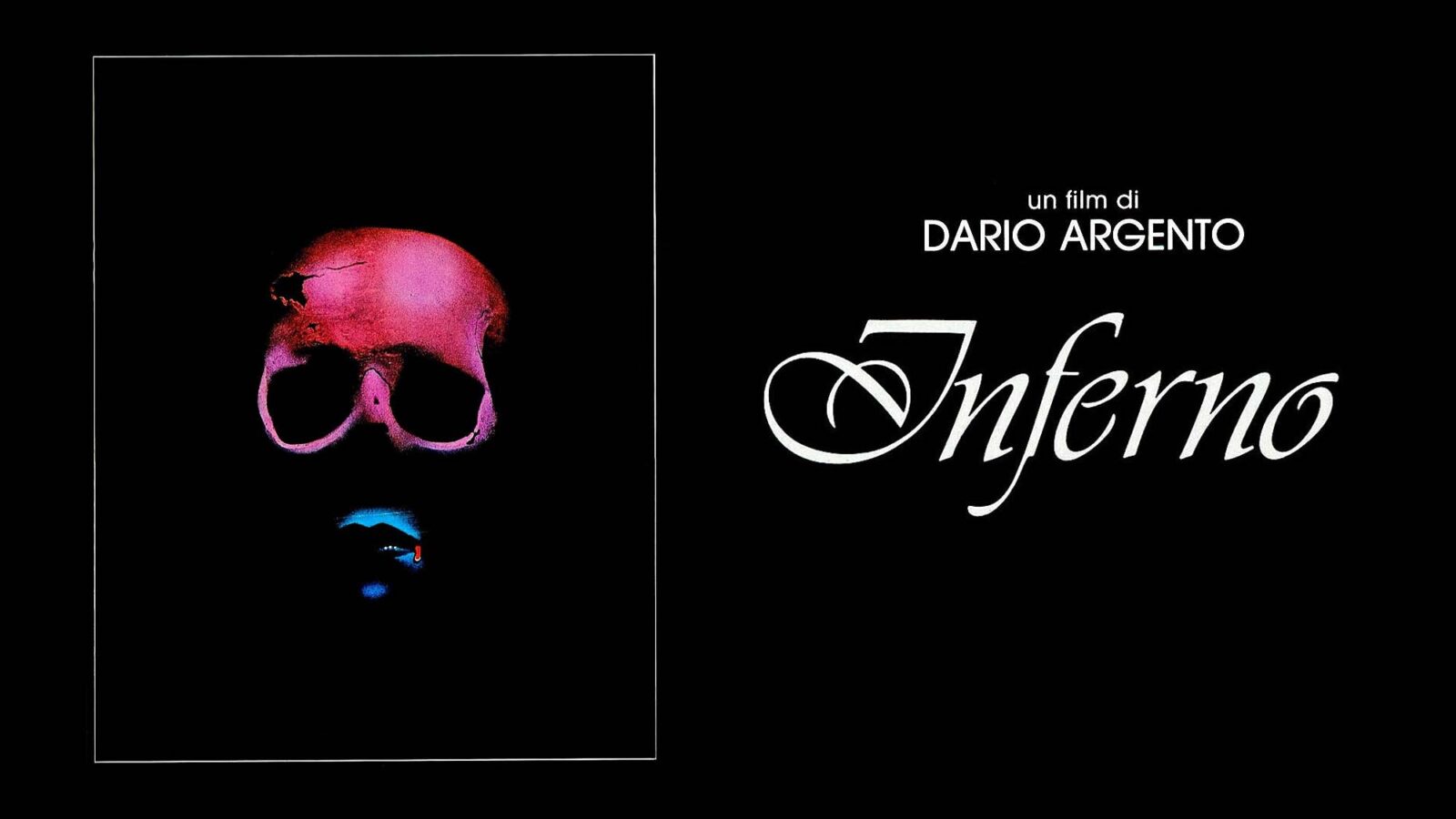
Inferno
Inferno was filmed mainly in Rome and New York, with much of the production built around studio-controlled interiors in Rome and selected real locations.

The Omen
The Omen was primarily filmed in England, with key locations including London, Surrey, and Berkshire. Additional scenes were shot in Rome and Jerusalem.

Biblioteca Angelica
Biblioteca Angelica is in The Garden of the Finzi-Continis, Il segno del comando, Inferno, Angels & Demons, A Liberal Passion, It’s All About Karma and more.
Hotel Genio
Hotel Genio, a four-star hotel at Via Giuseppe Zanardelli 28 in the Ponte district of central Rome, has appeared in Night on Earth (1991).
Piazza San Bartolomeo all’Isola
Piazza San Bartolomeo all’Isola has appeared in The Two Orphans, Flesh Will Surrender, Love and Troubles, La cento chilometri, L’Avventura, Akiko and many more.
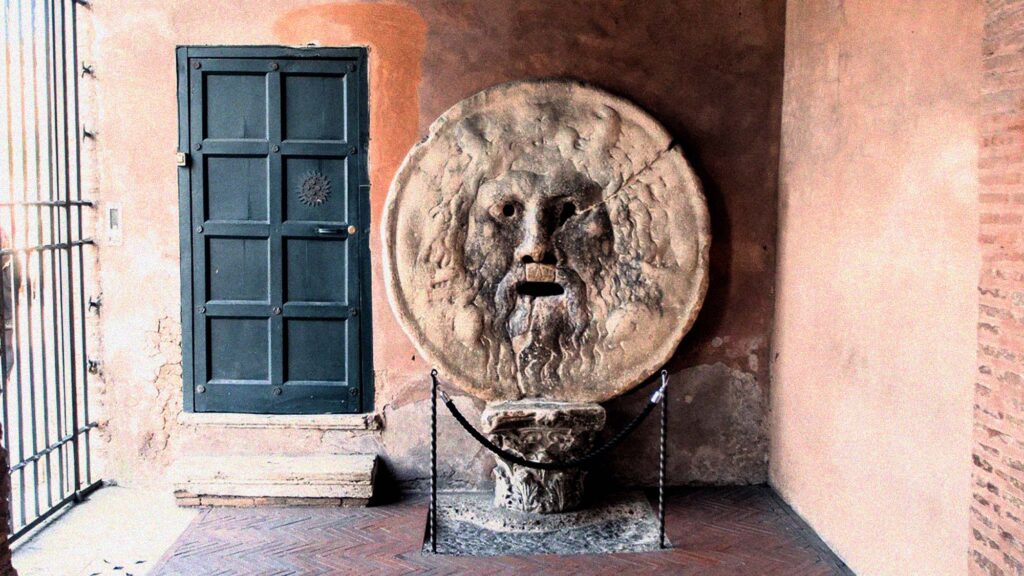
The Mouth of Truth
The Mouth of Truth has appeared in Roman Holiday (1953). The monument is used directly as one of the Roman landmarks visited by the film’s central characters.
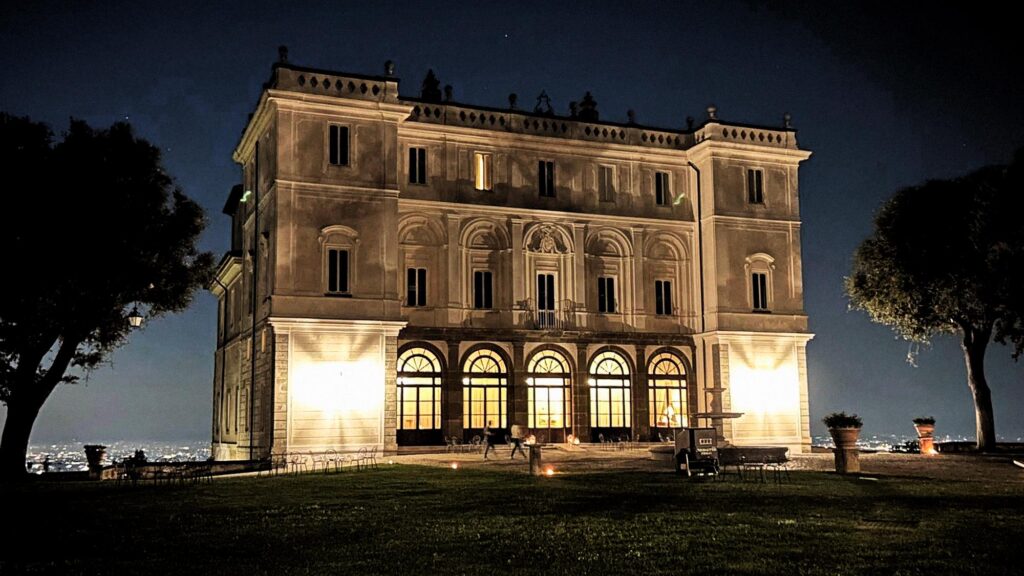
Park Hotel Villa Grazioli
Park Hotel Villa Grazioli has appeared in Kill, Baby, Kill, The Marquis of Grillo, Nosferatu in Venice, The Dew Point and The Long Night.
Rocca Calascio
Rocca Calascio is a ruined medieval fortress situated above the village of Calascio in the Province of L’Aquila, Abruzzo, Italy. Standing approximately…
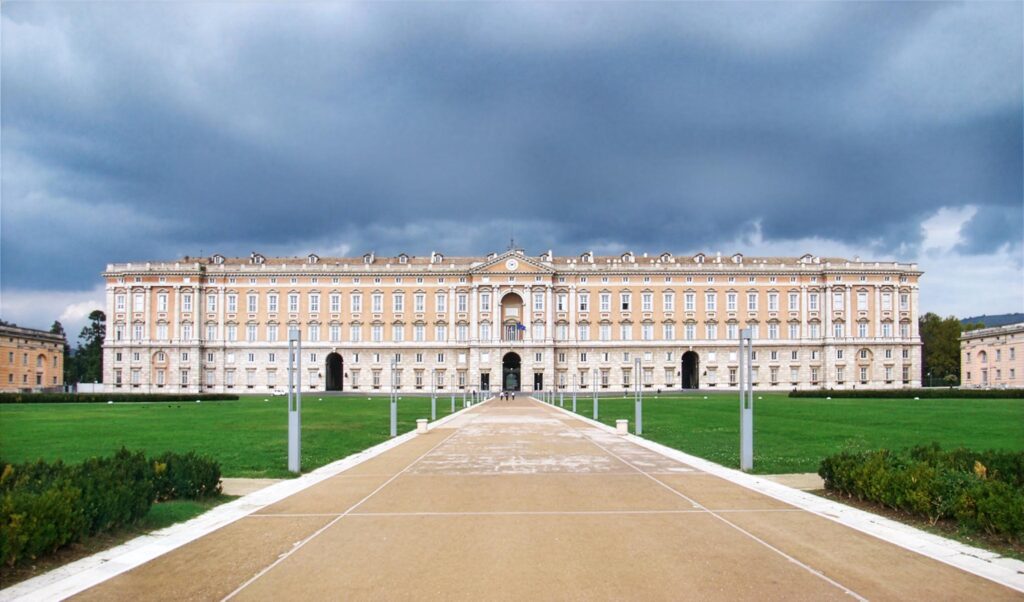
Royal Palace of Caserta
Royal Palace of Caserta has appeared in Star Wars – The Phantom Menace, Star Wars – Attack of the Clones, Mission: Impossible III, and many more.
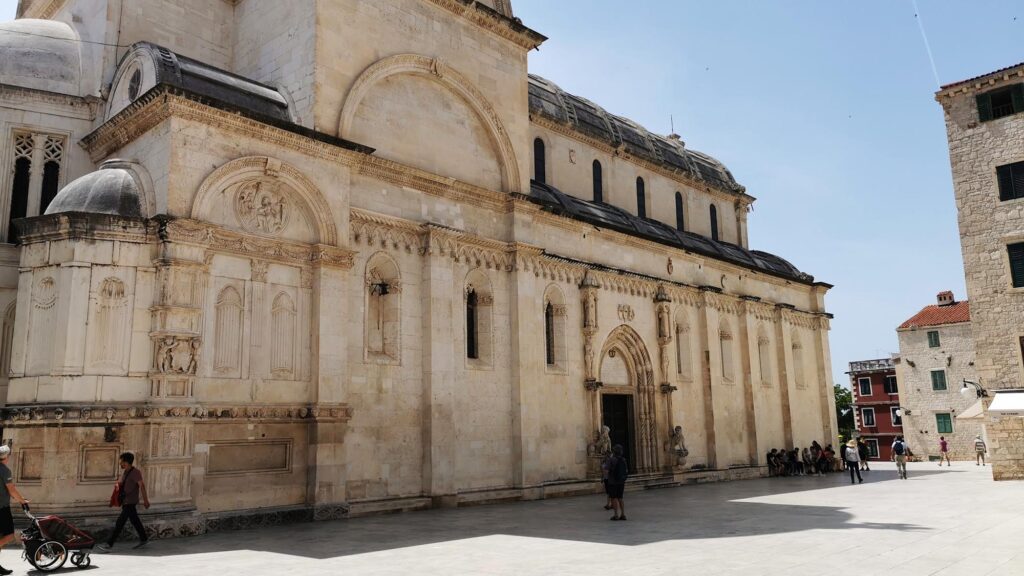
The Cathedral of St. James
The Cathedral of St. James appears in Game of Thrones, where Šibenik is used to represent parts of Braavos in season 5.
Torrechiara Castle
Torrechiara Castle is in Condottieri, Women and Soldiers, ’Tis Pity She’s a Whore, Tragedy of a Ridiculous Man, Ladyhawke, The Charterhouse of Parma and more.