
Rocca Calascio is a ruined medieval fortress situated above the village of Calascio in the Province of L’Aquila, Abruzzo, Italy. Standing approximately 1,460 metres above sea level on a ridge overlooking the Tirino Valley and the Navelli Plain, it is one of the highest fortifications in Italy. The oldest element is the central square tower, which was probably established as an isolated watchtower during the Middle Ages and is first documented in 1380. The fortress acquired much of its present appearance around 1480, when Antonio Piccolomini added a stone enclosure and four round corner towers around the original keep. The upper fortified village developed below the castle, while the nearby octagonal church of Santa Maria della Pietà was constructed beside the route towards Santo Stefano di Sessanio. A major earthquake in 1703 severely damaged both the fortress and the settlement, causing most inhabitants to relocate to the lower village of Calascio. The castle was later conserved and partially restored, but its roofless towers, exposed walls and abandoned village remain central to its appearance.
Rocca Calascio, the ruined settlement below it and the surrounding Gran Sasso landscape have appeared in Amici miei – Atto IIº (1982), Krull (1983), Ladyhawke (1985), The Name of the Rose (1986), La piovra 7 (1995), Il viaggio della sposa (1997), Padre Pio: Tra cielo e terra (2000), L’orizzonte degli eventi (2005) and The American (2010). The fortress and its treeless mountain surroundings have represented the setting of an improvised Via Crucis, a landscape on another planet, the refuge of a medieval monk, the surroundings of an isolated abbey, a criminal’s Sicilian hideout, seventeenth-century travel routes, an early version of the monastery at San Giovanni Rotondo and the remote highlands of Abruzzo.
In Amici miei – Atto IIº (1982), Rocca Calascio appears during one of the elaborate practical jokes recalled by the group of ageing friends. Melandri is persuaded to dress as Jesus and take part in what he believes will be a solemn historical recreation of the Via Crucis. Instead, his companions subject him to an increasingly violent and humiliating imitation of Christ’s journey to Calvary, forcing him to carry a large wooden cross while they beat and torment him. The sequence was filmed along the dirt road and across the open ground among the ruins of the abandoned settlement below the castle. Local residents and visitors participated as extras, while the fortress itself is most clearly visible in a brief reverse view as the improvised procession approaches. The scene therefore uses the wider Rocca Calascio complex rather than the interior of the castle.
In Krull (1983), Rocca Calascio and the remains of the fortified village make brief appearances among the landscapes of the fictional planet Krull. The film follows Prince Colwyn as he crosses forests, mountains and wastelands in search of the Black Fortress, where Princess Lyssa is being held by the alien creature known as the Beast. Much of the Italian location material was filmed across the Campo Imperatore plateau and other mountain areas, with Rocca Calascio contributing short views of an ancient and apparently abandoned stronghold encountered within this larger fantasy landscape. The castle is not established as the Black Fortress or given a separate name within the story; its ruined towers and exposed position are used principally to expand the visual geography of Colwyn’s journey.
In Ladyhawke (1985), Rocca Calascio represents the ruined refuge of the monk Imperius. After Isabeau d’Anjou is wounded while in the form of a hawk, Philippe Gaston carries her across the mountains and brings her to Imperius, who treats her injuries inside the abandoned stronghold. During the night, the hawk transforms back into Isabeau, allowing Philippe to understand that she and Captain Etienne Navarre have been cursed by the Bishop of Aquila: Isabeau becomes a hawk by day, while Navarre becomes a wolf at night, preventing them from meeting in human form. Imperius later reveals that an approaching solar eclipse may provide an opportunity to break the curse. The Bishop’s soldiers attack the refuge and pursue Philippe and Isabeau through the ruins and towers before dawn brings another transformation. The production added decorative stone-like crowns to the tops of Rocca Calascio’s round towers, altering the silhouette of the unrestored fortress. The castle appears both as Imperius’s isolated home and as the setting for several of the film’s most important revelations about the curse.
In The Name of the Rose (1986), Rocca Calascio does not represent the monastery in which the murders take place. The monastery exterior was constructed as a large set near Rome, while the principal interiors were filmed at Eberbach Abbey in Germany. Rocca Calascio instead appears as part of the distant mountain landscape surrounding the fictional abbey. During the opening journey, the Franciscan friar William of Baskerville and his novice Adso of Melk travel by mule through a cold and sparsely inhabited landscape, with the tower of Rocca Calascio visible in the distance in material incorporated into the sequence. Additional location work was carried out in the valley between Rocca Calascio and Santo Stefano di Sessanio for the concluding part of the journey, after the monastery and its library have been destroyed. The fortress therefore helps establish the isolation of the story’s fourteenth-century setting but is not the abbey itself, despite that claim frequently appearing in simplified location guides.
In La piovra 7 – Indagine sulla morte del commissario Cattani (1995), Rocca Calascio represents the ruined castle near Mount Etna in which Tano Cariddi has withdrawn from the world. Haunted by his past and apparently separated from organised crime, Tano lives alone among the abandoned rooms and exposed stone walls of the fortress. In the final episode, Vanya Marinoff reaches his hiding place and brings him the secret archive assembled by the corrupt financier Ottavio Ramonte. The files contain information capable of exposing politicians, businessmen and members of the criminal organisation operating behind Italian public life. Tano initially buries the material beneath the ground surrounding the castle, but the ending suggests that he intends eventually to use it and return to power. Both exterior and interior areas of Rocca Calascio were used for the isolated Sicilian hideout, with the mountainous Abruzzo landscape standing in for the slopes below Etna.
In Il viaggio della sposa (1997), released internationally as The Bride’s Journey, Rocca Calascio contributes to the remote seventeenth-century landscape crossed by Porzia Colonna as she travels from an Abruzzo convent towards an arranged marriage in Bari. After her escort is attacked and dispersed, the young noblewoman is left with Bartolo, a rough stable worker who must guide her through forests, mountains and territories threatened by bandits. The production used several parts of Abruzzo, including the Gran Sasso area, before continuing through landscapes and historic properties in Puglia. Rocca Calascio and its surrounding uplands form part of the early mountain journey, providing the exposed and sparsely populated environment through which Porzia and Bartolo travel. The available production sources do not identify the fortress as a consistently named castle within the story, suggesting that it was used as part of the broader historical landscape rather than as a principal residence.
In Padre Pio: Tra cielo e terra (2000), Rocca Calascio and the surrounding settlement were used to recreate San Giovanni Rotondo as it appeared during the early period of Padre Pio’s life there. The television miniseries follows the Capuchin friar from his arrival at the monastery through the appearance of the stigmata, the growing number of pilgrims seeking his help and the investigations conducted by medical and Church authorities. Buildings and temporary additions around Calascio were adapted to represent the isolated monastery before San Giovanni Rotondo developed into a major pilgrimage centre. The stone village and mountain landscape accompany scenes involving Padre Pio’s religious community and the people who travel to meet him. Publicly available production accounts describe the reconstruction of the convent at Calascio but do not clearly separate every temporary set from the preserved buildings of the fortress and village.
In L’orizzonte degli eventi (2005), released internationally as The Event Horizon, Rocca Calascio contributes to the Gran Sasso landscape surrounding the story of physicist Max Flamini. After an experiment at the underground Gran Sasso National Laboratory fails and damages his professional reputation, Max retreats into the mountains and becomes involved with Bajram, an Albanian shepherd living outside conventional society. The film contrasts the laboratories and Max’s scientific ambitions with the roads, villages and open highlands of Abruzzo. Rocca Calascio is credited among the production’s locations and contributes to this isolated mountain environment, although the most clearly identifiable road scenes were filmed closer to Castel del Monte. The fortress is therefore part of the geographical setting surrounding Max’s withdrawal and personal crisis rather than a named building central to the plot.
In The American (2010), Rocca Calascio appears in the Abruzzo landscape surrounding Jack, an assassin and gunsmith who hides in the region after an attack in Sweden. Jack stays in the fictional town of Castelvecchio, accepts a final assignment to construct a specialised rifle and begins a relationship with a prostitute named Clara while becoming increasingly suspicious of his employer. The production was filmed across several separate towns: Castelvecchio Calvisio is used for Jack’s initial arrival, Castel del Monte supplies many of the streets around his rented home, and Sulmona is used for meetings and urban scenes. Calascio was also among the production locations, and Rocca Calascio can be recognised in wider landscape material establishing the remote mountainous region in which Jack is attempting to disappear. The fortress does not represent Jack’s residence or a separate named castle and should not be confused with the streets of Castel del Monte used for most of his daily life.
Ladyhawke
Ladyhawke (1985) is a medieval fantasy adventure film directed by Richard Donner, starring Matthew Broderick, Rutger Hauer and Michelle Pfeiffer. Broderick plays…
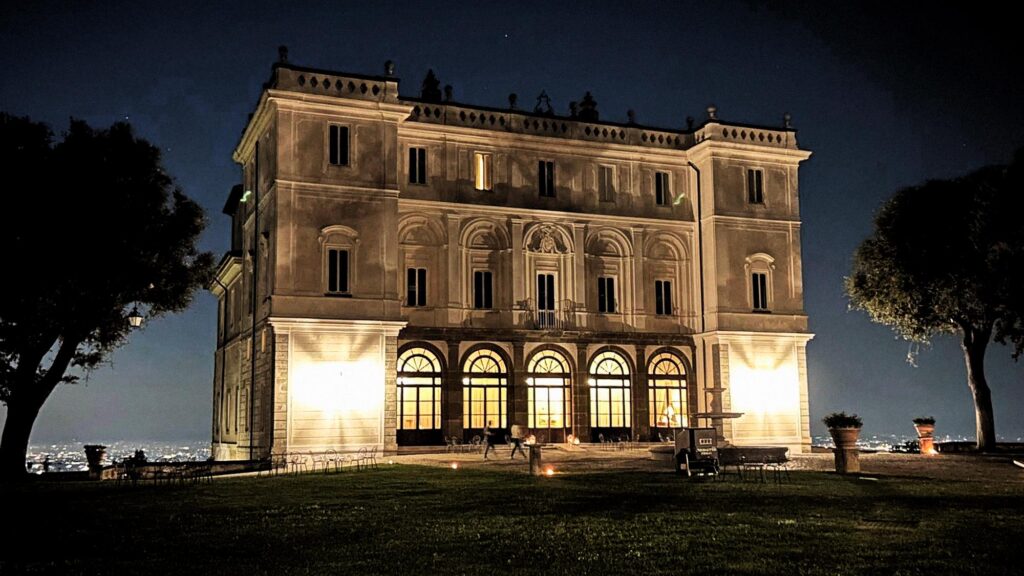
Park Hotel Villa Grazioli
Park Hotel Villa Grazioli has appeared in Kill, Baby, Kill, The Marquis of Grillo, Nosferatu in Venice, The Dew Point and The Long Night.

Piazza Mincio
Piazza Mincio and the buildings directly facing it have appeared in The Girl Who Knew Too Much (1963), The Omen (1976), Inferno (1980) and many other movies.

Biblioteca Angelica
Biblioteca Angelica is in The Garden of the Finzi-Continis, Il segno del comando, Inferno, Angels & Demons, A Liberal Passion, It’s All About Karma and more.
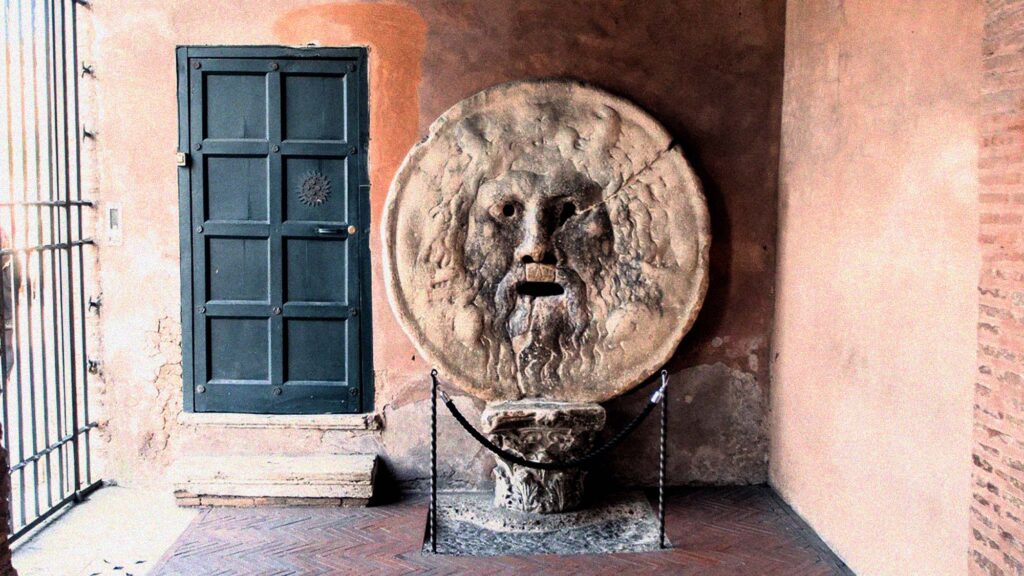
The Mouth of Truth
The Mouth of Truth has appeared in Roman Holiday (1953). The monument is used directly as one of the Roman landmarks visited by the film’s central characters.
Hotel Genio
Hotel Genio, a four-star hotel at Via Giuseppe Zanardelli 28 in the Ponte district of central Rome, has appeared in Night on Earth (1991).
Piazza San Bartolomeo all’Isola
Piazza San Bartolomeo all’Isola has appeared in The Two Orphans, Flesh Will Surrender, Love and Troubles, La cento chilometri, L’Avventura, Akiko and many more.
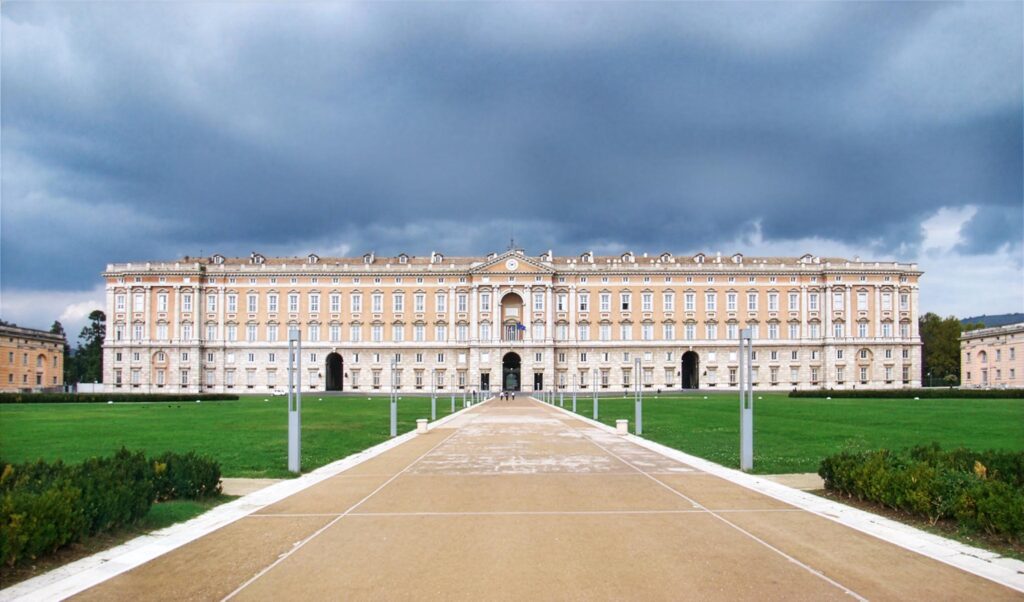
Royal Palace of Caserta
Royal Palace of Caserta has appeared in Star Wars – The Phantom Menace, Star Wars – Attack of the Clones, Mission: Impossible III, and many more.
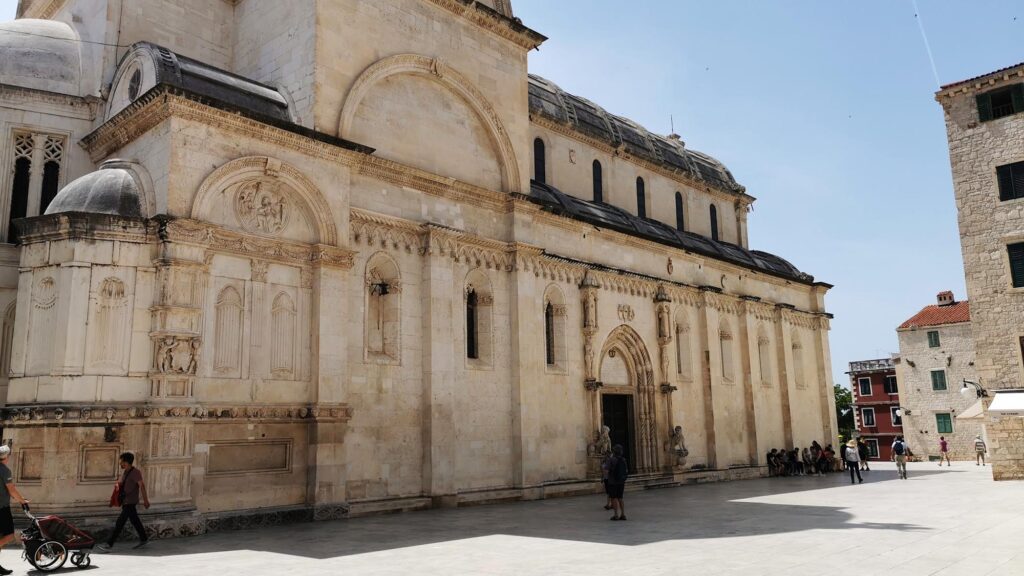
The Cathedral of St. James
The Cathedral of St. James appears in Game of Thrones, where Šibenik is used to represent parts of Braavos in season 5.
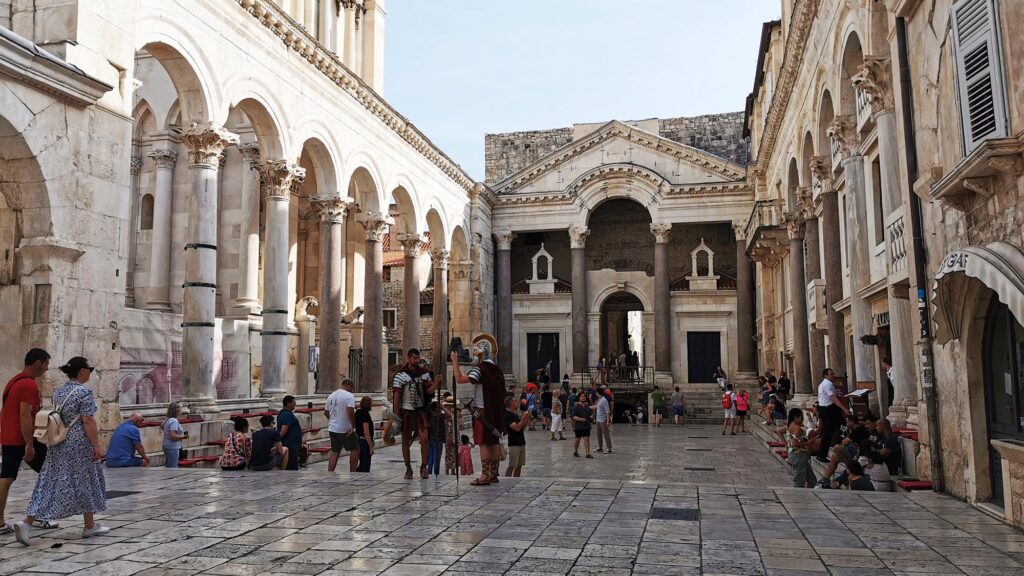
Diocletian’s Palace
Diocletian’s Palace has been used in several productions, most famously "Game of Thrones" (2011–2019) and the Netflix thriller "The Weekend Away" (2022).