
Belvoir Castle is a Grade I-listed country house and historic castle overlooking the Vale of Belvoir in Leicestershire, England, around seven miles west of Grantham. A Norman castle was established on the hill by Robert de Todeni, a companion of William the Conqueror, in the late 11th century, traditionally dated to 1067. The estate eventually passed to the Manners family, whose descendants have remained associated with Belvoir for more than five centuries. The castle has repeatedly been destroyed and rebuilt: it suffered badly during the Wars of the Roses, was rebuilt during the 16th century, used as a Royalist stronghold during the English Civil War and largely demolished by order of Parliament in 1649. Another rebuilding followed between 1654 and 1668, but the present romantic Gothic appearance dates mainly from the early 19th century. James Wyatt began a major transformation for the 5th Duke and Duchess of Rutland in 1801, although a devastating fire in 1816 destroyed large parts of the unfinished building. Reconstruction continued under the Reverend Sir John Thoroton, with the castle largely completed by around 1830. Its hilltop towers, battlements, grand state rooms and extensive parkland have subsequently made Belvoir one of England’s busiest historic filming locations, while part of the castle remains the home of the Duke and Duchess of Rutland.
Belvoir Castle has appeared in Little Lord Fauntleroy (1980), Young Sherlock Holmes (1985), King Ralph (1991), The Haunting (1999), The Da Vinci Code (2006), The Young Victoria (2009), Victoria & Abdul (2017) and The Crown (2016–2023). The castle has been particularly useful whenever filmmakers need royal surroundings: it has represented Buckingham Palace, Windsor Castle and even Castel Gandolfo, while other productions have turned it into a fictional aristocratic estate or used its less glamorous service rooms as part of a haunted mansion.
In Little Lord Fauntleroy (1980), Belvoir Castle becomes Dorincourt Castle, the ancestral home of the elderly Earl of Dorincourt. Young Cedric Errol arrives from New York after discovering that he is heir to his grandfather’s title and estate, and the castle is introduced as his carriage approaches before the household staff assemble outside to welcome the new Lord Fauntleroy. Belvoir continues to appear throughout Cedric’s life at Dorincourt as his warmth and generosity gradually soften his bitter grandfather. One particularly effective sequence uses the elevated landscape around the castle when the Earl shows Cedric the enormous estate he will one day inherit. Cedric notices the impoverished Earl’s Lane below and begins asking questions about the tenants living there, eventually encouraging his grandfather to improve their conditions. Belvoir’s courtyard is also used as the Earl becomes increasingly playful with his grandson, while parts of the wider estate, including the Belvoir Hunt stables, contribute to the fictional Dorincourt lands.
In Young Sherlock Holmes (1985), Belvoir Castle is associated with Professor Waxflatter, the eccentric inventor whose niece Elizabeth Hardy is close to the young Sherlock Holmes. The castle provides exterior locations around Waxflatter’s home and workshop and is most recognisable during the scenes involving his experimental flying machine. Waxflatter has spent years developing the strange winged contraption, and later in the film Holmes, Watson and Elizabeth use the machine themselves after their investigation leads them into increasingly dangerous territory. Belvoir’s Gothic towers and elevated setting fit naturally into the film’s slightly exaggerated Victorian world, while the flying machine gives the location one of its more unusual screen appearances.
In King Ralph (1991), Belvoir Castle supplies part of Buckingham Palace after American lounge singer Ralph Jones unexpectedly becomes King of the United Kingdom. Ralph is discovered to be the last surviving member of the royal bloodline after the rest of the Royal Family are killed in a freak accident, leaving royal secretary Sir Cedric Willingham with the difficult task of transforming him into a presentable monarch. Belvoir’s White Room is used as one of the Buckingham Palace interiors during this transformation. The fictional palace is actually assembled from numerous British stately homes and historic buildings, including Blenheim Palace, Apsley House and Lancaster House, meaning that Ralph can effectively move from one real building to another without apparently leaving Buckingham Palace.
In The Haunting (1999), Belvoir Castle becomes part of the enormous and sinister Hill House, although the exterior seen in the film belongs to nearby Harlaxton Manor. Dr. David Marrow has invited Nell Vance, Theo and Luke Sanderson to the supposedly haunted mansion under the pretence of conducting a study into insomnia, while secretly intending to investigate their reactions to fear. As increasingly inexplicable events begin occurring around them, Belvoir Castle provides Hill House’s kitchen and pantry. One sequence has Nell and Theo startled by a loud knocking sound in the kitchen, only for Luke to investigate and demonstrate that the noise appears to come from the old plumbing. His explanation offers temporary reassurance, but by this stage the characters – and particularly Nell – are already becoming convinced that something genuinely supernatural is moving through the house. The use of Belvoir alongside Harlaxton Manor and elaborate studio sets helps make Hill House appear far larger and stranger than any single real building.
In The Da Vinci Code (2006), Belvoir Castle takes an unexpected trip to Italy by representing Castel Gandolfo, the Pope’s traditional summer residence outside Rome. The location appears when senior members of the Catholic organisation Opus Dei become involved in the conspiracy surrounding the Priory of Sion, the Holy Grail and the murder investigation drawing Robert Langdon and Sophie Neveu across Europe. Belvoir is used primarily for aerial exterior views of Castel Gandolfo, with digital alterations helping transform the English castle and its surroundings into the papal residence overlooking Lake Albano. The scenes inside Castel Gandolfo were created elsewhere, so the distinctive hilltop silhouette of Belvoir is what provides the fictional Italian location with its exterior identity.
In The Young Victoria (2009), Belvoir Castle supplies several different royal interiors as the young Victoria moves from the restrictions imposed by her mother and Sir John Conroy to becoming queen and building her relationship with Prince Albert. The Elizabeth Saloon becomes part of the Duchess of Kent’s apartments, including the scene after Victoria’s coronation in which Conroy bitterly reflects on having been excluded from the ceremony and losing his influence over the new monarch. Elsewhere, Belvoir’s Chinese Bedroom and Tapestry Room are used as Victoria’s palace bedroom, while the Regent’s Gallery appears as she prepares for her coronation. The King’s Rooms become Victoria and Albert’s honeymoon suite after their marriage, giving the sequence an unusual historical connection: Queen Victoria herself stayed at Belvoir during a royal visit in the 1840s. The castle grounds also stand in for Windsor Great Park, making Belvoir one of the film’s most extensively used locations rather than simply another stately-home establishing shot.
In Victoria & Abdul (2017), Belvoir Castle again becomes part of Queen Victoria’s royal world, this time representing Windsor Castle during the later years of her reign. Abdul Karim and Mohammed arrive in Britain after travelling from India to present a ceremonial coin to the Queen during her Golden Jubilee, only for Victoria to become fascinated by Abdul and gradually draw him into her personal household. Belvoir is seen as a carriage approaches Windsor Castle and is also used for several interiors after the two Indian servants are brought into the royal household. Among the scenes filmed here are their arrival before the Queen, a formal dinner and the moment when Victoria asks Abdul about India and announces that she would like a mango brought to her. The request becomes a running source of frustration for the household as attempts are made to find a suitably ripe mango in England. As with many royal productions, Victoria & Abdul combines Belvoir with several other properties, including Osborne House and Knebworth House, to create the Queen’s various residences.
In The Crown (2016–2023), Belvoir Castle serves primarily as Windsor Castle during the first three seasons. Both interiors and exteriors are used, with the Elizabeth Saloon and Regent’s Gallery among the rooms transformed into parts of the royal residence. Belvoir appears in episodes including “Windsor” (2016), which deals with the abdication of Edward VIII and the consequences his decision continues to have for the Royal Family, and “Pride & Joy” (2016), where Queen Elizabeth II’s long Commonwealth tour leaves Princess Margaret temporarily taking on more public duties at home. The castle returns during the second season and is again recognisable in the third-season episode “Margaretology” (2019), when Helena Bonham Carter takes over the role of Princess Margaret. The production also uses Belvoir’s formal gardens, allowing the location to provide both the grand interior rooms and carefully controlled royal landscape associated with Windsor. Like many of the palaces in The Crown (2016–2023), the fictional Windsor is assembled from several real locations, but Belvoir is one of the series’ most persistent substitutes for the castle.
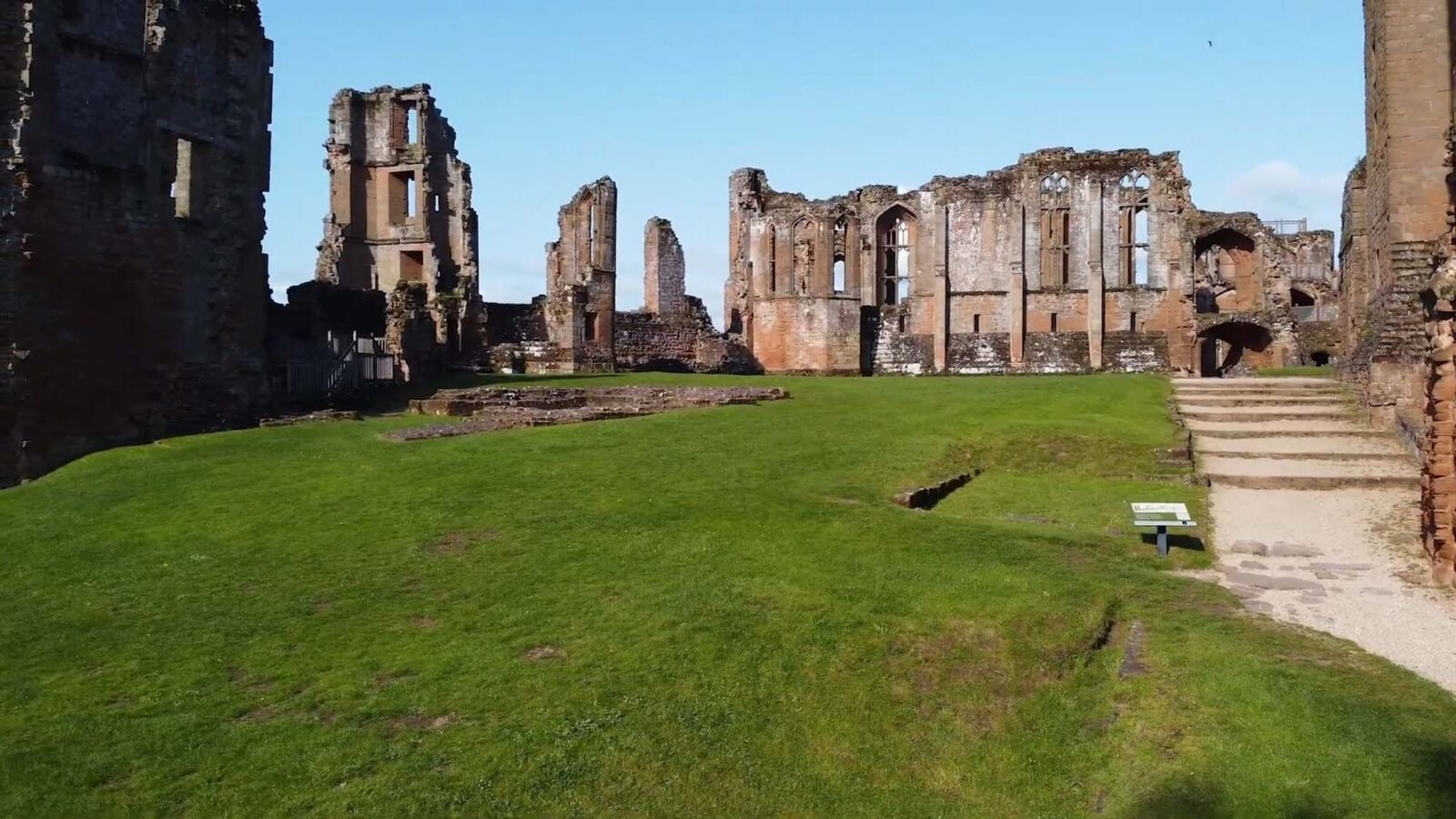
Kenilworth Castle
Kenilworth Castle, in Warwickshire, England, has appeared in When Knights Were Bold (1916), Kenilworth Castle and Amy Robsart (1926) and Father Brown (2013–).

Stowe School
Stowe School is in Indiana Jones and the Last Crusade, Inspector Morse, Jeeves and Wooster, The Avengers, Vanity Fair, The World Is Not Enough and many more.
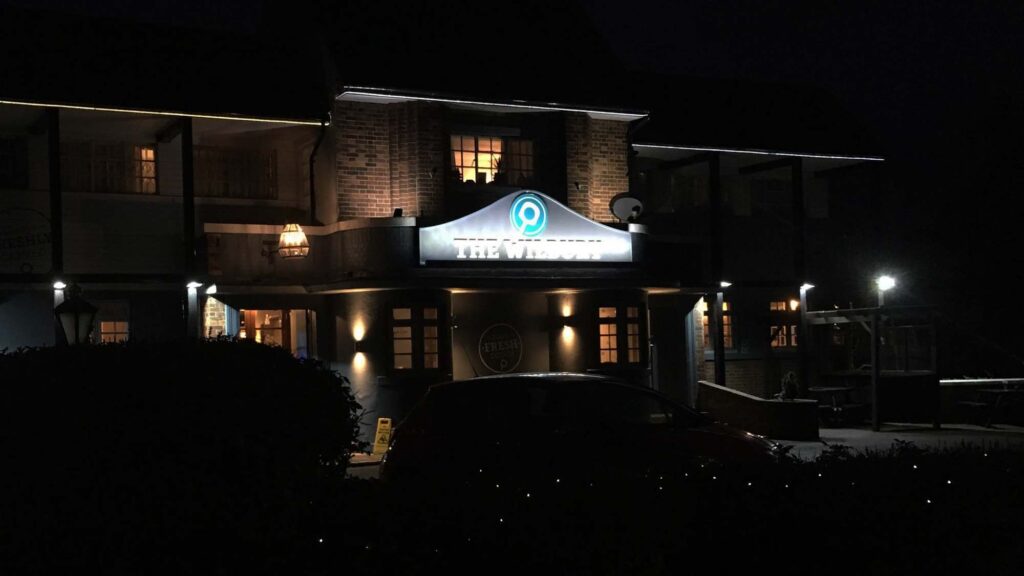
The Wilbury
The Wilbury has appeared in The World’s End (2013), where it was used as the fictional pub that gives the film its title and serves as the final destination.

The Falkland Arms
The Falkland Arms appears in MobLand (2025–). The series uses the real Great Tew pub as itself, with the name The Falkland Arms kept in the dialogue.
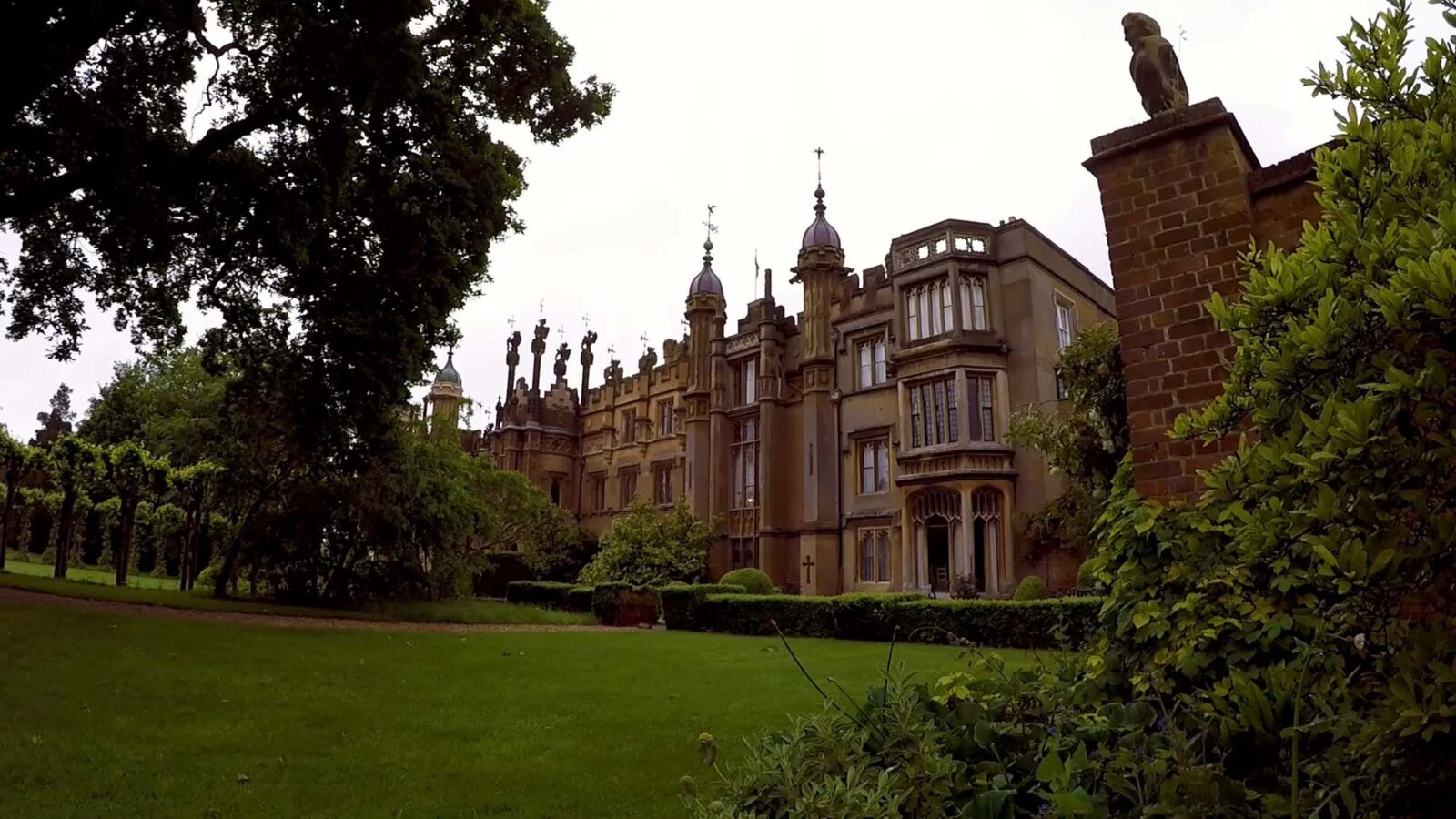
Knebworth House
Knebworth House appeared in The Great Muppet Caper, The Shooting Party, The Lair of the White Worm, Batman, The Wings of the Dove, and many more.
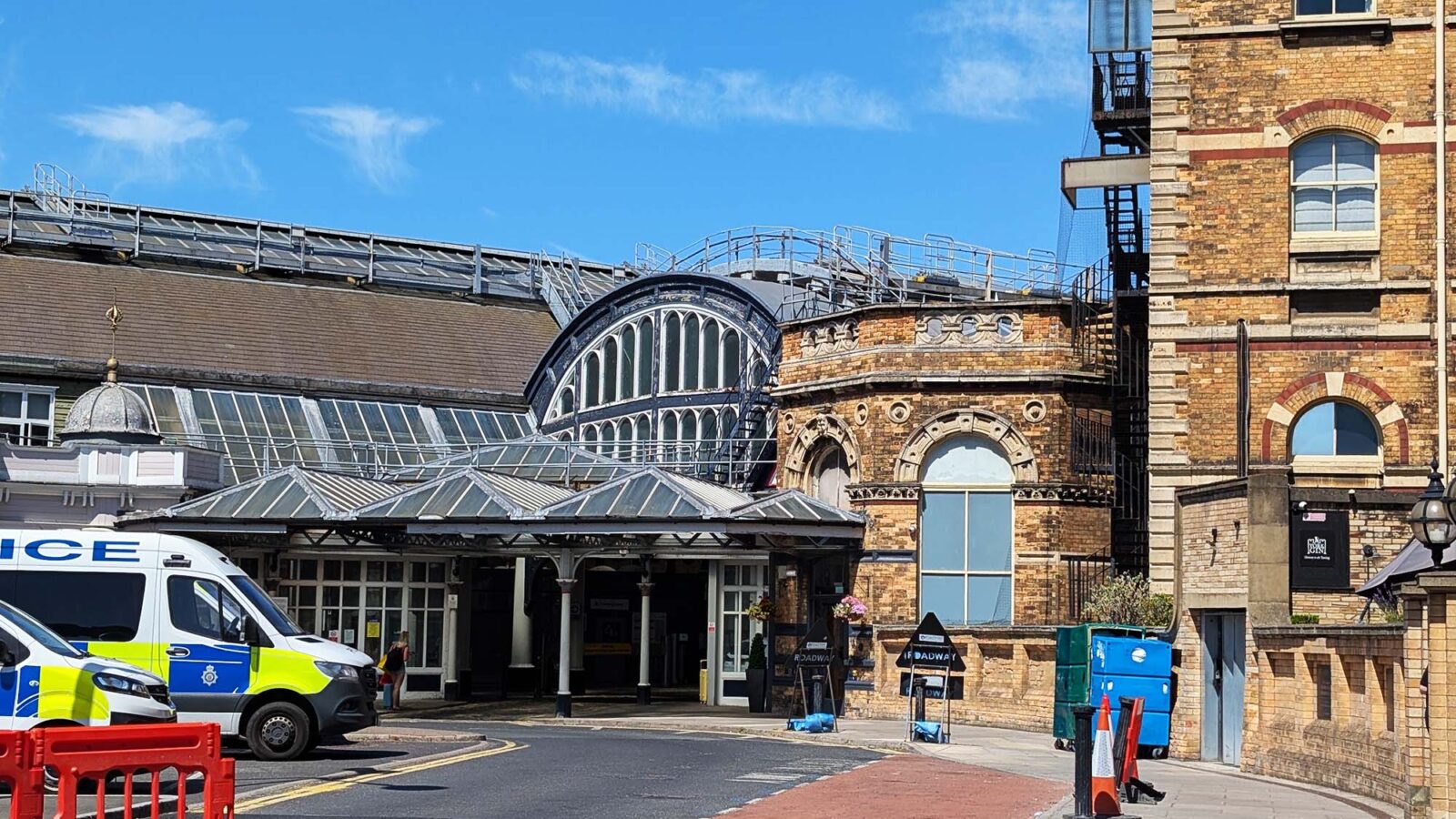
York Railway Station
York Railway Station has appeared in Chariots of Fire (1981) and The Dresser (1983). Harry Potter and the Philosopher’s Stone (2001) is incorrectly linked.
St John the Evangelist Church
St John the Evangelist Church appears in Witchfinder General (1968), the British historical horror film directed by Michael Reeves and starring Vincent Price.
Blenheim Palace
Blenheim Palace is a monumental English Baroque country house in Woodstock, Oxfordshire, and the ancestral seat of the Dukes of Marlborough. It…
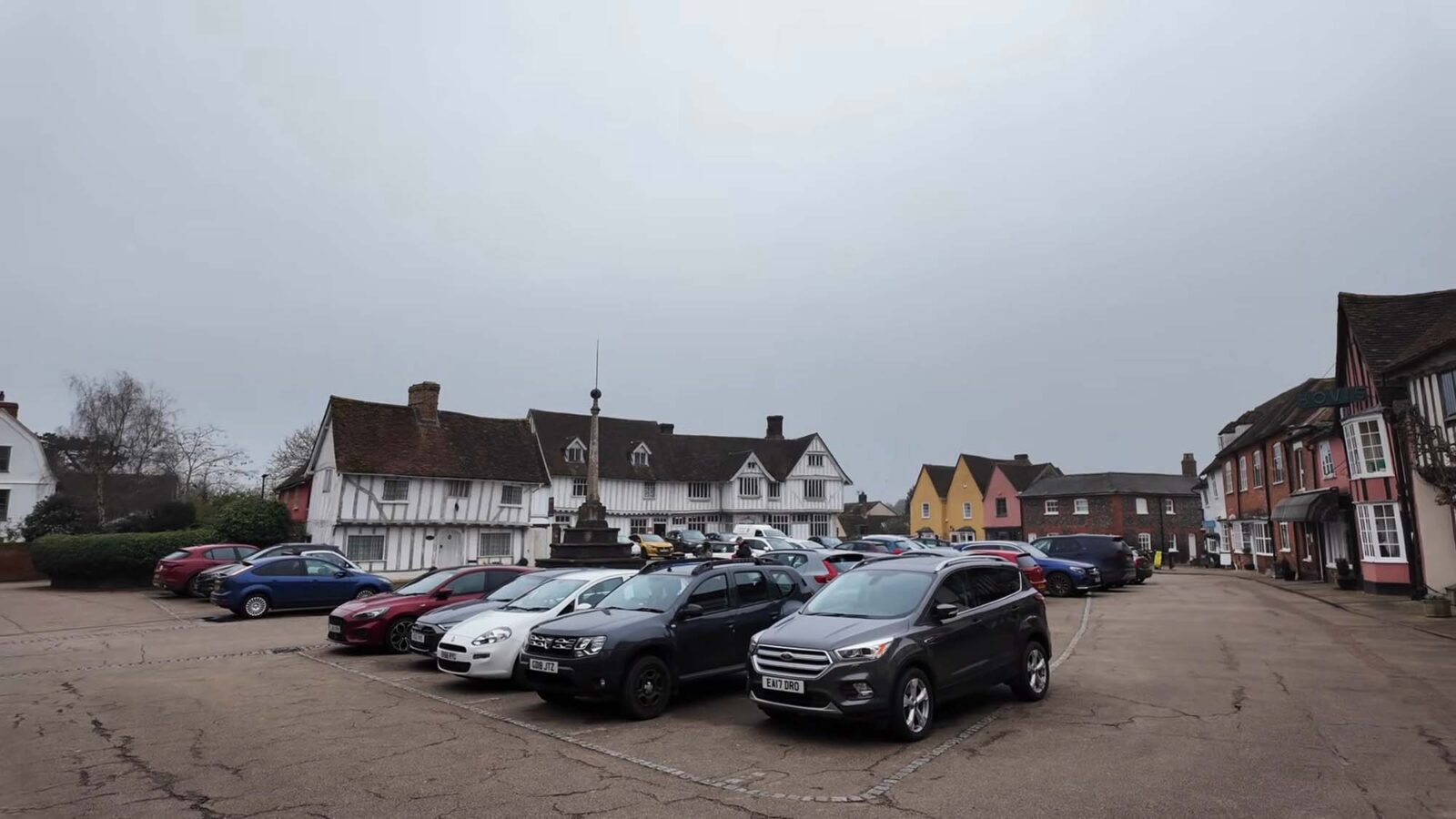
Lavenham Market Square
Lavenham Market Square is in Witchfinder General, The Canterbury Tales, Playing Away, Lovejoy, Harry Potter and the Deathly Hallows: Part 1 and The Strays.