
The Worst Person in the World (Verdens verste menneske) is a 2021 Norwegian romantic comedy-drama directed by Joachim Trier and written by Trier and Eskil Vogt. Renate Reinsve stars as Julie, a young woman approaching thirty who struggles to settle on a career and find direction in her personal life. Her relationship with successful comic-book artist Aksel (Anders Danielsen Lie), who is considerably older than her, becomes increasingly complicated when she meets Eivind (Herbert Nordrum), a coffee shop employee with whom she develops an immediate connection. The film is the third and final instalment in Trier’s unofficial Oslo Trilogy, following Reprise (2006) and Oslo, August 31st (2011). Reinsve won the Best Actress award at the 2021 Cannes Film Festival for her performance.
The Worst Person in the World (2021) was filmed primarily on location in Oslo, Norway, with additional studio filming in Trollhättan, Sweden. Production began in early 2020 but was suspended after only a few days because of the COVID-19 pandemic. Filming resumed in August and continued until the end of October, using residential streets, bookshops, restaurants, parks and other recognisable places throughout the Norwegian capital. Among the main locations were Ekebergrestauranten, Norli Universitetsgata, St. Hanshaugen Park, the Barcode district and Ullevål Hospital. The production also used Studio Fares, operated by Film i Väst in Trollhättan, where work continued during October 2020.
One of the film’s opening locations is Ekebergrestauranten at Kongsveien 15, overlooking central Oslo and the Oslofjord from the wooded slopes of Ekeberg. The restaurant was designed by architect Lars Backer and opened in 1929, becoming an important example of early Norwegian Functionalist architecture. In the film, Aksel holds a reception celebrating the publication of his latest comic book, while Julie finds herself increasingly uncomfortable among his older friends and professional acquaintances. She eventually leaves the gathering and steps onto the restaurant’s terrace, where she stands alone smoking a cigarette with the city spread out behind her. The scene, which became one of the film’s most widely reproduced images, was photographed in the evening light with Oslo’s harbour and waterfront visible below.
After leaving the restaurant, Julie walks down Kongsveien towards the city centre. She stops along the hillside to look across the Oslofjord before continuing towards Gamlebyen, where she notices a party taking place and impulsively decides to enter. The gathering provides the setting for her first encounter with Eivind, played by Herbert Nordrum. Although both are already involved in relationships, they spend the evening flirting and testing the boundaries of what they consider acceptable behaviour. The party takes place in a residential building in Oslo’s Old Town district, with the subsequent nighttime scenes following the pair as they leave the gathering and continue their conversation through the surrounding streets.
The night ends at St. Hanshaugen Park, one of Oslo’s largest public parks, where Julie and Eivind continue talking as dawn approaches. The park occupies a hill north of the city centre, with pathways, lawns and terraces leading towards its highest point. From here, the pair look out across the city as the morning light appears over Oslo. The park and its elevated viewpoints return during the film’s later romantic sequence in which Julie imagines time standing still. According to cinematographer Kasper Tuxen, the scenes involving Julie and Eivind’s extended night together were filmed over approximately eight days. The production visited the park on separate occasions to capture the changing light, including scenes photographed at dusk and again around sunrise.
Another important location is Rouleur Oslo at Ullevålsveien 16A, a combination of café, wine bar and bicycle workshop near St. Hanshaugen. The establishment appears during the early part of the story, where Julie first meets Aksel. The café’s relatively small interior and everyday surroundings provide the setting for the beginning of their relationship, before the film moves into the apartment they eventually share. Rouleur is one of several independently operated Oslo businesses used in the film rather than recreated as anonymous café interiors.
Julie’s workplace is Norli Universitetsgata at Universitetsgata 22–24 in central Oslo. The large bookshop occupies several floors and is particularly associated with academic literature and textbooks. After abandoning her earlier ambitions in medicine and psychology, Julie works here while trying to establish herself as a writer and photographer. The shop becomes particularly important when Eivind unexpectedly appears among its bookshelves after their first encounter at the party. They recognise one another but are accompanied by their respective partners, creating an awkward reunion that forces them to conceal their attraction.
The bookstore scenes were filmed inside the real Norli branch during a production period lasting approximately two weeks in 2020. In an interview with Letterboxd Magazine, a store manager recalled that the crew took over an entire section of the shop and installed extensive additional lighting. He was surprised by the amount of preparation required for scenes that occupy relatively little time in the finished film. The existing shelves, displays and sales areas were incorporated into the photography, making Norli one of the film’s most easily identifiable interior locations.
Julie and Aksel’s apartment is situated in Josefines gate, in the Uranienborg district west of central Oslo. The residential street runs through an established neighbourhood of nineteenth-century apartment buildings, close to Uranienborg Church. Their home appears throughout the first half of the film, including the conversations in which Aksel expresses his wish to have children while Julie remains uncertain about their future. The apartment also provides the starting point for the film’s best-known sequence, in which Julie imagines the entire city freezing around her. As Aksel begins pouring coffee, everything suddenly stops moving, allowing Julie to leave the apartment and run through Oslo to find Eivind.
The extraordinary sequence of Julie running through a motionless Oslo was filmed on real city streets, including Holtegata, Louises gate and Dronning Eufemias gate. One of the most recognisable shots shows Renate Reinsve running downhill along Louises gate towards Bislett. The street’s gentle slope and long perspective were used to frame Julie against the surrounding apartment buildings, with the scene later becoming the basis for the film’s international theatrical poster. Louises gate lies between Pilestredet and Fagerborggata, a short distance from St. Hanshaugen Park, and remains largely recognisable from the film.
The running sequence also passes through the Barcode development in Bjørvika, where the modern office buildings along Dronning Eufemias gate contrast with the older residential streets seen earlier in Julie’s journey. She crosses the broad road while pedestrians, vehicles and cyclists remain completely still around her. The filmmakers temporarily controlled sections of the city during filming, positioning extras in frozen poses while Reinsve ran past them. Rather than creating the sequence entirely through digital effects, Trier wanted to photograph real people standing motionless in the actual streets. Small supports were occasionally used to help extras maintain difficult positions, with the equipment subsequently removed digitally. The production also had to coordinate traffic restrictions, camera movements and the positioning of numerous performers within very short filming windows.
Julie’s destination is Åpent Bakeri Barcode at Dronning Eufemias gate 16, where Eivind works behind the counter. The bakery and café occupy a ground-floor commercial space in the modern Barcode development, surrounded by the area’s distinctive glass-and-steel office buildings. Julie enters while Eivind is working, and the two embrace and kiss as the other customers and employees remain frozen in place. They subsequently spend an imagined day together in the deserted city, taking advantage of the extraordinary situation to explore their feelings without interruption. The café was filmed on location, with its actual service counter and seating areas visible during their reunion. The scene also provides a direct contrast with their earlier meeting, when both had carefully avoided physical intimacy.
The frozen-time sequence continues through other parts of Oslo, including St. Hanshaugen Park, where Julie and Eivind spend time together overlooking the city. The camera follows them through streets and public spaces normally filled with people and traffic, now occupied by motionless figures. The location work required careful coordination between the actors, extras, camera operators and municipal authorities. Reinsve later recalled that the running scenes were particularly demanding because they required her to maintain a consistent pace while the camera followed closely through temporarily closed streets. The sequence was photographed over several days and combines locations that are geographically separated rather than presenting a continuous, realistic route across Oslo.
After Julie begins a relationship with Eivind, his apartment becomes one of the film’s main interior locations. The exterior is a residential building in Sigurds gate, just below Tøyen Square, in the eastern part of Oslo. The building’s ground-floor commercial premises include Bagdad Frisør, a local hairdresser visible in the surrounding street scenes. The apartment is used for the couple’s everyday life together and for the increasingly uncomfortable moments in which Julie begins questioning her choices. One of the film’s most elaborate sequences takes place here when Julie consumes psychedelic mushrooms during a gathering with Eivind and his friends.
Although the Sigurds gate building provides the apartment’s identifiable exterior, the interior was constructed as a studio set. Production designer Roger Rosenberg explained that the decision allowed the filmmakers to remove walls and modify the rooms for Julie’s hallucination sequence. During her increasingly disturbing experience, the apartment appears to distort around her, including a moment when she seems to fall backwards through the floor. The removable sections of the set made it possible to create these shots while retaining the general appearance of an ordinary Oslo apartment. The finished scenes combine the exterior location in Tøyen with the separately constructed interior.
The film also includes several locations associated with Julie’s changing routine and her relationship with Eivind. Dælenenggata, in the Dælenenga neighbourhood east of the Akerselva River, appears during a winter sequence in which Julie passes a brightly lit fitness centre. Snow and slush cover the street outside, contrasting with the summer scenes that dominate much of the earlier film. The gym’s large windows, with exercise machines visible inside, provide a recognisable background as Julie moves through the neighbourhood. The location is one of several ordinary Oslo streets used to show the passing seasons without moving the story away from the city.
Another Oslo location is the NRK broadcasting complex at Marienlyst, where Aksel appears on the television discussion programme Dagsnytt 18. During the interview, presenter Sigrid Sollund challenges him about the offensive and provocative material in his comic-book series, particularly the character Gaupe. The sequence is presented in the familiar surroundings of NRK’s television studio, with the programme’s actual presenter appearing as herself. The discussion becomes increasingly confrontational as Aksel defends his earlier work against changing cultural attitudes. The scene connects the fictional character to a recognisable Norwegian media institution rather than inventing a television programme for the story.
Ullevål Hospital at Kirkeveien 166 in Oslo becomes important during the later part of the film, when Julie learns that Aksel has developed incurable cancer. After their relationship has ended, she visits him at the hospital, where they begin speaking more openly about their past and the time they spent together. Their conversations take place around Aksel’s hospital room as his condition deteriorates. The real hospital complex, one of Norway’s largest medical institutions, was used during filming and is identifiable through its buildings and surrounding grounds. Unlike the romantic scenes in the city’s parks and streets, the hospital sequences remain largely contained within the medical setting as Julie and Aksel confront the reality of his illness.
The waterfront around Rådhusplassen also appears during the film’s later scenes. The large public square lies between Oslo City Hall and the harbour, with views across the Oslofjord and towards Akershus Fortress. Julie is seen against this recognisable city landscape during one of the more emotionally difficult passages in the story. The location brings the action back into the centre of Oslo, with the monumental brick exterior of City Hall and the open waterfront establishing the setting. The surrounding streets and quayside are among the places where the film uses the existing city without substantial alterations.
The final section also features Torshov, a residential district north of Grünerløkka, where Julie eventually lives in an apartment of her own. The neighbourhood’s older apartment buildings and newer residential developments provide the surroundings for this later stage of her life. The apartment scenes show her living independently and working with her photographs, contrasting with the earlier homes she shared with Aksel and Eivind. The district is used as an ordinary residential setting, without the heightened treatment given to the film’s more elaborate romantic sequences.
The epilogue was filmed at Kunstnernes Hus at Wergelandsveien 17, near the Royal Palace and Slottsparken. Opened in 1930, the Functionalist building is one of Norway’s most important exhibition venues for contemporary art and also contains a cinema and café. In the film, Julie is now working professionally as a photographer and is photographing an actress during a production. She unexpectedly encounters Eivind, who has moved on with his life and started a family. The sequence was filmed within the actual art institution, incorporating its café and surrounding interiors. The building provides one of the film’s final identifiable locations before Julie returns to her apartment to work on the photographs she has taken.
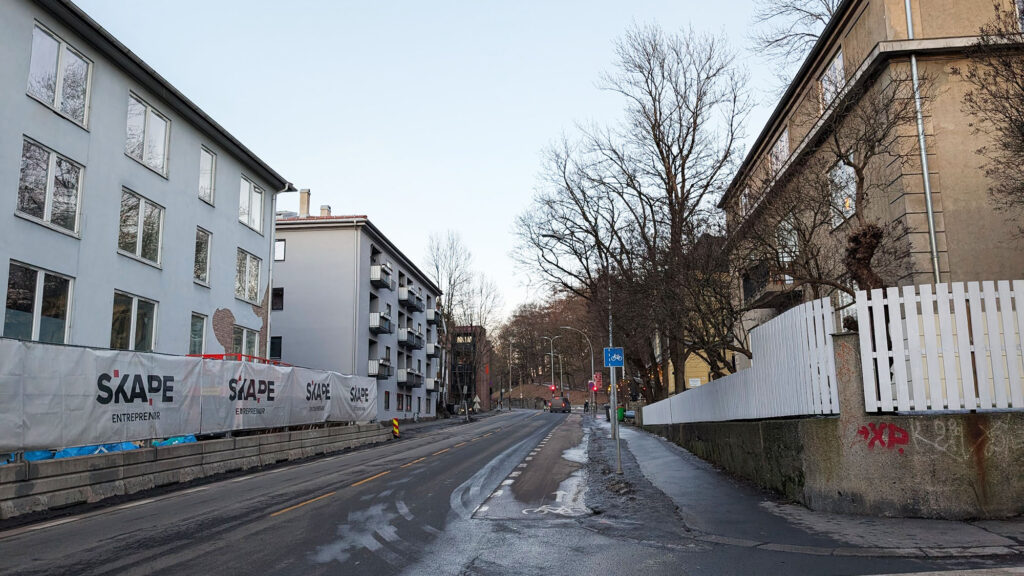
Louises gate
Louises gate appears in The Worst Person in the World (2021), where it is used in one of the film scenes. It is also the location used for the poster image
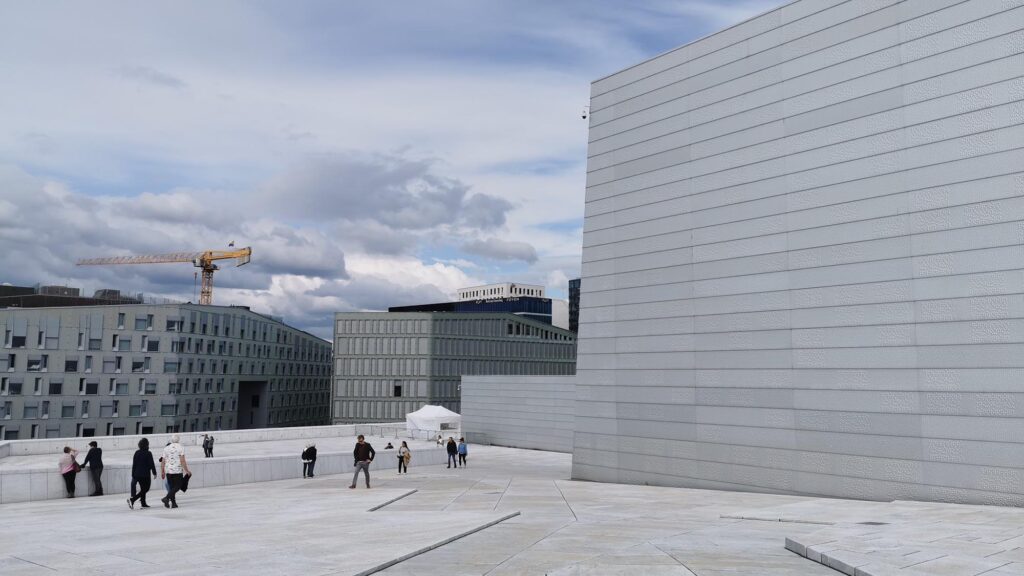
Oslo Opera House
As a screen location, the Oslo Opera House has been used in Pax (2011), 22 July, The Snowman (2017), The Worst Person in the World (2021) and Tenet (2020).
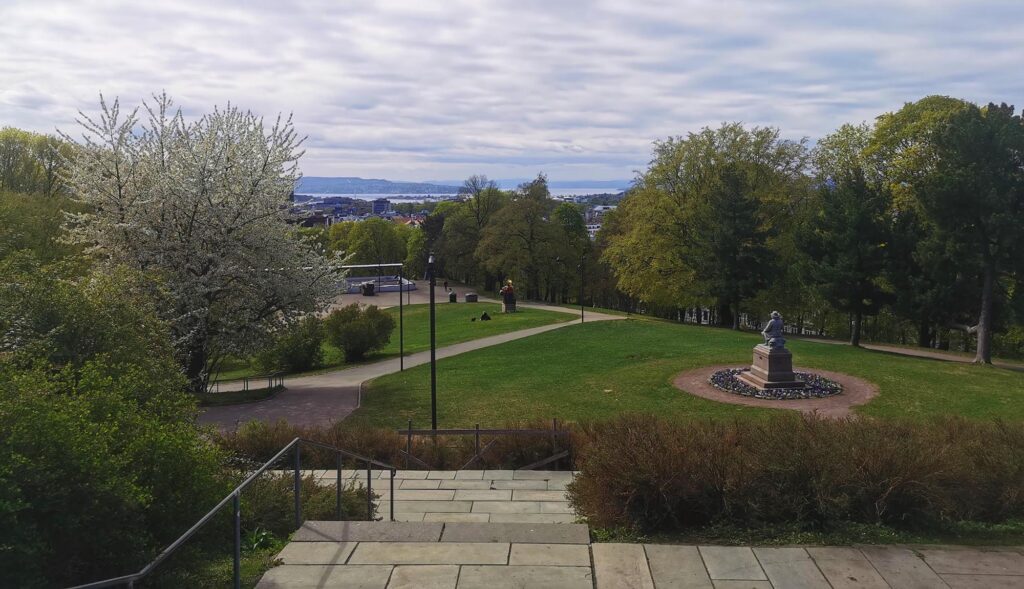
St. Hanshaugen Park
St. Hanshaugen Park is a frequent filming location for Norwegian and international productions due to its elevated views and classic landscape.
Ullevål Hospital
Ullevål Hospital has appeared in 22 July (2020) and The Worst Person in the World (2021), with both using the actual Oslo hospital for substantial sequences.
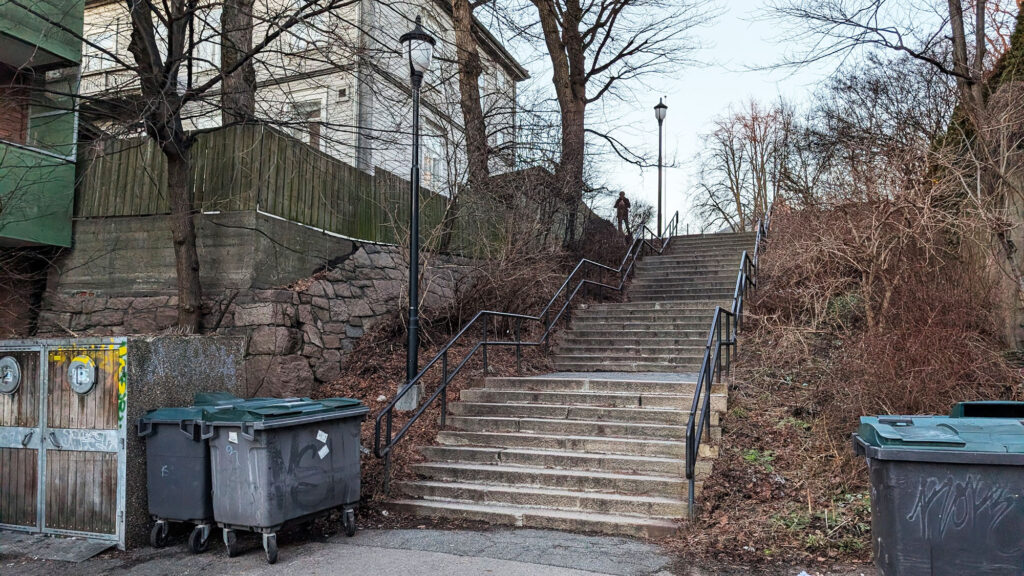
Wilhelms gate Steps
Wilhelms gate Steps appears in The Worst Person in the World (2021). The stairway is used in one of the film’s Oslo street sequences.