
Joachim Trier is a Norwegian film director and screenwriter born on 1 March 1974 in Copenhagen, Denmark. He grew up in Oslo in a family with strong connections to cinema, music and the visual arts. His Danish father, Jacob Trier, worked as a film sound engineer and jazz musician, contributing to productions including the Norwegian animated classic The Pinchcliffe Grand Prix (1975). His mother, Hilde Løchen Trier, worked in documentary filmmaking and television journalism, eventually holding a senior position at the Norwegian Broadcasting Corporation (NRK). His maternal grandfather was Erik Løchen, a filmmaker and jazz musician whose experimental films included The Chasers (1959) and Remonstrance (1972). Løchen had also been imprisoned during the German occupation of Norway for his involvement in the resistance movement. Growing up in this environment, Trier was introduced to filmmaking at an early age, sometimes accompanying his father to film sets and experimenting with Super 8 cameras long before deciding to become a director himself.
During his adolescence in Oslo, Trier developed a strong interest in skateboarding, a sport that had been banned in Norway between 1978 and 1989. He began skating around the age of twelve and became a Norwegian national champion in 1989, the year the ban was lifted. He also started making videos of his friends performing tricks, gaining practical experience with cameras, editing and the relationship between movement and images. Skateboarding took him across Oslo’s streets, squares and public spaces, giving him an unusually detailed familiarity with the city that would later become central to his filmmaking. His social circle included people involved in music and alternative culture, some of whom subsequently struggled with addiction. Trier has spoken about losing friends from this period, experiences that would eventually inform his interest in characters dealing with isolation, substance abuse and the difficulties of adulthood.
In 1993, while working as a camera assistant on a television quiz programme for NRK, Trier met Eskil Vogt, a fellow film enthusiast who was also working on the production. The two became close friends, spending much of their spare time attending screenings at the Cinemateket in Oslo, watching films on video and discussing directors, literature and screenwriting. Their shared interests developed into a professional partnership that would continue throughout Trier’s career. In 1995, Trier enrolled at the European Film College in Ebeltoft, Denmark, where he studied during the 1995–1996 academic year. Among the students he met there was Danish editor Olivier Bugge Coutté, who later edited all his feature films. Trier moved to England in 1998 to attend the National Film and Television School in Beaconsfield, Buckinghamshire, outside London. During this period, Vogt was pursuing film studies in Paris, but the two maintained contact and began collaborating on screenplays. Trier directed several short films, including Pietà (1999), Still (2001) and Procter (2002), all written with Vogt. Procter received the Terje Vigen Award at the Norwegian Short Film Festival in Grimstad in 2002, helping establish Trier’s reputation before his feature debut.
After completing his education, Trier returned to Norway and began developing Reprise (2006), his first feature film. Written with Vogt, it follows two aspiring young writers, Erik and Phillip, played by Espen Klouman Høiner and Anders Danielsen Lie, as their friendship is tested by literary ambition, relationships and mental illness. The film was shot in Oslo, using locations familiar to Trier from his own youth, including the Briskeby neighbourhood, Vigeland Park, the Huk beach area on Bygdøy and the music venue Last Train. These settings connected the story to the city’s literary and alternative cultural environments without relying on conventional representations of the Norwegian capital. Reprise premiered internationally at the Karlovy Vary International Film Festival in the Czech Republic, where Trier received the Best Director award in 2006. It subsequently won the Discovery Award at the Toronto International Film Festival and several Norwegian Amanda Awards, including Best Film and Best Director. The success of Reprise brought Trier international attention and established Anders Danielsen Lie as a recurring collaborator.
Trier’s second feature, Oslo, August 31st (2011), continued his collaboration with Vogt and Danielsen Lie while exploring a darker subject. Loosely inspired by Pierre Drieu La Rochelle’s novel Will O’ the Wisp and its earlier film adaptation by Louis Malle, the story follows a recovering drug addict who leaves a rehabilitation centre for a day in Oslo, attempting to reconnect with friends and former acquaintances. Trier filmed throughout the capital, including St. Hanshaugen, Frogner, Vigeland Park and the streets around the Royal Palace. One of the film’s central conversations takes place on a hillside at St. Hanshaugen, while other scenes use cafés, residential neighbourhoods and bars such as Robinet to show the ordinary life from which the main character feels increasingly detached. The film premiered in the Un Certain Regard section at Cannes in 2011 and received several international awards. Alongside Reprise, it established Trier’s close association with Oslo and his interest in the experiences of young adults navigating expectations, personal relationships and changing social circumstances.
Following the success of his first two features, Trier made his English-language debut with Louder Than Bombs (2015), starring Isabelle Huppert, Gabriel Byrne, Jesse Eisenberg and Devin Druid. The film concerns a family struggling to understand the death of a celebrated war photographer and the different memories left behind by her absence. Production began in New York in September 2014, with filming taking place in New York City and surrounding communities, including Bayside in Queens and Nyack in Rockland County, north of Manhattan. Trier worked with an American production crew while retaining several of his established Scandinavian collaborators, including cinematographer Jakob Ihre and editor Olivier Bugge Coutté. Louder Than Bombs was selected for the main competition at the 2015 Cannes Film Festival, becoming Trier’s first film to compete for the Palme d’Or. In 2016, Trier, Vogt and producer Thomas Robsahm received the Nordic Council Film Prize for the production, the first time a Norwegian film had won the award.
Trier returned to Norway for Thelma (2017), a supernatural psychological thriller starring Eili Harboe as a young university student whose emerging sexuality coincides with unexplained seizures and disturbing supernatural abilities. The film represented a departure from his earlier realist dramas, requiring extensive visual effects and more elaborate technical planning. Filming took place in Oslo, including the University of Oslo campus at Blindern and the Oslo Opera House in Bjørvika, where a significant sequence was staged inside the auditorium. Additional production work took place in Sweden, including the Gothenburg and Trollhättan areas, while the film’s wintry landscapes and frozen waters contributed to its supernatural storyline. Thelma was selected as Norway’s submission for the Academy Award for Best Foreign Language Film, although it did not receive a nomination. During this period, Trier also collaborated with his younger brother Emil Trier on the documentary The Other Munch (2018). The film followed Norwegian author Karl Ove Knausgård as he prepared an exhibition of works by Edvard Munch at the Munch Museum in Oslo, connecting Trier’s filmmaking to the country’s artistic history and to locations associated with the painter’s life.
Trier’s next feature, The Worst Person in the World (2021), was conceived with Renate Reinsve in mind after the actress had appeared in a small part in Oslo, August 31st a decade earlier. Reinsve played Julie, a woman approaching thirty whose relationships, ambitions and uncertain professional direction unfold over several years in Oslo. Filming took place primarily in the Norwegian capital in 2020, with locations including Ekebergrestauranten, the Barcode district in Bjørvika, St. Hanshaugen, Akershus Fortress and residential streets around the city. One of the film’s most recognisable sequences follows Julie running through Oslo while the people around her remain motionless, an elaborate scene achieved largely by having extras stand still during filming. The film premiered in competition at Cannes in 2021, where Reinsve won the award for Best Actress, becoming the first Norwegian performer to receive the honour. The Worst Person in the World subsequently received Academy Award nominations for Best International Feature Film and Best Original Screenplay, the latter shared by Trier and Vogt. Together with Reprise and Oslo, August 31st, the film became the final part of what is known as Trier’s Oslo trilogy, three independent stories connected by their urban setting, recurring collaborators and interest in the uncertainties of contemporary adulthood.
Trier’s personal life also became increasingly established in Oslo during this period. In 2019, he met Helle Bendixen, an architect and experimental theatre artist, who subsequently became his wife. The couple have two daughters and have lived in the Frogner district, close to several locations used in Trier’s films. His interest in architecture and the relationship between buildings and personal memory became particularly significant in his next feature, Sentimental Value (2025), which again brought together Trier, Vogt and Renate Reinsve. The film also starred Stellan Skarsgård, Inga Ibsdotter Lilleaas and Elle Fanning, telling the story of two sisters whose estranged father, a filmmaker, returns to their lives following the death of their mother. Its screenplay drew partly on Trier’s interest in family history, including the experiences of his grandfather Erik Løchen, whose imprisonment during the Second World War had left lasting consequences within the family. While developing the film, Trier researched his grandfather’s wartime experiences and examined archival documents concerning his arrest and imprisonment.
Sentimental Value was filmed principally in Oslo, with a historic wooden villa in Thomas Heftyes gate in Frogner serving as the central family home. The property, owned by Norwegian musician Lars Lillo-Stenberg, had previously appeared in Oslo, August 31st and was located only a short walk from Trier’s own home. After an extensive search for a suitable building, Trier chose the villa for its architecture, interior spaces and connection to the surrounding neighbourhood. The production used the real building’s exterior and first-floor rooms, while its upper floor and bedrooms were reconstructed at Gateway Studios in Drammen, where virtual production technology allowed the filmmakers to recreate changing seasons and historical periods outside the windows. Other Oslo locations included the National Theatre, Vår Frelsers Gravlund and the restaurant Lorry, with additional filming taking place in Strömstad, Sweden, and Deauville, France. The film premiered at the 2025 Cannes Film Festival, winning the Grand Prix, the festival’s second-highest award.
Sentimental Value became the most internationally decorated production of Trier’s career. At the European Film Awards in January 2026, he received the award for Best Director and shared the Best Screenwriter award with Vogt, while the film also won Best European Film and acting awards for Renate Reinsve and Stellan Skarsgård. It subsequently received nine nominations at the 98th Academy Awards, including Best Picture, Best Director and Best Original Screenplay. At the ceremony in Hollywood on 15 March 2026, Sentimental Value won the Academy Award for Best International Feature Film, becoming the first Norwegian feature film to win an Oscar. The achievement marked a significant milestone for Trier, whose career had begun with skateboarding videos on the streets of Oslo before developing through film schools in Denmark and England into an internationally recognised filmmaking career.
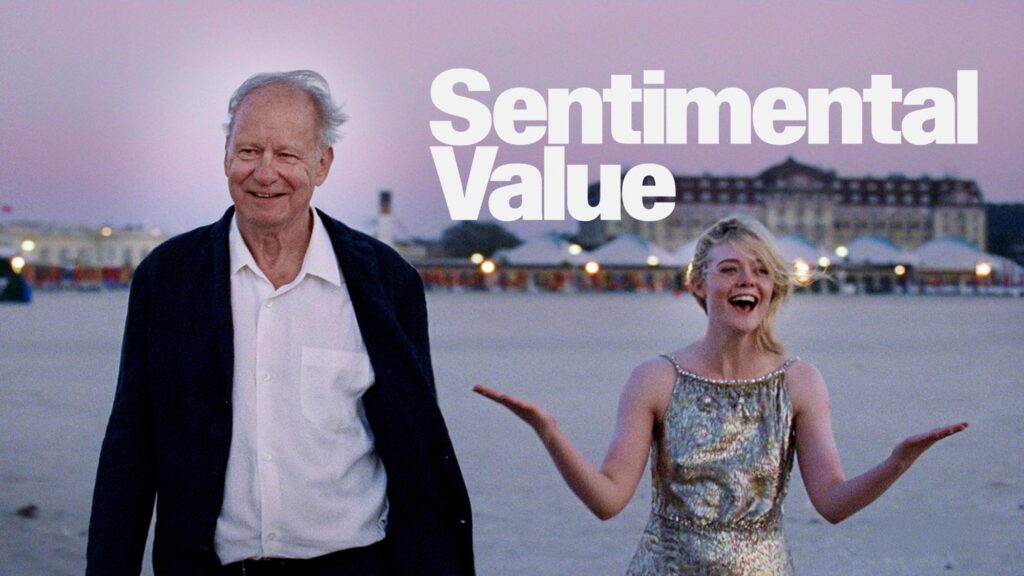
Sentimental Value
Sentimental Value was primarily filmed in Oslo, Norway, with additional scenes in Deauville, France, and Strömstad, Sweden.
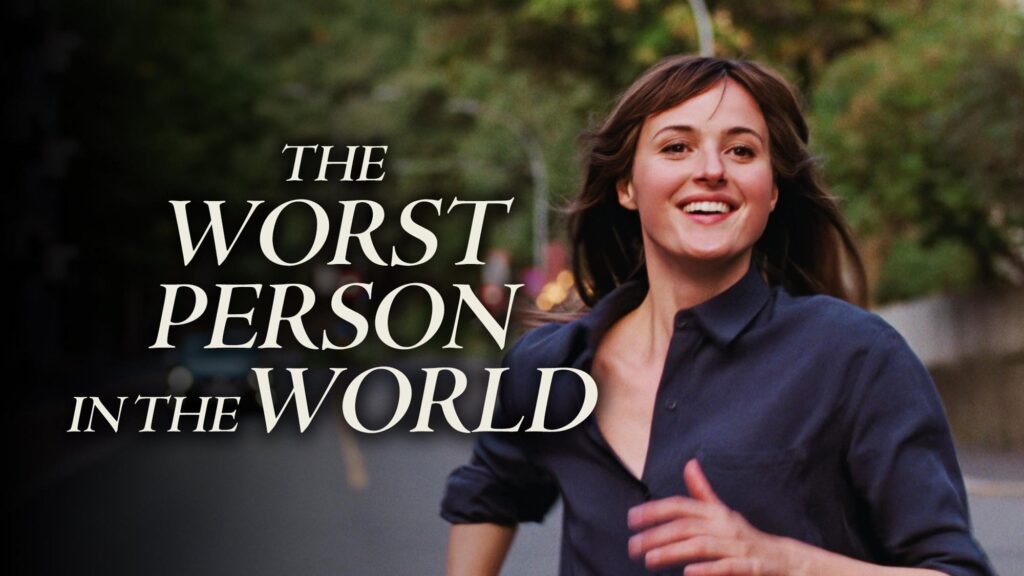
The Worst Person in the World
The Worst Person in the World was primarily filmed in Oslo, Norway, which director Joachim Trier treats as a central character in the story.