
Ullevål Hospital, known in Norwegian as Ullevål sykehus, is a major hospital complex at Kirkeveien 166 in the St. Hanshaugen district of Oslo, Norway. Established by Kristiania Municipality in 1887, it was originally designed as an epidemic hospital to accommodate patients suffering from infectious diseases at a time when the rapidly expanding city was struggling with outbreaks of diphtheria, scarlet fever and other illnesses. Planning began in 1884, with architect Adolf Schirmer responsible for the original buildings, which consisted of four detached patient pavilions, an observation building, service facilities, a mortuary and stables. The first patients were admitted in September 1887, and the hospital was already operating at full capacity only four days later. Its layout reflected contemporary medical beliefs about the importance of fresh air and isolation, with the individual buildings separated by extensive planted areas to reduce the spread of disease. A major expansion began during the 1890s under architect Victor Nordan and his colleague Ingvar Hjorth, who introduced the distinctive yellow-brick buildings with red decorative detailing that still characterise much of the historic complex. New surgical, medical, psychiatric and administrative departments followed during the early twentieth century, gradually transforming Ullevål from an epidemic institution into a general hospital. The imposing administration building with its prominent entrance tower facing Kirkeveien was completed in 1924, becoming one of the most recognisable features of the site. Further expansion continued after the Second World War, including new maternity facilities, a children’s centre, laboratory buildings and a modern emergency department. Ullevål became part of Oslo University Hospital in 2009, alongside Rikshospitalet, Radiumhospitalet and Aker Hospital. Particularly associated with emergency medicine and trauma treatment, the hospital played a central role in caring for those injured during the terrorist attacks in Oslo and on Utøya on 22 July 2011. Several of its historic buildings and parts of the surrounding grounds are protected for their considerable architectural and medical heritage value.
Ullevål Hospital has appeared in 22 July (2020), originally titled 22. juli, and The Worst Person in the World (2021), with both productions using the actual Oslo hospital for substantial dramatic sequences. In 22 July (2020), the hospital portrays itself in NRK’s dramatisation of the events surrounding the terrorist attacks of 22 July 2011, particularly through the work of the emergency and trauma departments receiving the wounded. The Worst Person in the World (2021) uses Ullevål for a very different story, providing the setting for a series of intimate encounters between Julie and her former partner Aksel after he is diagnosed with terminal pancreatic cancer. The two productions consequently show contrasting sides of the same institution, from the pressures of emergency medicine during a national catastrophe to the personal experiences of patients and their loved ones.
In 22 July (2020), the six-part Norwegian drama series created by Sara Johnsen and Pål Sletaune, Ullevål Hospital is one of the principal locations through which the events of the terrorist attacks of 22 July 2011 are portrayed. The story begins several weeks before the attacks, introducing anaesthesiologist Anne Cathrine, played by Ane Skumsvoll, who is deeply concerned about planned hospital reorganisations and budget cuts that she believes will weaken emergency preparedness. After obtaining documents suggesting that important financial calculations behind the restructuring are incorrect, she approaches Aftenposten journalist Anine, played by Alexandra Gjerpen, hoping to draw public attention to the consequences. The hospital also introduces Liban, played by Hamza Kader, a newly employed cleaner whose everyday working life becomes an important part of the series. When the bomb explodes in Oslo’s Government Quarter on 22 July, the situation at Ullevål changes dramatically as emergency personnel prepare to receive casualties. The second episode, «Oslo», depicts the hospital’s trauma team responding to the explosion while information about the incident remains confused. The situation escalates further in the third episode, «Someone Is Shooting», originally titled «Det er noen som skyter», as news arrives of a second attack on Utøya and the hospital begins receiving seriously wounded young people evacuated from the island. Anne Cathrine and her colleagues work continuously to stabilise patients, while Liban and the other support staff struggle to keep treatment areas operational as the number of casualties increases. During one sequence, Liban is instructed to concentrate on replacing the bloodstained sheets on hospital stretchers rather than cleaning the blood from the floor, demonstrating the extraordinary pressure under which the emergency department is operating. The hospital storyline continues into the aftermath of the attacks, exploring the physical and emotional consequences for patients, medical personnel and other employees. The series was based on extensive research and interviews with people who had worked during the actual events, including members of Ullevål’s trauma team. Filming was also undertaken at the real hospital, giving the fictionalised reconstruction a direct connection to one of the principal institutions involved in the emergency response.
In The Worst Person in the World (2021), originally titled Verdens verste menneske and directed by Joachim Trier, Ullevål Hospital provides the setting for several of the film’s most important scenes during its final act. After ending her relationship with comic-book artist Aksel Willmann, played by Anders Danielsen Lie, Julie, played by Renate Reinsve, has begun a new life with Eivind, played by Herbert Nordrum. Some time later, she learns through a mutual acquaintance that Aksel has been diagnosed with incurable pancreatic cancer. Julie visits him at Ullevål, where they gradually reconnect despite the circumstances surrounding their separation. When she arrives at his hospital room, Aksel is listening to music through headphones and enthusiastically playing imaginary drums along to Turbonegro’s «Back to Dungaree High», briefly demonstrating that his characteristic humour and enthusiasm have survived his illness. The two subsequently spend time together in the hospital cafeteria and outside in the grounds, where a long conversation takes place at a picnic table between the trees. Aksel speaks about his youth in Oslo and the disappearance of the cultural world in which he grew up, recalling visits to record shops, comic-book stores and video rental shops such as Voices at Grünerløkka and Video Nova in Majorstuen. He explains how collecting physical objects and accumulating knowledge about music, films and comics gradually became central to his identity, and how his approaching death has transformed those interests into memories of a world that no longer exists. Julie attempts to reassure him that his life and artistic achievements still have value, but Aksel admits that his preoccupation with the past is largely driven by his fear of dying. During their conversation, Julie reveals that she is pregnant with Eivind’s child and remains deeply uncertain about becoming a mother. Aksel, who had previously wanted children with her, assures Julie that he never doubted her ability to be a good parent and expresses regret that he failed to make her appreciate her own qualities while they were together. He also acknowledges that Julie was the most important romantic relationship of his life. The hospital scenes are followed by further encounters between the two as Aksel’s condition deteriorates, including a visit to places associated with his childhood. Shortly afterwards, Julie receives a telephone message from Aksel’s brother informing her that his condition has suddenly worsened and that he may not survive the night. The scenes filmed at Ullevål therefore provide the central setting for the reconciliation between the former couple, with the hospital room, cafeteria and outdoor grounds used for the conversations that bring their shared history to a conclusion.

The Worst Person in the World
The Worst Person in the World was primarily filmed in Oslo, Norway, which director Joachim Trier treats as a central character in the story.
Idioten
Idioten appears in Oslo, August 31st (2011). The park is used for one of the film’s most important conversations, in which Anders meets his old friend Thomas.

Sagene Church
Sagene Church has appeared in Skam (2015–2017), the Norwegian television drama created by Julie Andem for NRK.
Havens Kolonial
In Max Manus, Havens Kolonial is used for the Plasskafeen. Gregers Gram and Edvard Tallaksen are seen coming from Hertzbergs gate before entering the café.

Hjemmets Kolonihager
Hjemmets Kolonihager is an allotment garden on Bjølsen in the Sagene borough of Oslo, Norway, situated between Bjølsenparken, Stavangergata, Kongsvingergata and Sarpsborggata.…
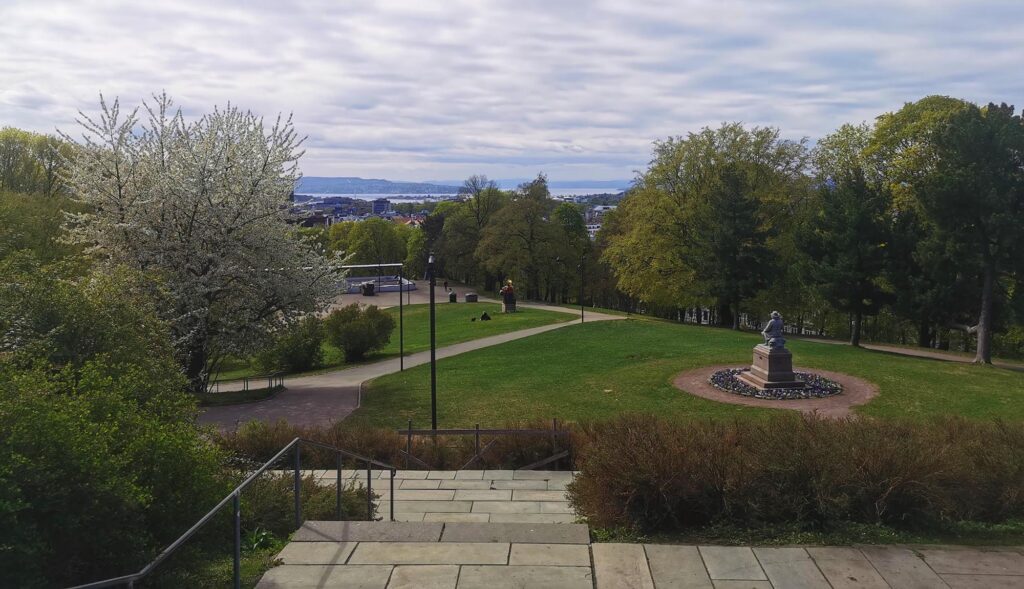
St. Hanshaugen Park
St. Hanshaugen Park is a frequent filming location for Norwegian and international productions due to its elevated views and classic landscape.
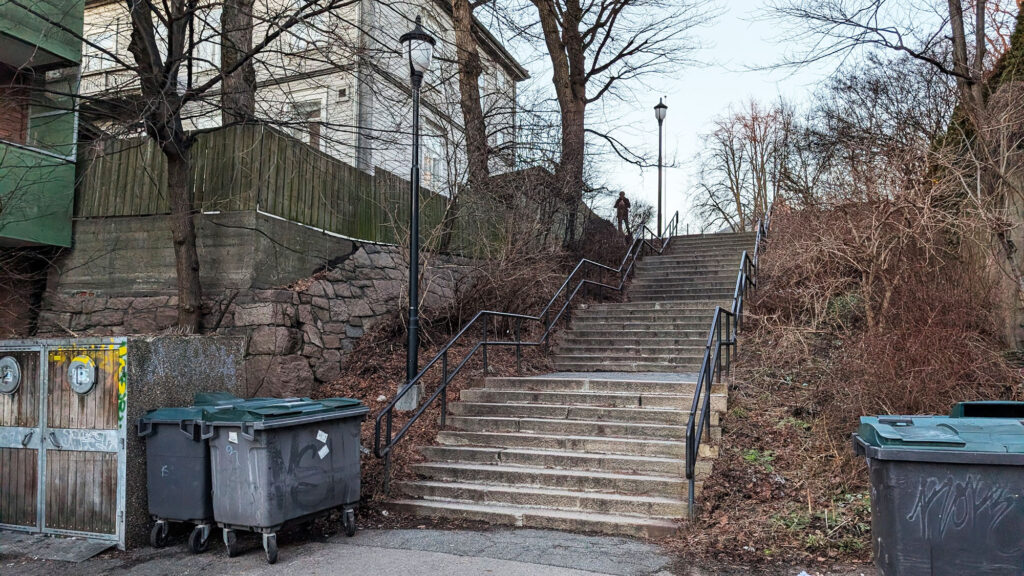
Wilhelms gate Steps
Wilhelms gate Steps appears in The Worst Person in the World (2021). The stairway is used in one of the film’s Oslo street sequences.
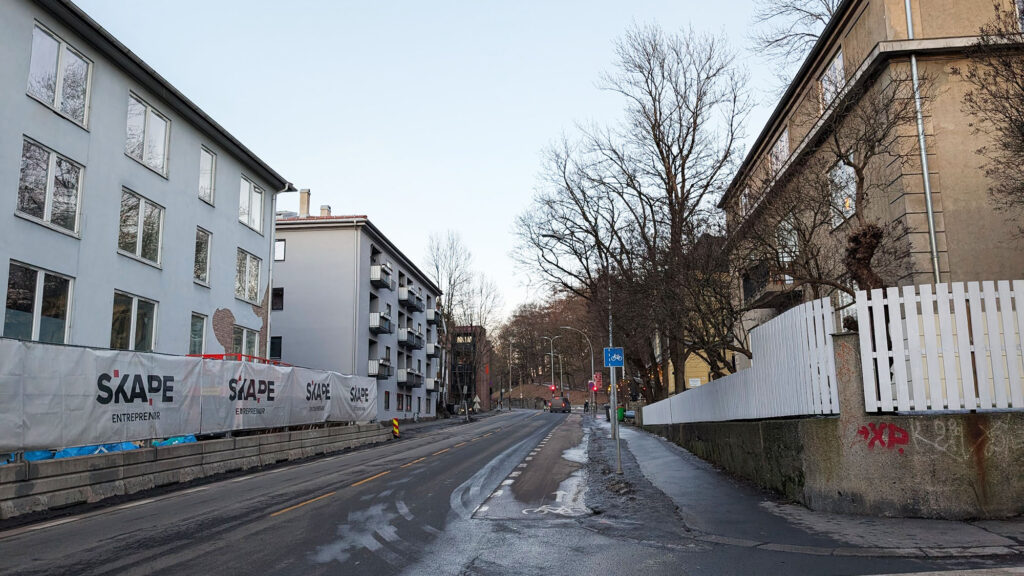
Louises gate
Louises gate appears in The Worst Person in the World (2021), where it is used in one of the film scenes. It is also the location used for the poster image
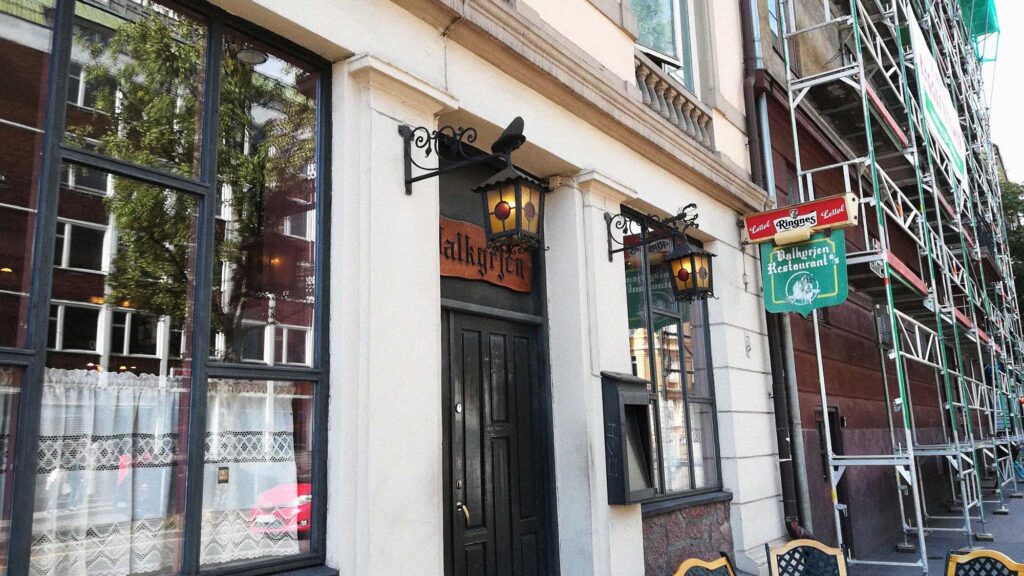
Valkyrien Restaurant
Valkyrien Restaurant has appeared in Elling (2001) and O’ Horten (2007). In both films, its old-fashioned interior is used as a familiar Oslo restaurant.
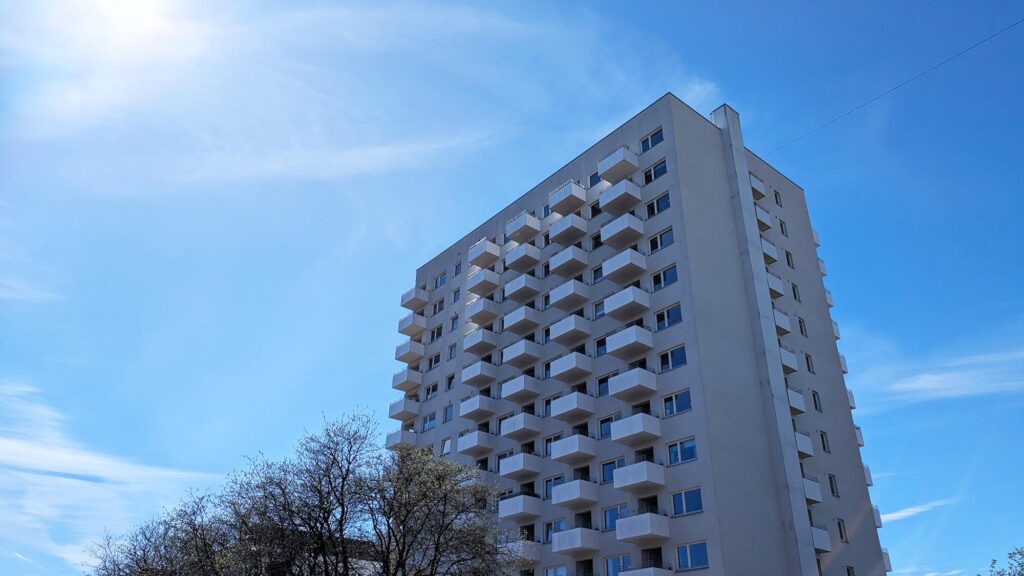
Fossheim Borettslag
Fossheim Borettslag at Thorvald Meyers gate 5 appears in Jo Nesbø’s Detective Hole (2026), where the building is used as Harry Hole’s apartment block.