
Hjemmets Kolonihager is an allotment garden on Bjølsen in the Sagene borough of Oslo, Norway, situated between Bjølsenparken, Stavangergata, Kongsvingergata and Sarpsborggata. The garden was established in 1912 on land belonging to Bjølsen farm after an initiative by Ole Sundø, director of the Norwegian weekly magazine Hjemmet. The magazine initially financed the development of the site, which opened with 150 allotments and was later expanded to 174 before street development during the 1920s reduced its size. The land passed into municipal ownership in 1920, and the garden today contains 109 allotments with individually owned cottages connected by a network of small internal roads and paths. Among them is the cottage known throughout Norway as Portveien 2, preserved from its use in one of NRK’s best-known children’s television programmes of the 1980s.
Hjemmets Kolonihager appeared extensively in Portveien 2 (1985–1987). A cottage and its surrounding garden were used for the exterior of the fictional home shared by the programme’s presenters, while the paths and greenery around it created the impression that Portveien 2 was a genuine residential address. Although viewers repeatedly saw the cottage from outside, the familiar rooms inside the house were not filmed there and were instead constructed at NRK’s studios.
In Portveien 2 (1985–1987), Hjemmets Kolonihager provides the exterior of the small house where Eli, played by Eli Rygg, initially lives with Jarl, played by Jarl Goli, and later with Terje, played by Terje Strømdahl. The cottage and garden recur throughout the series as the characters arrive, leave, work outdoors and experience the changing seasons, while the surrounding paths help establish Portveien 2 as an apparently real place. The outdoor material was deliberately filmed throughout the year so that the programme reflected the same seasonal changes experienced by its young viewers. Only the exterior was genuine: scenes inside the house, including the kitchen and living room where much of the programme took place and where the unseen residents frequently narrowly missed discovering the mischievous giraffe Raffen, were filmed on a studio set at NRK. Portveien 2 was not an ordinary Oslo street address created for the series, but the cottage itself remains in Hjemmets Kolonihager and has become so closely associated with the programme that it is still known as Portveien 2.
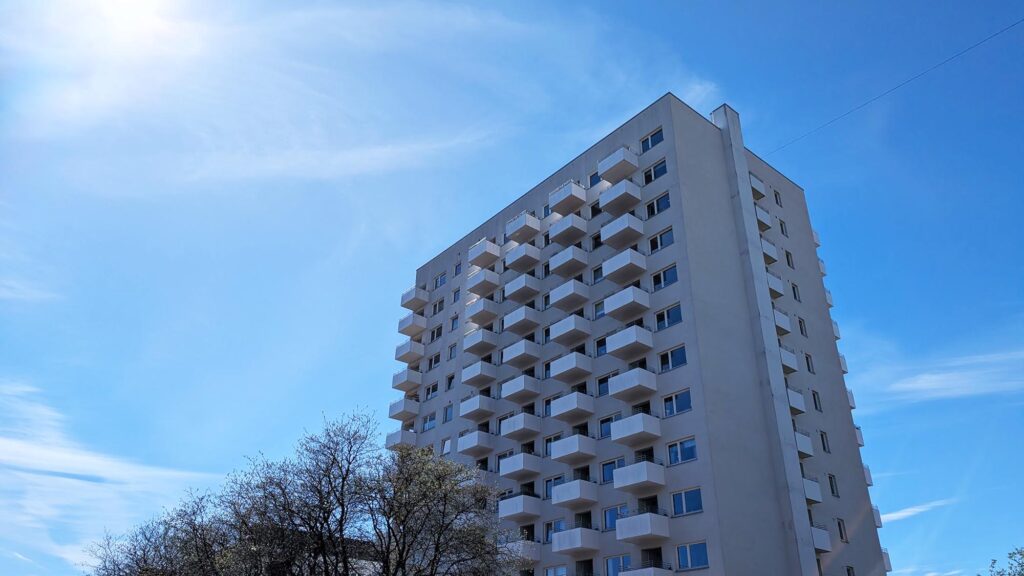
Fossheim Borettslag
Fossheim Borettslag at Thorvald Meyers gate 5 appears in Jo Nesbø’s Detective Hole (2026), where the building is used as Harry Hole’s apartment block.
Idioten
Idioten appears in Oslo, August 31st (2011). The park is used for one of the film’s most important conversations, in which Anders meets his old friend Thomas.
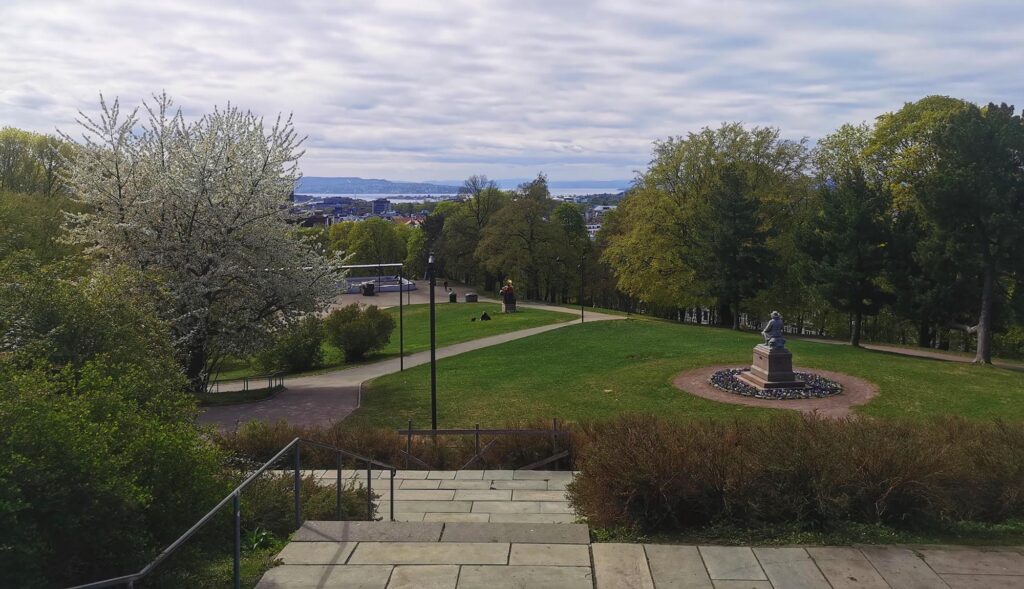
St. Hanshaugen Park
St. Hanshaugen Park is a frequent filming location for Norwegian and international productions due to its elevated views and classic landscape.
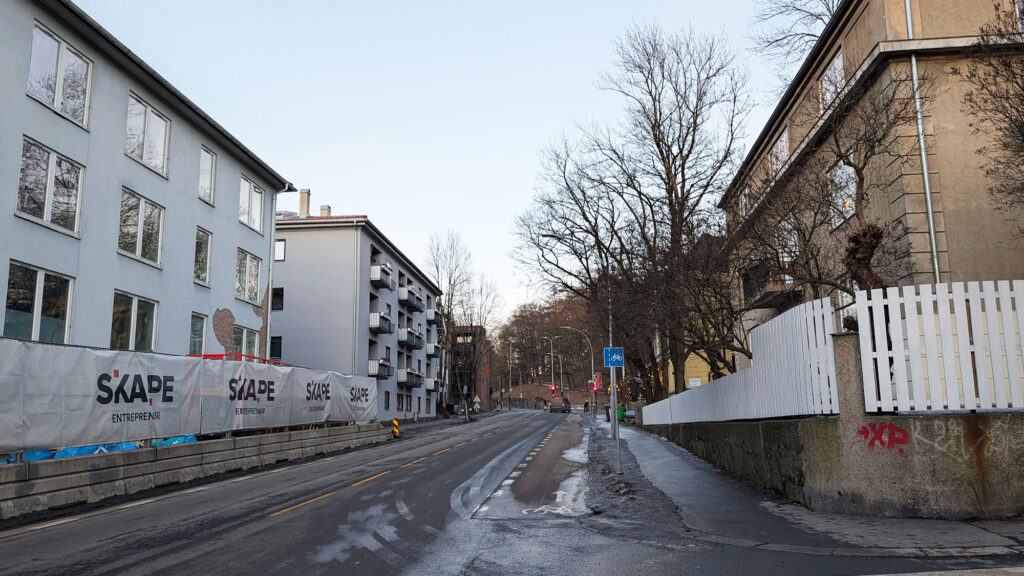
Louises gate
Louises gate appears in The Worst Person in the World (2021), where it is used in one of the film scenes. It is also the location used for the poster image
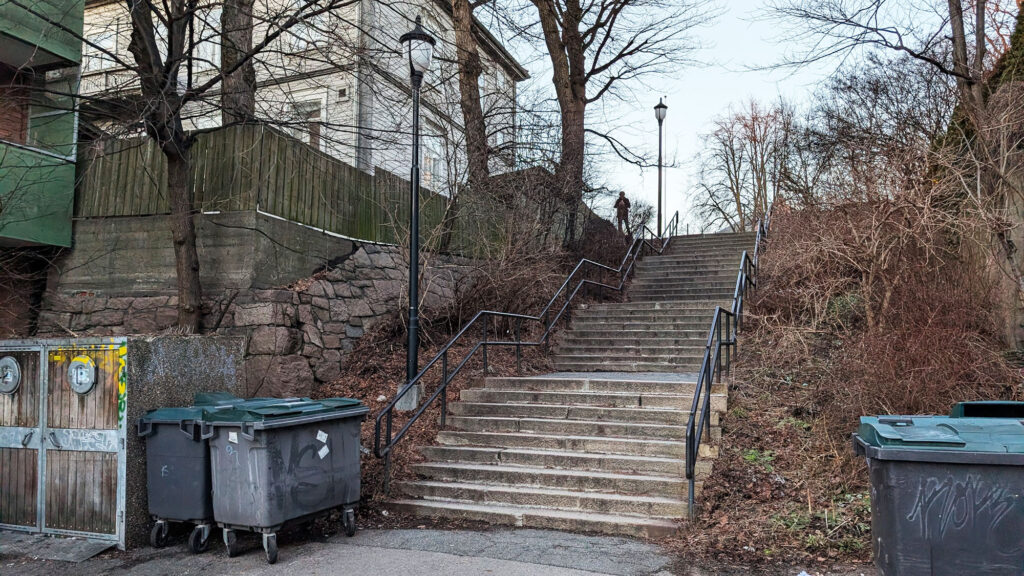
Wilhelms gate Steps
Wilhelms gate Steps appears in The Worst Person in the World (2021). The stairway is used in one of the film’s Oslo street sequences.
Havens Kolonial
In Max Manus, Havens Kolonial is used for the Plasskafeen. Gregers Gram and Edvard Tallaksen are seen coming from Hertzbergs gate before entering the café.
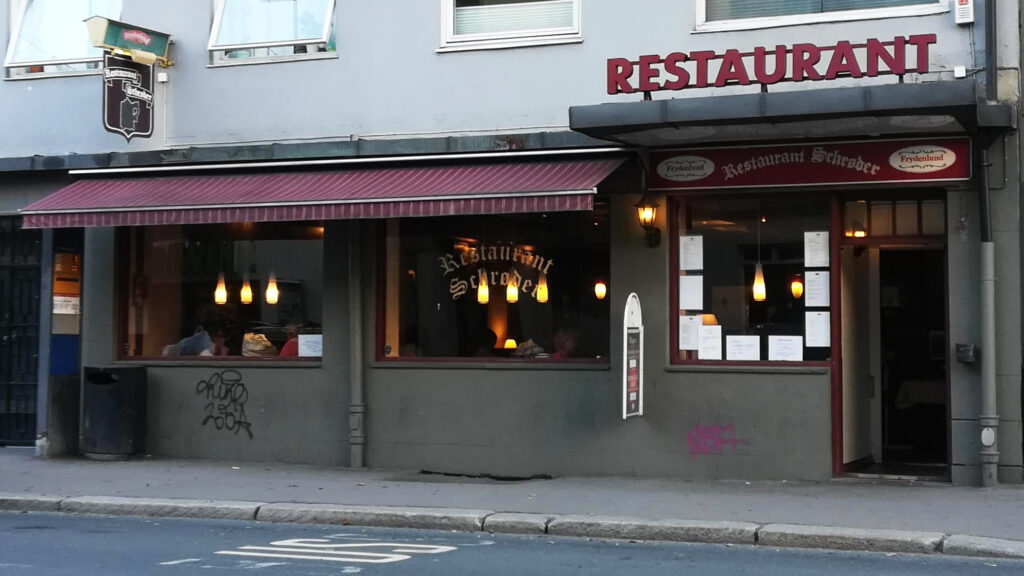
Restaurant Schrøder
Restaurant Schrøder appears in Jo Nesbø’s Detective Hole (2026) and The Snowman (2017). In both productions, the restaurant is used in by Harry Hole.
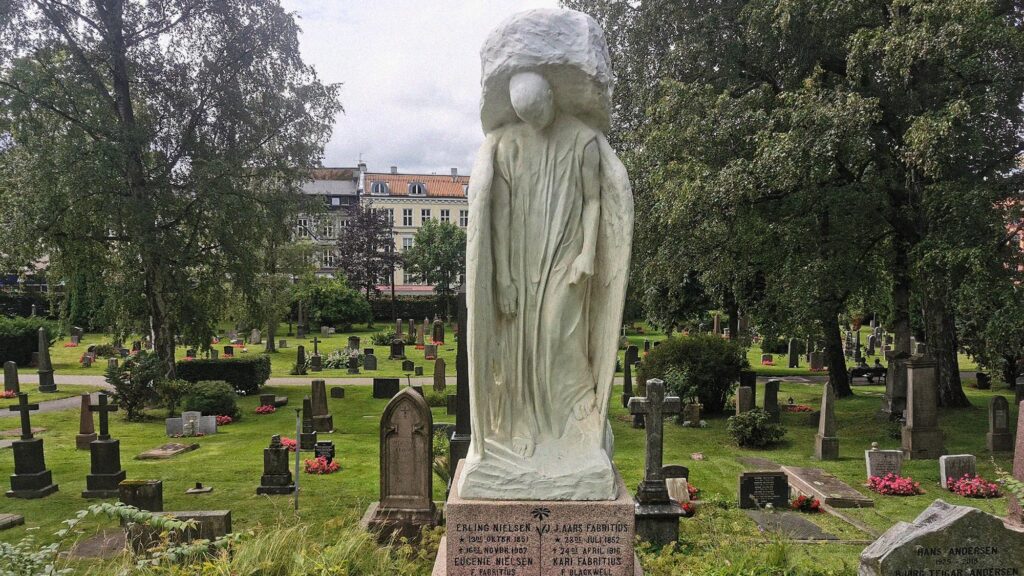
Cemetery of Our Saviour
Cemetery of Our Saviour appears in Sentimental Value, where it is used as a recognisable Oslo location.
Blå
Blå, a famous nightclub and venue in Oslo, has appeared in Elling (2001), Oslo, August 31st (2011) and Jo Nesbø’s Detective Hole (2026).