
Inferno (2016) is an American mystery thriller directed by Ron Howard and written by David Koepp, based on Dan Brown’s 2013 novel of the same name. Tom Hanks returns as Robert Langdon, the Harvard professor of symbology previously seen in The Da Vinci Code (2006) and Angels & Demons (2009). After waking in a Florence hospital with a head injury and no memory of the previous two days, Langdon discovers that he is being pursued by people apparently determined to kill him. With the help of British doctor Sienna Brooks, played by Felicity Jones, he begins investigating a series of clues connected to Dante Alighieri’s Divine Comedy and a biological weapon developed by scientist Bertrand Zobrist, portrayed by Ben Foster. The cast also includes Irrfan Khan as Harry Sims, Sidse Babett Knudsen as World Health Organization director Elizabeth Sinskey, Omar Sy as Christoph Bouchard and Ana Ularu as the assassin Vayentha. The story moves between Florence, Venice and Istanbul, combining Renaissance art, medieval architecture and historical mysteries with a modern conspiracy involving biological warfare and human population growth.
Inferno was filmed in Italy, Hungary and Turkey between 27 April and 21 July 2015. Although its story moves through some of Europe’s most recognisable historical cities, much of the production was based in Budapest, where Origo Studios and Korda Studios provided the principal studio facilities. Florence and Venice supplied numerous authentic exterior and interior locations, while Istanbul was used for additional scenes connected to the film’s climax. The filmmakers frequently combined these actual landmarks with Hungarian buildings and elaborate studio reconstructions, sometimes using different locations for the exterior and interior of the same fictional space. Cinematographer Salvatore Totino later explained that the production deliberately relied on genuine locations wherever practical, partly because its budget did not permit the extensive digital reconstruction associated with the earlier Robert Langdon films. The resulting combination of real architecture and carefully constructed substitutes is particularly noticeable in the sequences at Palazzo Vecchio, St. Mark’s Basilica and the Basilica Cistern.
The film opens with a pursuit through the historic centre of Florence. Bertrand Zobrist flees from a group of armed men through the narrow streets before reaching the bell tower of the Badia Fiorentina, the historic abbey church of Santa Maria Assunta on Via del Proconsolo. Trapped at the top, he chooses to jump to his death rather than allow his pursuers to capture him. The church’s distinctive hexagonal bell tower, rising approximately 70 metres above the surrounding buildings, is an important feature of Florence’s medieval skyline. It also has a literary connection to Dante, who mentioned the abbey in the Divine Comedy and grew up in the surrounding neighbourhood. The production used the real building for the exterior setting while relying on specially prepared stunt and visual-effects material to complete the fall. Before filming, Howard shared photographs of small-scale models of the tower that had been prepared for planning the sequence.
Florence becomes the principal setting when Langdon wakes in a hospital and discovers that he has no memory of arriving in the city. After escaping with Sienna, he begins examining a strange object that projects a modified version of Sandro Botticelli’s Map of Hell, a famous illustration inspired by Dante’s Inferno. The image contains a series of alterations that point towards a hidden message. The investigation quickly takes the characters from Sienna’s apartment into the streets of Florence, where they are pursued by armed agents and surveillance equipment. The filmmakers used locations around the historic centre, including streets near Ponte Vecchio and the Arno River, together with additional material filmed in Budapest.
One of the first major locations in the pursuit is Porta Romana, the medieval gateway at the southern entrance to Florence’s historic centre. Built in the fourteenth century, it once formed part of the city’s defensive walls and remains an important junction between the old town and the roads leading into the surrounding hills. In the film, Langdon and Sienna approach the gate by car but discover that the authorities have established a security checkpoint. Unable to continue towards their intended destination, they abandon their vehicle and look for another way into the city. The sequence was filmed around the actual gateway and the nearby streets, including Viale del Poggio Imperiale. The surrounding walls and narrow entrances provide a convincing obstacle for the characters, who are trying to reach Palazzo Vecchio without being intercepted.
Their escape takes them past the historic Istituto d’Arte, where they climb into the adjoining Boboli Gardens. Situated behind Palazzo Pitti, the gardens were developed during the sixteenth century for the Medici family and subsequently expanded into one of Italy’s most important examples of formal landscape design. The production used several areas of the extensive grounds, including the broad avenues, wooded paths and formal garden spaces. Langdon and Sienna run through the gardens while a surveillance drone searches for them from above, forcing them to take cover among the trees and historic structures.
The Boboli Gardens sequence includes several recognisable features, such as the tree-lined avenues, the Isolotto and the Grotta del Buontalenti. The latter is a highly decorated artificial grotto created during the late sixteenth century, with an unusual façade incorporating sculptural figures and naturalistic decorative elements. The characters eventually reach a small doorway close to the grotto, which provides access to the next stage of their escape. The filmmakers were permitted to use selected sections of the real gardens while other areas remained accessible to visitors. The arrangement required carefully coordinated filming because the production was working inside a protected historic landscape rather than an ordinary public park.
The escape continues through the Vasari Corridor, one of Florence’s most unusual architectural features. Constructed in 1565 for Cosimo I de’ Medici, the elevated passage connects Palazzo Pitti with Palazzo Vecchio, passing through the Uffizi complex and crossing the Arno above Ponte Vecchio. It was designed to allow members of the ruling family to move between their residence and government offices without travelling through the crowded streets. In Inferno, Langdon uses his knowledge of Florence’s history to lead Sienna into the passage while their pursuers search the surrounding area. The corridor provides the characters with a concealed route across the city, although the film exaggerates the ease with which its various entrances and passages can be accessed.
The production filmed inside the actual Vasari Corridor and around the adjoining Uffizi Gallery, using the historic passage and its views over the Arno as part of the pursuit. The elevated walkway also creates a visual connection between several major Florentine landmarks that might otherwise appear unrelated. Below the corridor, Ponte Vecchio can be seen crossing the river, its distinctive shops extending over the sides of the bridge. The bridge dates largely from the fourteenth century and has long been associated with Florence’s goldsmiths and jewellers. Additional action footage was filmed around the bridge and neighbouring streets, including second-unit work involving stunt performers near the river.
The pursuit eventually brings Langdon and Sienna to Palazzo Vecchio, the monumental medieval palace overlooking Piazza della Signoria. Constructed beginning in 1299, the building served as the seat of government of the Florentine Republic and later became associated with the Medici rulers. Its imposing exterior, Arnolfo Tower and richly decorated interiors play a central role in the film’s investigation. The production obtained permission to film inside the actual palace, including the Salone dei Cinquecento, one of the largest and most impressive historic halls in Florence. Access was especially significant because the building remains both a museum and the seat of Florence’s municipal government.
The Salone dei Cinquecento provides the setting for one of Langdon’s most important discoveries. He examines Giorgio Vasari’s vast fresco The Battle of Marciano in the Chiana Valley, painted during the sixteenth century, and draws attention to the tiny inscription “Cerca trova”, meaning “Seek and find”, hidden within the composition. The inscription is a genuine feature of the painting, although its significance in the film belongs to Dan Brown’s fictional mystery. Langdon believes the words contain a clue to the location of Dante’s death mask, which has become central to the investigation. The scene makes extensive use of the hall’s real decoration, monumental paintings and sculptures, including the enormous architectural space surrounding the characters.
Filming inside Palazzo Vecchio required considerable cooperation from the Florentine authorities. The museum was temporarily closed to visitors during part of the production, with the filmmakers paying compensation for the resulting loss of admission revenue. Contemporary reports placed the payment at approximately €250,000. The filming also involved large numbers of crew members and background performers, while security and conservation restrictions limited the movement of equipment through the historic rooms. Florence’s mayor, Dario Nardella, even made a brief cameo appearance in the Salone dei Cinquecento, visible among the people behind the principal characters.
Not every scene supposedly taking place inside Palazzo Vecchio was filmed in the original building. The sequence in which Langdon and Sienna discover that Dante’s death mask has disappeared, then examine security recordings to determine who removed it, was filmed at the Museum of Ethnography in Budapest. The historic museum building, which at the time occupied the former Palace of Justice opposite the Hungarian Parliament, provided interiors that could stand in for the Florentine palace. By combining footage from the real Salone dei Cinquecento with these Hungarian rooms, the filmmakers created a continuous sequence inside a building that was actually represented by more than one location.
The mystery leads the characters further into Palazzo Vecchio, particularly the Sala delle Carte Geografiche, or Hall of Geographical Maps. This room contains an extraordinary collection of sixteenth-century geographical paintings mounted on wooden cabinets, representing the known world during the Medici period. In the film, Langdon identifies a concealed entrance behind one of the maps and uses it to escape with Sienna. They eventually reach the enormous space above the ceiling of the Salone dei Cinquecento, where a confrontation develops among the wooden structural beams supporting the historic hall below. The sequence incorporates genuine architectural features and studio reconstruction, with the more dangerous action requiring specially constructed environments rather than unrestricted access to the historic roof structure.
After escaping the palace, Langdon and Sienna reach the Baptistery of Saint John in Piazza del Duomo. Standing opposite Florence Cathedral, the octagonal building is one of the city’s oldest surviving religious monuments, with much of its present structure dating from the eleventh and twelfth centuries. Its lavish interior mosaics, marble decoration and bronze doors are central to the film’s investigation. Langdon recognises a clue connected to Lorenzo Ghiberti’s celebrated Gates of Paradise, the gilded bronze doors on the baptistery’s eastern side. The real doors are now preserved in the nearby Museo dell’Opera del Duomo, with replicas displayed at the baptistery itself. The film uses the historic building and its decoration as an important stage in the search, ultimately leading the characters towards Venice.
The Baptistery also provides a further connection to Dante. The poet was baptised there, and he refers to the building affectionately in the Divine Comedy. Its appearance in Inferno therefore has a closer relationship to the historical figure than many of the other monuments used in the story. The production filmed at the actual baptistery, with its bronze doors, monumental octagonal form and elaborate interior helping to establish the connection between the clues. As elsewhere in Florence, the filmmakers worked around restrictions intended to protect the historic building and its artworks.
The action subsequently moves to Venice, where Langdon attempts to continue following the trail of clues. Principal photography for Inferno actually began in Venice on 27 April 2015, before the production moved to Florence. Filming took place around Piazza San Marco, St. Mark’s Basilica and the canals, with additional material photographed from boats travelling through the city. The famous square, surrounded by historic arcades and dominated by the basilica and its bell tower, provides a major setting for the characters’ arrival. St. Mark’s Basilica, with its Byzantine architecture, golden mosaics and elaborate sculptural decoration, becomes the next important location in the search.
The film’s Venetian mystery is connected to Enrico Dandolo, the blind Doge of Venice who played a major role in the Fourth Crusade and died in Constantinople in 1205. Langdon initially believes the clues are pointing towards Venice because of its historical association with the doge. The characters investigate St. Mark’s Basilica and its underground spaces, where further evidence suggests that their understanding of the mystery has been incomplete. Although the production filmed at the actual basilica, including its exterior and balcony, the crypt sequences were recreated in Hungary. This allowed the filmmakers to stage the pursuit and dangerous action without working inside the protected underground chambers of the historic church.
Additional escape scenes around the Doge’s Palace were filmed in Venice itself, with the palace’s monumental façades and nearby passageways providing the setting for the pursuit. The production used temporary structures to conceal equipment and create the impression that the characters were entering subterranean areas connected to the historic buildings. As in Florence, the film joins actual exterior locations to interiors filmed elsewhere, making the movement through Venice appear more continuous than it was during production.
One of the more unusual production decisions concerned the train journey between Florence and Venice. Rather than constructing an elaborate train interior on a soundstage, cinematographer Salvatore Totino suggested using a real passenger train. The actors rehearsed the scene during the journey between the two cities, allowing the crew to plan camera positions and work out the available lighting. The scene was then photographed aboard the moving train, largely using natural light supplemented by portable LED fixtures. Totino later explained that this approach avoided the expense of building railway carriages and creating moving backgrounds digitally. It also gave the footage the natural movement and shifting light of a genuine train journey.
The film briefly represents Padua railway station during the characters’ journey, although the station was not photographed at the real location. When an early trailer was released, residents of Padua noticed that a sign reading “Padova Centrale” did not correspond to anything at the actual station. The surrounding platform layout was also incorrect. Local reporting subsequently identified the sequence as a reconstruction rather than footage shot at Padua. It is a small but revealing example of the film’s willingness to create convincing European transport locations using sets and digital alterations rather than travelling to every place mentioned in the story.
The investigation eventually leads to Istanbul, where the final clues point towards the city’s Byzantine heritage. The production filmed around several actual Istanbul landmarks, including Hagia Sophia, the Grand Bazaar, Beyazıt Square, the main entrance to Istanbul University and the streets near Eminönü. Further footage was photographed along Kennedy Avenue and the waterfront. These locations provide the city with a geographical identity beyond the famous monuments alone, connecting the historical buildings to its commercial streets and transport routes.
Hagia Sophia is particularly important because of its association with Constantinople and Enrico Dandolo. Originally constructed as a Byzantine cathedral during the reign of Emperor Justinian I and completed in 537, it later became an Ottoman mosque and was operating as a museum when Inferno was filmed in 2015. Its enormous central dome, marble columns and monumental interior provide the setting for Langdon’s investigation of Dandolo’s burial place. The historical doge is commemorated by a tomb marker inside the building, although the film uses this genuine association as part of a fictional puzzle. The filmmakers photographed material at the real monument but also recreated parts of its interior in Budapest, enabling them to control lighting, camera movement and action more precisely.
The climax takes place beneath Istanbul in the Basilica Cistern, known in Turkish as Yerebatan Sarnıcı. Built during the sixth century under Emperor Justinian I, the immense underground reservoir contains 336 marble columns arranged in twelve rows, supporting a vaulted ceiling above a vast body of water. Originally constructed to supply water to the Great Palace and surrounding buildings, the cistern later became one of Istanbul’s most unusual historical attractions. Its low lighting, flooded floor and forest of columns make it an atmospheric setting for the film’s final confrontation.
In Inferno, the cistern becomes the hiding place for Zobrist’s biological weapon, which has been suspended underwater in a sealed container. Langdon and the World Health Organization team arrive as a concert is taking place above the water, leaving them with little time to locate the device before Zobrist’s followers attempt to release its contents. The sequence develops into a confrontation involving divers, armed security personnel and an underwater explosion, with the characters desperately attempting to prevent the weapon from contaminating the surroundings.
Although the film clearly establishes the Basilica Cistern as the location, most of this climactic action was not filmed inside the actual monument. The production constructed an enormous replica at Korda Studios in Etyek, outside Budapest, using the studio’s water-tank facilities. Approximately one-third of the cistern was recreated physically, complete with columns, arches, raised walkways and a large volume of water. The remaining sections were extended digitally, allowing the finished shots to suggest a much larger underground reservoir.
The replica was particularly demanding to photograph because the real Basilica Cistern has an unusual lighting arrangement. Totino and his crew recreated the decorative fixtures seen inside the historic monument, incorporating modern LED technology that allowed their brightness to be controlled during filming. Blue-screen sections surrounding the set made it possible to extend the rows of columns digitally, while the water tank provided the controlled environment required for the underwater action. The filmmakers could stage explosions, diving sequences and large movements of actors and equipment without placing the original sixth-century structure at risk. The result is one of the film’s most elaborate examples of a real historical location being recreated on a soundstage.
Budapest played a far greater role in Inferno than merely providing the final cistern set. Origo Studios served as the principal production headquarters, housing the art department, costume facilities, special-effects workshops and several large interior sets. Production designer Peter Denham supervised the construction of environments that could not practically be filmed in the actual historic buildings. The Museum of Ethnography doubled for parts of Palazzo Vecchio, while the Hungarian National Museum was used for scenes representing Harvard University. The production also worked at the Hungarian State Opera House and several other locations around the city, using both prestigious historic buildings and ordinary residential neighbourhoods.
According to supervising location manager Sam Hutchins, the work in Hungary was divided fairly evenly between soundstage construction and location filming. Budapest offered the production considerably more control than the crowded historic centres of Florence and Venice. The Italian filming was concentrated on distinctive landmarks that would have been difficult to reproduce convincingly elsewhere, while less recognisable streets and interiors could be created or photographed in Hungary. Howard later explained that gaining access to important Florentine monuments often meant having only a few hours to complete a scene. Extensive preparation, detailed shot lists and careful coordination with local authorities were therefore essential.
The film was completed in July 2015 and released internationally in October 2016. Although its story is structured around a series of elaborate historical puzzles, its production was equally dependent on the practical problem of combining locations across different countries. The opening tower belongs to Florence’s Badia Fiorentina, the chase through the Boboli Gardens and Vasari Corridor uses real Medici architecture, and Palazzo Vecchio is represented partly by its actual historic rooms and partly by buildings in Budapest. Venice supplies the real St. Mark’s Square and basilica, while a reconstructed crypt provides the underground action. Istanbul contributes Hagia Sophia and its historic streets, but the enormous Basilica Cistern finale was created inside a Hungarian studio.
These combinations are central to the appearance of Inferno. The film repeatedly moves between genuine historic locations and spaces constructed to reproduce them, allowing its fictional investigation to pass through buildings that were never physically connected during filming. It also records several remarkable European monuments as they appeared during 2015, including areas of Florence, Venice and Istanbul where large-scale film production required unusual access and extensive cooperation from cultural authorities. Rather than using the cities only as backgrounds, Inferno makes their architecture, artworks and historical associations essential parts of its mystery.
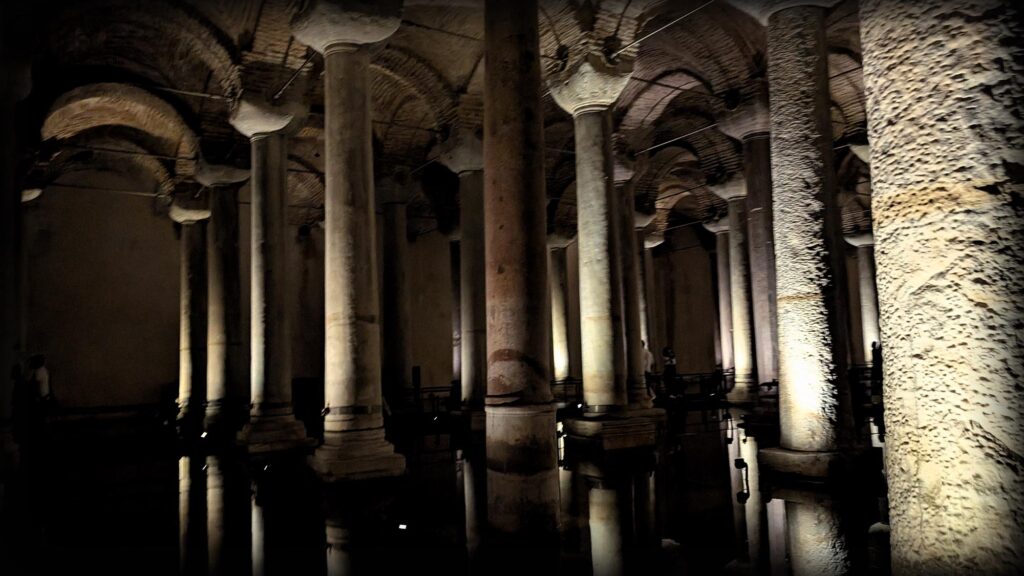
Basilica Cistern
Basilica Cistern has appeared in From Russia with Love, The International and Brotherhood of Tears. It is also strongly associated with Inferno.
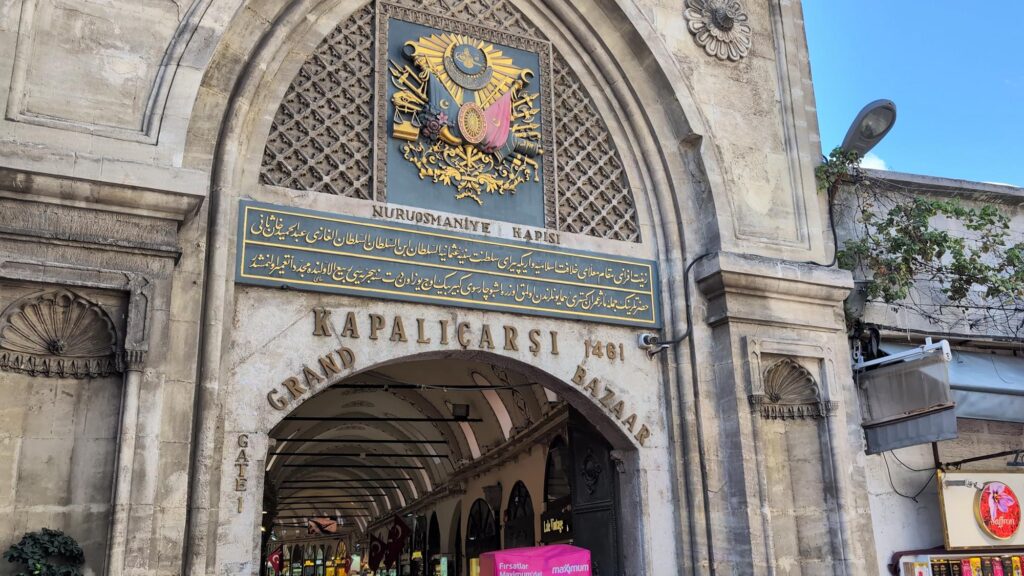
Grand Bazaar
Grand Bazaar has appeared in From Russia with Love (1963), The International (2009), Argo (2012), Taken 2 (2012), Skyfall (2012), Inferno and Charlie’s Angels.
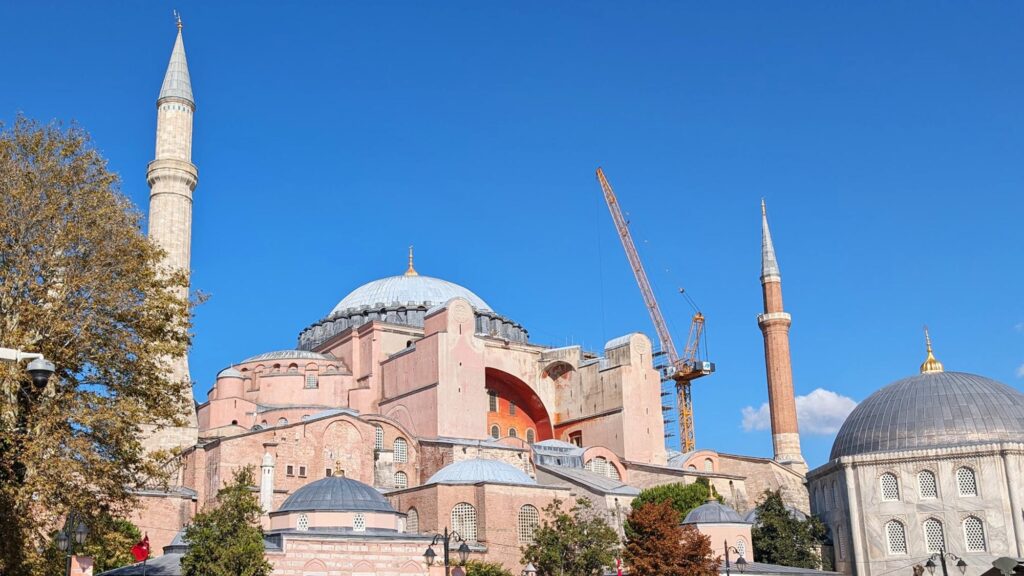
Hagia Sophia
Hagia Sophia has appeared in several international films, including "From Russia with Love" (1963), "Argo" (2012) and "Inferno" (2016).
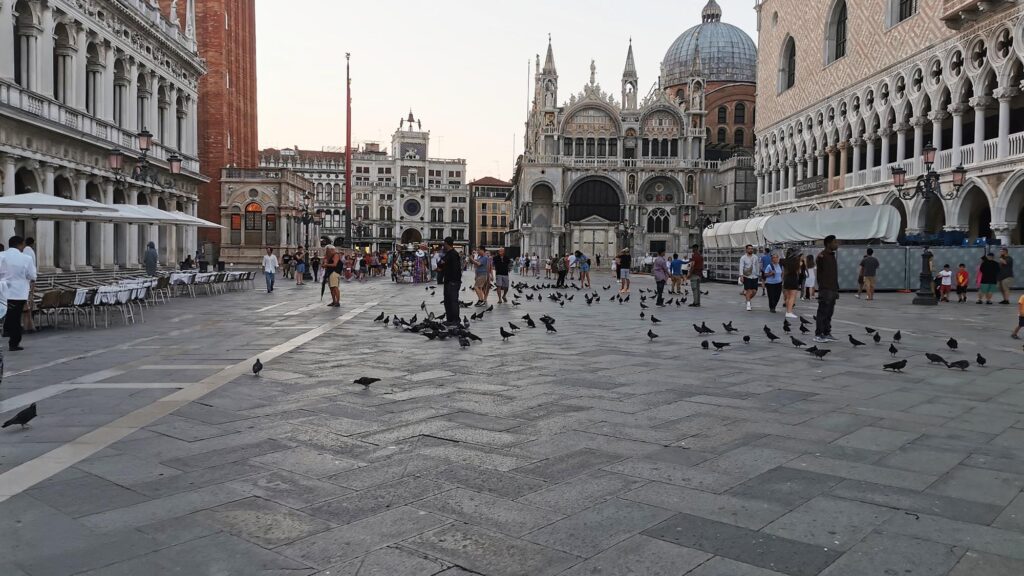
St. Mark’s Square
Films associated with St. Mark’s Square are Summertime, Death in Venice, A Little Romance, Moonraker, The Tourist, Inferno and Spider-Man: Far From Home.