
Thomas Jeffrey Hanks was born on 9 July 1956 in Concord, California, United States, to Amos Mefford Hanks, a cook who worked in restaurants across northern California, and Janet Marylyn Frager, a hospital worker of Portuguese ancestry. His parents divorced when he was five years old, after which Tom and his older siblings, Sandra and Larry, lived primarily with their father, while their younger brother, Jim, remained with their mother. The family moved frequently as Amos changed jobs and entered new relationships, taking the children between different homes in the San Francisco Bay Area and, for a period, Reno, Nevada. Hanks later recalled having lived in approximately ten houses by the age of ten. His childhood included periods in Redding, Oakland and Alameda, where the family briefly lived aboard a houseboat on the Oakland Estuary. These repeated moves meant that he attended several schools and regularly had to establish himself among new classmates. Despite the unsettled circumstances, he developed an interest in history, cinema and storytelling, spending considerable time watching films and reading about American history.
Hanks eventually settled into school life in Oakland, attending John Swett Elementary School, Bret Harte Junior High School and Skyline High School, where he graduated in 1974. During his teenage years, he began participating in school theatre under the direction of drama teacher Rawley Farnsworth, appearing in productions including William Shakespeare’s Twelfth Night. He also supported himself through part-time employment, working as a bellhop at the Oakland Hilton and selling refreshments at the Oakland Coliseum. The latter brought him into regular contact with the city’s professional sports culture, particularly the Oakland Athletics and Oakland Raiders, whose fortunes he followed throughout his life. Although he had no family connections to the entertainment industry, his growing interest in acting led him to attend performances at the American Conservatory Theater in San Francisco and Berkeley Repertory Theatre. After finishing high school, he enrolled at Chabot College in Hayward, where tuition was free and he could pursue theatre studies without the financial burden of a private university. He appeared in a student production of Thornton Wilder’s Our Town and became increasingly absorbed in stage performance. In 1976, he transferred to California State University, Sacramento, intending to continue his theatrical education.
While living in Sacramento, Hanks became involved with the Sacramento Civic Theater, where he appeared in Anton Chekhov’s The Cherry Orchard. The production brought him into contact with Irish director Vincent Dowling, artistic director of the Great Lakes Shakespeare Festival in Ohio. Dowling invited the young actor to join the festival as an apprentice in the summer of 1977, and Hanks travelled across the country to Lakewood, a suburb of Cleveland. The company performed at the Lakewood Civic Auditorium, where Hanks initially worked behind the scenes, assisting with stage management and other production duties before receiving acting roles. He returned for the following two summers, appearing in Shakespeare productions including The Taming of the Shrew and The Two Gentlemen of Verona. His performance as Proteus in the latter earned him a Cleveland Critics Circle Award in 1978. The work introduced him to the routines of professional repertory theatre, with extended rehearsals, frequent performances and touring engagements around Ohio. His growing commitments to the festival eventually led him to abandon his university studies. During this period, he also became a father when his son Colin was born in November 1977 to actress Samantha Lewes, whose real name was Susan Dillingham. The couple married in January 1978 and subsequently had a daughter, Elizabeth, born in 1982.
After completing his work with the Great Lakes Shakespeare Festival, Hanks moved to New York City in 1979, where he auditioned for theatre, television and film roles while supporting his young family. He performed with the Riverside Shakespeare Company in Manhattan and secured a small part in the low-budget horror film He Knows You’re Alone (1980), his feature-film debut. His theatrical training helped him obtain an audition for the television comedy Bosom Buddies (1980–1982), which paired him with Peter Scolari as two young advertising employees who disguise themselves as women to obtain affordable accommodation in a female-only apartment building. The series was filmed in Los Angeles, prompting Hanks to relocate to California and establish a new professional base. Although it lasted only two seasons, it introduced him to American television audiences and led to guest appearances in programmes including Happy Days and Family Ties. In 1981, actress Rita Wilson appeared in an episode of Bosom Buddies, marking the beginning of a friendship that would later become a romantic relationship. Hanks subsequently gained his first substantial leading film role in Ron Howard’s Splash (1984), playing a New York businessman who falls in love with a mermaid portrayed by Daryl Hannah. The film was shot in New York and the Bahamas and became a considerable commercial success, moving Hanks from television comedy into leading roles in Hollywood cinema.
Throughout the remainder of the 1980s, Hanks appeared in a succession of comedies, including Bachelor Party (1984), Volunteers (1985), The Money Pit (1986), Nothing in Common (1986) and Dragnet (1987). While making Volunteers, a comedy set in Thailand but filmed largely in Mexico, he reunited with Rita Wilson, who played his character’s romantic interest. Their relationship developed following the breakdown of his marriage to Samantha Lewes, and the couple divorced in 1987. Hanks and Wilson married in Los Angeles on 30 April 1988 and subsequently had two sons, Chester, born in 1990, and Truman, born in 1995. Their family settled in the Los Angeles area, initially purchasing a Spanish-style house in Pacific Palisades before acquiring additional property in the surrounding region. Wilson, whose family background includes Greek and Bulgarian ancestry, became an important collaborator in Hanks’s professional life, particularly through their later film production activities. Their marriage also deepened his connection to Greece, where the family began spending extended summer holidays.
Hanks’s breakthrough as a dramatic screen actor came with Big (1988), directed by Penny Marshall, in which he played Josh Baskin, a twelve-year-old boy who suddenly finds himself living in an adult’s body. The production began filming in August 1987 in Cliffside Park, New Jersey, where residential streets and houses were used for Josh’s childhood neighbourhood. A travelling fairground was constructed at Ross Dock Park beside the Hudson River in Fort Lee, while additional scenes were filmed in Manhattan. One of the film’s best-known sequences features Hanks and Robert Loggia playing a giant floor piano at FAO Schwarz, the famous toy shop then located on Fifth Avenue near Central Park. Big became one of the most successful films of 1988 and earned Hanks his first Academy Award nomination for Best Actor. His performance led to further leading roles in films including The ‘Burbs (1989), Turner & Hooch (1989), Joe Versus the Volcano (1990) and The Bonfire of the Vanities (1990). Although these films varied in critical and commercial success, his ability to move between comedy and more serious material increasingly attracted major directors.
During the early 1990s, Hanks began choosing roles that would fundamentally change his career. He portrayed the cynical baseball manager Jimmy Dugan in Penny Marshall’s A League of Their Own (1992), appearing alongside Geena Davis, Madonna and Lori Petty in a story about women’s professional baseball during the Second World War. The production filmed in Indiana, including at Bosse Field in Evansville, one of the oldest professional baseball stadiums in the United States. He subsequently starred opposite Meg Ryan in Nora Ephron’s Sleepless in Seattle (1993), playing a widowed architect who moves from Chicago to Seattle with his young son. The production used several locations around Seattle, including a floating home on Lake Union, with additional filming in New York and Maryland. That same year, Hanks took a considerably more demanding role in Philadelphia (1993), directed by Jonathan Demme. He portrayed Andrew Beckett, a gay lawyer dismissed from his position after his employers discover that he has AIDS. The film was shot primarily in Philadelphia, with courtroom scenes filmed inside City Hall and additional work at the University of Pennsylvania and other locations around the city. Hanks lost considerable weight in preparation for the role and researched the experiences of people living with AIDS. His performance earned him the Academy Award for Best Actor in March 1994, establishing him as one of Hollywood’s leading dramatic actors.
The following year, Hanks received a second consecutive Academy Award for Forrest Gump (1994), directed by Robert Zemeckis. He played the title character, a man whose experiences intersect with major events in American history. Although the story moves across several decades and numerous states, principal photography took place largely in South Carolina, where production began near Beaufort in August 1993. A specially constructed farmhouse at Bluff Plantation in Yemassee represented Forrest’s childhood home, while sections of the same estate and nearby Hunting Island State Park were transformed into locations representing Vietnam. The film’s familiar bus-bench sequences were shot in Chippewa Square in Savannah, Georgia. Hanks also participated in filming across the United States for scenes depicting Forrest’s long-distance running, with locations including Monument Valley in Utah, Grandfather Mountain in North Carolina and Marshall Point Lighthouse near Port Clyde, Maine. Forrest Gump became one of the highest-grossing films of 1994 and won six Academy Awards, including Best Picture and Best Director. Hanks became the first actor since Spencer Tracy in the 1930s to win consecutive Best Actor Oscars.
His next major collaboration with Ron Howard was Apollo 13 (1995), in which he portrayed astronaut Jim Lovell during NASA’s unsuccessful attempt to land on the Moon in April 1970. Hanks had been interested in the American space programme since childhood, and the project allowed him to work closely with NASA personnel and the surviving members of the original crew. Alongside Kevin Bacon and Bill Paxton, he underwent training at the Johnson Space Center in Houston, Texas, and participated in flights aboard NASA’s KC-135 aircraft, which performed repeated parabolic manoeuvres to create brief periods of weightlessness. The actors spent several days filming inside a replica spacecraft cabin installed aboard the aircraft. Additional scenes were filmed at Kennedy Space Center in Florida, where Hanks and Howard worked at the actual launch facilities, while extensive interiors were constructed at Universal Studios in California. Apollo 13 received nine Academy Award nominations and further strengthened Hanks’s association with historical subjects. During the same year, he began voicing Woody, the cowboy doll in Pixar’s Toy Story (1995), establishing a relationship with the animation studio that would continue for more than three decades.
By the mid-1990s, Hanks had become increasingly involved in filmmaking beyond acting. He made his feature-film directing debut with That Thing You Do! (1996), a comedy-drama that he also wrote and in which he played the manager of a fictional American pop group during the 1960s. Filming took place around Los Angeles and Orange County, particularly in the historic Orange Plaza district, where period shopfronts and streets were used to recreate the band’s hometown in Pennsylvania. Other locations included the Orpheum Theatre in downtown Los Angeles and the former Ambassador Hotel on Wilshire Boulevard. His interest in producing subsequently led him to establish Playtone with producer Gary Goetzman, named after the fictional record label in That Thing You Do!. The company became the vehicle for numerous film and television projects, allowing Hanks to pursue subjects connected to history, literature and music. His particularly strong interest in the Apollo programme led him to executive produce the HBO miniseries From the Earth to the Moon (1998), for which he directed the opening episode and wrote the final instalment. Much of the production was undertaken in Florida, including at Kennedy Space Center and the Disney-MGM Studios complex near Orlando.
Hanks’s collaboration with Steven Spielberg began with Saving Private Ryan (1998), in which he portrayed Captain John H. Miller, an American officer leading a mission through German-occupied France following the Normandy landings in June 1944. The film was shot mainly in Ireland and England rather than France. The extensive opening battle sequence was filmed at Ballinesker Beach, part of Curracloe Beach in County Wexford, where approximately 1,500 extras, including members of the Irish Defence Forces, participated in the recreation of the Omaha Beach landings. Hanks spent several weeks filming in Ireland under physically demanding conditions, with the production using explosives, landing craft and large-scale practical effects. Additional filming took place at the former British Aerospace factory site in Hatfield, Hertfordshire, where the French town of Ramelle was constructed for the film’s climactic battle. Saving Private Ryan earned Hanks another Academy Award nomination and began a long professional relationship with Spielberg, encompassing several subsequent films and television productions. His growing association with Second World War history also informed the HBO miniseries Band of Brothers (2001), which Hanks and Spielberg executive produced. The series was filmed primarily in England, with extensive sets constructed at the former Hatfield Aerodrome, and followed American paratroopers from their training in the United States through the European campaign.
During this period, Hanks continued taking leading roles in films with widely differing production demands. He played prison officer Paul Edgecomb in Frank Darabont’s The Green Mile (1999), an adaptation of Stephen King’s novel, filmed largely in Tennessee, where the former Tennessee State Penitentiary in Nashville supplied the exterior of the fictional Cold Mountain prison. His next collaboration with Robert Zemeckis, Cast Away (2000), required him to spend extended periods on a remote island in Fiji. The film follows a FedEx employee stranded alone after a plane crash, with most island scenes filmed on Monuriki, an uninhabited island in the Mamanuca archipelago. Production began in January 1999, with Hanks initially appearing at a heavier weight before filming was suspended for approximately a year. During the interval, he lost around 25 kilograms and allowed his hair and beard to grow so that the later scenes could portray his character’s prolonged isolation. Filming resumed in April 2000, with additional work in Memphis, Tennessee, and Texas. The production attracted attention for its logistical difficulties, including transporting equipment to the island and working in a relatively isolated tropical environment. Hanks received another Academy Award nomination for the performance, which relied heavily on his ability to sustain scenes without dialogue or other actors.
Hanks subsequently appeared in Road to Perdition (2002), directed by Sam Mendes, portraying a Depression-era criminal opposite Paul Newman, and reunited with Spielberg for Catch Me If You Can (2002), playing FBI agent Carl Hanratty alongside Leonardo DiCaprio. He again worked with Spielberg on The Terminal (2004), in which he portrayed Viktor Navorski, a traveller stranded at New York’s John F. Kennedy International Airport. Rather than filming most of the story inside an operational airport, the production constructed an enormous replica terminal within a hangar at Palmdale Regional Airport in California. The set incorporated working escalators, shops and restaurants, allowing Hanks to perform extensively in a controlled environment representing the airport’s international transit area. During the same decade, he appeared in The Ladykillers (2004), The Da Vinci Code (2006), Charlie Wilson’s War (2007) and Angels & Demons (2009). The two adaptations of Dan Brown’s novels took him to European locations associated with Renaissance art and religious history, although some interiors were recreated on studio sets when access to historic buildings was restricted. He also returned to comedy and animation, reprising Woody in Toy Story 2 (1999) and Toy Story 3 (2010).
His work as a producer developed alongside these acting commitments. Playtone became particularly associated with ambitious historical television projects, including John Adams (2008), The Pacific (2010) and later Masters of the Air (2024), produced in collaboration with Spielberg’s Amblin Television. These programmes brought together substantial international casts and crews and required extensive historical research and large-scale production facilities. Hanks and Goetzman also helped bring My Big Fat Greek Wedding (2002) to the screen, working with Rita Wilson after she became interested in Nia Vardalos’s original stage production. The film’s success led to sequels and strengthened the family’s professional involvement in projects connected to Greek culture. Hanks also directed and starred opposite Julia Roberts in Larry Crowne (2011), a comedy about a middle-aged man who returns to education after losing his job. The film was shot in the Los Angeles area, including at California State University, Dominguez Hills, in Carson. Although he increasingly devoted time to producing, Hanks continued accepting acting roles that involved working across the United States and internationally.
One of his most significant later dramatic performances came in Captain Phillips (2013), directed by Paul Greengrass and based on the 2009 hijacking of the American cargo ship Maersk Alabama by Somali pirates. Hanks portrayed the ship’s captain, Richard Phillips, alongside Barkhad Abdi as the pirate leader. Much of the production was filmed at sea off Malta, where a working container ship, the Maersk Alexander, was used to recreate the hijacking. Additional filming took place in Morocco and off the Virginia coast, with American naval vessels participating in the reconstruction of the rescue operation. Hanks spent considerable time aboard the ship and in confined maritime environments, particularly during the lifeboat sequences. That same year, he appeared as Walt Disney in Saving Mr. Banks (2013), opposite Emma Thompson as author P. L. Travers, in a production filmed partly at Walt Disney Studios in Burbank and at Disneyland in Anaheim. He also returned to Broadway for the first time as a leading actor, portraying New York journalist Mike McAlary in Nora Ephron’s Lucky Guy. The production opened at the Broadhurst Theatre on West 44th Street in April 2013 and earned Hanks a Tony Award nomination for Best Actor in a Play.
His collaboration with Spielberg continued with Bridge of Spies (2015), in which he portrayed American lawyer James B. Donovan, who negotiated the exchange of prisoners between the United States and the Soviet Union during the Cold War. The production was filmed in New York, Germany and Poland, including at Studio Babelsberg in Potsdam. The historic Glienicke Bridge between Potsdam and Berlin, where actual Cold War prisoner exchanges had taken place, was temporarily closed to traffic for filming in November 2014. Hanks worked on the bridge alongside Mark Rylance, who portrayed Soviet intelligence officer Rudolf Abel, while other Berlin locations were used to recreate the divided city during the early 1960s. The film received six Academy Award nominations and won Rylance the award for Best Supporting Actor. Hanks continued portraying historical figures in Clint Eastwood’s Sully (2016), based on the emergency landing of US Airways Flight 1549 on the Hudson River in 2009, and Steven Spielberg’s The Post (2017), in which he played Washington Post editor Ben Bradlee opposite Meryl Streep as publisher Katharine Graham. His performance in the latter drew on the history of American journalism during the publication of the Pentagon Papers in 1971.
Hanks has maintained a particularly close connection to American history through his professional work and his involvement with historical and educational organisations. He has supported the National World War II Museum in New Orleans and participated in fundraising and commemorative activities connected to military history. His interest in space exploration has also continued beyond Apollo 13, including public support for museums and institutions devoted to the American space programme. In November 2016, President Barack Obama presented him with the Presidential Medal of Freedom at the White House in Washington, D.C., recognising his contributions to American culture. He had previously received the American Film Institute’s Life Achievement Award in 2002 and the Kennedy Center Honors in 2014. His television production activities continued through Playtone, while his long association with Hollywood studios and performers increasingly allowed him to develop projects as a producer without necessarily appearing on screen.
During the late 2010s, Hanks returned to roles centred on recognisable American public figures. He portrayed children’s television presenter Fred Rogers in A Beautiful Day in the Neighborhood (2019), directed by Marielle Heller, for which he received his sixth Academy Award nomination. The film was shot extensively in Pittsburgh, Pennsylvania, where Rogers had produced Mister Rogers’ Neighborhood for decades. Production included work at WQED’s television studios, with additional filming at the Omni William Penn Hotel and other locations around the city. Hanks later returned to Pittsburgh for A Man Called Otto (2022), directed by Marc Forster and adapted from the Swedish novel A Man Called Ove by Fredrik Backman. The production used residential streets in Bellevue, north of central Pittsburgh, along with locations in Lawrenceville, Sewickley and neighbouring communities. Hanks portrayed a recently widowed man whose difficult relationship with his neighbours gradually changes, while his youngest son Truman played a younger version of the character in flashbacks. The film was produced partly through Playtone, with Rita Wilson also serving as a producer.
In March 2020, Hanks became one of the first major international celebrities to announce that he had contracted COVID-19. He and Rita Wilson were in Queensland, Australia, where he was preparing to portray Elvis Presley’s manager Colonel Tom Parker in Baz Luhrmann’s Elvis (2022). Both tested positive for the virus while staying on the Gold Coast and were admitted to hospital before recovering in isolation. The diagnosis occurred during the earliest stages of the global pandemic and prompted the temporary suspension of the production. Filming subsequently resumed at Village Roadshow Studios in Oxenford, where extensive sets were constructed to represent locations in the United States, including Graceland, Las Vegas concert venues and other places associated with Presley’s career. The production also employed thousands of Australian crew members and extras, with filming continuing through March 2021. Hanks’s portrayal of Parker, an older and manipulative figure, involved extensive prosthetic makeup and a pronounced accent, providing a departure from many of his earlier leading roles.
Outside the United States, Hanks has developed longstanding personal connections to Greece. He and Wilson purchased a holiday property on the island of Antiparos in the Cyclades, where they have spent many summers with family and friends. Their involvement with the country expanded through the production of films such as My Big Fat Greek Wedding, its sequels and Mamma Mia! (2008), on which Hanks served as an executive producer. The couple also participated in charitable efforts following the devastating wildfires in the Attica region in July 2018. In recognition of their support, Hanks and his family were offered honorary Greek citizenship in December 2019. In July 2020, Hanks and Wilson received their Greek passports, meeting Prime Minister Kyriakos Mitsotakis on the island of Paros. Their property interests have also included a holiday home on Patmos, another Greek island, as well as residences in California and Idaho. In the United States, the couple’s principal home has been in Pacific Palisades, Los Angeles, where they purchased a substantial property in 2010. They have also owned a beachfront house in Malibu and a holiday residence in Ketchum, Idaho, close to the Sun Valley resort area.
Hanks’s interests have extended beyond film and television into literature and collecting. He is particularly known for his collection of vintage typewriters, an enthusiasm reflected in his first book, Uncommon Type (2017), a collection of short stories in which typewriters appear in different ways. He subsequently published The Making of Another Major Motion Picture Masterpiece (2023), a novel examining the development of a fictional Hollywood film from its earliest inspiration through production. The books drew on his experiences of filmmaking while allowing him to pursue writing independently of screenplays. His attachment to the theatre also continued, and in 2018 he played Falstaff in a Shakespeare Center of Los Angeles production of Henry IV, directed by Daniel Sullivan and staged at the Japanese Garden on the West Los Angeles campus of the Department of Veterans Affairs.
In the 2020s, Hanks continued to work with several directors associated with earlier stages of his career. He appeared in News of the World (2020), directed by Paul Greengrass, and Finch (2021), a post-apocalyptic science-fiction drama in which he played a robotics engineer. In 2024, he reunited with Robert Zemeckis and Robin Wright for Here, an experimental drama following several generations of people living in the same house. The production was filmed largely at Pinewood Studios in Buckinghamshire, England, with digital technology used to transform the appearance of the actors across different periods. He also appeared in Wes Anderson’s Asteroid City (2023) and The Phoenician Scheme (2025), the latter filmed at Studio Babelsberg in Potsdam, Germany. His longstanding association with Pixar continued with Toy Story 4 (2019) and Toy Story 5 (2026), the fifth instalment being released in June 2026, more than thirty years after he first voiced Woody.
In 2025, Hanks returned to the New York stage in This World of Tomorrow, a science-fiction romance he co-wrote with playwright James Glossman, adapted from stories in his collection Uncommon Type. The production premiered at The Shed, the performing arts centre at Hudson Yards in Manhattan, with performances running from October to December. Directed by Kenny Leon, it starred Hanks as Bert Allenberry, a scientist travelling back through time to the 1939 New York World’s Fair, opposite Kelli O’Hara. The engagement marked his first appearance on a New York stage since Lucky Guy in 2013. In October 2026, plans were announced to transfer the production to Broadway for a limited engagement in autumn 2027, with Hanks and O’Hara returning under Leon’s direction.
Hanks has remained closely involved in the careers of his children, several of whom have entered the entertainment industry. Colin Hanks established himself as an actor through film and television, while Elizabeth Hanks pursued writing and publishing. Chester, professionally known as Chet Hanks, has worked in music and acting, and Truman Hanks has pursued work in filmmaking. Hanks and Rita Wilson have continued collaborating as producers while dividing their time between Los Angeles and their other homes. His professional commitments have regularly returned him to New York, a city where he first attempted to establish himself as a young actor in 1979 and where, nearly five decades later, he was again developing new work for the stage.

Angels & Demons
Angels & Demons is associated with Rome and Vatican City, but uses a mixture of real Roman locations, palace interiors, studio sets and recreated spaces.

Big
Big was shot in New Jersey and New York, with that combination shaping its movement from suburban childhood into the overwhelming scale of the city.
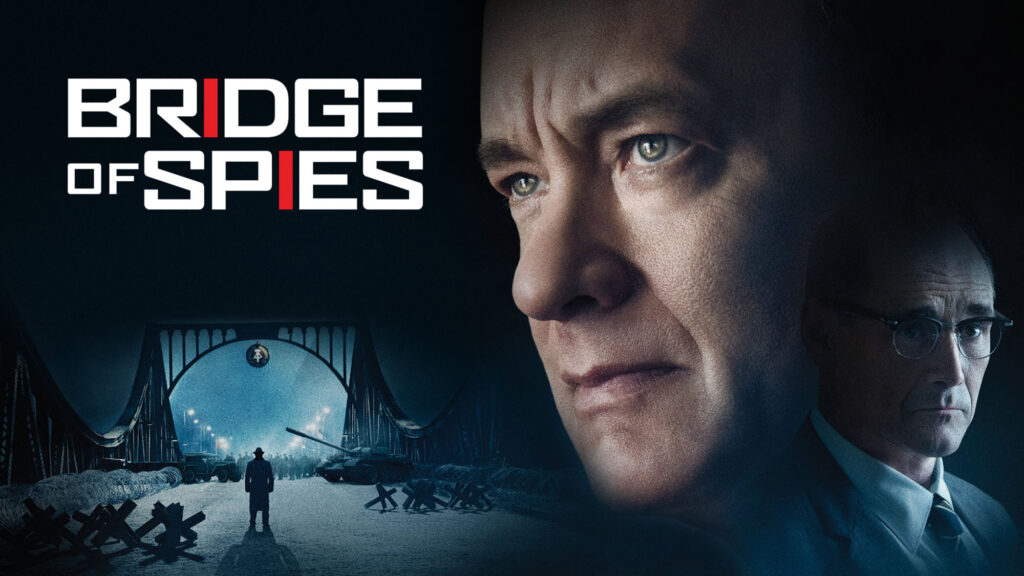
Bridge of Spies
Bridge of Spies is a 2015 historical film directed and co-produced by Steven Spielberg, written by Matt Charman and the Coen brothers, and starring Tom Hanks.

Cloud Atlas
Cloud Atlas was filmed mainly in Germany, Scotland and Spain, with the production using a wide range of real locations and studio work to create different eras.
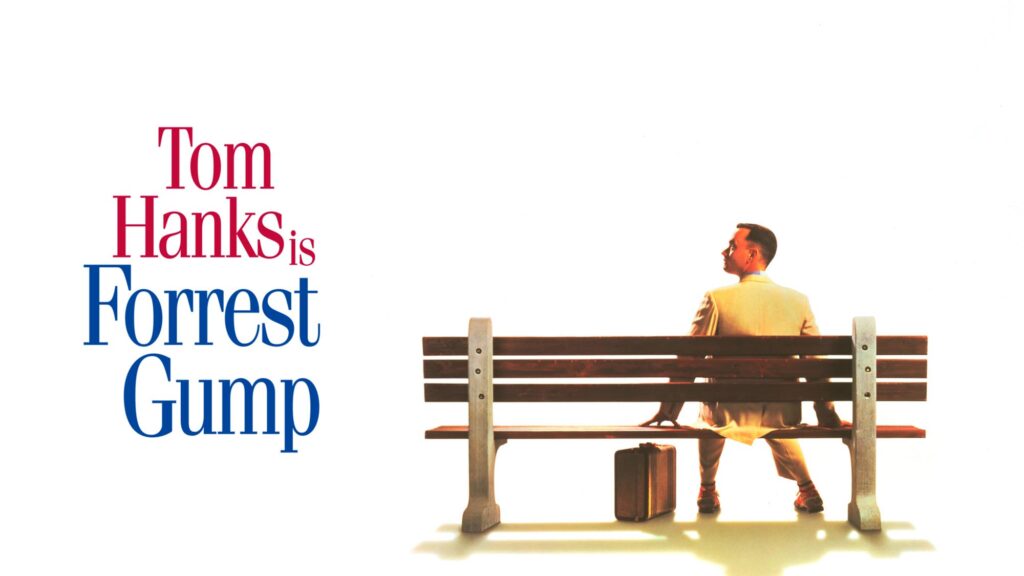
Forrest Gump
Forrest Gump was shot across several parts of the United States, but its strongest geographical identity comes from Georgia and South Carolina.

Inferno
Inferno (2016) was shot across Florence, Venice, Budapest and Istanbul, with Florence providing the most important real-world setting.