
Holmenkollen Chapel, known in Norwegian as Holmenkollen kapell, is a wooden church at Holmenkollveien 142 in the Vestre Aker district of Oslo, Norway, situated on a wooded hillside immediately north of the famous Holmenkollen Ski Jump. The original chapel was designed by Norwegian architect Holger Sinding-Larsen, following an architectural competition held in 1894. Plans for the building had been initiated three years earlier by Director of Public Roads Hans Hagerup Krag and professor Bredo Morgenstierne, who wanted to provide a place of worship for the growing number of people visiting the forests above Kristiania, as Oslo was then known. Completed in 1903, the building was initially used as a prayer house before being formally consecrated as a chapel on 24 September 1913. Its architecture drew heavily on Norway’s medieval stave churches, with massive wooden pillars, steeply pitched roofs, elaborate carved decorations and a tall central tower. The original building also featured an unusual outdoor pulpit on its northern side, intended for religious gatherings on the surrounding hillside, although it was never put into regular use. Over the following decades, Holmenkollen Chapel became closely associated with the nearby ski facilities and the Norwegian royal family, who traditionally attend Christmas services there while staying at the neighbouring Royal Lodge, Kongsseteren. On 23 August 1992, the chapel was destroyed in an arson attack connected to members of the Norwegian black metal scene. Kristian «Varg» Vikernes of Burzum and Bård «Faust» Eithun of Emperor were subsequently convicted in connection with the fire. The destruction caused considerable public outrage, and plans to replace the chapel with a modern building were abandoned after widespread demands for a reconstruction of the original structure. A fundraising campaign supported by Princess Astrid, Mrs Ferner, helped finance the project, while architect Arne Sødal supervised the reconstruction using Sinding-Larsen’s original drawings, with several modifications. The new chapel was consecrated on 3 March 1996 and retains the characteristic dark timber exterior, carved wooden ornamentation and imposing tower of its predecessor. Standing approximately 33 metres high, the reconstructed building accommodates around 200 people and features stained-glass windows installed in 1999. The main entrance is approached by a broad flight of stone steps, while a separate accessible ramp follows the side of the building. Surrounded by rocky ground, sloping woodland and paths connecting it to the surrounding Holmenkollen area, the chapel remains an active place of worship.
Holmenkollen Chapel appears in Lords of Chaos (2018), the biographical crime drama directed by Jonas Åkerlund about the early Norwegian black metal scene. The film uses the reconstructed chapel to portray the original building during the arson attack of August 1992. Several exterior scenes were filmed at the actual location, including the approach along the wooded hillside, the break-in through a side entrance and the escape down the steps in front of the church. The interior fire sequences were staged separately, while a later wide shot of the burning chapel uses a different setting. Much of the exterior footage nevertheless shows the real Holmenkollen Chapel, including the entrance, surrounding paths and distinctive architectural features.
In Lords of Chaos (2018), Holmenkollen Chapel appears approximately one hour into the film, during the sequence depicting its destruction by members of the Norwegian black metal scene. The scene follows a conversation in which Bård «Faust» Eithun, played by Valter Skarsgård, admits that he has murdered a man in Lillehammer. Kristian «Varg» Vikernes, played by Emory Cohen, suggests celebrating by burning down a church, and he is joined by Mayhem guitarist Øystein «Euronymous» Aarseth, played by Rory Culkin, and Faust. The three men are first seen approaching Holmenkollen Chapel on foot, climbing the sloping path through the wooded grounds behind the building. These shots were filmed at the actual location, with the chapel’s dark timber exterior and surrounding hillside clearly recognisable. Rather than approaching the main entrance at the top of the broad stone staircase, the men make their way towards a smaller side entrance situated to the left of the main doorway when viewed from the front. They force their way inside through this door, which is part of the real building. The film then cuts to a series of interior scenes in which the three begin preparing the chapel for destruction. Varg encourages Euronymous to participate rather than simply watching, while Faust joins in as they set the interior alight. Flames spread through the wooden surroundings, and the men become increasingly excited by what they are doing. These interior sequences were filmed separately from the actual chapel, using constructed sets for the destructive effects.
The film returns to the real Holmenkollen Chapel when the three men run out through the same side entrance they used to break in. Smoke and the glow of fire are visible around the doorway and through the chapel’s windows, creating the impression that the interior is burning. Rather than running directly away from the building, the men turn towards the main entrance, run up the wheelchair-accessible ramp and then descend the broad stone staircase leading down from the front of the chapel. The movement takes them closer to the building before they finally run away, allowing the camera to capture more of its architecture and the fire effects visible in the windows. The actual chapel and its distinctive stone steps are clearly recognisable throughout these shots. The sequence then cuts to a wider view from behind the three men as they stop and turn to look at the burning church. Although the building is intended to be the same, the surrounding landscape is noticeably different. Instead of the uneven rocky hillside on which Holmenkollen Chapel actually stands, the ground is comparatively flat, with longer grass and trees arranged around a more open area. The rocky outcrop beside the real chapel is also absent. This final view was filmed at a separate location, allowing the production to depict the destruction of the building without damaging the reconstructed church. Director Jonas Åkerlund used large purpose-built wooden structures for the film’s church-burning sequences, which were set alight for the more extensive fire footage. By combining footage from the actual Holmenkollen Chapel with separately filmed interiors and burning structures, the production presents the entire sequence as though it takes place at the original location. The real chapel had already been reconstructed more than twenty years before filming and was never damaged during the production.

Lords of Chaos
The story in Lords of Chaos is rooted in Oslo and in the real early-1990s Norwegian black metal milieu, but the production was split between Norway and Hungary.

Kragstøtten
Kragstøtten appears in Lords of Chaos (2018), the biographical film directed by Jonas Åkerlund about the early Norwegian black metal scene and the band Mayhem.
Emanuel Vigeland Museum
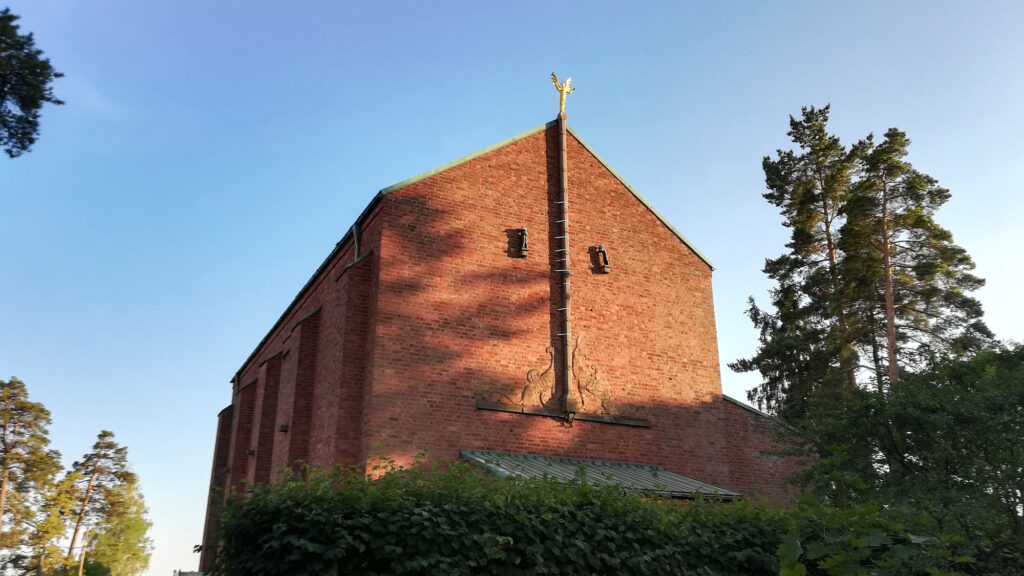
In Jo Nesbø’s Detective Hole (2026), Emanuel Vigeland Museum is used as a meeting place for powerful figures, including police, wearing cloaks and masks.
Exit Villa
Exit Villa is in Olsenbanden Junior, Taxi, Hjelp, vi er i filmbransjen, Tina & Bettina: The Movie, Mammon, Doctor Proctor’s Fart Powder, Hvite gutter and Exit.
Bogstad Manor
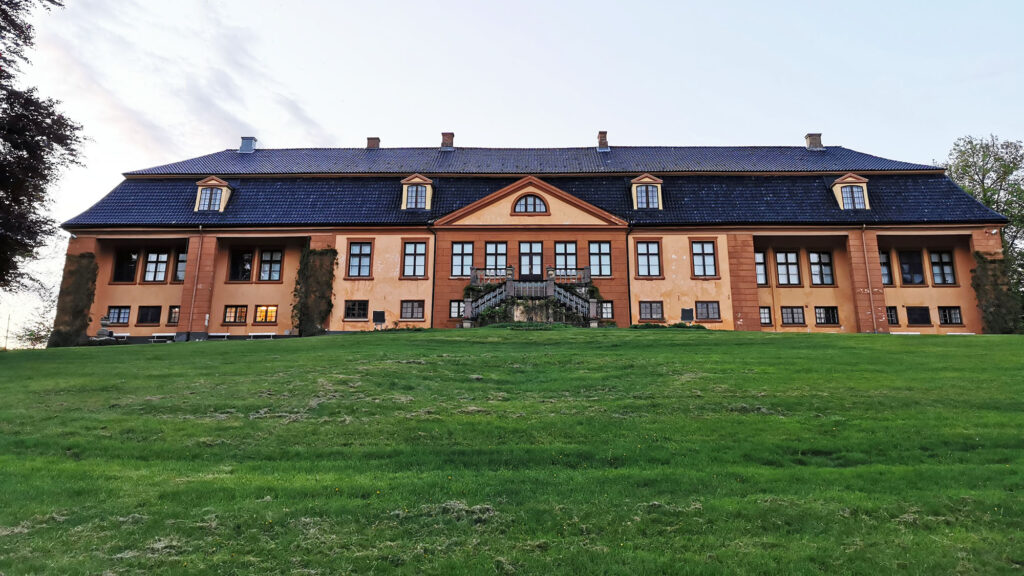
In Jo Nesbø’s Detective Hole (2026), Bogstad Manor is used for the large garden party where many people from the police are gathered.
Skomakertjern
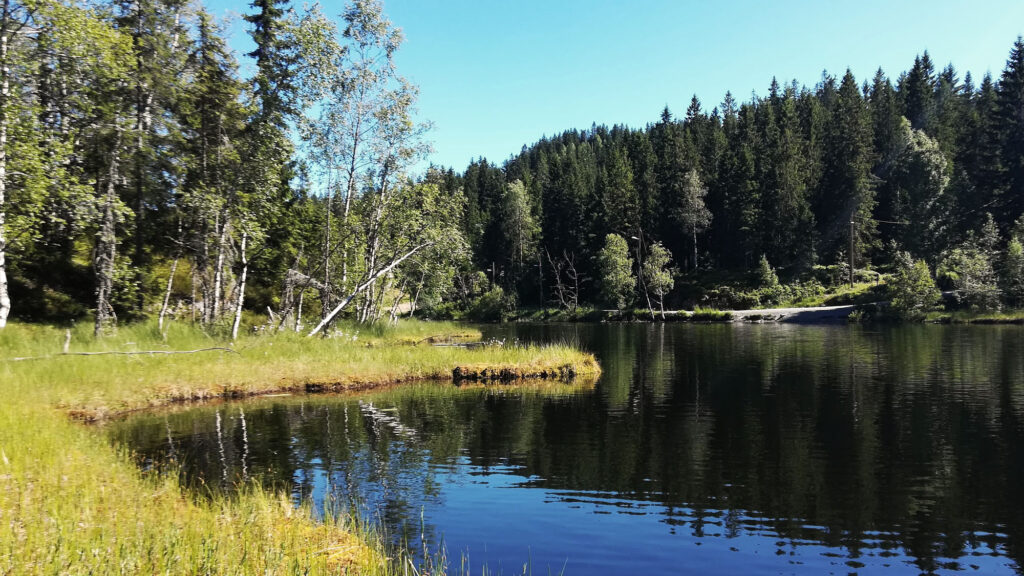
Skomakertjern appears in De dødes tjern (1958). The original film used three different lakes to represent the cursed lake from André Bjerke’s story.
Vigeland Sculpture Park
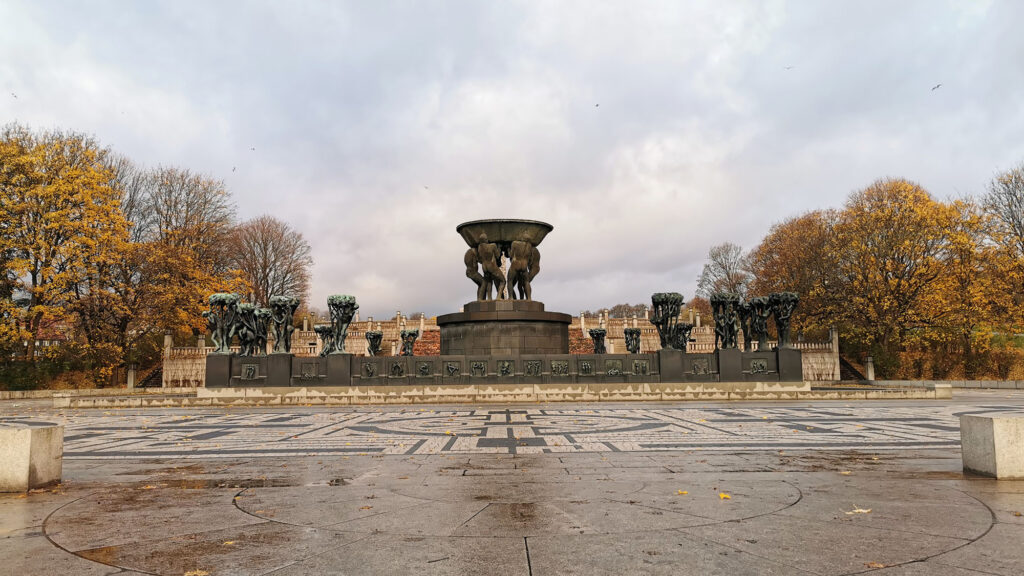
Vigeland Sculpture Park appears in Jo Nesbø’s Detective Hole, The Snowman, Himmel og helvete, Oslo, 31. august, Elling, and many more.
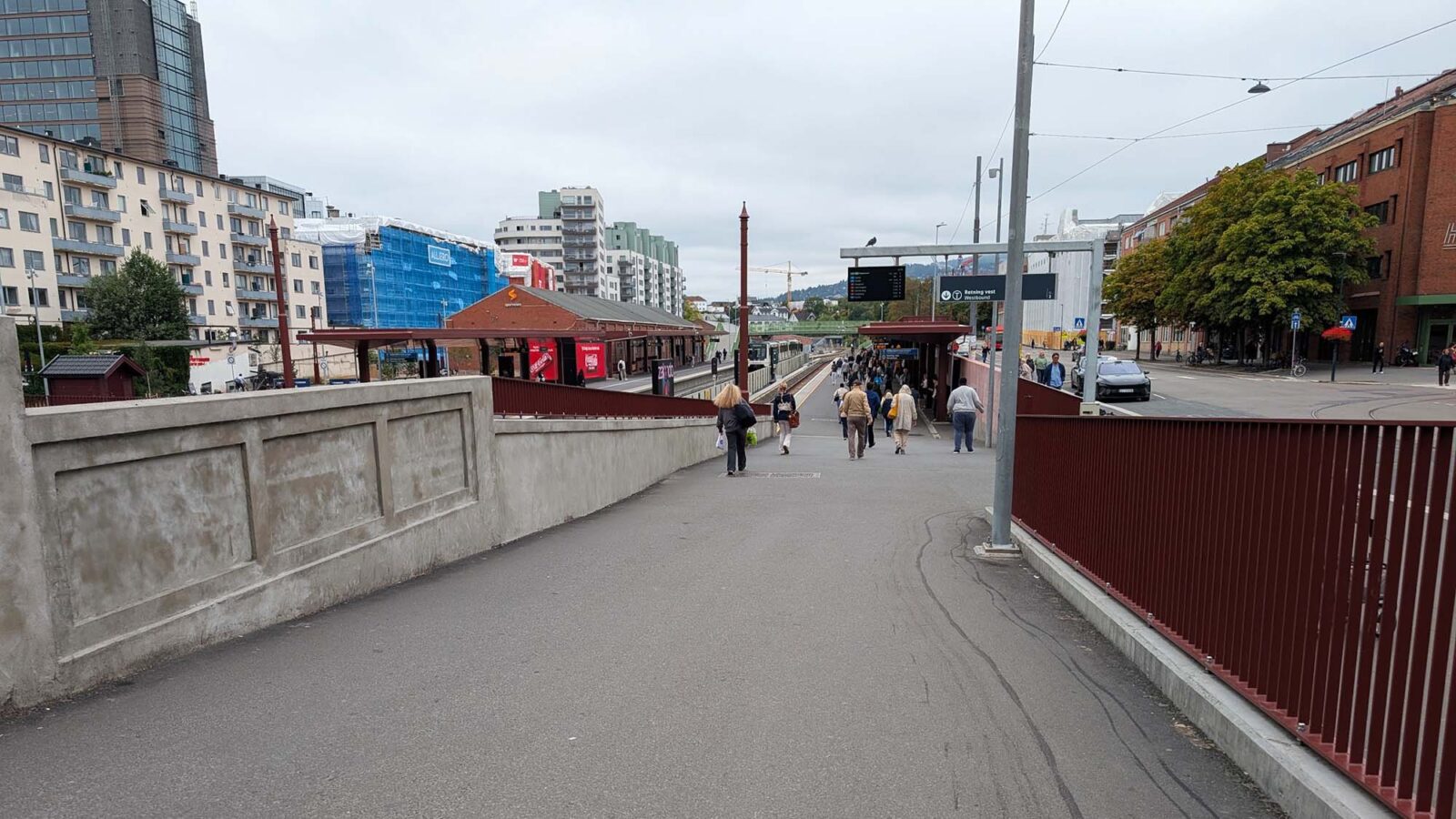
Majorstuen Station
Majorstuen Station appears in Jo Nesbø’s Detective Hole (2026), the Netflix adaptation of Nesbø’s Harry Hole universe, which was filmed extensively in Oslo.
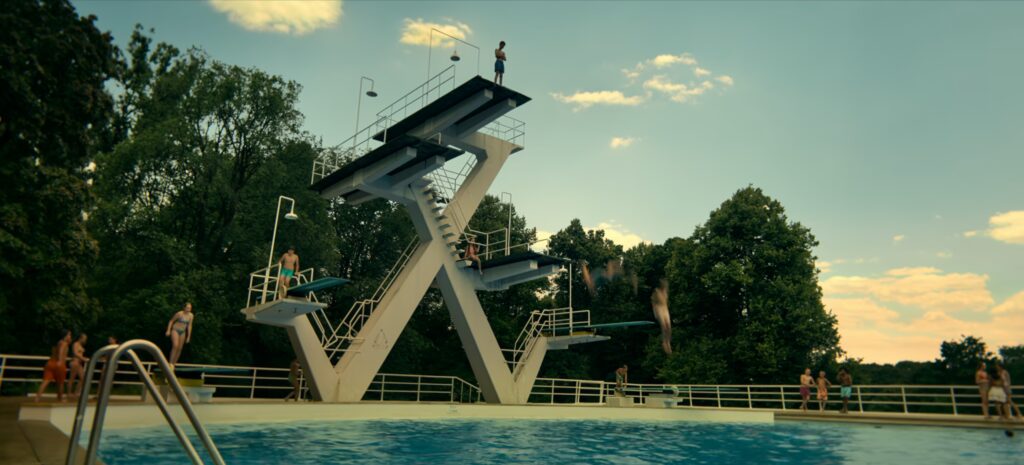
Frognerbadet
Frognerbadet is in Olsenbanden møter Kongen & Knekten, Frida: Straight from the Heart, Stuperen, Oslo, August 31st, Beatles, Hvite gutter and Detective Hole.
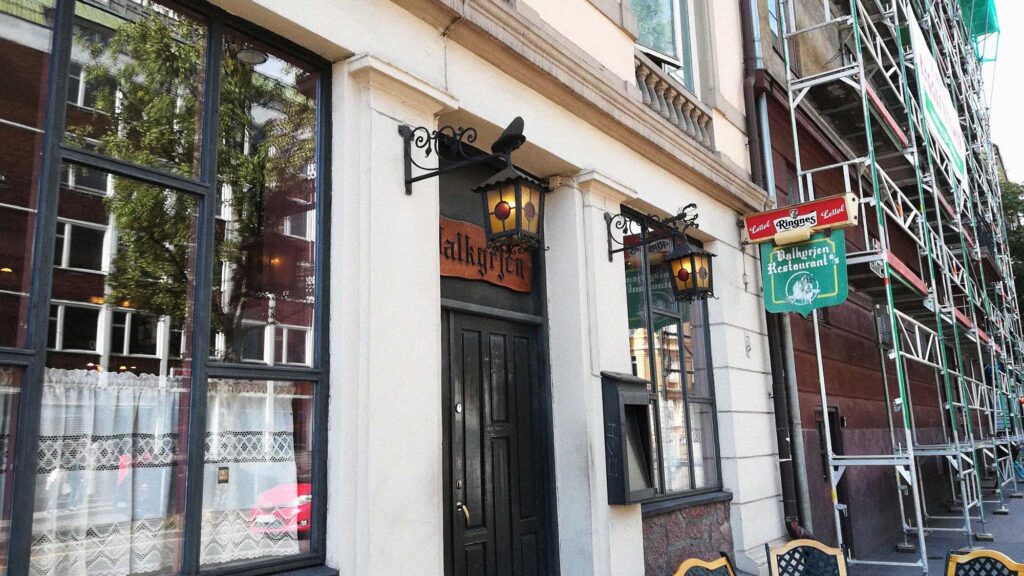
Valkyrien Restaurant
Valkyrien Restaurant has appeared in Elling (2001) and O’ Horten (2007). In both films, its old-fashioned interior is used as a familiar Oslo restaurant.