
Farine in Oslo is a bakery, restaurant and neighbourhood meeting place in Normannsgata 44 on Kampen. The distinctive yellow corner building stands close to Kampen Church and Thorbjørn Egners plass, in one of Oslo’s most recognisable old residential areas. Locally, the building is also known as Strykejernet because of its narrow, iron-shaped form, which gives it a very characteristic appearance in the streetscape. Today Farine gives the address a new identity, but the building has a long screen history in Norwegian film and television.
Normannsgata 44 has appeared in several Norwegian productions, including “Olsenbanden” (1969), “Olsenbanden og Dynamitt-Harry” (1970), “Olsenbanden tar gull” (1972), “Hemmelighetene i B-by” (1982), “Lyckliga gatan” (1999) and “Hos Martin” (2004–2005). The building has been used in different ways over the years: as Café Lefsa and later Krita in the Olsenbanden films, as Billy Bryant’s Kafé in “Hemmelighetene i B-by”, as a sweet shop in “Lyckliga gatan”, and as Martin’s café in “Hos Martin”. Its Kampen setting, unusual shape and neighbourhood-café character have made it especially useful for productions looking for a recognisable Oslo location with everyday charm.
In “Olsenbanden” (1969), the building is used for one of the more surprising parts of the first film. Although the Olsenbanden series later became known as family-friendly Norwegian comedy, the original film contains far more adult humour and sleaze than many viewers remember. In the film, the gang runs its own brothel in the upper floor of the building, while Café Lefsa is located on the ground floor. The scenes include women exposing their breasts and Benny being more than ready to take part in a porn film, giving the first Olsenbanden film a much rougher and more adult tone than the later entries in the series.
In “Olsenbanden og Dynamitt-Harry” (1970) and “Olsenbanden tar gull” (1972), the building continues to appear as a familiar Kampen location, but the place is now called Krita. Kafévert Hansen is still connected to the ground-floor café, and the building remains part of the Olsenbanden world around Kampen and Botsen. The change from Café Lefsa to Krita reflects how the series reused the same neighbourhood geography while adjusting details from film to film.
In “Hemmelighetene i B-by” (1982), the building was used as Billy Bryant’s Kafé. The NRK series gives Normannsgata 44 another layer of television history, using the same recognisable corner building as part of its fictional world. With its café windows, street-corner position and local character, the location works naturally as a small neighbourhood meeting place on screen.
In “Lyckliga gatan” (1999), Normannsgata 44 is used as a sweet shop. In one of the film’s darker comic moments, the character played by Jon Øigarden “kills” the shop assistant, played by Sossen Krogh. The use of the building as a shop shows how flexible the location has been on screen, shifting from café to brothel frontage, television café and small local store while still remaining easy to recognise.
In “Hos Martin” (2004–2005), the building becomes the café run by Martin Amundsen, played by Sven Nordin. Nils Vogt also appears in the series, making the location part of a sitcom built around well-known Norwegian comedy actors. Where the Olsenbanden films use the building for criminal farce and adult humour, “Hos Martin” turns it into a warmer everyday café setting, centred on regular customers, relationships and small conflicts in the Kampen neighbourhood. This makes today’s Farine one of Oslo’s more layered screen locations, with several different fictional identities attached to the same distinctive building.
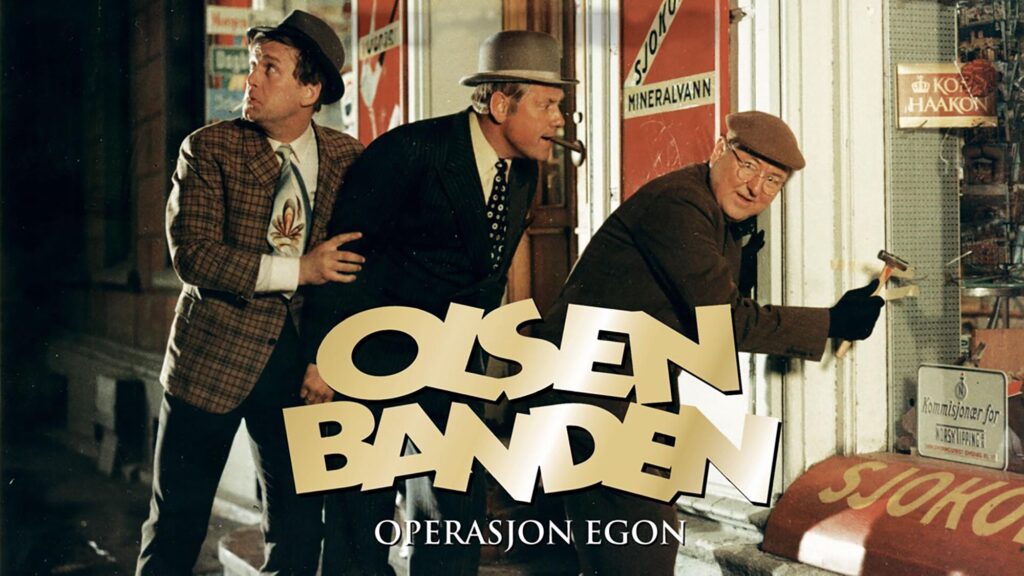
Olsenbanden – Operasjon Egon
Olsenbanden – Operasjon Egon was shot mainly in and around Oslo, giving the Norwegian Olsenbanden film a very different local identity from the Danish original.
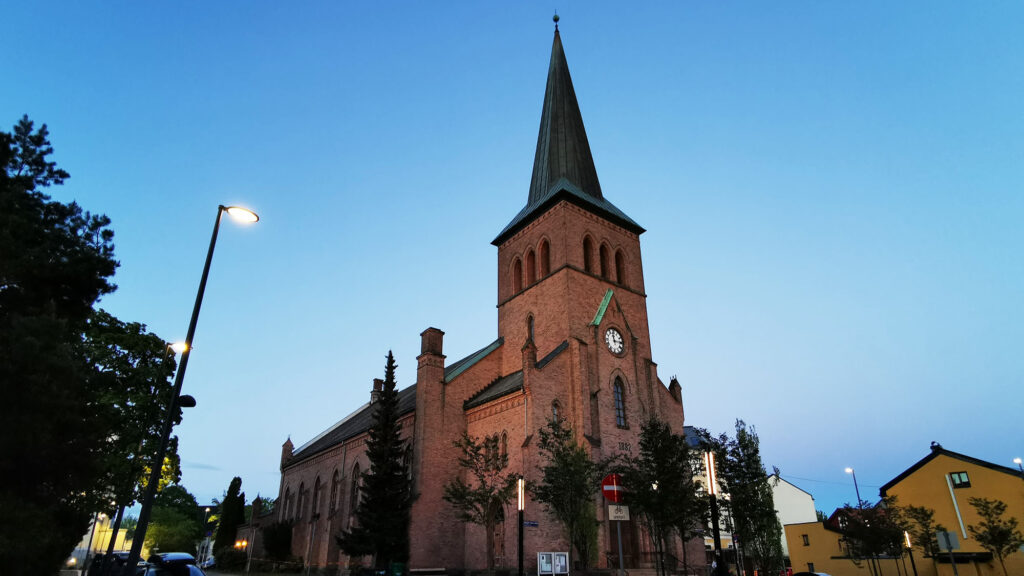
Kampen Church
Kampen Church appears in Jo Nesbø’s Detective Hole (2026), Olsenbanden for full musikk (1976), Mot i brøstet (1993–1997), and Hemmelighetene i B-by (1982–).
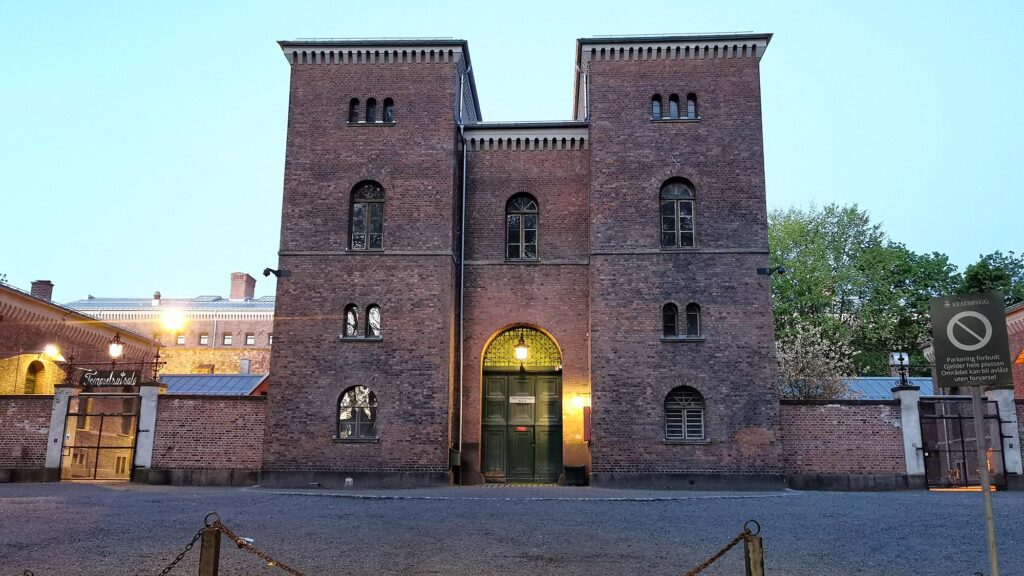
Botsen
Botsen is best known from the "Olsenbanden" film series, where it appears as the prison Egon Olsen is released from at the start of many of the films.
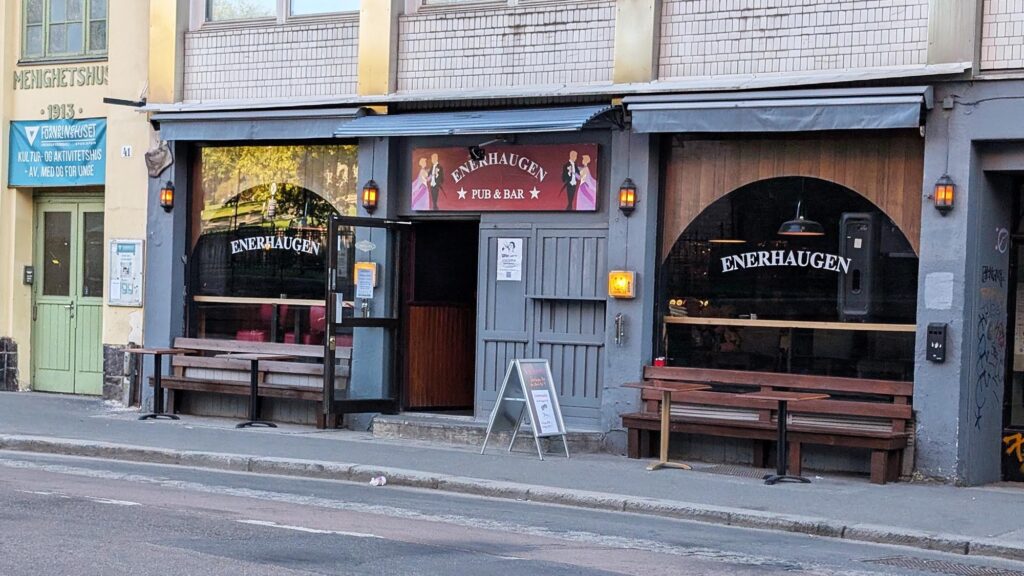
Enerhaugen Cafe
In Jo Nesbø’s Detective Hole (2026), Enerhaugen Cafe serves as the real-life location for Boxer Bar, the pub where police officers go for a beer after work.
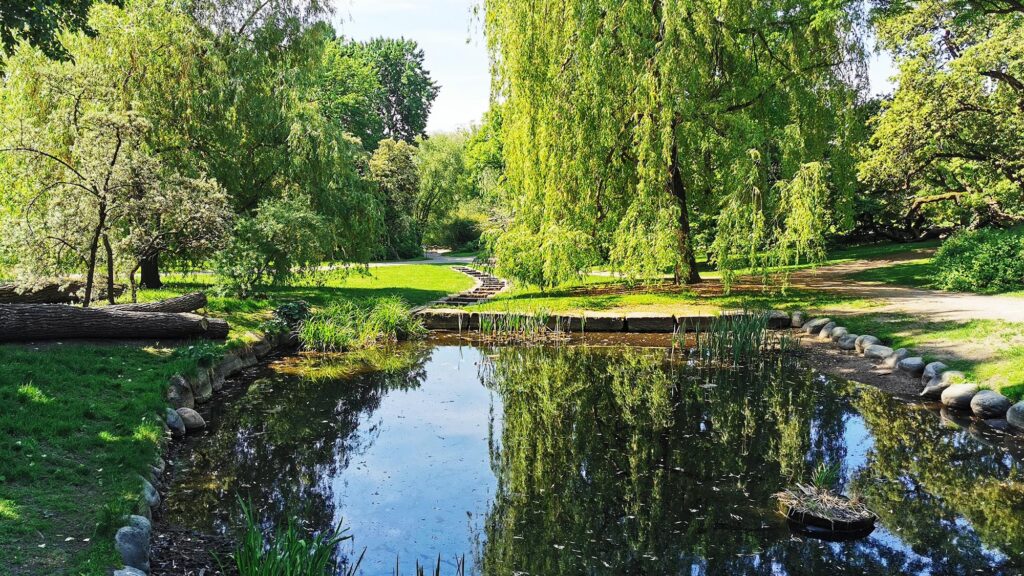
Botanical Garden Oslo
Botanical Garden is in the Norwegian movie About Tilla from 1963. Botanical Garden is used as one of the film’s central early locations.
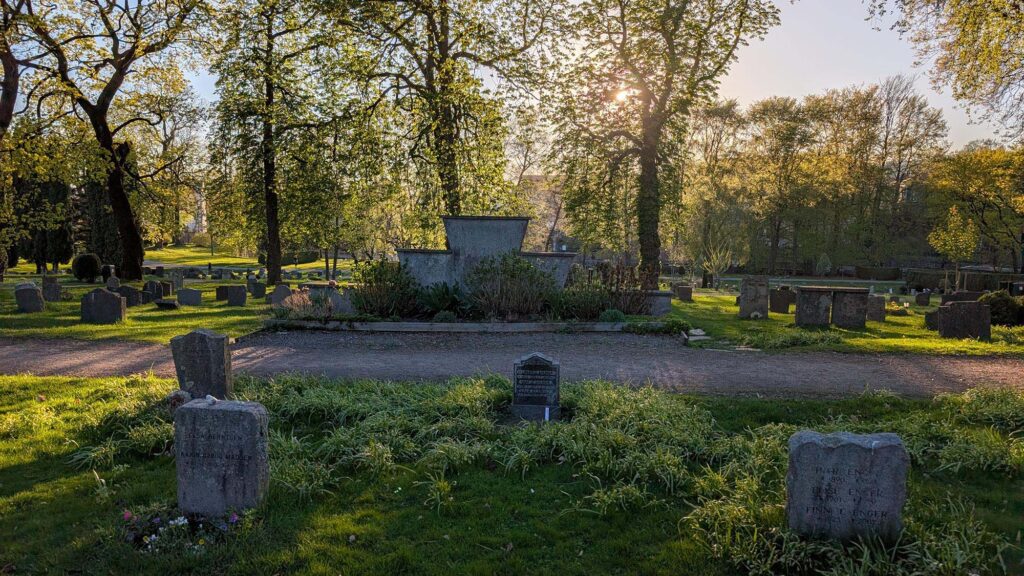
Gamlebyen gravlund
In Jo Nesbø’s Detective Hole (2026), Gamlebyen gravkapell in Gamlebyen gravlund is used for Ellen Gjelten’s funeral.
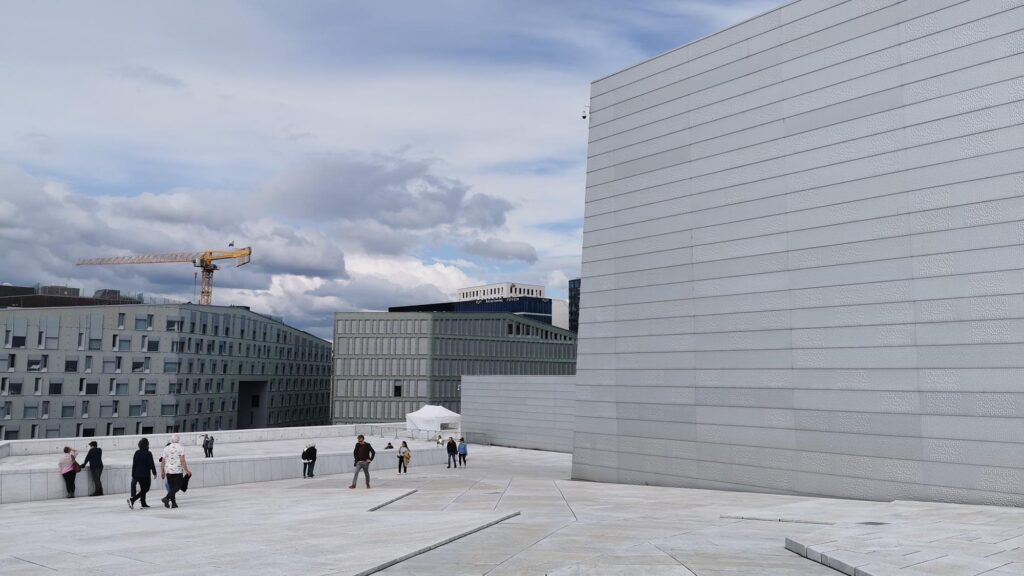
Oslo Opera House
As a screen location, the Oslo Opera House has been used in Pax (2011), 22 July, The Snowman (2017), The Worst Person in the World (2021) and Tenet (2020).
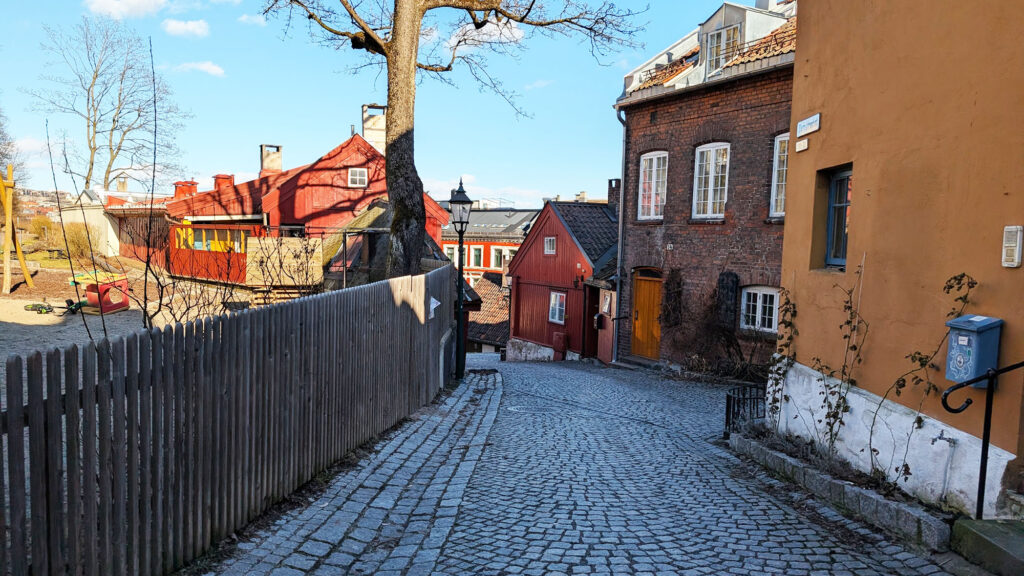
Damstredet
Damstredet appears in Lasse & Geir (1976), The Snowman (2017), and The Worst Person in the World (2021).
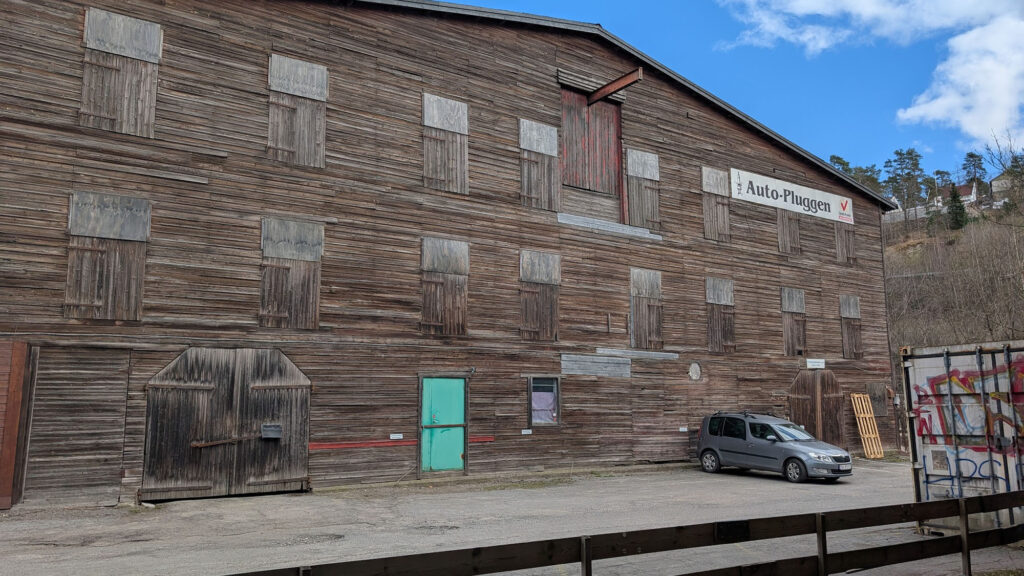
Autopluggen
In Jo Nesbø’s Detective Hole (2026), Autopluggen is used in the scene where Harry Hole stops under a bridge beside the run-down building and bribes a couple.
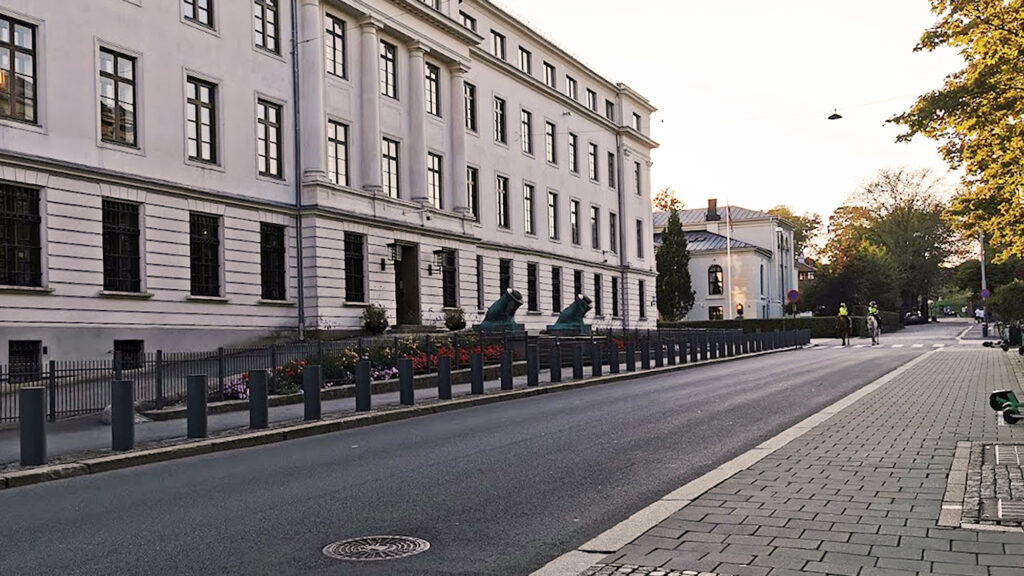
Ministry of Defence
The Royal Norwegian Ministry of Defence in Oslo is the government ministry responsible for developing and implementing Norwegian security and defense policy.
Leave a Reply