
Jack Nicholson (born John Joseph Nicholson on 22 April 1937) is an American actor, filmmaker and screenwriter whose career has included some of the most influential films of the second half of the twentieth century. Born in Neptune, New Jersey, he grew up in nearby Neptune City and later Spring Lake, along the Jersey Shore. His childhood was dominated by the women in his family, particularly Ethel May Nicholson, who operated a beauty salon, and her daughters June and Lorraine. Nicholson was raised believing that Ethel May and her husband, John Nicholson, were his parents and that June was his older sister. In reality, June was his biological mother, having given birth to him as a young unmarried woman, while Ethel May and John were his grandparents. The identity of his biological father has never been conclusively established. Nicholson attended Roosevelt Grammar School in Neptune City and later Manasquan High School, where he was known for his humour and was voted class clown by his fellow students. He graduated in 1954 and initially considered attending university, but instead decided to travel west to California, where June was living.
Nicholson arrived in Los Angeles in 1954, aged seventeen, and found work as an office assistant in the animation department of Metro-Goldwyn-Mayer, whose studios were located in Culver City. He worked around animators William Hanna and Joseph Barbera, then responsible for the Tom and Jerry cartoons, but gradually became more interested in acting. He began attending classes with Jeff Corey, an actor and teacher whose students included several future Hollywood stars, and gained experience at the Players Ring Theatre in Los Angeles. Early television appearances followed, alongside a period of service in the California Air National Guard, which he joined in 1957. His first leading film role came in The Cry Baby Killer (1958), a low-budget crime drama produced by Roger Corman. Although the film attracted little attention, Corman became an important figure in Nicholson’s early career, employing him in productions including The Little Shop of Horrors (1960), in which he played a masochistic dental patient, The Raven (1963) and The Terror (1963). These inexpensive productions provided regular employment, although Nicholson also worked as a screenwriter when acting opportunities were scarce. He married actress Sandra Knight in 1962, and their daughter Jennifer was born the following year. The couple separated in 1966 and divorced in 1968.
During the 1960s, Nicholson became involved with a circle of independent filmmakers working outside the traditional Hollywood studio system. He collaborated with director Monte Hellman on the Westerns The Shooting (1966) and Ride in the Whirlwind (1966), writing the screenplay for the latter, and contributed the script for Corman’s psychedelic drama The Trip (1967). His friendship with director Bob Rafelson also became professionally significant. Together they developed Head (1968), an experimental musical film featuring the Monkees, whose television series had been created by Rafelson and Bert Schneider. Nicholson’s career changed dramatically the following year when he was cast as George Hanson, an alcoholic Southern lawyer, in Dennis Hopper’s Easy Rider (1969). The film followed two motorcyclists travelling across the American Southwest towards New Orleans, with location filming taking place in California, Arizona, New Mexico and Louisiana. Nicholson’s character joins the two travellers after meeting them in a small-town jail, and his performance earned him his first Academy Award nomination, for Best Supporting Actor. The film also connected him with the emerging New Hollywood movement, whose directors were increasingly challenging the conventions of mainstream American cinema.
Nicholson followed Easy Rider with his first major starring success, Five Easy Pieces (1970), directed by Rafelson. He portrayed Robert Dupea, a former classical pianist who has abandoned his privileged upbringing to work in California’s oilfields. The production moved between Hollywood, Oregon and Vancouver Island in British Columbia, where a large house near Victoria represented the home of Dupea’s musical family. Nicholson appeared in several scenes filmed on location in the Pacific Northwest, including the well-known restaurant confrontation in which his character unsuccessfully attempts to order a chicken salad sandwich without the chicken. The performance earned him an Academy Award nomination for Best Actor. During the same period, Nicholson made his directorial debut with Drive, He Said (1971), a drama about university basketball and political unrest. Although the story takes place at a fictional Ohio university, filming was carried out at the University of Oregon in Eugene, where Nicholson incorporated material involving genuine student demonstrations. He returned to work with Rafelson in The King of Marvin Gardens (1972), playing a Philadelphia radio presenter opposite Bruce Dern. Much of the film was shot in Atlantic City, New Jersey, including on the Boardwalk and around the Marlborough-Blenheim Hotel, which was demolished in 1978. The production brought Nicholson back to the state where he had grown up, although his principal home and professional connections were now firmly established in California.
His growing reputation led to two of his defining performances in the early 1970s. In Hal Ashby’s The Last Detail (1973), Nicholson played Billy Buddusky, a naval petty officer escorting a young sailor to prison. The film followed the characters through several cities on the American East Coast, with location work in Washington, DC, New York City, Boston and Virginia, as well as additional filming in Canada. Nicholson received another Academy Award nomination for the role. He then portrayed private detective J. J. Gittes in Roman Polanski’s Chinatown (1974), a mystery involving corruption and water rights in 1930s Los Angeles. Filming made extensive use of Los Angeles and its surrounding communities, including Echo Park Lake, where Gittes follows a city official, and the Catalina Casino on Santa Catalina Island, which appears during his meeting with Noah Cross, played by John Huston. The film’s screenplay was written by Robert Towne, a friend and collaborator of Nicholson, and became one of the most celebrated works of the New Hollywood period. Nicholson’s performance brought another Best Actor nomination. Around the time of the film’s release, he also learnt the truth about his childhood. While researching a 1974 profile for Time magazine, journalists discovered that June Nicholson, who had died in 1963, was actually his mother. Ethel May had died in 1970, leaving Nicholson unable to discuss the long-concealed family history with either woman.
By the middle of the decade, Nicholson had developed sufficient influence to choose projects with prominent international filmmakers. He starred opposite Maria Schneider in Michelangelo Antonioni’s The Passenger (1975), playing a television journalist who assumes the identity of a dead stranger while reporting in Africa. The production involved extensive travel, with filming in Algeria, Spain, Germany and England. Nicholson worked in the Algerian desert, which represented Chad, and in Barcelona, where Antoni Gaudí’s Palau Güell was used for a meeting between his character and Schneider’s. Other scenes were filmed along La Rambla, in Munich and across Andalucía, including Almería and Seville. Later the same year, Nicholson appeared in Miloš Forman’s One Flew Over the Cuckoo’s Nest (1975), portraying Randle McMurphy, a rebellious criminal transferred to a psychiatric institution. The film was shot at Oregon State Hospital in Salem, where the production was granted access to unused wards, and hospital superintendent Dr Dean Brooks appeared as the fictional Dr John Spivey. Filming began in January 1975 and continued for several months, with additional location work around the Oregon coast, including Depoe Bay. The film won five Academy Awards, including Best Picture, Best Director and Best Actor, giving Nicholson his first Oscar.
Nicholson’s working relationship with Marlon Brando, an actor he had admired since his youth, resulted in The Missouri Breaks (1976), directed by Arthur Penn. He subsequently returned to directing with Goin’ South (1978), a Western comedy in which he starred alongside Mary Steenburgen, Christopher Lloyd and John Belushi. Although set in the American West, the film was shot in Durango, Mexico, during the summer and autumn of 1977. Nicholson had also become increasingly established in Hollywood’s social and artistic community. In 1973, he began a long relationship with actress Anjelica Huston, daughter of director John Huston, which continued intermittently until 1989. The couple spent considerable time at Nicholson’s house on Mulholland Drive in the hills above Beverly Hills, an area also associated with several of his friends and contemporaries. Marlon Brando owned a neighbouring property, and Nicholson’s friendship with both Brando and Warren Beatty helped make the neighbourhood a well-known gathering place for leading figures in the film industry. Huston eventually established a separate home on Beverly Glen while the relationship continued. Nicholson also developed a serious interest in collecting art, acquiring works by artists including Pablo Picasso, Henri Matisse and Andy Warhol.
In 1980, Nicholson starred in Stanley Kubrick’s adaptation of Stephen King’s The Shining, portraying Jack Torrance, a writer who becomes caretaker of an isolated mountain hotel in Colorado. Although the fictional Overlook Hotel was associated with the Rocky Mountains, the production was filmed almost entirely in England. Kubrick constructed extensive hotel interiors and exterior sets at Elstree Studios in Borehamwood, Hertfordshire, where Nicholson worked alongside Shelley Duvall and Danny Lloyd over a lengthy shooting schedule. The exterior of the hotel seen in establishing shots was Timberline Lodge on Mount Hood in Oregon, while the opening aerial photography used locations in Montana’s Glacier National Park. These American locations did not constitute the principal filming environment for Nicholson’s performance. The demanding production lasted well over a year, and his portrayal of Torrance became one of his most recognisable roles. He subsequently appeared as playwright Eugene O’Neill in Warren Beatty’s historical drama Reds (1981), before winning his second Academy Award, this time for Best Supporting Actor, for James L. Brooks’s Terms of Endearment (1983). Nicholson played Garrett Breedlove, a retired astronaut involved with Shirley MacLaine’s character, Aurora Greenway. Filming began in the River Oaks neighbourhood of Houston, Texas, where the production used actual residential streets and businesses, including Brennan’s restaurant on Smith Street for a lunch scene involving Nicholson and MacLaine. Other parts of the film were shot in Nebraska and New York.
Nicholson continued alternating between comedy and more demanding dramatic roles during the remainder of the 1980s. He reunited with John Huston in Prizzi’s Honor (1985), playing a New York Mafia hitman, and appeared alongside Cher, Susan Sarandon and Michelle Pfeiffer in The Witches of Eastwick (1987). One of his more substantial dramatic roles came in Ironweed (1987), adapted from William Kennedy’s novel and directed by Héctor Babenco. Nicholson portrayed Francis Phelan, a homeless former baseball player returning to Albany, New York, during the Great Depression, opposite Meryl Streep. The production was filmed extensively in Albany and its surrounding communities, including Troy, Cohoes and the hamlet of Slingerlands. Several streets were temporarily altered to recreate the city during the 1930s, while a three-block section of Lark Street was used for a historical trolley-strike sequence. Nicholson celebrated his fiftieth birthday in Albany during filming, and the film later premiered in the city in December 1987. His performance earned another Academy Award nomination, as did Streep’s. He also appeared briefly in Brooks’s Broadcast News (1987), maintaining a professional relationship with the director that would continue into the following decade.
One of Nicholson’s greatest commercial successes came when Tim Burton cast him as the Joker in Batman (1989), opposite Michael Keaton. The film represented a major change from the comparatively modest productions that had established Nicholson’s career, with Warner Bros. investing heavily in elaborate sets and international marketing. Filming began in England in October 1988, with much of the fictional Gotham City constructed at Pinewood Studios in Buckinghamshire. Several real buildings were used, including Knebworth House in Hertfordshire for the exterior of Wayne Manor, Hatfield House for interiors, and industrial facilities in London and Bedfordshire for the Axis Chemical Works. Nicholson spent several months working in England, where his elaborate make-up and characterisation were central to the production. The Joker became another of his most widely recognised screen characters, and his financial arrangements, which included a share of the film’s earnings, proved exceptionally lucrative. He followed Batman by returning to the character of J. J. Gittes in The Two Jakes (1990), a sequel to Chinatown that Nicholson also directed. Production took place in Los Angeles during 1989, using locations including the Max Factor Building in Hollywood, the Dresden Room restaurant in Los Feliz and the Ojai Valley Inn. The production also used Nicholson’s own residence for filming, with principal photography concluding there in July 1989. The Two Jakes was his third feature film as director and remains his last completed directing credit.
During the early 1990s, Nicholson continued to appear in major Hollywood productions while his personal life underwent further changes. After his relationship with Huston ended, he was involved with actress Rebecca Broussard, with whom he had two children, Lorraine, born in 1990, and Raymond, born in 1992. He also has other children from previous relationships, including Caleb Goddard and Honey Hollman, although some aspects of his family relationships have been publicly disputed. Professionally, he portrayed Colonel Nathan Jessep in Rob Reiner’s courtroom drama A Few Good Men (1992), starring Tom Cruise and Demi Moore. Although the story involves a murder investigation at the American naval base at Guantánamo Bay, Cuba, the production did not film there. Locations in Southern California, including Fort MacArthur in San Pedro and Point Mugu, represented the military base, while the courtroom sequences were filmed at Culver Studios in Culver City. Nicholson’s confrontation with Cruise in the courtroom became one of the film’s best-known scenes and earned him another Academy Award nomination. He also starred as union leader Jimmy Hoffa in Hoffa (1992), directed by Danny DeVito, and appeared in Wolf (1994), The Crossing Guard (1995) and Mars Attacks! (1996).
Nicholson won his third Academy Award for As Good as It Gets (1997), again working with director James L. Brooks. He played Melvin Udall, a misanthropic novelist in New York City who gradually develops a relationship with a waitress portrayed by Helen Hunt. The production used several recognisable locations in Manhattan and Brooklyn, including streets in Greenwich Village and the Prospect Park neighbourhood, with additional filming in California. The film earned Nicholson the Oscar for Best Actor, making him one of the few performers to have won three acting Academy Awards. His later work increasingly reflected his age, moving away from the rebellious younger characters that had defined his career in the 1970s. In Alexander Payne’s About Schmidt (2002), he portrayed Warren Schmidt, a recently retired insurance executive from Omaha, Nebraska, who travels across the American Midwest following his wife’s death. The film was shot extensively in Nebraska, using residential areas of Omaha and locations including Pioneer Village in Minden and the Great Platte River Road Archway Monument in Kearney. Nicholson received his twelfth Academy Award nomination for the role, extending his record as the most frequently nominated male actor in the history of the awards.
His later films frequently paired him with other established performers. He starred opposite Adam Sandler in Anger Management (2003) and Diane Keaton in Nancy Meyers’s romantic comedy Something’s Gotta Give (2003), playing a wealthy businessman who develops an unexpected relationship with a successful playwright. Although much of the latter film takes place at a beach house in the Hamptons on Long Island, production work was divided between New York, California and Paris. The house exterior was filmed in Sagaponack, while interiors were recreated at Warner Bros. Studios in Burbank. The Paris sequences included the historic Le Grand Colbert restaurant, where the characters reunite near the end of the film. Nicholson subsequently returned to a darker role in Martin Scorsese’s The Departed (2006), portraying Boston crime boss Frank Costello alongside Leonardo DiCaprio and Matt Damon. The production was filmed in Boston and New York City, with locations around South Boston, Charlestown and the wider metropolitan area used alongside New York streets and interiors. Nicholson’s participation was concentrated into several weeks of the lengthy shoot. The film won the Academy Award for Best Picture and brought him back into the kind of crime drama that had been important to his earlier career.
In 2007, Nicholson starred opposite Morgan Freeman in Rob Reiner’s The Bucket List, portraying a wealthy businessman who embarks on an international journey with a fellow cancer patient. Although the characters visit places including the Taj Mahal, the pyramids of Egypt and the Great Wall of China, several of these destinations were represented by second-unit footage and visual effects rather than the two actors travelling to every location. His final released feature-film performance came in How Do You Know (2010), directed by James L. Brooks, in which he played the father of Paul Rudd’s character. Since then, Nicholson has largely withdrawn from acting and public appearances, although he has not formally announced a permanent retirement. His career has also been recognised through numerous industry honours, including the American Film Institute Life Achievement Award in 1994, the Cecil B. DeMille Award in 1999 and a Kennedy Center Honor in 2001. His star on the Hollywood Walk of Fame is situated on Hollywood Boulevard in Los Angeles.
Outside acting, Nicholson has maintained several longstanding connections with Los Angeles, particularly through his homes, friendships and enthusiasm for basketball. He became a season-ticket holder for the Los Angeles Lakers in 1970 and remained a familiar presence at games for decades, first at the Forum in Inglewood and later at the team’s downtown Los Angeles arena, originally known as Staples Center and renamed Crypto.com Arena in 2021. His courtside appearances became a regular part of the team’s public image, and he was known to arrange professional commitments around important games. His connection to the Mulholland Drive neighbourhood also continued long after many of his contemporaries had moved away. Following Marlon Brando’s death in 2004, Nicholson purchased his former neighbour’s Beverly Hills-area property in 2005 for approximately $5 million, adding it to his existing holdings in the area. The two actors had been neighbours for more than thirty years, and the purchase preserved a property associated with one of Nicholson’s closest professional friends.
In recent years, Nicholson has lived a considerably quieter life, remaining in the Beverly Hills area and spending time with his family. He made an increasingly rare public appearance at a Lakers playoff game in April 2023, accompanied by his son Ray, who has also pursued an acting career. In February 2025, he appeared during the fiftieth-anniversary special of Saturday Night Live, introducing a musical performance by Adam Sandler, and his daughter Lorraine subsequently shared photographs of him during family gatherings. Nicholson turned eighty-nine in April 2026, having spent more than half a century associated with the Hollywood film industry. Although his final screen performance remains How Do You Know, his body of work encompasses acting, writing and directing, from the independent cinema of the 1960s through to major international studio productions, while his personal history remains closely connected to the Jersey Shore where he grew up and the Los Angeles neighbourhoods where he spent most of his adult life.
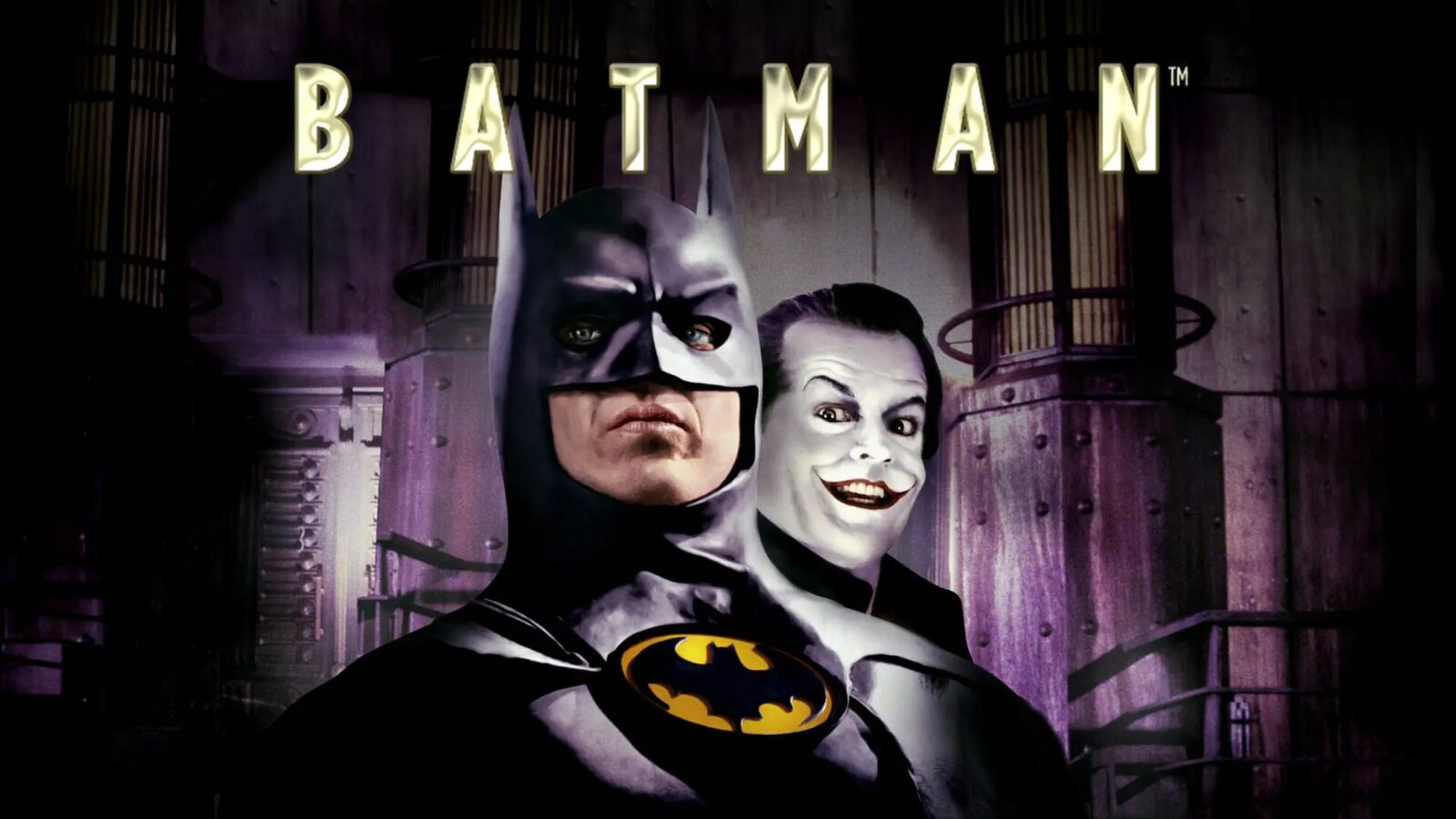
Batman
Batman is set in Gotham City, but the film was made mainly in England, with Pinewood Studios in Buckinghamshire serving as the main production base.
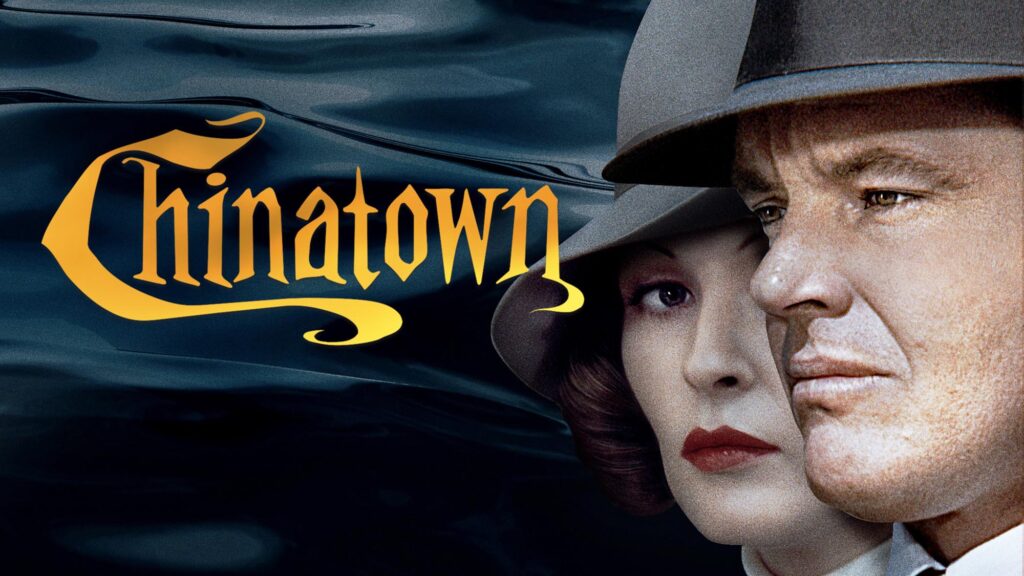
Chinatown
Chinatown was shot in and around Los Angeles, with additional material on Catalina Island, where it turns the city into a place of power and violence.

The Shining
The Shining was shot through a mix of exterior locations and extensive studio work in England. Exterior of the Overlook Hotel was filmed at Timberline Lodge.