
Clint Eastwood (born 31 May 1930) is an American actor, film director, producer and composer, best known for his roles in the Dollars Trilogy (1964–1966), Dirty Harry (1971), Escape from Alcatraz (1979), Unforgiven (1992) and Gran Torino (2008). He has also directed numerous films, including The Bridges of Madison County (1995), Mystic River (2003), Million Dollar Baby (2004), American Sniper (2014) and Juror No. 2 (2024). Born Clinton Eastwood Jr. in San Francisco, California, he is the son of Clinton Eastwood Sr. and Ruth Runner. His father worked in manufacturing and held several positions during the Great Depression, while his mother later worked for IBM. Eastwood has a younger sister, Jeanne, and his family background includes English, Irish, Scottish and Dutch ancestry.
Eastwood spent much of his childhood in the San Francisco Bay Area, although his family relocated several times during the 1930s as his father searched for employment. They eventually settled in Piedmont, an affluent residential community surrounded by Oakland in the East Bay. Eastwood attended Piedmont High School before transferring to Oakland Technical High School, graduating in 1949. During his school years, he developed an interest in swimming, music and mechanics, but had little ambition to become a professional actor. After graduation, he worked at several jobs, including as a lumberjack, lifeguard and petrol station attendant.
In 1951, Eastwood was drafted into the United States Army and assigned to Fort Ord, a military installation near Monterey on California’s central coast. Rather than being sent overseas during the Korean War, he worked primarily as a swimming instructor and lifeguard. His time at Fort Ord proved significant for reasons extending far beyond his military service. He became familiar with Monterey, Carmel-by-the-Sea and the surrounding coastline, developing an attachment to a region where he would eventually establish his home, restaurants and other business interests.
One of the most dramatic events of his early life took place on 30 September 1951, when Eastwood was travelling aboard a Douglas AD-1Q Skyraider aircraft returning from Seattle. The aircraft experienced mechanical problems and ran out of fuel before making an emergency landing in the Pacific Ocean off Point Reyes, north of San Francisco. Eastwood and the pilot survived the crash and made their way through the cold water towards shore. They eventually reached land near the Point Reyes Peninsula, where assistance was arranged. The incident became one of the most unusual episodes of his life before he entered the film industry.
After leaving the Army, Eastwood moved to Los Angeles, where he attended Los Angeles City College and took acting classes. He supported himself through various jobs before obtaining a contract with Universal Pictures during the mid-1950s. His early film appearances included Revenge of the Creature (1955), Tarantula (1955) and Ambush at Cimarron Pass (1958). Most were produced in Southern California, using the studios, backlots and surrounding landscapes that supported Hollywood’s extensive Western and science fiction production industry.
His first major success came with the television Western Rawhide (1959–1965), in which he played Rowdy Yates, a young cattle drover travelling across the American West. Although the story follows a cattle drive through different regions of the United States, filming took place largely in California, using established Western sets and ranch locations. The series made Eastwood a familiar television actor and gave him extensive experience working on location, handling horses and performing in demanding outdoor conditions.
Eastwood became an international film star when Italian director Sergio Leone selected him for A Fistful of Dollars (1964). The Western, loosely inspired by Akira Kurosawa’s Yojimbo (1961), follows a mysterious gunfighter who arrives in a Mexican border town controlled by rival criminal families. Although the story takes place along the American-Mexican frontier, the film was shot primarily in Spain. Hoyo de Manzanares and Colmenar Viejo, communities north of Madrid, provided much of the dusty town setting, while additional interiors were completed at Cinecittà Studios in Rome.
The production marked the beginning of Eastwood’s association with European Western filmmaking, often called the spaghetti Western. Leone returned to the genre with For a Few Dollars More (1965), again starring Eastwood, this time alongside Lee Van Cleef. Filming took place across several Spanish regions, particularly around Almería in Andalusia, where the desert landscapes resembled parts of the American Southwest. The Tabernas Desert, with its dry riverbeds, rocky hills and open plains, became a major location for Italian and Spanish Western productions. Purpose-built settlements and existing towns were adapted to represent nineteenth-century communities in the United States and Mexico.
The trilogy concluded with The Good, the Bad and the Ugly (1966), one of the most geographically ambitious Westerns of the period. Set during the American Civil War, the film was shot in Spain rather than the United States. Locations included the Tabernas Desert and Cabo de Gata in Almería, as well as communities around Madrid, Granada and Burgos. The landscape surrounding the Arlanza River in the province of Burgos was used for the sequence in which Union and Confederate troops battle over a wooden bridge. The filmmakers constructed a large temporary bridge across the river and destroyed it during filming.
The film’s most recognisable location is Sad Hill Cemetery, an enormous circular burial ground constructed in the Valle de Mirandilla near Santo Domingo de Silos, Burgos. Approximately 250 Spanish soldiers helped create the set, which contained more than 5,000 artificial graves arranged around a central stone plaza. The location became the setting for the famous three-way confrontation between Eastwood’s Blondie, Eli Wallach’s Tuco and Lee Van Cleef’s Angel Eyes.
After filming ended, the cemetery was abandoned and gradually disappeared beneath vegetation. In 2015, a group of Spanish film enthusiasts began clearing and restoring the site, rebuilding the cemetery’s distinctive arrangement of graves. Their work was documented in Sad Hill Unearthed (2017), a documentary about the restoration project. The reconstructed cemetery has since become a landmark associated with European Western filmmaking, preserving a location that originally existed only for a single film production.
Eastwood subsequently returned to Europe for Where Eagles Dare (1968), a Second World War adventure starring Richard Burton. Although the story concerns an Allied mission to infiltrate a German fortress in the Alps, the film was shot extensively in Austria. The medieval Hohenwerfen Castle near Salzburg represented the fictional Schloss Adler, the heavily defended mountain fortress where much of the action takes place. The real castle dates to the eleventh century and stands on a rocky hill overlooking the Salzach Valley.
The film’s dramatic cable-car sequences were created using the Feuerkogel cableway near Ebensee in Upper Austria, combined with studio-built sections and miniature effects. Other Austrian locations included Lofer, which represented a German village, and the military airfield at Aigen im Ennstal. Additional interiors were filmed at MGM-British Studios in Borehamwood, Hertfordshire. The production combined several geographically separate Austrian sites into a fictional alpine fortress complex.
Another wartime adventure, Kelly’s Heroes (1970), took Eastwood to what was then Yugoslavia. He played an American soldier who organises an unauthorised mission to steal gold held by German forces in occupied France. Instead of filming in France, director Brian G. Hutton used locations in present-day Croatia and Serbia. The small Istrian town of Vižinada provided the streets of the fictional French community where the soldiers attempt to seize the gold. Additional scenes were filmed around Novi Sad and Beočin in Serbia, where historic buildings, roads and military equipment helped recreate wartime Europe. The production benefited from Yugoslavia’s availability of functioning Second World War vehicles, including tanks used during the battle sequences.
Eastwood made his directorial debut with Play Misty for Me (1971), a psychological thriller in which he portrayed Dave Garver, a radio presenter threatened by an increasingly obsessive admirer played by Jessica Walter. The film was closely connected to Monterey County, where Eastwood had developed a personal attachment during his military service. Unlike productions that disguised one city as another, he chose to film extensively in Carmel-by-the-Sea, Monterey and the surrounding coastal communities.
The fictional radio station KRML was filmed at the actual KRML facilities in the Carmel Rancho Shopping Center. The Sardine Factory restaurant on Wave Street in Monterey became another important location, while scenes were also filmed around Ocean Avenue in Carmel, the waterfront and the Monterey County Fairgrounds. The production incorporated the 1970 Monterey Jazz Festival, recording real musicians and festival audiences. The climactic confrontation was filmed at a house on Spindrift Road in Carmel Highlands, overlooking the Pacific Ocean. Coastal sequences also used Highway 1 and the dramatic landscape around Big Sur. Play Misty for Me established an enduring connection between Eastwood’s filmmaking and the Monterey Peninsula.
That same year, Eastwood starred in Don Siegel’s Dirty Harry (1971), portraying San Francisco police inspector Harry Callahan. Unlike several of his earlier films, which used distant locations to recreate their settings, Dirty Harry was shot extensively in the actual city where its story takes place. Its opening sequence was filmed around the Bank of America Center at 555 California Street, where the Scorpio killer fires from a rooftop towards a woman swimming in a hotel pool.
The film used numerous recognisable San Francisco landmarks, including City Hall, Portsmouth Square, the former Holiday Inn on Kearny Street and Kezar Stadium near Golden Gate Park. Kezar Stadium became the setting for the nighttime confrontation in which Callahan attempts to capture Scorpio on the football field. The large cross on Mount Davidson was used during the ransom-delivery sequence, while additional filming took place around North Beach, the Mission District and the surrounding Bay Area. Dirty Harry established Eastwood’s screen identity as a modern urban lawman and became particularly associated with San Francisco’s streets, hills and public buildings.
Eastwood continued his directing career with High Plains Drifter (1973), a supernatural Western in which he played a mysterious stranger arriving in an isolated frontier town. The fictional settlement of Lago was constructed on the southern shore of Mono Lake, an alkaline lake east of the Sierra Nevada in California. Rather than using an existing Western town at a Hollywood studio, Eastwood had an entire settlement built for the production, including houses, a church and a two-storey hotel.
The buildings were designed as functional structures rather than simple façades, allowing scenes to be filmed both inside and outside. The isolated lake, treeless landscape and distant mountains became central to the film’s unsettling atmosphere. Additional filming took place around Winnemucca Lake in Nevada and the Inyo National Forest. The town was removed after production, leaving the natural shoreline largely unchanged.
Eastwood returned to Europe for The Eiger Sanction (1975), an espionage thriller in which he played Jonathan Hemlock, an assassin and mountaineer sent on a dangerous mission in the Swiss Alps. The production used the actual Eiger mountain near Grindelwald in Switzerland, with sections of the film shot on and around its notoriously dangerous north face. Additional locations included Zürich, Monument Valley in Arizona and Utah, and Zion National Park in southwestern Utah.
Eastwood performed some of the climbing himself, working in difficult mountain conditions with specialist equipment. The production was marked by tragedy when British climber and camera assistant David Knowles died during an accident on the Eiger. The film became particularly notable for its use of genuine high-altitude locations, contrasting with the more controlled studio environments normally used for large action productions.
In Escape from Alcatraz (1979), Eastwood reunited with director Don Siegel for a prison drama based on the actual 1962 escape of Frank Morris and brothers John and Clarence Anglin. Eastwood portrayed Morris, one of the inmates who planned and carried out the escape from the federal prison on Alcatraz Island in San Francisco Bay. Unlike many prison films, which use former institutions or studio-built facilities, the production was granted permission to film inside the real Alcatraz prison, which had closed in 1963.
The filmmakers used the prison’s cellblocks, corridors, exercise areas and other facilities, restoring parts of the deteriorating buildings for production. At the time, Alcatraz had already become part of the Golden Gate National Recreation Area, but much of the former prison required maintenance and restoration. The National Park Service agreed to the filming partly because the production would help restore damaged interiors and furnishings. Escape from Alcatraz therefore had a practical impact on the preservation of a historic institution as well as documenting its appearance during the late 1970s.
Eastwood returned to the Western genre as both actor and director with Pale Rider (1985), portraying a mysterious preacher who arrives in a mining community threatened by a wealthy landowner. The film was shot primarily in Idaho, using the rugged mountains and forests of the Sawtooth National Recreation Area near Sun Valley. The Boulder Mountains provided the setting for the isolated prospectors’ settlement, while the surrounding valleys and rivers helped establish the fictional gold-mining region.
Other Pale Rider locations included Columbia State Historic Park in California, where preserved nineteenth-century buildings provided the setting for town scenes, and Railtown 1897 State Historic Park in Jamestown, which was used for railway sequences. The production combined the mountain landscapes of Idaho with historic Californian towns and railway infrastructure to create a single frontier environment.
Eastwood’s directorial career reached another milestone with Unforgiven (1992), in which he portrayed ageing gunfighter William Munny opposite Morgan Freeman, Gene Hackman and Richard Harris. Although the film takes place primarily in Wyoming during the late nineteenth century, it was shot largely in Alberta, Canada. Production began in August 1991, with the filmmakers constructing the fictional town of Big Whiskey near Longview, southwest of Calgary.
The town was built specifically for the film, including its saloon, sheriff’s office, shops and residential buildings. Other Alberta locations included Brooks, where Munny’s farm was constructed, and Drumheller, where the distinctive badlands provided the setting for Ned Logan’s farm. The production also filmed around High River and Calgary. For the railway scenes, Eastwood travelled to Sonora, California, where the historic Sierra Railway supplied a functioning nineteenth-century-style train. The fictional Wyoming town was dismantled after filming, while the surrounding Alberta landscapes remain associated with the production. Unforgiven won four Academy Awards, including Best Picture and Best Director.
Eastwood subsequently appeared opposite Kevin Costner in A Perfect World (1993), a crime drama set in Texas during 1963. Eastwood played Texas Ranger Red Garnett, who pursues an escaped prisoner travelling with a young boy. The film was shot extensively in Texas, including locations around Austin, Huntsville, Martindale and Brackettville. The Texas State Capitol in Austin provided a historic setting for scenes involving the authorities, while the small town of Martindale, beside the San Marcos River, supplied several commercial buildings and rural streets. The production made extensive use of actual Texas communities rather than relying on Hollywood studio towns.
In The Bridges of Madison County (1995), Eastwood directed and starred opposite Meryl Streep in a romantic drama set in rural Iowa during the 1960s. Playing National Geographic photographer Robert Kincaid, he travels to Madison County to photograph its historic covered bridges, where he meets Italian-born housewife Francesca Johnson. The film was shot extensively around Winterset, Iowa, using actual bridges, farmhouses, streets and surrounding countryside.
Roseman Covered Bridge, west of Winterset, became one of the film’s central locations, where Robert first meets Francesca while searching for the bridge. The nineteenth-century wooden structure had been restored shortly before filming, but the production temporarily altered its appearance to make it look older and less maintained. Holliwell Covered Bridge, southeast of Winterset, also appeared, including during the sequence in which Robert photographs Francesca.
Other filming locations included Winterset City Park, where the characters have a picnic beside a stone bridge, and the streets around the town centre. The scene in which Francesca considers leaving her husband while sitting in the family vehicle was filmed at an intersection in downtown Winterset during heavy rain. The production preserved the geographical relationship between the bridges and the surrounding Iowa countryside, allowing the actual historic structures to become essential elements of the story.
Eastwood returned to the American South with Midnight in the Garden of Good and Evil (1997), an adaptation of John Berendt’s bestselling book about a murder investigation in Savannah, Georgia. The film was shot extensively in Savannah’s historic district, using many of the actual buildings associated with the events that inspired the story. The Mercer Williams House at 429 Bull Street, overlooking Monterey Square, became the principal location. The nineteenth-century mansion had been the home of antiques dealer Jim Williams, played by Kevin Spacey in the film.
The production was granted access to the actual house, including several interiors containing historic furniture and artworks. Some of the more demanding scenes, including violent confrontations, were recreated on studio sets in California to protect the building and its contents. Other Savannah locations included Bonaventure Cemetery, Forsyth Park, Clary’s Café on Abercorn Street and the Tomochichi Federal Building, which served as the courthouse. The film also used the historic Lucas Theatre and several private residences around Monterey Square. Eastwood’s decision to shoot in Savannah gave the production a direct connection to the real buildings and public spaces associated with the story.
His film Mystic River (2003), starring Sean Penn, Tim Robbins and Kevin Bacon, continued his use of actual American neighbourhoods. Set in Boston, Massachusetts, the crime drama was filmed extensively in the city, particularly around South Boston, East Boston and Jamaica Plain. The grocery store operated by Jimmy Markum, played by Penn, was represented by a property on K Street in South Boston. Other locations included Condor Street in East Boston, used for the childhood abduction sequence, and Franklin Park, where the body of Katie Markum is discovered.
The former Doyle’s Café in Jamaica Plain provided the setting for scenes involving Katie and her friends. The historic establishment had operated for more than a century before closing in 2019, and its building was subsequently demolished. Mystic River therefore preserves images of a long-established Boston neighbourhood business that no longer exists.
Eastwood won another Academy Award for Best Director for Million Dollar Baby (2004), a boxing drama in which he starred alongside Hilary Swank and Morgan Freeman. Set primarily in Los Angeles, the film used a mixture of actual gymnasiums, residential streets and studio locations. The Hollywood Athletic Club on Sunset Boulevard provided one of the boxing venues, while the Hollywood Palladium also appeared during the characters’ professional boxing careers.
Other Los Angeles locations included St. Mark Catholic Church in Venice, where Eastwood’s character Frankie Dunn regularly attends Mass, and residential streets around Venice, Pasadena and the San Fernando Valley. The climactic boxing championship, supposedly taking place in Las Vegas, was filmed at the historic Grand Olympic Auditorium in downtown Los Angeles. The auditorium had hosted major boxing and wrestling events for much of the twentieth century and had appeared in numerous other productions, including Rocky (1976) and Raging Bull (1980). The building later became the home of a church.
Eastwood undertook one of his most ambitious international projects with Flags of Our Fathers (2006) and Letters from Iwo Jima (2006), two companion films depicting the Battle of Iwo Jima during the Second World War from American and Japanese perspectives. Although the battle took place on a small volcanic island in the Pacific Ocean, much of the filming occurred in Iceland and California.
The black volcanic sand of Sandvík on Iceland’s Reykjanes Peninsula was used to recreate the beaches of Iwo Jima, particularly for the large-scale American landing sequences. The production brought military vehicles, landing craft, personnel and extensive equipment to the Icelandic coast. Digital effects were subsequently used to alter the landscape and recreate the island’s terrain, including Mount Suribachi. The production also filmed portions of Letters from Iwo Jima in Southern California, with limited filming permitted on Iwo Jima itself. The two films became a striking example of different modern landscapes being combined to recreate a single historical battlefield.
His historical crime drama Changeling (2008), starring Angelina Jolie, took Eastwood back to Los Angeles during the late 1920s. However, many of the city’s original buildings and streets had been demolished or substantially altered. The production therefore used surviving historic neighbourhoods elsewhere in Southern California to recreate the period.
The Old Town district of San Dimas provided residential and commercial streets, while the historic Santa Fe Depot in San Bernardino represented the Los Angeles railway station where Christine Collins is reunited with a boy falsely identified as her missing son. The train station, completed in 1918, was temporarily modified with period signs and furnishings for filming. Additional locations included Los Angeles City Hall, San Quentin State Prison and buildings around Pasadena. The production’s use of surviving historic architecture allowed Eastwood to recreate a version of Los Angeles that had largely disappeared.
Eastwood returned to acting in Gran Torino (2008), portraying Walt Kowalski, a retired automotive worker living in a changing Detroit neighbourhood. The film was shot almost entirely in and around metropolitan Detroit, making extensive use of actual residential streets, churches and commercial establishments. Walt’s house was filmed on Rhode Island Street in Highland Park, while the house associated with a local gang was located on Pilgrim Street in the same community.
Other Gran Torino locations included Saint Ambrose Catholic Church in Grosse Pointe Park, Pointe Hardware and a Veterans of Foreign Wars post in Center Line. The barbershop used for scenes involving Walt and his neighbour was Widgren’s Barbershop in Royal Oak, an establishment founded in 1938. The filmmakers selected the shop from numerous possible locations because its traditional appearance suited the character’s long-established habits. The production’s decision to use actual Detroit-area communities gave the film a strong geographical connection to the American automotive industry and its changing neighbourhoods.
For Invictus (2009), Eastwood travelled to South Africa to dramatise the country’s victory in the 1995 Rugby World Cup, starring Morgan Freeman as Nelson Mandela and Matt Damon as rugby captain François Pienaar. Unlike many historical productions that recreate events in distant locations, Invictus filmed extensively in the places associated with its story.
The production used locations in Cape Town, Pretoria and Johannesburg, including the Union Buildings, the official seat of the South African government, and Robben Island, where Mandela had spent much of his imprisonment. The concluding rugby match was filmed at Ellis Park Stadium in Johannesburg, the actual venue where South Africa defeated New Zealand in the 1995 World Cup final. Using the stadium where the historical event occurred gave the production an unusually direct connection to its subject.
In J. Edgar (2011), starring Leonardo DiCaprio as FBI director J. Edgar Hoover, Eastwood again used geographical substitution to recreate historical American locations. Although much of the story takes place in Washington, D.C., the production was based largely in Los Angeles. The Cicada restaurant inside the historic James Oviatt Building represented New York’s Stork Club, while the former Park Plaza Hotel near MacArthur Park supplied interiors representing government and commercial buildings.
The Old Orange County Courthouse in Santa Ana was used for the courtroom scenes depicting the trial of Bruno Richard Hauptmann, associated with the Lindbergh kidnapping case. The actual courthouse is located in Flemington, New Jersey, but Eastwood used the historic Californian building for its interiors. Additional scenes were filmed at the Library of Congress in Washington, D.C., and around Warrenton, Virginia, with studio interiors completed at Warner Bros. Studios in Burbank.
Eastwood directed the biographical war drama American Sniper (2014), starring Bradley Cooper as United States Navy SEAL Chris Kyle. Although the story follows Kyle’s service in Iraq and his life in Texas, filming took place primarily in Morocco and Southern California. The Moroccan city of Salé, near Rabat, provided urban environments representing Iraqi towns, while the Blue Cloud Movie Ranch near Santa Clarita supplied elaborate military sets designed to resemble Middle Eastern streets and settlements.
The production also used El Centro in California’s Imperial Valley for a major battle sequence, transforming an abandoned industrial property into part of the fictional Iraqi battlefield. Other locations included Seal Beach, where coastal and commercial establishments represented parts of Kyle’s life in the United States. The production was another example of Eastwood combining genuine international locations with specialised California film ranches to recreate geographically distant military environments.
He returned to a contemporary American story with Sully (2016), starring Tom Hanks as airline pilot Chesley Sullenberger. The film dramatises the emergency landing of US Airways Flight 1549 on the Hudson River in New York City on 15 January 2009. Production took place in New York, including around LaGuardia Airport and the Hudson waterfront, with additional filming in Atlanta, Georgia, and Charlotte, North Carolina.
Several aircraft and investigation interiors were recreated using specialised sets and flight simulators, while computer-generated effects reconstructed the aircraft’s descent and landing on the river. Gwinnett Technical College in Georgia provided interiors used for air traffic control and official hearing sequences. The film combined actual New York geography with studio work and digital effects to recreate an event that had taken place only seven years earlier.
Eastwood returned to Europe for The 15:17 to Paris (2018), based on the real-life attempt to stop an armed attacker aboard a Thalys train travelling from Amsterdam to Paris in August 2015. The three Americans who intervened, Spencer Stone, Alek Skarlatos and Anthony Sadler, played themselves in the film. Rather than reconstructing the entire journey on sound stages, Eastwood filmed extensively in the actual countries and transport environments associated with the event.
The production used Venice in Italy, including Santa Lucia railway station, St. Mark’s Square and the Grand Canal, as well as locations in Rome and Paris. In France, filming took place at Gare du Nord, Arras railway station and Charles de Gaulle Airport. The filmmakers also obtained access to a real Thalys train and filmed aboard it while travelling along the route associated with the original incident. The production was one of Eastwood’s most direct attempts to recreate a recent historical event using actual locations and people who had participated in it.
In The Mule (2018), Eastwood played Earl Stone, an elderly horticulturist who becomes involved in transporting drugs for a Mexican cartel. The story follows the central character on repeated journeys between the American Midwest and Southwest, but much of the production was filmed in Georgia. Locations included Atlanta, Augusta, Rome and several communities around the metropolitan area.
Shaw’s Sunshine Gardens in Augusta represented Earl’s home and horticultural business, while the Augusta Museum of History was used for a family graduation scene. St. Paul’s Church in downtown Augusta provided the setting for a wedding reception, and a Waffle House in Norcross was used for a roadside restaurant sequence. The production also travelled to Las Cruces, New Mexico, where a commercial property on West Picacho Avenue represented the cartel’s vehicle repair shop. Additional road sequences were filmed across New Mexico and Colorado, combining genuine highways and landscapes to recreate Earl’s long-distance journeys.
His next film, Richard Jewell (2019), returned to Atlanta, Georgia, and the events surrounding the bombing at Centennial Olympic Park during the 1996 Summer Olympics. The film follows security guard Richard Jewell, who discovered a suspicious backpack before the explosion and later became the subject of intense media attention and a federal investigation. Unlike productions that reconstruct historic events far from their original settings, Eastwood filmed extensively in Atlanta.
Centennial Olympic Park itself was used during production, with temporary structures, lighting and decorations installed to recreate its appearance during the 1996 Games. Other locations included downtown Atlanta streets, civic buildings and Oglethorpe University in Brookhaven, which represented a college campus. The use of the original Olympic Park gave the film a direct geographical connection to the event it dramatises.
Eastwood appeared again as both director and leading actor in Cry Macho (2021), playing Mike Milo, a former rodeo star travelling from Texas into Mexico to retrieve a young boy. Despite the story’s cross-border setting, the production was filmed entirely in New Mexico during November and December 2020. Filming locations included Albuquerque, Belen, Socorro and the surrounding desert landscapes.
Montaño’s Family Restaurant in Belen was transformed into a Mexican roadside café, while roads around Socorro represented parts of the journey towards the border. The production used existing buildings, farms and arid landscapes to create the fictional rural communities encountered by the characters. The film also reunited Eastwood with the Western genre decades after his breakthrough in Sergio Leone’s productions.
His later directorial work included Juror No. 2 (2024), a legal thriller starring Nicholas Hoult, Toni Collette and J. K. Simmons. The story follows a juror who begins to suspect that he may be responsible for the death at the centre of the trial. Although the story takes place in Georgia, the filmmakers concentrated production around Savannah and its surrounding communities.
Pooler City Hall, west of Savannah, provided the exterior of the fictional courthouse, while additional filming took place in commercial buildings, residential streets and establishments around Savannah. A roadside bar known as Rowdy’s Hideaway was represented by a property on Ogeechee Road. The production brought Eastwood back to the same region where he had filmed Midnight in the Garden of Good and Evil more than twenty-five years earlier.
Outside filmmaking, Eastwood has maintained an unusually strong connection to Carmel-by-the-Sea and the Monterey Peninsula. His association with the region began during his military service at Fort Ord, but he eventually acquired property in Carmel and became increasingly involved in local business and preservation. One of his earliest ventures was Hog’s Breath Inn, a restaurant and bar on San Carlos Street in downtown Carmel, which he established during the early 1970s with business partners.
Hog’s Breath Inn became closely associated with Eastwood during the years when he was one of the most recognisable actors in Hollywood. The restaurant was known for its fireplaces, courtyard, rustic interiors and photographs and memorabilia connected with his films. It also became a gathering place for local residents and visitors to the Monterey Peninsula. Eastwood eventually sold his interest in the establishment, which closed briefly in 1999 before reopening in 2000 under restaurateur Kaiser Morcus. The restaurant continues to operate, but it is no longer owned by Eastwood.
His involvement in local affairs led him to enter politics in 1986, when he was elected mayor of Carmel-by-the-Sea. The campaign followed disagreements with the local authorities concerning development, planning regulations and business permits. Eastwood defeated incumbent mayor Charlotte Townsend and served one two-year term, from April 1986 until 1988. During his administration, the city introduced several changes to parking and planning regulations, while Eastwood also supported the preservation of historic buildings and open spaces.
One of his most significant personal investments came in December 1986, when he purchased Mission Ranch, a historic property immediately south of Carmel-by-the-Sea. The ranch had once been part of a nineteenth-century dairy farm and had developed into a small hotel and restaurant complex. Plans had been proposed to replace much of the property with residential development, prompting local opposition.
Eastwood purchased the approximately 22-acre property for an estimated $5 million to $5.5 million and undertook an extensive restoration. Rather than demolishing its older structures, he employed craftsmen to repair and reproduce historic details, including wooden mouldings, doors and traditional hardware. The restored buildings included the former farmhouse, bunkhouse, barns and cottages, many of which were converted into hotel accommodation.
Mission Ranch remains in operation as a hotel and restaurant, with its historic buildings overlooking open meadows and the Pacific coastline. Its grounds continue to accommodate grazing sheep, preserving part of the property’s agricultural character. The establishment is one of the clearest examples of Eastwood’s personal involvement in restoring and operating a historic property rather than simply investing in commercial real estate.
Eastwood also became involved in the ownership of Pebble Beach Company, one of the most prominent golf and hospitality businesses in the United States. In 1999, he joined an investor group that included Arnold Palmer, Peter Ueberroth and Richard Ferris in purchasing the company. Its holdings included Pebble Beach Golf Links, The Lodge at Pebble Beach, The Inn at Spanish Bay and other major properties along the Monterey Peninsula. The investment connected Eastwood directly to several internationally recognised golf courses, hotels and restaurants.
Another long-term project was Teháma, a private residential and golf development situated in the hills between Carmel Valley and Monterey. Eastwood began acquiring land in the area during the 1980s, eventually assembling more than 2,000 acres of forest, grassland and coastal hillside. Working with designer and developer Alan Williams, he established a plan that concentrated construction within a relatively small portion of the property while preserving most of the surrounding landscape.
Teháma includes a private golf course, residential properties and recreational facilities, but approximately 85 per cent of the original land remains undeveloped. The project reflects Eastwood’s interest in maintaining the natural character of the Monterey Peninsula while allowing limited residential development. Unlike his film-related ventures, Teháma has become a substantial part of his involvement in land conservation and architecture.
Eastwood has also maintained a personal connection to music, particularly jazz. He is a pianist and has composed or contributed music to several of his films, including Mystic River, Million Dollar Baby and Changeling. His 1988 film Bird, starring Forest Whitaker as saxophonist Charlie Parker, reflected this longstanding interest. The production recreated American jazz clubs and recording environments associated with Parker’s life, with much of the filming taking place in Los Angeles.
His interest in jazz also influenced Play Misty for Me, which incorporated actual performances at the Monterey Jazz Festival. Eastwood subsequently helped produce the documentary Piano Blues (2003), part of Martin Scorsese’s television series The Blues. Music has therefore provided another connection between his filmmaking, the cultural history of American cities and the Monterey Peninsula.
In his personal life, Eastwood was married to Maggie Johnson from 1953 until their divorce in 1984, and to television presenter Dina Ruiz from 1996 until 2014. He has eight publicly acknowledged children, several of whom have worked in the entertainment industry. His son Kyle Eastwood became a professional jazz bassist and composer, while daughters Alison and Francesca Eastwood and son Scott Eastwood pursued acting careers. The family has maintained connections with California, particularly Los Angeles and the Monterey Peninsula.
Eastwood’s professional history extends across more than seven decades, beginning with television Westerns filmed in California before developing into an international career involving productions in Spain, Austria, the former Yugoslavia, Switzerland, Canada, Iceland, South Africa and numerous parts of the United States. His films have frequently transformed real locations into fictional environments, from Spanish valleys representing the American Civil War to Alberta farmland standing in for Wyoming and Icelandic beaches recreating a battlefield in the Pacific Ocean.
Beyond his films, his restoration of Mission Ranch, former ownership of Hog’s Breath Inn, investment in Pebble Beach Company and development of Teháma have left lasting connections to specific properties on California’s central coast. Together with the surviving filming locations of Dirty Harry, Play Misty for Me, The Bridges of Madison County and the reconstructed Sad Hill Cemetery, these places provide a geographical record of a career that has extended well beyond Hollywood’s studio system.
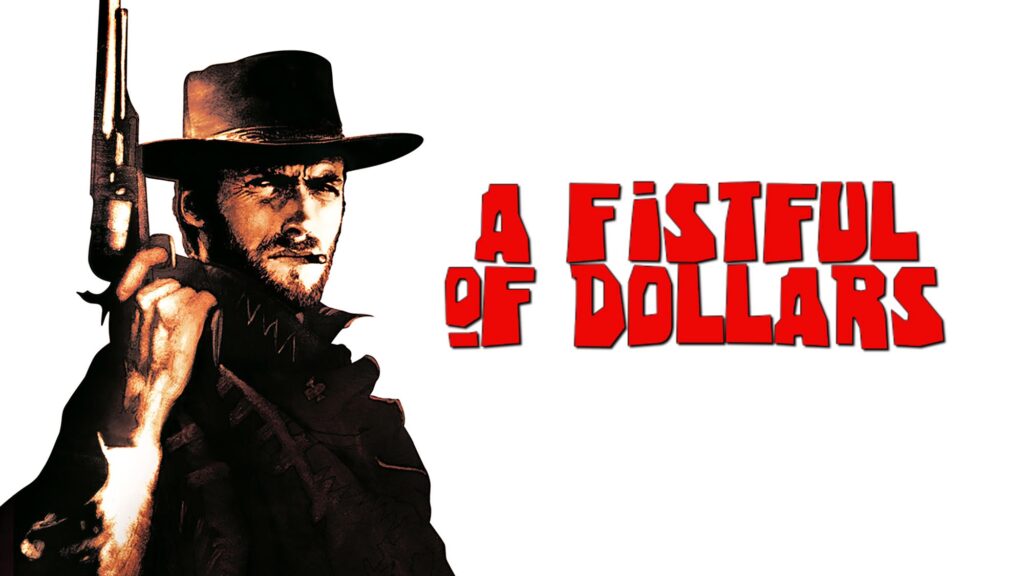
A Fistful of Dollars
A Fistful of Dollars was shot in Spain, using Madrid-area western sets and the dry landscapes of Almería to stand in for the American-Mexican borderlands.
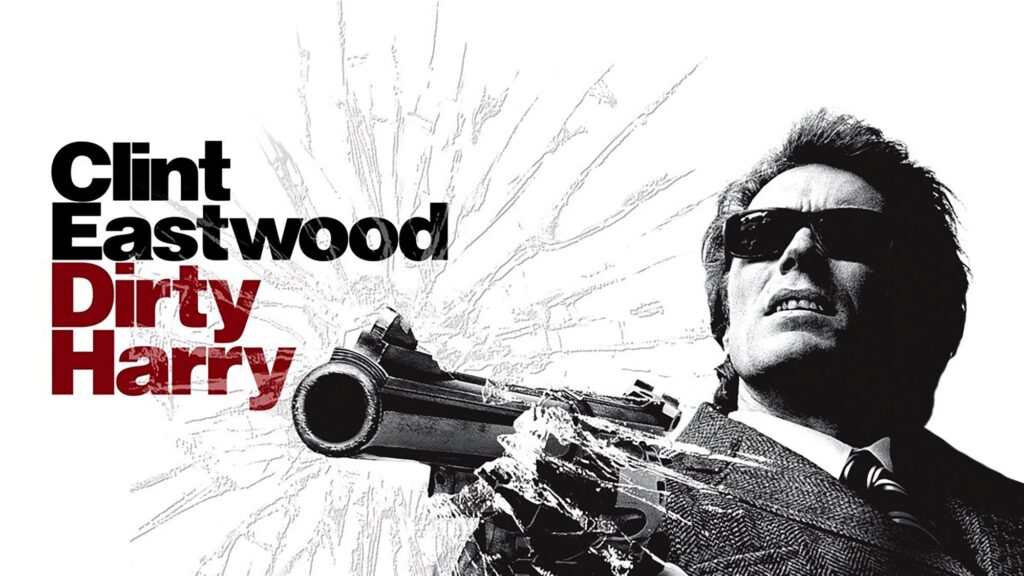
Dirty Harry
Dirty Harry was shot largely on location in San Francisco, and the city is essential to its cold, tense atmosphere.
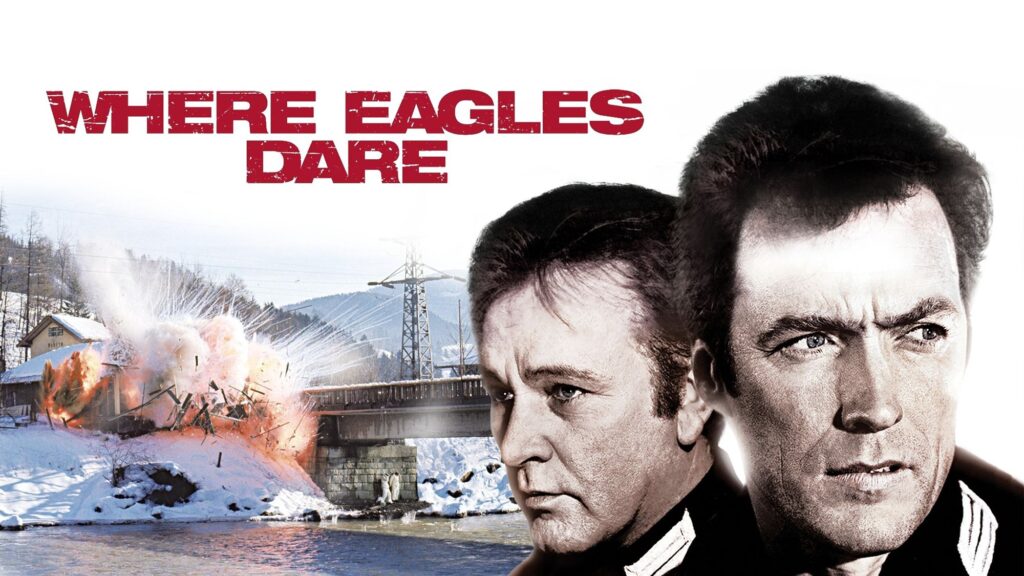
Where Eagles Dare
Where Eagles Dare (1968) is a British-American Second World War action adventure film directed by Brian G. Hutton and written by Alistair…