
The Manor Elstree, formerly known as Edgwarebury House and the Edgwarebury Hotel, is a historic country house hotel on Edgwarebury Lane, off Barnet Lane in Elstree, Hertfordshire, England. The present mock-Tudor building dates from approximately 1900 and was constructed on the site of an earlier estate associated with a sixteenth-century house. Its original owner was Commander Sir Arthur Trevor Dawson (1866–1931), a former Royal Navy officer who became managing director of the British armaments manufacturer Vickers. Dawson furnished his residence with architectural antiques, incorporating a medieval door from Lewes Castle, an eighteenth-century Italian fireplace, sixteenth-century stained glass and carved wooden panelling. A mural depicting the Spanish Armada was painted by Norman Little in 1907 and remains among the building’s historic interior features. Following Dawson’s death in 1931, the property became a private country club frequented by people working in the nearby film studios at Borehamwood, before being converted into a hotel in the late 1960s. A substantial extension containing additional bedrooms and conference facilities was completed in 1989, replacing part of the original gardens and croquet lawn. The building retains its distinctive half-timbered exterior, gabled roof, tall chimneys and traditional entrance porch, although later alterations have changed parts of the grounds and interiors. The former Edgwarebury Hotel was subsequently operated by Corus Hotels and Laura Ashley before adopting its present identity as The Manor Elstree. Set within approximately ten acres of grounds, the property is included on Hertsmere Borough Council’s list of locally important historic buildings. Its proximity to Elstree Studios, combined with its varied interiors and gardens, has made it a frequently used filming location for more than eight decades.
The Manor Elstree has appeared in numerous films and television productions, including Sons of the Sea (1939), A Woman Possessed (1958), The Rough and the Smooth (1959), School for Scoundrels (1960), The Spider’s Web (1960), So Evil, So Young (1961), Night Must Fall (1964), The Liquidator (1965), The Avengers (1961–1969), The Devil Rides Out (1968), Randall and Hopkirk (Deceased) (1969–1970), My Lover, My Son (1970), A Clockwork Orange (1971), Endless Night (1972), The Protectors (1972–1974), Dracula (1974), Stardust (1974), Not Now, Comrade (1976), The Professionals (1977–1983), Hammer House of Mystery and Suspense (1984), and Hot Fuzz (2007). The property has portrayed private residences, country clubs, hotels and other establishments, with productions making use of its distinctive timber-framed exterior, entrance hall, staircase, historic rooms and extensive gardens. Several films also preserve views of the original tennis courts and grounds before the hotel’s later extensions.
In Sons of the Sea (1939), directed by Maurice Elvey, the property appears during the early part of a wartime espionage thriller centred on the Royal Naval College at Dartmouth. The film follows an investigation into a conspiracy involving foreign agents and British naval secrets, with Leslie Banks leading the cast. The house appears in exterior footage featuring its main entrance and the two ornamental sphinxes that once stood on stone plinths beside the doorway. These distinctive sculptures remained at the property for decades and are also visible in later productions, providing a useful means of identifying the building in older films. Other location work for Sons of the Sea took place around Dartmouth and Kingswear in Devon, while the country house footage was filmed at Edgwarebury.
In A Woman Possessed (1958), directed by Max Varnel, the house represents the family residence of Dr John Winthrop (Francis Matthews). After returning from the United States with his fiancée Ann (Kay Callard), John encounters opposition to their relationship from his possessive mother Katherine (Margaretta Scott). The film uses the hotel’s entrance driveway, rear terrace and gardens for scenes at the family home. John and Ann are shown arriving by car at the front of the building, while other sequences take place behind the house, where the original lawn and garden features are visible. In one scene, John’s uncle Walter (Ian Fleming) walks with Ann through the grounds while discussing the family’s history. Another sequence uses a stone sundial in the garden, where Ann becomes distressed after a dog approaches her. The sundial has since disappeared, and the rear grounds have been considerably altered by later hotel extensions.
In The Rough and the Smooth (1959), also released as Portrait of a Sinner, The Manor Elstree appears as the hotel where archaeologist Mike Thompson (Tony Britton) spends several days with his lover Ila Hansen (Nadja Tiller). Directed by Robert Siodmak, the film follows Mike as his affair with Ila threatens his engagement to Margaret Goreham (Natasha Parry). Mike and Ila arrive at the hotel together, with the main entrance and its distinctive timber-framed exterior visible as they approach the building. At reception, the couple register under the assumed names Mr and Mrs Grange, using a wedding ring to support the deception. The scene was filmed inside the actual property, and the arrangement of the windows behind the reception area can be identified in comparison photographs. The hotel represents an establishment outside London where the couple can conduct their affair without attracting attention from their acquaintances.
In School for Scoundrels (1960), directed by Robert Hamer, The Manor Elstree provides the Old Chippentonian Tennis Club, where the inexperienced and easily intimidated Henry Palfrey (Ian Carmichael) plays against the manipulative Raymond Delauney (Terry-Thomas). The location appears several times during the film, beginning with Henry’s arrival in his unreliable Swiftmobile, an elderly luxury car that he has been tricked into purchasing. He struggles to stop the engine outside the hotel’s main entrance before collecting his tennis racquet and joining Delauney and April Smith (Janette Scott). The characters walk around the southern side of the building and descend towards the original tennis courts below the terrace. The court is framed by the hotel’s gardens, with the rear elevation of the house visible in the surrounding shots.
During their first match, Delauney exploits Henry’s nervousness and lack of confidence, manipulating the game while maintaining the appearance of a friendly sporting contest. He positions himself to gain an advantage from the sun and continues undermining Henry in front of April. The tennis scenes were filmed on one of the two courts that originally occupied the hotel’s grounds, with the steps leading down from the terrace also visible. After attending Mr Potter’s College of Lifemanship, Henry returns to the same club for a second match and reverses their positions. He deliberately keeps Delauney waiting, then takes control of the game and defeats him while April watches. The final sequence also uses the front of the hotel and its entrance gates, where Henry leaves with April as the humiliated Delauney realises that he has been outmanoeuvred. The former tennis court and adjacent croquet lawn were subsequently affected by the hotel’s expansion, although parts of the original terrace and garden levels remain identifiable.
In The Spider’s Web (1960), directed by Godfrey Grayson and adapted from Agatha Christie’s play, the hotel represents the country residence of diplomat Henry Hailsham-Brown and his wife Clarissa (Glynis Johns). The opening establishes the building as the family’s home, showing the main façade and the curved driveway outside the entrance. When Oliver Costello, the former husband of Henry’s first wife, arrives at the property, his car is seen approaching the house before parking near the rear of the building. The gardens also appear during the subsequent murder investigation, including a sequence in which Inspector Lord (Peter Butterworth) runs around the northern side of the house. These shots document several areas of the property before the later hotel extensions changed the appearance of the driveway and rear service buildings.
In So Evil, So Young (1961), directed by Godfrey Grayson, Edgwarebury House is used as the wealthy residence targeted by two young women during a burglary. Lucy (Jocelyn Britton) and her accomplice Claire enter the house and open a safe to steal jewellery. When the butler discovers them, Claire attacks him, and the women flee. Lucy is shown leaving the rear of the building, using the steps leading down towards the southern lawn. The film cuts between the interior burglary and the exterior escape, with the distinctive timber-framed rear elevation visible. The stolen jewellery subsequently becomes central to the wrongful conviction of another young woman, although the later reform-school scenes were filmed elsewhere.
In Night Must Fall (1964), directed by Karel Reisz, The Manor Elstree appears in the exterior location work involving Danny (Albert Finney), a hotel worker whose apparently agreeable manner conceals a violent personality. The property is visible in scenes connected with Danny’s employment, including views across the grounds and the former croquet lawn. The original garden layout can be seen particularly clearly in the film, before the construction of the hotel’s later accommodation wing. Other important scenes involving Danny and the household of Mrs Bramson (Mona Washbourne) were filmed at separate Hertfordshire locations, including the former Nyn Hall estate near Northaw.
In The Liquidator (1965), directed by Jack Cardiff, Edgwarebury House serves as the training centre where Brian ‘Boysie’ Oakes (Rod Taylor) undergoes a series of tests after being recruited into British Intelligence by Colonel Mostyn (Trevor Howard). The hotel’s front lawn, rear terrace, tennis courts and dining room were all used for the training sequences. Boysie arrives expecting an attractive and comfortable intelligence job but is subjected to increasingly demanding exercises intended to prepare him for assassination work. During an outdoor firearms test, Mostyn questions his progress, and Boysie mischievously fires a paintball at the colonel from behind. The sequence takes place on the lawn in front of the main entrance, with the hotel’s timbered façade and circular driveway visible.
Other parts of the training sequence were filmed behind the house. During a judo exercise, Boysie becomes distracted by Iris MacIntosh (Jill St John), allowing his instructor to catch him off guard. The subsequent struggle takes place beside the rear terrace, with the tennis court used in School for Scoundrels visible in the background. The terrace is also used for an exercise in which Boysie must determine which drinks have been tampered with, including one containing a miniature transmitter hidden inside an olive. Parts of this sequence extend into the hotel’s dining room. The production made extensive use of the property’s real layout, moving between the gardens and interiors to represent different sections of the fictional intelligence training facility. The hotel dining room should not be confused with the separate Casino Hotel restaurant on Tagg’s Island, which was used for another sequence involving Oakes and Mostyn.
In The Avengers (1961–1969), The Manor Elstree was used in several episodes, beginning with You Have Just Been Murdered (1967), where it represents the residence of wealthy businessman Sir George Unwin. The episode follows John Steed (Patrick Macnee) and Emma Peel (Diana Rigg) as they investigate an elaborate extortion scheme targeting millionaires. The property was selected for the exterior of Unwin’s country house, with its main façade and entrance grounds establishing the wealthy residential setting. The building appears again in The Curious Case of the Countless Clues (1968), representing the mansion belonging to Sir William Burgess (George A. Cooper). The episode concerns a criminal operation in which apparently convincing evidence is manufactured to implicate innocent people. The mansion’s exterior was filmed at Edgwarebury, while other scenes used the nearby Norwegian Barn and the estate’s gatehouse as separate fictional properties.
The Manor Elstree has a more extensive role in the Avengers episode Wish You Were Here (1968), in which it represents the Elizabethan Hotel. Tara King (Linda Thorson) travels to the hotel to investigate why her uncle Charles Merredale has been unable to leave despite repeatedly promising to return home. She discovers that the establishment is effectively a prison, with the management inventing excuses to prevent guests from checking out. The hotel’s distinctive mock-Tudor exterior provides establishing shots of the fictional Elizabethan, while the story follows Tara’s attempts to escape and expose the conspiracy. The episode uses the idea of a comfortable country hotel whose guests are trapped inside against their will, although its interior action should not automatically be attributed to the real Edgwarebury rooms.
In The Devil Rides Out (1968), directed by Terence Fisher for Hammer Film Productions, Edgwarebury House represents the residence of Richard Eaton (Paul Eddington) and his wife Marie (Sarah Lawson). The couple are friends of the Duc de Richleau (Christopher Lee), an aristocrat investigating a Satanic cult led by the sinister Mocata (Charles Gray). The film repeatedly returns to the Eaton residence as de Richleau attempts to protect his friends from Mocata’s supernatural influence. The main entrance of Edgwarebury House appears in scenes where visitors arrive and depart by car, with the black-and-white timber framing, pitched roof and former ornamental sphinxes visible. Marie is shown emerging from the entrance, while Richard and Marie wait outside for Rex Van Ryn (Leon Greene). Later, de Richleau and Rex return to the house, approaching the same entrance and driveway.
The Eaton residence plays an important part in the film’s confrontation with Mocata, but the actual exterior filming must be distinguished from the supernatural sequences created inside the fictional house. The ritual involving the protective circle, in which de Richleau and his companions attempt to withstand demonic attacks, is part of the same fictional residence but is not established as having been filmed inside Edgwarebury. The film also uses High Canons near Well End for a separate country-house location associated with Mocata and his followers. The two properties are sometimes confused because both appear in the same production, but Edgwarebury is identifiable as the exterior of Richard and Marie Eaton’s home.
In Randall and Hopkirk (Deceased) (1969–1970), The Manor Elstree appears in the episode Who Killed Cock Robin? (1969) as the country residence of Mrs Howe. The episode concerns the suspicious deaths of birds belonging to an elderly heiress, with private detective Jeff Randall (Mike Pratt) becoming involved in the investigation. The opening shot establishes the house, and subsequent scenes feature its front entrance, driveway and rear terrace. Jeff arrives at the residence in his car, while other visitors and police vehicles are shown outside the building. The gardener Beeches is seen working on the lawn behind the house and walking towards the aviary. Not all the surrounding woodland was filmed on the hotel grounds, however. Some of the scenes involving the grounds and the suspected intruder were recorded in the perimeter woodland of Elstree Studios, which was used to extend the fictional estate.
The property was used even more extensively in The House on Haunted Hill (1969), where it represents Merston Manor, an apparently haunted mansion being used by criminals as a hiding place. The episode opens inside the hotel’s ground-floor lounge, now known as the Terrace Bar, where two ghost hunters, Frederick Waller (Peter Jones) and Henry Horsfall (Dermot Kelly), are investigating strange noises. They hear footsteps and eerie laughter from upstairs, and Frederick flees through the front entrance, abandoning his frightened companion. The lounge’s fireplace, wooden panelling and doorway into the entrance hall are visible throughout the scene, with the old front door and staircase forming part of the background.
Later, the ghost of Marty Hopkirk (Kenneth Cope) explores the building while Jeff investigates the supposed haunting. The actual hotel’s entrance hall, staircase and first-floor landing were used for several important scenes. Marty is seen examining the lobby and watching one of the suspects enter through the front door. Jeff subsequently climbs the staircase, passing the historic Spanish Armada mural, before being attacked by a disguised figure and falling unconscious. In the final confrontation, Jeff fights one of the criminals, Lattimer (Keith Buckley), on the real upstairs landing. During the struggle, Lattimer drops his gun beside the wooden balustrade. Some of the adjoining rooms, including the chamber where Jeff and Jennifer are held prisoner, were constructed at Elstree Studios. This creates a visible continuity difference between the genuine hotel landing and the studio doorway used when the characters enter the room. The episode is particularly valuable as a record of the hotel’s original interior before the renovations of 1989 and 2013.
In My Lover, My Son (1970), directed by John Newland, the grounds of Edgwarebury House were used during scenes involving Francesca Anderson (Romy Schneider) and her son James (Dennis Waterman). The hotel’s rear gardens and tennis court appear during the sequences at the family’s residence, with characters seen overlooking the same court used in School for Scoundrels. Another scene shows Francesca burning items in the grounds, while the building’s entrance and driveway appear in additional exterior shots. The film uses several recognisable parts of the property rather than relying solely on an establishing view of the house.
In A Clockwork Orange (1971), directed by Stanley Kubrick, The Manor Elstree was used during the sequence in which Alex DeLarge (Malcolm McDowell) is imprisoned in an upstairs room and subjected to Beethoven’s Ninth Symphony. After completing the experimental Ludovico Treatment, Alex finds himself unable to tolerate violence or certain music, making him vulnerable to revenge by people he previously harmed. The writer Frank Alexander (Patrick Magee), whose home Alex attacked earlier in the film, discovers his former assailant’s identity and participates in a scheme to exploit the young man’s psychological conditioning. Alex is taken away from Alexander’s house and locked inside a room where the music is played at an intolerable volume.
The room used for this sequence was room 10 of the Edgwarebury Hotel, subsequently known as the Piccadilly Room, situated on the top floor of the building. Its sloping ceiling and large window are visible as Alex struggles to escape the sound, covering his ears before moving towards the window. Unable to endure the music, he opens the window and throws himself out. The production used the actual room for the interior footage, while the exterior of the building appears in the fall sequence. Additional shots involving Frank Alexander were filmed in the hotel’s main-floor lobby, linking the room above with the fictional location below.
The Manor Elstree should not be confused with the earlier house used for Alex’s original attack on Frank Alexander and his wife, which was assembled from several other locations. The exterior of that house was filmed at the Japanese Garden property in Shipton-under-Wychwood, while important interiors were filmed at Skybreak House in Radlett and on constructed sets in Borehamwood. Edgwarebury was used for the later Beethoven sequence, particularly the room where Alex is imprisoned, rather than the initial home invasion.
In Endless Night (1972), directed by Sidney Gilliat and adapted from Agatha Christie’s novel, the hotel’s dining room appears during a meeting involving Michael Rogers (Hywel Bennett) and wealthy heiress Ellie Thomsen (Hayley Mills). Michael, a young man with ambitions far beyond his modest means, becomes romantically involved with Ellie after meeting her near an English country estate known as Gypsy’s Acre. The Edgwarebury dining room was used for a scene in which the two characters have tea together. They sit beside one of the room’s distinctive windows, whose decorative stained-glass pattern can still be identified in the surviving interior. The hotel was used only for this particular dining-room setting, while the film’s main country-house exterior was photographed on the Isle of Wight and other scenes were filmed in London and abroad.
In The Protectors (1972–1974), the hotel and its grounds appear in several episodes of the international crime series produced by Gerry Anderson and Reg Hill. In The Numbers Game (1972), the property represents a location called the Old Barn, connected with an investigation into a drug-smuggling operation involving coded messages and vehicle registration numbers. In The Bodyguards (1972), the house is used as the residence of Ralph Corder, a suspected participant in a series of bank robberies. Harry Rule (Robert Vaughn) and Caroline di Contini (Nyree Dawn Porter) are hired to guard Corder’s supposedly dead body in an attempt to lure his criminal associates into revealing themselves. The building’s exterior provides the setting for the residence where the elaborate deception is carried out. The grounds were also used in Chase (1972), representing a secluded log cabin belonging to the Contessa. The production used different parts of the property for unrelated fictional locations within the same series.
In Dracula (1974), the television adaptation directed by Dan Curtis and starring Jack Palance as Count Dracula, Edgwarebury House appears as part of the English hotel where Dracula confronts Mina (Penelope Horner). The production filmed the exterior of the hotel in Rye, East Sussex, but used the rear of Edgwarebury for additional scenes involving the building. Dracula stands outside and looks up towards a window where Mina appears. The distinctive upper windows and timbered walls of the Hertfordshire property are visible, although the production appears to have modified part of the window arrangement to accommodate the scene. Later, Dracula is shown looking down at the body of a porter whom he has thrown from an upstairs window. This was filmed at the south-eastern corner of the building, above the hotel’s bar area. The location therefore represents a section of the same fictional hotel that is otherwise established through footage of a completely different building in Rye.
In Stardust (1974), directed by Michael Apted, the property appears during an outdoor celebration organised following the release of the first record by the fictional rock band the Stray Cats. The film follows singer Jim MacLaine (David Essex) as his band rises to international fame under the management of Mike Menary (Adam Faith). The party takes place on the hotel’s former croquet lawn behind the main building, with guests standing in the garden. During the gathering, Mike introduces journalist Sally Porter (Charlotte Cornwell) to Jim, beginning an important relationship within the story. The actual hotel forms the background to the scene, and the lawn used for the celebration was subsequently covered by the accommodation extension built in 1989. The scene consequently preserves a view of a section of the original garden that no longer survives in its former layout.
In Not Now, Comrade (1976), a British comedy adapted from the stage farce by Ray Cooney and John Chapman, The Manor Elstree represents the country residence of Commander Rimmington (Leslie Phillips). The story concerns a Russian ballet dancer attempting to defect to Britain, creating a series of misunderstandings involving military officers, intelligence agents and members of the household. The film uses the main entrance, rear gardens, driveway and the lodge near the entrance gates. Several characters are shown moving around the grounds while attempting to conceal or pursue the defecting dancer. In one sequence, a character played by Roy Kinnear escapes across the back of the hotel grounds while being chased by another man, running towards the area formerly occupied by the croquet lawn. Other scenes use the main entrance and the separate gate lodge, which remains standing beside Edgwarebury Lane. The combination of the main house and neighbouring buildings allows the film to represent several connected parts of the fictional estate.
In The Professionals (1977–1983), Edgwarebury House appears in the episode In the Public Interest (1978), where it represents the residence of Chief Constable Green. The episode follows CI5 agents Bodie (Lewis Collins) and Doyle (Martin Shaw) during an investigation into police corruption and the abuse of authority. The country house is used to establish Green’s private residence, linking the police official to a substantial property away from his professional surroundings. The location has been identified in specialist research into the series’ filming sites, although the available evidence does not securely establish which interior rooms, if any, were used during the episode.
In Hammer House of Mystery and Suspense (1984), the hotel appears in Mark of the Devil, one of the feature-length episodes produced for Hammer’s television anthology series. The story follows a young couple whose marriage and honeymoon are disrupted by increasingly disturbing supernatural events. Edgwarebury House was used as the honeymoon hotel, with its historic building providing the exterior of the establishment where part of the story unfolds. The episode is one of several 1980s television productions to use the property after its conversion into a hotel.
In Hot Fuzz (2007), directed by Edgar Wright, The Manor Elstree provides the interiors of the Swan Hotel in the fictional village of Sandford. Sergeant Nicholas Angel (Simon Pegg) arrives in the village after being transferred from London’s Metropolitan Police and is given accommodation at the Swan while waiting for the cottage promised to him. The reception and lobby scenes were filmed inside the actual Edgwarebury Hotel, where Angel encounters elderly hotel proprietor Joyce Cooper (Billie Whitelaw). The hotel’s dark wooden panelling, large fireplace and traditional reception area are visible as Angel checks in and settles into his temporary accommodation. The sequence establishes the Swan as a genteel village hotel, although its interior was filmed in Hertfordshire rather than Somerset.
The Manor Elstree also appears later in Hot Fuzz when Angel eats alone in the Swan Hotel dining room. Following his unsuccessful attempt to persuade his fellow officers that a series of suspicious deaths are murders rather than accidents, he returns to the hotel and sits by himself at a dining table. The scene was filmed in the property’s actual dining room, a different space from the reception area used earlier in the film. The Swan Hotel exterior, however, was filmed in Wells, Somerset, where the Crown at the northern end of the Market Place was used to represent the fictional establishment. The exterior and interior scenes are therefore separated by more than 150 kilometres in reality, despite appearing to take place in the same hotel within the film.
The Devil Rides Out (1968)


Hot Fuzz
Hot Fuzz was shot primarily in Wells, Somerset, Edgar Wright’s home city, and the place is used so thoroughly that it becomes one of the film’s main characters.

The Devil Rides Out
The Devil Rides Out is a 1968 British horror film. Although the film feel associated with Hammer, it also made effective use of real English locations.
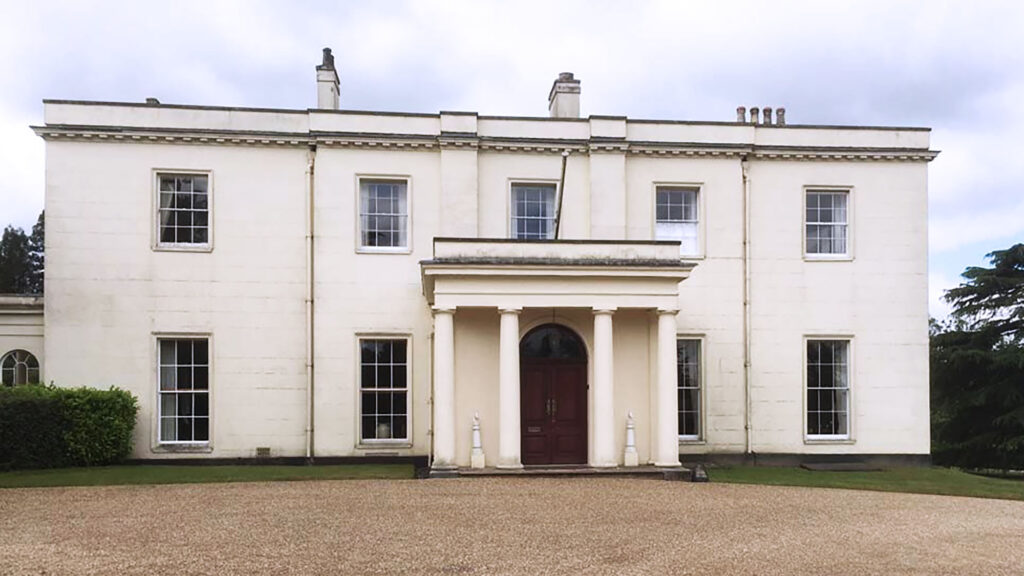
High Canons
High Canons appears in The Devil Rides Out, The Satanic Rites of Dracula, Murder on the Orient Express, Half Moon Street, and many more.

King’s Cross Railway Station
King’s Cross Railway Station has appeared in The Ladykillers, Hoffman, Dilwale Dulhania Le Jayenge, Career Girls, and many more .

Waterloo Bridge
Waterloo Bridge is a road and pedestrian bridge crossing the River Thames in central London, connecting the Strand and Aldwych on the…

The London Eye
The London Eye is a cantilevered observation wheel located on the South Bank of the River Thames in London, England, between Westminster…

Bishops Park
Bishops Park is best known to film fans from The Omen. The film uses several London and Surrey locations, and the Fulham section is one of its most memorable.

All Saints Church, Fulham
All Saints Church, Fulham, is best known on screen from The Omen. It is one of the key Fulham locations used in the film, together with nearby Bishops Park.

Anchor Bankside
Anchor Bankside has appeared in films including Mission: Impossible and Get Him to the Greek. It has also been linked to British television through The Sweeney.

Embassy of the United States in London
The Embassy of the United States in London has appeared in The Diplomat (2023–), Black Doves (2024–) and The Agency (2024–).
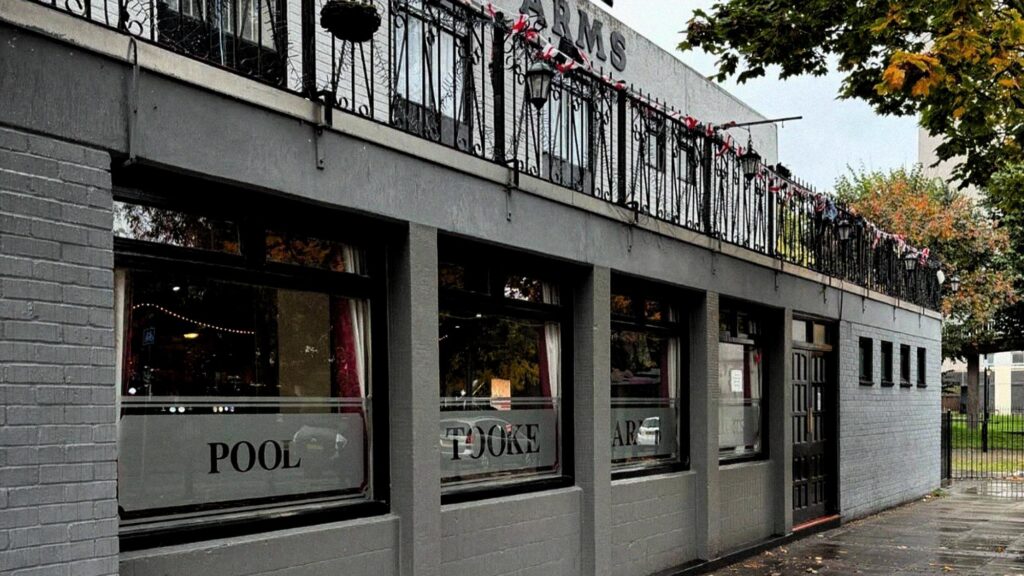
The Tooke Arms
The Tooke Arms appears in MobLand (2025–), where it is used as The Sinful Monkey, the criminal base of Richie Stevenson.