
La Pallice is the deep-water commercial port district of La Rochelle on the Atlantic coast of western France and is particularly known for the enormous German submarine base constructed there during the Second World War. Work on the base began in 1941 after the German occupation of France, with the Organisation Todt constructing massive reinforced-concrete pens capable of protecting U-boats from Allied bombing. The 3rd U-boat Flotilla transferred to La Pallice from Kiel in 1941, and the complex was expanded during the following years to accommodate as many as thirteen submarines. The base became an important departure and repair point for U-boats operating in the Battle of the Atlantic. La Pallice was heavily bombed during the war, but the extraordinary thickness of the concrete structure allowed much of the submarine base to survive. German forces continued to hold La Rochelle and its port until the end of the war in Europe in May 1945. The French Navy subsequently used parts of the complex, and the surviving bunker now stands within the modern commercial port. Public access is normally restricted, but its largely preserved wartime architecture has made it an unusually authentic location for films and television series set around German submarine operations.
La Pallice has appeared in Das Boot (1981), Raiders of the Lost Ark (1981), Back in Crime (2013) and the television series Das Boot (2018–2023). The submarine pens have frequently been allowed to represent what they actually were during the Second World War, making the location particularly valuable for productions requiring a genuine German U-boat base. Das Boot used the complex for both the beginning and devastating conclusion of the story, while Raiders of the Lost Ark transformed it into a secret Nazi base on a Mediterranean island. Decades later, the location was incorporated into the fictional port city of Back in Crime before returning to its historical role as the German submarine base at La Rochelle in the television version of Das Boot.
In Das Boot (1981), La Pallice represents the U-boat base from which U-96 departs on its Atlantic patrol and to which the damaged submarine eventually returns. The real bunker is seen as the crew prepares to leave, with U-boats occupying the enormous concrete pens and military personnel gathering around the harbour. Because only one full-size exterior submarine replica was available, the filmmakers repeatedly positioned it in different pens and filmed it in varying stages of preparation, creating the impression that several U-boats were simultaneously stationed inside the base. La Pallice was chosen partly because the wartime submarine pens had survived with relatively few visible modern alterations, and surviving equipment found around the site could even be incorporated into the production. Filming at the working port was generally restricted to weekends so that modern shipping could be removed from view.
La Pallice becomes even more important when U-96 finally returns after surviving severe damage near Gibraltar. The exhausted crew receives a triumphant welcome as the submarine enters the harbour, but the celebration lasts only moments before Allied aircraft suddenly attack the base. Bombs and machine-gun fire tear through the harbour, killing or wounding several members of the crew. The captain is mortally wounded and watches from the quay as U-96 sinks before collapsing himself. The climactic air raid was staged at the real La Pallice base with around 200 French extras and extensive pyrotechnics. Vintage American aircraft were repainted to represent the attacking British planes, while the damaged full-size submarine replica was specially modified so that it could sink during the final scene. The genuine wartime bunker therefore frames both the crew’s optimistic departure and the devastating ending of the film.
In Raiders of the Lost Ark (1981), La Pallice represents the secret Nazi submarine base on the Mediterranean island where the Ark of the Covenant is taken before the ceremony intended to reveal its power. After the German submarine carrying the Ark and Marion Ravenwood reaches the island, the Ark is unloaded inside the enormous concrete submarine pen while German soldiers assemble around it. Indiana Jones, who has followed the submarine to the base, hides nearby and steals a German uniform so that he can continue following the Ark without being recognised. The La Pallice sequence was historically appropriate even though the story relocates the bunker to the Mediterranean, as the real structure had genuinely been constructed and operated by Nazi Germany.
The scenes at La Pallice were also the first material shot during principal photography on Raiders of the Lost Ark. Filming began there on 23 June 1980, with Harrison Ford, Karen Allen and Paul Freeman among the actors present and 59 local extras dressed as German soldiers for the unloading of the Ark. The production benefited directly from Das Boot, which was being made at approximately the same time. The full-size U-boat replica constructed for Wolfgang Petersen’s film was temporarily loaned to Steven Spielberg’s production and placed inside the genuine wartime bunker. After several days at La Pallice, the crew continued filming at sea before leaving France for the remainder of the production.
In Back in Crime (2013), originally released as L’Autre Vie de Richard Kemp, the former submarine base is incorporated into the anonymous coastal city in which police detective Richard Kemp investigates a serial killer. Kemp discovers similarities between a present-day murder and the unsolved crimes of the killer known as the Perce-Oreille, whom he investigated twenty years earlier. After being attacked and thrown into the water, he inexplicably finds himself transported from 2010 back to 1989, shortly before the first of the original murders. Director Germinal Alvarez deliberately avoided identifying the setting as a recognisable real city. Instead, locations in La Rochelle, Bordeaux and the surrounding region were combined to construct a fictional port city that could plausibly exist in both 1989 and 2010. The monumental concrete structures of the La Pallice submarine base form part of this industrial waterfront environment rather than representing a Second World War facility. Together with Bordeaux’s Mériadeck district, the Port Atlantique area and the Île de Ré bridge, the base helps create the deliberately difficult-to-place urban landscape through which the two versions of Kemp pursue the same murder investigation.
In Das Boot (2018–2023), La Pallice returns to its historical role as the German submarine base at La Rochelle during the Second World War. The series is a separate continuation of Lothar-Günther Buchheim’s submarine stories rather than a remake of Wolfgang Petersen’s film, following both German U-boat crews at sea and civilians, German authorities and members of the French Resistance in occupied La Rochelle. In the first season, the fictional U-612 is based at La Pallice and departs from La Rochelle on its first combat patrol under the command of Klaus Hoffmann. The parallel storyline ashore includes Simone Strasser, Gestapo officer Hagen Forster and Heinrich Glück, the commander responsible for the U-boat flotilla stationed at the port. The genuine submarine bunker was therefore used again for exterior and harbour material connected to the flotilla more than thirty-five years after it had appeared in the original Das Boot.
The production returned to La Rochelle and the surrounding region for the second season, with La Pallice continuing to represent the wartime submarine base. Hundreds of local participants and extras were involved during the first season’s location work, with filming at the former base taking place in 2017. As with the original film, the surviving bunker provides authentic scale that would be difficult to reproduce as a set, but the television production combines it with locations and studio facilities in several countries. Submarine interiors were filmed separately, while Malta was extensively used for the U-boat and maritime material. La Pallice primarily supplies the real historical environment of the German naval presence in occupied La Rochelle.
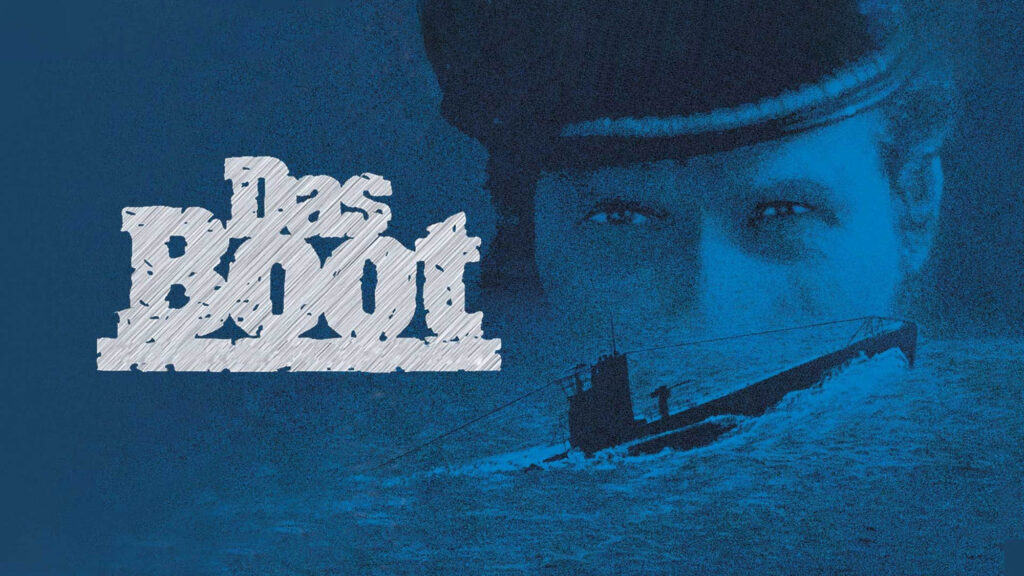
Das Boot
Das Boot is a 1981 West German war film written and directed by Wolfgang Petersen, produced by Günter Rohrbach, and starring Prochnow, Grönemeyer and Wennemann.

Raiders of the Lost Ark
Raiders of the Lost Ark was filmed in England, Tunisia, France, Hawaii and California, with each place contributing a very different part of Indy's journey.
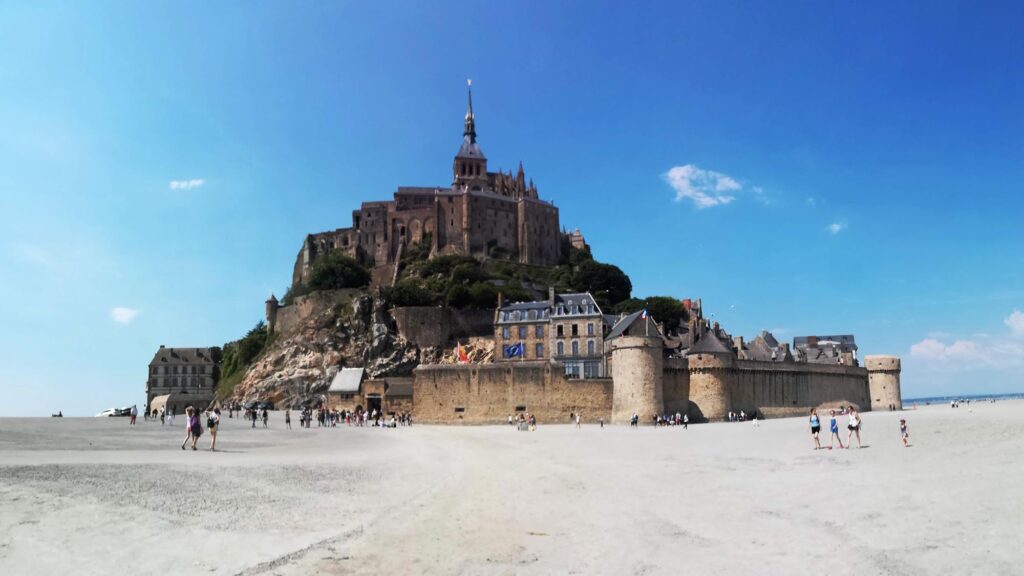
Mont-Saint-Michel
Mont-Saint-Michel has appeared in films including Mindwalk, Armageddon and To the Wonder, and it is also used in The Walking Dead: Daryl Dixon.
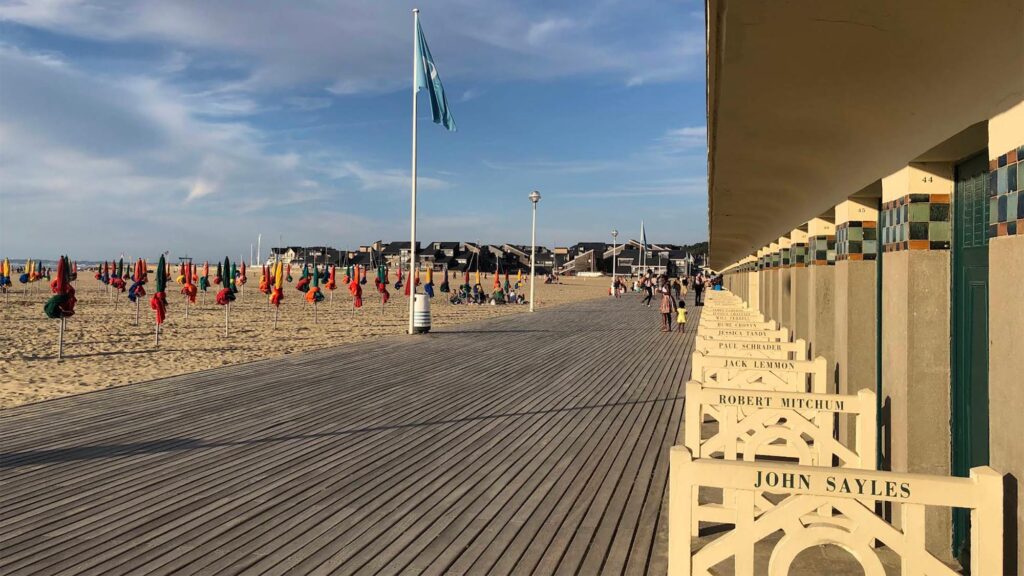
Deauville Beach Cabins
The Deauville beach cabins have appeared in both A Man and a Woman and Sentimental Value.
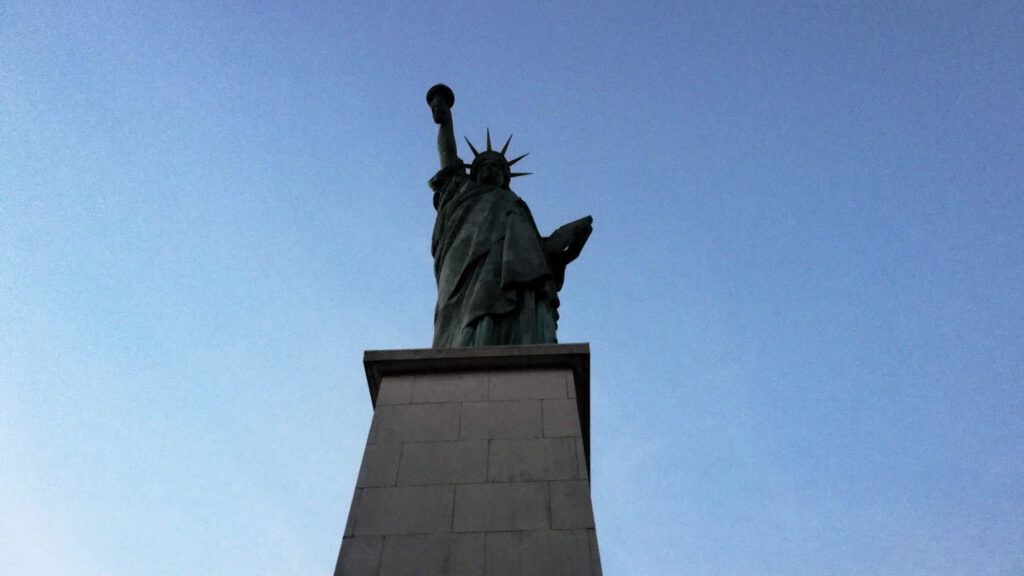
Statue of Liberty in Paris
Statue of Liberty in Paris appears in Frantic (1988), National Treasure: Book of Secrets (2007), Lost in Paris (2016), and The Fall (2006).
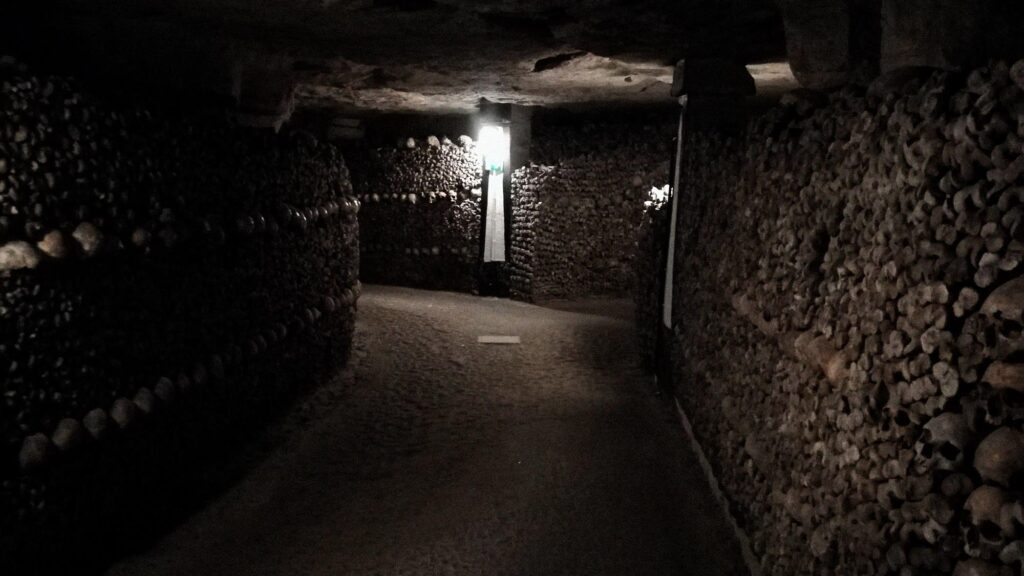
Catacombs of Paris
The Catacombs of Paris are most closely associated with "As Above, So Below" (2014). The location also appears in "The Walking Dead: Daryl Dixon" (2023–).
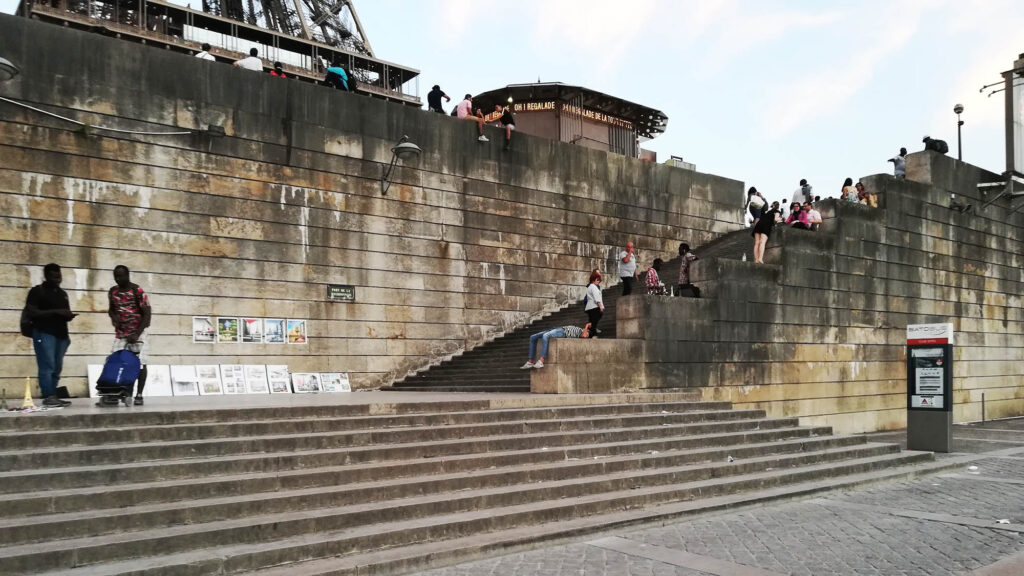
Pont d’Iéna Stairs
Pont d’Iéna Stairs appears in A View to a Kill (1985). The stairway is used as part of one of the film’s best-known Paris action sequences.
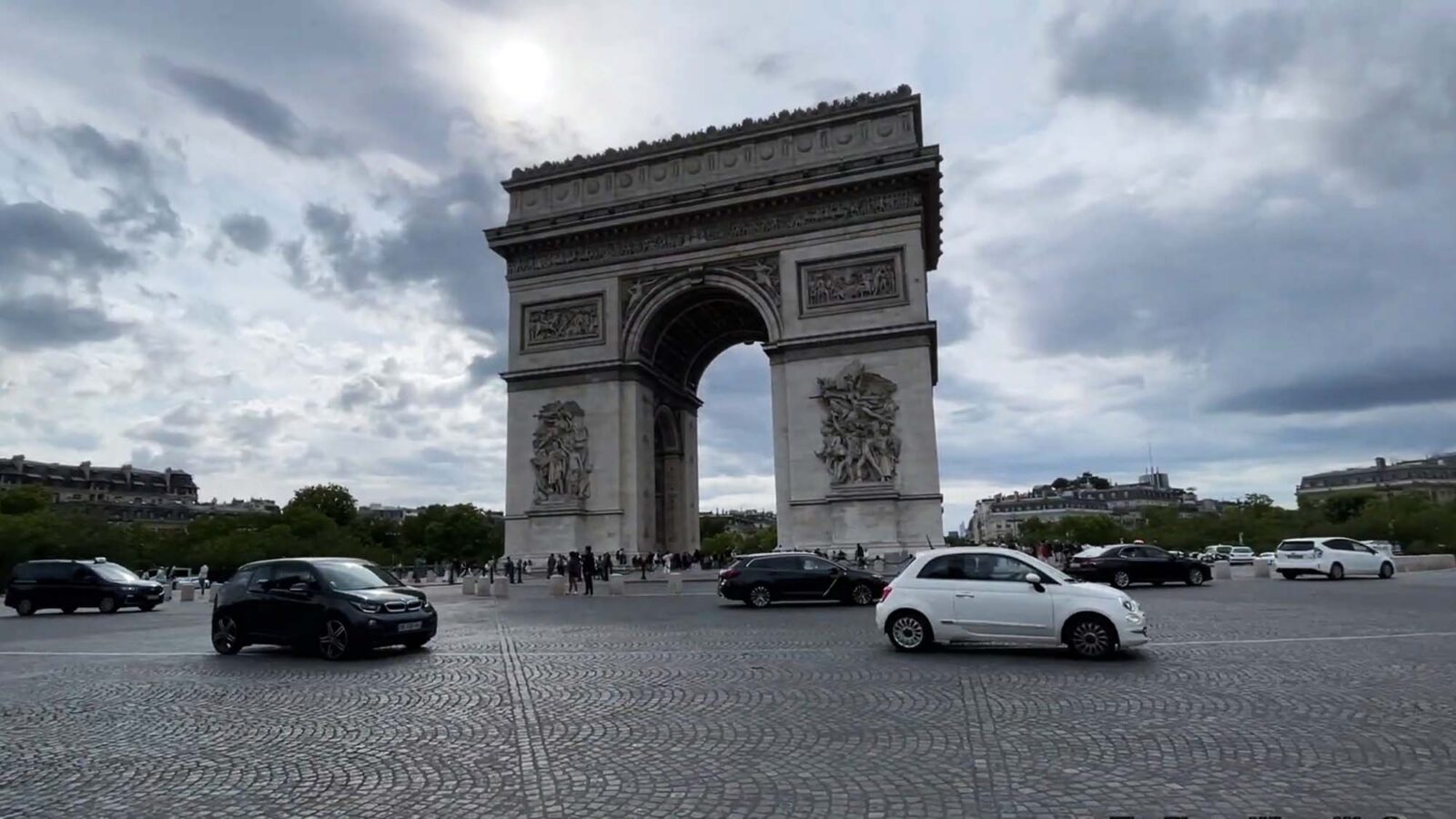
Arc de Triomphe
Arc de Triomphe has appeared in The Day of the Jackal, Ronin, National Treasure: Book of Secrets, Taken, Mission: Impossible – Fallout and Blindspot.
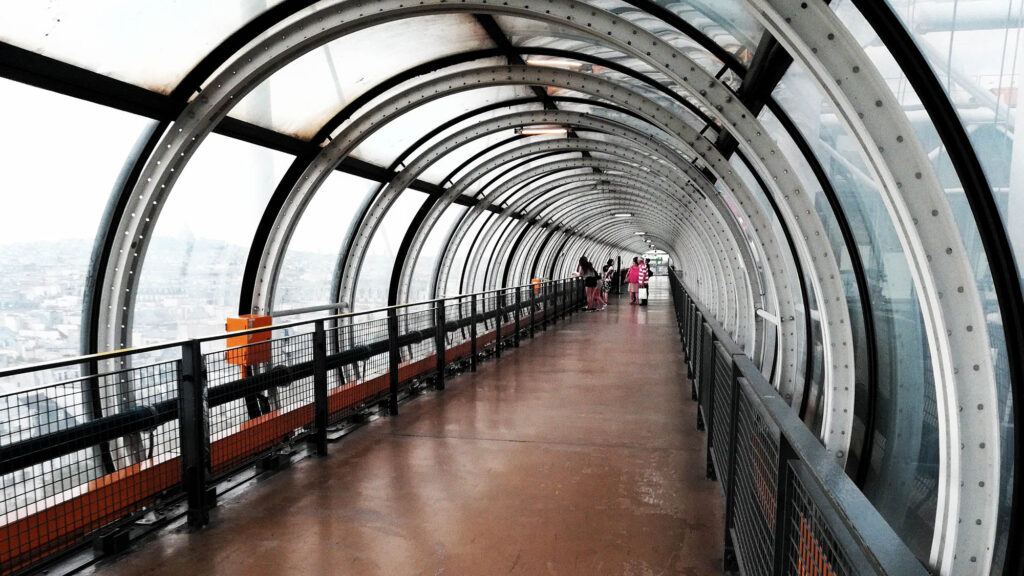
Centre Pompidou
The Centre Pompidou is a building complex in Paris, France. The Centre Pompidou served as a primary filming location for the 1979 James Bond film Moonraker.
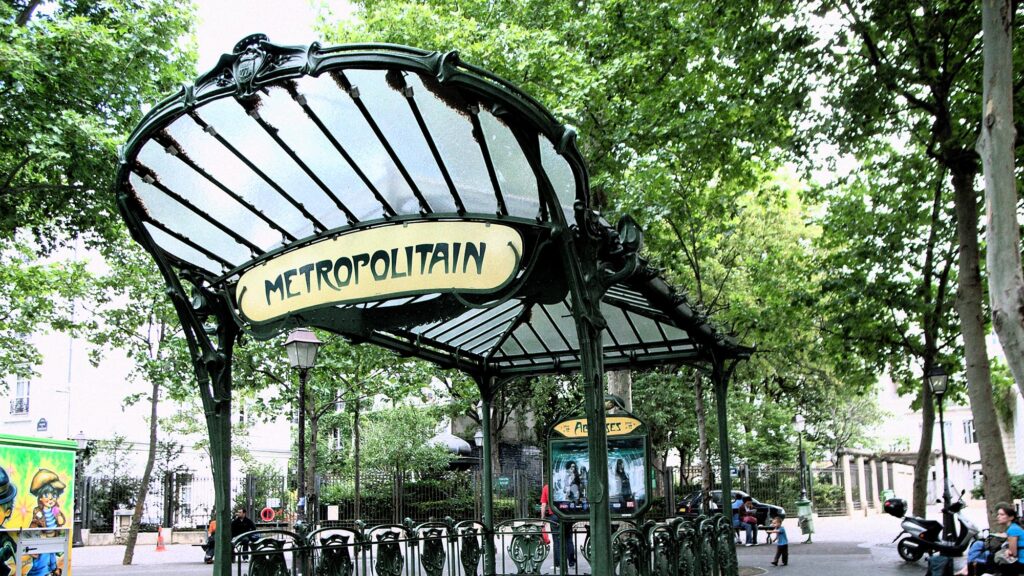
Abbesses Metro Station
Abbesses is a famous, historic Paris Métro station on Line 12 in Montmartre, renowned as the deepest station in the network at roughly 36 meters below ground.
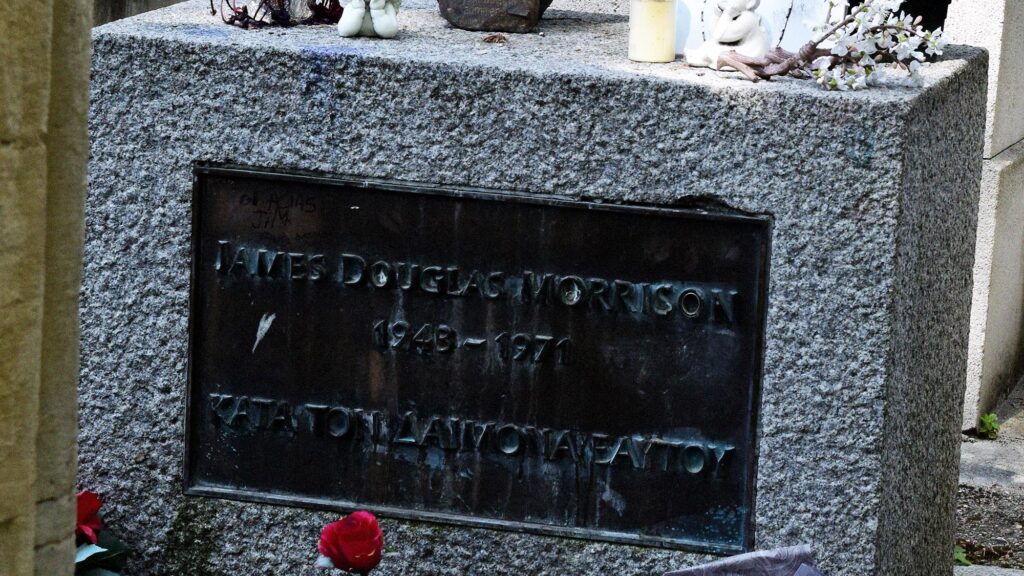
Jim Morrison’s Grave
Jim Morrison’s Grave appears in The Doors (1991) and The Walking Dead: Daryl Dixon (2023–). Both productions use the real grave in Père Lachaise Cemetery.