
Grande Arche, formally known as Grande Arche de la Fraternité, is a monumental office building and landmark at the western end of the historic axis of Paris in the La Défense business district, within the commune of Puteaux. The project originated in President François Mitterrand’s programme of major architectural works and an international competition launched in 1982 to complete the Tête Défense at the end of the axis running from the Louvre through the Place de la Concorde and Arc de Triomphe. A total of 424 proposals were submitted, with Mitterrand selecting the design of relatively unknown Danish architect Johan Otto von Spreckelsen and engineer Erik Reitzel in 1983. Spreckelsen conceived the building as an enormous open cube, a modern counterpart to the Arc de Triomphe dedicated to humanity and fraternity rather than military victory. Construction began in 1985, with French architect Paul Andreu assuming an increasingly important role as technical and political disagreements complicated the project. Spreckelsen resigned in 1986 and died the following year without seeing the building completed. Grande Arche was inaugurated in July 1989 during celebrations marking the bicentenary of the French Revolution and the G7 summit held at La Défense. The structure rises approximately 110 metres and contains offices within its two massive sides, while the open centre frames the Paris skyline and historic axis. Its original Carrara marble cladding deteriorated more quickly than anticipated, leading to a major renovation during the 2010s in which much of the exterior stone was replaced with more durable granite. With its enormous geometric form, monumental stairways and surrounding open plaza, Grande Arche has become both the defining landmark of La Défense and a distinctive modern filming location.
Grande Arche has appeared in Until the End of the World (1991), The Bourne Identity (2002), Girlhood (2014), The Walking Dead: Daryl Dixon (2023–) and The Great Arch (2025). Wim Wenders used the recently completed monument as part of his near-future vision of Paris in Until the End of the World (1991), while The Bourne Identity (2002) places Jason Bourne directly beneath the Arche as he follows a lead connected to his forgotten identity. Girlhood (2014) makes particularly striking use of the plaza and monumental steps for a large gathering and dance sequence involving Marieme and other teenage girls. The Walking Dead: Daryl Dixon (2023–) later transforms the same area into an abandoned post-apocalyptic business district, while The Great Arch (2025) is devoted to the extraordinary story of the building’s creation and its architect Johan Otto von Spreckelsen.
In Until the End of the World (1991), Grande Arche appears during the Paris section of Wim Wenders’ globe-spanning science-fiction road movie. The story is set in 1999, when an out-of-control nuclear satellite threatens to fall back to Earth, and the recently completed architecture of La Défense helps create a believable version of a city only a few years into the future. Claire Tourneur arrives at the base of the broad steps beneath the Grande Arche as she moves through Paris, with the enormous white structure forming part of the film’s futuristic urban landscape. The location was especially effective because Grande Arche had opened only two years before the film’s release and still looked strikingly new, allowing Wenders to present genuine contemporary architecture as part of an imagined turn-of-the-millennium world.
In The Bourne Identity (2002), Grande Arche appears after Jason Bourne and Marie Kreutz begin reconstructing the identity of John Michael Kane, one of the aliases connected to Bourne’s forgotten past. Marie obtains telephone records showing that Kane had contacted a company called Alliance Sécurité Maritime, and Bourne follows the lead to La Défense. He approaches the enormous Grande Arche and enters what the film presents as the company’s offices beneath the monument. Inside, an employee recognises him as Mr Kane and explains that he had previously been making enquiries about purchasing a yacht. Bourne is shown paperwork containing a photograph of African dictator Nykwana Wombosi, providing the crucial connection between his false identity and the assassination attempt that left him wounded and amnesiac at the beginning of the film. Grande Arche therefore marks an important step in Bourne’s discovery that he was not simply John Michael Kane but an assassin sent to kill Wombosi.
In Girlhood (2014), originally titled Bande de filles, the plaza and steps beneath Grande Arche provide the setting for one of the film’s most exuberant sequences. Marieme, now increasingly confident within the group led by Lady, joins a large gathering of teenage girls from different neighbourhoods at La Défense. The camera tracks along a long line of girls before revealing the enormous Grande Arche behind them, after which individuals and groups move into the open space to dance while the others cheer them on. Marieme and Lady eventually dance together to J. Dash’s «Wop», a song that had previously accompanied Marieme’s tentative attempts to copy Lady’s movements on the Métro. Here she performs confidently alongside her, visually demonstrating how much her identity within the group has changed. Director Céline Sciamma deliberately enlarged the kind of informal gatherings she had observed among teenagers, filling the monumental corporate plaza with young women and allowing their energy to temporarily dominate a space normally associated with offices, finance and business. Grande Arche is particularly effective in the wide shots, where the dancers appear tiny against the scale of the building yet command the otherwise empty plaza.
In The Walking Dead: Daryl Dixon (2023–), Grande Arche appears during the second season, The Book of Carol, as part of the abandoned post-apocalyptic La Défense district. In «Moulin Rouge» (2024), Carol Peletier passes through the area after reaching Paris while searching for Daryl. The normally crowded business district has become silent and overgrown, with wrecked vehicles, rubbish and bodies scattered around the pedestrian spaces behind the Arche. Grande Arche becomes even more prominent in «Vouloir, C’est Pouvoir» (2024), when Daryl and Carol travel through La Défense after finally being reunited. The production filmed along the Jetée Chemetov and on the monumental steps immediately behind Grande Arche, temporarily filling the modern office district with abandoned vehicles and apocalyptic debris. Later in the same episode, Daryl passes the monument again with Laurent while taking him towards the plane that may carry them to America. Looking at the enormous structure, Laurent remarks that it looks like the future, and Daryl agrees. The comment gives the location an ironic quality: a building designed in the 1980s as an optimistic monument to humanity and the future now towers over an empty civilisation that has largely collapsed.
In The Great Arch (2025), originally titled L’Inconnu de la Grande Arche, the monument is not merely a filming location but the subject of the entire story. Claes Bang plays Danish architect Johan Otto von Spreckelsen, who unexpectedly wins François Mitterrand’s international architectural competition in 1983 and suddenly finds himself responsible for one of the largest and most politically important building projects in France. The film follows his collaboration with French architect Paul Andreu, played by Swann Arlaud, and his increasingly difficult battles with engineers, civil servants, construction requirements and changing political priorities as his mathematically pure concept is forced into physical reality. Production took place partly at La Défense, including the real parvis, but the filmmakers could not simply use the completed Grande Arche to recreate its construction during the 1980s. The building site was therefore reconstructed on the TSF Studios 77 backlot using large-scale set pieces and green screens, while archival photographs of the real construction were digitally animated and combined with new footage and visual effects. More than a hundred visual-effects shots were created to show the Grande Arche at different stages of completion. The film therefore creates an unusual relationship with the real location: present-day La Défense appears on screen, while the building whose history it tells is repeatedly stripped back digitally to recreate the years before the monument actually existed.
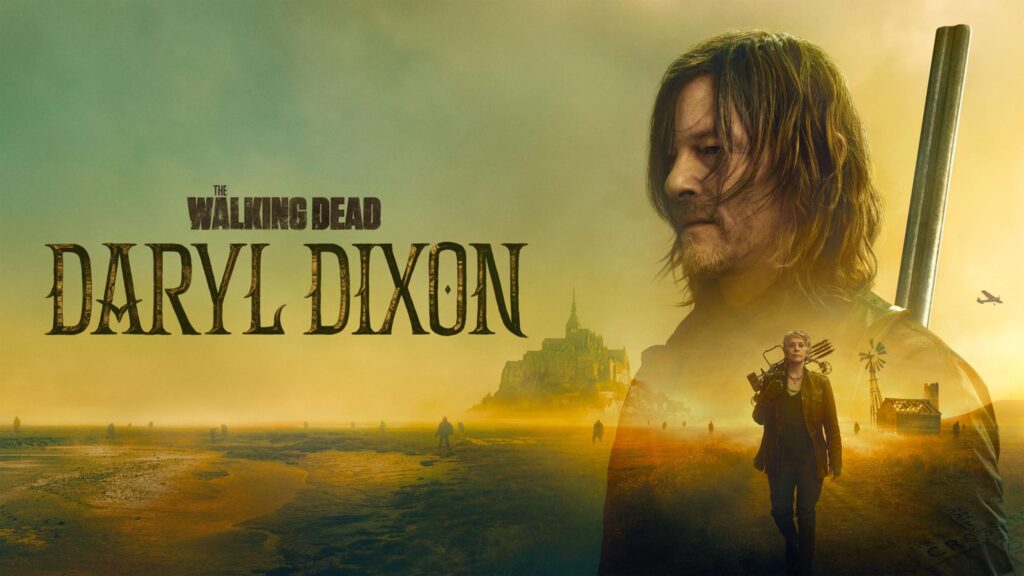
The Walking Dead: Daryl Dixon
The Walking Dead: Daryl Dixon is closely tied to France, and the country is far more than a generic backdrop.
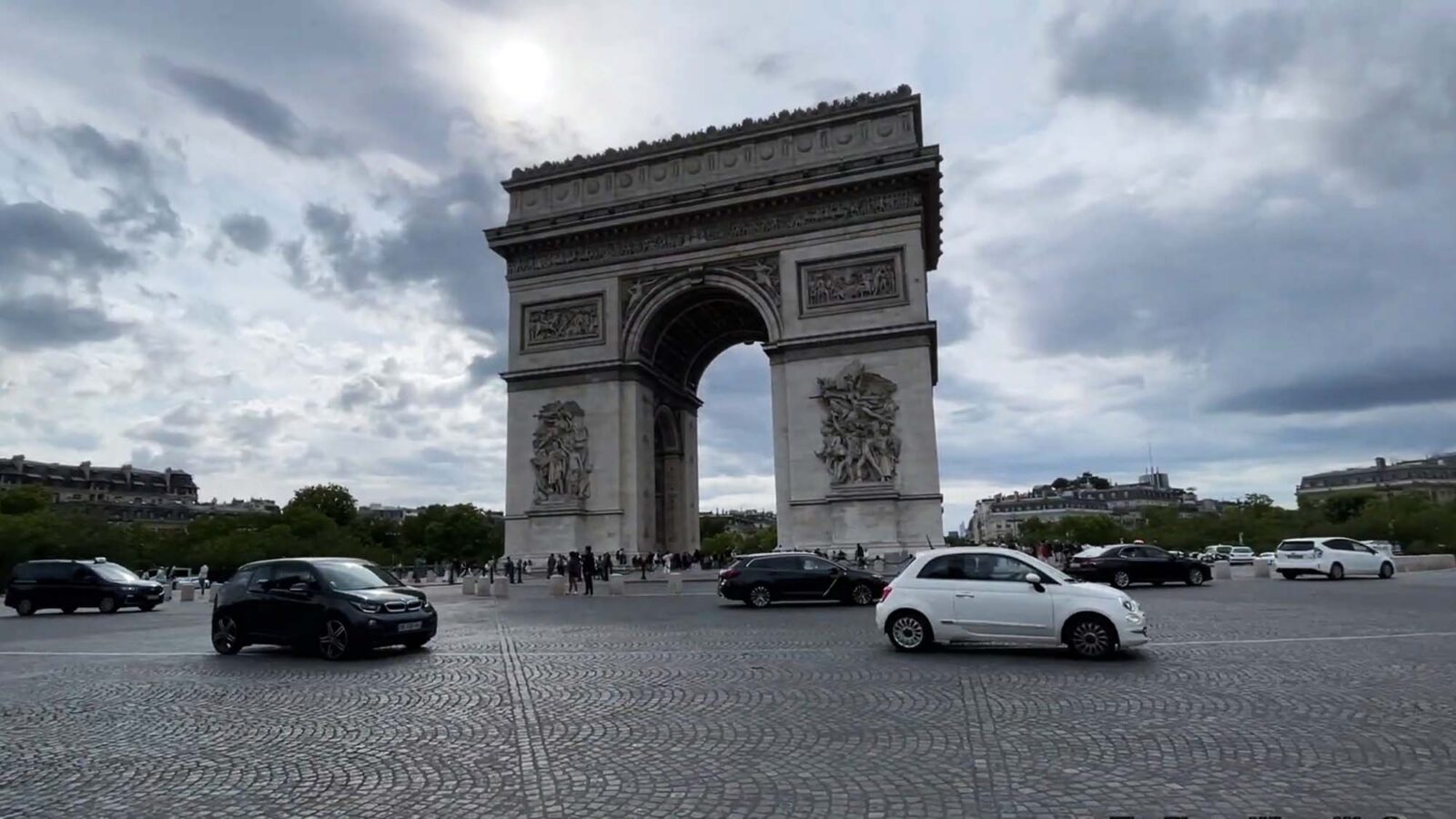
Arc de Triomphe
Arc de Triomphe has appeared in The Day of the Jackal, Ronin, National Treasure: Book of Secrets, Taken, Mission: Impossible – Fallout and Blindspot.
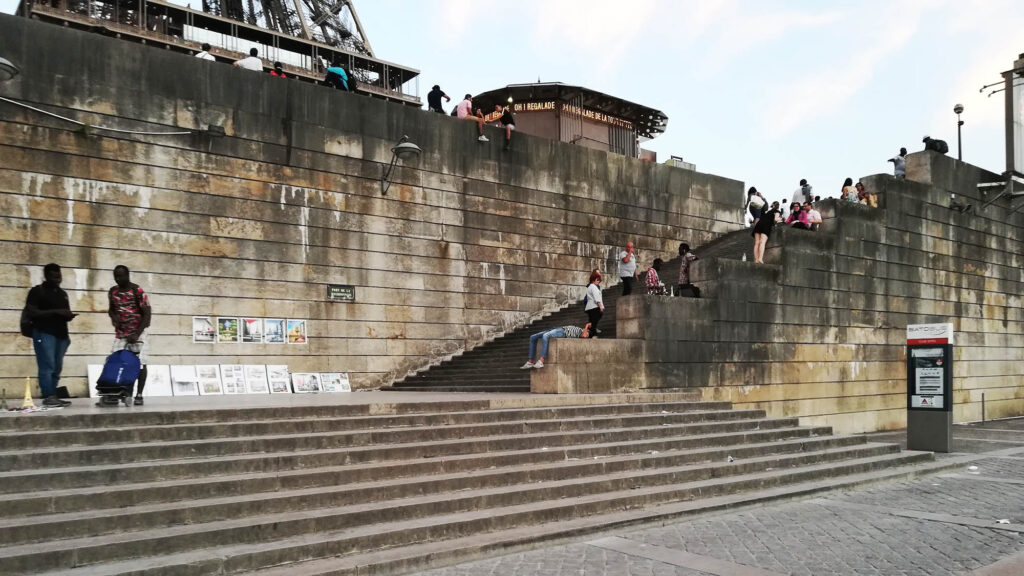
Pont d’Iéna Stairs
Pont d’Iéna Stairs appears in A View to a Kill (1985). The stairway is used as part of one of the film’s best-known Paris action sequences.
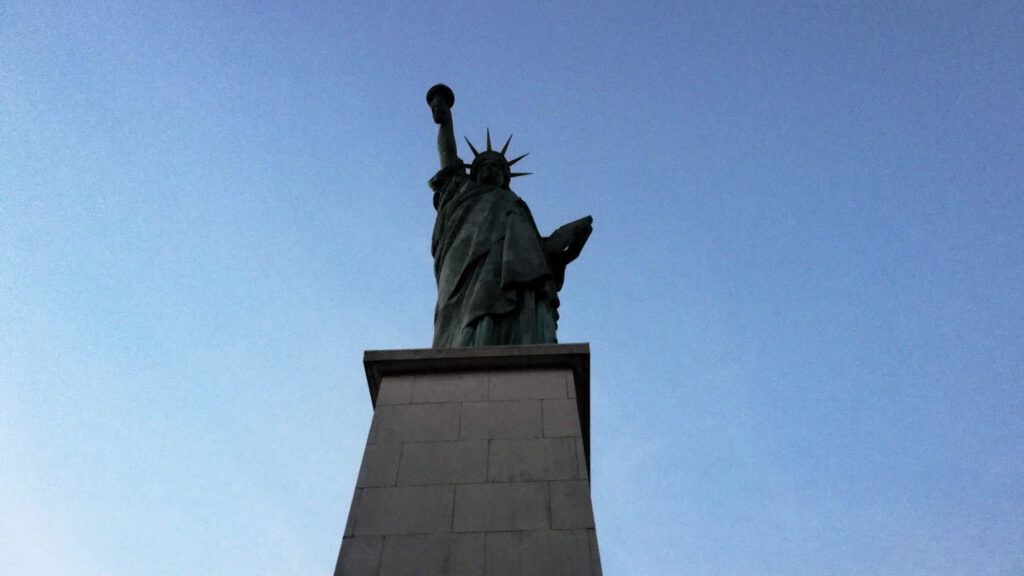
Statue of Liberty in Paris
Statue of Liberty in Paris appears in Frantic (1988), National Treasure: Book of Secrets (2007), Lost in Paris (2016), and The Fall (2006).
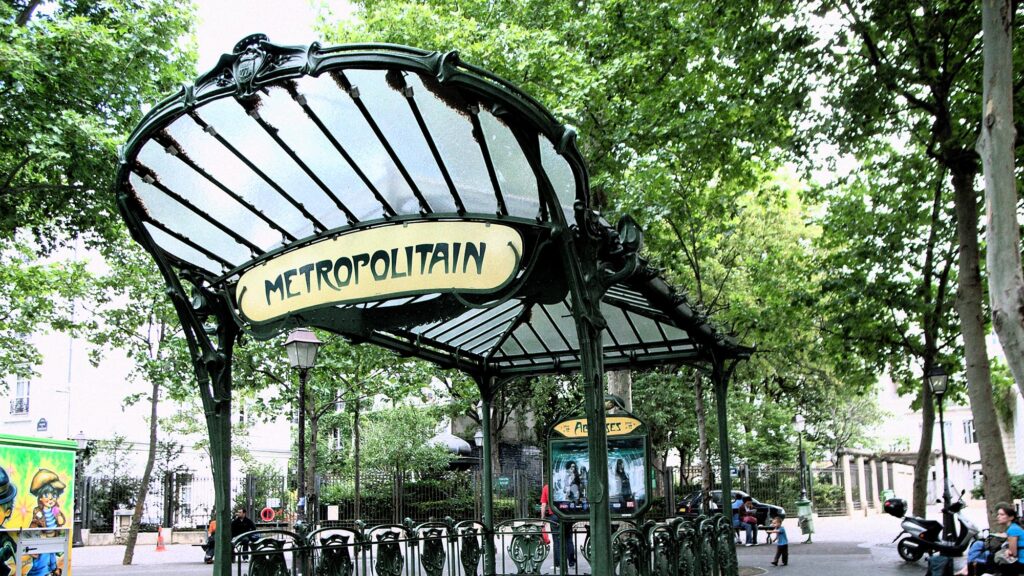
Abbesses Metro Station
Abbesses is a famous, historic Paris Métro station on Line 12 in Montmartre, renowned as the deepest station in the network at roughly 36 meters below ground.
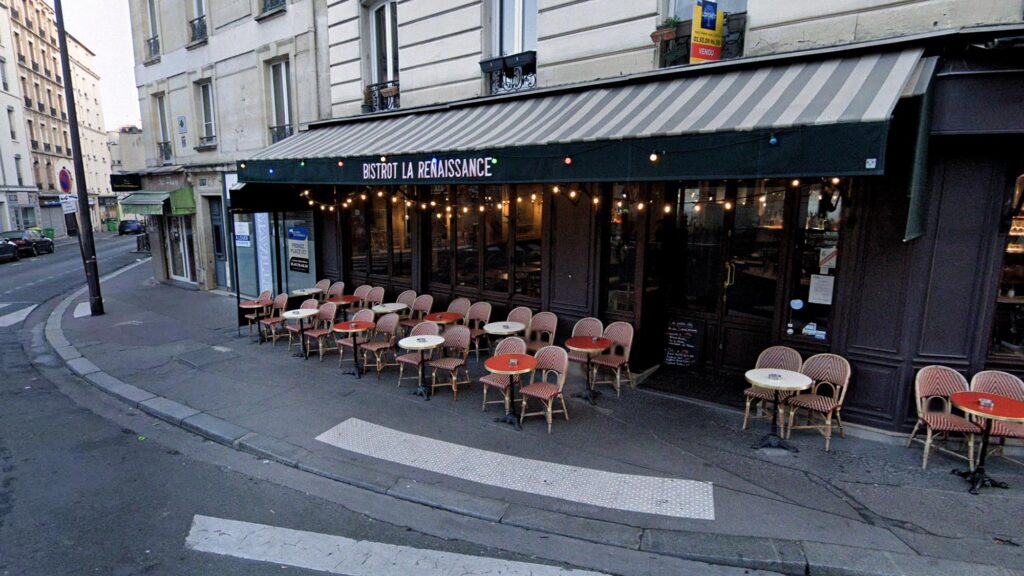
Bistrot La Renaissance
Bistrot La Renaissance is in Inglourious Basterds (2009), Le Mouton enragé (1974), Le Sang des autres (1984), My New Partner (1984) and Animal (2005).
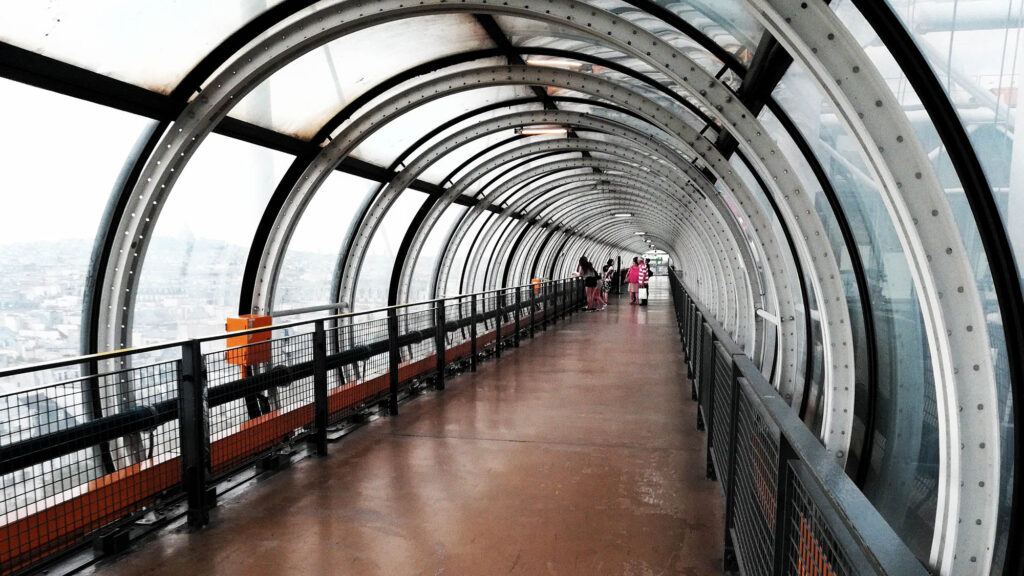
Centre Pompidou
The Centre Pompidou is a building complex in Paris, France. The Centre Pompidou served as a primary filming location for the 1979 James Bond film Moonraker.
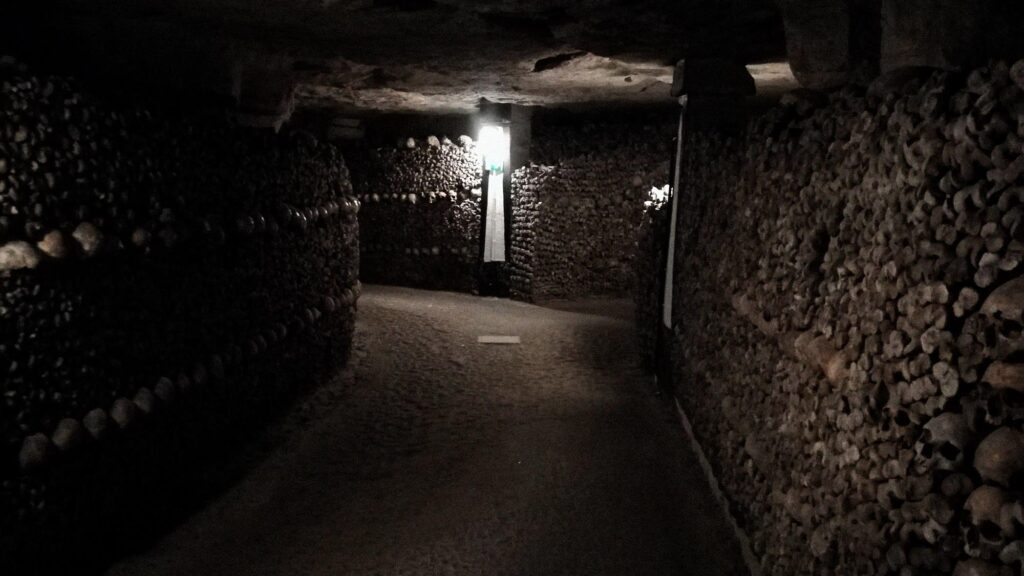
Catacombs of Paris
The Catacombs of Paris have appeared in As Above, So Below (2014) and The Walking Dead: Daryl Dixon (2023–).
Fort de Cormeilles-en-Parisis
Fort de Cormeilles-en-Parisis is in Triple Cross, The Night of the Generals, Army of Shadows, The Seventh Company Has Been Found, L’Affaire Dominici and more.
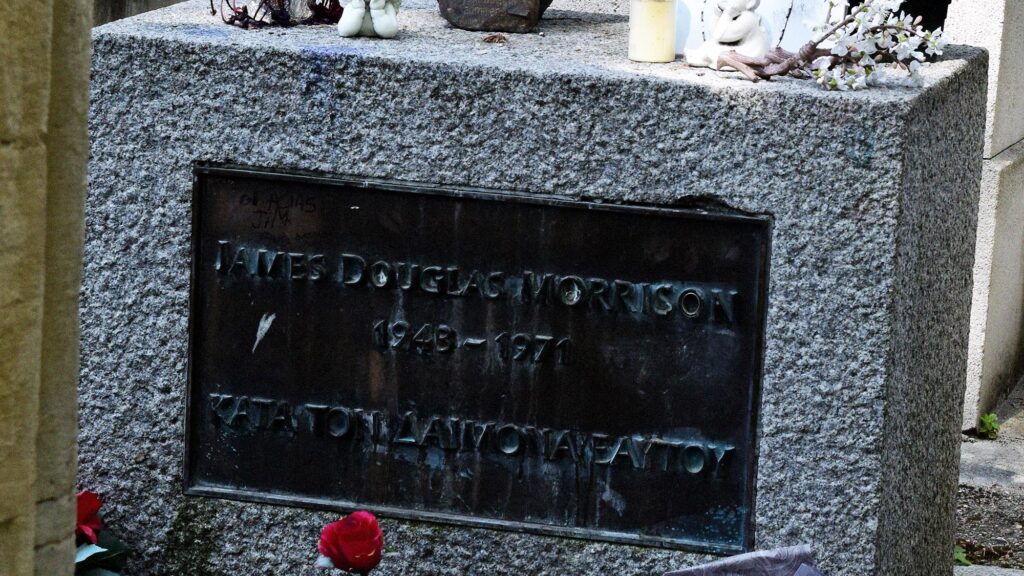
Jim Morrison’s Grave
Jim Morrison’s Grave appears in The Doors (1991) and The Walking Dead: Daryl Dixon (2023–). Both productions use the real grave in Père Lachaise Cemetery.