
Fort de Cormeilles-en-Parisis is a nineteenth-century artillery fortress on the heights above Cormeilles-en-Parisis in Val-d’Oise, north-west of Paris. It was constructed between 1874 and 1877 as one of the first major works in the Séré de Rivières system, the new outer ring of fortifications created around Paris following France’s defeat in the Franco-Prussian War. The position was strategically important because Prussian forces had used the hill overlooking the Seine valley during the 1870–71 conflict, demonstrating how easily modern long-range artillery could threaten the capital from the surrounding heights. The polygonal fort was built into an artificial earthwork approximately 13 metres high and surrounded by more than a kilometre of defensive ditch, with underground galleries, casemates, powder magazines, caponiers and accommodation for a large garrison. It originally carried around 64 guns. During the First World War, anti-aircraft weapons were installed on the fort and fired on German Zeppelins approaching Paris. German forces occupied the site during the Second World War and stored submarine equipment and hundreds of torpedoes there before abandoning it during the liberation of Paris in August 1944. The fort subsequently became an internment camp for Axis prisoners and later a penal institution, remaining a prison until 1956. From 1967 to 1997 it served as a French military commando-training centre. The Île-de-France region acquired the property in 1997, and since 1998 the association Les Amis du Fort de Cormeilles has worked to preserve and restore the complex. Its long tunnels, prison-like rooms, barracks, courtyards and military architecture have also made it one of the most frequently used historic filming locations around Paris.
Fort de Cormeilles-en-Parisis has appeared in Triple Cross (1966), The Night of the Generals (1967), Army of Shadows (1969), The Seventh Company Has Been Found (1975), L’Affaire Dominici (2003), Aux abois (2005), OSS 117: Cairo, Nest of Spies (2006), Female Agents (2008), MR 73 (2008), A French Village (2009–2017), Chocolat (2016) and The Walking Dead: Daryl Dixon (2023–). The fort’s screen roles have repeatedly drawn on its genuine military and penal history: it has represented wartime prisons, Gestapo facilities, underground resistance locations and modern detention centres, while The Walking Dead: Daryl Dixon (2023–) transforms the entire complex into Maison Mère, headquarters of the authoritarian Pouvoir du Vivant.
In Triple Cross (1966), Fort de Cormeilles is used during the early imprisonment of British criminal Eddie Chapman, played by Christopher Plummer. Chapman begins the story as a professional safecracker before being arrested and imprisoned on the Channel Islands, where the German occupation eventually gives him an opportunity to offer his services as a spy. The fort provides the austere prison environment in which Chapman is held before his transformation from convicted criminal into one of the Second World War’s most remarkable double agents. The production was one of the earliest feature films to take advantage of Cormeilles’ genuine cells, military passages and heavy stone architecture.
In The Night of the Generals (1967), Fort de Cormeilles appears during the film’s wartime Paris section and provides the setting for the confrontation between Major Grau and General Tanz. Grau has spent years investigating the murder of a prostitute in Warsaw and has become convinced that Tanz is responsible. When the two men meet again in Paris during the July 1944 plot against Adolf Hitler, Grau finally confronts Tanz with his suspicions. Tanz responds by shooting him, eliminating the investigator who has come closest to exposing him. The real military architecture of Cormeilles gives the confrontation an appropriately oppressive setting, while the fort itself had already been used by director Terence Young for Triple Cross the previous year.
In Army of Shadows (1969), originally titled L’Armée des ombres, Fort de Cormeilles is used for the first part of one of the film’s most important sequences: Philippe Gerbier’s second escape from German custody. Gerbier has been arrested and condemned to death alongside several other prisoners. Before the execution, the men wait together in an underground cell, where Gerbier shares his remaining cigarettes with the others. They are then taken out and told that they will be forced to run towards a distant wall while German machine-gunners fire behind them, with the first man to reach the wall supposedly spared until the next execution. Gerbier initially refuses to participate but is forced to run. Smoke grenades suddenly obscure the firing range and his Resistance comrades rescue him. The underground detention material was filmed inside the tunnels of Fort de Cormeilles, while the exterior execution and escape section was filmed separately at the Satory military camp near Versailles.
In The Seventh Company Has Been Found (1975), originally titled On a retrouvé la 7e compagnie, Fort de Cormeilles is used for the secret underground passage beneath the château occupied by German forces. Pitivier becomes separated from his companions while attempting to move through the hidden tunnel and cautiously waits when he hears someone approaching in the darkness. The mysterious figure turns out to be Chaudard, reuniting two members of the hapless trio. The supposedly medieval secret passage is actually one of the caponiers of Fort de Cormeilles, giving the wartime comedy a genuine military tunnel while other parts of the château sequence were filmed at Château de Vigny.
In L’Affaire Dominici (2003), Fort de Cormeilles represents the prison at Arles during the dramatisation of one of France’s most famous twentieth-century murder cases. Michel Serrault plays Gaston Dominici, the elderly farmer convicted of murdering British scientist Jack Drummond, his wife Anne and their young daughter Elizabeth near the family farm in Provence in 1952. After Dominici is convicted and sentenced to death, the fort’s former prison spaces are used for his incarceration. The choice is particularly appropriate because Fort de Cormeilles itself functioned as a penal institution between 1948 and 1956, overlapping with the period in which the real Dominici case took place.
In Aux abois (2005), Fort de Cormeilles is used for the imprisonment of Paul Duméry, played by Élie Semoun. Duméry is an increasingly desperate man whose financial problems and criminal decisions lead him towards violence and eventual arrest. The later detention scenes were filmed inside the fort, with its cells, heavy doors and corridors requiring little alteration to function as a prison. The production is one of several crime dramas to make use of the complex’s genuine post-war penal architecture.
In OSS 117: Cairo, Nest of Spies (2006), Fort de Cormeilles becomes part of the secret headquarters of the Aigles de Khéops, the Egyptian nationalist organisation investigated by French agent Hubert Bonisseur de La Bath. The first section of the organisation’s hideout was filmed in a converted workshop in Casablanca, but the action then moves seamlessly into the underground galleries of Fort de Cormeilles. OSS 117 is captured and held inside the organisation’s base before managing to free himself, with the fort’s vaulted tunnels and stone chambers standing in for a clandestine underground complex in Cairo. The location is another example of the film deliberately combining authentic-looking spaces from different countries to create its exaggerated 1950s spy world.
In Female Agents (2008), originally titled Les Femmes de l’ombre, Fort de Cormeilles provides the grim detention and torture rooms used after members of Louise Desfontaines’ Resistance team are captured by the Germans. Louise, played by Sophie Marceau, her brother Pierre and Gaëlle are among those subjected to brutal interrogation and torture as the Gestapo attempts to extract information about their mission. The production spent several days filming inside the fort in July 2007, using its underground galleries and former prison spaces rather than recreating the sequences entirely in a studio. The oppressive architecture is especially effective because the site had genuinely served as both a wartime military installation and a post-war prison.
In MR 73 (2008), Fort de Cormeilles becomes the prison holding convicted serial killer Charles Subra. Marseille detective Louis Schneider, played by Daniel Auteuil, had helped put Subra behind bars decades earlier and is disturbed when he learns that the killer is approaching release. Before Schneider visits him, Subra is ordered to strip completely while prison guards conduct a humiliating search. The fort was used extensively for the prison material, with filming continuing for several weeks and exterior equipment positioned along the Route Stratégique. Its real cells and corridors provide the bleak institutional environment surrounding Subra shortly before he is released back into society.
In A French Village (2009–2017), originally titled Un village français, Fort de Cormeilles was used during several seasons, but its most important appearance comes in the fifth-season finale «Un sens au monde» (2013). Communist Resistance leader Marcel Larcher has been sentenced to death, while Philippe Chassagne, despite having collaborated with the German authorities, is also condemned after becoming politically inconvenient. The two men spend their final hours together before being taken out for execution on 13 November 1943. Fort de Cormeilles provides the prison and execution environment for their final scenes, culminating in Marcel and Chassagne being shot together. The fort’s actual wartime history gives the sequence an additional layer of authenticity, even though the fictional town of Villeneuve is located elsewhere in France.
In Chocolat (2016), Fort de Cormeilles is used for the imprisonment of Rafael Padilla, known professionally as Chocolat, played by Omar Sy. After becoming one of Belle Époque Paris’s most popular performers alongside the white clown Footit, Chocolat’s success is undermined by racism, gambling debts and increasingly self-destructive behaviour. He is eventually arrested because of his uncertain legal status and is brutally mistreated while in custody. The imprisonment and torture scenes were filmed inside Fort de Cormeilles, with its dark cells and underground passages providing one of the harshest environments in a film otherwise dominated by theatres, circuses and the brightly lit entertainment world of turn-of-the-century Paris.
In The Walking Dead: Daryl Dixon (2023–), Fort de Cormeilles becomes Maison Mère, the heavily fortified headquarters of Marion Genet and the Pouvoir du Vivant. The location is introduced during the first season as the centre of Genet’s increasingly authoritarian movement, with armed Guerriers guarding the former military complex and prisoners held in its cells. It becomes especially important in «Deux Amours» (2023), when Quinn and Isabelle attend Genet’s De Gaulle Day gathering at Maison Mère. Inside, Isabelle discovers that Daryl has been captured and imprisoned, while Laurent is being held under Genet’s control. Quinn is subsequently locked in the cells with Daryl as Genet prepares to use Laurent publicly as a symbol against the Union of Hope. The fort’s real barracks, courtyards, underground rooms and prison architecture are extensively incorporated into the fictional headquarters rather than being limited to exterior establishing shots.
Fort de Cormeilles returns throughout the second season of The Walking Dead: Daryl Dixon (2023–). In «L’Invisible» (2024), Carol is brought to Maison Mère after entering Paris and comes face to face with Genet, while the fortress remains the centre of the Pouvoir’s experiments with enhanced walkers. By «Vouloir, C’est Pouvoir» (2024), Genet is dead and Maison Mère has collapsed into chaos. Guerriers, workers and prisoners have turned on one another, leaving the complex abandoned and overrun by walkers. Ash Patel becomes trapped inside an SUV while searching the fort for fuel, prompting Daryl and Carol to return to Maison Mère to find him. They fight through the ruined compound and discover him surrounded by a herd. Daryl finds experimental serum darts inside the vehicle and uses them to turn two walkers into aggressive «Ampers», which tear through the surrounding dead before Carol kills them. The sequence gives Fort de Cormeilles one of its most extensive screen appearances, using the same real military complex first seen in films almost sixty years earlier as a fully developed post-apocalyptic stronghold.
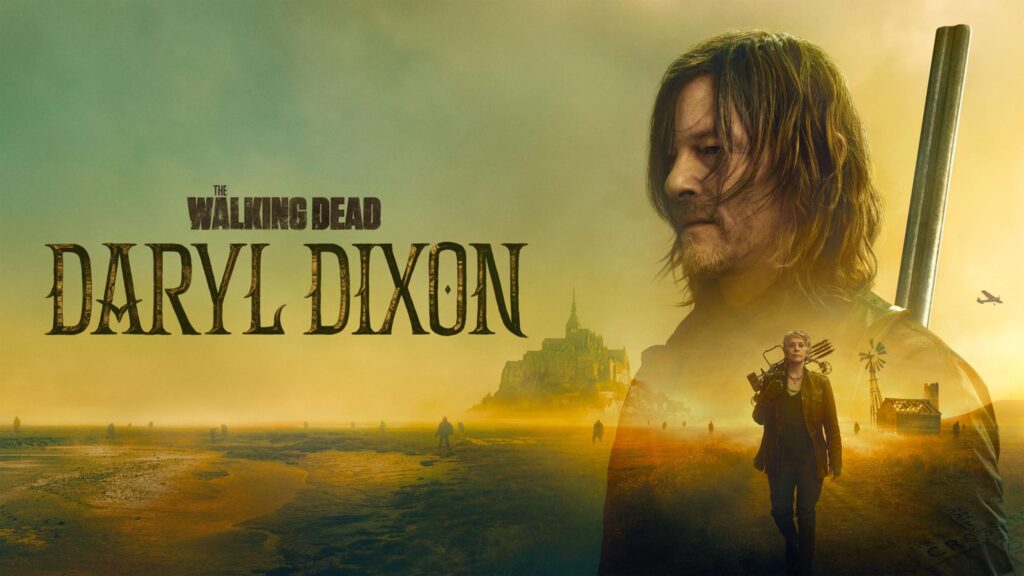
The Walking Dead: Daryl Dixon
The Walking Dead: Daryl Dixon is closely tied to France, and the country is far more than a generic backdrop.
Grande Arche
Grande Arche has appeared in Until the End of the World, The Bourne Identity, Girlhood, The Walking Dead: Daryl Dixon and The Great Arch.
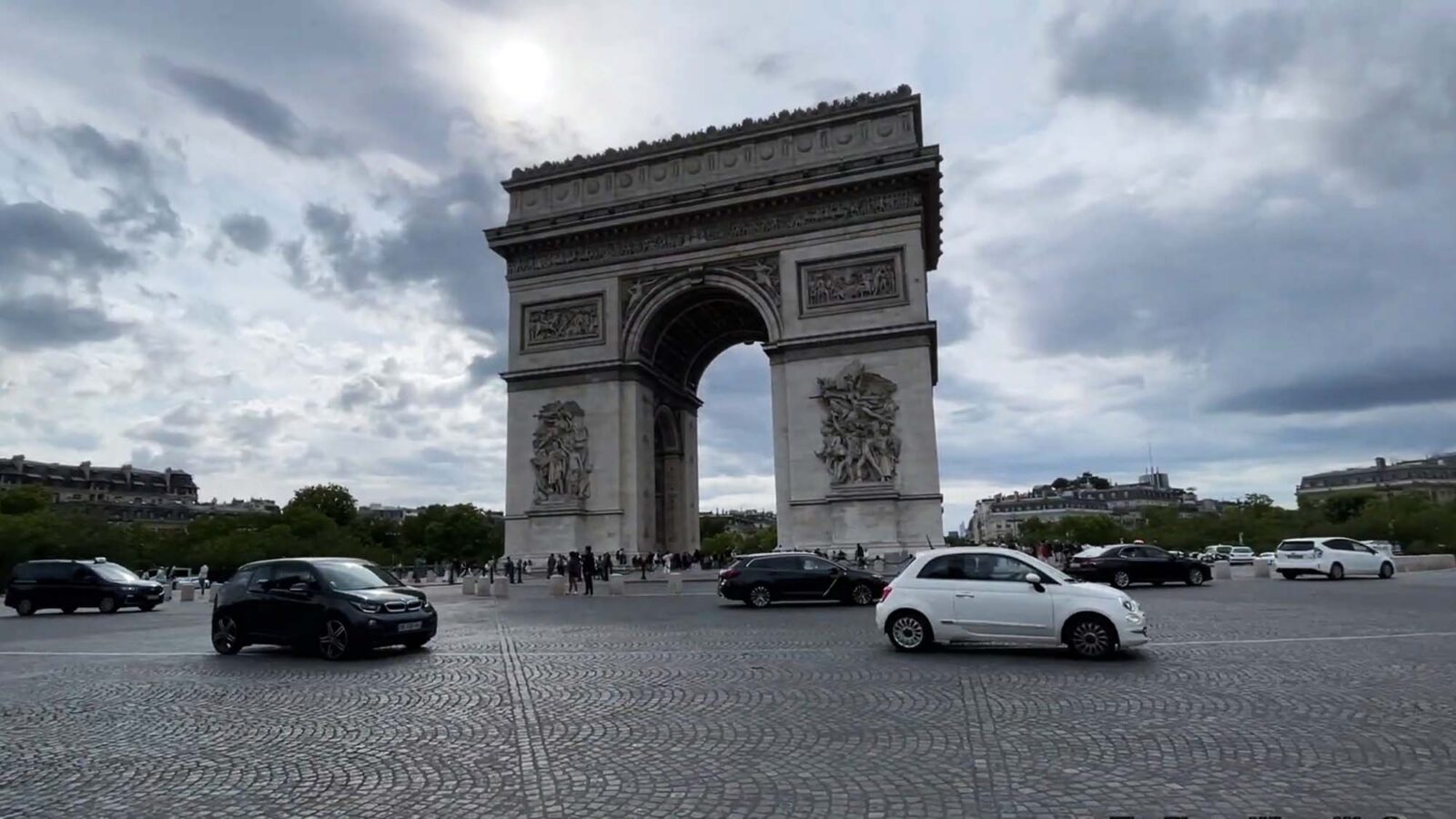
Arc de Triomphe
Arc de Triomphe has appeared in The Day of the Jackal, Ronin, National Treasure: Book of Secrets, Taken, Mission: Impossible – Fallout and Blindspot.
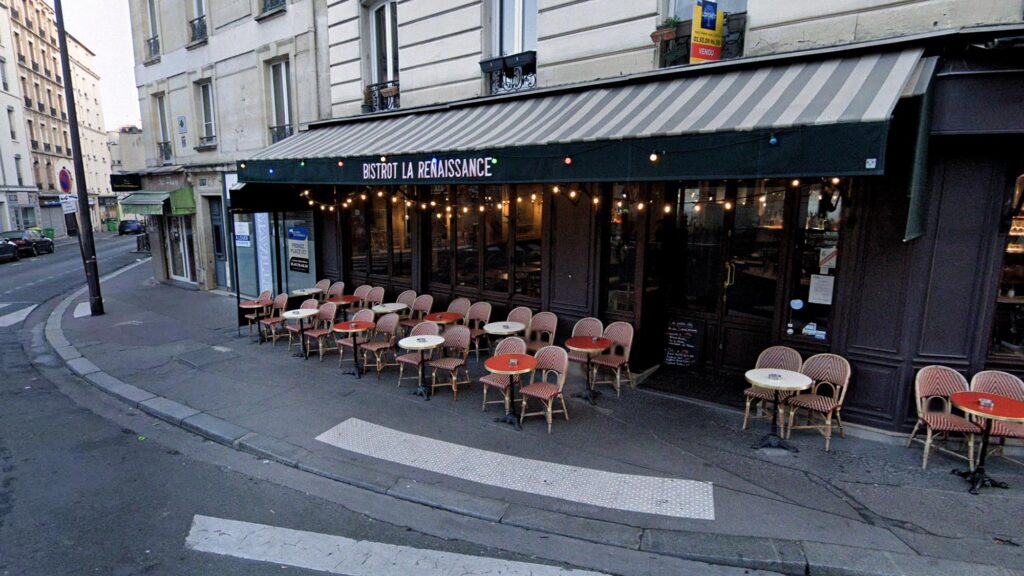
Bistrot La Renaissance
Bistrot La Renaissance is in Inglourious Basterds (2009), Le Mouton enragé (1974), Le Sang des autres (1984), My New Partner (1984) and Animal (2005).
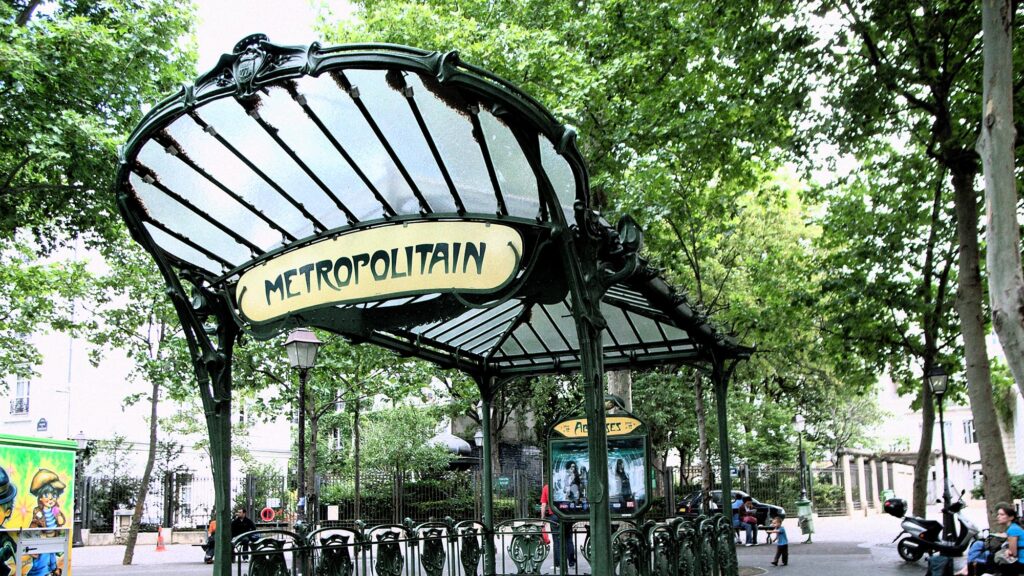
Abbesses Metro Station
Abbesses is a famous, historic Paris Métro station on Line 12 in Montmartre, renowned as the deepest station in the network at roughly 36 meters below ground.
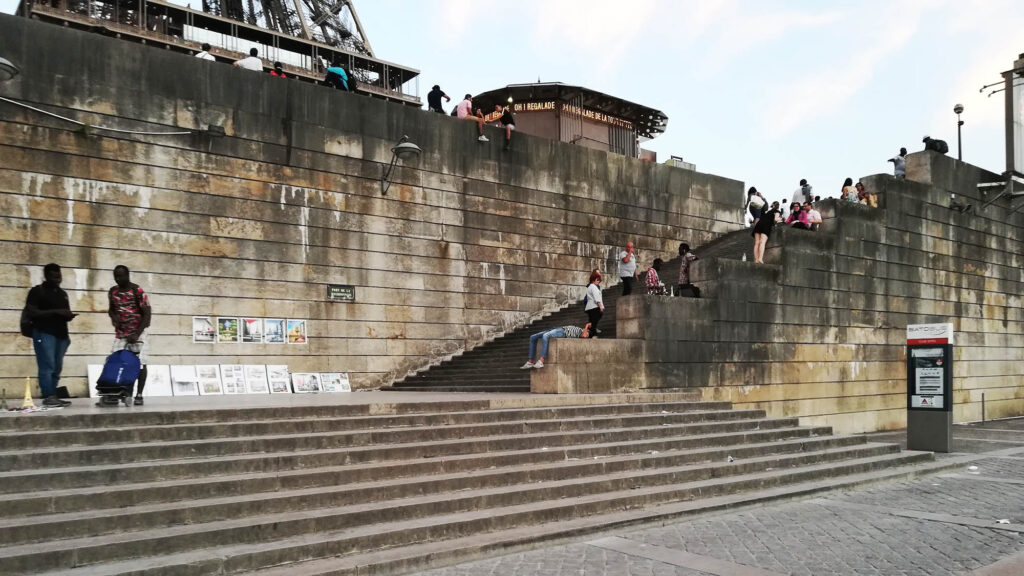
Pont d’Iéna Stairs
Pont d’Iéna Stairs appears in A View to a Kill (1985). The stairway is used as part of one of the film’s best-known Paris action sequences.
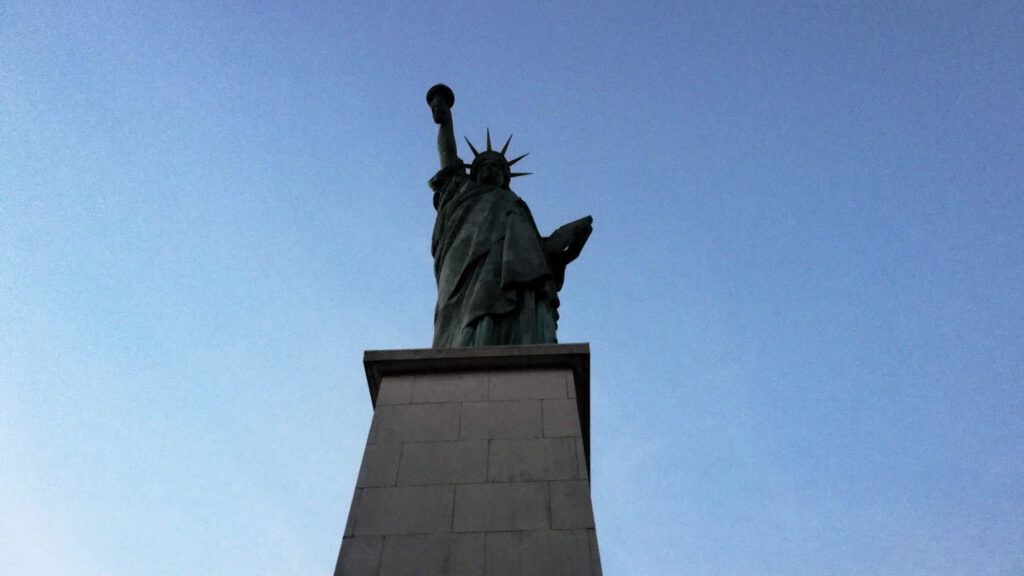
Statue of Liberty in Paris
Statue of Liberty in Paris appears in Frantic (1988), National Treasure: Book of Secrets (2007), Lost in Paris (2016), and The Fall (2006).
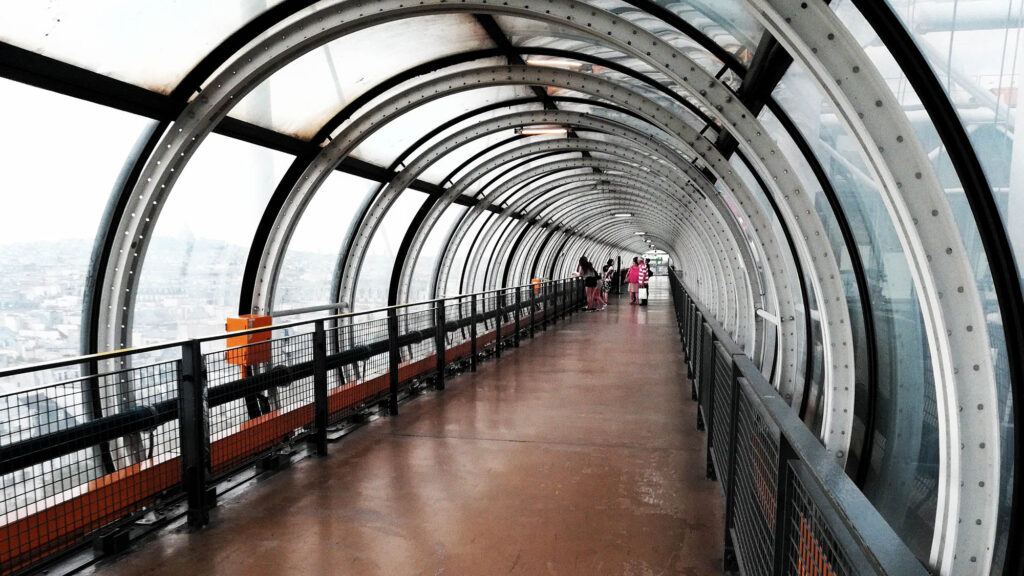
Centre Pompidou
The Centre Pompidou is a building complex in Paris, France. The Centre Pompidou served as a primary filming location for the 1979 James Bond film Moonraker.
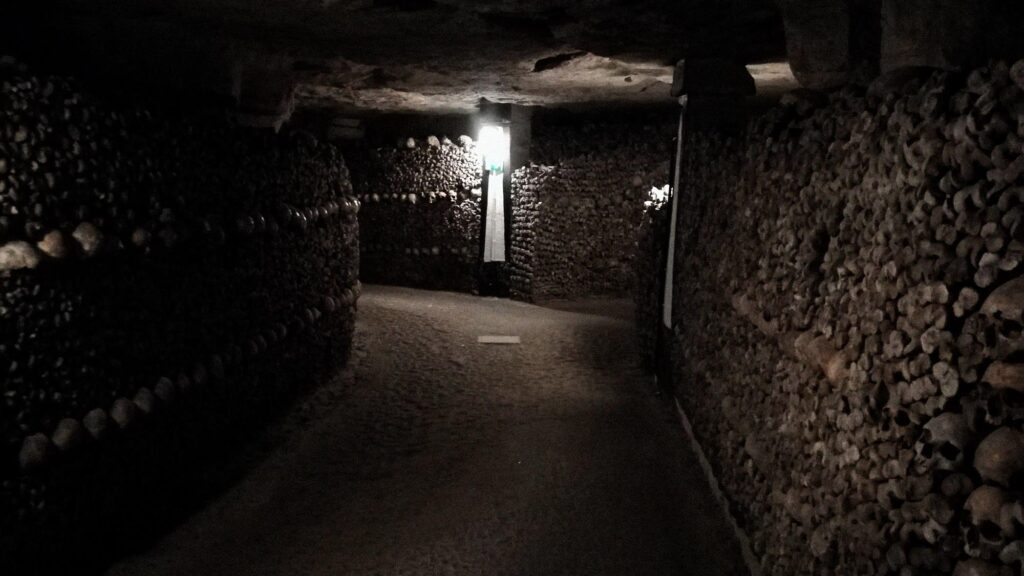
Catacombs of Paris
The Catacombs of Paris have appeared in As Above, So Below (2014) and The Walking Dead: Daryl Dixon (2023–).
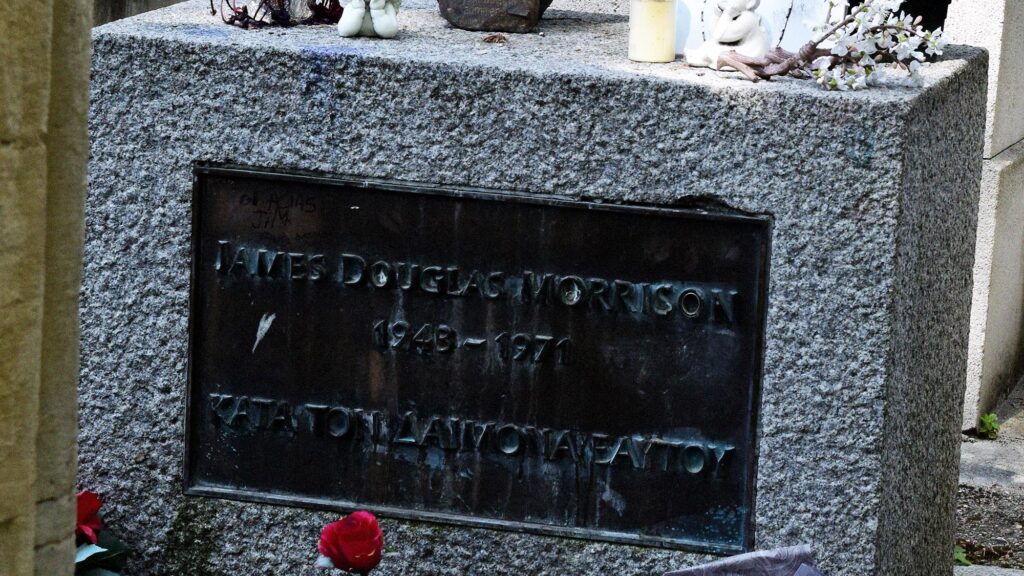
Jim Morrison’s Grave
Jim Morrison’s Grave appears in The Doors (1991) and The Walking Dead: Daryl Dixon (2023–). Both productions use the real grave in Père Lachaise Cemetery.