
Dahlgren Chapel of the Sacred Heart is a Roman Catholic chapel located in Dahlgren Quadrangle at Georgetown University in Washington, D.C. Constructed between 1892 and 1893, the red-brick Gothic Revival building stands behind the university’s imposing Healy Hall, surrounded by some of the oldest surviving buildings on the campus. The chapel was commissioned by John Vinton Dahlgren, a Georgetown graduate and son of Civil War naval officer Rear Admiral John A. Dahlgren, and his wife Elizabeth Wharton Drexel, a member of the prominent Philadelphia banking family. The couple originally proposed building a small memorial chapel in honour of their infant son Joseph Drexel Dahlgren, who died in 1891 at the age of one. Georgetown’s president, Reverend J. Havens Richards, persuaded them to finance a larger building that could serve the university’s entire Catholic community. Elizabeth contributed $10,000 towards the project and took a personal interest in its design, particularly the stained-glass windows. The cornerstone was laid in May 1892, and the completed chapel was dedicated to the Sacred Heart of Jesus on 9 June 1893. It became the first building at Georgetown University to be named after someone other than a Jesuit priest and the first financed entirely through private donations. The chapel’s exterior features pointed Gothic windows, decorative brickwork, a steeply pitched slate roof and a small bell tower. Inside, a vaulted wooden ceiling rises above the nave, while sixteen elaborate stained-glass windows manufactured by Franz Mayer of Munich depict scenes from the lives of Jesus Christ, the Virgin Mary and several saints, including Joan of Arc and Ignatius of Loyola, founder of the Society of Jesus. Beneath the altar is the Dahlgren family crypt, containing the remains of John, Elizabeth and their son Joseph. The chapel also preserves a historic iron cross associated with the early Catholic missions in colonial Maryland, which was used by Pope Francis during his first visit to the United States in September 2015. Over the years, the building has remained an important part of religious life at Georgetown, hosting Masses, weddings, baptisms and memorial services. In April 2013, the chapel suffered vandalism that damaged furniture, religious furnishings and parts of the interior, although investigators found no evidence that the incident had been motivated by religious desecration. A major restoration completed in 2014 included repairs to the foundations, restoration of the stained-glass windows, improvements to the interior and the installation of a new organ. The chapel, which accommodates approximately 275 people, remains an active place of worship and a contributing building within the Georgetown Historic District.
Dahlgren Chapel of the Sacred Heart appears in The Exorcist (1973) and The Exorcist III (1990), two supernatural horror films associated with Georgetown University and the work of author William Peter Blatty. In the original film, directed by William Friedkin, the chapel is used for scenes involving Father Damien Karras and a disturbing incident in which a statue of the Virgin Mary is discovered desecrated. The chapel also appears in the background as Karras and police lieutenant William Kinderman walk through the university grounds. The Exorcist III returns to the same building fifteen years later within the story, using its exterior and chapel setting for scenes involving Father Joseph Dyer and the religious community at Georgetown. Both productions filmed on the actual university campus, although the original film used a specially constructed replica of part of the chapel’s interior for the desecrated statue.
In The Exorcist (1973), the supernatural horror film directed by William Friedkin, Dahlgren Chapel represents the church associated with Father Damien Karras, played by Jason Miller, a Jesuit priest and psychiatrist working at Georgetown University. One of its most disturbing appearances occurs early in the film, when a priest enters the chapel carrying flowers intended for the religious statues. He approaches the altar and kneels in prayer before discovering that a statue of the Virgin Mary has been grotesquely desecrated. The statue’s face and body have been defaced with obscene decorations, including modelling clay arranged in a deliberately offensive manner. The priest is horrified by the discovery, which appears to be an act of sacrilege directed against the Catholic Church. The incident is particularly unsettling because the perpetrator is never directly identified in the film, although it becomes associated with the increasingly disturbing events taking place at the nearby MacNeil residence. Later, Lieutenant William Kinderman, played by Lee J. Cobb, refers to the desecration while questioning Karras about the mysterious death of film director Burke Dennings. Kinderman has begun considering whether the circumstances surrounding Dennings’ death might involve occult practices and is interested in Karras’s knowledge of witchcraft and religious phenomena. The chapel also appears during a religious service in which Karras celebrates the Eucharist, with the camera showing the altar and the surrounding Gothic interior.
The production used the actual Dahlgren Chapel for exterior footage and interior photography during filming at Georgetown University in October and November 1972. Cinematographer Owen Roizman later recalled that photographing the interior was particularly difficult because Friedkin wanted a wide establishing shot that included the chapel’s stained-glass windows while maintaining the appearance of natural lighting. Large lighting units had to be positioned high above the floor to illuminate the space without making the artificial light obvious. However, the close-up sequence involving the desecrated Virgin Mary statue was not filmed inside the real chapel. During a return visit to Georgetown in April 2018, Friedkin explained that he had reconstructed one corner of the building on a film set because he did not want to stage the offensive imagery inside an active Catholic place of worship. The replica was used for the shots of the vandalised statue, while the genuine chapel provided the surrounding architectural setting.
Dahlgren Chapel is also visible during the sequence in which Kinderman approaches Karras while the priest is exercising on Georgetown’s former Kehoe Field running track. After introducing himself and asking questions about Burke Dennings, Kinderman accompanies Karras across the campus towards the priest’s residence. Their walk takes them through Dahlgren Quadrangle, where the chapel’s red-brick exterior is visible among the surrounding university buildings. The two men eventually reach the steps leading to the Jesuit residence beside the chapel, where Kinderman continues asking questions before leaving. The scene was filmed in the actual quadrangle, using the existing pathways, chapel façade and neighbouring university buildings.
In The Exorcist III (1990), the supernatural horror film written and directed by William Peter Blatty, Dahlgren Chapel returns as part of Georgetown University’s religious community fifteen years after the death of Father Damien Karras. The story follows Lieutenant William Kinderman, now played by George C. Scott, as he investigates a series of murders bearing the distinctive characteristics of the Gemini Killer, a serial murderer who was executed on the same night Karras died. Father Joseph Dyer, played by Ed Flanders, remains a priest at Georgetown and is one of Kinderman’s closest friends. The chapel appears during the early part of the film, providing the setting for a religious service conducted by Dyer. Dressed in his vestments, he stands before the altar and celebrates Mass while the surrounding university community continues its daily activities. The religious service is contrasted with the police investigation unfolding nearby, as officers search the Potomac River for evidence connected to the murder of a young boy, Thomas Kintry. The church scenes also recall Father Karras, whose death continues to affect both Dyer and Kinderman. The chapel’s exterior appears in additional shots of the Georgetown campus, with its Gothic windows and distinctive red-brick façade visible from the surrounding quadrangle.
William Peter Blatty returned to Georgetown for location filming in June 1989, deliberately using several buildings and streets associated with the original film. Dahlgren Chapel was among these locations, along with Healy Hall and the surrounding university grounds. The chapel’s inclusion provides a direct visual connection to The Exorcist, particularly through the religious setting and the characters who remember Karras. The sequel also makes extensive use of Holy Trinity Church on N Street, which appears in the opening sequence when an unseen supernatural presence moves through the building and the doors suddenly open. Although the two churches are sometimes confused in location guides, they are separate buildings. Holy Trinity Church stands several blocks east of Georgetown University, while Dahlgren Chapel is enclosed within the university’s historic quadrangle. The production used both locations during its Washington, D.C., filming schedule.
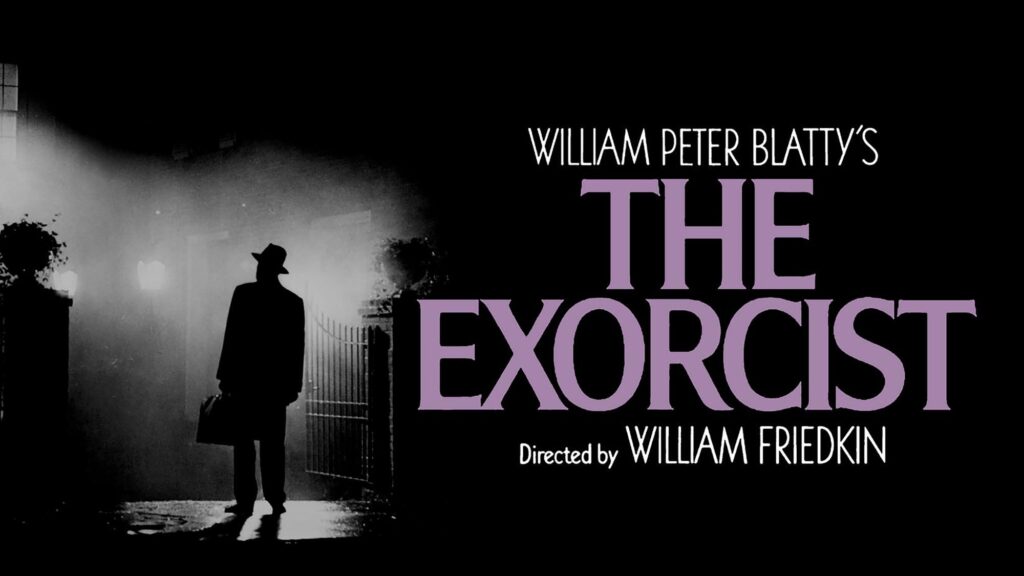
The Exorcist
The Exorcist (1973) was primarily filmed in Georgetown (Washington, D.C.), New York City, and Iraq.

The Tombs
The Tombs appears in The Exorcist III (1990), the supernatural horror film written and directed by William Peter Blatty.
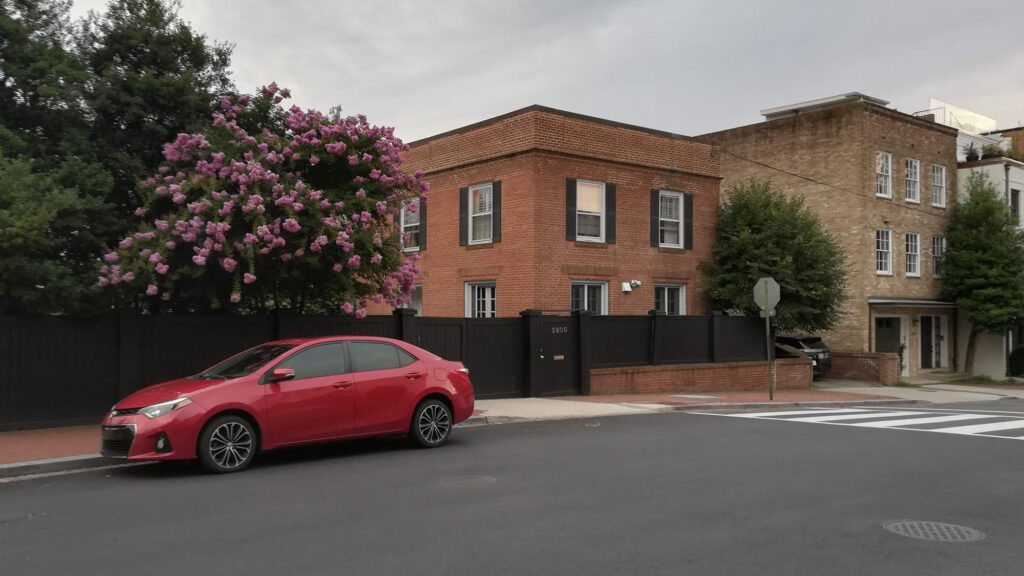
The Exorcist House
The Exorcist House refers to the private residence in Georgetown, Washington, D.C., which was used for exterior filming of the 1973 horror movie The Exorcist.
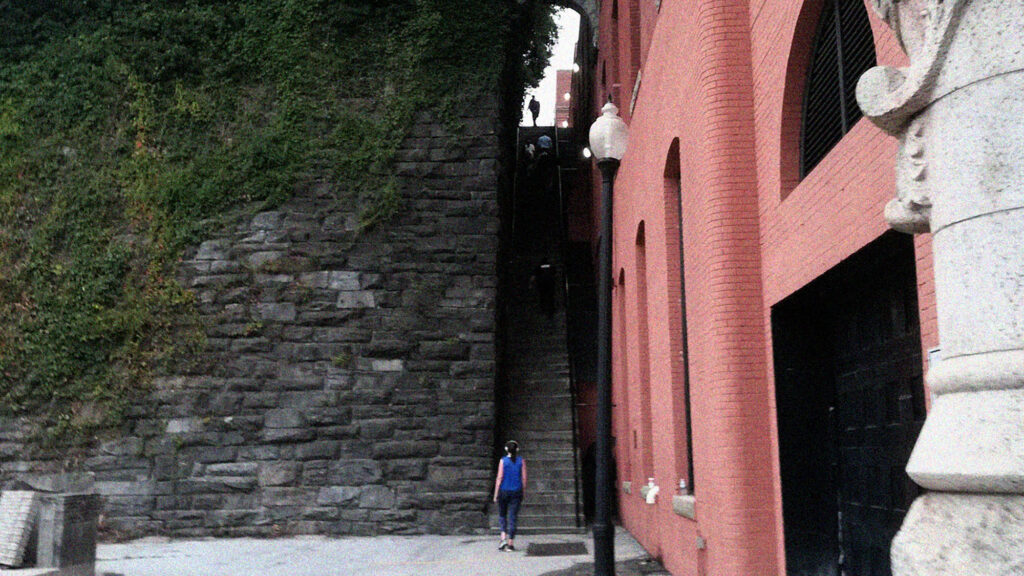
The Exorcist Steps
The Exorcist Steps the famous 75-step stairway in Washington, D.C., have appeared in The Exorcist (1973), The Exorcist III (1990) and Ghosted (2023).

Martin’s Tavern
Martin's Tavern appears in The Exorcist (1973), the supernatural horror film directed by William Friedkin and based on the novel by William Peter Blatty.
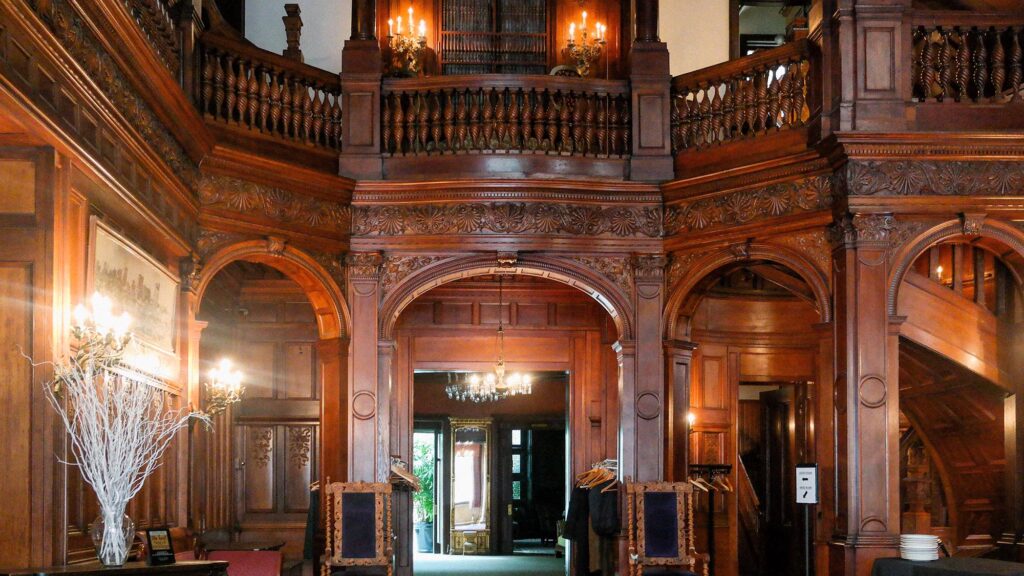
Garrett Jacobs Mansion
The Garrett Jacobs Mansion has been used in productions as Bedroom Window, Clara’s Heart, Her Alibi, The Accidental Tourist, He Said, She Said, Major League II, 12 Monkeys, Diner, Species II, and My One and Only.

Miller School of Albemarle
Miller School of Albemarle has appeared in Morgan Stewart's Coming Home (1987), Toy Soldiers (1991) and Major Payne (1995).
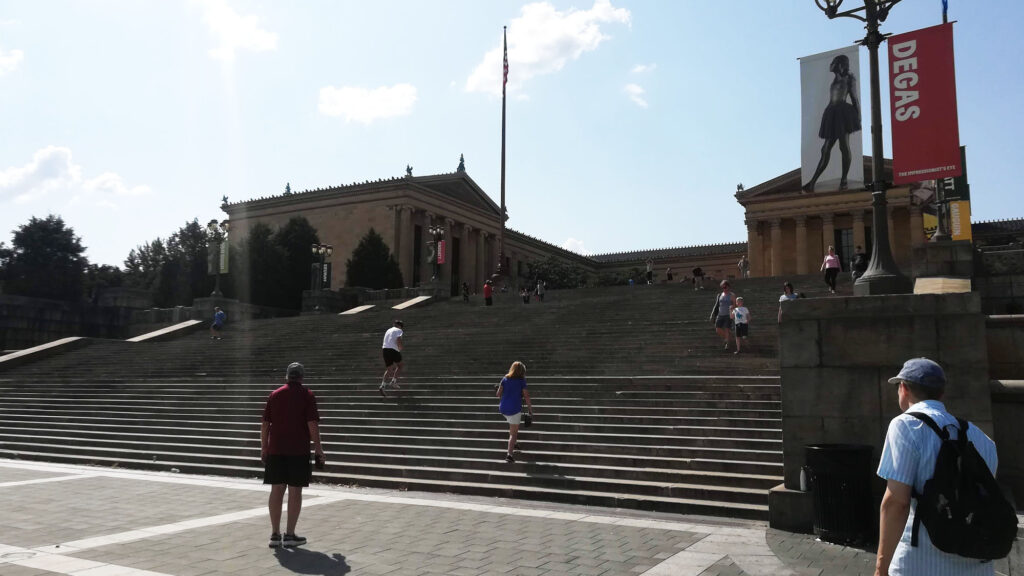
Philadelphia Museum of Art Steps
Philadelphia Museum of Art Steps appear most famously in Rocky (1976), and later returned in several other Rocky and Creed films. They also appear in Shazam.
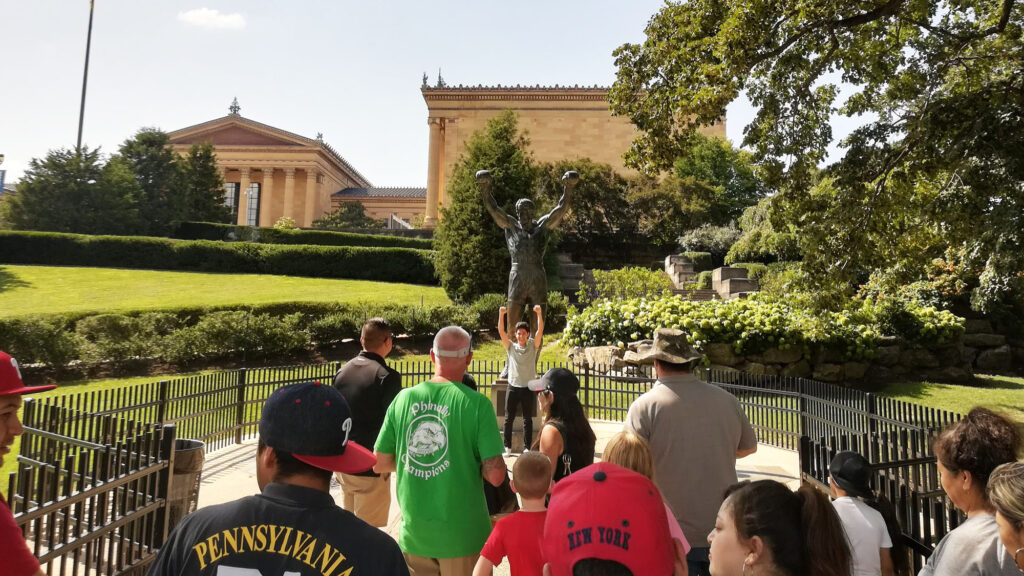
Rocky Statue
The Rocky Statue appears in Rocky III (1982), Rocky V (1990), Philadelphia (1993), Creed II (2018), and several later Rocky-related screen works.
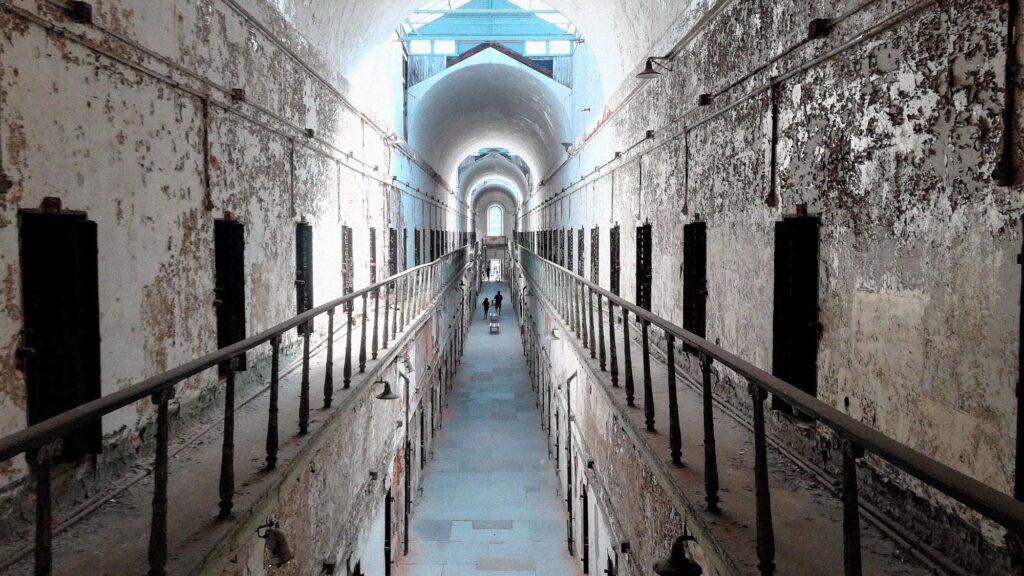
Eastern State Penitentiary
As a filming location, Eastern State Penitentiary is used in three feature films: 12 Monkeys, Return to Paradise, and Transformers: Revenge of the Fallen.