
Bamburgh Castle is a Grade I listed fortress standing on a volcanic rock outcrop above the village of Bamburgh and the North Sea coast in Northumberland, England. The site was originally occupied by the Brittonic stronghold known as Din Guarie before becoming an important Anglo-Saxon royal centre during the sixth century. It developed into the principal fortress of the kingdoms of Bernicia and Northumbria, and the name Bebbanburg became associated with Queen Bebba. The Anglo-Saxon settlement was attacked by Vikings in 993, while the Normans established a new castle on the site during the late eleventh century. The massive square keep dates principally from the twelfth century, and Bamburgh subsequently served as a royal fortress controlling the surrounding coast. During the Wars of the Roses, it fell to Yorkist forces in 1464 after an artillery bombardment and is generally regarded as the first castle in England to be captured through the use of gunpowder artillery. Much of the fortress later deteriorated before it was purchased in 1894 by the industrialist William Armstrong, whose architect C. J. Ferguson carried out an extensive restoration and rebuilding programme. The present castle combines medieval walls, towers and vaulted rooms with Victorian state apartments, including the King’s Hall and Cross Hall, and remains in the ownership of the Armstrong family.
Bamburgh Castle, Bamburgh Beach and the surrounding dunes have appeared in Huntingtower (1927), Becket (1964), The Devils (1971), Macbeth (1971), Mary, Queen of Scots (1971), The Tempest (1979), Ivanhoe (1982), Robin of Sherwood (1984), Spymaker: The Secret Life of Ian Fleming (1990), Elizabeth (1998), The Virgin Queen (2005), the first season of Outlander (2014–2015), Macbeth (2015), World’s End (2015), The BFG (2016), Transformers: The Last Knight (2017), the third season of Frontier (2018), the third season of The Last Kingdom (2018), Indiana Jones and the Dial of Destiny (2023) and The Last Kingdom: Seven Kings Must Die (2023). Its walls, wards, entrance passages, state rooms, rocky surroundings and extensive beach have represented Scottish, English, French, German and fictional castles, a military research facility, Wentworth Prison, Macbeth’s stronghold, Lord Benton’s estate and the home of a secret society connected to the Transformers.
In Huntingtower (1927), Bamburgh Castle provides the exterior of the fictional Huntingtower, an isolated Scottish castle in which a Russian princess is being held prisoner. The silent adventure, adapted from the novel by John Buchan, follows retired Glasgow grocer Dickson McCunn as he becomes involved in the attempt to rescue her with the assistance of a group of local boys. Location material was filmed at Bamburgh, whose walls and coastal position establish the apparently deserted stronghold at the centre of the story. The surviving archival material from the film is incomplete, making detailed identification of every Bamburgh shot difficult, but the castle formed the principal exterior identity of Huntingtower.
In Becket (1964), Bamburgh Beach represents the coast of Normandy during a meeting between King Henry II and Thomas Becket. Richard Burton, dressed in Becket’s monastic robes, and Peter O’Toole as Henry ride towards one another from opposite directions across the sand before meeting on horseback. Edward Woodward, Wilfrid Lawson and numerous mounted soldiers and attendants were also involved in the location work. Bamburgh Castle is visible in general views and rises above the dunes surrounding the scene, although the main action was staged on the beach rather than within the fortress. Filming took place in July 1963 and attracted large numbers of spectators to the dunes.
In The Devils (1971), Bamburgh Castle provides an exterior view of the fortified French city of Loudun. The castle appears during the opening section of the film, seen behind bodies left to decay outside the city walls. Its long curtain walls and elevated position establish Loudun as an enclosed stronghold before the film moves inside the city. Most of the streets, convent buildings and monumental white walls of Loudun were constructed as large sets at Pinewood Studios under the direction of production designer Derek Jarman. Bamburgh is therefore used principally as a distant exterior establishing image rather than as the setting for the main scenes involving Father Urbain Grandier, Sister Jeanne and the campaign to demolish the city’s defences.
In Macbeth (1971), Bamburgh Castle supplies exterior material for King Duncan’s fortress and was also used during the large-scale military sequences connected to the final assault on Macbeth. The production combined Bamburgh with Lindisfarne Castle, landscapes in Wales and interiors constructed at Shepperton Studios rather than maintaining one physical location for each castle in the story. During the climax, Malcolm and Macduff’s army approaches carrying branches cut from Birnam Wood before attacking the fortified position with ladders, a battering ram and catapults. Hundreds of performers, smoke effects and flaming projectiles were used around Bamburgh to create the violent siege, while other views of Macbeth’s residence were filmed at Lindisfarne.
In Mary, Queen of Scots (1971), Bamburgh Castle represents Dunbar Castle. In the film, Mary’s half-brother James Stewart is confined at Dunbar after Lord Bothwell defeats the rebellious Scottish lords and restores Mary’s authority. Mary considers executing James for his involvement in the conspiracy against her, but he reminds her that Lord Darnley was also involved in the murder of David Rizzio. The castle’s fortified exterior establishes the place where James is held during this confrontation. Bamburgh Beach was used separately for a sequence showing Mary and Darnley riding along the coast, while Alnwick Castle represents Holyrood Palace and nearby Seahouses is used for Mary’s arrival in Scotland.
In The Tempest (1979), Bamburgh Beach and its dunes form the desolate exterior landscape of Prospero’s island. The most clearly documented sequence filmed there shows Ferdinand emerging naked from the sea after being separated from the other survivors of the shipwreck. Director Derek Jarman and his crew had travelled north during severe winter weather and were required to clear snow from the dunes before filming. Jarman deliberately selected the relatively featureless beach so that the island would not resemble a recognisable real location. Bamburgh Castle was reduced through framing and filtration to a dark silhouette above the coast, while most of the interior scenes involving Prospero, Miranda, Ariel and Caliban were filmed at Stoneleigh Abbey.
In Ivanhoe (1982), Bamburgh Castle provides the exterior of the castle associated with Wilfred of Ivanhoe. The television adaptation follows the returning crusader as he becomes involved in the conflict between Saxons and Normans and attempts to protect both Rowena and Rebecca. Bamburgh is not the fortress of Reginald Front-de-Boeuf in which the prisoners are held and which is attacked during the central siege; that location was assembled elsewhere. Instead, Bamburgh appears as Ivanhoe’s own castle, particularly during the concluding scenes. When Rebecca leaves at the end of the story, the North Sea can be seen beyond the castle, despite the fictional location being presented as part of inland Yorkshire.
In Robin of Sherwood (1984), Bamburgh Castle appears in the opening two-part story, “Robin Hood and the Sorcerer”. Its exterior and guard room represent Castle Belleme, the residence of the sinister Baron Simon de Belleme. After becoming an outlaw and gathering his first followers, Robin travels to the castle to rescue Lady Marion, who has been taken there by the baron. Robin and his companions fight Sir Guy of Gisburne’s men around the fortress before confronting Belleme and freeing Marion. Parts of the Keep were also used earlier in the story as rooms within Nottingham Castle during Robin’s escape. When Castle Belleme returned in the later episode “The Enchantment”, different locations were used rather than Bamburgh.
In Spymaker: The Secret Life of Ian Fleming (1990), Bamburgh Castle is confirmed as one of the production’s Northumberland locations. The television film follows Ian Fleming through his work as a journalist and British naval intelligence officer before he creates James Bond. Publicly available location records identify Bamburgh Castle and the surrounding village as filming sites but do not assign them to a specific named building or sequence. Highclere Castle is separately identified as Fleming’s country estate, meaning Bamburgh should not be presented as that residence. Without further visual confirmation, its role is best described as part of the film’s British exterior location work.
In Elizabeth (1998), Bamburgh Castle contributes to the collection of historic buildings used to create Tudor England during the rise of Elizabeth I. The production filmed throughout northern England, combining castles, cathedrals and manor houses to represent royal residences, prisons and government buildings. Bamburgh is confirmed as a filming location, but available production records do not identify the precise sequence or the building it represents. Several of the film’s more recognisable scenes are documented elsewhere: Elizabeth’s arrest was filmed at Alnwick Castle, the Tower of London cells at Warkworth Castle, Whitehall at Durham Cathedral and the coronation at York Minster. Bamburgh should therefore be credited without assigning it one of those scenes.
In The Virgin Queen (2005), the dunes south of Bamburgh Castle represent Tilbury during the threat posed by the Spanish Armada. Queen Elizabeth I, played by Anne-Marie Duff, addresses the English troops gathered to resist a possible Spanish invasion. The scene recreates her famous declaration that although she has “the body of a weak and feeble woman”, she has “the heart and stomach of a king”. The soldiers, standards and military encampment are arranged across the open landscape below Bamburgh, with the castle and dunes providing the fortified coastal surroundings for the speech rather than reproducing the real Tilbury in Essex.
In the first season of Outlander (2014–2015), Bamburgh Castle contributes to the exterior of Wentworth Prison in the final two episodes, “Wentworth Prison” and “To Ransom a Man’s Soul”. Jamie Fraser is imprisoned there while awaiting execution and is subsequently tortured by Jonathan “Black Jack” Randall. Claire and Murtagh first attempt to gain access through the prison authorities before Claire enters the complex to find Jamie. Bamburgh’s walls and entrance were digitally altered and combined with material filmed at Linlithgow Palace to create distant views of the prison. Linlithgow supplied many of the entrances, passages and staircases, while Carlisle Castle was used for the execution courtyard. Bamburgh is therefore most clearly present in the CGI-enhanced exterior views rather than the scenes inside Jamie’s cell.
In Macbeth (2015), Bamburgh Castle represents Dunsinane, the stronghold occupied by Macbeth after he becomes King of Scotland. The fortress appears in exterior views and in material filmed within its grounds, establishing the severe coastal residence from which Macbeth and Lady Macbeth rule after Duncan’s murder. The castle is seen during the later part of the story as Macbeth becomes increasingly isolated and prepares to confront the army led by Malcolm and Macduff. Additional interiors were filmed at locations including Ely Cathedral, while the battlefields, villages and surrounding Scottish landscape were assembled from sites on the Isle of Skye, in Surrey and along the Northumberland coast. Bamburgh remains the principal visible castle associated with Macbeth’s rule.
In World’s End (2015), Bamburgh Castle provides the exterior of World’s End Castle, a remote Scottish military research facility. The CBBC science-fiction series follows a group of children who are unexpectedly brought to the castle with their families and gradually discover that the people running the facility are concealing experiments, secret underground areas and the existence of duplicates known as the Origin. Bamburgh’s walls, entrance, battlements and surrounding coast repeatedly establish the isolated compound in which the characters are confined. Location filming also took place on the nearby beaches, while the principal interior environments—including the residential areas, laboratories, Secret Zone and caves beneath the castle—were constructed at The Space Project in Manchester.
In The BFG (2016), Bamburgh Beach is used for a brief view of enormous footprints crossing the sand below the castle. The tracks provide physical evidence that giants have moved through the landscape after Sophie and the BFG reveal the danger posed by the man-eating giants. The production created the oversized impressions directly in the beach and then poured barrels of water across them to make the edges appear as though they had been partially washed away by the tide. Bamburgh Castle remains clearly visible above the beach in the background, giving the otherwise fantastical image a recognisable coastal setting.
In Transformers: The Last Knight (2017), Bamburgh Castle forms part of Castle Folgan, the ancestral home of Sir Edmund Burton and headquarters of the surviving Order of the Witwiccans. Cade Yeager and Bumblebee are brought to the castle, while Viviane Wembly is delivered there by Hot Rod. Burton explains that the Transformers have been involved in human history for centuries and reveals that Viviane is descended from Merlin and can activate Merlin’s staff. Bamburgh provides the seaward establishing views and several interiors used during these explanations, including the King’s Hall and areas around the Cross Hall fireplace. Castle Folgan is nevertheless a composite location: additional rooms and exterior scenes were filmed at Alnwick Castle, while the chamber containing King Arthur’s Round Table was filmed at the Church of St Bartholomew the Great in London.
In the third season of Frontier (2018), Bamburgh Castle represents the Scottish estate occupied by Lord Benton. After leaving North America, Benton takes Grace Emberly across the Atlantic and uses her in his efforts to regain influence with the Hudson’s Bay Company. Declan Harp pursues them to Scotland, approaches the fortified estate and eventually invades Benton’s castle in the season finale, “The Sins of the Father”. Bamburgh’s walls, courtyards, entrances and coastal surroundings provide the remote stronghold in which Grace is held. The nearby beach was also used for action material associated with the approach to the estate, including soldiers, fires and explosive effects.
In the third season of The Last Kingdom (2018), Bamburgh Beach was used for a short battle involving groups of Saxon and Danish warriors. The scene was staged in a secluded cove near the castle, with costumed extras fighting with swords and shields beneath the coastal headland. Although Bamburgh is the historical site of Bebbanburg, Uhtred’s ancestral fortress, the real castle was not used for the principal Bebbanburg interiors or courtyards. Those environments were largely constructed in Hungary, where most of the series was filmed. Bamburgh’s contribution is therefore the coastal battle landscape and the recognisable geographical connection between the modern castle and Uhtred’s fictional home.
In Indiana Jones and the Dial of Destiny (2023), Bamburgh Castle represents a Nazi-controlled fortress in Germany during the film’s 1944 prologue. Indiana Jones enters the complex while attempting to recover antiquities looted by the Nazis, including what is believed to be the Lance of Longinus. He is captured and taken through the castle before the action continues onto the train carrying Jürgen Voller, Basil Shaw and part of the Antikythera mechanism. The production spent approximately two weeks dressing Bamburgh for the wartime sequence. The Inner Ward courtyard, Crewe Entrance, King’s Hall and Cross Hall fireplace can all be recognised, while the surrounding walls and entrance establish the heavily guarded German stronghold.
In The Last Kingdom: Seven Kings Must Die (2023), Bamburgh Castle appears in the final transition from the fictional ninth-century Bebbanburg to the present day. After the Battle of Brunanburh, the wounded Uhtred returns to his hall and appears to stand between the living world and Valhalla as he considers whether to join his dead friends. The film then moves forward through the centuries and reveals the modern Bamburgh Castle, accompanied by text explaining that the fortress at Bebbanburg still stands. The real castle is not used for the preceding medieval interiors, but its appearance in the closing shot directly connects Uhtred’s fictional ancestral home with the surviving Northumberland landmark.

Indiana Jones and the Dial of Destiny
Indiana Jones and the Dial of Destiny was shot across England, Scotland, Italy, Morocco and studio facilities at Pinewood, giving it a wide geographical range.
Outlander
Outlander is associated with Scotland, and many of its most recognisable locations were filmed there, even when the story later moves to other countries.
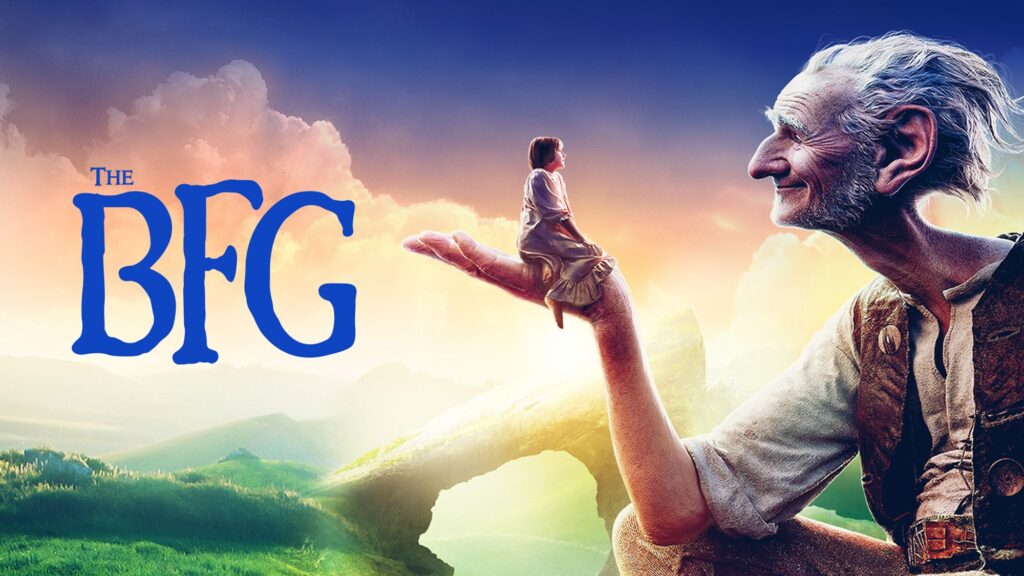
The BFG
The BFG was produced around Vancouver, where much of the film’s studio and set work was created, while real locations in the UK were used for exterior.
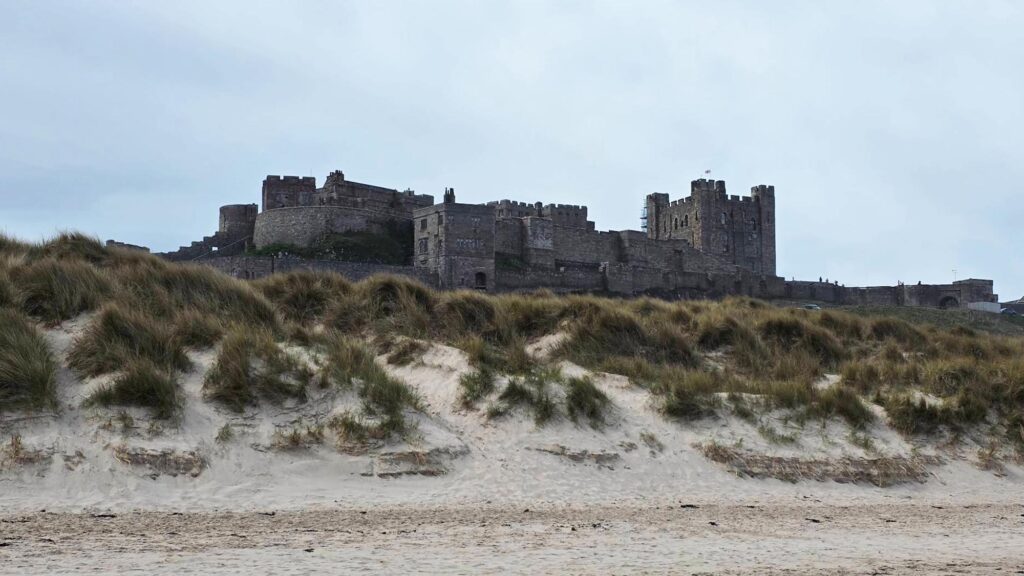
Bamburgh Castle
Bamburgh Castle has appeared in Becket, Mary, Queen of Scots, Elizabeth, Macbeth, The BFG, Transformers and Indiana Jones and the Dial of Destiny.
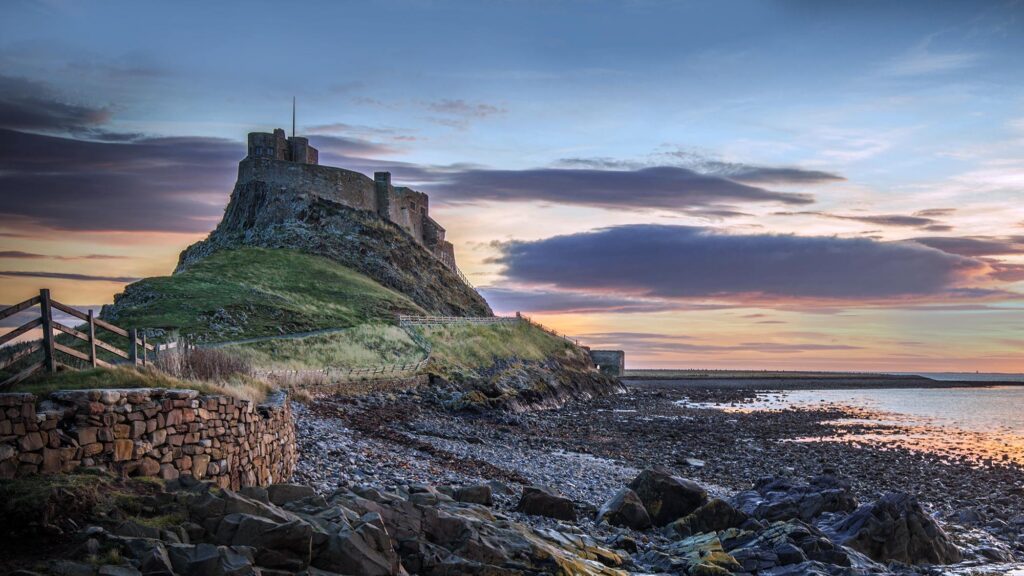
The Holy Island of Lindisfarne
The Holy Island of Lindisfarne has appeared in several films, including "Cul-de-sac" (1966), "Macbeth" (1971) and "28 Years Later" (2025).
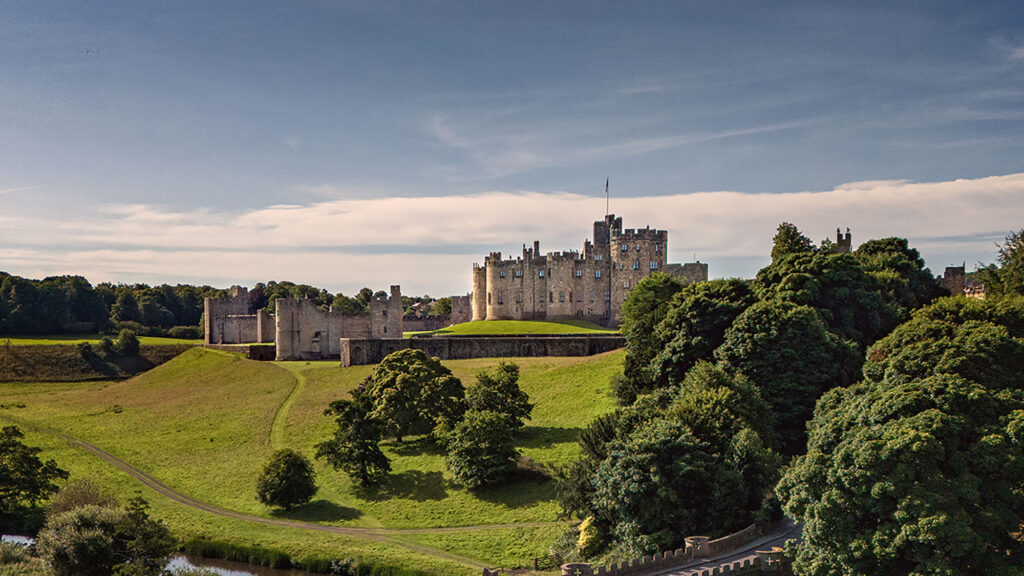
Alnwick Castle
Alnwick Castle has appeared in Harry Potter and the Philosopher’s Stone, Harry Potter and the Chamber of Secrets, Downton Abbey, Transformers and many more.
Gosford House
Gosford House has appeared in The Awakening (2011), Outlander (2014), The Princess Switch: Switched Again (2020), The Buccaneers (2023) and Frankenstein (2025).
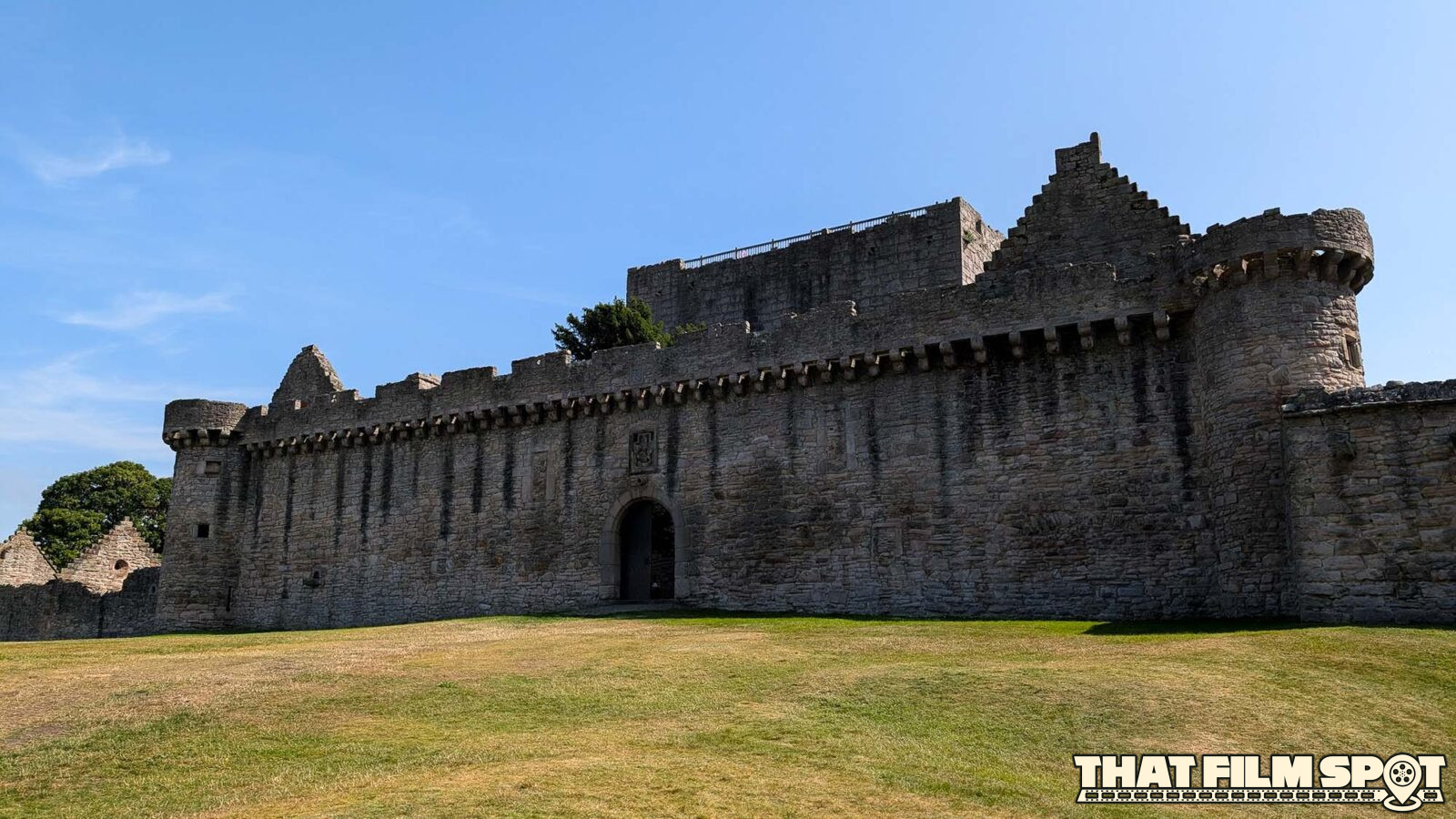
Craigmillar Castle
Craigmillar Castle has appeared in Outlander (2014), Outlaw King (2018) and other historical productions connected to Scotland’s medieval and early modern past.
Bakehouse Close
Bakehouse Close has appeared in The Adventures of Greyfriars Bobby (2005), Outlander (2014–) and Frankenstein (2025).
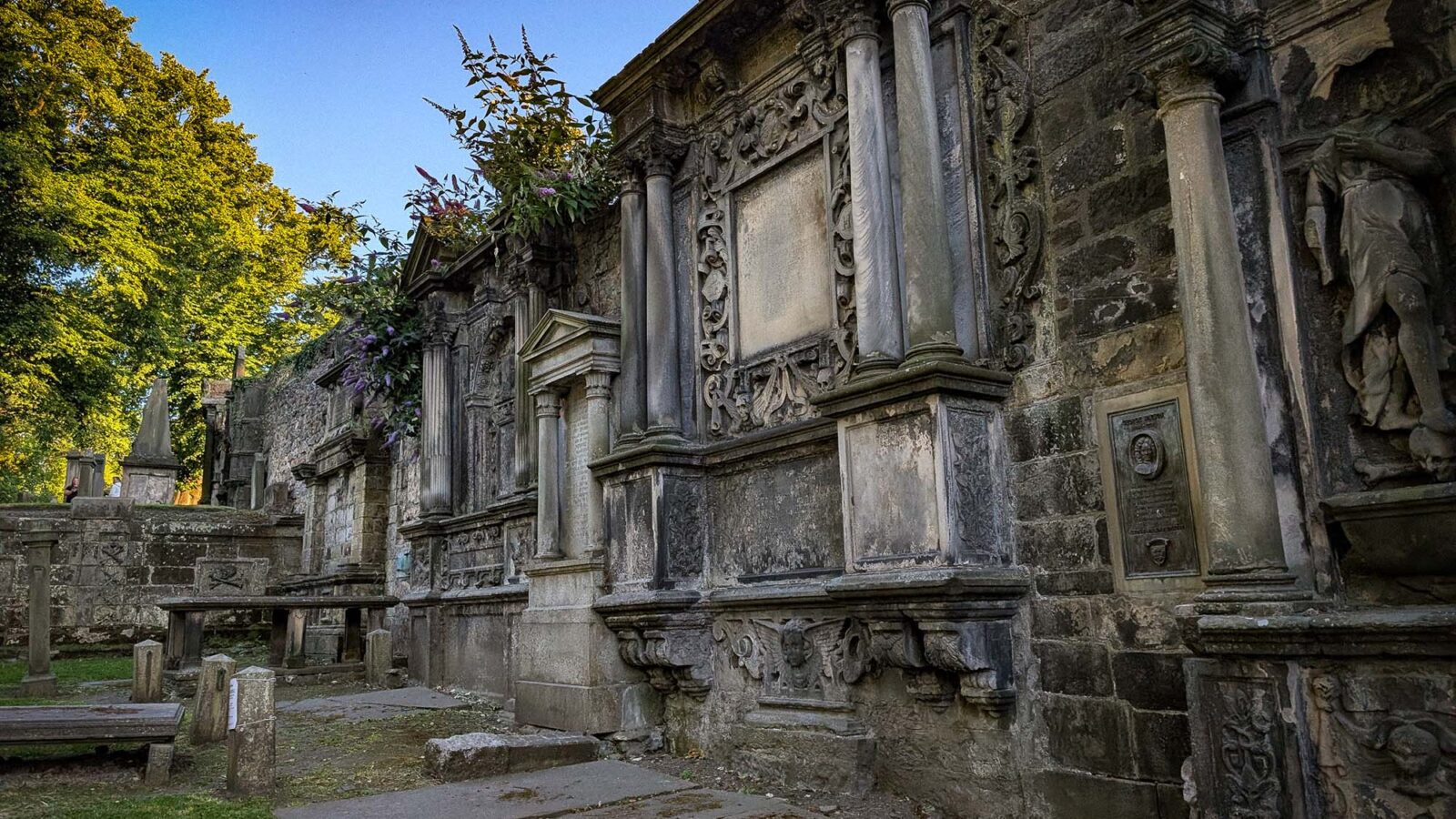
Greyfriars Kirkyard
Greyfriars Kirkyard has appeared in Greyfriars Bobby: The True Story of a Dog, The Prime of Miss Jean Brodie, Jude and The Adventures of Greyfriars Bobby.
St Giles’ Cathedral
St Giles’ Cathedral has appeared in Avengers: Infinity War (2018), and the area around the cathedral was also used for Frankenstein (2025).
Victoria Street
Victoria Street has appeared in F9: The Fast Saga (2021) and Eurovision Song Contest: The Story of Fire Saga (2020).
Leave a Reply