
An-Magritt is a 1969 Norwegian historical drama directed by Arne Skouen, with Liv Ullmann in the title role. The film is based on Johan Falkberget’s Nattens brød cycle, especially the novels An-Magritt and Plogjernet, and is set in the harsh mining society around Røros in the seventeenth century. An-Magritt is born into violence and shame after her mother is raped, and grows up under brutal conditions in a male-dominated world of poverty, hard labour and social judgement. The film follows her struggle to survive on her own terms, working with men, driving ore and charcoal, and fighting for dignity in a society where class, gender and religion weigh heavily on every part of life.
The film is closely tied to Røros and the mining landscape that shaped Falkberget’s writing. The old copper-mining town, its surrounding mountain terrain and the wider Røros district give the story a physical world of winter, ore transport, timber, smoke, hunger and labour. This is not a decorative historical backdrop, but the foundation of the drama: An-Magritt’s life is defined by the mines, the smelting works, the roads through the mountain landscape and the brutal conditions of a community built around copper production. By using Røros and its surroundings, the film connects directly to the region that inspired Falkberget’s novels and turns the landscape itself into part of An-Magritt’s struggle.
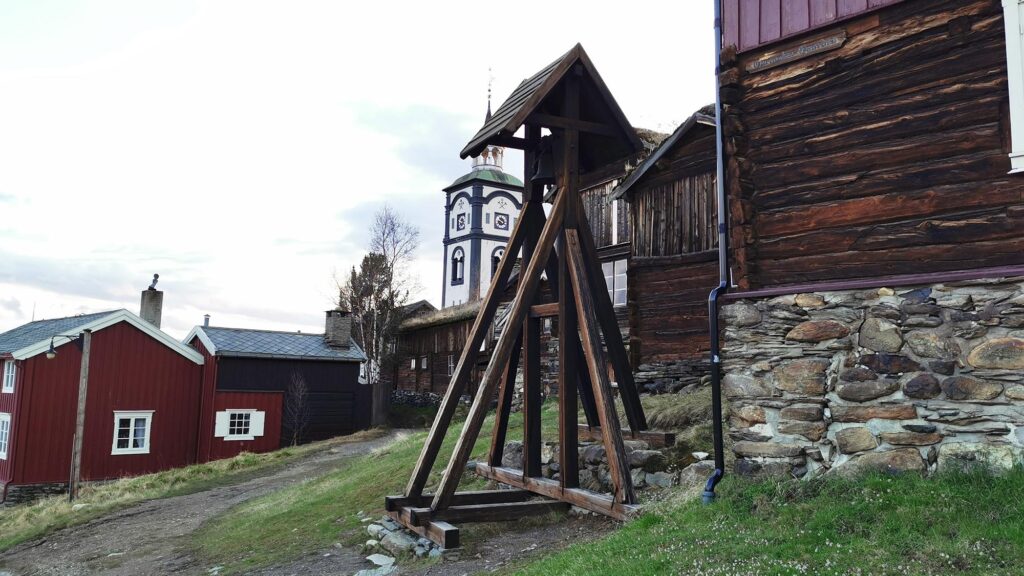
Hyttklokka
In "An-Magritt" (1969), Hyttklokka appears in a scene that ties directly into the mining society and everyday life at Røros.
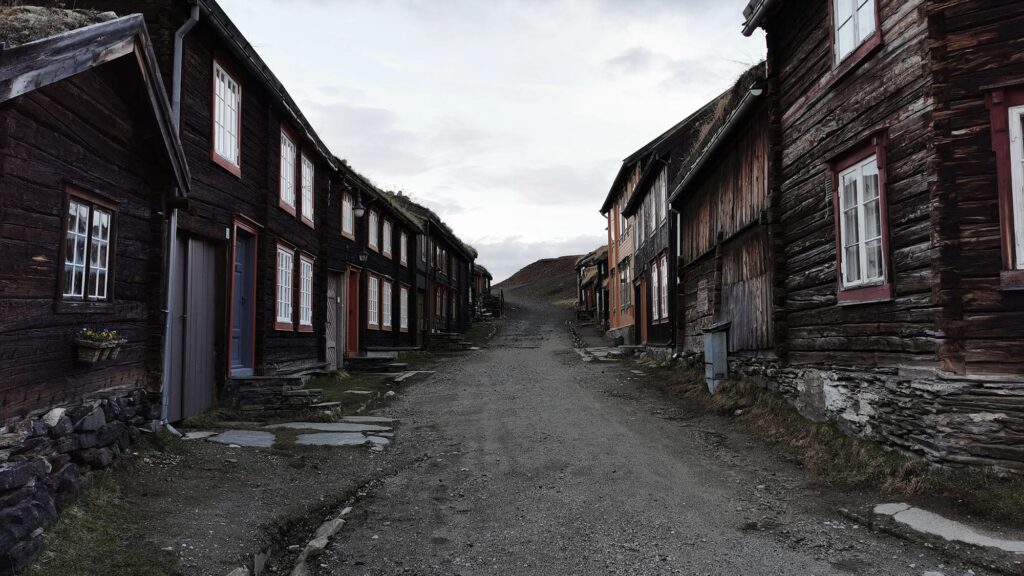
Sleggveien
Sleggveien is known from several Norwegian and international productions connected to Røros, like An-Magritt, Pippi Longstocking, and Jul i Blåfjell.