
Huntington Castle, also known as Clonegal Castle, is a historic fortified country house in the village of Clonegal, County Carlow, Ireland, close to the border with County Wexford. The castle was built in 1625 by Sir Laurence Esmonde, an Irish soldier who had served under Elizabeth I and James I and was subsequently appointed governor of Duncannon Fort in County Wexford. Originally constructed as a defensive stronghold, it occupied a strategically important position along the route between Dublin and Wexford, overlooking the valley of the River Derry. The original building was a substantial three-storey tower house, but over the following centuries it was gradually transformed into a family residence. Around 1680, the property became known as Huntington, and Sir Laurence Esmonde’s grandson began developing the formal gardens that still surround the castle. These included an avenue of lime trees planted in 1687, ornamental ponds, terraces and carefully arranged gardens. The estate also contains a remarkable avenue of ancient yew trees, some more than 500 years old, which forms one of its most distinctive features. During the early eighteenth century, further extensions were constructed, including a new wing and elaborately decorated plaster ceilings dating from around 1720. A major reconstruction followed during the nineteenth century under Alexander Durdin, who added a substantial two-storey wing and introduced the Gothic Revival features that characterise much of the exterior, including its battlements and projecting turrets. The property subsequently passed to the Robertson family through marriage, eventually becoming the ancestral home of the Durdin Robertson family. During the twentieth century, architect Manning Durdin Robertson introduced further alterations, including a conservatory balcony and greenhouse. One of the castle’s more unusual chapters began in the 1960s, when Olivia Robertson, her brother Lawrence Durdin-Robertson and his wife Pamela established the Huntington Castle Centre for Meditation and Study. In 1976, the three founded the Fellowship of Isis, an international spiritual organisation dedicated to the worship of the divine feminine. A series of underground rooms beneath the castle was converted into a temple containing shrines dedicated to Isis and other goddesses, which remains one of the property’s most unusual features. Huntington Castle has remained in the same extended family since its construction and is now maintained by Alexander and Clare Durdin Robertson. Its extensive gardens, historic interiors and surviving seventeenth-century architecture make it one of the more distinctive country houses in southeastern Ireland.
Huntington Castle appears in Barry Lyndon (1975), the historical drama directed by Stanley Kubrick. The castle grounds beside the River Derry provide the setting for an early scene in which Redmond Barry interrupts a romantic encounter between his cousin Nora Brady and the wealthy English officer Captain John Quin. The scene was filmed outdoors on the estate, using the surrounding countryside and castle as a backdrop. It establishes the rivalry between Barry and Quin, which eventually leads to a duel and sets Barry on the journey that dominates the remainder of the film.
In Barry Lyndon (1975), the historical drama written and directed by Stanley Kubrick and based on the novel by William Makepeace Thackeray, Huntington Castle appears during the opening part of the story, when the young Redmond Barry, played by Ryan O’Neal, is living in eighteenth-century Ireland. Barry has fallen deeply in love with his cousin Nora Brady, played by Gay Hamilton, but his feelings are not entirely reciprocated. Nora enjoys his attention but has become increasingly interested in Captain John Quin, played by Leonard Rossiter, a wealthy English officer whose marriage to her would considerably improve the financial circumstances of the Brady family. The scene filmed at Huntington Castle begins with Nora and Quin enjoying a romantic encounter in the countryside beside the River Derry. The captain holds Nora’s hands and assures her of his affection, although his declaration that he has never experienced such feelings for anyone except her and four other women rather undermines his romantic sincerity. Nora responds with equally exaggerated expressions of devotion, insisting that she has never loved another man. Kubrick initially photographs the couple in close-up before slowly pulling the camera back to reveal the surrounding landscape. Nearby, Nora’s brothers Mick and Ulick are acting as chaperones, although their principal concern is ensuring that her relationship with the wealthy captain develops into marriage. Barry then appears in the distance and approaches the couple, visibly angered by what he has witnessed. Nora greets him pleasantly, but Barry immediately takes her aside and demands to know how she could betray him. He produces a ribbon she had previously given him during an intimate encounter and returns it, making it clear that he considers their relationship finished. Nora attempts to dismiss the incident, but Quin notices the exchange and becomes suspicious. When Nora introduces Barry as her cousin, Quin suggests that the two have something to discuss privately and offers to withdraw. Nora insists that Barry is merely a boy and means nothing to her, but Quin points out that the gift of an intimate article of clothing suggests otherwise. He then produces another ribbon that Nora has given him, exposing her habit of making similar romantic gestures towards both men. Offended by the situation, Quin throws down the ribbon and announces that he intends to withdraw his attentions from Nora. Her brothers become increasingly alarmed, knowing that the family stands to lose the financial advantages of her proposed marriage. One of them confronts Barry, blaming him for interfering with a gentleman whose annual income amounts to £1,500. The scene was filmed in the grounds of Huntington Castle, with the River Derry, surrounding trees and the castle itself contributing to the carefully composed landscape shots. Kubrick and cinematographer John Alcott used slow zooms and carefully positioned figures to create compositions resembling eighteenth-century landscape paintings. The confrontation is particularly important because it makes Barry’s jealousy public and exposes the financial motives behind his cousin’s courtship. The rivalry established beside the river subsequently leads to Barry challenging Quin to a pistol duel, an event that forces him to leave his home and begins his adventures across Europe. The actual castle was used for the exterior location, while no interior scenes at Huntington Castle have been securely identified in the production.

Dublin Castle
Dublin Castle is in Barry Lyndon, The Young Indiana Jones Chronicles, Michael Collins, The Medallion, The Tudors, Northanger Abbey, Neverland and many more.
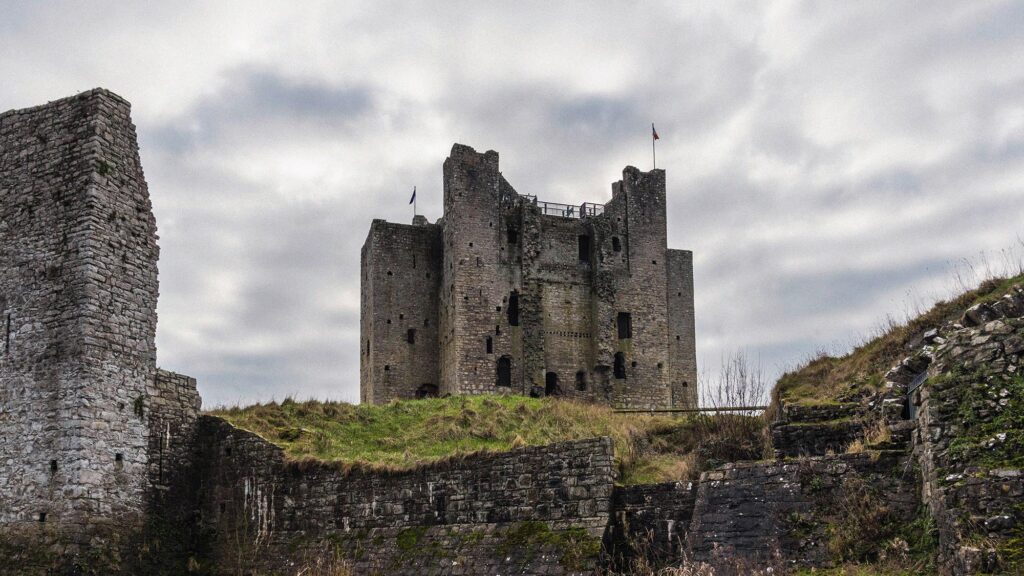
Trim Castle
Trim Castle has appeared in The Big Red One (1980) and Braveheart (1995). In both films, the castle is used to represent places outside Ireland.
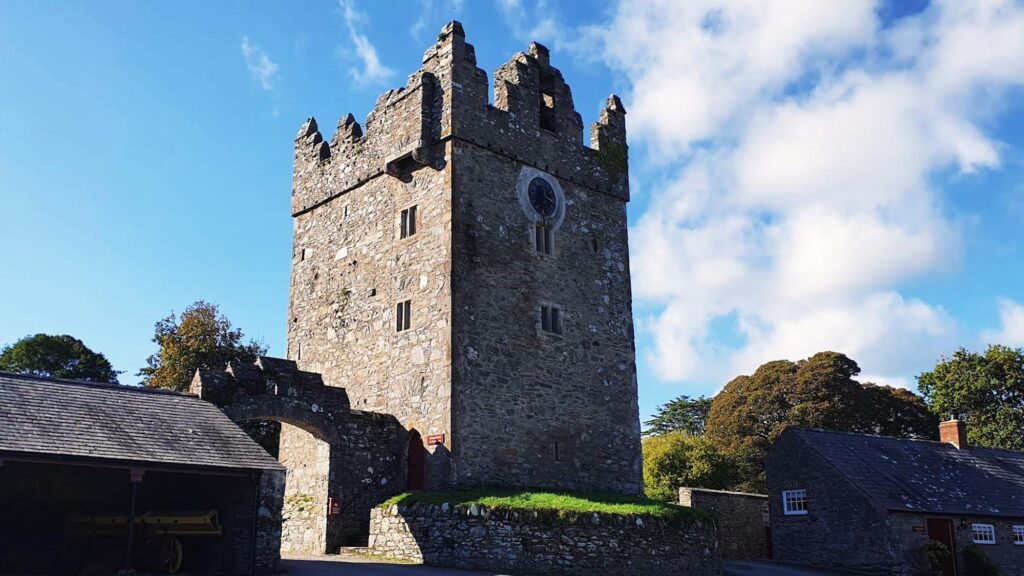
Old Castle Ward
Old Castle Ward and the surrounding estate are best known from Game of Thrones, where the historic farmyard and nearby areas stood in for Winterfell.
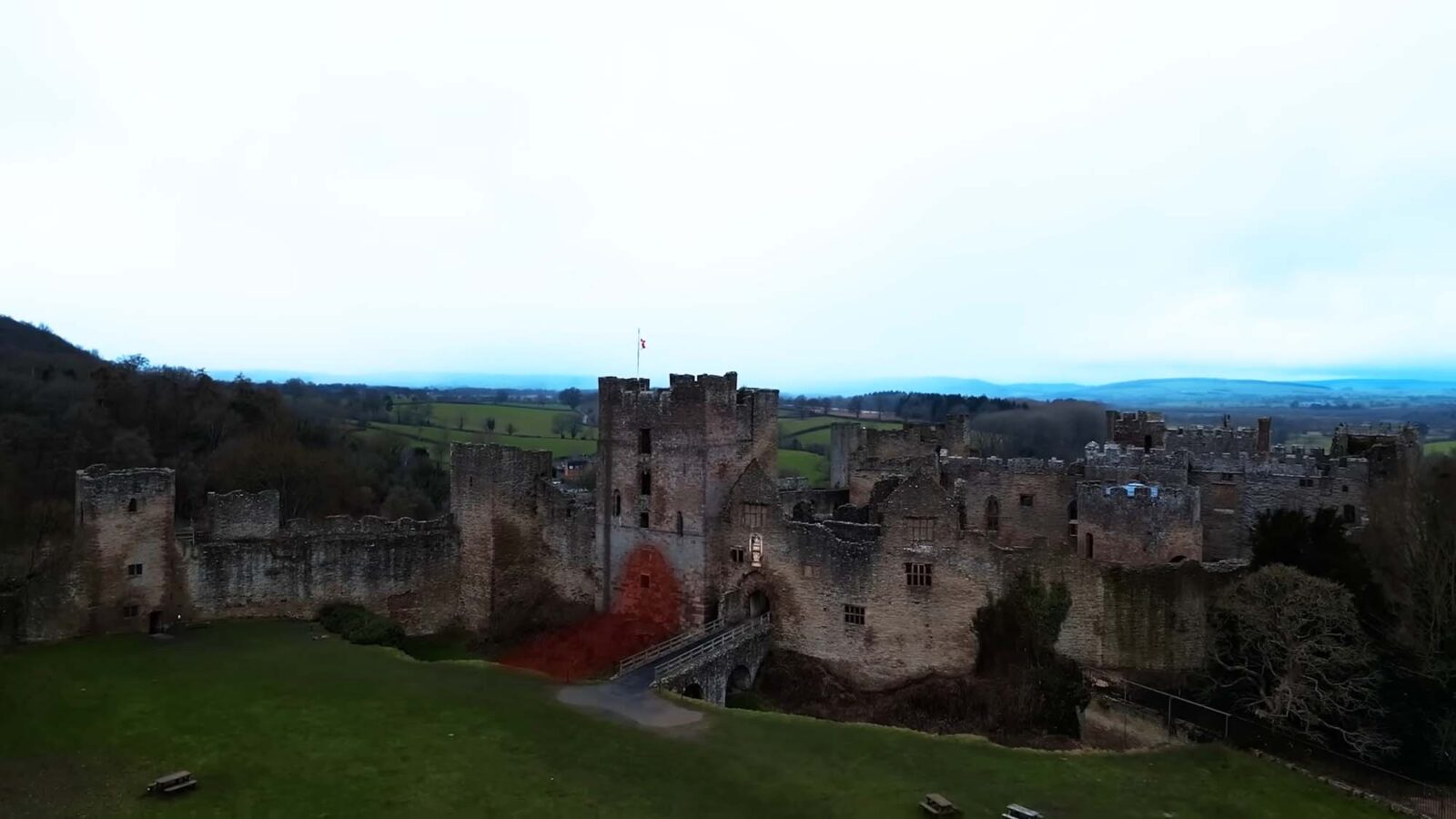
Ludlow Castle
Ludlow Castle has appeared in Faintheart (2008), Catherine Called Birdy (2022) and The Completely Made-Up Adventures of Dick Turpin (2024–2025).

St Michael’s Mount
St Michael’s Mount appears in Dracula (1979), Twelfth Night (1996), Johnny English (2003), and House of the Dragon (2022).

Gloucester Cathedral
Gloucester Cathedral is in El libro de buen amor II, The Whistle Blower, The Choir, Shadow Run, Harry Potter and the Sorcerer’s Stone, and many more.

Chatsworth House
Chatsworth House is in The Return of Sherlock Holmes, The Case-Book of Sherlock Holmes, Pride & Prejudice, The Duchess, The Wolfman and many more.
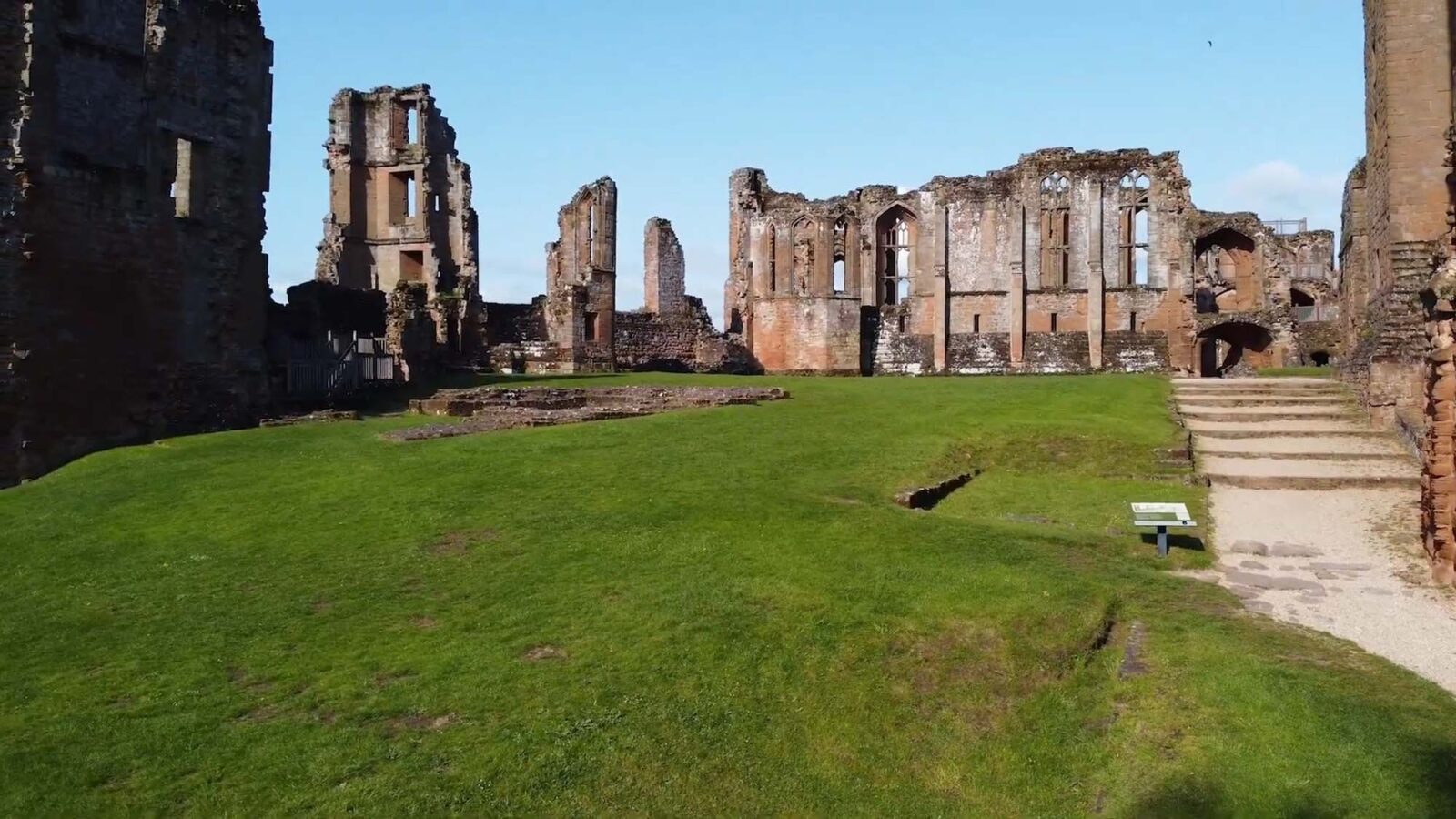
Kenilworth Castle
Kenilworth Castle, in Warwickshire, England, has appeared in When Knights Were Bold (1916), Kenilworth Castle and Amy Robsart (1926) and Father Brown (2013–).
Dean Castle
Dean Castle has appeared in Outlander (2014–2026). In the second season, its medieval exterior, gateway and courtyard represent Beaufort Castle.