
Sturebadet is a historic bathhouse and spa beside Stureplan in central Stockholm, Sweden, with its original building at Sturegatan 4 and its present entrance through Sturegallerian at Sturegallerian 36. The bath was initiated by physician and balneologist Carl Curman, who believed strongly in bathing and physical exercise as part of public health, and was constructed between 1883 and 1885 for Stockholm Badhus AB. Architects Magnus Isæus and Carl Sandahl designed the building, while Curman provided much of the original concept. Its Renaissance-inspired façade was modelled on the Ca’ Vendramin Calergi palace in Venice, deliberately giving what was essentially a public bathhouse the appearance of an elegant city palace. The complex was expanded in the early twentieth century with a new swimming hall, completed in 1903 to designs by Sigge Cronstedt and Hjalmar Molin. Its richly decorated Art Nouveau interior combined Nordic and Moorish influences and became the most recognisable part of Sturebadet. A devastating fire on 30 May 1985 destroyed much of the swimming hall during renovation work. Because the interiors had been extensively photographed shortly before the fire, they could be reconstructed in close detail, and Sturebadet reopened in 1989. It continues to operate as a spa, swimming and fitness complex while retaining much of the appearance of the historic bathhouse.
Sturebadet has appeared in Doctor Glas (1942), Ratataa or The Staffan Stolle Story (1956) and Gorky Park (1983), while its swimming hall was also used in Drake’s music video for «Sticky» (2022). The three feature films were all made before the destructive 1985 fire and therefore preserve views of the original Sturebadet interiors. Doctor Glas (1942) incorporates the Turkish bath into the everyday social life of its characters, Ratataa or The Staffan Stolle Story (1956) uses the bath for the comic musical number «Var är tvålen?», and Gorky Park (1983) transforms it into a bathhouse in Moscow. By the time Drake filmed «Sticky» (2022), the swimming hall seen on screen was the carefully reconstructed version completed after the fire.
In Doctor Glas (1942), Sturebadet appears several times as one of the places where Doctor Tomas Glas meets his friend, journalist Markel. In the first bath sequence, Glas and Markel move from the sauna into a relaxation area, where they continue one of the personal conversations through which Glas discusses and reflects upon the people around him. From their seats they notice Klas Recke, the man having an affair with Helga Gregorius, being vigorously scrubbed by a bath attendant before he recognises the two men through the glass and acknowledges them. Recke’s presence immediately connects the otherwise ordinary visit to Glas’s obsessive thoughts about Helga, with images of her intruding into his mind. Sturebadet appears again near the end of the film when Glas and Markel dive into the pool and swim while discussing their plans for dinner. The scenes make unusually extensive use of the real bathhouse and also preserve the appearance of its interiors more than four decades before the 1985 fire.
In Ratataa or The Staffan Stolle Story (1956), originally titled Ratataa eller The Staffan Stolle Story, Sturebadet provides the setting for «Var är tvålen?», one of Povel Ramel’s best-known comic musical numbers from the film. Staffan Stolle, played by Ramel, and Vicke Wickberg, played by Martin Ljung, appear among a group of male bathers as an everyday visit to the bathhouse develops into an increasingly elaborate song about the seemingly simple problem of finding the soap. Ramel and Ljung are joined vocally by Tosse Bark and Oscar Rundqvist as the bathing ensemble expands around them. The sequence was filmed inside the real Sturebadet, using the pools and bathing environment as both the setting and visual basis for the comedy. Because the film was shot almost thirty years before the fire that destroyed much of the swimming hall, the sequence is also a valuable moving-image record of the original interior.
In Gorky Park (1983), Sturebadet stands in for a Russian bathhouse in Moscow and becomes the setting for two important encounters involving investigator Arkady Renko. Early in his investigation into three mutilated bodies found in Gorky Park, Renko is invited to the baths by Chief Prosecutor Iamskoy, who presents relaxation there as part of his daily routine. Inside, Iamskoy introduces Renko to wealthy American fur trader Jack Osborne, establishing a connection that becomes increasingly important as Renko uncovers the conspiracy behind the murders. The bathhouse returns later after Renko discovers that Iamskoy himself is involved. Renko confronts him at the baths and secretly records his confession that the murder investigation has been manipulated to pressure Osborne over an illegal scheme involving valuable sable. When Renko reveals that he has recorded the conversation, Iamskoy attacks him and the two struggle over a gun, which fires and kills Iamskoy. Although the scenes are supposed to take place in Moscow, they were filmed inside Sturebadet in Stockholm. Gorky Park was shot only two years before the 1985 fire, making it one of the final major films to capture the original bathhouse interior.
In Drake’s music video for «Sticky» (2022), Sturebadet appears during footage filmed while the Canadian rapper was visiting Stockholm in July 2022. Drake is shown alone in the water inside the ornate main swimming hall, with the reconstructed arches, columns and decorative interior clearly visible around the pool. The Stockholm material in the video also includes the Hall of Mirrors at Grand Hôtel, the terrace at Södra Teatern and locations around Djurgården, but the Sturebadet sequence is among the most visually distinctive. Unlike the earlier films shot before the 1985 fire, «Sticky» shows the restored swimming hall that reopened in 1989, providing an interesting comparison with the original interior preserved in Doctor Glas, Ratataa and Gorky Park.
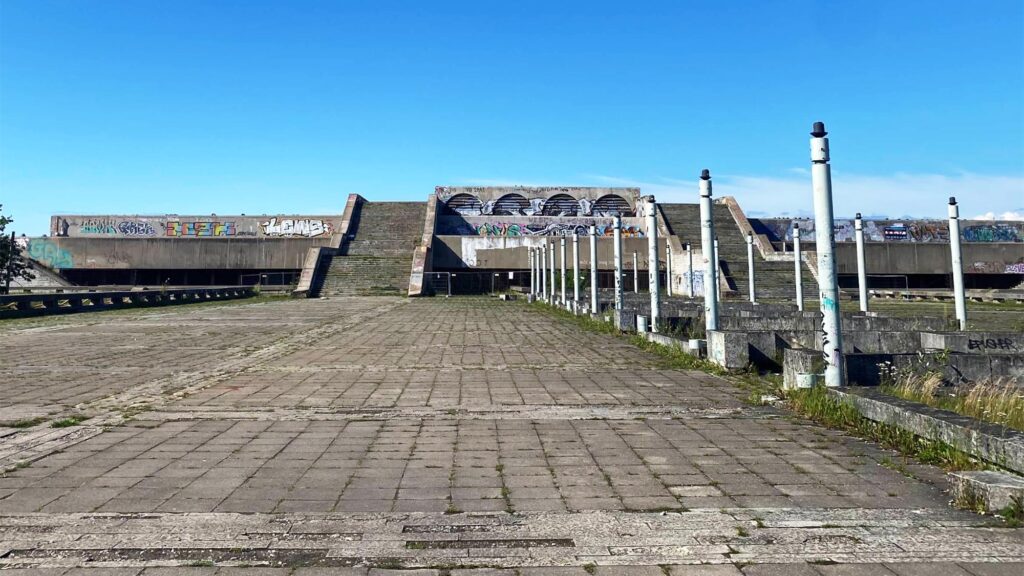
Tallinna Linnahall
Tallinna Linnahall is best known as a filming location from Tenet (2020), where it stands in for the Kyiv Opera House during the film’s opening sequence.
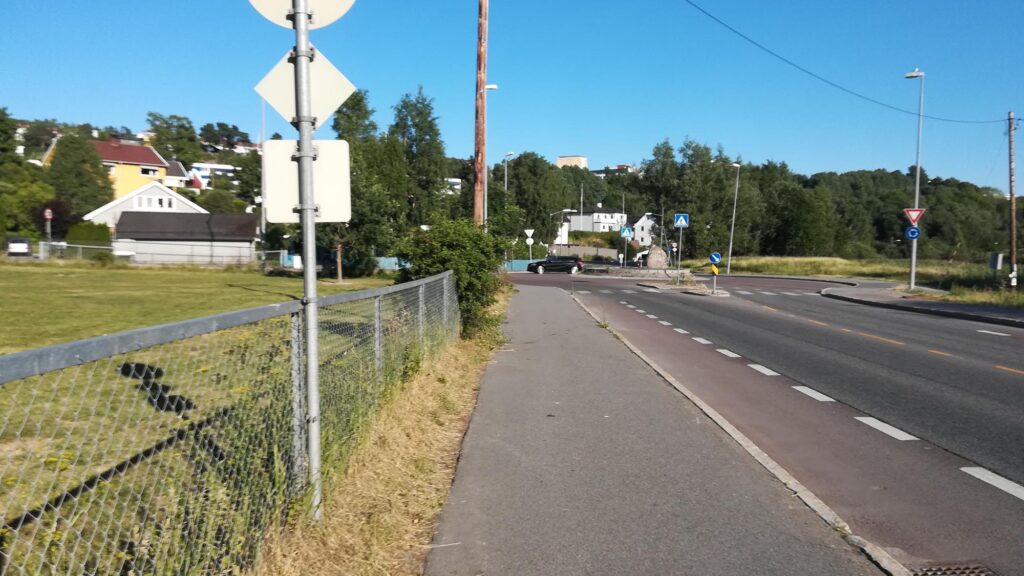
Østensjøveien
Østensjøveien in Oslo appears in the opening section of "Lasse & Geir", the 1976 Norwegian drama and cult film directed by Svend Wam.
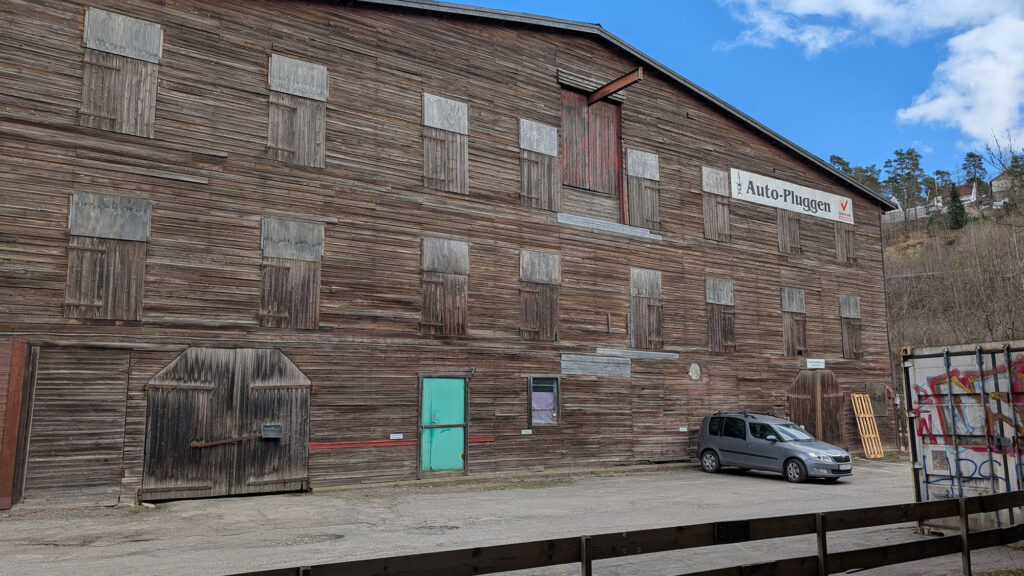
Autopluggen
In Jo Nesbø’s Detective Hole (2026), Autopluggen is used in the scene where Harry Hole stops under a bridge beside the run-down building and bribes a couple.
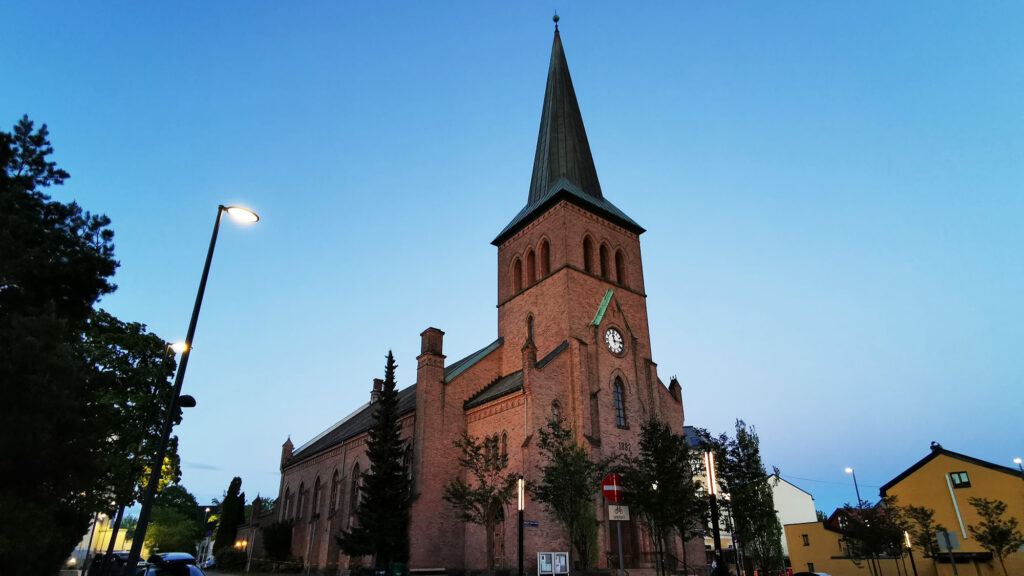
Kampen Church
Kampen Church has appeared in Olsenbanden for full musikk (1976), Hemmelighetene i B-by (1982), Mot i brøstet (1993–1997) and Jo Nesbø's Detective Hole (2026).
Farine
Farine has appeared in Olsenbanden, Olsenbanden og Dynamitt-Harry, Olsenbanden tar gull, Hemmelighetene i B-by, Lyckliga gatan and Hos Martin.
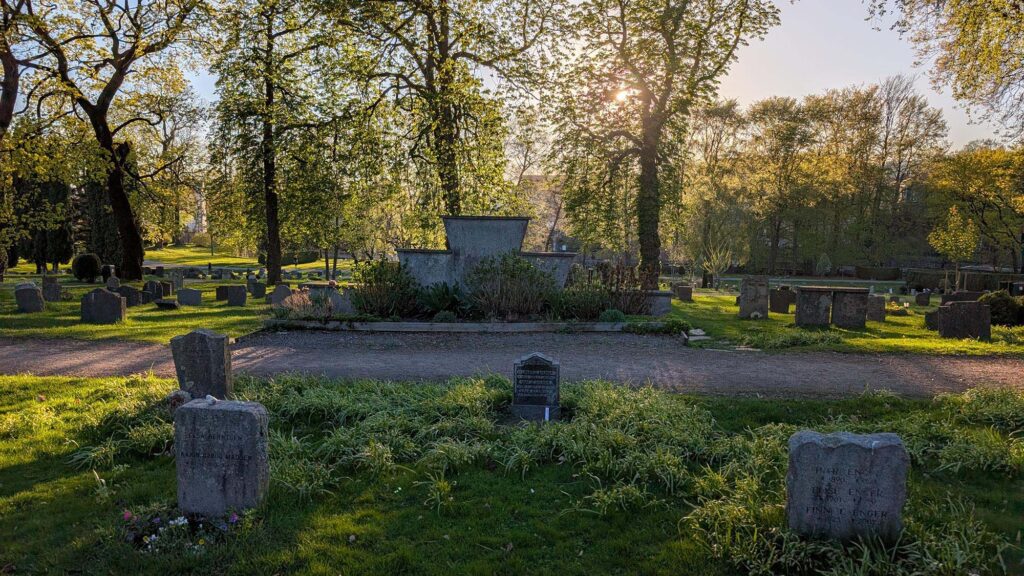
Gamlebyen gravlund
In Jo Nesbø’s Detective Hole (2026), Gamlebyen gravkapell in Gamlebyen gravlund is used for Ellen Gjelten’s funeral.
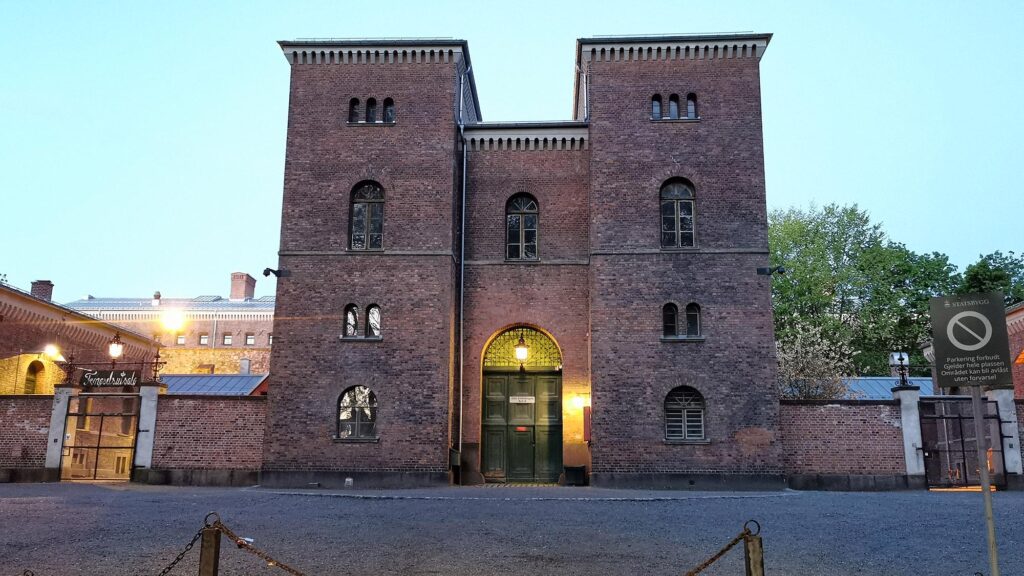
Botsen
Botsen is best known from the "Olsenbanden" film series, where it appears as the prison Egon Olsen is released from at the start of many of the films.

Neseblod Records
Neseblod Records appears briefly in Lords of Chaos (2018), the biographical crime drama directed by Jonas Åkerlund about the early Norwegian black metal scene.
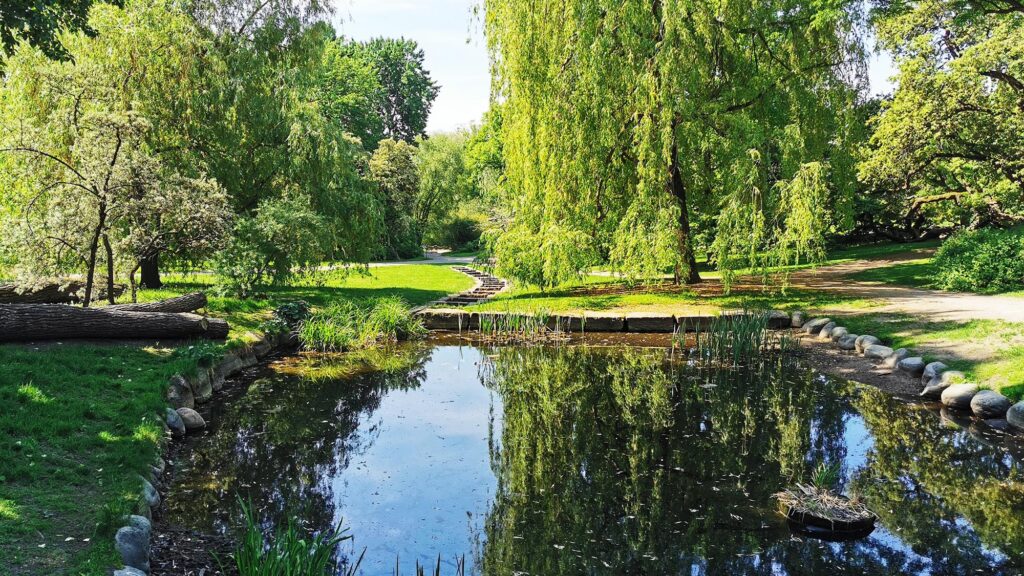
Botanical Garden Oslo
Botanical Garden is in the Norwegian movie About Tilla from 1963. Botanical Garden is used as one of the film’s central early locations.