
Dublin Castle, known in Irish as Caisleán Bhaile Átha Cliath, is a government complex situated between Dame Street and the Dubh Linn Gardens in central Dublin, Ireland. Construction of a royal castle began in 1204 under King John of England on the site of an earlier Viking settlement. The medieval fortress was arranged around a central enclosure protected by high walls, a surrounding moat and four circular corner towers. Much of this structure was destroyed or removed following a major fire in 1684, after which the complex was gradually rebuilt as a Georgian administrative palace. The State Apartments developed along the southern side of the Upper Yard and served as the official and ceremonial residence of the British viceroy in Ireland. The thirteenth-century Record Tower is the only complete surviving tower from the medieval castle, while the Gothic Revival Chapel Royal was added beside it during the early nineteenth century. Dublin Castle remained the centre of English and later British administration in Ireland until 16 January 1922, when it was formally handed over to the Provisional Government led by Michael Collins. It is now used for state ceremonies, government functions, conferences and presidential inaugurations.
Dublin Castle has appeared in Barry Lyndon (1975), the television episode The Young Indiana Jones Chronicles: “Ireland, April 1916” (1993), Michael Collins (1996), The Medallion (2003), The Tudors (2007–2010), Northanger Abbey (2007), Neverland (2011), Albert Nobbs (2011), Penny Dreadful (2014–2016) and Rebellion (2016). Its State Apartments, Drawing Room, Chapel Royal, Upper Yard, archways, Record Tower and surrounding grounds have represented the residence of a European gambler, British administrative headquarters, Vatican buildings, a scenic walk above Bath, streets and public buildings in Victorian London and Dublin Castle itself during the Easter Rising and the Irish War of Independence.
In Barry Lyndon (1975), the State Drawing Room at Dublin Castle represents the residence of the Chevalier de Balibari, an expatriate Irish gambler living in Prussia. Redmond Barry is ordered by the Prussian authorities to enter Balibari’s household and secretly report on his activities. When Barry meets him, however, he becomes emotional at hearing the voice of another Irishman and immediately confesses that he has been sent as a spy. Balibari accepts him as an assistant, and the two subsequently travel together and make money by cheating wealthy aristocrats at cards. Rooms within Dublin Castle were used for Balibari’s residence and associated hotel and gaming interiors, while other locations and studio sets provided the European estates visited during their partnership. The castle is not identified as an Irish government building in the film and appears instead as part of the eighteenth-century continental setting.
In The Young Indiana Jones Chronicles episode “Ireland, April 1916” (1993), Dublin Castle contributes to the recreation of Dublin during the Easter Rising. Indiana Jones and his friend Remy arrive in Ireland while attempting to earn enough money to travel to London and enlist in the Belgian Army. Indy becomes involved with a young woman named Maggie while political tension grows between Irish republicans and the British authorities. When the Rising begins, fighting breaks out across the city and Indy witnesses the conflict from the perspective of civilians caught between the opposing sides. Dublin Castle appears as part of the political and military landscape surrounding the rebellion, reflecting its historical role as the headquarters of British administration in Ireland. Available location records confirm filming at the castle but do not identify the precise division between its scenes and material filmed elsewhere in central Dublin.
In Michael Collins (1996), Dublin Castle appears as itself and represents the centre of British government, police intelligence and military authority during the Irish War of Independence. After escaping from Frongoch internment camp, Michael Collins organises an intelligence network capable of obtaining information from inside the British administration. Detective Ned Broy secretly brings Collins into the castle and allows him to examine confidential files containing reports, photographs and information about republican suspects. Collins uses this material to identify informers and members of the British intelligence operation working against the Irish Republican Army. The castle’s corridors, offices, courtyards and entrances recur as officials attempt to suppress the independence movement and respond to Collins’s increasingly effective campaign. The use of the real complex gives the scenes an additional historical connection, since Collins personally accepted the transfer of Dublin Castle from the final lord lieutenant to the Irish Provisional Government in January 1922.
In The Medallion (2003), Dublin Castle is used during the Dublin section of the fantasy action comedy. Hong Kong police officer Eddie Yang travels to Ireland while pursuing the criminal Snakehead, who has kidnapped a boy named Jai in order to obtain the supernatural powers of an ancient medallion. Dublin Castle and its surrounding courtyards provide part of the urban environment through which Eddie and the Interpol agents investigate the kidnapping. The medieval Record Tower can be recognised briefly, while more extensive action and stunt material was filmed around the castle complex. Dublin Castle does not represent Snakehead’s principal fortress: the dramatic coastal exterior of his stronghold was filmed at Dunluce Castle in Northern Ireland, with its interior rooms created separately.
In The Tudors (2007–2010), Dublin Castle was transformed into buildings associated with Rome and the Vatican. The series follows the reign of Henry VIII, including his attempt to have his marriage to Catherine of Aragon annulled and the resulting conflict with the Catholic Church. The Chapel Royal and other areas of the castle were used for ecclesiastical council scenes involving cardinals, papal representatives and discussions about Henry’s marriage. Courtyards and historic interiors within the complex contributed to the representation of Vatican City and other royal or religious settings. Dublin Castle was combined with numerous Irish properties, including Christ Church Cathedral, Kilmainham Gaol, Drimnagh Castle and Powerscourt Estate, to create the palaces, churches and political institutions of Tudor England and continental Europe.
In Northanger Abbey (2007), the grounds around Dublin Castle represent Beechen Cliff, the elevated walk overlooking Bath. Catherine Morland visits the area with Henry and Eleanor Tilney after her growing friendship with the family. During their walks and conversations, Henry gently challenges Catherine’s tendency to interpret real people and places through the conventions of Gothic novels. The Dublin location provides the landscaped surroundings for these scenes rather than the fictional Northanger Abbey itself. Lismore Castle in County Waterford supplies the principal exterior of General Tilney’s estate, while interiors and other Bath locations were assembled from several Irish historic properties.
In Neverland (2011), Dublin Castle was one of the Irish historic locations used to create the nineteenth-century world preceding the events of Peter Pan. The miniseries follows Peter and a group of orphaned boys who work for the criminal and former fencing instructor Jimmy Hook before being transported through a magical portal to Neverland. Dublin Castle contributes to the period architecture surrounding the characters before and during the expansion of the story beyond London. Production records and surviving location material confirm filming at the castle, but they do not identify its precise fictional building or separate its scenes clearly from those filmed at other Dublin properties. The castle should consequently be credited as part of the production’s historical urban setting without assigning it to one specific residence.
In Albert Nobbs (2011), Dublin Castle was used during the production’s recreation of late nineteenth-century Dublin. The film follows Albert Nobbs, who has lived for decades as a man in order to work as a waiter and survive independently within a society offering few opportunities to women. Albert saves money in the hope of opening a tobacco shop and begins considering marriage to the hotel maid Helen Dawes. The production filmed throughout Dublin and at several historic interiors to create the streets, hotels and institutions surrounding Albert’s restricted life. Dublin Castle is confirmed as one of the locations, although available production records do not identify the exact room or sequence filmed there. It should not automatically be described as Morrison’s Hotel, since the hotel’s interiors and service areas were assembled from other buildings and sets.
In Penny Dreadful (2014–2016), Dublin Castle represents several locations in Victorian London. In the first season, Victor Frankenstein takes his newly created companion Proteus outside and introduces him to the city. They pass through one of Dublin Castle’s archways and enter a courtyard that was digitally transformed into the Thames Embankment. The real cobblestones, gateway, walls and performers were retained, while visual effects added the river, boats, industrial activity and the skyline of London, including St Paul’s Cathedral. The castle was also used as the foundation for an exterior view of the British Museum, with only the foreground entrance and people filmed practically before the larger museum façade was created digitally.
Dublin Castle returned during later Penny Dreadful filming, when the Upper Yard was transformed with tables, parasols and temporary decorations into an outdoor café. The courtyard appears during material involving Lily Frankenstein and the group of women she is gathering around her as she plans a violent rebellion against the men who have abused and exploited them. Additional filming in the same area involved police officers confronting female demonstrators. The production repeatedly altered the familiar government courtyard through period vehicles, extras, street furniture and visual effects, allowing the same location to represent several supposedly separate areas of London.
In Rebellion (2016), Dublin Castle appears as itself during the opening day of the Easter Rising in April 1916. The series dramatises the rebellion through fictional characters connected to the Irish Volunteers, the Irish Citizen Army, the British administration and families divided by the conflict. One of the first confrontations occurs at the Cork Hill entrance to Dublin Castle, where members of the Citizen Army attempt to seize the complex. An unarmed Dublin Metropolitan Police constable guarding the gate is shot, recreating the killing of Constable James O’Brien at approximately the same place where the historical incident occurred. Gunfire, soldiers and mounted weapons are used around the courtyard as the rebels discover that the heavily defended administrative headquarters cannot be taken easily. Although the real castle supplies the exterior, entrance and courtyard material, some interiors presented as offices within Dublin Castle were filmed at other historic houses.
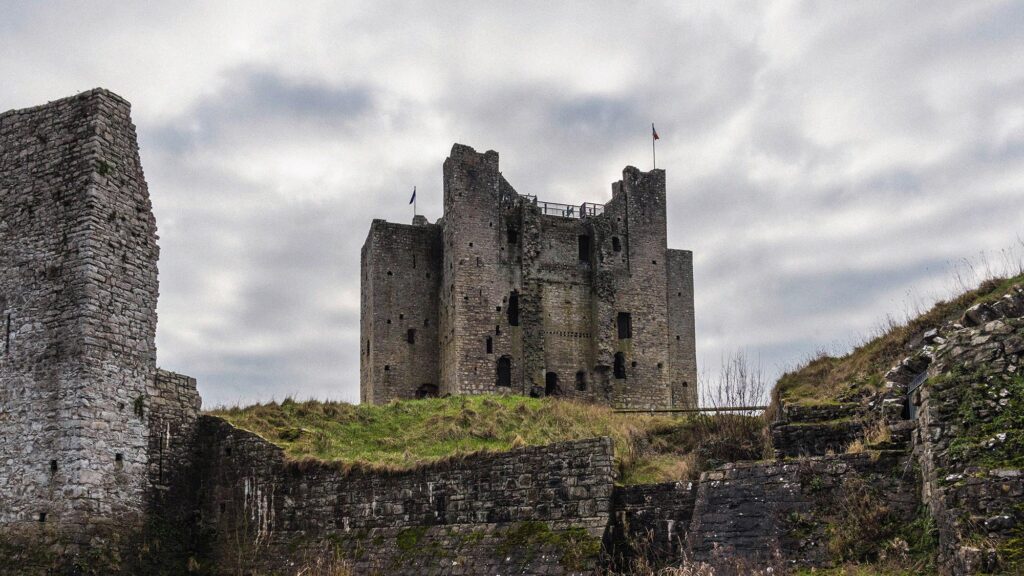
Trim Castle
Trim Castle has appeared in The Big Red One (1980) and Braveheart (1995). In both films, the castle is used to represent places outside Ireland.
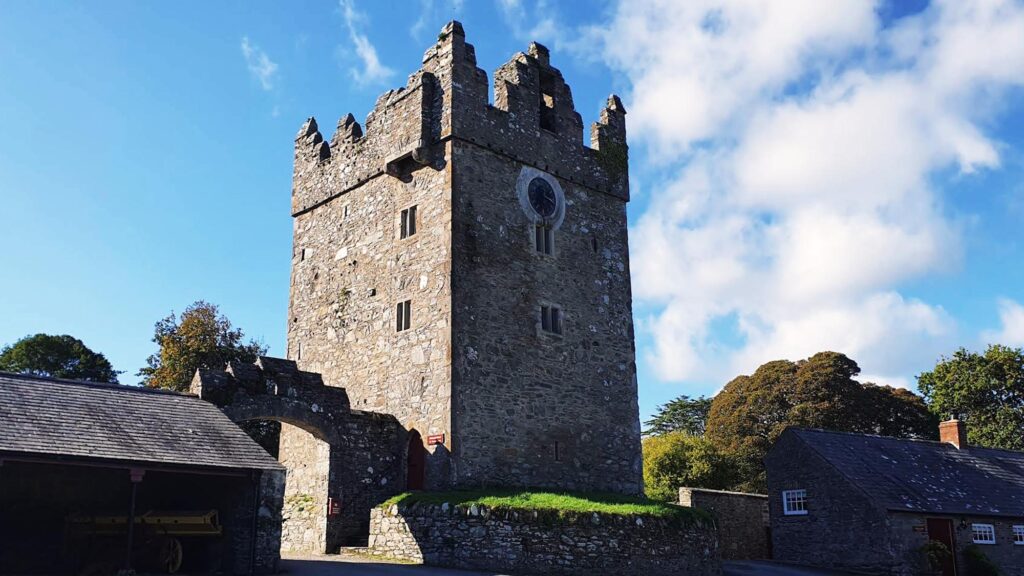
Old Castle Ward
Old Castle Ward and the surrounding estate are best known from Game of Thrones, where the historic farmyard and nearby areas stood in for Winterfell.
Dean Castle
Dean Castle has appeared in Outlander (2014–2026). In the second season, its medieval exterior, gateway and courtyard represent Beaufort Castle.

Gloucester Cathedral
Gloucester Cathedral is in El libro de buen amor II, The Whistle Blower, The Choir, Shadow Run, Harry Potter and the Sorcerer’s Stone, and many more.
Finnich Glen
Finnich Glen has appeared in The Eagle, the first season of Outlander, King Arthur: Legend of the Sword, Pokémon Detective Pikachu and The Nest.
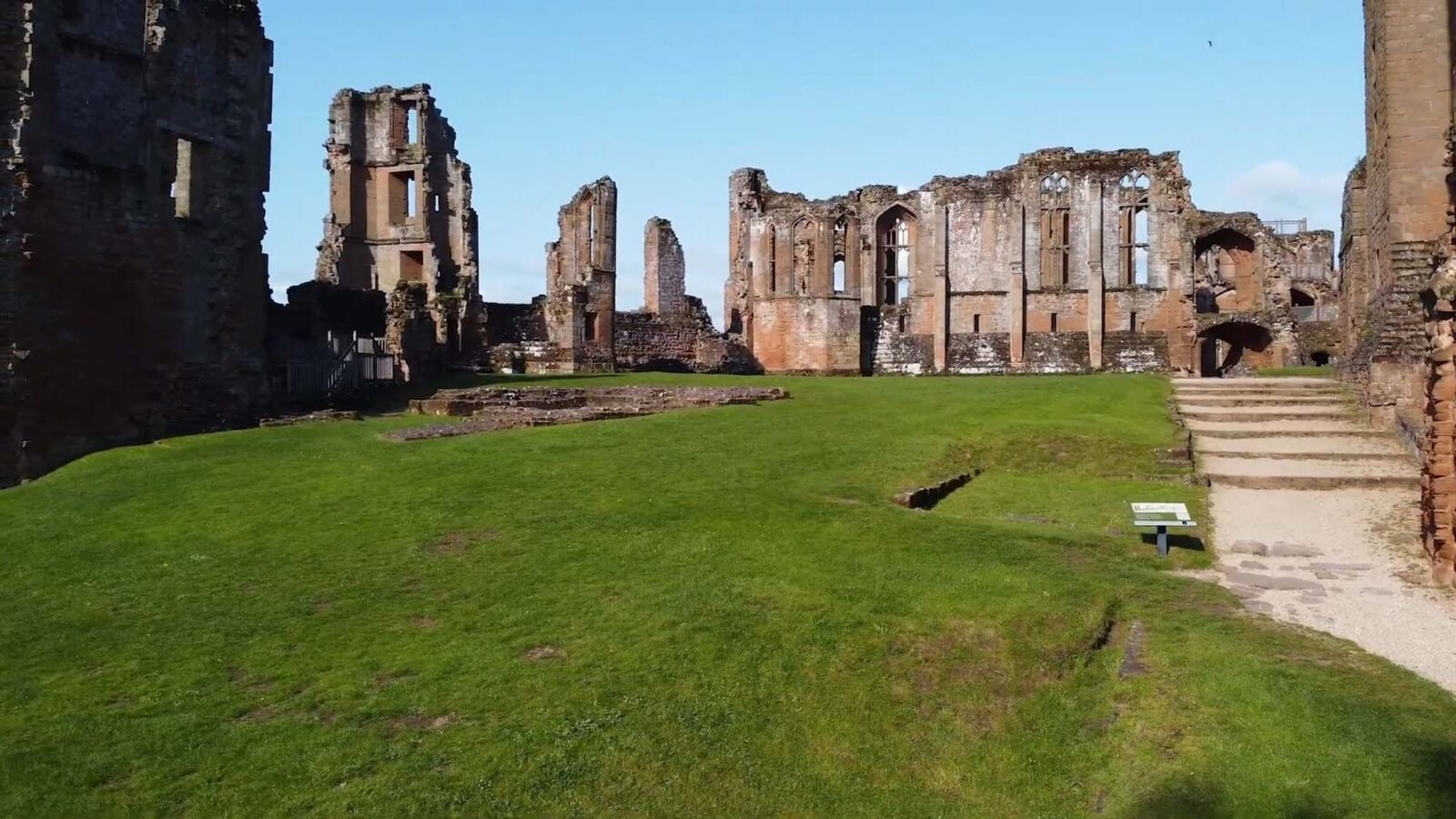
Kenilworth Castle
Kenilworth Castle, in Warwickshire, England, has appeared in When Knights Were Bold (1916), Kenilworth Castle and Amy Robsart (1926) and Father Brown (2013–).
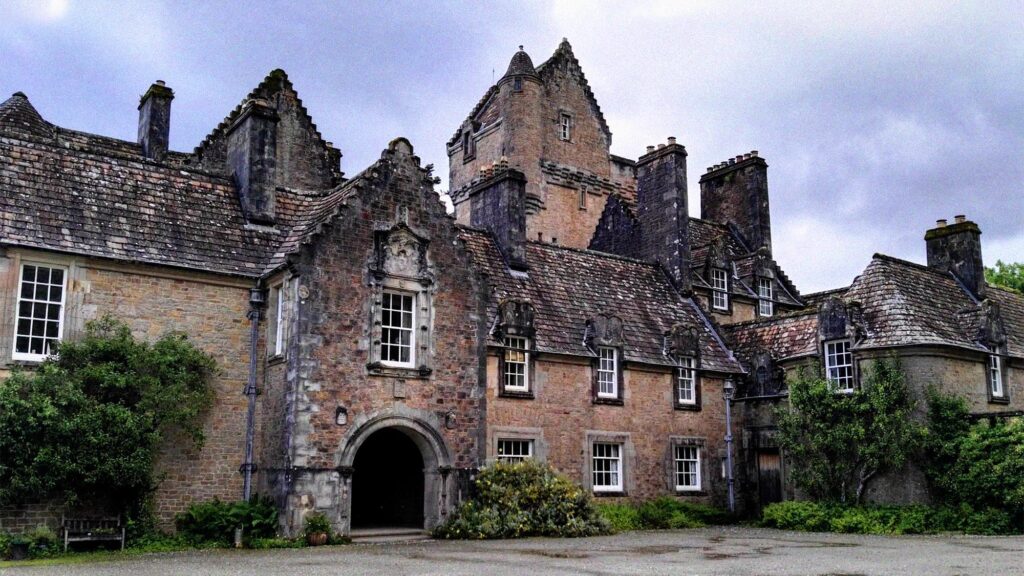
Ardkinglas House
Ardkinglas House appeare in The Crow Road, My Life So Far, The Rocket Post, The Water Horse: Legend of the Deep, Max Manus, Sense8, Behind Her Eyes and more.
Linlithgow Palace
Linlithgow Palace appeared in Outlander (2014–2026) and Outlaw King (2018). Its entrance passage, stone corridors and staircases represented Wentworth Prison.
Stirling Castle
Stirling Castle is one of Scotland’s most important historic castles, standing on Castle Hill above the city of Stirling. Its position on…