
Uma Karuna Thurman (born 29 April 1970) is an American actress and former model whose career has encompassed independent cinema, major Hollywood productions, theatre and television. She was born in Boston, Massachusetts, into a family with strong connections to academia, Buddhism and international culture. Her father, Robert Thurman, is an American scholar of Indo-Tibetan Buddhist studies who had previously been ordained as a Buddhist monk, while her mother, Nena von Schlebrügge, was a Swedish-German fashion model who later became a psychotherapist. Her maternal grandmother, Birgit Holmquist, was also a model, and her mother had appeared on the cover of British Vogue as a teenager. Thurman grew up with three brothers, Ganden, Dechen and Mipam, and has an older half-sister, Taya, from her father’s previous marriage. Much of her childhood was spent in Amherst, a university town in western Massachusetts, where her father taught at Amherst College. The family subsequently lived in Woodstock, New York, and spent extended periods in India during her father’s academic work. Thurman later recalled travelling to India twice for approximately a year at a time, experiences that introduced her to cultures and religious traditions unfamiliar to most American children of her generation.
Although her family provided an intellectually stimulating environment, Thurman found aspects of her childhood difficult. She attended public schools in Amherst and struggled with dyslexia, while her unusual first name and appearance made her feel conspicuous among her classmates. She became interested in performing at an early age, appearing as the Wicked Witch of the West in a school production of The Wizard of Oz. During her teenage years, she enrolled at Northfield Mount Hermon School, a boarding school in Massachusetts, where she appeared as Abigail Williams in Arthur Miller’s The Crucible. Her performance attracted the attention of two New York talent agents, who encouraged her to consider acting professionally. At fifteen, she persuaded her parents to allow her to leave school and pursue a career in New York City. She initially lived in Hell’s Kitchen, then a considerably rougher neighbourhood than it would become in later decades, while attending auditions and supporting herself through modelling. She signed with the Ford Modeling Agency and appeared in publications including Glamour and British Vogue, following a path into fashion that had already been established by her mother and grandmother.
Thurman’s first film appearance came in the independent thriller Kiss Daddy Goodnight (1987), in which she played a young woman who drugs and robs men. The production received little attention, but further opportunities followed with the American comedy Johnny Be Good (1988) and Terry Gilliam’s fantasy adventure The Adventures of Baron Munchausen (1988). In the latter, she appeared as the goddess Venus, emerging from a giant seashell opposite Oliver Reed’s Vulcan. Gilliam’s elaborate production was filmed at Cinecittà Studios in Rome, with additional work in Spain and England. A more substantial breakthrough came when Stephen Frears cast her as Cécile de Volanges in Dangerous Liaisons (1988), alongside Glenn Close, John Malkovich and Michelle Pfeiffer. Adapted from Christopher Hampton’s play, the historical drama was filmed in France, using eighteenth-century residences and other historic properties around Paris. The Château de Champs-sur-Marne provided several important interiors, while the Abbaye Royale du Moncel near Pontpoint was used for scenes involving Cécile’s convent. Thurman’s portrayal of a sheltered young woman manipulated by wealthy aristocrats attracted considerable critical attention and established her as one of Hollywood’s emerging actresses before she had turned nineteen.
Her early success led to a series of international productions, including Philip Kaufman’s Henry & June (1990), in which she portrayed June Miller, the wife of American novelist Henry Miller, opposite Fred Ward and Maria de Medeiros. Set among expatriate writers and artists in Paris during the 1930s, the film was shot largely in the French capital during the autumn of 1989, with additional work at Épinay Studios. The production used Parisian streets, apartments and cafés associated with the period in which Henry Miller and Anaïs Nin lived in the city. Its frank treatment of sexuality made it the first major American studio film released with the newly introduced NC-17 rating. During this period, Thurman also began a relationship with British actor Gary Oldman, whom she married in 1990. Their marriage ended in divorce in 1992. She continued working on both sides of the Atlantic, appearing as Maid Marian in John Irvin’s Robin Hood (1991) and taking roles opposite Richard Gere in Final Analysis (1992), Andy Garcia in Jennifer 8 (1992) and Robert De Niro in Mad Dog and Glory (1993). She also starred in Gus Van Sant’s adaptation of Tom Robbins’s novel Even Cowgirls Get the Blues (1993), playing Sissy Hankshaw, a young woman whose unusually large thumbs make her a successful hitchhiker.
Thurman’s career changed decisively when Quentin Tarantino cast her as Mia Wallace in Pulp Fiction (1994), a crime drama featuring several interconnected stories set in Los Angeles. Mia, the wife of gangster Marsellus Wallace, becomes the companion of hitman Vincent Vega, played by John Travolta, during one of the film’s central episodes. Their visit to the fictional 1950s-themed restaurant Jack Rabbit Slim’s produced one of the most recognisable sequences of Thurman’s career, particularly the twist contest in which the characters dance together. Although the restaurant’s exterior was filmed at the former Grand Central Bowl on Flower Street in Glendale, the extensive interior was constructed inside a warehouse on Hayden Place in Culver City. Thurman and Travolta performed their dance on this purpose-built set, surrounded by reproductions of classic cars, period advertising and other references to American popular culture. The Wallace residence was represented by a house in Beverly Hills, while additional scenes involving Mia were filmed at locations around Los Angeles. Pulp Fiction won the Palme d’Or at the Cannes Film Festival and became an international success, earning Thurman an Academy Award nomination for Best Supporting Actress. Her performance established a lasting professional association with Tarantino and introduced her to a much wider audience.
After Pulp Fiction, Thurman resisted concentrating exclusively on similar characters. She appeared in the ensemble drama Beautiful Girls (1996) and starred opposite Janeane Garofalo in the romantic comedy The Truth About Cats & Dogs (1996), before accepting two contrasting roles in major studio productions. In Andrew Niccol’s science-fiction drama Gattaca (1997), she portrayed Irene Cassini, an employee of a genetic engineering organisation who becomes romantically involved with a colleague played by Ethan Hawke. Filming took place in California, with Frank Lloyd Wright’s Marin County Civic Center in San Rafael serving as the headquarters of the fictional Gattaca Corporation. Thurman and Hawke worked inside the building during May 1996, using its distinctive corridors, escalators and administrative spaces for scenes representing the futuristic organisation. Other filming locations included the Sepulveda Dam in Los Angeles, the Forum in Inglewood and Los Angeles City Hall. The film brought Thurman and Hawke together professionally and marked the beginning of a relationship that would later lead to marriage. She also portrayed the villain Poison Ivy in Joel Schumacher’s Batman & Robin (1997), opposite George Clooney and Arnold Schwarzenegger, working on elaborate studio sets in Los Angeles. Although the film received largely negative reviews, it became one of her most commercially prominent projects of the decade.
Thurman married Ethan Hawke in May 1998, while expecting their first child, Maya, who was born in July that year. Their son Levon followed in 2002. The couple established their family life principally in New York City, where both actors maintained professional connections with theatre and independent film. During their marriage, Thurman appeared as Fantine in Bille August’s adaptation of Les Misérables (1998), followed by Woody Allen’s Sweet and Lowdown (1999) and James Ivory’s The Golden Bowl (2000). In the latter, she played Charlotte Stant opposite Nick Nolte, Kate Beckinsale and Jeremy Northam in a historical drama adapted from Henry James’s novel. She also worked with Hawke and Robert Sean Leonard in Richard Linklater’s Tape (2001), an independent drama built around a confrontation between three former schoolmates in a motel room. The relatively small production contrasted with the scale of the Hollywood films she had made during the preceding years. Her personal connection to New York was reflected in several subsequent projects, particularly Mira Nair’s television film Hysterical Blindness (2002), in which she portrayed Debby Miller, a young woman searching for affection while working-class life in 1980s New Jersey shapes her relationships. Thurman also served as an executive producer and won a Golden Globe for Best Actress in a Miniseries or Television Film at the ceremony held in January 2003.
The most physically demanding role of Thurman’s career followed when she reunited with Tarantino for Kill Bill, an extended martial arts revenge story released in two parts as Kill Bill: Vol. 1 (2003) and Kill Bill: Vol. 2 (2004). She played Beatrix Kiddo, a former assassin known as the Bride who seeks revenge on the members of her former organisation after surviving an attack during her wedding rehearsal. Thurman and Tarantino had developed the original concept for the character while working on Pulp Fiction, but the project required several years of preparation before production began. Thurman underwent extensive training in sword fighting, martial arts and physical conditioning, working with stunt performers and fight choreographers, including Hong Kong action specialist Yuen Woo-ping. Filming began in 2002 and continued into 2003, moving between the United States, China, Japan and Mexico. In California, the Sanctuary Adventist Church near Lancaster was used as the exterior of the Two Pines Chapel, where the Bride is attacked at the beginning of the story. Additional locations included Los Angeles and Pasadena, while Chinese studios provided much of the elaborate martial arts production.
One of the largest sequences in Kill Bill takes place at the House of Blue Leaves, a fictional Japanese restaurant and nightclub where the Bride confronts O-Ren Ishii, played by Lucy Liu, and dozens of armed opponents. Although the scene is set in Tokyo, its elaborate interiors and Japanese garden were constructed for filming in Beijing. Production designer Yohei Taneda created the interconnected spaces used for the lengthy fight sequence, allowing the performers to move between the restaurant’s main hall, corridors and snow-covered garden. Thurman spent extended periods working on these studio sets, later explaining that she saw relatively little of Beijing because she was filming for much of her time there. Location photography in Tokyo and other parts of Japan helped establish the fictional settings, but many of the principal action scenes were created in China and the United States. The second film shifted attention towards the Bride’s past and her confrontation with Bill, portrayed by David Carradine, with substantial filming in Mexico and the American Southwest. Both films became international successes, and Thurman received Golden Globe nominations for her leading performance.
Production of Kill Bill also involved an accident that had lasting consequences for Thurman. During the final stages of filming in Mexico, she was asked to drive a convertible along a sandy road for a sequence in which the Bride travels to confront Bill. Thurman later stated that she had expressed concerns about the vehicle’s safety and wanted a stunt driver to perform the scene, but Tarantino persuaded her to drive it herself. The car crashed into a tree, causing injuries that Thurman subsequently described as affecting her neck and knees. The incident damaged her relationship with Tarantino, and she later sought access to the footage recorded during the accident. In February 2018, she publicly discussed the events in an interview with The New York Times, together with allegations that producer Harvey Weinstein had sexually assaulted her in the 1990s. Weinstein denied sexually assaulting her, while Tarantino acknowledged that persuading her to drive the car had been a serious mistake. Thurman subsequently made the accident footage public. The disclosures formed part of the wider debate concerning the treatment of women and safety standards in the film industry, while also revealing difficulties behind one of her best-known productions.
Following Kill Bill, Thurman returned to more conventional comedy and drama. She appeared opposite John Travolta again in Be Cool (2005), a sequel to Get Shorty, and starred alongside Meryl Streep and Bryan Greenberg in Prime (2005), a romantic comedy set in New York City. She also appeared in the film adaptation of the Broadway musical The Producers (2005), directed by Susan Stroman, and played the title character in My Super Ex-Girlfriend (2006), a romantic comedy involving a superhero who reacts badly to the end of a relationship. During this period, her marriage to Hawke came to an end, with the couple divorcing in 2005. Thurman continued raising their two children in New York, while Hawke remained involved in their upbringing. Her later films included The Accidental Husband (2008), in which she played a radio relationship adviser whose personal life becomes complicated by an apparent marriage she knows nothing about. Filming took place in New York City, including locations in Astoria, Queens, and Midtown Manhattan, with additional work in Greenwich, Connecticut. She subsequently starred in Motherhood (2009), portraying a Greenwich Village mother struggling to organise her daughter’s birthday while managing family responsibilities and her ambitions as a writer. The production was filmed in New York, bringing another of her characters into the city where she was raising her own family.
Thurman’s relationship with New York also extended to property ownership and charitable work. She owned a townhouse in Greenwich Village and apartments near Gramercy Park before purchasing a residence at River House, the historic residential building overlooking the East River in Manhattan’s Turtle Bay neighbourhood, in 2013. The property had previously belonged to novelist Barbara Taylor Bradford and her husband. Thurman was also involved with Room to Grow, a charitable organisation established in 1998 to support families raising young children in poverty. The organisation began in Boston and subsequently expanded to New York City, two places closely connected to Thurman’s own life. She served on its board and participated in fundraising events, including its tenth-anniversary gala at Christie’s in Rockefeller Center in December 2008. Her personal life underwent further changes when she began a relationship with French financier Arpad Busson in 2007. The couple became engaged but never married, and their daughter Rosalind, commonly known as Luna, was born in July 2012. Their relationship ended in 2014, followed by a custody dispute in New York that was resolved in 2017.
During the early 2010s, Thurman continued alternating between film and television. She appeared as Medusa in Percy Jackson & the Olympians: The Lightning Thief (2010) and played a supporting role in Bel Ami (2012), an adaptation of Guy de Maupassant’s novel set in nineteenth-century Paris. She also joined the cast of the NBC musical drama Smash (2012–2013), portraying Rebecca Duvall, a Hollywood actress recruited to play Marilyn Monroe in a fictional Broadway production. Her appearances involved musical performances and scenes filmed in New York City, returning her professionally to the theatrical world that had attracted her when she first moved to Manhattan as a teenager. The role earned her a Primetime Emmy Award nomination for Outstanding Guest Actress in a Drama Series in 2012. She later appeared in Lars von Trier’s Nymphomaniac (2013), playing Mrs H, a woman who confronts the younger woman involved with her husband. Although her appearance was confined to a single extended sequence, it became one of the film’s most discussed performances. Further television work included the American miniseries The Slap (2015) and a recurring role in the crime comedy-drama Imposters (2017–2018).
In November 2017, Thurman made her Broadway debut in Beau Willimon’s The Parisian Woman, a contemporary political drama inspired by Henri Becque’s nineteenth-century French play. She portrayed Chloe, a wealthy Washington socialite whose personal relationships become entangled with political ambitions and the influence of powerful acquaintances. Directed by Pam MacKinnon, the production opened at the Hudson Theatre on West 44th Street in Manhattan on 30 November 2017, following several weeks of previews. Thurman performed alongside Josh Lucas, Blair Brown and Phillipa Soo, remaining with the production until its closing performance on 11 March 2018. Although the story takes place in Washington, DC, the entire theatrical production was presented in New York. The engagement marked an important development in her career, bringing her to Broadway more than thirty years after she had arrived in the city seeking work as an actress. She subsequently appeared in the psychological horror series Chambers (2019), playing Nancy Lefevre, a wealthy mother whose deceased daughter’s heart is transplanted into another teenager. Although the story is set in Arizona, filming took place in Albuquerque and other locations in New Mexico, including studio facilities and buildings in Rio Rancho.
Her screen work during the early 2020s included appearances in the television dramas Suspicion (2022) and Super Pumped: The Battle for Uber (2022), the latter featuring her as media executive Arianna Huffington. She also portrayed Ellen Claremont, the fictional American president, in Red, White & Royal Blue (2023), adapted from Casey McQuiston’s novel. Other projects reflected her continuing connection with independent cinema, notably Paul Schrader’s Oh, Canada (2024), in which she appeared alongside Richard Gere and Jacob Elordi. The film, adapted from Russell Banks’s novel Foregone, follows an ageing documentary filmmaker confronting memories of his past. It was shot in New York State during a relatively brief production schedule, with locations on Long Island and in Westchester County used to represent places in both the United States and Canada. Oh, Canada premiered in competition at the Cannes Film Festival in May 2024, bringing Thurman back to the international event where Pulp Fiction had won the Palme d’Or thirty years earlier.
Thurman returned to large-scale action filmmaking with The Old Guard 2 (2025), directed by Victoria Mahoney and starring Charlize Theron as the leader of a group of immortal mercenaries. She played Discord, an ancient immortal who becomes an adversary of Theron’s character. The production was filmed principally in Europe, beginning in Italy in June 2022 and using Cinecittà Studios in Rome together with locations around the Italian capital and the old port of Fiumicino. Additional filming took place in Britain, with later photography carried out in Canada. The film was released by Netflix in July 2025 after an extended period of post-production. Her return to action also included Pretty Lethal (2026), directed by Vicky Jewson, in which she portrayed Devora Kasimer, a former ballet dancer who operates an isolated inn visited by a group of young ballerinas. The film was shot in Hungary during 2024, with production based around Budapest. It premiered at the South by Southwest festival in Austin, Texas, in March 2026 before being released on Prime Video. The role placed Thurman opposite a younger ensemble including Maddie Ziegler, Lana Condor and Iris Apatow, continuing her association with physically demanding action cinema.
Television also became an increasingly important part of her later career. In Dexter: Resurrection (2025–), a continuation of the American crime series starring Michael C. Hall, Thurman joined the cast as Charley Brown, a former special operations officer employed as the head of security for a wealthy businessman. The series was filmed principally in New York City, with production using locations in Manhattan, the Bronx and surrounding communities. Thurman was photographed filming scenes at the James B. Duke House on East 78th Street in June 2025, alongside actor David Zayas. The historic mansion represented a location associated with a fictional police function in the series. Her participation brought her back to filming in familiar New York neighbourhoods after several years of productions elsewhere. She was confirmed to return for the second season, which began filming in New York in April 2026 and was scheduled for release later that year.
Throughout her career, Thurman has maintained a relatively strong connection to New York City, despite spending substantial periods working in Los Angeles and overseas. Her daughter Maya Hawke established her own acting and music career, gaining international recognition through the television series Stranger Things, while her son Levon Hawke also pursued acting. Thurman has occasionally appeared at public events alongside her children and has discussed the challenges of balancing motherhood with professional commitments, particularly during periods when major productions required extended travel. Her life has encompassed academic communities in Massachusetts, childhood stays in India, early independence in Manhattan, and film assignments in France, Italy, California, China and numerous other locations. By her mid-fifties, she remained active in both film and television, continuing a career that began in New York during the 1980s and developed through some of the most widely recognised American films of the following decades.

Dexter: Resurrection
Dexter: Resurrection was filmed mainly in New York, with New York City and Yonkers forming the core of the production.

Kill Bill: Vol. 1
Kill Bill was shot across Southern California, Japan and China, with its locations shifting between revenge thriller, hospital nightmare and Japanese swordplay.

Kill Bill: Vol. 2
Kill Bill: Vol. 2 was shot mainly in Southern California, Mexico and China, giving it a much dustier and more western-influenced visual identity than Vol. 1.
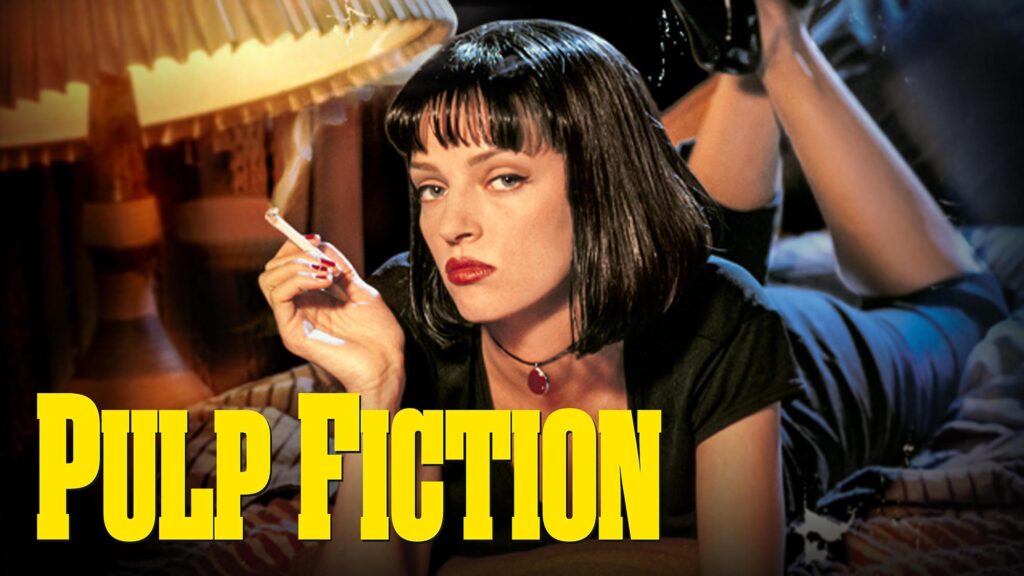
Pulp Fiction
Pulp Fiction was shot around Los Angeles County, and its locations are central to its low-rent, sun-baked urban atmosphere.