
Kill Bill: Vol. 2 is a 2004 martial-arts revenge film written and directed by Quentin Tarantino, and the second half of the story that began in Kill Bill: Vol. 1 (2003). Uma Thurman returns as the Bride, now revealed more fully as Beatrix Kiddo, as she continues her hunt for the remaining members of the Deadly Viper Assassination Squad and finally confronts Bill himself. Compared with the first film, Vol. 2 is slower, more character-driven and more heavily shaped by spaghetti westerns, desert revenge stories and old kung fu training films. It still contains bursts of violence and stylised genre homage, but its real focus is Beatrix’s past, her survival, her relationship with Bill and the emotional cost of revenge.
The film was shot mainly in Southern California, Mexico and China, giving it a much dustier and more western-influenced visual identity than Vol. 1. The Two Pines Wedding Chapel was filmed at a small church in the Mojave Desert east of Lancaster, California, placing the massacre flashback in a stark, isolated desert landscape. Budd’s trailer and the buried-alive sequence also draw heavily on remote desert settings, while Emma Jean’s Holland Burger Café in Victorville appears as part of the film’s roadside California world. The training scenes with Pai Mei were created through the production’s China material, including Beijing studio work and stylised mountain-temple environments, while the final act moves into a Mexican setting connected to Bill, Esteban Vihaio and Beatrix’s discovery of her daughter. Together, these locations give Kill Bill: Vol. 2 a very different atmosphere from the neon, snow and swordplay of the first film, shifting the story into chapels, trailers, desert roads, graveyards, old temples and sun-bleached borderland spaces.
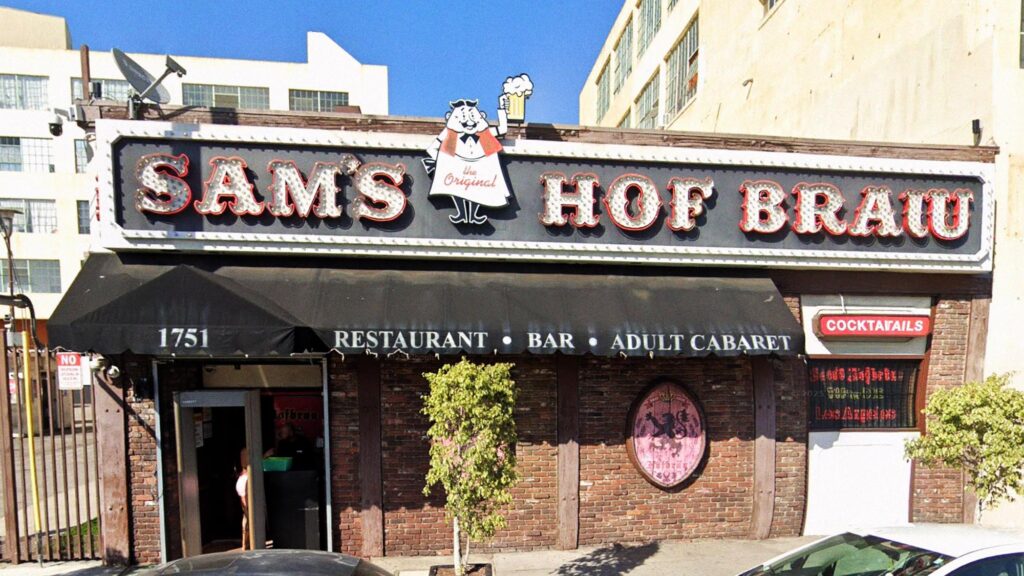
Sam’s Hofbrau
Sam’s Hofbrau is best known from Quentin Tarantino’s "Jackie Brown" (1997) and "Kill Bill: Vol. 2" (2004). In both films, the location is used as a strip club.
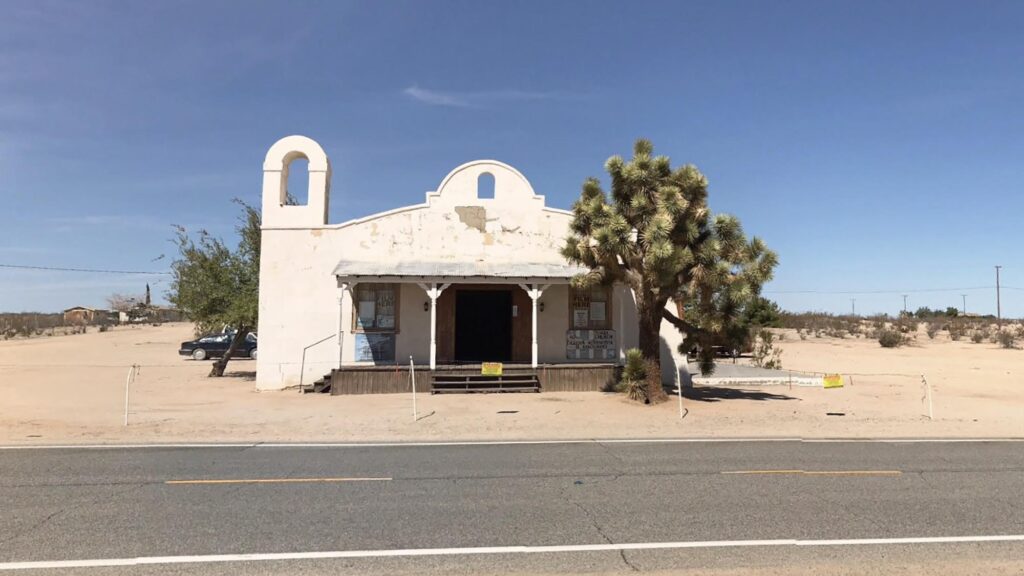
Two Pines Chapel
Two Pines Chapel appears in Kill Bill: Vol. 1 (2003), Kill Bill: Vol. 2 (2004), and True Confessions (1981).