
Robert Anthony De Niro Jr. (born 17 August 1943) is an American actor, director and producer whose career has encompassed more than six decades in cinema. He was born in Manhattan, New York City, the only child of Robert De Niro Sr. and Virginia Admiral, both established painters associated with the city’s artistic community. His parents had met while studying with German-American artist Hans Hofmann in Provincetown, Massachusetts, and subsequently became part of the intellectual and creative circles of Greenwich Village. Their marriage ended when Robert was two years old, and he was raised principally by his mother in a second-floor apartment on Bleecker Street. His father continued living nearby, allowing them to maintain a relationship throughout his childhood. Admiral worked as a typist and copy editor to support the family, while De Niro Sr. devoted himself to painting and struggled with the financial uncertainties of an artistic career. Growing up among painters, writers and musicians, the younger De Niro became familiar with creative work long before he considered acting professionally.
His childhood was closely associated with Greenwich Village and the neighbouring streets of Little Italy, where he spent considerable time among local Italian-American teenagers. Although his ancestry was predominantly Irish, Italian, Dutch, English, French and German, the Italian-American community became an important influence on his understanding of New York street life. His pale complexion earned him the childhood nickname Bobby Milk, and he later recalled observing the older boys and men who gathered outside neighbourhood cafés, bars and social clubs. He attended Public School 41 in Greenwich Village, where he played the Cowardly Lion in a school production of The Wizard of Oz at the age of ten. The performance encouraged an interest in acting, and his mother arranged for him to attend Saturday classes at the Dramatic Workshop, established by German theatre director Erwin Piscator. He subsequently enrolled briefly at the High School of Music and Art before attending other schools, including the private McBurney School. By sixteen, he had decided to leave formal education and concentrate on becoming an actor.
De Niro studied at the Stella Adler Conservatory and later with Lee Strasberg at the Actors Studio, both in Manhattan. Adler’s emphasis on understanding a character’s circumstances, history and motivations became particularly important to his approach to acting. His training also involved extensive observation of people outside the theatre, something he had already practised instinctively while growing up in Little Italy. During the early 1960s, he worked in experimental theatre, attended auditions and accepted occasional screen parts while supporting himself through temporary employment. His earliest film work included Brian De Palma’s The Wedding Party, photographed in 1963 but not released until 1969. The independent comedy, produced on a limited budget and filmed around New York, provided one of his first opportunities to work with a director who would become an important figure in the New Hollywood movement. He subsequently appeared in De Palma’s Greetings (1968), a satirical film involving three young men attempting to avoid military service during the Vietnam War, followed by Hi, Mom! (1970). These productions placed him within the independent New York film community at a time when younger directors were challenging established Hollywood conventions.
His first substantial roles outside De Palma’s films included Roger Corman’s Bloody Mama (1970), in which he played Lloyd Barker, one of the sons of the Depression-era criminal Kate Barker, portrayed by Shelley Winters. He subsequently appeared opposite Michael Moriarty in Bang the Drum Slowly (1973), directed by John D. Hancock. De Niro played Bruce Pearson, a professional baseball catcher suffering from a terminal illness, while Moriarty portrayed the teammate who attempts to protect him. He spent considerable time learning baseball techniques and working with professional players in preparation for the role. The film was produced partly in Florida, where spring-training facilities and baseball fields provided the sporting environment, with additional filming in New York. His performance attracted widespread critical attention and established him as an actor capable of portraying emotionally vulnerable characters rather than relying exclusively on the aggressive personalities he had played in his earlier work.
A decisive development came when Martin Scorsese cast him as Johnny Boy Civello in Mean Streets (1973), a crime drama about young Italian-American men living around Little Italy. Although Scorsese and De Niro had grown up in nearby Manhattan neighbourhoods, they had not worked together before the production. Scorsese drew on his own experiences of Catholicism, friendship and organised crime in downtown New York, while De Niro brought his familiarity with the neighbourhood’s social atmosphere to the unpredictable Johnny Boy. Despite the film’s strong connection with Little Italy, most of Mean Streets was actually shot in Los Angeles because of the relatively high cost of filming in New York. Approximately a week of location work took place around Manhattan, including Mulberry Street and the area surrounding the Basilica of St Patrick’s Old Cathedral, while other scenes were recreated using Californian locations and interiors. De Niro’s energetic performance contrasted with Harvey Keitel’s portrayal of Charlie, a man struggling to reconcile his religious beliefs with loyalty to his friends. The film began one of the most important actor-director partnerships in American cinema.
The success of Mean Streets brought De Niro to the attention of Francis Ford Coppola, who was preparing The Godfather Part II (1974). De Niro was cast as the young Vito Corleone, portraying the character previously played in later life by Marlon Brando in The Godfather (1972). The production required him to learn substantial amounts of dialogue in Italian, particularly the Sicilian dialect, and to develop a younger version of Brando’s character without merely imitating his performance. The film’s historical sections followed Vito from his childhood in Sicily to his emergence as an influential figure in New York’s Italian-American community. De Niro worked on location in Sicily and Manhattan, where streets in the East Village were transformed to represent Little Italy during the early twentieth century. East Sixth Street between Avenues A and B became one of the principal locations for Vito’s New York scenes, while other filming took place around Sullivan Street and the surrounding neighbourhoods. In Sicily, historic villages and rural properties were used to recreate Vito’s childhood and eventual return to confront the man responsible for his family’s murder. The Godfather Part II won six Academy Awards, and De Niro received the Oscar for Best Supporting Actor in April 1975, establishing him internationally as a major dramatic actor.
His collaboration with Scorsese continued with Taxi Driver (1976), in which he portrayed Travis Bickle, a Vietnam War veteran working as a night-time taxi driver in New York City. De Niro prepared by obtaining a taxi driver’s licence and driving around Manhattan, observing passengers and becoming familiar with the city’s night-time streets. He also studied the experiences of Vietnam veterans and developed the character’s isolated manner and increasingly disturbed behaviour. Principal photography took place during the summer of 1975, much of it in Manhattan during a period of unusually hot weather. Times Square, Eighth Avenue and the surrounding streets provided important locations for Bickle’s journeys, while the film’s interiors and additional street scenes were photographed in the East Village and other parts of the city. De Niro worked opposite Jodie Foster, Cybill Shepherd, Harvey Keitel and Albert Brooks, portraying a character whose attempt to impose order on his surroundings eventually turns towards violence. Taxi Driver won the Palme d’Or at the Cannes Film Festival in 1976 and earned De Niro an Academy Award nomination for Best Actor. His performance, particularly the improvised scene in which Bickle addresses himself in a mirror, became one of the most recognisable portrayals of urban alienation in American cinema.
During the same period, De Niro worked with Bernardo Bertolucci on 1900 (1976), an ambitious historical drama examining social and political conflicts in Italy during the first half of the twentieth century. He played Alfredo Berlinghieri, the son of a wealthy landowning family, opposite Gérard Depardieu as a farm labourer whose life develops in parallel with his own. The production was filmed extensively in the Emilia-Romagna region of northern Italy, particularly around Parma and Reggio Emilia, where rural estates, farm buildings and agricultural landscapes provided the setting. The large international cast included Burt Lancaster, Donald Sutherland, Dominique Sanda and Stefania Sandrelli. De Niro subsequently reunited with Scorsese for New York, New York (1977), a musical drama in which he played saxophonist Jimmy Doyle opposite Liza Minnelli as singer Francine Evans. The production was based largely in Hollywood studios, where elaborate sets recreated the entertainment venues and city streets of post-war New York. Although the film received a mixed response and was commercially disappointing, it allowed De Niro to explore a different type of character while continuing the collaboration with Scorsese.
One of his most demanding productions was Michael Cimino’s The Deer Hunter (1978), in which he portrayed Michael Vronsky, a steelworker from Pennsylvania whose experiences during the Vietnam War permanently affect his life and friendships. The ensemble included Christopher Walken, John Savage, Meryl Streep and John Cazale. Filming took place in industrial communities in Ohio and Pennsylvania, with Mingo Junction and Cleveland providing locations representing the fictional town of Clairton. The opening steelworks sequences were filmed at an operating industrial facility, while St Theodosius Russian Orthodox Cathedral in Cleveland was used for the extended wedding scenes. Mountain landscapes in Washington State represented the hunting country of Pennsylvania, while the film’s Vietnamese sequences were photographed in Thailand. De Niro participated in difficult scenes involving rivers, jungle locations and confined interiors during the sections portraying imprisonment and the aftermath of combat. The Deer Hunter won five Academy Awards, including Best Picture, and brought De Niro another nomination for Best Actor.
By the late 1970s, De Niro had become known for the intensive preparation he undertook before filming. His most extreme physical transformation came with Raging Bull (1980), Scorsese’s biographical drama about boxer Jake LaMotta. De Niro had discovered LaMotta’s autobiography while working on The Godfather Part II and subsequently encouraged Scorsese to direct an adaptation. He trained with the former boxer for months at Gramercy Gym in New York, learning how to move, strike and defend himself in the ring. Principal photography began at MGM Studios in Culver City in April 1979, with additional filming in New York during the summer. The Olympic Auditorium in Los Angeles provided a boxing venue for several fight sequences, while New York buildings and streets were used for scenes involving LaMotta’s personal life. After completing the early sections, production paused while De Niro gained approximately twenty-five kilograms to portray the older, heavier LaMotta. He appeared opposite Joe Pesci as the boxer’s brother Joey and Cathy Moriarty as his wife Vickie. Raging Bull earned eight Academy Award nominations, and De Niro won Best Actor at the 1981 ceremony. The film became one of the defining achievements of his career and consolidated his reputation for detailed physical and psychological preparation.
De Niro married actress and singer Diahnne Abbott in 1976, during the period when his career was rapidly expanding. Their son Raphael was born that year, and De Niro adopted Abbott’s daughter Drena from an earlier relationship. Both children grew up with connections to the entertainment industry, and Raphael subsequently became involved in New York real estate. Abbott also appeared in several films alongside her husband, including Taxi Driver, New York, New York and The King of Comedy (1982). The couple maintained their family life principally in New York, although De Niro’s work regularly took him to California and international locations. Their marriage ended in divorce in 1988. By then, he had become financially secure and increasingly interested in establishing a permanent professional base in lower Manhattan rather than working exclusively through the established Hollywood studios.
His film career during the early 1980s included Scorsese’s The King of Comedy (1982), in which he portrayed Rupert Pupkin, an aspiring comedian whose obsession with a television presenter, played by Jerry Lewis, develops into a criminal plot. The production returned him to New York, with filming around Broadway, Times Square and other Manhattan locations. The Paramount Building at 1501 Broadway represented the television presenter’s offices, while exterior scenes were also photographed in New Jersey. De Niro subsequently played David “Noodles” Aaronson in Sergio Leone’s Once Upon a Time in America (1984), an expansive crime drama following a group of Jewish gangsters from childhood in New York through several decades of their lives. Filming took place in New York, Montreal, Italy and other locations, combining actual American streets with recreated historical environments. De Niro worked alongside James Woods, Elizabeth McGovern and Tuesday Weld, portraying a character whose memories of betrayal and lost relationships dominate the story. The film’s complicated release history initially affected its reception in the United States, but longer versions subsequently received renewed critical attention.
Other productions broadened his range. He played an eccentric repairman in Terry Gilliam’s dystopian satire Brazil (1985), filmed principally in Britain, and starred opposite Jeremy Irons in Roland Joffé’s The Mission (1986). In the latter, De Niro portrayed Rodrigo Mendoza, a mercenary and slave trader who seeks redemption through work with Jesuit missionaries in eighteenth-century South America. Principal photography took place in Argentina and Colombia, including locations around Iguazú Falls and tropical river landscapes. The demanding production involved remote settings, difficult weather and extended travel through areas far removed from conventional studio facilities. The Mission won the Palme d’Or at Cannes in 1986 and received seven Academy Award nominations. De Niro subsequently portrayed Chicago gangster Al Capone in Brian De Palma’s The Untouchables (1987), starring Kevin Costner and Sean Connery. The film was shot in Chicago and other American locations, with historic buildings and carefully constructed interiors used to represent the city during Prohibition. He gained weight and altered his appearance to play Capone, once again transforming himself physically for a relatively limited but prominent supporting role.
His commercial career continued with Martin Brest’s Midnight Run (1988), a comedy-action film in which he played Jack Walsh, a bounty hunter transporting an accountant portrayed by Charles Grodin across the United States. The production involved extensive location work, including New York, Chicago, Arizona and California. De Niro’s exchanges with Grodin allowed him to demonstrate the comic abilities that had occasionally appeared in his earlier films but had rarely been central to a major commercial production. He subsequently returned to serious drama in Awakenings (1990), directed by Penny Marshall and based on neurologist Oliver Sacks’s experiences treating patients who had remained largely unresponsive for decades. De Niro played Leonard Lowe, a patient who temporarily regains the ability to move and communicate following experimental medical treatment. The film was produced in New York and on Long Island, where institutional buildings and hospital interiors provided the setting. De Niro worked opposite Robin Williams, whose character was based on Sacks, and received another Academy Award nomination for Best Actor.
Scorsese and De Niro reunited for Goodfellas (1990), adapted from Nicholas Pileggi’s account of organised crime in New York. De Niro played Jimmy Conway, a senior figure in the criminal organisation surrounding Henry Hill, portrayed by Ray Liotta. The production was filmed extensively across New York City and its suburbs, including Brooklyn, Queens, Manhattan and Staten Island. Astoria provided locations representing the Brooklyn neighbourhood where Hill grows up, while the former Hawaii Kai restaurant near Broadway and West 49th Street was used for the interior of the Bamboo Lounge. Other important locations included the Copacabana nightclub on East 60th Street and airport facilities at John F. Kennedy International Airport. De Niro worked alongside Liotta, Pesci and Lorraine Bracco, creating a character whose apparent friendliness conceals an increasing willingness to eliminate associates who threaten his interests. The film’s success was followed by Scorsese’s Cape Fear (1991), in which De Niro played Max Cady, a recently released prisoner who begins terrorising a lawyer and his family. Filming took place in Georgia and Florida, including Savannah, Fort Lauderdale and Hollywood, with additional interiors and elaborate storm sequences constructed at studio facilities. De Niro again underwent substantial physical preparation, developing an imposing appearance for the character.
His continuing association with New York led to a significant development away from acting. In 1989, De Niro and producer Jane Rosenthal established Tribeca Productions and the Tribeca Film Center at 375 Greenwich Street in lower Manhattan. The building, formerly associated with the Martinson coffee company, was developed as a professional facility for filmmakers and other creative businesses. De Niro was particularly interested in Tribeca, a former industrial and warehouse neighbourhood that was gradually becoming a residential and cultural district. Together with restaurateur Drew Nieporent and other investors, he opened Tribeca Grill on the ground floor of the building in 1990. The restaurant became a gathering place for filmmakers, artists and neighbourhood residents, helping establish the area as an important destination for dining and entertainment. De Niro’s investment reflected a personal attachment to downtown Manhattan that extended back to his childhood in Greenwich Village and Little Italy.
He made his feature-film directing debut with A Bronx Tale (1993), adapted from Chazz Palminteri’s autobiographical stage play. Set in the Bronx during the 1960s, the story follows a young Italian-American boy caught between the influence of his working-class father, played by De Niro, and a local gangster portrayed by Palminteri. De Niro had seen the stage production and recognised connections with his own childhood observations of neighbourhood loyalties and masculine authority. Although the film is set in the Bronx, substantial filming took place in Astoria, Queens, particularly around 30th Avenue and neighbouring residential streets. The Anello family’s apartment building was represented by a property on 30th Avenue, while additional scenes were filmed in Brooklyn and New Jersey. De Niro directed the younger actors while appearing in the central role of Lorenzo Anello, a bus driver determined to keep his son away from organised crime. The film was dedicated to his father, Robert De Niro Sr., who died in May 1993. De Niro subsequently returned to directing with The Good Shepherd (2006), a historical drama examining the development of American intelligence services, starring Matt Damon, Angelina Jolie and himself. That production was filmed in New York, Connecticut, Washington, DC, London and the Dominican Republic.
During the middle of the 1990s, De Niro appeared in several films that became central to the crime genre. He played Sam “Ace” Rothstein in Scorsese’s Casino (1995), portraying a gambling expert whose management of a Las Vegas casino is complicated by organised crime and his relationship with a woman played by Sharon Stone. The production was filmed extensively in Nevada, with the Riviera Hotel and Casino providing much of the fictional Tangiers Casino’s interior environment. Additional filming took place around Las Vegas, including historic casinos, restaurants and desert locations. De Niro reunited with Pesci, who portrayed Rothstein’s increasingly violent associate Nicky Santoro. The same year, he starred opposite Al Pacino in Michael Mann’s Heat (1995), playing professional criminal Neil McCauley. Unlike The Godfather Part II, in which the two actors appeared in separate storylines, Heat brought them together in several scenes. Their first extended conversation was filmed at Kate Mantilini, a restaurant on Wilshire Boulevard in Beverly Hills, while other sequences took place across Los Angeles. Mann used numerous actual city locations, including streets in downtown Los Angeles and the area surrounding the Central Library, giving the film a geographical authenticity that became an important part of its reputation.
De Niro’s subsequent collaborations included Barry Levinson’s Sleepers (1996), Quentin Tarantino’s Jackie Brown (1997) and James Mangold’s Cop Land (1997), where he played an internal affairs investigator alongside Sylvester Stallone and Harvey Keitel. He also appeared opposite Dustin Hoffman in Levinson’s political satire Wag the Dog (1997), portraying a professional fixer involved in manufacturing a fictional international crisis. His growing interest in comedy continued with Analyze This (1999), directed by Harold Ramis, in which he played a Mafia boss undergoing psychotherapy with a psychiatrist portrayed by Billy Crystal. The film was shot principally in New York and Florida and became a major commercial success. He returned to the character in Analyze That (2002), demonstrating a willingness to parody the gangster roles that had dominated much of his earlier career.
Another successful comedy franchise began with Meet the Parents (2000), directed by Jay Roach and starring Ben Stiller. De Niro played Jack Byrnes, a retired intelligence officer whose suspicion of his daughter’s prospective husband becomes the source of increasingly uncomfortable family encounters. Much of the production was filmed in New York State and the surrounding region, with locations in Long Island and Westchester County representing the Byrnes family’s affluent suburban environment. The character contrasted with De Niro’s earlier criminals, although his intimidating manner and carefully controlled expressions became central to the comedy. He reprised the role in Meet the Fockers (2004) and Little Fockers (2010), working alongside Stiller, Blythe Danner, Teri Polo, Dustin Hoffman and Barbra Streisand. The films broadened his international audience and became an important part of his commercial career during the 2000s.
De Niro’s personal life also changed during these years. Following his divorce from Abbott, he had a long-term relationship with actress and model Toukie Smith, with whom he had twin children, Julian and Airyn, in 1995. He subsequently married Grace Hightower in 1997. Their son Elliot was born in 1998, and their daughter Helen Grace was born in December 2011. The couple separated in 2018 after more than two decades together. De Niro generally attempted to keep his family life private despite the publicity surrounding his career, although several of his children eventually became involved in acting, modelling, journalism and property development. He maintained a strong connection with New York, dividing his time between family responsibilities, film production and the restaurants and businesses in which he had invested.
His association with the restaurant industry expanded when he became involved with Japanese chef Nobu Matsuhisa and businessman Meir Teper. De Niro had visited Matsuhisa’s restaurant in Beverly Hills during the late 1980s and encouraged the chef to establish a restaurant in New York. After several years of discussions, they opened Nobu in Tribeca in 1994. The restaurant became internationally recognised for its Japanese cuisine with Peruvian influences and developed into a hospitality business with restaurants and hotels around the world. De Niro remained involved as a business partner rather than merely lending his name to the venture. He also participated in the development of the Greenwich Hotel, which opened at 377 Greenwich Street in 2008. The hotel was established with investors including Ira Drukier and Richard Born and featured individually designed rooms, a courtyard and a Japanese-inspired spa. Locanda Verde, an Italian restaurant associated with chef Andrew Carmellini, opened within the property in 2009. These businesses further strengthened De Niro’s connection with Tribeca, where he had become a prominent figure in the neighbourhood’s cultural and commercial development.
The attacks on the World Trade Center on 11 September 2001 profoundly affected lower Manhattan, damaging the local economy and reducing activity in neighbourhoods surrounding the former towers. In response, De Niro, Jane Rosenthal and Craig Hatkoff established the Tribeca Film Festival, intended to encourage people to return to downtown Manhattan and support its cultural recovery. The first festival took place in 2002, presenting films and public events across the neighbourhood. De Niro remained closely associated with the organisation as it expanded into an internationally recognised cultural institution. The festival eventually included television, music, games and other forms of storytelling in addition to cinema. His involvement continued through subsequent decades, while the economic pressures facing New York restaurants eventually affected Tribeca Grill. After thirty-five years of operation, the restaurant closed on 1 March 2025, although De Niro retained his connection with the Greenwich Street building and other neighbourhood businesses.
His later film career continued across several genres. He appeared in Stardust (2007), a fantasy adventure directed by Matthew Vaughn and filmed in Britain and Iceland, before starring in films including Everybody’s Fine (2009), Limitless (2011) and Silver Linings Playbook (2012). The latter, directed by David O. Russell, featured De Niro as Pat Solitano Sr., an obsessive Philadelphia Eagles supporter whose relationship with his son, played by Bradley Cooper, is complicated by family conflict and gambling. Filming took place extensively in Pennsylvania, with the Solitano family residence represented by a house on South Madison Avenue in Upper Darby. Other sequences used Ridley Park, Philadelphia and Lincoln Financial Field, where scenes involving Eagles supporters were filmed. De Niro appeared alongside Jennifer Lawrence and Jacki Weaver, earning an Academy Award nomination for Best Supporting Actor. The performance brought renewed critical attention after a period in which he had appeared frequently in commercial comedies and supporting roles.
His professional interests also remained connected to his father’s artistic legacy. Robert De Niro Sr. had been a respected painter within the New York art community, but his achievements were less widely known than those of his son. De Niro preserved his father’s former studio and worked with curators, filmmakers and galleries to maintain and exhibit his paintings. In 2014, he participated in Remembering the Artist: Robert De Niro, Sr., an HBO documentary directed by Perri Peltz and Geeta Gandbhir. The film used archival footage, interviews, letters and journal entries to examine his father’s life and artistic career. De Niro also supported exhibitions of his father’s work and discussed the difficulties of growing up with a parent whose creative ambitions were not always accompanied by financial security. The project reflected a longstanding personal interest in painting and his family’s place within the New York art world.
He returned to historical drama in The Wizard of Lies (2017), directed by Barry Levinson and produced for HBO. De Niro portrayed financier Bernard Madoff, whose fraudulent investment scheme collapsed in 2008, causing substantial financial losses to thousands of investors. The production was filmed around New York City and Long Island, with actual offices, residences and financial districts helping establish the environment in which Madoff had operated. Michelle Pfeiffer played his wife Ruth, while Alessandro Nivola and Hank Azaria appeared in supporting roles. De Niro received an Emmy nomination for his performance and continued taking supporting roles in projects including Joker (2019), directed by Todd Phillips. In the latter, he portrayed Murray Franklin, a television talk-show host whose programme becomes central to the story of Arthur Fleck, played by Joaquin Phoenix. Although the fictional events take place in Gotham City, the production was filmed extensively in New York, with additional studio work and location photography in New Jersey.
His most substantial collaboration with Scorsese during the late 2010s was The Irishman (2019), adapted from Charles Brandt’s book I Heard You Paint Houses. De Niro portrayed Frank Sheeran, a truck driver who becomes involved with organised crime and the disappearance of labour leader Jimmy Hoffa, played by Al Pacino. The production reunited De Niro with Pesci and brought together several performers who had been associated with major American crime films for decades. Principal photography took place between August 2017 and March 2018, with filming across New York City, Long Island, the Hudson Valley and New Jersey. Locations included Ridgewood in Queens, where residential streets and shops represented neighbourhoods from earlier decades, and Suffern in Rockland County, where historic commercial buildings were adapted for scenes involving organised crime. Additional filming took place on Long Island, including around Williston Park and Huntington Station. Extensive digital effects were used to portray the actors at different ages across the story’s long historical period. The Irishman received ten Academy Award nominations, including Best Picture, and became one of Netflix’s most ambitious original film productions.
De Niro’s longstanding association with Scorsese continued with Killers of the Flower Moon (2023), adapted from David Grann’s account of the murders of members of the Osage Nation during the 1920s. He played William King Hale, a wealthy and influential rancher who conspires to gain control of oil-related wealth through violence and manipulation. Leonardo DiCaprio portrayed Hale’s nephew Ernest Burkhart, while Lily Gladstone played Ernest’s Osage wife, Mollie. Unlike many historical dramas that recreate their settings elsewhere, the production was filmed extensively in Oklahoma, including in communities associated with the actual events. Principal photography began in April 2021, with filming around Pawhuska, Fairfax, Bartlesville and Tulsa. The filmmakers worked with members of the Osage Nation, while historic streets and buildings were adapted to represent the region during the early twentieth century. De Niro’s performance required him to portray a character whose outwardly respected position within the community concealed involvement in organised murder. Killers of the Flower Moon premiered at the Cannes Film Festival in May 2023 and received ten Academy Award nominations, including Best Supporting Actor for De Niro.
His personal life entered another chapter when he and his partner Tiffany Chen welcomed a daughter, Gia Virginia Chen-De Niro, on 6 April 2023. De Niro was seventy-nine at the time of her birth, becoming a father for the seventh time. He subsequently discussed the experience of raising a young child later in life, describing the enjoyment of spending time with her away from his professional commitments. Chen, a martial arts instructor, had previously appeared in The Intern (2015), directed by Nancy Meyers, in which De Niro played a retired businessman who begins working as an intern for a Brooklyn-based online fashion company. The film had been shot largely in New York, including around Brooklyn and Manhattan, and reflected De Niro’s continuing interest in projects that allowed him to work close to home. He also appeared in About My Father (2023), a comedy based partly on the family experiences of comedian Sebastian Maniscalco, and Ezra (2023), directed by Tony Goldwyn, in which he played the father of a comedian raising a son on the autism spectrum.
De Niro returned to the gangster genre with Barry Levinson’s The Alto Knights (2025), based on the rivalry between New York crime bosses Frank Costello and Vito Genovese during the 1950s. Written by Nicholas Pileggi, whose work had previously provided the basis for Goodfellas and Casino, the film required De Niro to portray both men. The dual performance involved distinct physical appearances, speech patterns and behaviour, with extensive make-up work allowing the two characters to appear together. Although the story takes place principally in New York, much of the production was filmed in Cincinnati and northern Kentucky. Locations included the Hilton Cincinnati Netherland Plaza, Arnold’s Bar and Grill and several streets in downtown Cincinnati, while Covington, Kentucky, provided additional period environments. The film was released in March 2025, extending De Niro’s association with historical crime dramas more than fifty years after his work on Mean Streets and The Godfather Part II.
The same year, De Niro made his first leading appearance in a television drama series with Zero Day (2025), a six-part political thriller created by Eric Newman, Noah Oppenheim and Michael S. Schmidt. He portrayed George Mullen, a former American president appointed to lead an investigation into a catastrophic cyberattack. The ensemble included Angela Bassett, Jesse Plemons, Lizzy Caplan, Connie Britton and Joan Allen. De Niro also served as an executive producer, becoming involved in the development of the project after expressing an interest in working on a substantial production based in New York. Filming took place principally around Manhattan and Brooklyn, with interiors constructed at Steiner Studios in the Brooklyn Navy Yard. Other locations included the Wall Street district, the New York Public Library and buildings around Battery Park. De Niro filmed a major public-address sequence outside One Battery Park Plaza in May 2024, while additional scenes were photographed around the city’s financial district. The series premiered on Netflix on 20 February 2025, marking an important expansion of his career into long-form television drama.
In May 2025, De Niro travelled to France to receive an honorary Palme d’Or at the Cannes Film Festival, recognising his contribution to international cinema. The award was presented at the festival’s opening ceremony on 13 May by Leonardo DiCaprio, with whom he had worked on This Boy’s Life (1993), Marvin’s Room (1996) and Killers of the Flower Moon. De Niro had previously served as president of the Cannes jury in 2011, while several of his films, including Taxi Driver and The Mission, had won the festival’s highest prize. The following day, he participated in a public discussion at the Palais des Festivals, reflecting on his acting methods, relationships with directors and continuing interest in the work of his father. His appearance brought together several generations of his family, including his daughter Helen Grace and his partner Tiffany Chen.
His most recent released feature film is The Whisper Man (2026), a psychological thriller directed by James Ashcroft and adapted from Alex North’s novel. De Niro played Pete Willis, a retired police detective who becomes involved in the search for his missing grandson after his estranged son, portrayed by Adam Scott, asks for help. Michelle Monaghan also appeared in the principal cast. Unlike the novel’s original English setting, the film was relocated to New Jersey, where principal photography took place between April and June 2025. The production used locations across twenty-two communities, including Paterson, Newark, Montclair, Plainfield, Hoboken, Jersey City and Kearny. De Niro was photographed working on location at Garrett Mountain Reservation near Paterson, while other scenes were filmed around Paterson City Hall and residential areas across the state. The Whisper Man premiered on Netflix on 28 August 2026, extending his screen career into another contemporary crime drama.
De Niro also completed work on Focker-In-Law (2026), a new instalment in the Meet the Parents comedy series. Directed by John Hamburg, the film reunites him with Ben Stiller, Blythe Danner, Teri Polo and Owen Wilson, while Ariana Grande, Skyler Gisondo and Beanie Feldstein joined the cast. De Niro returned as Jack Byrnes and also served as a producer through Tribeca Productions alongside Jane Rosenthal and other collaborators. Universal Pictures scheduled the film for theatrical release on 25 November 2026, continuing a franchise that began more than twenty-five years earlier. Its production also reflects De Niro’s continuing willingness to alternate between comedy and drama rather than concentrating exclusively on the crime films most closely associated with his earlier reputation.
Throughout his career, De Niro has received numerous honours, including two Academy Awards, a Kennedy Center Honor in 2009, the Cecil B. DeMille Award in 2011 and the Presidential Medal of Freedom in 2016. His work as an actor has been closely connected to New York, particularly the neighbourhoods of Greenwich Village, Little Italy and Tribeca, while his professional activities have taken him to filming locations throughout the United States, Europe and South America. His business interests and involvement in the Tribeca Film Festival have also made him a significant figure in the cultural development of lower Manhattan. By October 2026, he remained active as an actor and producer at the age of eighty-three, with recent work in film and television continuing alongside his restaurants, hospitality businesses and support for the preservation of his father’s artistic legacy.
Gallery
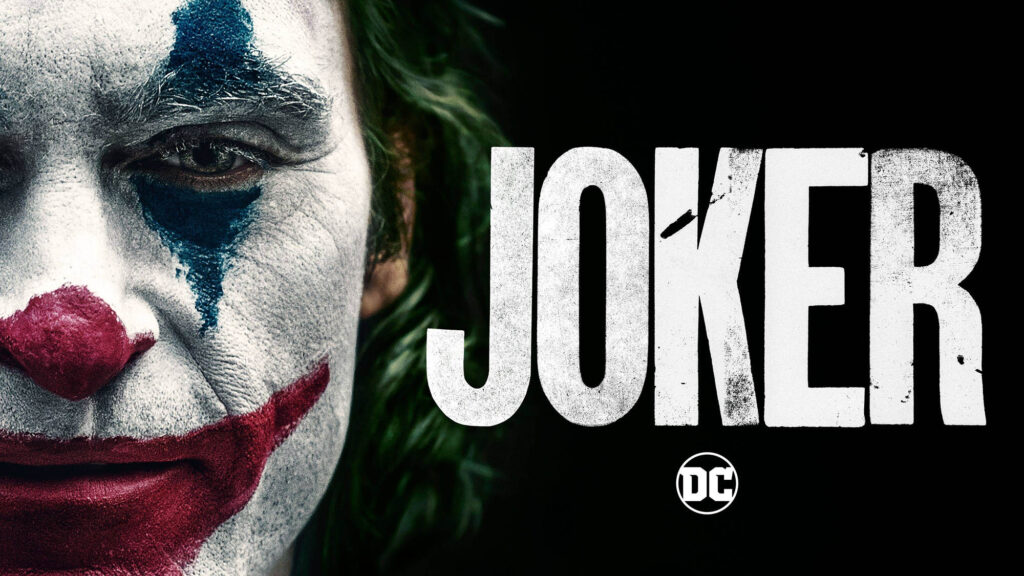
Joker
The story in Joker is set in the fictional Gotham City. Filming was mainly in New York City, with additional work in New Jersey and studio filming in Brooklyn.
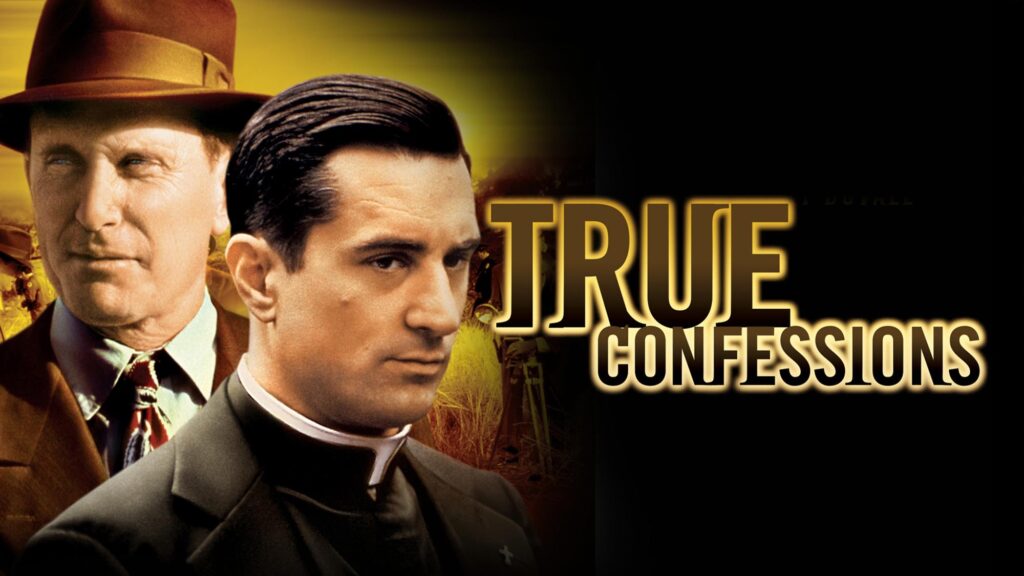
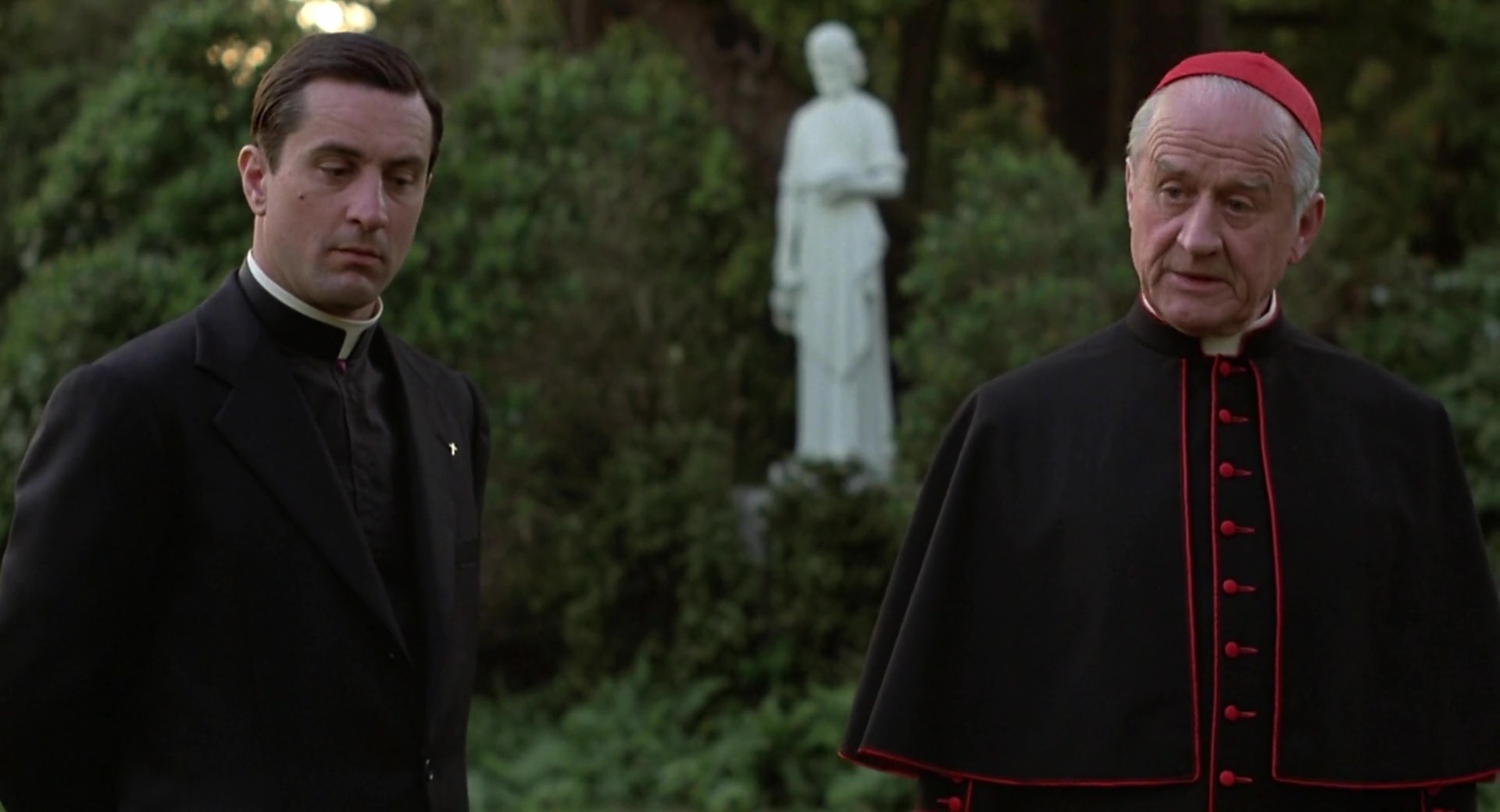
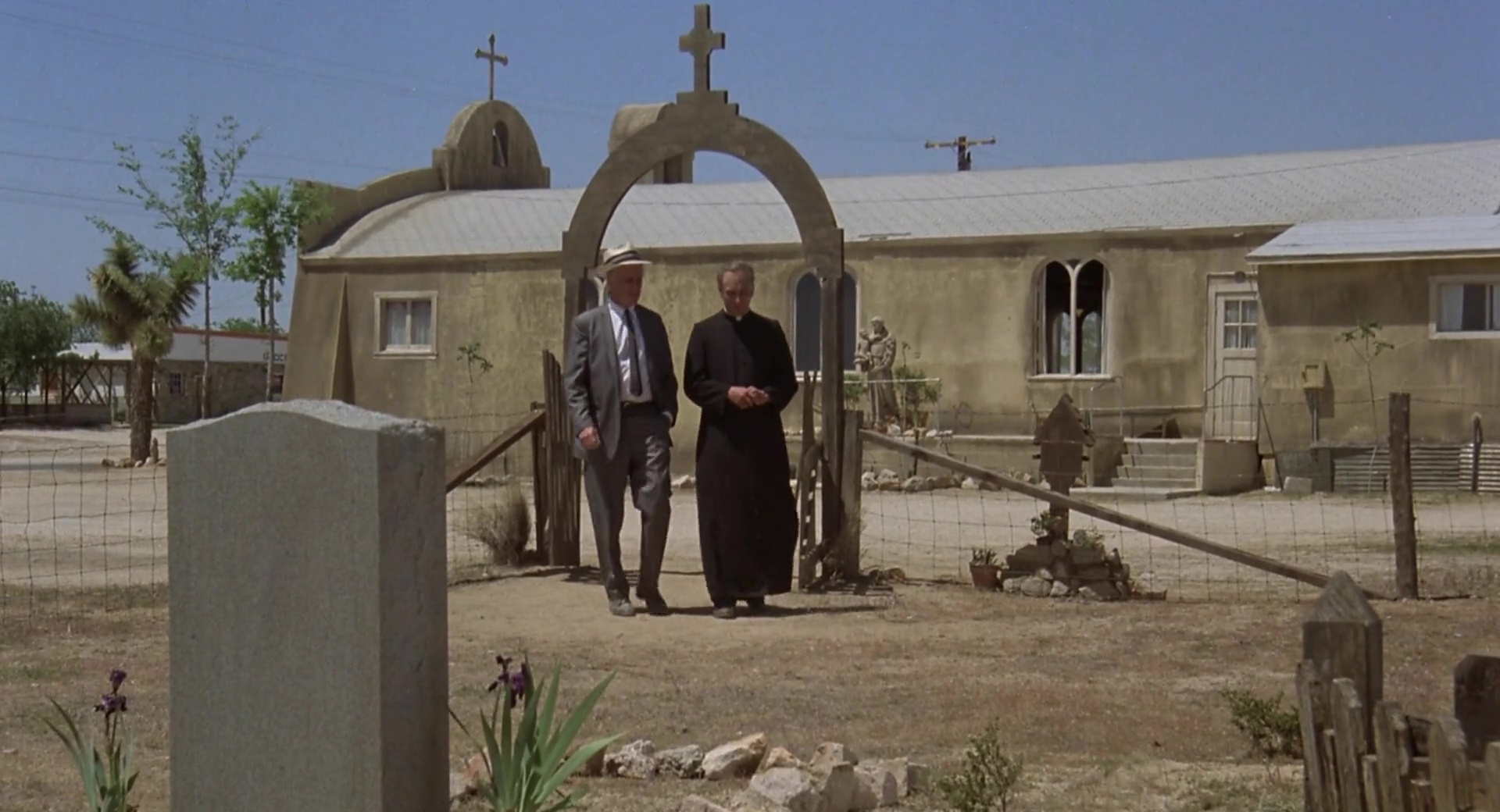
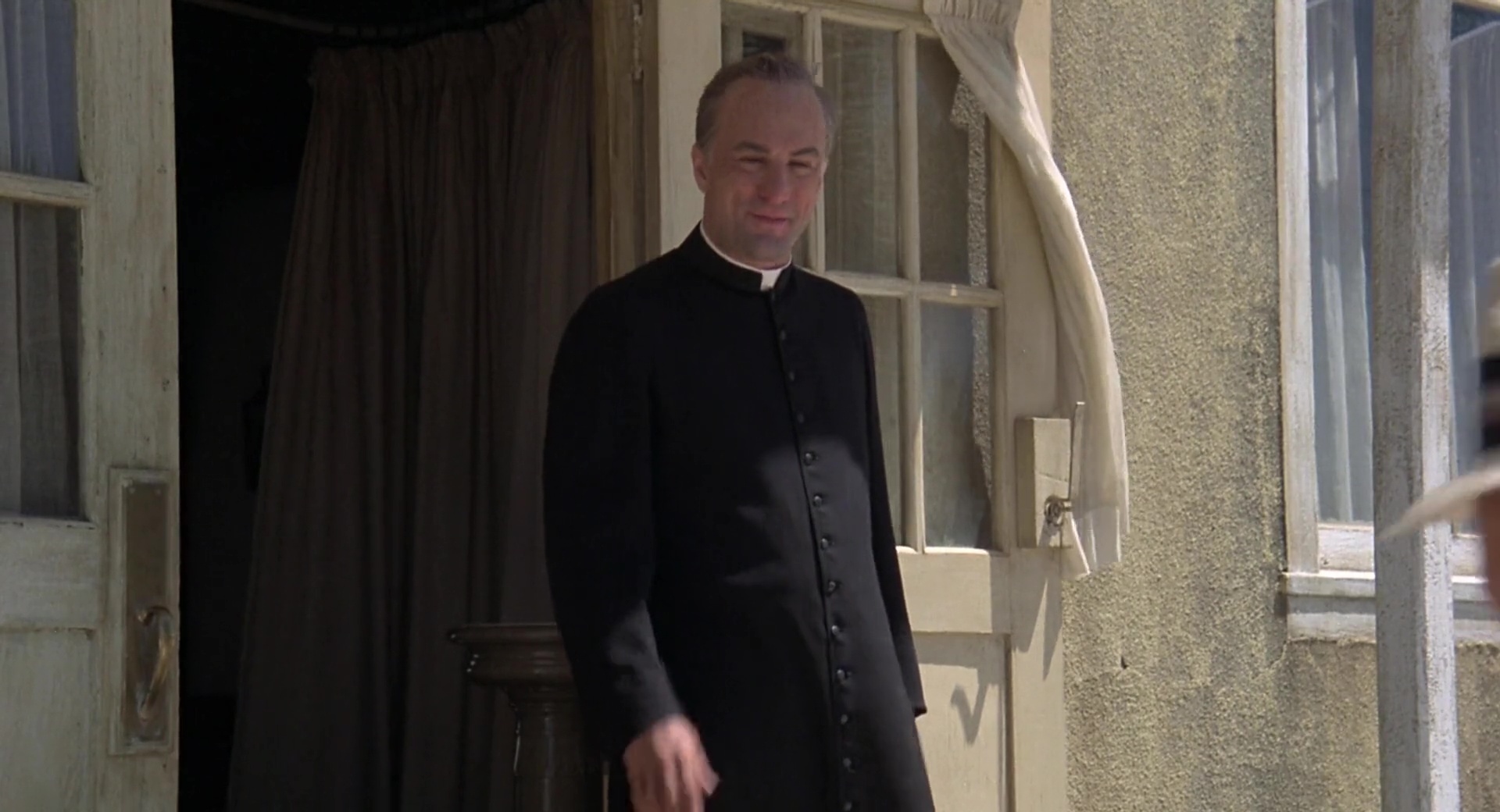
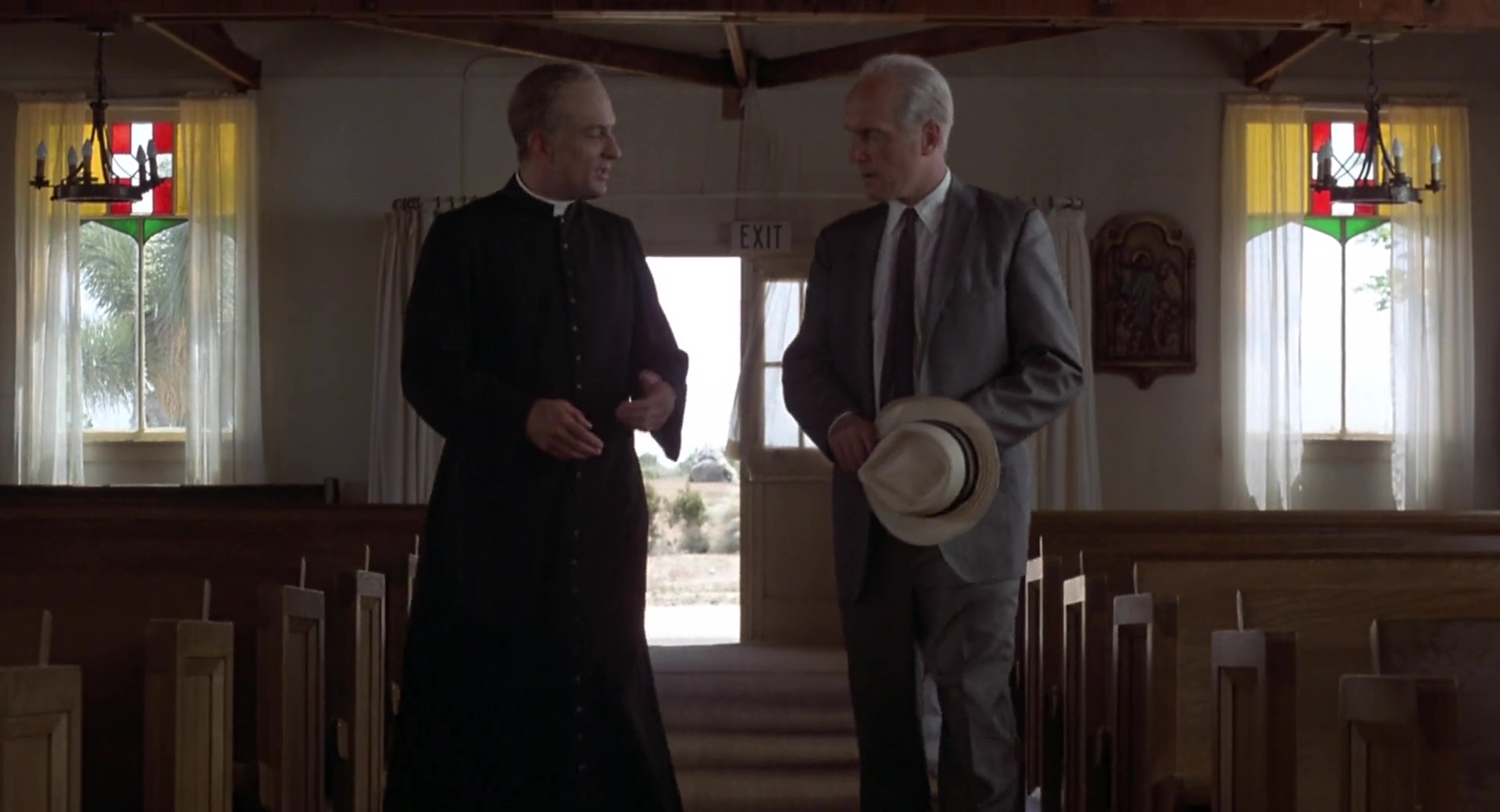
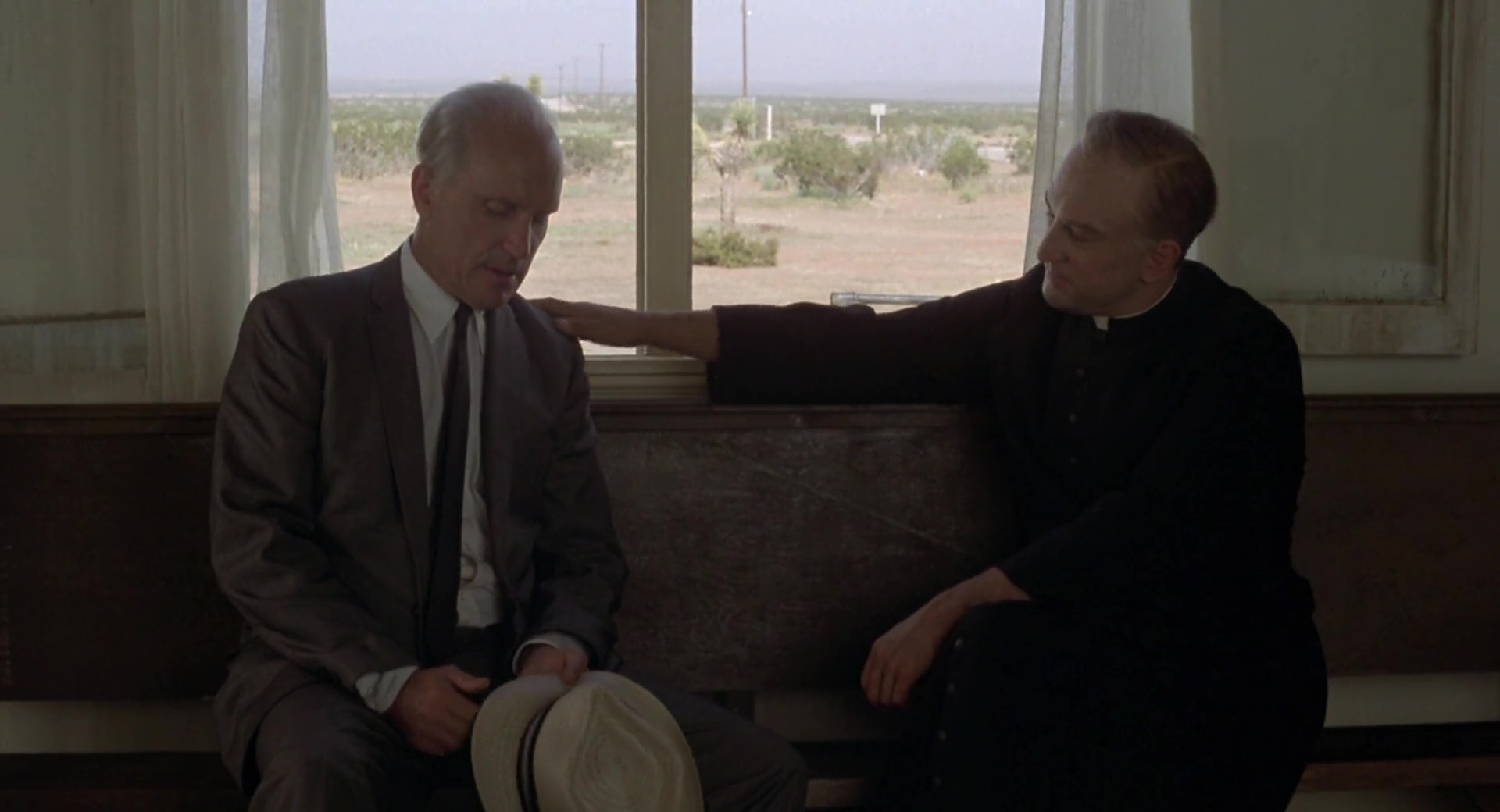
True Confessions
True Confessions was shot around Los Angeles, and its locations are central to its period noir atmosphere..