
Quentin Tarantino (born 27 March 1963) is an American film director, screenwriter, producer and actor best known for Reservoir Dogs (1992), Pulp Fiction (1994), Jackie Brown (1997), Kill Bill: Volume 1 (2003), Kill Bill: Volume 2 (2004), Death Proof (2007), Inglourious Basterds (2009), Django Unchained (2012), The Hateful Eight (2015) and Once Upon a Time in Hollywood (2019). Born in Knoxville, Tennessee, he grew up in Southern California and began his filmmaking career after working in a video rental shop in Manhattan Beach. His films are known for their non-linear storytelling, elaborate dialogue, distinctive soundtracks and references to earlier cinema, particularly crime thrillers, Westerns, martial arts films and exploitation pictures. A two-time Academy Award winner for screenwriting, Tarantino has directed productions in the United States, China, Germany, France and several other countries. His personal and professional life has remained closely associated with Los Angeles, where he owns two historic cinemas, although he has also maintained a family home in Tel Aviv, Israel.
Quentin Jerome Tarantino was born in Knoxville, the largest city in eastern Tennessee, to Connie McHugh and Tony Tarantino. His mother was a young nursing student of Irish ancestry, while his father was an aspiring actor and musician of Italian descent. His parents separated before he was born, and Quentin grew up without a relationship with his biological father. Connie had originally met Tony while living in Los Angeles, but returned to her family in Knoxville following the breakdown of their marriage. When Quentin was approximately three years old, she moved back to Southern California with him, eventually settling in Torrance, southwest of downtown Los Angeles. She married musician Curtis Zastoupil, who became an important figure in Quentin’s childhood. The family lived in the South Bay region of Los Angeles County, an area of suburban communities extending from the Pacific coast towards the industrial districts surrounding the Port of Los Angeles. Torrance, neighbouring Harbor City and the nearby beach communities provided the setting for much of his upbringing.
Tarantino developed an interest in cinema at an unusually young age. His mother and stepfather regularly took him to film screenings, and he became familiar with Hollywood productions intended for considerably older audiences. Among the films that made an impression on him were Carnal Knowledge (1971), Deliverance (1972) and the crime thrillers, Westerns and martial arts pictures that appeared in local cinemas during the 1970s. He also watched films on television and became interested in the actors, directors and production companies associated with them. The South Bay’s numerous cinemas, shopping centres and video shops provided easy access to popular entertainment, while its proximity to Hollywood made the film industry a familiar presence even though the family had no professional connections within it. Tarantino attended several schools in the area, including Fleming Junior High School in Lomita and Narbonne High School in Harbor City. He showed little interest in conventional academic education and left Narbonne during his first year, aged fifteen, deciding to concentrate on acting and filmmaking.
His early theatrical experience came through the Torrance Community Theater, where he appeared in plays and sometimes worked behind the scenes as a stage manager. He subsequently enrolled in acting classes taught by James Best, an American character actor who had appeared in numerous Westerns and later became widely recognised for playing Sheriff Rosco P. Coltrane in The Dukes of Hazzard. Best conducted classes in Toluca Lake, near Riverside Drive in the San Fernando Valley, requiring Tarantino to travel across Los Angeles from the South Bay. The classes introduced him to other aspiring performers and encouraged him to begin writing dialogue for scenes that he could perform. During this period, he also worked at the Pussycat Theatre on Cravens Avenue in downtown Torrance, an adult cinema where he obtained employment after claiming to be older than he was. Other jobs included market research and recruitment work connected with Southern California’s aerospace industry. None offered a clear route into filmmaking, but his involvement with local theatre and the cinema business gradually gave him practical experience of the entertainment industry.
A more important opportunity arrived in 1985 when Tarantino began working at Video Archives, an independent video rental shop at 1808 North Sepulveda Boulevard in Manhattan Beach. The shop specialised in a broad selection of films, including foreign-language cinema, horror, action films and older Hollywood productions that were not always readily available elsewhere. Tarantino spent several years working there alongside other film enthusiasts, most notably Roger Avary, who would become an important early writing collaborator. The employees regularly discussed films with customers and one another, comparing directors, performances and individual scenes. Tarantino developed an extensive knowledge of international cinema and became familiar with the work of filmmakers ranging from Jean-Luc Godard and Sergio Leone to John Woo, Brian De Palma and Howard Hawks. The shop also attracted aspiring screenwriters, actors and other people interested in filmmaking, creating an informal community of enthusiasts outside the Hollywood studio system. Video Archives eventually closed, and the original shop premises were converted to other commercial uses, but its former location remains one of the most significant places associated with Tarantino’s early career.
While working at Video Archives, Tarantino began writing screenplays and developing short film projects. His first substantial attempt at directing was My Best Friend’s Birthday, a black-and-white comedy written with Craig Hamann, whom he had met through acting classes. Filming took place intermittently between 1984 and 1987, using a small budget, friends as performers and locations around Los Angeles. Tarantino directed and played one of the leading roles, gaining experience with cameras, editing and the difficulties of organising a production without professional backing. The film was never completed in its intended form, and only approximately half of the original footage survives. Several ideas from the screenplay were subsequently incorporated into True Romance (1993), a crime story Tarantino developed during the same period. He also wrote Natural Born Killers, another screenplay that attracted attention within the industry. Producer Lawrence Bender encouraged him to concentrate on writing a feature he could direct himself, rather than continuing to seek acting work or sell scripts to other filmmakers.
The result was Reservoir Dogs (1992), a crime thriller about a group of criminals whose attempted jewellery robbery goes disastrously wrong. Tarantino originally planned to make the film on a very small budget using friends and inexpensive locations, but actor Harvey Keitel became interested in the screenplay and helped attract professional financing. Principal photography began in Los Angeles in July 1991, with much of the filming concentrated in Eagle Rock and Highland Park, two neighbourhoods northeast of downtown. The opening restaurant scene, in which the criminals discuss Madonna’s Like a Virgin and argue about tipping, was filmed at Pat & Lorraine’s Coffee Shop at 4720 Eagle Rock Boulevard. The opening credits, showing the men walking together in their black suits, were photographed outside the former All Star Lanes bowling alley at 4459 Eagle Rock Boulevard. These locations were ordinary neighbourhood businesses rather than purpose-built sets, and the film’s modest production resources encouraged Tarantino to make extensive use of actual Los Angeles streets and interiors.
The central warehouse, where most of Reservoir Dogs takes place, occupied a disused mortuary building at 5860 North Figueroa Street in Highland Park. The property contained an upstairs area that was also used for scenes set in Mr Orange’s apartment, while its large ground-floor space accommodated the principal confrontations between the characters. The building was demolished not long after production. Other locations included the intersection of York Boulevard and North Avenue 50, where Mr Pink is struck by a car while escaping from the police, and Johnie’s Coffee Shop at 6101 Wilshire Boulevard, where the undercover officer rehearses aspects of his fictional criminal identity. The shop at 2612 West Burbank Boulevard in Burbank represented the diamond business targeted by the criminals, although the actual robbery is never shown. Reservoir Dogs premiered at the Sundance Film Festival in Park City, Utah, in January 1992. Its critical reception brought Tarantino international attention, and the film subsequently screened at festivals including Cannes and Toronto.
The success of Reservoir Dogs allowed Tarantino to direct his next screenplay on a considerably larger scale. Pulp Fiction (1994), co-written in part with Roger Avary, brought together several overlapping crime stories involving hitmen, a boxer, a gangster’s wife and two restaurant robbers. Rather than moving production away from his home city, Tarantino again chose Los Angeles as the principal filming environment. Photography began in September 1993, with locations spread across Hollywood, Glendale, Pasadena, the San Fernando Valley and the South Bay. The film’s opening and closing restaurant scenes were shot at the Hawthorne Grill, a distinctive Googie-style building at 13763 Hawthorne Boulevard in Hawthorne. The restaurant subsequently closed and was demolished, but its curved roof and large windows remain familiar through the film. A former bowling alley building at 1435 Flower Street in Glendale represented the exterior of Jack Rabbit Slim’s, the fictional 1950s-themed restaurant where John Travolta and Uma Thurman perform their famous dance. The elaborate interior was constructed inside a warehouse in Culver City rather than inside the Glendale property.
Other Pulp Fiction locations included a house at 3519 La Clede Avenue in Atwater Village, used as the home of drug dealer Lance, and the Crown Pawn Shop at 20933 Roscoe Boulevard in Canoga Park, where Bruce Willis’s character becomes involved in one of the film’s most disturbing sequences. The Raymond Theatre at 129 North Raymond Avenue in Pasadena represented the venue for Butch’s boxing match, while several apartment buildings and streets around Hollywood and the San Fernando Valley supplied additional locations. Tarantino also appeared in the film as Jimmie Dimmick, continuing his practice of taking small acting roles in his own productions. Pulp Fiction premiered at the Cannes Film Festival in May 1994 and won the Palme d’Or, one of the festival’s highest honours. Its subsequent theatrical success established Tarantino as a major figure in American cinema. He and Avary won the Academy Award for Best Original Screenplay in March 1995, at a ceremony held at the Shrine Auditorium in Los Angeles.
Tarantino’s success as a screenwriter also brought attention to projects he had developed before becoming a director. True Romance (1993), directed by Tony Scott, was filmed primarily in Los Angeles and Detroit, Michigan, while Natural Born Killers (1994), directed by Oliver Stone, used locations across the American Southwest. Both films were based on his original screenplays, although the finished productions differed from his own intentions. He also appeared as an actor in several films during the 1990s, most prominently From Dusk Till Dawn (1996), directed by Robert Rodriguez. Tarantino wrote the screenplay and played Richard Gecko opposite George Clooney, with much of the production filmed in Texas and at studios in Southern California. His professional friendship with Rodriguez developed into several later collaborations, including the anthology film Four Rooms (1995) and Grindhouse (2007). Tarantino also directed an episode of the medical television series ER in 1995, working at the Warner Bros. facilities in Burbank, where the programme was produced.
After the international success of Pulp Fiction, Tarantino returned to a more intimate crime story with Jackie Brown (1997), adapted from Elmore Leonard’s novel Rum Punch. He moved the novel’s setting from Florida to the South Bay area of Los Angeles, using communities that he had known since childhood. Pam Grier played the title character, a flight attendant who becomes involved in a scheme to transport money for an arms dealer. The production filmed extensively around Los Angeles International Airport, Torrance, Carson, Hawthorne and Playa del Rey. The Del Amo Fashion Center, the large shopping complex on Hawthorne Boulevard in Torrance, provided the setting for the film’s complicated shopping-centre money exchange. Tarantino and his crew made extensive use of the mall’s food court, corridors and parking facilities, including the multistorey car park where several important scenes take place.
The fictional Cherry Bail Bonds office was represented by an actual bail bond business at 724 East Carson Street in Carson, while the Cockatoo Inn at 4334 West Imperial Highway in Hawthorne appeared under its real name. The historic hotel, established in the mid-twentieth century, had long been associated with the nearby airport and aviation industry before eventually closing. Other locations included the beachfront apartment building at 6309 Ocean Front Walk in Playa del Rey and commercial streets in Wilmington. Jackie Brown was particularly personal for Tarantino because its characters moved through the same suburban landscape where he had grown up, rather than the more familiar Hollywood and Beverly Hills settings of many Los Angeles films. It also allowed him to work with Grier and Robert Forster, two performers whose earlier careers had strongly influenced his interest in American genre cinema. The film received critical acclaim, with Forster earning an Academy Award nomination for Best Supporting Actor.
By the end of the 1990s, Tarantino had become financially independent and maintained a home in the Hollywood Hills, where he developed an extensive private film collection. He also travelled regularly to international film festivals and cinematheques, attending screenings and presenting films by directors who had influenced him. His work became particularly popular in France, where Reservoir Dogs and Pulp Fiction had established his reputation among critics and audiences. Cannes remained an important part of his professional life, both through festival appearances and his relationships with European filmmakers. In 2004, he would serve as president of the festival jury, returning to the event that had given him his first Palme d’Or a decade earlier.
Tarantino’s next major project was Kill Bill, an elaborate martial arts revenge story starring Uma Thurman as a former assassin attempting to kill the members of a criminal organisation. The film was originally conceived as a single feature, but the amount of material produced led to its release in two parts, Kill Bill: Volume 1 (2003) and Kill Bill: Volume 2 (2004). Production began in 2002 and required work in the United States, China, Japan and Mexico. One of the most important locations was Beijing Film Studio in China’s capital, where large sets were constructed for the Japanese sequences. The House of Blue Leaves, the restaurant where Thurman’s character confronts O-Ren Ishii and her associates, was built inside the Beijing studio complex. Its design was inspired by Gonpachi, a Japanese restaurant in the Nishi-Azabu district of Tokyo, which Tarantino had visited. The filmmakers recreated the restaurant’s timber structure, upper galleries and open central floor while adapting the layout for an extended fight sequence.
The scenes supposedly taking place in Okinawa, where the Bride visits sword maker Hattori Hanzō, were also filmed on sets in Beijing rather than in Japan. Other material was photographed in Tokyo, including driving sequences around Shinjuku and Rainbow Bridge. The production additionally used Southern California locations, among them a house at 5500 Atlas Street in South Pasadena, which represented the residence of Vernita Green. The hospital scenes were filmed at the former St Luke Medical Center in Pasadena, while the wedding chapel central to both films was an actual church in Hi Vista, a sparsely populated desert community east of Lancaster. The building, at 19809 East Avenue G, was known as Calvary Baptist Church and later Sanctuary Adventist Church. Despite the film’s fictional setting in El Paso, Texas, the chapel stands in the Mojave Desert, surrounded by agricultural plots and isolated roads. Its simple white exterior and position beside a Joshua tree made it one of the production’s most distinctive locations. Additional scenes were filmed in Mexico, while the martial arts training sequences used Chinese studio facilities and outdoor locations. The long international production became one of Tarantino’s most ambitious undertakings, bringing together American crime cinema, Japanese samurai films and the traditions of Hong Kong martial arts filmmaking.
His next directorial project, Death Proof (2007), was developed alongside Robert Rodriguez’s Planet Terror as part of the double-feature production Grindhouse. Tarantino wrote and directed the story of a stuntman who uses his car to murder young women, with Kurt Russell playing the principal character. The film was shot in Texas and California, particularly around Austin and the countryside north of Santa Barbara. Several Austin businesses appeared under their real names, including Güero’s Taco Bar at 1412 South Congress Avenue and the Texas Chili Parlor at 1409 Lavaca Street. The latter provided the exterior of the bar where several characters encounter Russell’s Stuntman Mike, while a matching interior was constructed for filming. Other scenes used the former Zedler Mill complex in Luling, southeast of Austin, where a property was adapted to represent a rural garage and vehicle sales business. The film’s extended car chase was photographed on roads around Buellton and Los Olivos in Santa Barbara County, including sections of California State Route 246 and Figueroa Mountain Road. Death Proof also brought Tarantino into contact with New Zealand stunt performer Zoë Bell, who had worked as Thurman’s stunt double on Kill Bill and appeared as herself in the film.
During this period, Tarantino became increasingly involved in preserving and presenting older films. In 2007, he purchased the building housing the New Beverly Cinema at 7165 Beverly Boulevard in Los Angeles, near the intersection with North La Brea Avenue. The cinema had opened as a repertory theatre in 1978 under Sherman Torgan, developing a reputation for screening double features, foreign films and older Hollywood productions. When the building faced possible redevelopment, Tarantino bought it to preserve its use as a cinema. He initially allowed Torgan’s son Michael to continue programming the theatre, but assumed direct responsibility for its schedule in 2014. The New Beverly subsequently became dedicated almost entirely to screenings from physical film prints, particularly 35mm and occasionally 16mm. Tarantino regularly selected films from his personal collection and organised programmes around particular directors, actors and genres. The theatre became one of the few surviving commercial cinemas in Los Angeles committed to presenting repertory films through traditional projection rather than digital exhibition.
His return to feature directing with Inglourious Basterds (2009) took him to Europe for one of the most geographically extensive productions of his career. The alternative-history war film follows a group of Allied soldiers operating in German-occupied France during the Second World War. Although the story takes place largely in France, principal photography was concentrated in Germany, where the production was based at Studio Babelsberg in Potsdam, southwest of Berlin. Established in 1912, Babelsberg is one of the world’s oldest film production complexes and had been associated with important German films of the silent and early sound eras. Tarantino used its soundstages, exterior streets and production workshops to recreate occupied Paris, military installations and rural French communities.
Filming also took place across Berlin, Brandenburg and Saxony. Fort Hahneberg in Berlin-Spandau, a nineteenth-century military fortification, represented a location where the Allied soldiers interrogate German prisoners. The former military barracks at Krampnitz near Potsdam were used for additional wartime scenes, while the historic town of Görlitz, on Germany’s eastern border with Poland, provided period architecture that required relatively little alteration. The production also filmed around Sebnitz and Bad Schandau in Saxon Switzerland, where a farmhouse set represented the residence of the French dairy farmer Perrier LaPadite. Several Paris scenes were filmed at actual French locations, including Brasserie La Renaissance at 112 Rue Championnet in the eighteenth arrondissement. However, the fictional Paris cinema where much of the concluding action takes place was constructed at Babelsberg. Inglourious Basterds premiered at Cannes in May 2009, and Christoph Waltz won the festival’s Best Actor award for his portrayal of Colonel Hans Landa. The performance subsequently earned Waltz an Academy Award, while the film became one of Tarantino’s greatest international commercial successes.
The film also brought an important personal connection to Israel. During a promotional visit in 2009, Tarantino met Israeli singer and model Daniella Pick, the daughter of musician Zvika Pick. Their relationship developed intermittently over several years before they became engaged in 2017. Tarantino had previously maintained long-term relationships with actresses including Mira Sorvino and filmmaker Sofia Coppola, but had never married. On 28 November 2018, he and Pick married in a private ceremony at their home in Beverly Hills, California. The ceremony was attended by a small group of relatives and friends, including several actors who had appeared in his films. A reception followed at Mr Chow, the Chinese restaurant on North Camden Drive in Beverly Hills. Their marriage subsequently brought Tarantino into closer contact with Israel, where the couple established a second home.
Following Inglourious Basterds, Tarantino returned to the Western genre with Django Unchained (2012), starring Jamie Foxx, Christoph Waltz and Leonardo DiCaprio. Set in the American South before the Civil War, the film required several different landscapes to represent the characters’ journey through slavery-era America. Production began in Southern California before moving to Wyoming and Louisiana. The Western streets of Melody Ranch Motion Picture Studio in Newhall, north of Los Angeles, were used for several town sequences, while other scenes were filmed around the Alabama Hills near Lone Pine in the eastern Sierra Nevada. The production subsequently travelled to Jackson Hole, Wyoming, where the mountainous landscapes around Grand Teton National Park provided the snow-covered setting for the early scenes involving Django and Dr Schultz.
The most historically significant locations were in Louisiana, particularly the plantations along the Mississippi River between New Orleans and Baton Rouge. Evergreen Plantation at 4677 Louisiana Highway 18 near Wallace represented the estate of plantation owner Spencer Bennett. The property, established during the eighteenth century, retains its historic main house, agricultural buildings and a substantial number of surviving structures associated with enslaved workers. Its inclusion gave the film a direct connection to the architectural and geographical history of slavery in Louisiana, although the screenplay’s characters and specific events were fictional. Additional plantation scenes were filmed elsewhere in the state, with constructed interiors and sets used for material that could not be photographed inside protected historic buildings. The film was released in December 2012 and earned Tarantino his second Academy Award for Best Original Screenplay, presented at the Dolby Theatre in Hollywood in February 2013. Waltz also received his second supporting actor Oscar for a Tarantino film.
Tarantino’s next Western, The Hateful Eight (2015), was developed as a largely self-contained story about strangers trapped inside a mountain stagecoach stop during a snowstorm. After an early version of the screenplay was leaked, he briefly abandoned the project before organising a public script reading in Los Angeles. He eventually decided to film it in Colorado, where the mountains around Telluride offered access to genuine winter conditions. Principal photography began in early 2015 at Schmid Ranch on Wilson Mesa, southwest of Telluride. The production constructed Minnie’s Haberdashery, the isolated building where most of the story unfolds, on the ranch’s high plateau, surrounded by the San Miguel Mountains. The building was designed to withstand winter weather while allowing the camera crew to work both inside and outside. Additional interiors were constructed at RED Studios Hollywood on North Cahuenga Boulevard in Los Angeles.
The production used Ultra Panavision 70, a large-format photographic system developed during the 1950s and largely abandoned after the 1960s. Historic lenses were restored and adapted for modern cameras, allowing Tarantino to photograph the confined interior scenes in an unusually wide image format. The Hateful Eight was subsequently released in a special 70mm roadshow presentation at selected cinemas, with an overture, interval and printed programme inspired by the theatrical exhibition practices of the mid-twentieth century. Its music was composed by Ennio Morricone, whom Tarantino had admired since childhood through Sergio Leone’s Westerns. The collaboration earned Morricone his first competitive Academy Award for Best Original Score. On 21 December 2015, shortly before the film’s general release, Tarantino received a star on the Hollywood Walk of Fame at 6927 Hollywood Boulevard, directly in front of the TCL Chinese Theatre.
His next film returned to the city where he had grown up and worked for most of his life. Once Upon a Time in Hollywood (2019) is set in Los Angeles in 1969, during a period when the American film and television industries were undergoing substantial changes. Leonardo DiCaprio played fading television actor Rick Dalton, while Brad Pitt portrayed his stunt double and friend Cliff Booth. The story also incorporated historical figures, including actress Sharon Tate, played by Margot Robbie. Tarantino drew on his childhood memories of Southern California during the late 1960s, when he had begun attending cinemas and watching television programmes that would later influence his work. Rather than relying primarily on studio sets, he decided to recreate as much of the period city as possible through actual Los Angeles streets and surviving buildings.
Principal photography began in June 2018 and involved extensive work along Hollywood Boulevard, Sunset Boulevard and other parts of central Los Angeles. The historic Musso & Frank Grill at 6667 Hollywood Boulevard, which had opened in 1919 and long served actors, writers and filmmakers, appeared as itself in a meeting between Rick Dalton and producer Marvin Schwarz. Other surviving Hollywood establishments incorporated into the production included the Frolic Room at 6245 Hollywood Boulevard, the former Earl Carroll Theatre at 6230 Sunset Boulevard and the Cinerama Dome at 6360 Sunset Boulevard. The filmmakers temporarily replaced modern signs, shopfronts and street furniture to recreate the commercial environment of 1969, while period vehicles were used extensively throughout the central Hollywood district. The exterior of Rick Dalton’s house was represented by a property on Alta View Drive in Studio City, although its fictional location was in Benedict Canyon.
One of the film’s most elaborate historical recreations involved Spahn Ranch, the former Western film location in Chatsworth where members of Charles Manson’s group had lived during the late 1960s. The actual ranch had largely disappeared following a fire and subsequent changes to the property, so Tarantino’s production recreated it at Corriganville Park in Simi Valley. The site had itself been a major Western film ranch during the 1940s and 1950s before its original sets were destroyed by fire. Production designer Barbara Ling reconstructed ranch buildings, vehicles and other details based on historical photographs and accounts, allowing the location to represent Spahn Ranch as it appeared during 1969. Additional Western television scenes were filmed at Melody Ranch in Newhall and on the Universal Studios backlot. The film therefore combined surviving Hollywood landmarks with reconstructed environments and historic properties that had originally served the very industry it depicted.
Once Upon a Time in Hollywood premiered in competition at Cannes in May 2019 and was released internationally that summer. It received ten Academy Award nominations, winning two, including Best Supporting Actor for Brad Pitt. Tarantino subsequently expanded the story in a novel of the same name, published in 2021. The book incorporated additional material about the fictional careers and personal histories of Rick Dalton and Cliff Booth, including their relationships with Hollywood studios, television producers and stunt performers. He followed it with Cinema Speculation (2022), a non-fiction collection examining films released during the 1970s and the cinema culture he experienced while growing up in Southern California. The book drew extensively on the places where he had watched films as a child and teenager, particularly the theatres of Los Angeles and the South Bay.
Tarantino’s involvement with historic cinemas expanded further when he purchased the Vista Theatre at 4473 Sunset Drive in Los Feliz in 2021. Opened in 1923, the single-screen cinema was known for its Spanish Revival exterior and Egyptian-inspired interior decoration. The building had experienced several closures and ownership changes before becoming an important neighbourhood cinema during the late twentieth century. Tarantino announced plans to restore the theatre and maintain traditional film projection, distinguishing it from the New Beverly by concentrating more heavily on new releases presented on physical film. Following extensive renovation, the Vista reopened in November 2023, with Tarantino hosting an anniversary screening of True Romance before the cinema resumed regular public programming.
The Vista subsequently introduced upgraded 35mm and 70mm projection facilities, together with a small additional screening room known as the Video Archives Cinema Club. The name was chosen in reference to the Manhattan Beach rental shop where Tarantino had worked before becoming a director. The cinema also incorporated Pam’s Coffy, a coffee shop named after Pam Grier’s 1973 film Coffy, continuing his longstanding association with the actress and American exploitation cinema. Together with the New Beverly, the Vista represents one of his most substantial personal investments in Los Angeles film culture. His ownership is unusual among major Hollywood directors, as the two properties operate as public cinemas rather than private screening facilities or conventional commercial investments. Tarantino has remained directly involved in programming, selecting films from his collection and occasionally presenting screenings in person.
His personal life has increasingly been divided between California and Israel. In November 2019, Tarantino and Daniella Pick rented a substantial two-storey residence in northern Tel Aviv, close to Kikar Hamedina, a large public square surrounded by shops and residential buildings. The family subsequently became associated with the Ramat Aviv area of the city, while continuing to maintain their home in Los Angeles. Their first child, Leo, was born at Ichilov Hospital in Tel Aviv in February 2020, and their daughter, Adriana, was born at the same hospital in July 2022. Tarantino has spoken about becoming a father relatively late in life and has spent extended periods in Israel, learning Hebrew and participating in ordinary family activities away from his professional commitments. Although he has travelled regularly between Tel Aviv and Los Angeles, he has described Israel as an important part of his life rather than simply a temporary overseas residence.
During the early 2020s, Tarantino continued developing several possible film projects while repeatedly discussing his intention to retire from feature directing after completing ten films. He briefly worked on a screenplay titled The Movie Critic, set in California during the late 1970s, but abandoned the project in 2024. He subsequently wrote The Further Mis-Adventures of Cliff Booth, a continuation of the story introduced in Once Upon a Time in Hollywood. Rather than directing it himself, Tarantino agreed to have David Fincher direct the film for Netflix, with Brad Pitt returning as Cliff Booth. Principal photography began in Southern California in July 2025, using locations around Los Angeles, Long Beach, Huntington Beach and Ventura. The production recreated parts of late-1970s Hollywood, including historic commercial buildings in Highland Park, while the Ventura County Fairgrounds supplied the setting for a demolition derby sequence. Tarantino retained his role as screenwriter but was not the director, and the project therefore did not count towards his proposed final feature.
In 2025, Tarantino also announced that he intended to write and direct a stage production in London’s West End. The project eventually became The Popinjay Cavalier, a swashbuckling comedy set in Europe during the 1830s and inspired by the adventure films and theatrical romances of classical Hollywood. Produced by Sonia Friedman Productions and Sony Pictures Entertainment, the play was scheduled to open at the Phoenix Theatre on Charing Cross Road in London’s West End. The theatre, which opened in 1930, stands near the junction with Shaftesbury Avenue and has hosted numerous major British stage productions. In October 2026, producers confirmed that Sacha Baron Cohen would star in the play, making his professional West End debut. Preview performances were scheduled to begin on 23 February 2027, ahead of an official opening on 18 March. Tarantino planned to direct the production himself, marking his first major project as a stage director and a return to the theatrical environment that had been part of his early career in Southern California.
The London project also introduced the possibility of another extended period living in Europe. Tarantino had previously worked in France, Germany and other European countries on film productions, but the West End play required a different professional commitment, involving rehearsals and a continuing relationship with a resident theatre company. He indicated that he intended to spend substantial time in Britain with his family during its development and initial run. By October 2026, The Popinjay Cavalier was scheduled to continue at the Phoenix Theatre until June 2027, while Tarantino’s next feature film as director remained unannounced. His most recent completed feature as director was still Once Upon a Time in Hollywood, released seven years earlier.
Although Tarantino’s international career has taken him from the film studios of Beijing and Potsdam to the historic streets of Paris, the mountains of Colorado and the plantations of Louisiana, Southern California remains particularly important to his personal and professional history. The former Video Archives shop in Manhattan Beach, the neighbourhood restaurants and industrial buildings used in Reservoir Dogs, the demolished Hawthorne Grill from Pulp Fiction, the South Bay shopping centres of Jackie Brown and the historic theatres he owns in Los Angeles are all associated with different periods of his career. His later life has added Tel Aviv and, through his forthcoming stage production, London to the places where he has lived and worked. These connections extend beyond the settings depicted in his films, encompassing the schools he attended, the businesses where he worked before becoming a director, the cinemas he helped preserve and the production locations where he developed some of the most recognisable films in contemporary American cinema.
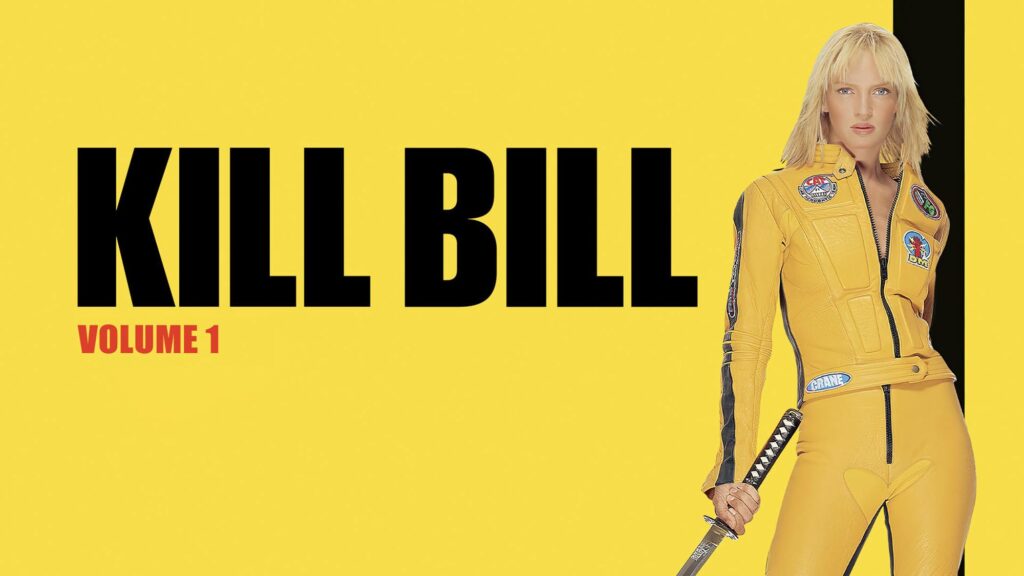
Kill Bill: Vol. 1
Kill Bill was shot across Southern California, Japan and China, with its locations shifting between revenge thriller, hospital nightmare and Japanese swordplay.
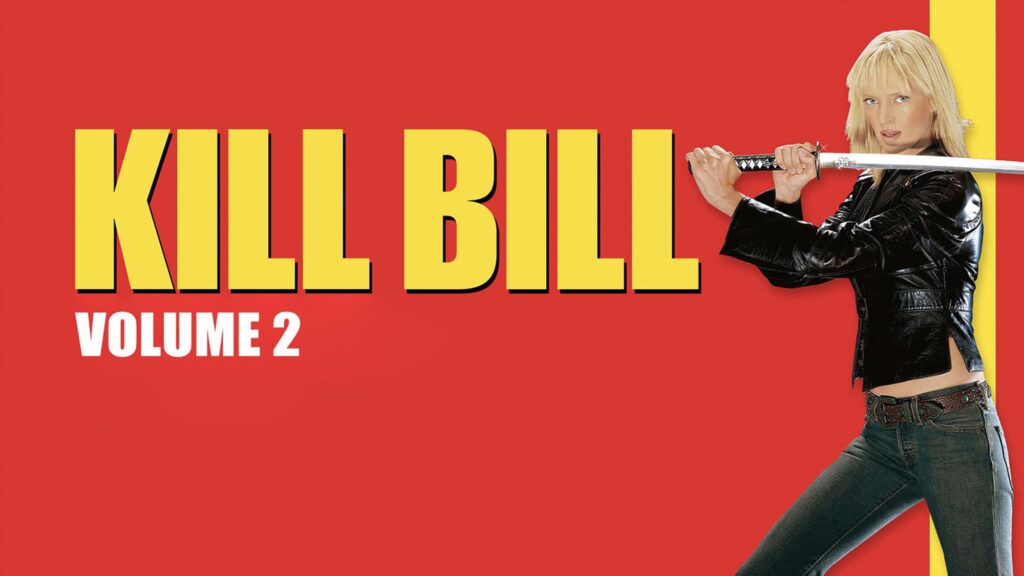
Kill Bill: Vol. 2
Kill Bill: Vol. 2 was shot mainly in Southern California, Mexico and China, giving it a much dustier and more western-influenced visual identity than Vol. 1.
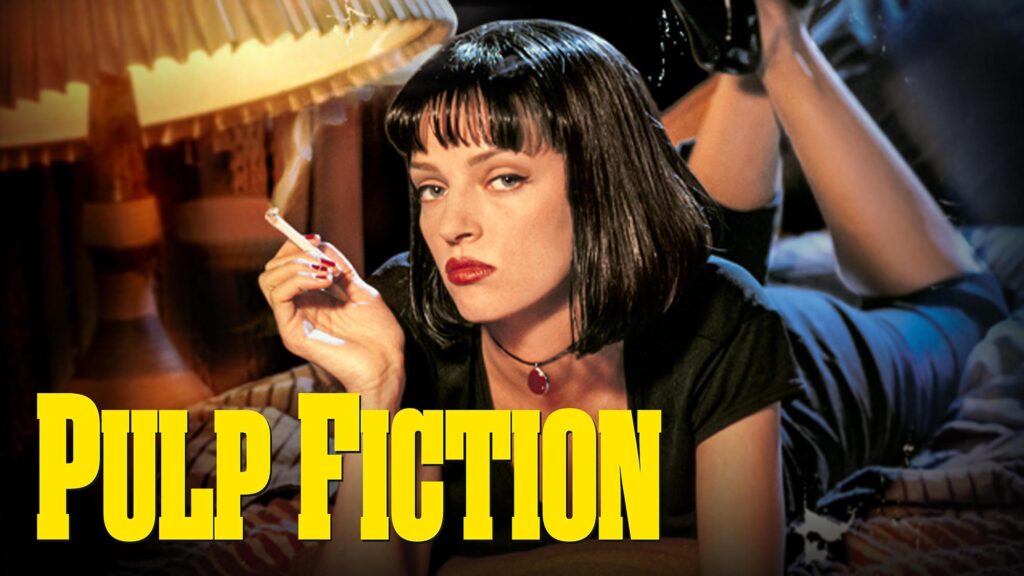
Pulp Fiction
Pulp Fiction was shot around Los Angeles County, and its locations are central to its low-rent, sun-baked urban atmosphere.