
Michael J. Fox (born 9 June 1961) is a Canadian-American actor, producer, author and activist best known for playing Alex P. Keaton in the television series Family Ties (1982–1989), Marty McFly in the Back to the Future trilogy (1985–1990) and Mike Flaherty in Spin City (1996–2000). His film career also includes Teen Wolf (1985), The Secret of My Success (1987), Bright Lights, Big City (1988), Casualties of War (1989), Doc Hollywood (1991) and The Frighteners (1996). Born in Edmonton, Alberta, he grew up in several Canadian communities before settling in Burnaby, British Columbia. His acting career subsequently took him to Los Angeles, New York, Thailand, New Zealand and numerous filming locations across North America. Since being diagnosed with Parkinson’s disease in 1991, he has also become internationally recognised for his work supporting medical research.
Fox was born Michael Andrew Fox in Edmonton, the capital of the Canadian province of Alberta. His father, William Nelson Fox, was a career soldier in the Canadian Armed Forces, while his mother, Phyllis Evelyn Fox, worked as a payroll clerk and had also been involved in acting. His father’s military career meant that the family frequently moved between different Canadian communities during Michael’s childhood. He was one of six children and grew up in a household where adapting to new surroundings was a regular part of family life.
The family eventually settled in Burnaby, British Columbia, in 1971, after his father retired from military service. Situated immediately east of Vancouver, Burnaby was then a rapidly expanding suburban municipality, with residential neighbourhoods developing alongside industrial areas and commercial districts. The move gave Fox a more permanent childhood home after years of relocation. He attended Burnaby Central Secondary School and became interested in ice hockey, music and acting during his teenage years.
Fox initially hoped to pursue ice hockey, but his relatively small stature made a professional career unlikely. He played guitar in local bands and became involved in school theatre productions. His interest in acting developed through drama classes, where a teacher encouraged him to audition for television work. Vancouver had a growing film and television industry during the 1970s, supported by Canadian broadcasters and the city’s proximity to the American entertainment industry.
His first major television opportunity came with the Canadian comedy series Leo and Me, produced in Vancouver during the late 1970s. Fox was fifteen when he was cast as Jamie, a young boy who develops a friendship with an older man played by Brent Carver. The programme gave him his first substantial professional acting experience and introduced him to television production outside the classroom. He subsequently appeared in other Canadian television projects, including the television film Letters from Frank (1979).
At seventeen, Fox decided to leave school and pursue acting in the United States. His father accompanied him on the journey from British Columbia to Los Angeles, where he hoped to find opportunities unavailable in the comparatively small Vancouver entertainment industry. The move represented a major geographical and professional change, taking him from suburban Burnaby to the centre of American film and television production.
After arriving in Los Angeles, Fox began attending auditions and looking for acting work. He initially struggled financially and lived in modest accommodation while trying to establish himself. He adopted the professional name Michael J. Fox because another actor named Michael Fox was already registered with the Screen Actors Guild. Rather than using his actual middle initial, A, he chose J partly in tribute to American character actor Michael J. Pollard.
His early American appearances included the television series Palmerstown, U.S.A. (1980–1981) and the feature film Midnight Madness (1980), a comedy about competing teams participating in an elaborate overnight scavenger hunt through Los Angeles. He also appeared in Class of 1984 (1982), directed by Mark L. Lester. These early roles provided experience in American productions while Fox continued seeking more substantial work.
His breakthrough came when he was cast as Alex P. Keaton in Family Ties, which premiered on NBC in September 1982. The sitcom followed a family living in suburban Columbus, Ohio, with Fox playing a politically conservative teenager whose views frequently clashed with those of his more liberal parents. Although set in Ohio, the series was filmed primarily at Paramount Studios in Hollywood, Los Angeles.
The Paramount studio complex, situated on Melrose Avenue, became one of the most important workplaces of Fox’s early career. Established in the early twentieth century, the studio had hosted numerous major Hollywood productions before becoming a significant centre of television filming. Fox spent much of the 1980s working on its soundstages, rehearsing and recording episodes before live studio audiences.
Family Ties made Fox one of the most recognisable young actors on American television. His performance earned several Emmy Awards and attracted the attention of film producers. It also established his professional connection with actress Tracy Pollan, who joined the programme in 1985 as Ellen Reed, a girlfriend of his character. Their relationship would develop several years later, when they worked together again.
Fox’s first major starring film role came with Teen Wolf (1985), directed by Rod Daniel. He played Scott Howard, a teenager who discovers that he has inherited the ability to transform into a werewolf. The comedy was filmed during 1984, before the release of Back to the Future, using locations around Los Angeles and its surrounding suburbs.
South Pasadena provided several important Teen Wolf locations. A house on Bushnell Avenue represented Scott Howard’s family home, while other residential streets in the neighbourhood supplied the setting for scenes involving his friends. John Burroughs Middle School on South McCaddon Place in Los Angeles was used for school scenes, and the Montrose Bowl on Honolulu Avenue in Montrose appeared as the bowling alley.
One particularly notable connection between Teen Wolf and Fox’s next major film was the house at 1727 Bushnell Avenue in South Pasadena. The property represented Scott Howard’s home in Teen Wolf and was subsequently used as the childhood home of Lorraine Baines, played by Lea Thompson, in Back to the Future. The same residential street therefore appeared in two of Fox’s best-known films released in 1985.
Fox achieved international stardom with Back to the Future (1985), directed by Robert Zemeckis and produced by Steven Spielberg. He played Marty McFly, a California teenager who accidentally travels from 1985 to 1955 in a time machine constructed from a DeLorean sports car by eccentric scientist Emmett Brown, played by Christopher Lloyd. The film became a major commercial success and established Fox as an international leading actor.
Back to the Future was filmed almost entirely in Southern California, using existing suburban neighbourhoods, historic buildings and elaborate sets at Universal Studios. The fictional town of Hill Valley was principally represented by Courthouse Square on the Universal Studios backlot in Universal City. The set included the courthouse and clock tower that feature prominently in the film’s time-travel sequences.
The production began filming with Eric Stoltz in the role of Marty McFly, but he was replaced after several weeks. Fox was brought into the production while still under contract to Family Ties, creating an exceptionally demanding schedule. During the day, he rehearsed and filmed the television series at Paramount Studios in Hollywood. In the evenings, he travelled north through the Cahuenga Pass to Universal Studios and other locations to film Back to the Future, often working until the early morning.
The journey between the Paramount lot and Universal Studios became a regular part of Fox’s life during the production. He travelled along Gower Street and the Hollywood Freeway, crossing the hills separating Hollywood from the San Fernando Valley. The arrangement continued for approximately three months, leaving him with limited opportunities to sleep between television and film commitments. He later described this period in detail in his memoir Future Boy (2025).
Several of the film’s most recognisable scenes were shot far from the Universal backlot. Whittier High School, on Philadelphia Street in Whittier, represented Hill Valley High School in both 1955 and 1985. Its exterior corridors, entrance and surrounding grounds were used for scenes involving Marty, his parents and other students. The school, established in 1900, has a long history within the community and became one of the best-known real locations associated with the film.
The Twin Pines Mall, where Marty first witnesses Doc Brown’s time machine in operation, was represented by the Puente Hills Mall in the City of Industry, east of Los Angeles. The shopping centre’s large parking area provided the setting for the nighttime sequence in which the DeLorean reaches the speed necessary for time travel. Following Marty’s accidental journey into the past, the mall’s fictional name changes to Lone Pine Mall, reflecting an alteration to the timeline.
Marty’s family home was represented by a house at 9303 Roslyndale Avenue in Arleta, a residential neighbourhood in the northeastern San Fernando Valley. The surrounding streets were also used to represent the Lyon Estates housing development. The location appears in several scenes, including Marty’s journey home and the film’s conclusion, when Doc Brown returns in the flying DeLorean.
The production also made extensive use of Pasadena and South Pasadena. Lorraine’s childhood home stood at 1727 Bushnell Avenue, while George McFly’s house was located nearby at 1711 Bushnell Avenue. The Gamble House, a celebrated example of American Arts and Crafts architecture in Pasadena, provided the exterior of Doc Brown’s 1955 residence. Additional scenes associated with the property were filmed at the nearby Robert R. Blacker House.
The Enchantment Under the Sea dance, during which Marty performs Johnny B. Goode and ensures that his parents fall in love, was filmed in the gymnasium of Hollywood United Methodist Church on Franklin Avenue. The building, designed in a Gothic Revival style, had been used by numerous film and television productions. Its gymnasium was transformed into a 1950s school dance venue with elaborate decorations, period clothing and a temporary stage.
Other filming locations included Griffith Park in Los Angeles, the McCambridge Recreation Center in Burbank and Walt Disney’s Golden Oak Ranch near Newhall. The latter represented the rural property where Marty arrives after travelling back to 1955. Although the fictional setting was a small California town, the production brought together locations spread across Los Angeles County, from the San Fernando Valley to the San Gabriel Valley.
Following the success of Back to the Future, Fox became one of Hollywood’s most sought-after young actors. He starred in The Secret of My Success (1987), directed by Herbert Ross, playing Brantley Foster, an ambitious young man from Kansas who moves to New York City and attempts to build a corporate career. Unlike the studio-created Hill Valley, the film made extensive use of actual Manhattan locations.
The Secret of My Success was filmed during the summer of 1986 in New York City and the surrounding region. The Port Authority Bus Terminal on Eighth Avenue represented Brantley’s arrival in Manhattan, while office buildings in Midtown supplied the setting for the fictional Pemrose Corporation. The building at 599 Lexington Avenue was used for exterior scenes associated with the company, while 1166 Avenue of the Americas supplied executive-office interiors.
One of the film’s most distinctive scenes was filmed on the roof of 919 Third Avenue, where Fox’s character participates in a corporate jogging session high above the streets of Manhattan. The rooftop running track provided an unusual urban location, with the surrounding skyscrapers forming the background. Other scenes were filmed around Park Avenue, West Broadway and Midtown Manhattan, while properties in Somers and Katonah, north of New York City, represented suburban and country residences.
Fox returned to New York for Bright Lights, Big City (1988), directed by James Bridges and adapted from Jay McInerney’s novel. He played Jamie Conway, a young magazine fact-checker whose life deteriorates amid the nightlife and drug culture of 1980s Manhattan. The production was filmed extensively on location in New York, using the city’s streets, clubs and commercial buildings.
Filming locations included East 14th Street, the West Village, Bryant Park, Fifth Avenue and the streets of Tribeca. Jamie’s apartment was represented by a building at 24 Charles Street, near Waverly Place, while additional scenes used the Christopher Street subway station and locations along Laight Street. The production captured areas of Lower Manhattan that subsequently underwent considerable redevelopment.
Bright Lights, Big City also reunited Fox with Tracy Pollan, who played his character’s former girlfriend. The two began a romantic relationship during this period, after having initially met while filming Family Ties. They married on 16 July 1988 at the West Mountain Inn in Arlington, Vermont, a country inn situated among the wooded hills of southwestern Vermont.
Vermont became an important part of their personal lives. Around the time of their marriage, Fox acquired Lottery Hill Farm, a substantial rural estate in South Woodstock, near the town of Woodstock. The property occupied approximately 121 acres of countryside and provided a retreat from the couple’s professional commitments in Los Angeles and New York. They retained the estate for many years before offering it for sale in 2012.
In 1988, Fox travelled to Thailand for the filming of Casualties of War (1989), directed by Brian De Palma. The Vietnam War drama starred Fox as Private Eriksson, an American soldier who witnesses a violent crime committed by members of his unit. Sean Penn played Sergeant Tony Meserve, whose actions form the centre of the conflict. The film represented a substantial departure from Fox’s established comedic roles.
Much of Casualties of War was filmed in southern Thailand, particularly around Phuket and Phang Nga, where the tropical landscape was used to represent Vietnam. Production facilities were established around abandoned tin mines, some of which were converted into military installations and controlled filming environments. The cast underwent military training before principal photography, spending time in the jungle under conditions intended to prepare them for their roles.
Additional filming took place in Kanchanaburi, west of Bangkok, where the region’s rivers, forests and railway infrastructure provided further locations. The countryside around the River Kwai was used for sequences involving American soldiers moving through unfamiliar territory. These Thai locations represented Vietnam rather than the places where the original events occurred. The film also used San Francisco locations, including Dolores Park, for scenes set in the United States.
Fox returned to the role of Marty McFly in Back to the Future Part II (1989), which reunited him with Christopher Lloyd, Lea Thompson and director Robert Zemeckis. The sequel expands the fictional setting of Hill Valley into the future year of 2015, an altered version of 1985 and the familiar town of 1955.
Filming again took place primarily in Southern California, with Universal Studios providing elaborate sets representing the different versions of Hill Valley. The production returned to Courthouse Square, Whittier High School and several residential locations from the original film. New locations included El Monte, where a house on Oakhurst Street represented Marty’s future residence in the Hilldale neighbourhood, and Griffith Park, where the Mount Hollywood Drive Tunnel was used for the sequence involving Marty and Biff Tannen.
The second sequel, Back to the Future Part III (1990), moved the principal setting to the American West in 1885. Although the story remained centred on Hill Valley, the production required substantially different landscapes and architectural environments. A large Western town was constructed at Red Hills Ranch near Sonora, California, while further filming took place around Jamestown in Tuolumne County.
The production used the historic Sierra Railroad and facilities now associated with Railtown 1897 State Historic Park in Jamestown. A steam locomotive and sections of railway track provided the setting for the climactic sequence in which Doc Brown and Marty attempt to propel the DeLorean to the speed required for time travel. The locomotive, Sierra Railway No. 3, had appeared in numerous earlier Western films and television programmes.
Monument Valley, on the Arizona-Utah border, supplied the dramatic desert setting for Marty’s arrival in 1885. The production used the landscape’s distinctive sandstone formations in scenes involving the DeLorean and a group of Native American horsemen. The location connected the trilogy to the visual tradition of classical American Westerns, particularly those directed by John Ford.
Additional filming took place in Oak Park, Ventura County, and on the Universal Studios backlot. Although the three Back to the Future films depict different periods across more than a century of fictional history, nearly all their locations were concentrated in California, with Monument Valley providing the most recognisable exception.
Fox returned to contemporary New York in The Hard Way (1991), directed by John Badham. He played Nick Lang, a Hollywood actor who accompanies a New York police detective, played by James Woods, while researching a role. The film was shot in New York City and neighbouring New Jersey during 1990.
Among its locations were the historic Beacon Theatre on Broadway, McSorley’s Old Ale House on East Seventh Street, streets in Brooklyn and Newark Liberty International Airport. The production also used the coastal community of Deal, New Jersey, to represent the California home of Fox’s character. Filming in the actual New York metropolitan area provided the film with a considerably different environment from the studio-based comedy work that had established Fox’s television career.
One of the most personally significant productions of his career was Doc Hollywood (1991), directed by Michael Caton-Jones. Fox played Benjamin Stone, a young surgeon travelling from Washington, D.C., to Los Angeles who becomes stranded in a small South Carolina town after damaging his car. The story was largely filmed in Florida rather than South Carolina.
The towns of Micanopy and McIntosh, south of Gainesville, provided the principal locations for the fictional community of Grady. Their preserved historic buildings, narrow streets and surrounding countryside allowed the filmmakers to create the appearance of a small Southern town without extensive reconstruction. Micanopy’s main commercial street, Northeast Cholokka Boulevard, became particularly associated with the film, while McIntosh supplied additional buildings and residential locations.
The production spent approximately six weeks filming in Florida before moving to Los Angeles for further work. California locations included Beverly Hills and Hollywood, while studio interiors were completed at Warner Bros. Studios in Burbank. The film therefore combined Florida’s historic small-town architecture with the Southern California environment associated with its protagonist’s intended destination.
During the production period, Fox noticed an unusual tremor in one of his fingers. He initially considered it a temporary problem, but subsequent medical examinations led to a diagnosis of young-onset Parkinson’s disease in 1991, when he was 29. The diagnosis came during a particularly successful period of his career and remained private for several years.
Fox continued working in films throughout the early 1990s. He starred in For Love or Money (1993), directed by Barry Sonnenfeld, as Doug Ireland, a concierge working at a luxury Manhattan hotel. The production made extensive use of actual New York City locations, including The Pierre hotel on Fifth Avenue, which represented the fictional Bradbury Hotel.
Other scenes were filmed at department stores, restaurants and residential properties around Manhattan. Roosevelt Island, situated in the East River between Manhattan and Queens, played an important role as the site where Doug hopes to construct his own hotel. The production also filmed on Long Island, including a country residence in Southampton, while elaborate hotel interiors were built on a Manhattan soundstage.
In The American President (1995), directed by Rob Reiner, Fox played Lewis Rothschild, a domestic policy adviser to the fictional American president Andrew Shepherd, portrayed by Michael Douglas. The film was set primarily in Washington, D.C., but much of the production took place in Southern California.
Filming locations included Culver Studios and Sony Pictures Studios in Culver City, where interiors representing the White House were constructed. The Los Angeles County Arboretum and Botanic Garden in Arcadia, Kenneth Hahn State Recreation Area in Los Angeles County and locations around Lake Arrowhead supplied additional settings. Some exterior filming took place in Washington, D.C., including the area around the Old Executive Office Building near the White House.
Fox’s most substantial international filming assignment of the decade came with The Frighteners (1996), directed by Peter Jackson. He played Frank Bannister, a man who develops the ability to communicate with ghosts after the death of his wife and uses the supernatural encounters to make money as a fraudulent paranormal investigator.
Although the film is set in a fictional American town, the principal production took place in New Zealand. Jackson filmed extensively around Wellington, using suburban streets, coastal roads and historic buildings to create an American environment. Studio work was completed at Camperdown Studios in Miramar, a suburb of Wellington that subsequently became closely associated with Jackson’s filmmaking operations.
The production also spent several weeks filming in Lyttelton, the historic port town near Christchurch on New Zealand’s South Island. Lyttelton’s hillside streets and older buildings were adapted to represent the fictional town of Fairwater. Sets, signs, vehicles and other details were altered to give the New Zealand locations an American appearance.
The Frighteners was also significant for the extensive use of digital visual effects created by Weta Digital in Wellington. The company developed computer-generated supernatural characters and effects that were combined with Fox’s live-action performance. The production represented one of the most geographically distant assignments of his acting career, taking him from his established American working environment to New Zealand for several months.
Fox also appeared in Tim Burton’s science-fiction comedy Mars Attacks! (1996), playing television reporter Jason Stone. The film brought together a large ensemble cast and was shot in several American states, including California, Nevada, Arizona and Kansas. Las Vegas provided some of its most recognisable locations, including the former Landmark Hotel, which was used in a sequence involving the destruction of a fictional hotel. The production also filmed around Lake Mead and several properties on the Las Vegas Strip.
In 1996, Fox returned to regular television with Spin City, a political sitcom created by Gary David Goldberg and Bill Lawrence. He played Mike Flaherty, the deputy mayor of New York City, whose responsibilities include managing crises within the fictional administration of Mayor Randall Winston, played by Barry Bostwick.
Unlike Family Ties, which was set in Ohio but filmed in Hollywood, Spin City initially took advantage of its actual New York setting. The programme was recorded at Silver Screen Studios at Chelsea Piers, a former waterfront industrial and maritime complex on Manhattan’s western shoreline. The studios occupied facilities overlooking the Hudson River, while constructed interiors represented offices inside New York City Hall.
The actual City Hall building in Lower Manhattan was used for exterior establishing shots, but its interior was recreated on soundstages. Additional scenes used streets and public spaces around New York. The production’s location helped establish Fox’s increasingly strong professional and personal connection with Manhattan. After Fox left the series in 2000, the programme continued with Charlie Sheen in the leading role and production was subsequently based in Los Angeles.
During the late 1990s, Fox and Pollan established a principal family residence in New York City. In 1997, they purchased an apartment on Fifth Avenue on Manhattan’s Upper East Side, overlooking Central Park. Their decision to live in New York reflected both the production of Spin City and their preference for raising their children in the city.
The couple had four children: Sam Michael, born in 1989; twin daughters Aquinnah Kathleen and Schuyler Frances, born in 1995; and Esmé Annabelle, born in 2001. Their family life was divided between Manhattan and several country properties in the northeastern United States.
In addition to the Vermont estate, Fox and Pollan developed a country residence in Sharon, Connecticut, in 1997. The property occupied approximately 80 acres of farmland in the rural northwestern part of the state, near the borders with New York and Massachusetts. The house provided another retreat from Manhattan and remained in the family’s possession until it was offered for sale in 2016.
Fox also continued working in films during this period, increasingly accepting voice roles alongside live-action appearances. He provided the voice of Chance in Homeward Bound: The Incredible Journey (1993) and its sequel, Homeward Bound II: Lost in San Francisco (1996). Although the first film features landscapes in Oregon and other parts of the American West, Fox’s contribution was voice acting rather than participation in those outdoor filming locations.
He subsequently voiced the title character in Stuart Little (1999) and Stuart Little 2 (2002), which combine live-action filming with computer-generated animation. Both films depict a family living in New York City, with the Little family’s house represented by a fictionalised Manhattan residence. Fox provided the voice of the animated mouse rather than appearing physically in the filmed locations.
He also voiced Milo Thatch in Disney’s Atlantis: The Lost Empire (2001), an animated adventure involving an expedition to the legendary submerged city. These performances allowed Fox to continue working in major film productions without the extended location shoots required by many live-action roles.
Fox publicly disclosed his Parkinson’s disease diagnosis in 1998. Two years later, he established the Michael J. Fox Foundation for Parkinson’s Research, which became an important part of his professional life outside acting. Based in New York City, the organisation has supported medical research at universities, hospitals and research centres internationally.
New York became the centre of much of his charitable work. The foundation organised fundraising events and research initiatives involving medical institutions and supporters across the United States and abroad. Its annual A Funny Thing Happened on the Way to Cure Parkinson’s gala has been held at major New York venues, including Jazz at Lincoln Center at Columbus Circle. Fox has attended and participated in numerous fundraising events in the city, often accompanied by fellow actors, musicians and members of his family.
Although he left Spin City in 2000, Fox continued making occasional television appearances. He appeared in the medical comedy Scrubs (2004), the legal drama Boston Legal (2006) and the New York-set comedy-drama Rescue Me (2009). These performances were undertaken selectively as he adapted his working methods to the progression of Parkinson’s disease.
He also became a recurring guest star on The Good Wife (2009–2016), playing attorney Louis Canning. Although the series is set in Chicago, production was based primarily in New York City. The programme used studios and locations in Brooklyn, particularly facilities associated with Broadway Stages in Greenpoint, while exterior footage established its fictional Illinois setting.
Fox returned to leading television work with The Michael J. Fox Show (2013–2014), playing Mike Henry, a New York television news presenter who returns to work after being diagnosed with Parkinson’s disease. The sitcom drew on aspects of his personal experience while remaining a fictional family comedy.
The production was filmed at Silvercup Studios in Long Island City, Queens, in facilities previously used by the television series 30 Rock. The location provided Fox with another opportunity to work close to his Manhattan home. The series also made use of New York streets and public spaces to establish the environment in which his character worked and lived.
Outside television, Fox continued writing about his life and experiences. His books include Lucky Man (2002), Always Looking Up (2009), A Funny Thing Happened on the Way to the Future (2010), No Time Like the Future (2020) and Future Boy (2025). Several discuss his childhood in Canada, his early years in Los Angeles and his later life in New York, as well as the geographical and personal changes associated with his career.
In 2007, Fox and Pollan purchased a large residence in Quogue, a coastal village in the Hamptons region of Long Island, New York. The house occupied a landscaped property close to the Atlantic coast and became an important family retreat. The couple spent considerable time there, particularly during the early months of the COVID-19 pandemic in 2020.
The family sold the Quogue property in 2021, after also leaving their longtime Fifth Avenue apartment in Manhattan. Fox and Pollan subsequently spent time in Santa Barbara, California, before moving to Malibu. These changes reflected a gradual shift in their residential arrangements after decades associated with New York and the northeastern United States.
Fox’s Canadian background has remained important throughout his career. Burnaby, where he spent his teenage years, recognised his achievements through the Michael J. Fox Theatre, which opened in 1993 on the grounds of Burnaby South Secondary School. The performing arts venue serves school and community events and maintains a direct connection between Fox’s international career and the municipality where he developed his early interest in acting.
He has received numerous honours in Canada and the United States. In 2010, he was appointed an Officer of the Order of Canada, with his investiture taking place in 2011. He received the Jean Hersholt Humanitarian Award from the Academy of Motion Picture Arts and Sciences at the Governors Awards in Los Angeles in November 2022, recognising his charitable work and contributions to Parkinson’s research.
His life was examined in Still: A Michael J. Fox Movie (2023), directed by Davis Guggenheim. The documentary combined contemporary interviews and newly filmed material with archival footage from his films, television programmes and personal life. It explored his early years in Canada, his arrival in Hollywood, the filming of Back to the Future and his later life with Parkinson’s disease.
In June 2024, Fox made a surprise appearance with the British band Coldplay during its headline performance at the Glastonbury Festival in Somerset, England. Playing guitar from his wheelchair, he joined the band during Humankind and Fix You. The performance was another significant international appearance, this time at one of Britain’s largest music festivals rather than on a film set.
On 4 January 2025, Fox received the Presidential Medal of Freedom, one of the highest civilian honours in the United States, in recognition of his acting career and his efforts to advance Parkinson’s research. Later that year, he published Future Boy, a memoir concentrating on the extraordinary months in 1985 when he worked simultaneously on Family Ties and Back to the Future. The book revisited the Hollywood studios, streets and production schedules that had defined his breakthrough year.
After announcing his retirement from regular acting in 2020, Fox returned to live-action television with a guest role in the third season of Shrinking (2026). He appeared as Gerry, a man living with Parkinson’s disease, opposite Harrison Ford, whose character is also affected by the condition. The series, set and filmed primarily in the Los Angeles area, marked Fox’s first substantial live-action acting role in several years.
In October 2026, Fox returned to Canada for a ceremony at Rideau Hall in Ottawa, where he was formally promoted to Companion of the Order of Canada. The honour recognised his international achievements and his work supporting Parkinson’s research. The ceremony provided another connection with the country where he had been born and where his acting career began.
Michael J. Fox’s life has been closely connected to several distinct geographical regions. Edmonton was his birthplace, while Burnaby and Vancouver provided the setting for his childhood and first acting opportunities. Los Angeles became the centre of his breakthrough years, with Paramount Studios, Universal Studios and the filming locations of the Back to the Future trilogy playing particularly important roles. New York subsequently became the centre of his family life, television work and charitable activities.
His film career also took him beyond the major American production centres, including the jungles of Thailand for Casualties of War, the historic communities of northern Florida for Doc Hollywood, and Wellington and Lyttelton in New Zealand for The Frighteners. Together with his former homes in Vermont, Connecticut and Long Island, his family’s later connection to California and his continued association with Canada, these locations provide a geographical record of a career extending from Canadian television in the 1970s to international recognition across more than four decades.
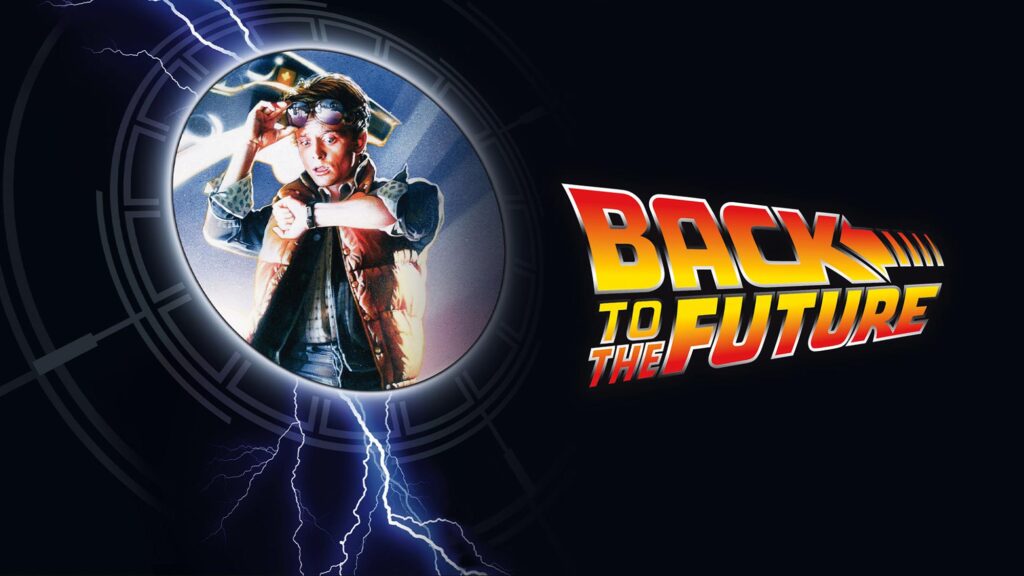
Back to the Future
Back to the Future was shot mainly in California, using a mix Los Angeles-area locations and Universal Studios backlot sets to create the fictional Hill Valley.
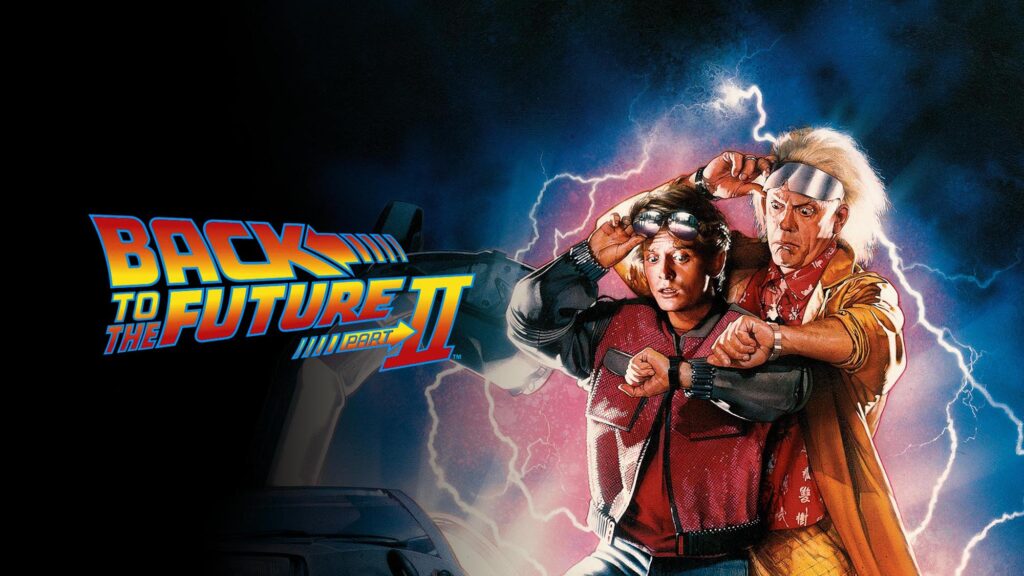
Back to the Future Part II
Back to the Future Part II was shot mainly in California, with Universal Studios’ Courthouse Square backlot again serving as the centre of Hill Valley.
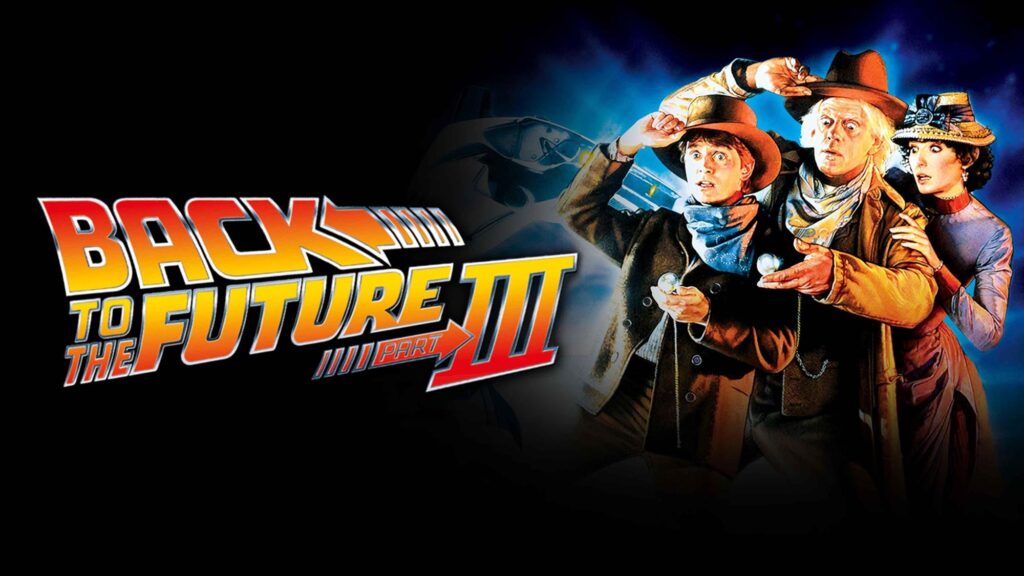
Back to the Future Part III
Back to the Future Part III was shot mainly in California and Arizona, with Universal Studios’ Courthouse Square still used for the familiar 1955 Hill Valley.

Midnight Madness
Midnight Madness was filmed across the Los Angeles area, and its locations are central to the film’s concept. The story is built around a citywide night game.