
Lea Thompson (born 31 May 1961) is an American actress, director, producer and former professional ballet dancer best known for All the Right Moves (1983), Red Dawn (1984), the Back to the Future trilogy (1985–1990), Howard the Duck (1986), Some Kind of Wonderful (1987), Dennis the Menace (1993), Caroline in the City (1995–1999) and Switched at Birth (2011–2017). Born in Rochester, Minnesota, and raised primarily in Minneapolis, she trained as a ballet dancer before moving to New York City and eventually establishing a career in Hollywood. Her work has taken her to filming locations across the United States and Canada, from the industrial communities of Pennsylvania and the mountains of New Mexico to the historic neighbourhoods of Los Angeles and the streets of Winnipeg. During the 2000s, she expanded into television directing, subsequently making her feature directorial debut with The Year of Spectacular Men (2017), a family collaboration involving her daughters Madelyn and Zoey Deutch. She has been married to film director Howard Deutch since 1989, and the family has maintained its principal home in Los Angeles.
Lea Katherine Thompson was born in Rochester, a city in southeastern Minnesota best known as the home of the Mayo Clinic. She was the youngest of five children of Clifford and Barbara Barry Thompson, who worked as a musician and singer. The family had limited financial resources during her early childhood and spent approximately the first year of her life living in the Starlight Motel in Rochester. When her father obtained employment in Minneapolis, the family relocated to the state’s largest city, where Lea spent most of her childhood. Her parents divorced when she was six, leaving her mother responsible for supporting the children. Barbara struggled with alcoholism before eventually stopping drinking and finding work performing music in local clubs. She subsequently married musician Rob Hanson, bringing another professional musician into the household. Thompson grew up surrounded by singing, musical instruments and an appreciation for the performing arts, although the family’s circumstances were sometimes difficult. Her older siblings included Andrew Thompson, who also became a professional ballet dancer, and Coleen Goodrich, who pursued acting.
Thompson began studying ballet at the age of nine and quickly developed an unusually disciplined approach to training. She practised for several hours each day, attending classes and participating in productions at the Minnesota Dance Theatre in Minneapolis. Her first stage role was as a mouse in The Nutcracker, and she eventually performed in more than forty-five ballet productions. By fourteen, her abilities had attracted the attention of major American dance companies, and she received scholarships associated with the American Ballet Theatre in New York, the San Francisco Ballet and the Pennsylvania Ballet. She attended Marshall-University High School in Minneapolis, completing her education at sixteen to concentrate on professional dancing. During her teenage years, she performed with the Minnesota Dance Theatre and subsequently worked with ballet companies elsewhere in the United States, including the Pennsylvania Ballet. The demanding schedule required her to spend extended periods away from Minnesota, introducing her to the professional performing arts communities of Philadelphia, New York and San Francisco before she had seriously considered becoming an actress.
Her ambition to become a principal ballet dancer eventually brought her to New York City, where she trained with American Ballet Theatre’s younger company, then known as ABT II. Around the age of nineteen or twenty, she was evaluated by Mikhail Baryshnikov, the celebrated Soviet-born dancer who had become artistic director of American Ballet Theatre in 1980. Although he considered her a talented performer, he told her that her physical proportions were unsuitable for the highest level of classical ballet. Thompson later described the encounter as a decisive moment, realising that continuing to pursue the same ambition could mean spending many more years attempting to overcome limitations outside her control. Rather than abandon performing, she redirected her efforts towards acting. Her years of dance training had already provided extensive experience of auditions, rehearsals, choreography and the physical demands of appearing before an audience, skills that subsequently proved useful in film and television.
She remained in New York, supporting herself through waitressing and commercial modelling while attending acting auditions. Her early advertisements included campaigns for Burger King and Twix, and she appeared in numerous television commercials before obtaining substantial dramatic work. The Burger King commercials introduced her to professional camera crews and provided a steady income during the early stages of her transition from dance to acting. Thompson later recalled that her Midwestern appearance and natural manner made her particularly suitable for advertisements requiring a recognisable American teenager rather than a glamorous model. Some of the commercials featured other young performers, including Elisabeth Shue, with whom she would later work on the Back to the Future sequels. The earnings also allowed her to assist her mother financially, an important achievement after the family’s earlier difficulties. By the beginning of the 1980s, Thompson had decided to concentrate exclusively on screen acting and began securing auditions for feature films.
Her first substantial film role came in Jaws 3-D (1983), directed by Joe Alves and starring Dennis Quaid, Louis Gossett Jr. and Bess Armstrong. Thompson played Kelly Ann Bukowski, a young employee of a marine amusement park threatened by a great white shark. The production was filmed principally at SeaWorld Orlando in Florida, where the actual marine park supplied the setting for the fictional attraction. Opened in 1973, SeaWorld had become one of central Florida’s major tourist destinations, with extensive pools, underwater viewing areas and aquatic exhibition facilities. Principal photography began in 1982, using the park’s existing infrastructure alongside specially constructed sets and underwater equipment. Additional work took place on nearby property associated with Universal, while controlled underwater sequences were completed using specialised facilities. The film was designed for the revival of three-dimensional cinema during the early 1980s, requiring actors to perform alongside unusual camera and special-effects equipment. Thompson’s role was comparatively small, but it provided her first substantial experience of a major studio production and introduced her to the practical demands of location filming.
She subsequently appeared opposite Tom Cruise in All the Right Moves (1983), directed by Michael Chapman. The film follows a high-school American football player hoping to obtain a university scholarship and leave a struggling Pennsylvania steel town. Thompson played Lisa Lietzke, the girlfriend of Cruise’s character, Stef Djordjevic. Rather than recreate an industrial community in California, the filmmakers travelled to Johnstown, Pennsylvania, where principal photography took place over approximately seven weeks during the spring of 1983. The city had developed around iron and steel manufacturing during the nineteenth century, and its industrial buildings, steep surrounding hills and densely built residential neighbourhoods provided an authentic environment for the story. The production used Greater Johnstown High School, local residential streets and Point Stadium at 100 Johns Street, near the confluence of the Stonycreek and Little Conemaugh rivers.
Before filming, Thompson spent three days attending classes at Ferndale Area High School, near Johnstown, without revealing that she was an actress preparing for a film role. The exercise allowed her to observe students’ clothing, speech and social behaviour, helping her develop Lisa as a believable Pennsylvania teenager. Cruise undertook a similar exercise at Greater Johnstown High School but was recognised almost immediately. Local students also appeared as extras, particularly during the football sequences, while school uniforms and other materials were borrowed from Ferndale High School. The production photographed scenes around the city’s former steelworks, incorporating actual industrial facilities into the story’s background. All the Right Moves became an important early film for both Thompson and Cruise, and its extensive use of Johnstown established one of the first significant geographical connections in her film career outside Minnesota and New York.
Her next major production was Red Dawn (1984), directed by John Milius and starring Patrick Swayze, C. Thomas Howell, Charlie Sheen and Jennifer Grey. Thompson played Erica Mason, a teenager who joins a group of American resistance fighters following a fictional Soviet-led invasion of the United States. Although the story is set in Colorado, the production was filmed primarily in northern New Mexico during the winter of 1983–1984. The town of Las Vegas, approximately 100 kilometres east of Santa Fe, represented the fictional community of Calumet. Its historic railway district, older commercial buildings and surrounding countryside were adapted to create the appearance of a small American town under military occupation. The former Castañeda Hotel beside the railway station appeared in several important scenes, while buildings along Railroad Avenue and Grand Avenue were altered with fictional signs and propaganda.
Other Red Dawn locations included the mountains surrounding Las Vegas, Johnson Mesa near the Colorado border and Ghost Ranch near Abiquiú. The latter property, historically associated with painter Georgia O’Keeffe, provided rural locations for scenes involving Erica’s family and the occupying forces. The production also used the wooded slopes around Hermit’s Peak and the desert landscape near Abiquiú Lake, allowing the filmmakers to move between environments that appeared considerably farther apart within the fictional story. Thompson’s role required extensive outdoor filming in cold weather, often in remote locations where access and transport were difficult. Red Dawn became controversial because of its depiction of a foreign invasion and unusually high level of violence, but it established Thompson as a recognisable young actress within American action cinema.
She continued working with Eric Stoltz in The Wild Life (1984), a comedy written by Cameron Crowe and directed by Art Linson. The film followed a group of young adults living and working in suburban Los Angeles, with Thompson playing Anita, the girlfriend of Stoltz’s character. The production was filmed in Southern California, incorporating apartment complexes, shopping areas and commercial districts associated with the lives of young people outside the Hollywood entertainment industry. Although the film attracted limited attention, it brought Thompson into contact with performers and filmmakers who would become important during the remainder of the decade. Stoltz was subsequently cast as Marty McFly in Back to the Future, and Thompson began filming the science-fiction comedy opposite him before a major casting change altered the production.
Back to the Future (1985), directed by Robert Zemeckis, became the defining film of Thompson’s career. She played Lorraine Baines, a teenager living in the fictional California town of Hill Valley in 1955 who becomes attracted to her future son Marty McFly after he travels back in time from 1985. Thompson also portrayed Lorraine as an older married woman in the film’s contemporary sequences, requiring extensive makeup and considerable changes in physical mannerisms. Principal photography began in November 1984, with Stoltz initially playing Marty, but Zemeckis and producer Steven Spielberg eventually decided that his performance did not provide the comic quality required for the character. Michael J. Fox replaced him in January 1985, and several weeks of footage had to be reshot. Thompson therefore performed many of her early scenes twice, first opposite Stoltz and subsequently opposite Fox, while continuing to develop Lorraine’s contrasting teenage and adult personalities.
The production filmed extensively around Los Angeles County, using actual suburban communities and historic buildings to create Hill Valley. Lorraine’s childhood home was represented by a house at 1727 Bushnell Avenue in South Pasadena, a residential street lined with early twentieth-century properties. Her future husband George McFly’s house was located nearby at 1711 Bushnell Avenue, allowing the filmmakers to use the same neighbourhood for several important encounters. Whittier High School at 12417 Philadelphia Street in Whittier represented Hill Valley High School, while the fictional town centre was constructed around Courthouse Square on the Universal Studios backlot in Universal City. Other filming took place at the Gamble House at 4 Westmoreland Place in Pasadena, which represented the exterior of Doc Brown’s residence. The interior of Lorraine’s bedroom, where she first encounters Marty after he is struck by a car, was constructed at Universal Studios rather than filmed inside the South Pasadena property.
One of Thompson’s most important Back to the Future sequences was photographed inside the gymnasium of Hollywood United Methodist Church at 6817 Franklin Avenue in Hollywood. The room was transformed into the venue for the Enchantment Under the Sea dance, where Lorraine finally becomes romantically involved with George following his confrontation with Biff Tannen. The sequence required elaborate 1950s costumes, period decorations and a large group of young extras, while Thompson and Crispin Glover performed the central romantic scenes. The film’s conclusion also used streets around the Universal backlot, while the McFly family’s contemporary residence was represented by a property at 9303 Roslyndale Avenue in Arleta. Back to the Future was released in July 1985 and became the highest-grossing film of the year, earning four Academy Award nominations and winning Best Sound Effects Editing. Thompson’s portrayal of Lorraine brought her international recognition and established a professional connection with Fox, Glover and Christopher Lloyd that continued through subsequent productions and anniversary events.
Her next major project, SpaceCamp (1986), took her to actual facilities associated with the American space programme. Directed by Harry Winer, the film follows a group of teenagers attending a NASA-inspired training camp who accidentally become involved in a space mission. Thompson played Kathryn Fairly, an ambitious trainee hoping to become an astronaut, alongside Kelly Preston, Tate Donovan, Larry B. Scott and Joaquin Phoenix, who was credited as Leaf Phoenix. Much of the production was filmed at the U.S. Space & Rocket Center in Huntsville, Alabama, where Space Camp had opened in 1982. The museum and educational complex provided actual training equipment, exhibition facilities and spacecraft simulators, while the filmmakers constructed additional interiors to accommodate the fictional mission. Other scenes were filmed at Kennedy Space Center on Merritt Island, Florida, with studio facilities used for the spacecraft interiors that could not be photographed inside actual NASA equipment. The production gave Thompson another role requiring substantial physical preparation, drawing on her ballet background during scenes involving simulated weightlessness and complex movements.
SpaceCamp was released shortly after the Space Shuttle Challenger disaster in January 1986, which created difficult circumstances for a family adventure film involving a fictional shuttle emergency. The production had been completed before the accident, but its release became controversial because of the tragedy’s impact on NASA and the families of the astronauts. Although the film was not commercially successful, it retained a connection with the actual Space Camp educational programme. In 2016, the U.S. Space & Rocket Center inducted Thompson and other members of the cast into the Space Camp Hall of Fame, marking the thirtieth anniversary of its release. The honour brought her back into contact with Huntsville and the institution where one of her early major films had been produced.
Another substantial role followed in Howard the Duck (1986), directed by Willard Huyck and produced by George Lucas. Based on the Marvel Comics character, the film follows an anthropomorphic duck transported from another universe to Cleveland, Ohio. Thompson played Beverly Switzler, a singer and musician who befriends Howard and becomes involved in his attempts to return home. Although the fictional setting was Cleveland, principal photography was conducted almost entirely in Northern California, particularly around San Francisco and the surrounding Bay Area. The production began in November 1985 and used more than thirty actual locations, together with numerous constructed sets. The filmmakers chose the region partly because of its proximity to Industrial Light & Magic in San Rafael and Skywalker Sound in Nicasio, where much of the elaborate visual-effects and sound work would be completed.
Howard the Duck incorporated several recognisable San Francisco locations, including the California Academy of Sciences in Golden Gate Park, where the building’s historic entrance and exhibition halls were used for sequences involving the principal characters. The Hunters Point Naval Shipyard supplied the setting for the large scientific installation associated with the film’s climax, while other scenes were photographed around the city’s industrial waterfront. In Petaluma, north of San Francisco, the filmmakers staged an elaborate sequence involving an ultralight aircraft, using the Petaluma River and the waterfront around Western Avenue. The Fireman’s Fund building at 777 San Marin Drive in Novato represented the fictional Dynatechnics facility, while an elaborate restaurant set was constructed inside a warehouse in Richmond. Thompson also performed musical material as Beverly, returning to skills developed during her early years as a dancer and performer. Howard the Duck was critically and commercially unsuccessful on its initial release, but subsequently developed a cult following. Thompson has continued discussing the production with affection, particularly the experience of working with elaborate animatronic characters and a large technical crew.
She returned to a more conventional romantic drama with Some Kind of Wonderful (1987), directed by Howard Deutch and written by John Hughes. Thompson played Amanda Jones, a popular high-school student who becomes involved with a working-class aspiring artist portrayed by Eric Stoltz. Mary Stuart Masterson played Watts, his best friend, whose feelings form another part of the story. Unlike several of Hughes’s earlier teenage films, which had been set around Chicago, Some Kind of Wonderful was conceived specifically for Southern California. Principal photography began in August 1986, with San Pedro High School at 1001 West 15th Street providing the principal school location. The film also used residential streets in nearby Wilmington, where Amanda’s home was represented by a property at 1319 West E Street and Watts’s residence by another house on Emden Street. These working-class neighbourhoods contrasted with the wealthy Los Angeles environments associated with Amanda’s boyfriend Hardy Jenns.
The production extended across Los Angeles, incorporating the Hollywood Bowl, the Los Angeles County Museum of Art and the Los Angeles Municipal Art Gallery into the central date sequence. The Hollywood Bowl, an outdoor amphitheatre in the Hollywood Hills, provided the setting for one of Amanda’s conversations with Keith, while the surrounding areas were used for scenes involving the characters’ attempts to navigate their different social backgrounds. The mansion occupied by Hardy’s family was represented by a property at 516 South Hudson Avenue in Hancock Park, a wealthy residential district containing substantial early twentieth-century houses. Thompson had initially declined the role but eventually accepted after changes to the cast and production team. She developed a close professional relationship with Deutch during filming, and they subsequently began a personal relationship. The couple married in 1989, establishing one of Hollywood’s longstanding partnerships between an actress and director. Their meeting during Some Kind of Wonderful therefore became an important personal connection with the Los Angeles neighbourhoods where the film was produced.
Thompson returned to Lorraine McFly in Back to the Future Part II (1989) and Back to the Future Part III (1990), which were filmed largely as a connected production between 1989 and early 1990. The second film required her to portray several alternative versions of Lorraine, including the older woman living in the fictional year 2015 and a wealthy, unhappy wife of Biff Tannen in an altered version of 1985. The production again used the Universal Studios Courthouse Square backlot, substantially transforming its buildings and decorations for the different periods. Additional filming took place in El Monte, where a property at 3793 Oakhurst Street represented the McFly family’s future home in 2015, and around the Los Angeles suburbs that had been used in the original film. Thompson’s scenes as the altered Lorraine required elaborate makeup and prosthetics, giving her an opportunity to perform a considerably more exaggerated character than the relatively restrained mother of the first film.
For Back to the Future Part III, Thompson also played Maggie McFly, an ancestor of Marty’s family living in Hill Valley during 1885. The Western setting required the filmmakers to construct a period town at Red Hills Ranch near Sonora in Tuolumne County, California. Additional scenes were filmed around Jamestown, where the Sierra Railroad and what is now Railtown 1897 State Historic Park provided historic locomotives, railway buildings and track. Other photography took place in Monument Valley on the Arizona–Utah border and around Oak Park in Ventura County. These locations allowed the filmmakers to recreate the American frontier while maintaining continuity with the fictional town established in the earlier films. Although much of the production remained connected with the Los Angeles studios, the Western sequences were filmed in actual rural landscapes rather than relying exclusively on soundstages. The third film concluded the trilogy in May 1990, and Thompson’s appearances in all three films established Lorraine McFly as the most widely recognised character of her career.
During the late 1980s, Thompson also appeared in the television film Nightbreaker (1989), a drama about American soldiers involved in atmospheric nuclear testing during the 1950s. The production explored the consequences of radiation exposure and the subsequent attempts by former servicemen to obtain recognition for their illnesses. She continued accepting television projects alongside her feature work, establishing relationships with producers who would later offer her leading roles in television dramas and comedies. Her career also brought her into contact with Dennis Quaid, with whom she had appeared in Jaws 3-D and developed a relationship during the middle of the decade. They were engaged for a period before separating in 1987. Following her marriage to Howard Deutch, she increasingly divided her professional commitments with raising a family. Their first daughter, Madelyn, was born in 1991, followed by Zoey in 1994. Both daughters eventually pursued careers in film and television, continuing the family’s involvement in the entertainment industry.
Thompson’s subsequent feature appearances included Article 99 (1992), a medical drama set in a veterans’ hospital, and Dennis the Menace (1993), directed by Nick Castle and based on Hank Ketcham’s comic strip. In Dennis the Menace, she played Alice Mitchell, the mother of the mischievous young protagonist portrayed by Mason Gamble. The production was filmed primarily in the Chicago metropolitan area, where suburban communities provided the fictional Midwestern neighbourhood. The Mitchell family home was represented by a property at 1624 Ashland Avenue in Evanston, while the neighbouring residence of George and Martha Wilson, played by Walter Matthau and Joan Plowright, stood at 1618 Ashland Avenue. The two actual houses are immediately adjacent, allowing the filmmakers to stage scenes involving both households without constructing matching exteriors in a studio.
Other Dennis the Menace locations included Hinsdale, Wilmette and Elgin, with the latter supplying a railway bridge used for scenes involving the criminal known as Switchblade Sam. Burns Field Park in Hinsdale provided the setting for several outdoor sequences, while nearby suburban streets were used for scenes involving Dennis and his friends. The production also used the Miami Woods area near Niles, where the filmmakers constructed the children’s treehouse. Thompson’s principal role was associated with the Mitchell family home and its surroundings, rather than every location used for the film’s action sequences. Dennis the Menace became a commercial success and gave her another prominent family-film role after the international popularity of Back to the Future.
The same year, she appeared in The Beverly Hillbillies (1993), directed by Penelope Spheeris and adapted from the long-running American television series. Thompson played Laura Jackson, a con artist attempting to gain access to the fortune of a wealthy family that has moved from rural Arkansas to Beverly Hills. The production was filmed principally in Southern California, using actual residential properties and constructed interiors to represent the Clampett family’s luxurious new environment. The film’s contrast between rural and urban lifestyles allowed Thompson to adopt a more exaggerated comic performance, continuing her transition from teenage romantic roles to adult comedy. Her work during the early 1990s also included several television dramas, among them Stolen Babies (1993) and The Substitute Wife (1994), which provided more substantial dramatic parts than some of the feature films she was being offered.
Her most important television role came with Caroline in the City (1995–1999), an NBC sitcom created by Fred Barron, Dottie Dartland and Marco Pennette. Thompson played Caroline Duffy, a successful cartoonist living in Manhattan whose professional and personal life becomes entangled with the people around her. The series was set in New York City, particularly in the city’s artistic and publishing communities, but was produced primarily at CBS Studio Center, 4024 Radford Avenue in Studio City, Los Angeles. Permanent sets represented Caroline’s apartment, workplace and several neighbouring establishments, allowing the programme to be filmed in front of studio audiences. The principal cast included Eric Lutes, Malcolm Gets, Amy Pietz and Andy Lauer, whose characters formed the central social circle around Caroline.
Caroline in the City premiered in September 1995 as part of NBC’s popular Thursday evening comedy schedule, between Seinfeld and ER. The programme became an immediate ratings success and ran for four seasons, producing ninety-seven episodes before concluding in April 1999. Thompson also became involved in production, gaining experience of the television industry’s creative and organisational responsibilities beyond acting. Her performance earned her a People’s Choice Award for Favourite Female Performer in a New Television Series in 1996. The sitcom brought her renewed public recognition at a time when she was increasingly balancing professional work with motherhood, and its regular studio schedule allowed her to remain close to her family in Los Angeles. Although the fictional Caroline lived in Manhattan, the programme’s principal production environment remained the San Fernando Valley rather than New York.
Following the conclusion of Caroline in the City, Thompson returned to musical theatre. She played Sally Bowles in the touring production of Cabaret before joining the Broadway revival directed by Sam Mendes and Rob Marshall. Her engagement at Studio 54, located at 254 West 54th Street in Manhattan, began in August 2000 and continued until November. The theatre had originally opened as the Gallo Opera House in 1927 before becoming internationally famous as a nightclub during the late 1970s. Its later conversion into a theatrical venue allowed productions such as Cabaret to incorporate the building’s history as an entertainment space. Thompson’s performance required extensive singing and dancing, bringing her back to the stage skills she had developed before entering the film industry. The production also marked an important return to New York, where she had abandoned her original ballet ambitions nearly twenty years earlier.
Her television career continued with For the People (2002–2003), a legal drama in which she played Camille Paris, a senior prosecutor working in the Los Angeles district attorney’s office. She subsequently took the leading role in the Jane Doe mystery film series (2005–2008), portraying Cathy Davis, a suburban mother who secretly works for a government security agency. The nine films were made for the Hallmark Channel and produced principally in Southern California, using actual suburban neighbourhoods, government-style buildings and studio interiors. Thompson worked alongside Joe Penny and William R. Moses, appearing in all nine instalments. The series also provided her first substantial experience of directing screen drama, as she directed Jane Doe: The Harder They Fall (2006) and Jane Doe: Eye of the Beholder (2008). Her involvement behind the camera developed gradually from her experience as an actress who had worked closely with directors such as Robert Zemeckis, John Milius and Howard Deutch.
During the 2000s, Thompson increasingly accepted television films and smaller independent productions while continuing to work on occasional larger projects. She appeared in the family drama The Cabin (2011), the sports comedy Ping Pong Summer (2014) and the science-fiction thriller Left Behind (2014). Her interest in production also led her to develop Mayor Cupcake (2011), in which she played Mary Maroni, a small-town baker who unexpectedly becomes mayor. The film was produced in Pennsylvania, using actual communities and local businesses rather than recreating the entire fictional town in a studio. The project allowed Thompson to work in another independent production with a limited budget, while her involvement as a producer gave her greater influence over the finished film than she had enjoyed during many of her earlier commercial assignments.
Her next major television success came with Switched at Birth (2011–2017), created by Lizzy Weiss for ABC Family, subsequently renamed Freeform. Thompson played Kathryn Kennish, the wealthy mother of a teenage girl who discovers that she was accidentally switched with another infant at birth. The series starred Vanessa Marano and Katie Leclerc as the two daughters, alongside Constance Marie, D. W. Moffett and Sean Berdy. Although the story takes place in the Kansas City metropolitan area, most of the production was filmed in Southern California, where the filmmakers could use standing sets and established television facilities. The Kennish family residence was represented by a substantial property at 918 North Alpine Drive in Beverly Hills, while the neighbouring guesthouse and swimming pool were incorporated into the fictional family’s domestic environment.
Other Switched at Birth locations included Santa Clarita, where the original Vasquez family home was represented by a property at 22610 13th Place in Newhall. The fictional Carlton School for the Deaf was represented partly by a modern office complex at 25205 Avenue Tibbitts in Valencia, while Mayfield Senior School at 500 Bellefontaine Street in Pasadena supplied the exterior of Buckner Hall, the school attended by Kathryn’s daughter Bay. Other scenes were filmed around Hart High School in Newhall and at additional educational facilities in Pasadena. Thompson’s character was closely associated with the Kennish family home and the surrounding residential environments, while many of the younger characters’ scenes took place at the schools and other locations across Los Angeles County.
Switched at Birth became notable for its substantial representation of deaf characters and its use of American Sign Language. Several principal performers were deaf or hard of hearing, and the series devoted considerable attention to the experiences of deaf communities and the challenges of communication between families. Thompson remained with the programme throughout its five seasons, appearing in more than one hundred episodes before the final broadcast in April 2017. She also directed several episodes, including The Persistence of Memory’s later-season successors and the instalments Prudence, Avarice, Lust, Justice, Anger (2013), Your Body Is a Battleground (2014) and Fog and Storm and Rain (2015). The experience helped establish her as a regular television director, allowing her to work behind the camera while remaining involved in the series as an actress.
Her directing career subsequently expanded to other American television productions. She directed episodes of The Goldbergs, a sitcom set in Pennsylvania during the 1980s but filmed primarily in Southern California, and worked on Mom, American Housewife, Young Sheldon and several other comedies. The Goldbergs was particularly well suited to her experience because it depicted the decade in which she had become internationally famous through Back to the Future and other films. Thompson continued accepting acting roles during the same period, including appearances in J. Edgar (2011), directed by Clint Eastwood, and several independent dramas. Her growing involvement in directing represented an important professional change, allowing her to take greater responsibility for shaping performances, selecting camera positions and working with production designers.
In 2017, Thompson made her feature directorial debut with The Year of Spectacular Men, a comedy-drama written by her elder daughter Madelyn Deutch. The film follows a young woman attempting to establish her adult life after leaving university, with Madelyn playing the principal character and Zoey Deutch portraying her younger sister. Thompson also appeared as their mother, while her husband Howard Deutch and Zoey were involved as producers. The project developed over several years before filming began in September 2015. The production worked in Los Angeles, New York City, San Francisco and the Lake Tahoe region, following the screenplay’s changing settings and seasonal structure. The filmmakers also used locations around Santa Clarita for additional work, taking advantage of established production facilities close to the family’s home.
The Year of Spectacular Men was particularly personal for Thompson because it involved all four members of her immediate family in different creative roles. Madelyn wrote the screenplay, composed music and performed in the film, while Zoey appeared as an actress and helped produce it. Thompson supervised the overall production and played a supporting role, allowing her to collaborate professionally with both daughters in a project they had developed together. The film premiered at the Los Angeles Film Festival in June 2017 and received a wider release in June 2018. Thompson later described the experience as an opportunity to direct a story written from the perspective of a young woman, rather than a screenplay that treated female characters primarily through the interests of male protagonists. It remained her first feature film as director, building on the television work she had undertaken over the preceding decade.
She also appeared in Little Women (2018), a contemporary adaptation of Louisa May Alcott’s novel directed by Clare Niederpruem. Thompson played Margaret March, known as Marmee, the mother of four sisters navigating family relationships and personal ambitions. Although the original novel is closely associated with Concord, Massachusetts, the production was filmed primarily in Salt Lake City, Utah, beginning in June 2017. The filmmakers used actual residential neighbourhoods and local institutions to represent the fictional modern American setting, while additional interiors were completed in controlled production facilities. The film was released in September 2018 to coincide with the 150th anniversary of the novel’s publication. Thompson’s role returned her to family drama, a genre that had become important throughout her television career.
Her later work included Dinner in America (2020), a dark independent comedy directed by Adam Rehmeier, and the romantic comedy Unplugging (2022), co-starring Eva Longoria and Matt Walsh. She also directed episodes of Star Trek: Picard (2020–2023), the Paramount+ science-fiction series starring Patrick Stewart as Jean-Luc Picard. Thompson directed the third and fourth episodes of its second season, Assimilation and Watcher, which premiered in March 2022. Much of the season takes place in a fictional version of Los Angeles during 2024, and the production combined Southern California location work with studio facilities. The series also gave Thompson a brief acting appearance as Dr Diane Werner in the following episode, Fly Me to the Moon. Her involvement was significant because it brought her back to the science-fiction genre through a major television franchise, this time primarily as a director rather than an actress.
She continued directing science-fiction television with Resident Alien, the Syfy comedy-drama starring Alan Tudyk as an extraterrestrial living in a small Colorado town. Although the series is set in the Rocky Mountains, most of its production has been based in British Columbia, with locations around Vancouver and the coastal communities of Vancouver Island. Ladysmith, on the island’s eastern coast, has frequently represented the fictional town of Patience, Colorado, with its historic commercial streets adapted for the programme. Thompson directed several episodes during the series’ later seasons, working within a production that combined actual Canadian streets and landscapes with studio interiors and elaborate visual effects. Her experience on Back to the Future, SpaceCamp and Howard the Duck had given her considerable familiarity with the practical difficulties of science-fiction filmmaking, while her years directing family comedies provided experience handling the programme’s more character-based material.
Her return to a regular leading television role came with The Spencer Sisters (2023), a Canadian crime comedy created by Alan McCullough. Thompson played Victoria Spencer, a successful mystery novelist who begins investigating crimes with her daughter Darby, portrayed by Stacey Farber. The series is set in the fictional Canadian community of Alder Bluffs but was filmed primarily in southern Manitoba, particularly around Winnipeg, during the summer of 2022. The production used actual streets, houses and commercial buildings in the Winnipeg region, with additional work in other parts of Manitoba. Some scenes were also filmed in Dundas, Ontario. The programme allowed Thompson to work for an extended period in Canada, where she had previously undertaken acting assignments and developed professional connections through the North American television industry. The Spencer Sisters premiered on CTV in February 2023 and subsequently aired in the United States on The CW. Although the series received international distribution, it was cancelled after one season.
Thompson continued working in Canada with The Chicken Sisters (2024–2025), a Hallmark drama adapted from K. J. Dell’Antonia’s novel. She played Nancy Hillier, a woman whose family becomes involved in a longstanding rivalry between two fried-chicken restaurants in a fictional Southern town. The series also starred Wendie Malick, Schuyler Fisk and Genevieve Angelson. Despite its American Southern setting, filming took place primarily in British Columbia, particularly in Greater Vancouver and Langley. Principal photography for the first season began in May 2024 and continued through July, with the production adapting Canadian streets, houses and commercial properties to represent the fictional town of Merinac. Thompson returned for the second season, which began filming in Vancouver in April 2025 and premiered on the Hallmark Channel that August. The role continued her longstanding association with television dramas centred on family relationships, while adding another Canadian location to her career.
Her marriage to Howard Deutch has remained an important part of her personal and professional history. Deutch became established as a director through Pretty in Pink (1986), Some Kind of Wonderful and The Great Outdoors (1988), before moving increasingly into television. The couple have continued living in the Los Angeles area, raising their daughters while both pursuing careers within the entertainment industry. Their home has included several animals, particularly dogs, horses and chickens, reflecting Thompson’s longstanding affection for animals and her interest in outdoor activities. Although she has travelled regularly for filming and directing assignments, she has generally maintained a private family life away from the more public aspects of Hollywood.
Both daughters followed their parents into the entertainment industry. Madelyn Deutch developed a career as an actress, screenwriter and musician, while Zoey Deutch became known for performances in films including Everybody Wants Some!! (2016), Before I Fall (2017), Set It Up (2018), Zombieland: Double Tap (2019) and Not Okay (2022). Thompson has spoken about the importance of allowing her daughters to establish their own professional identities, although the family has occasionally worked together. Their collaboration on The Year of Spectacular Men provided an opportunity to combine the experience of two established filmmakers with the creative interests of a younger generation, without requiring the daughters to follow the same career paths as their parents.
Thompson has also maintained connections with charitable organisations, particularly those concerned with Alzheimer’s disease, cancer research and the work of the Michael J. Fox Foundation for Parkinson’s Research. Her involvement with the latter has an obvious personal connection through her friendship with Fox, whose diagnosis became public in 1998. She has attended numerous Back to the Future anniversary events and reunions, occasionally appearing alongside Fox, Christopher Lloyd and Thomas F. Wilson. These gatherings have maintained the public connection between the actors and the original film long after their professional careers developed in different directions. Thompson has generally expressed pride in the trilogy’s continued popularity while also discussing the considerable range of film, television and stage work she has undertaken since the 1980s.
Her career has involved an unusually varied combination of acting, dancing, producing and directing. The professional ballet companies of Minneapolis, Philadelphia and New York were central to her education, while the industrial streets of Johnstown and the mountain communities of New Mexico provided the settings for her earliest substantial dramatic roles. The homes of South Pasadena, Whittier High School and the Hollywood United Methodist Church became closely associated with Lorraine McFly, while later productions took her to the working-class neighbourhoods of San Pedro, the marine facilities of Florida, the historic streets of Evanston and the studios of Vancouver and Winnipeg. New York remained important through her early commercial work and performances on Broadway, but Los Angeles became the principal geographical centre of her adult life. More than four decades after her first major film appearance, Lea Thompson has continued working on both sides of the camera, developing a career that began with classical ballet and expanded into several generations of American film and television.
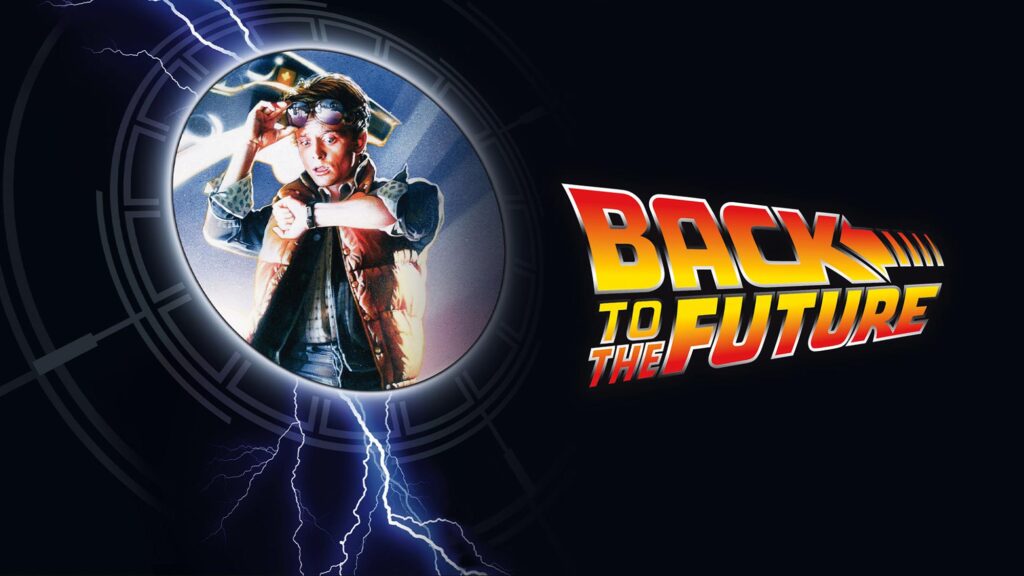
Back to the Future
Back to the Future was shot mainly in California, using a mix Los Angeles-area locations and Universal Studios backlot sets to create the fictional Hill Valley.

Back to the Future Part II
Back to the Future Part II was shot mainly in California, with Universal Studios’ Courthouse Square backlot again serving as the centre of Hill Valley.
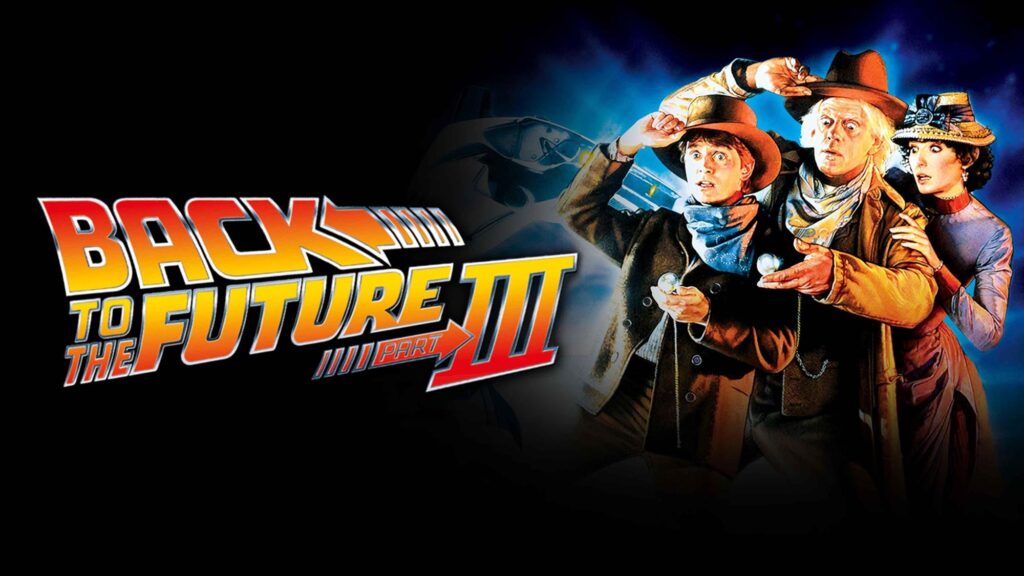
Back to the Future Part III
Back to the Future Part III was shot mainly in California and Arizona, with Universal Studios’ Courthouse Square still used for the familiar 1955 Hill Valley.