
Kadia Saraf was born on 9 November in Bern, Switzerland, to a Swiss mother and a Yemeni-Israeli father. Her parents had met at a kibbutz in Israel during the 1970s, despite initially speaking different languages. When Saraf was four years old, the family moved to the Galilee region of northern Israel, where she spent the following decade growing up in a rural mountainous environment. She later recalled spending much of her childhood outdoors, climbing trees and riding horses. The family returned to Switzerland when she was fourteen, and she completed her secondary education there. Growing up between the two countries gave her fluency in several languages, including Hebrew, German and Swiss German, while she subsequently became fluent in English and developed a working knowledge of French and Arabic. Her interest in performance began during childhood, when she studied ballet and flamenco. As a teenager in Switzerland, she joined a regional theatre company and played leading roles in two productions. At sixteen, she also wrote, directed and produced a stage play, taking responsibility for the costumes, scenery and props. Although she was already interested in pursuing a professional acting career, her early education initially took her in a different direction.
After finishing school, Saraf studied structural engineering at BBM in Kreuzlingen, a Swiss town near the southern shore of Lake Constance. She completed her qualification before returning to Israel, this time settling in Tel Aviv. Alongside attending acting auditions, she worked as a medic and ambulance driver for Magen David Adom, Israel’s national emergency medical service. She also trained extensively in Kenpo Jitsu, a martial art combining elements of karate and jujitsu, and won the Israeli national championship in 2001. Her sporting background later remained part of her professional activities, with continued training in martial arts and amateur boxing. Although her work in emergency medicine and engineering offered alternatives to acting, she continued pursuing opportunities to perform. In 2004, she moved alone to New York City, fulfilling a longstanding ambition to live and work in the United States. The relocation established New York as her principal professional base and marked the beginning of her American acting career.
Saraf’s first American television appearance came in Rescue Me (2006), the FX comedy-drama starring Denis Leary as a New York City firefighter dealing with the personal consequences of the September 11 attacks. She played a character named Jill in the series, which was produced in New York. The experience introduced her to professional television production in the United States, although several years passed before she began appearing regularly in network dramas. She continued developing her abilities through acting classes and independent projects, including the short productions Hiraeth (2013) and The Reel Life (2013), the latter of which she also helped write. She studied at the Lee Strasberg Theatre and Film Institute during 2012 and 2013, receiving training in Method acting, and subsequently worked with acting coaches including Ted Sluberski, Bob Krakower and Adam Kee. She also trained with the Upright Citizens Brigade, the improvisational comedy organisation founded in Chicago and established in New York during the 1990s. These experiences took place alongside auditions and smaller acting assignments, with Saraf gradually building a career in the city’s television industry. She joined SAG-AFTRA in 2013, an important professional step that followed her involvement in developing an original television pilot.
During the following years, Saraf appeared in several television dramas filmed in New York, including Blindspot (2015), Madam Secretary (2017), The Blacklist (2017) and The Good Fight (2020). She also appeared in Counterpart (2018), the science-fiction espionage thriller starring J. K. Simmons, and played Sarit in Danny A. Abeckaser’s crime drama First We Take Brooklyn (2018). These were generally supporting or guest appearances, but they brought her into contact with different production teams and established casting directors. Her subsequent television work included FBI: International (2022), in which she portrayed legal attaché Erin Padilla, and Blue Bloods (2023), appearing in the thirteenth-season episode Past History. The latter series, starring Tom Selleck and Donnie Wahlberg, had been a longstanding part of New York’s television production industry, with much of its filming taking place in the city’s residential neighbourhoods, police facilities and studio interiors. Saraf’s career during this period remained closely connected to New York, rather than requiring a permanent relocation to Los Angeles.
A more substantial television role came in Law & Order: Special Victims Unit (1999–), the long-running NBC crime drama set in Manhattan. Beginning in 2021, Saraf portrayed United States Attorney Anya Avital, a federal prosecutor who became involved in investigations conducted by the Special Victims Unit. She appeared in several episodes across the twenty-third and twenty-fourth seasons, working alongside Mariska Hargitay as Captain Olivia Benson and Ice-T as Sergeant Odafin Tutuola. The role eventually extended to Law & Order: Organized Crime (2021–), where she appeared during the third-season crossover storyline in May 2023. The productions were particularly important to Saraf because they provided an opportunity to develop a recurring character within an established television franchise rather than making isolated guest appearances. She also became involved in the writing process, contributing a story idea that was incorporated into the twenty-fourth-season episode Jumped In, broadcast on 5 January 2023.
The storyline developed partly from Saraf’s interest in American Sign Language and her involvement with members of the Deaf community. She began studying ASL in 2021 and became increasingly concerned about the difficulties that deaf survivors of sexual assault could encounter when dealing with the police and the criminal justice system. Together with actor Terry Serpico, who played Chief Tommy McGrath on Law & Order: Special Victims Unit, she approached the programme’s producers with a story exploring these issues. The resulting episode incorporated their ideas and credited both performers with the story. Saraf and Serpico also appeared together on screen, giving them an opportunity to work as actors on a project they had helped develop. The writing credit enabled Saraf to join the Writers Guild of America East, expanding her professional involvement beyond acting. She subsequently participated in the 2023 Writers Guild strike, joining other writers in New York who were campaigning over compensation, streaming residuals and the use of artificial intelligence in film and television production.
Her professional relationship with Serpico also developed into a personal one. The two actors met while working on Law & Order: Special Victims Unit in 2021 and married on 8 June 2022. Serpico had previously appeared in productions including Donnie Brasco (1997), Army Wives (2007–2013) and Yellowstone (2018–2024). The couple continued working within the New York television industry, occasionally assisting one another with auditions and recorded performances. Saraf has three children from an earlier relationship, and her eldest son has also pursued acting. She has generally kept her family life separate from her professional publicity, although she has spoken about the practical advantages of living in a household where several family members understand the demands of acting, auditions and production schedules.
Alongside her television career, Saraf began developing an independent historical drama based on her own family history. The project, provisionally titled Shoshana, concerns her great-grandmother, who lived in Yemen during the 1930s. According to the family history passed down through generations, Shoshana was widowed at the age of twenty-three and faced the possibility that her seven children could be taken from her under laws governing Jewish orphans. She devised a plan to protect the children and eventually emigrated with her family to the territory that later became Israel. Saraf first became interested in dramatising the story after speaking with her grandmother Leah in Tel Aviv, who described her mother’s experiences in Yemen. During the COVID-19 pandemic, she undertook extensive research into the country’s political, religious and social history, consulting relatives, historians and other specialists. Among those who assisted with her research was Abdulwahab Alkebsi, a descendant of Imam Yahya, who ruled Yemen during the period in which the story takes place. Saraf originally considered developing the material as a feature film but eventually decided that a limited television series would offer more room to explore the events and their historical context. By 2023, she and her collaborators were presenting the project to potential production partners.
Her most prominent screen role came with Dexter: Resurrection (2025–), the Paramount+ crime drama continuing the story of Dexter Morgan, played by Michael C. Hall. The series transferred the character from his former life in Miami and the fictional town of Iron Lake to New York City, where he attempts to reconnect with his son Harrison, played by Jack Alcott. Saraf was cast as Detective Claudette Wallace, a methodical investigator working for the New York City Police Department alongside Detective Melvin Oliva, portrayed by Dominic Fumusa. The opportunity emerged partly through her longstanding friendship with David Zayas, who had played Detective Angel Batista in the original Dexter series. Their families had remained in contact, and while attending a performance involving their children in late 2024, Zayas mentioned that the production was looking for an actress to play Wallace. Saraf subsequently contacted her representatives and submitted an audition recording in December 2024. She learned in January 2025 that she had secured the role, joining a cast that also included Uma Thurman, Peter Dinklage, James Remar and Ntare Guma Mbaho Mwine.
Principal photography on Dexter: Resurrection began in New York City in January 2025, with extensive filming across Manhattan, Brooklyn and neighbouring communities. Unlike the original Dexter series, which recreated much of Miami through locations in Los Angeles and Long Beach, the new production used actual New York streets and buildings. Saraf began filming before her casting was publicly announced on 13 February 2025, with production photographs showing her and Fumusa working together in downtown New York in late January. One of Wallace’s early scenes, involving the discovery of a dismembered body at a construction site, was filmed in the Vinegar Hill neighbourhood of Brooklyn, overlooking the East River and Manhattan. Additional filming took place throughout the city and in Yonkers, north of Manhattan, while production facilities provided interiors for the police station and other recurring settings. The series premiered on Paramount+ on 11 July 2025, with Saraf appearing throughout its ten-episode first season.
Wallace was introduced as the lead investigator in a murder case connected to the hotel where Harrison Morgan works. Her investigation subsequently brought her into contact with Dexter himself, allowing Saraf to share scenes with Michael C. Hall and David Zayas as the story developed. In preparing the character, she concentrated on Wallace’s controlled physical movements, direct manner of speaking and unusually restrained emotional expression. She later explained that she had deliberately avoided rewatching the original Dexter series before filming, preferring to approach the new production through her character’s own perspective rather than that of a longtime viewer. Her performances alongside Fumusa became an important part of the police investigation storyline, with the two actors portraying detectives whose contrasting personalities shaped their working relationship. The first season also attracted considerable attention from viewers familiar with the original series, introducing Saraf to a substantially larger international audience than her previous television roles.
Following the success of the first season, Saraf returned to portray Claudette Wallace in the second season of Dexter: Resurrection. Filming began in New York in April 2026, with Sunset Pier 94 Studios on Manhattan’s West Side providing a principal production base. The series continued making extensive use of locations around New York City, including street filming in Manhattan and the surrounding boroughs. During the spring, Saraf participated in location work alongside Fumusa, Jack Alcott, Brian Cox and other members of the expanded cast. The production also introduced new characters played by Dan Stevens, Nona Parker Johnson and Bokeem Woodbine. In addition to her continuing involvement with Dexter, Saraf appeared as Grace Lattimore in the CBS crime drama FBI (2018–), in the eighth-season episode Fidelity, broadcast in April 2026. The second season of Dexter: Resurrection was scheduled to premiere internationally on 30 October 2026.
Away from acting, Saraf has continued practising martial arts and boxing, drawing on the training she began in Israel before moving to the United States. Her sporting interests include participation in masters-level amateur boxing, while her involvement with the Deaf community has continued through her study of American Sign Language. She has also remained active as a writer, developing independent projects alongside her television commitments. New York has been her principal home and professional base since 2004, while her family background and personal interests continue to connect her to Switzerland, Israel and Yemen. Her career has consequently developed across several languages and countries, from teenage theatre performances in Switzerland and early auditions in Tel Aviv to recurring roles in American television and her work on Dexter: Resurrection.
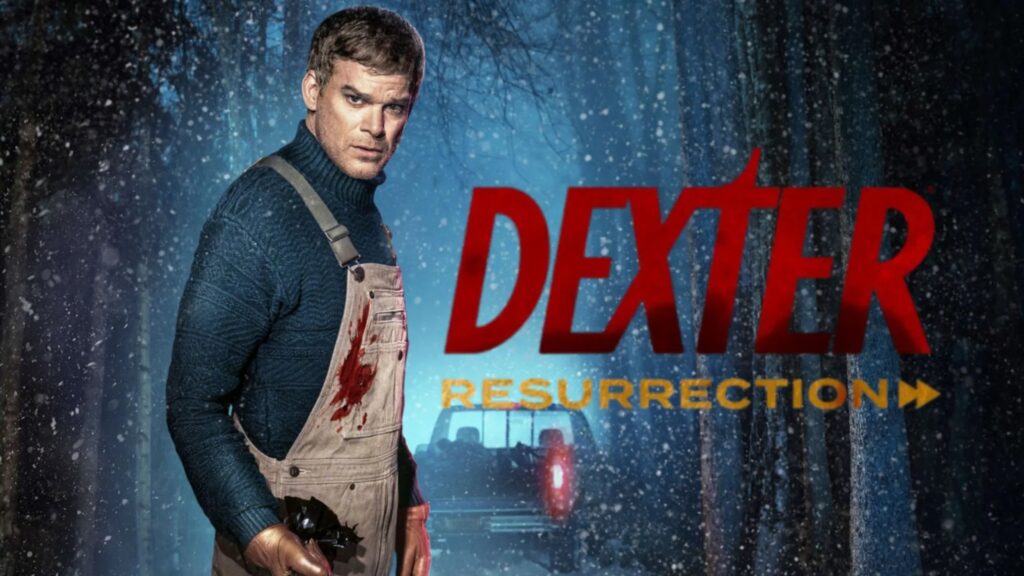
Dexter: Resurrection
Dexter: Resurrection was filmed mainly in New York, with New York City and Yonkers forming the core of the production.